- De ribdikte moet 40-60% van de nominale wanddikte bedragen
- Een onjuist ribontwerp veroorzaakt stromingsvertraging en inval
- De basisradius en lossingshoek beïnvloeden zowel de matrijsstroming als de koelefficiëntie
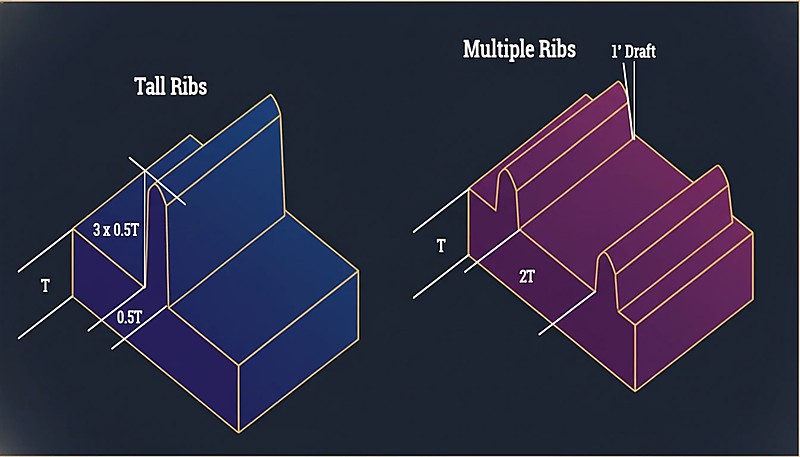
- Meerdere dunne ribben presteren bij constructieve toepassingen beter dan één hoge rib
- Moldflow-simulatie kan ribdefecten voorspellen voordat staal wordt verspaand
Ribontwerp is een van de meest bepalende keuzes bij het ontwerpen van spuitgietonderdelen. Een goed ontworpen ribnetwerk voegt stijfheid toe zonder het gewicht en de kosten van een dikkere wand, maar bij een verkeerde geometrie blijft u gedurende de hele levensduur van de matrijs kampen met stromingsvertraging1, inval2 en langere koeltijden. Uit onze ervaring met de productie van honderden matrijssets per maand behoren ribgerelateerde gebreken tot de vijf belangrijkste redenen waarom onderdelen bij de eerste-productinspectie worden afgekeurd. Voor een breder overzicht van het proces behandelt onze complete gids voor spuitgieten alles van materiaalkeuze tot productieoptimalisatie.
Dit artikel behandelt hoe de ribgeometrie—dikte, hoogte, lossingshoek, basisradius en tussenruimte—rechtstreeks bepalend is voor zowel het stromingsgedrag van de kunststofsmelt door de caviteit als de koelefficiëntie van het afgewerkte onderdeel. Of u nu een nieuw spuitgietonderdeel ontwerpt of defecten in een bestaande matrijs analyseert, inzicht in deze relaties is essentieel voor een constante onderdeelkwaliteit en kostenefficiënte productiecycli.
Wat zijn ribben bij spuitgieten en waarom zijn ze belangrijk?
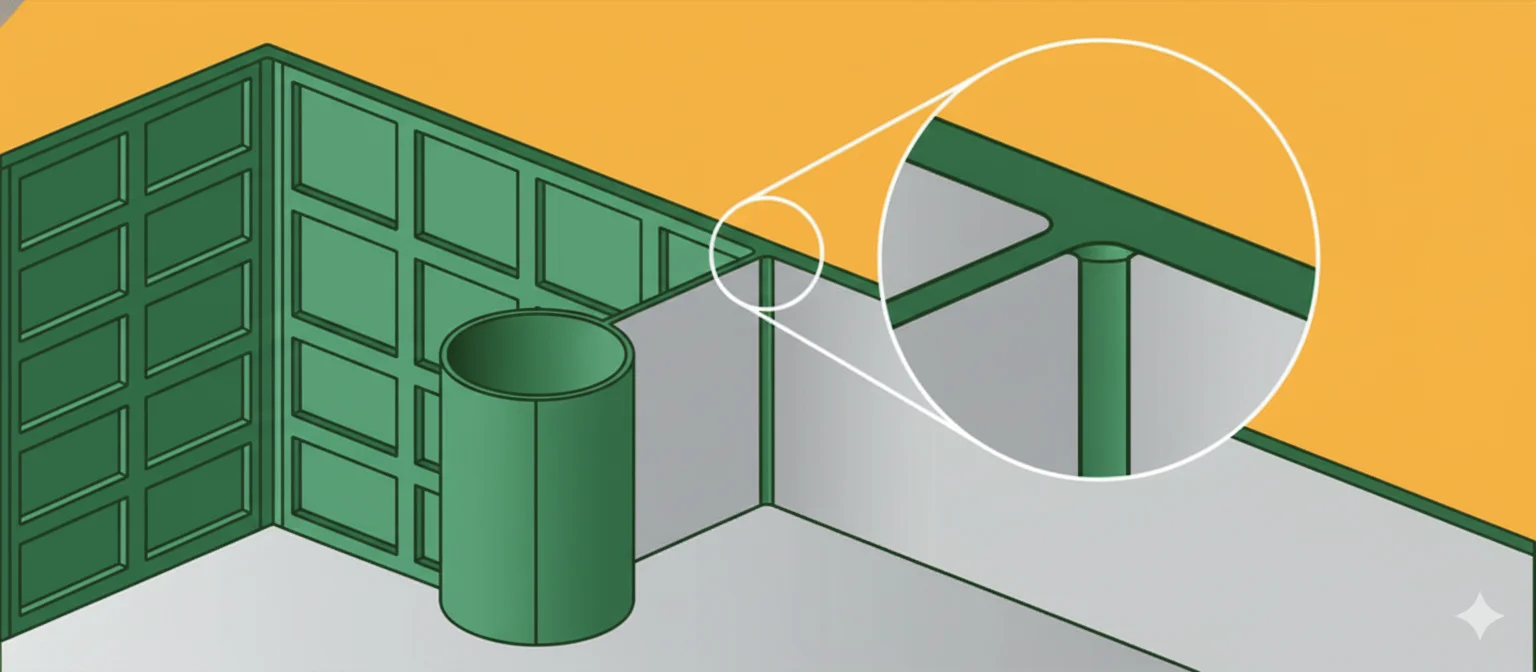
Ribben zijn dunne, bladachtige structurele elementen die loodrecht uitsteken vanaf de nominale wand van een spuitgietonderdeel. Hun voornaamste doel is de buigstijfheid en stijfheid te vergroten zonder de wanddikte, het materiaalverbruik of de cyclustijd evenredig te verhogen. In de context van de matrijsstroming fungeren ribben als hulpkanalen: afhankelijk van hun dikte ten opzichte van de nominale wand kunnen ze de smelt gelijkmatig over het onderdeel verdelen of het smeltfront laten aarzelen en voortijdig laten stollen. Bij het koelen vormt de T-verbinding tussen een rib en de wand een plaatselijke thermische massa die langzamer afkoelt dan het omliggende staal, waardoor inval ontstaat op het cosmetische oppervlak tegenover de rib.
Als u leveranciers vergelijkt of de inkoop plant, behandelt onze gids voor de selectie van spuitgietleveranciers de voorbereiding van RFQ’s, kwalificatie en controles van commerciële risico’s.
De afweging is eenvoudig: een te dunne rib vult slecht; een te dikke rib vormt op de kruising een warmtereservoir dat inval, holtes en langere cycli veroorzaakt. De industrienorm van 40% tot 60% van de nominale wanddikte balanceert beide risico’s. In onze fabriek in Shanghai zien we dat engineers boven 60% voor extra stijfheid steevast afkeur wegens inval krijgen. Gebruik meerdere dunnere ribben in plaats van één dikke, zodat de stijfheid blijft en de thermische massa per kruising beheersbaar is.
"Idealiter bedraagt de ribdikte 40% tot 60% van de aangrenzende nominale wanddikte om cosmetische fouten te voorkomen."True
Ribben dunner houden dan de hoofdwand voorkomt overmatige materiaalophoping bij de aansluiting en vermindert het risico op inval en holten in het zichtvlak aanzienlijk.
"Een rib met dezelfde dikte als de hoofdwand maximaliseert de onderdeelsterkte zonder neveneffecten."False
Een gelijke dikte creëert op het kruispunt een zware massa, wat leidt tot ernstige inval, interne holtes en aanzienlijk langere koeltijden door warmteophoping aan de basis.
Wat zijn de belangrijkste parameters voor optimalisatie van ribontwerp?
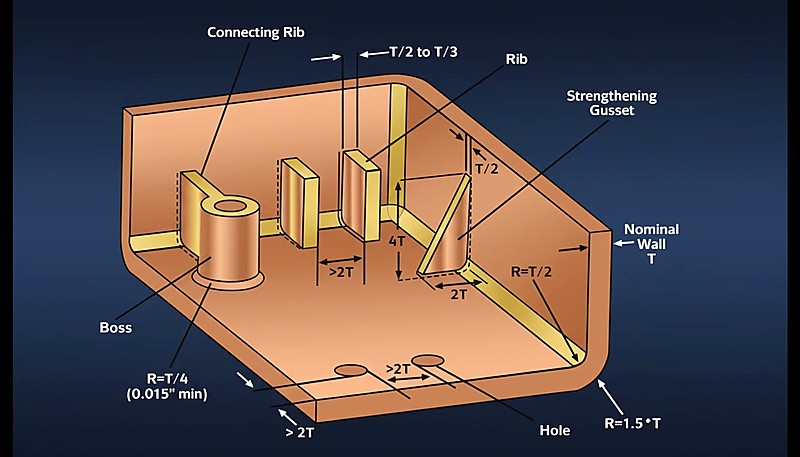
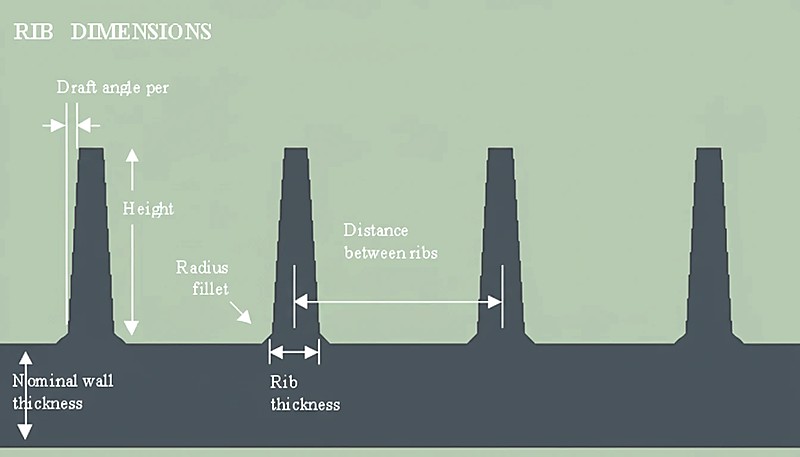
De belangrijkste parameters zijn ribdikte, hoogte, lossingshoek, basisradius en afstand. Elke parameter beïnvloedt afzonderlijk hoe de smelt door de matrijsholte stroomt en hoe efficiënt warmte aan het gereedschap wordt onttrokken. Eén verkeerde parameter kan leiden tot vulfouten, maatafwijkingen of cosmetische defecten die kostbare matrijswijzigingen vereisen. De onderstaande tabel vat per parameter het aanbevolen bereik en de dubbele invloed op stroming en koeling samen.
| Parameterwaarde | Aanbevolen waarde | Invloed op de matrijsstroming | Invloed op de koeling |
|---|---|---|---|
| Ribdikte (t) | 40% - 60% van nominale wanddikte (T) | Dunne ribben veroorzaken stromingsvertraging; dikke ribben verbeteren de vulling maar verhogen het risico op defecten | Dikkere ribben vergroten de plaatselijke massa en vereisen langere koeling om inval te voorkomen |
| Ribhoogte (H) | Niet meer dan 3x nominale wand (T) | Overmatige hoogte verhoogt de injectiedruk en kan gas insluiten | Diepe ribben zijn moeilijk te koelen; warmte blijft bij de punt opgesloten en veroorzaakt kromtrekken |
| Trekhoek | 0.5 tot 1.5 graden per zijde | Een grotere lossingshoek vergemakkelijkt het uitwerpen, maar vermindert de effectieve puntdikte | Minimale directe invloed, hoewel onvoldoende lossing sleepstrepen veroorzaakt |
| Basisradius (R) | 25% - 50% van nominale wand (T) | Ruime radii verminderen schuifspanning en drukverlies | Grote radii vergroten de ingeschreven cirkel aan de basis en creëren thermische hotspots |
| Afstand (steek) | Minstens 2x nominale wand (T) | Kleine tussenafstanden veroorzaken race-tracking, waarbij de stroming rond ribben versnelt | Dicht opeengeplaatste ribben creëren warmteophopingen die het matrijsstaal niet effectief kan afvoeren |
Wat zijn de voor- en nadelen van ribstructuren?
De belangrijkste voordelen zijn stijfheid, een kortere cyclustijd en materiaalbesparing. De belangrijkste nadelen zijn inval, stromingsvertraging en hogere gereedschapskosten. Het netto voordeel is sterk positief wanneer de geometrie gevestigde richtlijnen volgt, maar het neerwaartse risico neemt snel toe als ontwerpers bochten afsnijden. Ribben verhogen de stijfheid zonder evenredig meer materiaal, en vergeleken met massieve wanden met een gelijkwaardige stijfheid koelen ontwerpen met ribben sneller af. De rib-wandaansluiting is echter de meest voorkomende bron van inval, dunne ribben kunnen stromingsvertraging veroorzaken en diepe ribben vereisen dure EDM3-bewerking. Inzicht in deze afweging vormt de basis van een goed ribontwerp.
| Voordelen | Nadelen |
|---|---|
| Hoge sterkte-gewichtsverhouding: verhoogt de stijfheid aanzienlijk zonder de materiaalkosten van een massieve dikke wand | Inzakkingen: de overgang tussen rib en wand is een belangrijke locatie voor oppervlaktedeuken |
| Verkorting van de cyclustijd: ontwerpen met ribben koelen sneller dan massieve wanden met dezelfde stijfheid | Stroomstagnatie: dunne ribben kunnen ervoor zorgen dat het smeltfront bevriest voordat het kenmerk is gevuld |
| Weerstand tegen kromtrekken: strategische plaatsing van ribben onderbreekt patronen van restspanning | Ontluchtingsproblemen: diepe ribben vormen doodlopende zones voor gas, met risico op brandplekken (dieseleffect) |
| Materiaalbesparing: vermindert het polymeerverbruik ten opzichte van overal dikkere wanden | Complexiteit van de matrijs: diepe ribben vereisen EDM, wat de matrijskosten en doorlooptijd verhoogt |
In onze fabriek in Shanghai gebruiken we 47 spuitgietmachines van 90T tot 1850T en beoordelen onze 8 senior engineers ribontwerpen standaard tijdens de DFM-analyse (Design for Manufacturability). Het meest voorkomende probleem dat we signaleren is niet de ribgeometrie zelf, maar het ontbreken van voldoende ontluchtingsvoorzieningen bij de ribuiteinden. Een rib die wordt gevuld en gas insluit, veroorzaakt bij elke productiecyclus een brandplek; de enige oplossing is een matrijswijziging. Door dit tijdens de ontwerpbeoordeling te ontdekken, worden tijd en geld bespaard. In onze eigen matrijzenbouwfaciliteit kunnen we 100+ matrijssets per maand produceren. Daardoor kunnen we de ribgeometrie snel aanpassen wanneer de vulsimulatie problemen laat zien.
Waar worden ribontwerpen het vaakst toegepast?
Ribben worden vooral toegepast in automotive, consumentenelektronica, elektrisch gereedschap, batterijsystemen en apparaten. Elke toepassing stelt andere eisen aan ribgeometrie, materiaal en uiterlijk. Auto-onderdelen in PP of PA gebruiken ribben voor stijfheid bij laag gewicht; PC/ABS-behuizingen voor valtests; glasvezelversterkte ribben voor stijve gereedschapsgrepen; ribroosters tegen thermisch kromtrekken in batterijbehuizingen. Eén standaardontwerp faalt door unieke stromings-, koel- en uiterlijke eisen.
"Een radius aan de voet van een rib vermindert spanningsconcentraties en bevordert de materiaalstroming."True
Afrondingen verminderen de kerfwerking, verbeteren de slagvastheid en maken het stromingstraject van de kunststofsmelt vloeiender, waardoor de schuifspanning bij de kruising afneemt.
"Ribben koelen sneller af dan de nominale wand omdat ze dunner zijn en vereisen daarom geen bijzondere aandacht voor koeling."False
Hoewel het ribblad zelf snel afkoelt, houdt de aansluiting bij de basis langer warmte vast dan de omringende wand. Zonder goede kernkoeling veroorzaakt deze hotspot vertragingen in de cyclus en inval.
Hoe moeten ingenieurs het ribontwerp optimaliseren voor stroming en koeling?
Optimalisatie is een gedisciplineerd proces in zes stappen voor wanddikte, ribverhoudingen, lossingshoek, koeling, simulatie en ontluchting. Ons engineeringteam beschouwt simulatieresultaten als een harde voorwaarde voordat een productiematrijs wordt vastgelegd, omdat de kosten van Moldflow verwaarloosbaar zijn ten opzichte van het aanpassen van een voltooide matrijs. De onderstaande zes stappen vormen een systematisch kader dat voor alle materiaalsoorten en onderdeelgeometrieën werkt.
Stap 1 — Bepaal de nominale wanddikte (T): bepaal de basiswanddikte aan de hand van de verhouding tussen vloeilengte en wanddikte en de constructieve eisen. Deze waarde vormt de basis voor elke volgende ribmaat. Voor de meeste technische harsen is een nominale wanddikte van 2.0 tot 3.0 mm een praktisch uitgangspunt.
Stap 2 — Bereken de ribdikte (t): gebruik t = 0.5 x T voor hoogglansharsen zoals PC/ABS, of maximaal t = 0.7 x T voor materialen met geringe krimp of een textuuroppervlak. Overschrijd nooit 70% van de nominale wand; dit veroorzaakt vrijwel zeker inzakkingen aan de tegenoverliggende zijde. Voor zichtbare cosmetische oppervlakken adviseren wij maximaal 50% aan te houden voor de grootste veiligheidsmarge.
Stap 3 — Stel lossingshoek en hoogte in: pas per zijde een lossingshoek van minimaal 0.5 graden toe. Bereken de resulterende dikte aan de ribpunt — zorg dat deze niet minder dan 0.75 mm bedraagt om ontluchtingsproblemen en onvolledige vulling te voorkomen. Beperk de totale ribhoogte tot 3x de nominale wanddikte. Hogere ribben vereisen een onevenredig grote uitwerpkracht en hebben veel meer kans om tijdens het uitwerpen vast te lopen of beschadigd te raken.
"Vloeivertraging treedt op wanneer het smeltfront door zones met variabele dikte beweegt en de weg van de minste weerstand kiest."True
De polymeersmelt stroomt bij voorkeur door dikke secties (lage weerstand) in plaats van dunne ribben (hoge weerstand). Als de smelt in de rib te sterk vertraagt, kan deze stollen voordat de rib volledig is gevuld.
"De injectiesnelheid verhogen is de enige oplossing voor short shots in diepe ribben."False
Hoewel snelheid helpt, veroorzaakt een te hoge snelheid straalvorming, verbrandingssporen door gas en braamvorming. De juiste oplossing is optimalisatie van de ribdikte, aanspuitpositie en ontluchting — niet simpelweg de injectiesnelheid maximaal verhogen.
Stap 4 — Plan koeling bij de kruising: Als ribben diep of gegroepeerd zijn, neem dan matrijskoelkanalen (keerschotten of fonteinen) rechtstreeks op in het kernstaal tegenover de ribben. Dit is niet optioneel voor matrijzen voor grote productieseries—de kosten voor het toevoegen van koelelementen tijdens de eerste bouw bedragen slechts een fractie van de kosten voor het aanpassen van een productiematrijs om koelproblemen te verhelpen. De plaatselijke koeling aan de ribvoet bepaalt rechtstreeks de cyclustijd en de ernst van inval.
Stap 5 — Simuleer stroming en kromtrekken: Gebruik Moldflow of gelijkwaardige CAE-software om stromingsvertraging, de positie van laslijnen en voorspeld kromtrekken te controleren. Deze stap signaleert problemen die met vuistregels niet te voorspellen zijn, vooral bij complexe onderdelen met meerdere ribnetwerken die om de materiaalstroom concurreren. De simulatiekosten zijn verwaarloosbaar ten opzichte van de kosten van een matrijsaanpassing.
Stap 6 — Controleer de ontluchting bij de ribuiteinden: Zorg dat het matrijsontwerp voldoende ontluchting aan het einde van elke rib mogelijk maakt. Ingesloten lucht raakt onder compressiedruk oververhit (het dieseleffect), wat materiaaldegradatie, brandplekken en zelfs lokale verkoling veroorzaakt. In de praktijk betekent dit dat ontluchtingsgroeven (0.015 tot 0.025 mm diep) bij de ribuiteinden op het deelvlak worden geslepen of dat voor blinde ribben ontluchtingspennen worden toegevoegd. Dit is het detail dat bij ribontwerp het vaakst over het hoofd wordt gezien: we zien het ontbreken in ongeveer 30% van de eerste DFM-inzendingen.
Welke rol speelt materiaalkeuze bij de prestaties van ribben?
De materiaalkeuze is de belangrijkste bepalende factor voor ribontwerpparameters, omdat verschillende polymeren in sterk uiteenlopende mate krimpen, vloeien en warmte geleiden. Amorfe materialen zoals PC en ABS vereisen ruime basisradiussen om spanningsscheuren te voorkomen, terwijl semikristallijne materialen zoals PP en PA meer krimpen en daardoor een striktere beheersing van de dikte vereisen. Dankzij ervaring met 400+ kunststofmaterialen selecteert ons engineeringteam ribparameters op basis van de specifieke harssoort, niet op basis van algemene vuistregels.
| Type materiaal | Krimpgedrag | Aanbevolen verhouding rib/wand | Belangrijkste ontwerpoverweging |
|---|---|---|---|
| Amorf (PC, ABS) | Laag, isotroop | 50-60% | Vereist ruime basisradiussen om spanningsscheuren te voorkomen |
| Semikristallijn (PP, PA) | Hoog, anisotroop | 40-50% | Hogere krimp verhoogt het risico op inval; gebruik een strakkere verhouding |
| Glasgevuld (PA-GF, PBT-GF) | Lagere krimp, maar anisotroop | 50-65% | Vezeloriëntatie bij de ribvoet beïnvloedt sterkte en kromtrekken |
| PC/ABS-mengsels | Matig | 50-60% | Goede balans tussen vloei en stijfheid; het meest vergevingsgezind voor ribontwerp |
| Kwaliteiten met hoge vloei | Lagere viscositeit | 45-55% | Betere vulling van dunne ribben, maar mogelijk zichtbaardere inval |
"Glasvezelversterkte harsen maken iets hogere rib-wandverhoudingen mogelijk, omdat hun lagere krimp de ernst van inval vermindert."True
Door de geringere volumetrische krimp van glasgevulde kwaliteiten krimpt de overgang tijdens koeling minder, waardoor ontwerpers meer ruimte hebben voor ribdikte—doorgaans tot 60-65% van de wand.
"Alle kunststofmaterialen reageren hetzelfde op ribgeometrie, dus één universele dikteverhouding werkt voor elk project."False
Verschillende polymeren hebben sterk uiteenlopende krimppercentages, warmtegeleidingswaarden en vloeigedragingen. Een verhouding die voor PP perfect werkt, kan bij PC ernstige inval veroorzaken, en omgekeerd.
Veelgestelde vragen
Veelgestelde vragen
Waarom veroorzaken ribben inval op het zichtoppervlak?
Inval verschijnt op het cosmetische oppervlak (A-zijde) tegenover een rib omdat de kruising van rib en wand aanzienlijk meer materiaalvolume bevat dan de omliggende wand. Wanneer deze geconcentreerde massa tijdens de vormcyclus afkoelt en krimpt, trekt zij de nog zachte buitenhuid naar binnen en ontstaat een zichtbare verdieping. Een ribdikte van minder dan 60% van de nominale wand en voldoende plaatselijke koeling op de kruising zijn de effectiefste tegenmaatregelen. Voor kritische cosmetische oppervlakken adviseren we maximaal 50% om zichtbare inval volledig te voorkomen. Gasinjectie en schuimmiddelen kunnen de ernst van inval bij veeleisende toepassingen eveneens verminderen.
Wat is stromingsvertraging in onderdelen met ribben?
Vloeivertraging is een vulfout die ontstaat wanneer het smeltfront bij de ingang van een dunne rib liever door de dikkere aangrenzende wand stroomt, waar de stromingsweerstand lager is. Terwijl de smelt elders verder stroomt, koelt het materiaal bij de ribingang af en stijgt de viscositeit. Wordt die te hoog voordat de rib is gevuld, dan stolt het materiaal volledig en ontstaat een onvolledig gevuld onderdeel. Een juiste ribdikte (binnen 40-60%), strategische plaatsing van het aanspuitpunt nabij ribnetwerken en voldoende injectiesnelheid helpen dit veelvoorkomende defect te beperken. Moldflow-simulatie is de betrouwbaarste manier om vertraging te voorspellen voordat staal wordt verspaand.
Hoe beïnvloedt de materiaalkeuze de ribontwerpparameters?
De materiaalkeuze verandert de ontwerpvergelijking voor ribben fundamenteel. Amorfe materialen zoals polycarbonaat (PC) en ABS vereisen ruime basisradiussen om spanningsscheuren bij de overgang tussen rib en wand te voorkomen, en zijn door hun lagere krimp doorgaans vergevingsgezinder wat betreft invalplekken. Semikristallijne materialen zoals polypropyleen (PP) en polyamide (PA) hebben tijdens de kristallisatie een hogere volumetrische krimp, waardoor ze aanzienlijk gevoeliger zijn voor invalplekken en striktere dikteverhoudingen vereisen (vaak lager dan 50%). Glasgevulde kwaliteiten maken iets hogere rib-wandverhoudingen mogelijk, omdat het vezelgehalte de totale krimp vermindert. Selecteer ribparameters altijd op basis van de specifieke harskwaliteit en niet op basis van algemene richtlijnen.
Kunnen ribben de massieve wanddikte volledig vervangen?
Ja, bij veel structurele toepassingen is het gebruikelijk een dikke massieve wand te vervangen door een dunnere wand die met een ribbennetwerk is versterkt. Deze aanpak, uithollen genoemd, vermindert onderdeelgewicht, materiaalverbruik en cyclustijd met behoud van vergelijkbare buigstijfheid. De belangrijkste voorwaarde is dat het ribbennetwerk de verwachte belastingen draagt zonder spuitgietfouten te veroorzaken: elke rib moet een dikteverhouding van 40-60% hebben, voldoende tussenruimte behouden (minstens 2x de wanddikte) en de juiste lossingshoek voor uitwerping hebben. Ons engineeringteam beoordeelt uitholvoorstellen standaard tijdens de DFM-beoordeling om de structurele en productietechnische afwegingen correct te balanceren.
Wat is de ingeschreven-cirkelmethode voor ribontwerp?
De ingeschreven-cirkelmethode is een ontwerpverificatietechniek waarbij een engineer de grootst mogelijke cirkel tekent die in de doorsnede van de rib-wandovergang past. De diameter geeft direct de lokale thermische massa weer: hoe groter de cirkel, hoe meer materiaal bij de verbinding is geconcentreerd en hoe langer de koeling duurt. Het doel is deze diameter ten opzichte van de nominale wanddikte te minimaliseren. Een praktisch doel is maximaal 1.2x de wanddikte, wat gelijkmatige koeling waarborgt en inval op het tegenoverliggende oppervlak beperkt.
Hoeveel ribben moet u gebruiken in plaats van één dikke rib?
Meerdere dunnere ribben met een onderlinge afstand van minstens 2x de wanddikte presteren vrijwel altijd beter dan één dikke rib. Zo wordt de belasting verdeeld over kleinere aansluitingen die sneller koelen en minder inval veroorzaken dan één geconcentreerde thermische massa. Meerdere ribben geven ook gelijkmatigere stijfheid en minder kans op kromtrekken door asymmetrische krimp. Alleen bij zeer beperkte ruimte kan één hoge rib nodig zijn, maar ook dan pleiten langere koeling, meer inval en hogere uitwerpkracht daar meestal tegen.
Wat gebeurt er als u de aanbevolen ribhoogte overschrijdt?
Ribben hoger dan 3x de nominale wanddikte veroorzaken een reeks productieproblemen. De ribtop is moeilijk effectief te koelen, wat langere cyclustijden en maatinstabiliteit veroorzaakt. De uitwerpkracht neemt onevenredig toe met de ribhoogte, waardoor de rib bij het lossen kan blijven steken, scheuren of vervormen. Diepe ribben sluiten ook sneller gas in en vereisen speciale ontluchtingspennen of poreuze stalen inzetstukken om het dieseleffect te voorkomen (brandplekken door samengeperste, oververhitte lucht). In extreme gevallen vereisen ribben boven de hoogtegrens speciale matrijsfuncties zoals lifters of zijschuiven, die de matrijskosten en onderhoudseisen aanzienlijk verhogen.
Met ruim 20 jaar spuitgietervaring en 47 machines in onze fabriek in Shanghai beoordeelt ons team van 8 senior engineers dagelijks ribontwerpen tijdens DFM-analyse. Dankzij interne matrijsproductie kunnen we ribgeometrie snel itereren wanneer simulatie stromings- of koelproblemen toont—voordat productiegereedschap wordt vrijgegeven.
Ben je op zoek naar een expert DFM-review voor je ribdesign? Ons engineeringteam geeft gedetailleerde feedback over partgeometry, materiaalselectie en moldability voordat je tot tooling overgaat. Ontvang competitieve prijzen, simulatie-gebaseerde procesoptimalisatie en productietijdlijn van ZetarMold. Vraag een Gratis Offerte aan.
stromingsvertraging: stromingsvertraging is een verschijnsel bij het spuitgieten waarbij het smeltfront vertraagt of stopt wanneer het een dunne sectie bereikt, waardoor mogelijk een onvolledige vulling ontstaat. ↩
inval: inval is een verdieping in het oppervlak die wordt veroorzaakt door lokale krimp bij aansluitingen met een dikke wand en komt vooral voor bij rib-wandaansluitingen in spuitgegoten onderdelen. ↩
EDM: Electrical Discharge Machining (EDM) is een precisieproductieproces waarbij materiaal met beheerste elektrische vonken wordt verwijderd. Het wordt gebruikt om diepe ribholtes te maken in gehard gereedschapsstaal dat niet met conventionele snijgereedschappen kan worden bewerkt. ↩