

PVDF1 injection molding sits at the intersection of high-performance polymer chemistry and precision manufacturing. If you’re here, chances are you need parts that survive aggressive chemicals, extreme temperatures, or both — and regular polymers like PP or PE just won’t cut it. In this guide, I’ll walk you through everything that actually matters when molding PVDF: melt temps, mold design gotchas, drying requirements, and the mistakes I’ve seen engineers make (including me, early on).
- PVDF melts between 200–270°C; mold temperature should be 50–95°C
- Always pre-dry PVDF pellets at 120–150°C for 2–4 hours before molding
- Use hardened or Hastelloy barrels — fluoropolymers corrode standard steel
- PVDF is ~50–60% crystalline; mold temperature directly affects part strength
- Shrinkage runs 2–3%, higher than most engineering thermoplastics
What Is PVDF and Why Does It Matter in Injection Molding?
Pvdf and why does it matter in injection molding is defined by the function, constraints, and tradeoffs explained in this section. PVDF is a semi-crystalline fluoropolymer that bridges the gap between commodity plastics and high-performance polymers like PTFE2[^5].[^1] It’s roughly 50–60% crystalline, which gives it impressive mechanical strength and chemical resistance without requiring the extreme processing temperatures of PTFE.
What sets PVDF apart for injection molding is its balance: it processes at relatively accessible temperatures (190–280°C), resists almost every common solvent and acid, and has inherent UV stability that UV-resistant additives in other polymers can only dream of. That’s why you’ll find PVDF parts in chemical processing valves, semiconductor wafer carriers, photovoltaic backsheets, and medical tubing connectors.[^1]
In our factory, we’ve run PVDF on machines from 90T to 500T for chemical pump components and battery housing elements. The material handles well once you understand its quirks — but those quirks catch people off guard if they treat it like just another engineering thermoplastic. If you are comparing vendors or planning procurement, our injection molding supplier sourcing guide covers RFQ prep, qualification, and commercial risk checks.
What Are the Optimal PVDF Injection Molding Temperatures?
Temperature control is where PVDF molding lives or dies. Here’s the breakdown I use every time:
Smelttemperatuur: 200–270°C. Most grades run best at 230–250°C. Push above 280°C and you risk thermal degradation — PVDF starts releasing hydrogen fluoride gas, which is both corrosive and dangerous. Stay below 190°C and the melt viscosity is too high for proper cavity fill.
Barrel Temperature Profile (rear to nozzle):
– Rear zone: 200–220°C
– Middle zone: 220–240°C
– Front zone: 240–260°C
– Nozzle: 240–260°C
Schimmeltemperatuur: 50–95°C. Higher mold temps (80–95°C) promote crystallization, giving you better chemical resistance and mechanical strength. Lower temps speed up cycle time but reduce crystallinity3, which weakens the part.
For chemical processing applications, always aim for the higher end. One thing I’ve learned the hard way: PVDF’s thermal stability window is narrower than it looks. Unlike PP or PC where you can overshoot by 20–30°C and still get acceptable parts, PVDF degrades quickly once you cross that 280°C threshold. Set your alarms at 275°C and take them seriously.
How Do You Dry PVDF Before Injection Molding?
PVDF absorbs less moisture than nylon or PC — its water absorption rate is typically under 0.04% — but you still need to pre-dry it. Here’s why: even trace moisture at PVDF processing temperatures can cause hydrolysis and surface splay marks.
Drying Parameters:
– Temperature: 120–150°C
– Duration: 2–4 hours
– Dew point: −30°C or lower
– Equipment: Desiccant dryer (hot-air dryers won’t hit the dew point)
I’ve seen engineers skip drying PVDF because “it’s a fluoropolymer, they don’t absorb water.” True, the absorption is minimal. But the consequences of skipping the step — silver streaks, reduced mechanical properties, occasional bubbling — aren’t worth the 2 hours you save. Run the dryer.
After drying, keep the hopper sealed or use a hopper dryer to maintain the dry state. PVDF re-absorbs moisture slowly, but in humid environments (like our Shanghai factory in summer), even a few hours of exposure can undo your work.
What Mold Design Considerations Apply to PVDF?
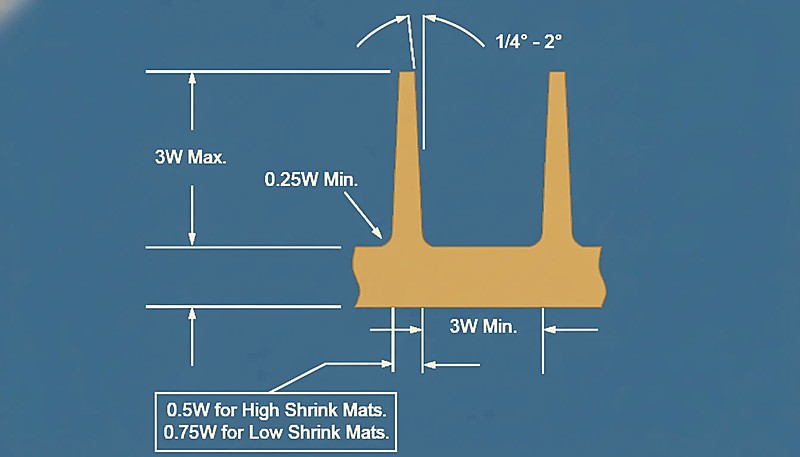
PVDF mold design demands oversized gates (60–70% of wall thickness), 1–2° draft angles, and corrosion-resistant tool steel. Three areas differ from standard engineering thermoplastics:
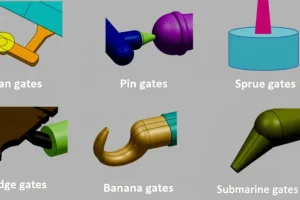
Poortontwerp: PVDF has relatively low melt viscosity at processing temperatures, which sounds like good news — and mostly it is. But that low viscosity also means it’s prone to jetting through undersized gates. Use tab gates, fan gates, or edge gates with generous cross-sections. Avoid pinpoint gates for thick-wall parts. As a starting point, gate thickness should be 60–70% of the nominal wall thickness to ensure smooth fill without jetting.
Lopersysteem: Cold runners work fine for PVDF in most cases. Full-round or trapezoidal cross-sections are preferred — they minimize pressure drop and material waste. For multi-cavity molds, a balanced H-pattern runner layout ensures uniform fill across all cavities, which is especially important given PVDF’s relatively narrow processing window.
Hot runners are possible but require careful temperature control — any dead spots where PVDF can sit above 280°C will degrade and generate corrosive byproducts. For most production runs, cold runners with full-round profiles (minimum 6mm diameter) provide reliable performance with lower maintenance overhead. If you do use hot runners, choose systems with individual zone temperature control and avoid manifold designs with sharp bends that create dead spots.
Draft Angles and Shrinkage: PVDF shrinks 2–3% in the flow direction and slightly more transverse to flow. That’s higher than PA, PC, or POM. You need draft angles of at least 1–2° per side, and more for deep draws. Underestimating PVDF shrinkage is the single most common mold design mistake I see — and it’s expensive to fix after the mold is cut. Always validate actual shrinkage with a test shot before committing to production tooling. For a deeper look at mold design principles, check out our injection mold guide.
What Injection Speed and Pressure Settings Work Best for PVDF?
Use moderate-to-high injection speeds at 70–120 MPa for PVDF, with profiled filling for thin-wall parts.
Injectiesnelheid: Moderate to high. PVDF’s relatively low viscosity at processing temperature means you can fill quickly, but watch for shear-induced degradation in thin-wall sections. For parts with wall thickness under 1.5mm, a profiled speed (starting fast, slowing at the end) reduces the risk of burning or jetting.
Injectiedruk: 70–120 MPa (10,000–17,500 psi) depending on part geometry. Thin-wall parts and multi-cavity molds will push toward the higher end of this range.
Houddruk: 40–60% of injection pressure, held for 3–8 seconds depending on wall thickness. PVDF’s rapid crystallization means gate freeze-off happens relatively quickly at lower mold temperatures.
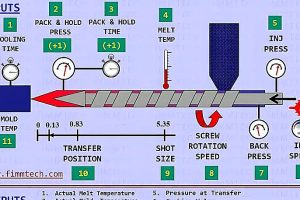
Begrijp de kosteneffectiviteit van Koolstofvezel Spuitgieten voor voertuigen voor de massamarkt en de toepassingen ervan. 0.5–1.5 MPa. Enough to ensure uniform melt color and consistency, but not so much that you extend cycle time or generate excessive shear heat.
Screw Speed: 40–80 rpm. PVDF doesn’t need aggressive screw speeds. Keep it moderate to avoid overheating. The key metric to watch is the cushion — aim for 3–5mm consistently. PVDF’s melt compressibility is different from polyolefins, and a consistent cushion tells you the screw is recovering properly and you’re not over-packing or under-packing the cavity.
What Are Common PVDF Injection Molding Defects and How Do You Fix Them?
The most common PVDF molding defects are silver streaks from moisture, thermal discoloration, and shrinkage voids in thick sections. Here’s what to watch for:
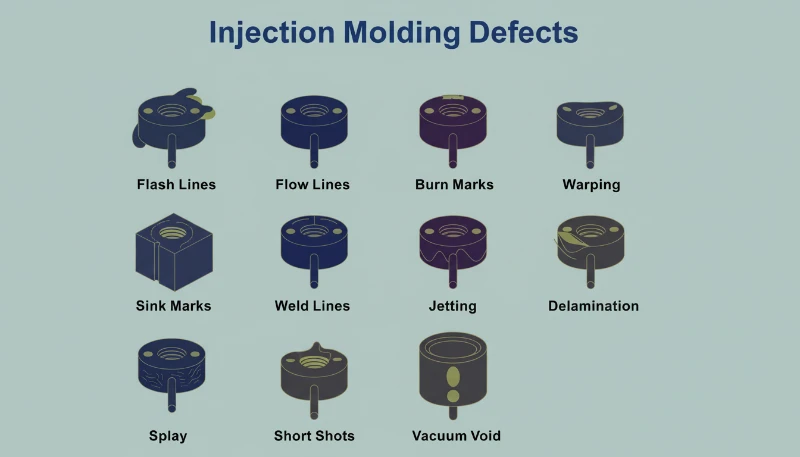
Silver Streaks / Splay: The #1 PVDF defect. Almost always caused by residual moisture. Solution: verify dryer temperature and dew point, check that hopper seal is intact. If drying parameters are correct, check for material contamination — even small amounts of non-PVDF pellets can introduce moisture.
Discoloration (Yellowing or Browning): Thermal degradation. Check that barrel temps aren’t creeping above 275°C, especially in the nozzle zone. Also verify screw recovery time — extended residence time degrades PVDF fast.
Discoloration (Yellowing or Browning): Thermal degradation. Check that barrel temps aren’t creeping above 275°C, especially in the nozzle zone. Also verify screw recovery time — extended residence time degrades PVDF fast.
If you’re running a small shot on a large machine, consider switching to a smaller barrel to reduce residence time.
Shrinkage Voids and Sink Marks: PVDF’s 2–3% shrinkage makes these common in thick sections. Solutions: increase holding pressure, extend holding time, raise mold temperature to promote uniform crystallization, or redesign thick sections with coring.
Jetting: Low-viscosity PVDF jetting through small gates. Fix: enlarge the gate, add a tab or fan gate, or reduce initial injection speed. For a broader look at spuitgieten defects and process optimization, see our comprehensive guide.
“Higher mold temperatures (80–95°C) produce stronger PVDF parts with better chemical resistance.”Echt
PVDF is approximately 50–60% crystalline, and higher mold temperatures promote fuller crystallization during cooling, resulting in improved chemical resistance, tensile strength, and dimensional stability in the finished part.
“PVDF can be processed on the same standard barrel and screw used for polypropylene without any modifications.”Vals
PVDF processing generates trace amounts of hydrogen fluoride that will corrode standard nitrided barrels over time. Bimetallic or Hastelloy-lined barrels are required for consistent production quality and acceptable equipment longevity.
Equipment selection and material handling are two areas where PVDF diverges significantly from standard engineering thermoplastics. The corrosion issue alone catches many shops off guard — a barrel that lasts years running polypropylene might show pitting after just months of PVDF production. This is why understanding the full picture of PVDF processing requirements, from dryer selection to barrel metallurgy, is essential before committing to a production run. The cost of retrofitted equipment or rejected parts far exceeds the cost of proper setup from the start.
“PVDF regrind can be safely used at 15–20% in the feed stream without significantly affecting mechanical properties.”Echt
At 15–20% regrind ratio, PVDF maintains acceptable mechanical properties and color consistency. However, ratios above 20% progressively reduce part strength and increase discoloration risk, and degraded or discolored material should never be reground.
“PVDF injection molding requires the same shrinkage allowance as ABS or polycarbonate parts.”Vals
PVDF shrinks 2–3%, which is significantly higher than ABS at 0.4–0.7% or PC at 0.5–0.7%. Mold design must account for this higher shrinkage from the start, especially for tight-tolerance parts in chemical processing applications.
What Equipment Do You Need for PVDF Injection Molding?
The essential equipment for PVDF injection molding is bimetallic or Hastelloy-lined barrels with hardened, corrosion-resistant nozzle tips.
Barrel and Screw Material: This is critical. PVDF processing generates trace amounts of hydrogen fluoride, especially at the upper end of the temperature range. Standard nitrided barrels will pit and corrode over time. Use bimetallic barrels with Xaloy or equivalent liners, and consider Hastelloy[^2] screw flights for long production runs. If you’re only doing short PVDF runs, hardened tool steel (H13 equivalent) can work, but expect shorter barrel life.
In our Shanghai factory, we run 47 injection molding machines (90T–1850T) with an in-house mold manufacturing facility. Our 8 senior engineers have deep experience processing fluoropolymers like PVDF — including proper barrel material selection, corrosion-resistant tooling, and the crystallization control needed for chemical-grade parts.
Clamp Force:PVDF doesn’t require exceptionally high clamp force. As a rule of thumb, 3–5 tons per square inch of projected area works well. For most PVDF parts (chemical fittings, valve bodies, battery components), machines in the 90T–500T range handle the job.
What Are the Main Applications of PVDF Injection Molded Parts?
PVDF injection molded parts are primarily used in chemical processing, semiconductor, battery, medical, and oil and gas industries.
Chemical Processing Industry: Valve bodies, pump housings, pipe fittings, and filter housings. PVDF resists hydrochloric acid, sulfuric acid, chlorine, and most organic solvents at elevated temperatures. These parts often replace metal components that would corrode or stainless steel that’s 5–10x more expensive to machine.[^3]
Photovoltaic Industry: Backsheet films and junction box components. PVDF’s UV resistance and weatherability exceed 30 years in outdoor exposure testing.
Battery Industry: Binder materials and separator coatings for lithium-ion batteries. This is PVDF’s fastest-growing application segment, driven by the global energy transition.
Medical and Pharmaceutical: Tubing connectors, filter housings, and bioprocessing equipment. PVDF’s biocompatibility and sterilizability (autoclave, gamma radiation) qualify it for ISO 13485 medical device applications.
Oil and Gas: Lining components, wire insulation, and downhole tooling parts that must survive H₂S and brine exposure over extended service lifetimes.
How Does PVDF Compare to Other Fluoropolymers for Injection Molding?
PVDF is often compared to PTFE[^5], FEP, PFA, and ETFE — but the differences in processability are significant:
| Eigendom | PVDF | PTFE | FEP | PFA | ETFE |
|---|---|---|---|---|---|
| Processable by IM | Yes | No (sintered) | Yes | Yes | Yes |
| Melt Temp (°C) | 200–270 | 327 (melt) | 260–280 | 300–330 | 260–300 |
| Chemische weerstand | Uitstekend | Outstanding | Uitstekend | Outstanding | Very Good |
| Cost (relative) | $$ | $ | $$$ | $$$$ | $$ |
| Mechanische sterkte | Hoog | Laag | Matig | Matig | Hoog |
| Shrinkage (%) | 2–3 | N/A | 3–4 | 3–4 | 2–3 |
De belangrijkste conclusie: PTFE[^5] kan helemaal niet worden gespoten — het vereist persgieten en sinteren. FEP en PFA zijn vormbaar maar kosten 2–4x meer dan PVDF. Voor de meeste toepassingen die geen PTFE-niveau chemische resistentie vereisen, biedt PVDF de beste combinatie van verwerkbaarheid, prestaties en kosten.
ETFE is de dichtstbijzijnde concurrent van PVDF. Het heeft vergelijkbare mechanische sterkte en chemische bestendigheid, verwerkt bij vergelijkbare temperaturen en kost ongeveer hetzelfde. PVDF wint op zuiverheid en piëzo-elektrische eigenschappen; ETFE wint op slagvastheid bij lage temperaturen.
What Are the Best Practices for PVDF Injection Molding?
Na het uitvoeren van PVDF over honderden productiecycli, zijn hier de praktijken die consequent de beste resultaten opleveren:
1. Spoel grondig voor en na PVDF-runs. Kruisbesmetting met andere polymeren veroorzaakt zowel cosmetische defecten als eigenschapsdegradatie. Gebruik PVDF-regranulaat of commerciële spoelverbindingen geschikt voor fluoropolymeren.
2. Begin met lagere cilindertemperaturen en werk omhoog. Begin bij 210°C en verhoog in stappen van 5°C tot u een goede vulling bereikt. Het is veel makkelijker om degradatie te voorkomen door laag te beginnen dan om te herstellen van oververhit materiaal.
3. Houd de verblijftijd in de cilinder in de gaten. PVDF begint te degraderen na 10–15 minuten bij verwerkingstemperaturen. Als u de productie moet onderbreken, verlaag dan de cilindertemperaturen tot 180°C of lager.
4. Gebruik matrijs temperatuurregelaars, geen fabriekswater. Consistente matrijstemperatuur is essentieel voor uniforme kristallisatie.[^4] Een ±2°C variatie in matrijstemperatuur kan zichtbare verschillen in onderdeeluitstraling en mechanische eigenschappen veroorzaken.
5. Ontwerp vanaf het begin voor krimp. Bouw een krimp van 2–3% in uw matrijsontwerp. Als het onderdeel nauwe toleranties heeft, overweeg dan eerst te prototypen met een eenholte matrijs en meet de werkelijke krimp voordat u overgaat tot productie met meerdere holtes.
6. Regrind zorgvuldig. PVDF-regrind is bruikbaar tot maximaal 15–20% in de voerstroom. Hogere verhoudingen verminderen mechanische eigenschappen en vergroten het risico op verkleuring. Grind nooit gedegradeerd of verkleurd materiaal opnieuw.
Veelgestelde vragen
Wat is het smelttemperatuurbereik voor PVDF-spuitgieten?
PVDF smelt bij 200–270°C, waarbij de meeste gradaties optimaal verwerken bij 230–250°C. Het overschrijden van 280°C brengt het risico op thermische degradatie en het vrijkomen van waterstoffluoridegas met zich mee, terwijl temperaturen onder 190°C een te hoge smeltviscositeit veroorzaken die een goede holtevulling verhindert. Begin altijd aan de onderkant en werk omhoog in stappen van 5°C om de optimale temperatuur voor uw specifieke graad en onderdeelgeometrie te vinden. Voor dikwandige chemische verwerkingsonderdelen geeft het richten op 240–250°C meestal de beste balans tussen vulkwaliteit en thermische veiligheidsmarge tijdens langdurige productieruns.
Moet PVDF worden gedroogd voor spuitgieten?
Ja, PVDF moet worden voorgedroogd, ook al is de vochtopname zeer laag, ongeveer 0,04%. Het overslaan van de droogstap veroorzaakt oppervlaktedefecten zoals zilverstrepen en sproeimarkeringen wanneer sporen van vocht in aanraking komen met verwerkingstemperaturen boven 200°C. Gebruik een adsorptiedroger op 120–150°C gedurende 2–4 uur met een dauwpunt van −30°C of lager voor de beste resultaten. Na het drogen houdt u de trechter gesloten of gebruikt u een trechterdroger om her-opname in vochtige omgevingen te voorkomen. De 2–4 uur droogtijd is een kleine investering vergeleken met de kosten van afgekeurde PVDF-onderdelen.
Welk type cilinder en schroef is nodig voor PVDF?
Bimetallische cilinders met corrosiebestendige voeringen zoals Xaloy worden sterk aanbevolen voor PVDF-verwerking. Voor langdurige productieruns bieden Hastelloy schroefgangen de beste levensduur omdat PVDF sporen van waterstoffluoride genereert bij verwerkingstemperaturen die standaard genitreerde stalen cilinders na verloop van tijd corroderen. Vermijd het gebruik van messing of koperlegeringscomponenten overal in het smeltpad, omdat ze snel degraderen wanneer ze worden blootgesteld aan fluorpolymeer uitgassen tijdens de productie. De investering in geschikte cilindermaterialen verdient zichzelf terug door langere apparatuurlevensduur en consistentere onderdeelkwaliteit.
Hoeveel krimpt PVDF tijdens het spuitgieten?
PVDF krimpt 2–3% in de stroomrichting en iets meer dwars op de stroom, wat aanzienlijk hoger is dan ABS met 0,4–0,7%, PC met 0,5–0,7% of PA met 0,5–1,5%. Matrijsontwerpen moeten deze hogere krimptoeslag vanaf het begin van de ontwerpfase incorporeren, inclusief geschikte ontlophoeken van minimaal 1–2° per zijde. Voor onderdelen met nauwe toleranties, zoals chemische fittingen, klephuizen of halfgeleidercomponenten, valideer altijd de werkelijke krimp met een eenholte prototype matrijs voordat u overgaat tot dure productiegereedschappen met meerdere holtes.
Kunnen PVDF-spuitgietonderdelen worden gebruikt in medische toepassingen?
Ja, PVDF is biocompatibel en kan worden gesteriliseerd door autoclaveren bij temperaturen tot 134°C en door gammastraling zonder significante degradatie of eigenschapsverlies. Het voldoet aan USP Klasse VI en ISO 10993 vereisten voor biologische evaluatie van medische hulpmiddelenmaterialen, waardoor het geschikt is voor medische slangconnectoren, filterbehuizingen en componenten voor bioprocessingapparatuur. Het zeer lage extracteerbare gehalte wordt vooral gewaardeerd in farmaceutische productie en laboratoriumomgevingen waar materiaalzuiverheid direct invloed heeft op productkwaliteit en patiëntveiligheid in kritieke gezondheidszorgtoepassingen.
Wat is het verschil tussen PVDF en PTFE voor spuitgieten?
Het belangrijkste verschil is dat PTFE helemaal niet kan worden gespoten omdat het niet smelt tot een vloeibare staat. In plaats daarvan vereist PTFE persgieten en sinteren, wat de complexiteit van onderdelen beperkt en de productiekosten aanzienlijk verhoogt. PVDF is een echte thermoplast die wordt verwerkt op conventionele spuitgietmachines bij 200–270°C, waardoor complexe geometrieën, hoogvolume productie en consistente dimensionale toleranties mogelijk zijn. Hoewel PTFE een iets betere chemische resistentie biedt in extreme omgevingen, levert PVDF vergelijkbare prestaties tegen lagere materiaalkosten met veel eenvoudigere en veelzijdigere verwerkingsmogelijkheden.
Wat zijn de belangrijkste commerciële PVDF-graden voor spuitgieten?
De meest gebruikte PVDF-graden komen van twee primaire fabrikanten. Arkema produceert de Kynar-serie, waaronder Kynar 740 voor algemeen spuitgieten en Kynar Flex-graden die verbeterde flexibiliteit bieden voor veeleisende toepassingen. Solvay fabriceert de Solef-serie, waaronder Solef 10110 en 21510, die populair zijn voor chemische verwerking en halfgeleidertoepassingen waar hogere zuiverheid vereist is. Uw graadselectie moet gebaseerd zijn op de vereiste balans van stijfheid, chemische bestendigheid, flexibiliteit en zuiverheid voor uw specifieke eindgebruikstoepassing.
Welke injectiedruk is nodig voor PVDF-spuitgieten?
PVDF vereist typisch 70–120 MPa (10.000–17.500 psi) injectiedruk, afhankelijk van de onderdeelgeometrie, wanddikte en complexiteit van het poortontwerp. Dunwandige onderdelen en matrijzen met meerdere holtes zullen naar het hogere einde van dit bereik gaan. De nawerktijd moet worden ingesteld op 40–60% van de piek injectiedruk en 3–8 seconden worden aangehouden om kristallisatiekrimp te compenseren en holtes of zinkplekken in dikke secties te voorkomen. Het monitoren van de consistentie van de cushion op 3–5mm is de beste manier om te bevestigen dat uw drukinstellingen correct zijn.
PVDF is geen materiaal waar je leert door vallen en opstaan — de kosten van zowel materiaal als fouten zijn te hoog. Bij ZetarMold verwerken we al meer dan 20 jaar fluoropolymeren in onze faciliteit in Shanghai. Met 47 spuitgietmachines (90T–1850T), een interne matrijsproductiewerkplaats en 8 senior engineers die de nuances van PVDF-kristallisatie begrijpen, kunnen we u helpen de dure leercurve te vermijden. Klaar om uw PVDF-project te bespreken? Ontvang een gratis offerte — onze Engelssprekende projectmanagers reageren binnen 24 uur.
-
PVDF: PVDF (polyvinylideenfluoride) is een hoogzuiver, semi-kristallijn thermoplastisch fluorpolymeer bekend om uitstekende chemische bestendigheid, UV-stabiliteit en piëzo-elektrische eigenschappen. ↩
-
PTFE: PTFE (polytetrafluoroethyleen) is een volledig gefluorideerd polymeer met uitstekende chemische bestendigheid, maar het kan niet worden verwerkt door conventioneel spuitgieten — het vereist persgieten en sinteren. ↩
-
crystallinity: kristalliniteit verwijst naar pVDF is ongeveer 50–60% kristallijn. Verwerkingscondities — vooral matrijstemperatuur en koelsnelheid — beïnvloeden direct de kristallijne fasevorming en uiteindelijke onderdeeleigenschappen. ↩



 EN
EN  ES
ES  FR
FR  DE
DE  PT
PT  AR
AR  RU
RU  JA
JA  KO
KO  IT
IT  NL
NL  TR
TR  PL
PL 