 Saltar para o conteúdo

PVDF1 injection molding sits at the intersection of high-performance polymer chemistry and precision manufacturing. If you’re here, chances are you need parts that survive aggressive chemicals, extreme temperatures, or both — and regular polymers like PP or PE just won’t cut it. In this guide, I’ll walk you through everything that actually matters when molding PVDF: melt temps, mold design gotchas, drying requirements, and the mistakes I’ve seen engineers make (including me, early on).
- PVDF melts between 200–270°C; mold temperature should be 50–95°C
- Always pre-dry PVDF pellets at 120–150°C for 2–4 hours before molding
- Use hardened or Hastelloy barrels — fluoropolymers corrode standard steel
- PVDF is ~50–60% crystalline; mold temperature directly affects part strength
- Shrinkage runs 2–3%, higher than most engineering thermoplastics
What Is PVDF and Why Does It Matter in Injection Molding?
Pvdf and why does it matter in injection molding is defined by the function, constraints, and tradeoffs explained in this section. PVDF is a semi-crystalline fluoropolymer that bridges the gap between commodity plastics and high-performance polymers like PTFE2[^5].[^1] It’s roughly 50–60% crystalline, which gives it impressive mechanical strength and chemical resistance without requiring the extreme processing temperatures of PTFE.
What sets PVDF apart for injection molding is its balance: it processes at relatively accessible temperatures (190–280°C), resists almost every common solvent and acid, and has inherent UV stability that UV-resistant additives in other polymers can only dream of. That’s why you’ll find PVDF parts in chemical processing valves, semiconductor wafer carriers, photovoltaic backsheets, and medical tubing connectors.[^1]
In our factory, we’ve run PVDF on machines from 90T to 500T for chemical pump components and battery housing elements. The material handles well once you understand its quirks — but those quirks catch people off guard if they treat it like just another engineering thermoplastic. If you are comparing vendors or planning procurement, our injection molding supplier sourcing guide covers RFQ prep, qualification, and commercial risk checks.
What Are the Optimal PVDF Injection Molding Temperatures?
Temperature control is where PVDF molding lives or dies. Here’s the breakdown I use every time:
Temperatura de fusão: 200–270°C. Most grades run best at 230–250°C. Push above 280°C and you risk thermal degradation — PVDF starts releasing hydrogen fluoride gas, which is both corrosive and dangerous. Stay below 190°C and the melt viscosity is too high for proper cavity fill.
Barrel Temperature Profile (rear to nozzle):
– Rear zone: 200–220°C
– Middle zone: 220–240°C
– Front zone: 240–260°C
– Nozzle: 240–260°C
Temperatura do molde: 50–95°C. Higher mold temps (80–95°C) promote crystallization, giving you better chemical resistance and mechanical strength. Lower temps speed up cycle time but reduce crystallinity3, which weakens the part.
For chemical processing applications, always aim for the higher end. One thing I’ve learned the hard way: PVDF’s thermal stability window is narrower than it looks. Unlike PP or PC where you can overshoot by 20–30°C and still get acceptable parts, PVDF degrades quickly once you cross that 280°C threshold. Set your alarms at 275°C and take them seriously.
How Do You Dry PVDF Before Injection Molding?
PVDF absorbs less moisture than nylon or PC — its water absorption rate is typically under 0.04% — but you still need to pre-dry it. Here’s why: even trace moisture at PVDF processing temperatures can cause hydrolysis and surface splay marks.
Drying Parameters:
– Temperature: 120–150°C
– Duration: 2–4 hours
– Dew point: −30°C or lower
– Equipment: Desiccant dryer (hot-air dryers won’t hit the dew point)
I’ve seen engineers skip drying PVDF because “it’s a fluoropolymer, they don’t absorb water.” True, the absorption is minimal. But the consequences of skipping the step — silver streaks, reduced mechanical properties, occasional bubbling — aren’t worth the 2 hours you save. Run the dryer.
After drying, keep the hopper sealed or use a hopper dryer to maintain the dry state. PVDF re-absorbs moisture slowly, but in humid environments (like our Shanghai factory in summer), even a few hours of exposure can undo your work.
What Mold Design Considerations Apply to PVDF?
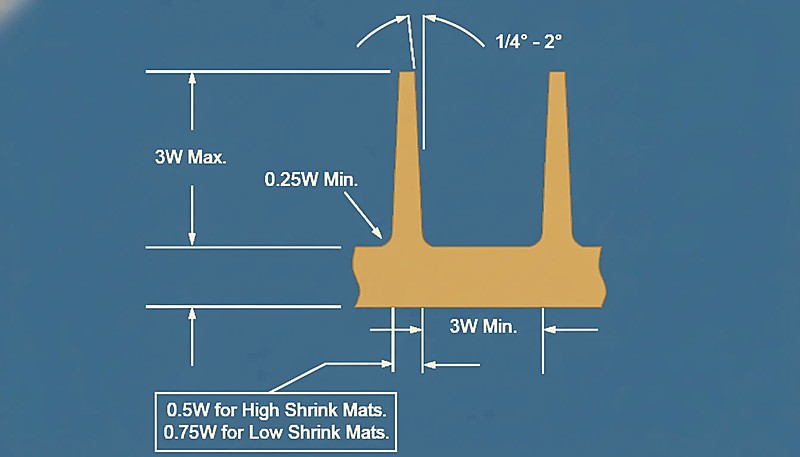
PVDF mold design demands oversized gates (60–70% of wall thickness), 1–2° draft angles, and corrosion-resistant tool steel. Three areas differ from standard engineering thermoplastics:
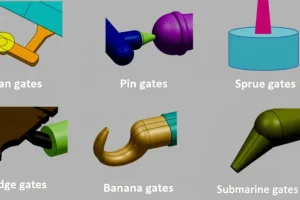
Conceção do portão: PVDF has relatively low melt viscosity at processing temperatures, which sounds like good news — and mostly it is. But that low viscosity also means it’s prone to jetting through undersized gates. Use tab gates, fan gates, or edge gates with generous cross-sections. Avoid pinpoint gates for thick-wall parts. As a starting point, gate thickness should be 60–70% of the nominal wall thickness to ensure smooth fill without jetting.
Sistema de corredores: Cold runners work fine for PVDF in most cases. Full-round or trapezoidal cross-sections are preferred — they minimize pressure drop and material waste. For multi-cavity molds, a balanced H-pattern runner layout ensures uniform fill across all cavities, which is especially important given PVDF’s relatively narrow processing window.
Hot runners are possible but require careful temperature control — any dead spots where PVDF can sit above 280°C will degrade and generate corrosive byproducts. For most production runs, cold runners with full-round profiles (minimum 6mm diameter) provide reliable performance with lower maintenance overhead. If you do use hot runners, choose systems with individual zone temperature control and avoid manifold designs with sharp bends that create dead spots.
Draft Angles and Shrinkage: PVDF shrinks 2–3% in the flow direction and slightly more transverse to flow. That’s higher than PA, PC, or POM. You need draft angles of at least 1–2° per side, and more for deep draws. Underestimating PVDF shrinkage is the single most common mold design mistake I see — and it’s expensive to fix after the mold is cut. Always validate actual shrinkage with a test shot before committing to production tooling. For a deeper look at mold design principles, check out our injection mold guide.
What Injection Speed and Pressure Settings Work Best for PVDF?
Use moderate-to-high injection speeds at 70–120 MPa for PVDF, with profiled filling for thin-wall parts.
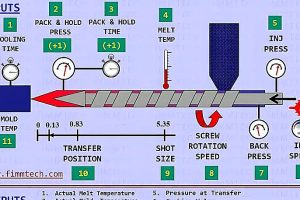
Velocidade de injeção: Moderate to high. PVDF’s relatively low viscosity at processing temperature means you can fill quickly, but watch for shear-induced degradation in thin-wall sections. For parts with wall thickness under 1.5mm, a profiled speed (starting fast, slowing at the end) reduces the risk of burning or jetting.
Pressão de injeção: 70–120 MPa (10,000–17,500 psi) depending on part geometry. Thin-wall parts and multi-cavity molds will push toward the higher end of this range.
Pressão de retenção: 40–60% of injection pressure, held for 3–8 seconds depending on wall thickness. PVDF’s rapid crystallization means gate freeze-off happens relatively quickly at lower mold temperatures.
Back Pressure: 0.5–1.5 MPa. Enough to ensure uniform melt color and consistency, but not so much that you extend cycle time or generate excessive shear heat.
Screw Speed: 40–80 rpm. PVDF doesn’t need aggressive screw speeds. Keep it moderate to avoid overheating. The key metric to watch is the cushion — aim for 3–5mm consistently. PVDF’s melt compressibility is different from polyolefins, and a consistent cushion tells you the screw is recovering properly and you’re not over-packing or under-packing the cavity.
What Are Common PVDF Injection Molding Defects and How Do You Fix Them?
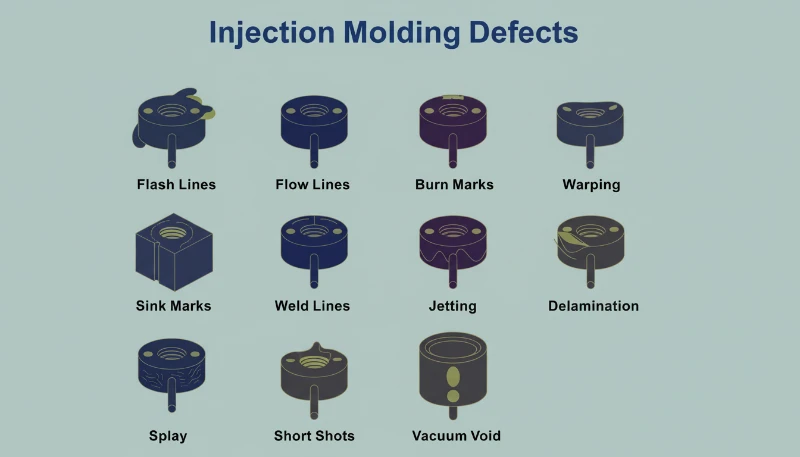
The most common PVDF molding defects are silver streaks from moisture, thermal discoloration, and shrinkage voids in thick sections. Here’s what to watch for:
Silver Streaks / Splay: The #1 PVDF defect. Almost always caused by residual moisture. Solution: verify dryer temperature and dew point, check that hopper seal is intact. If drying parameters are correct, check for material contamination — even small amounts of non-PVDF pellets can introduce moisture.
Discoloration (Yellowing or Browning): Thermal degradation. Check that barrel temps aren’t creeping above 275°C, especially in the nozzle zone. Also verify screw recovery time — extended residence time degrades PVDF fast.
Discoloration (Yellowing or Browning): Thermal degradation. Check that barrel temps aren’t creeping above 275°C, especially in the nozzle zone. Also verify screw recovery time — extended residence time degrades PVDF fast.
If you’re running a small shot on a large machine, consider switching to a smaller barrel to reduce residence time.
Shrinkage Voids and Sink Marks: PVDF’s 2–3% shrinkage makes these common in thick sections. Solutions: increase holding pressure, extend holding time, raise mold temperature to promote uniform crystallization, or redesign thick sections with coring.
Jetting: Low-viscosity PVDF jetting through small gates. Fix: enlarge the gate, add a tab or fan gate, or reduce initial injection speed. For a broader look at moldagem por injeção defects and process optimization, see our comprehensive guide.
“Higher mold temperatures (80–95°C) produce stronger PVDF parts with better chemical resistance.”Verdadeiro
PVDF is approximately 50–60% crystalline, and higher mold temperatures promote fuller crystallization during cooling, resulting in improved chemical resistance, tensile strength, and dimensional stability in the finished part.
“PVDF can be processed on the same standard barrel and screw used for polypropylene without any modifications.”Falso
PVDF processing generates trace amounts of hydrogen fluoride that will corrode standard nitrided barrels over time. Bimetallic or Hastelloy-lined barrels are required for consistent production quality and acceptable equipment longevity.
Equipment selection and material handling are two areas where PVDF diverges significantly from standard engineering thermoplastics. The corrosion issue alone catches many shops off guard — a barrel that lasts years running polypropylene might show pitting after just months of PVDF production. This is why understanding the full picture of PVDF processing requirements, from dryer selection to barrel metallurgy, is essential before committing to a production run. The cost of retrofitted equipment or rejected parts far exceeds the cost of proper setup from the start.
“PVDF regrind can be safely used at 15–20% in the feed stream without significantly affecting mechanical properties.”Verdadeiro
At 15–20% regrind ratio, PVDF maintains acceptable mechanical properties and color consistency. However, ratios above 20% progressively reduce part strength and increase discoloration risk, and degraded or discolored material should never be reground.
“PVDF injection molding requires the same shrinkage allowance as ABS or polycarbonate parts.”Falso
PVDF shrinks 2–3%, which is significantly higher than ABS at 0.4–0.7% or PC at 0.5–0.7%. Mold design must account for this higher shrinkage from the start, especially for tight-tolerance parts in chemical processing applications.
What Equipment Do You Need for PVDF Injection Molding?
The essential equipment for PVDF injection molding is bimetallic or Hastelloy-lined barrels with hardened, corrosion-resistant nozzle tips.
Barrel and Screw Material: This is critical. PVDF processing generates trace amounts of hydrogen fluoride, especially at the upper end of the temperature range. Standard nitrided barrels will pit and corrode over time. Use bimetallic barrels with Xaloy or equivalent liners, and consider Hastelloy[^2] screw flights for long production runs. If you’re only doing short PVDF runs, hardened tool steel (H13 equivalent) can work, but expect shorter barrel life.
In our Shanghai factory, we run 47 injection molding machines (90T–1850T) with an in-house mold manufacturing facility. Our 8 senior engineers have deep experience processing fluoropolymers like PVDF — including proper barrel material selection, corrosion-resistant tooling, and the crystallization control needed for chemical-grade parts.
Clamp Force:PVDF doesn’t require exceptionally high clamp force. As a rule of thumb, 3–5 tons per square inch of projected area works well. For most PVDF parts (chemical fittings, valve bodies, battery components), machines in the 90T–500T range handle the job.
What Are the Main Applications of PVDF Injection Molded Parts?
PVDF injection molded parts are primarily used in chemical processing, semiconductor, battery, medical, and oil and gas industries.
Chemical Processing Industry: Valve bodies, pump housings, pipe fittings, and filter housings. PVDF resists hydrochloric acid, sulfuric acid, chlorine, and most organic solvents at elevated temperatures. These parts often replace metal components that would corrode or stainless steel that’s 5–10x more expensive to machine.[^3]
Photovoltaic Industry: Backsheet films and junction box components. PVDF’s UV resistance and weatherability exceed 30 years in outdoor exposure testing.
Battery Industry: Binder materials and separator coatings for lithium-ion batteries. This is PVDF’s fastest-growing application segment, driven by the global energy transition.
Medical and Pharmaceutical: Tubing connectors, filter housings, and bioprocessing equipment. PVDF’s biocompatibility and sterilizability (autoclave, gamma radiation) qualify it for ISO 13485 medical device applications.
Oil and Gas: Lining components, wire insulation, and downhole tooling parts that must survive H₂S and brine exposure over extended service lifetimes.
How Does PVDF Compare to Other Fluoropolymers for Injection Molding?
PVDF is often compared to PTFE[^5], FEP, PFA, and ETFE — but the differences in processability are significant:
| Imóveis | PVDF | PTFE | FEP | PFA | ETFE |
|---|---|---|---|---|---|
| Processable by IM | Yes | No (sintered) | Yes | Yes | Yes |
| Melt Temp (°C) | 200–270 | 327 (melt) | 260–280 | 300–330 | 260–300 |
| Resistência química | Excelente | Outstanding | Excelente | Outstanding | Very Good |
| Custo (relativo) | $$ | $ | $$$ | $$$$ | $$ |
| Resistência mecânica | Elevado | Baixa | Moderado | Moderado | Elevado |
| Shrinkage (%) | 2–3 | N/A | 3–4 | 3–4 | 2–3 |
The key takeaway: PTFE[^5] can’t be injection molded at all — it requires compression molding and sintering. FEP and PFA are moldable but cost 2–4x more than PVDF. For most applications that don’t require PTFE-level chemical resistance, PVDF delivers the best combination of processability, performance, and cost.
ETFE is PVDF’s closest competitor. It has similar mechanical strength and chemical resistance, processes at comparable temperatures, and costs roughly the same. PVDF wins on purity and piezoelectric properties; ETFE wins on impact resistance at low temperatures.
What Are the Best Practices for PVDF Injection Molding?
After running PVDF across hundreds of production cycles, here are the practices that consistently produce the best results:
1. Purge thoroughly before and after PVDF runs. Cross-contamination with other polymers causes both cosmetic defects and property degradation. Use PVDF regrind or commercial purge compounds rated for fluoropolymers.
2. Start with lower barrel temperatures and work up. Begin at 210°C and increase in 5°C increments until you achieve proper fill. It’s much easier to avoid degradation by starting low than to recover from overheated material.
3. Monitor barrel residence time. PVDF begins degrading after 10–15 minutes at processing temperatures. If you need to pause production, drop barrel temperatures to 180°C or below.
4. Use mold temperature controllers, not factory water. Consistent mold temperature is essential for uniform crystallization.[^4] A ±2°C variation in mold temp can create visible differences in part appearance and mechanical properties.
5. Design for shrinkage from the start. Build 2–3% shrinkage into your mold design. If the part has tight tolerances, consider prototyping with a single-cavity mold first and measuring actual shrinkage before committing to multi-cavity production.
6. Regrind carefully. PVDF regrind is usable at 15–20% maximum in the feed stream. Higher ratios reduce mechanical properties and increase the risk of discoloration. Never regrind degraded or discolored material.
Perguntas mais frequentes
What is the melt temperature range for PVDF injection molding?
PVDF melts at 200–270°C, with most grades processing optimally at 230–250°C. Exceeding 280°C risks thermal degradation and hydrogen fluoride gas release, while temperatures below 190°C produce excessively high melt viscosity that prevents proper cavity fill. Always start at the lower end and work up in 5°C increments to find the sweet spot for your specific grade and part geometry. For thick-wall chemical processing parts, targeting 240–250°C usually gives the best balance of fill quality and thermal safety margin during extended production runs.
Does PVDF need to be dried before injection molding?
Yes, PVDF must be pre-dried even though its moisture absorption is very low at approximately 0.04%. Skipping the drying step causes surface defects like silver streaks and splay marks when trace moisture encounters processing temperatures above 200°C. Use a desiccant dryer at 120–150°C for 2–4 hours with a dew point of −30°C or lower for best results. After drying, keep the hopper sealed or use a hopper dryer to prevent reabsorption in humid environments. The 2–4 hours of drying time is a small investment compared to the cost of rejected PVDF parts.
What type of barrel and screw is needed for PVDF?
Bimetallic barrels with corrosion-resistant liners such as Xaloy are strongly recommended for PVDF processing. For extended production runs, Hastelloy screw flights provide the best service life because PVDF generates trace amounts of hydrogen fluoride at processing temperatures that corrode standard nitrided steel barrels over time. Avoid using brass or copper-alloy components anywhere in the melt path, as they degrade rapidly when exposed to fluoropolymer off-gassing during production. The investment in proper barrel materials pays for itself through longer equipment life and more consistent part quality.
How much does PVDF shrink during injection molding?
PVDF shrinks 2–3% in the flow direction and slightly more transverse to flow, which is significantly higher than ABS at 0.4–0.7%, PC at 0.5–0.7%, or PA at 0.5–1.5%. Mold designs must incorporate this higher shrinkage allowance from the very beginning of the design phase, including appropriate draft angles of 1–2° per side minimum. For tight-tolerance parts such as chemical fittings, valve bodies, or semiconductor components, always validate actual shrinkage with a single-cavity prototype mold before committing to expensive multi-cavity production tooling.
Can PVDF injection molded parts be used in medical applications?
Yes, PVDF is biocompatible and can be sterilized by autoclaving at temperatures up to 134°C and by gamma radiation without significant degradation or property loss. It meets USP Class VI and ISO 10993 requirements for biological evaluation of medical device materials, making it suitable for medical tubing connectors, filter housings, and bioprocessing equipment components. Its very low extractable content is particularly valued in pharmaceutical manufacturing and laboratory environments where material purity directly impacts product quality and patient safety in critical healthcare applications.
What is the difference between PVDF and PTFE for injection molding?
The most important difference is that PTFE cannot be injection molded at all because it does not melt into a flowable state. Instead, PTFE requires compression molding and sintering, which limits part complexity and increases production cost significantly. PVDF is a true thermoplastic that processes on conventional injection molding machines at 200–270°C, enabling complex geometries, high-volume production, and consistent dimensional tolerances. While PTFE offers slightly better chemical resistance in extreme environments, PVDF delivers similar performance at lower material cost with far easier and more versatile processing capabilities.
What are the main commercial PVDF grades for injection molding?
The most widely used PVDF grades come from two primary manufacturers. Arkema produces the Kynar series, which includes Kynar 740 for general-purpose injection molding and Kynar Flex grades that offer improved flexibility for demanding applications. Solvay manufactures the Solef series, including Solef 10110 and 21510, which are popular for chemical processing and semiconductor applications where higher purity is required. Your grade selection should be based on the required balance of stiffness, chemical resistance, flexibility, and purity for your specific end-use application.
What injection pressure is needed for PVDF molding?
PVDF typically requires 70–120 MPa (10,000–17,500 psi) injection pressure depending on part geometry, wall thickness, and gate design complexity. Thin-wall parts and multi-cavity molds will push toward the higher end of this range. Holding pressure should be set at 40–60% of the peak injection pressure and held for 3–8 seconds to compensate for crystallization shrinkage and prevent voids or sink marks in thick sections. Monitoring the cushion consistency at 3–5mm is the best way to confirm that your pressure settings are correct.
PVDF isn’t a material where you learn by trial and error — the cost of both material and mistakes is too high. At ZetarMold, we’ve been processing fluoropolymers for over 20 years at our Shanghai facility. With 47 injection molding machines (90T–1850T), an in-house mold manufacturing shop, and 8 senior engineers who understand the nuances of PVDF crystallization, we can help you avoid the expensive learning curve. Ready to discuss your PVDF project? Get a free quote — our English-speaking project managers respond within 24 hours.
-
PVDF: PVDF (polyvinylidene fluoride) is a high-purity, semi-crystalline thermoplastic fluoropolymer known for excellent chemical resistance, UV stability, and piezoelectric properties. ↩
-
PTFE: PTFE (polytetrafluoroethylene) is a fully fluorinated polymer with outstanding chemical resistance, but it cannot be processed by conventional injection molding — it requires compression molding and sintering. ↩
-
crystallinity: crystallinity refers to pVDF is approximately 50–60% crystalline. Processing conditions — especially mold temperature and cooling rate — directly affect crystalline phase formation and final part properties. ↩



 EN
EN  ES
ES  FR
FR  DE
DE  PT
PT  AR
AR  RU
RU  JA
JA  KO
KO  IT
IT  NL
NL  TR
TR  PL
PL 