POM (polyoxymethyleen) — ook wel acetaal of Delrin genoemd — is een van de meest betrouwbare technische kunststoffen voor precisieonderdelen. Het bewerkt prachtig, klikt in elkaar zonder te breken en houdt toleranties aan waar de meeste polymeren jaloers op zouden zijn. Als je tandwielen, bevestigingsmiddelen of mechanische componenten ontwerpt die moeten glijden, klikken of belasting dragen, verdient POM een grondige blik.
- POM biedt uitzonderlijke maatvastheid en lage wrijving voor mechanische precisieonderdelen.
- Het verwerkingstemperatuurvenster is smal: 190–210 °C smelttemperatuur, 80–120 °C matrijstemperatuur.
- Homopolymeer (Delrin) is sterker; copolymeer (Celcon/Ultraform) is beter bestand tegen chemicaliën.
- De krimp na het vormen bedraagt ongeveer 2,0–2,5%, zodat het matrijsontwerp dit vooraf moet compenseren.
- Droog POM vóór het vormen (80 °C, 2–4 uur), ook al neemt het weinig vocht op.
Wat is POM en waarom is het een voorkeursmateriaal voor precisieonderdelen?
POM, kort voor polyoxymethylene, is een semi-crystallijn thermoplast met een repetitieve –CH₂O– backbone. Die simpele moleculaire structuur geeft POM zijn uitmuntende eigenschappen: hoog stijfheid, excellente vermoeiingsweerstand en een merkwaardig lage wrijvingscoëfficiënt. In simpele termen, het is het plastic dat het meeste op metaal lijkt wanneer je dingen nodig hebt die bewegen, klikken of een last dragen.
POM is te vinden in brandstofsystemen, deurslotmechanismen, transportbandschakels en medische inhalatoren — overal waar een onderdeel onder belasting moet glijden, buigen of maatvast blijven. Er bestaan twee hoofdfamilies: homopolymeer (denk aan Delrin) en copolymeer (Celcon, BASF Ultraform). Ze hebben veel gemeen, maar verschillen op punten die ertoe doen wanneer u er één voor een specifiek project kiest.
Bij ZetarMold verwerken we regelmatig POM op onze 45 spuitgietmachines (90T–1850T). In meer dan 20 jaar productie heeft POM zich bewezen als een van de meest consistente materialen op onze werkvloer — mits het procesvenster wordt gerespecteerd, want dat is smaller dan de meeste mensen verwachten.
Onze fabriek in Shanghai verwerkt 400+ materialen en POM behoort qua volume tot de top 15. We zien het meestal in klikverbindingen voor auto's, tandwielassemblages en klephuizen. De 8 senior engineers in ons team hebben verwerkingsparameters gedocumenteerd voor tientallen POM-soorten van leveranciers als DuPont, Celanese en Asahi Kasei.
Wat zijn de belangrijkste eigenschappen van POM-materialen?
POM’s eigenschappenprofiel leest als een wishlist voor mechanisch design engineers. Hier is wat het meest belangrijk is wanneer je besluit of POM past in jouw applicatie.
| Eigendom | Homopolymeer (POM-H) | Copolymeer (POM-C) |
|---|---|---|
| Treksterkte | 68–72 MPa | 62–70 MPa |
| Buigmodulus | 2,800–3,200 MPa | 2,500–2,800 MPa |
| Rek bij breuk | 15–40% | 20–45% |
| Smeltpunt | 175 °C | 165 °C |
| Vervormingstemperatuur onder belasting (0.45 MPa) | 170 °C | 158 °C |
| Wrijvingscoëfficiënt | 0.1–0.3 | 0.15–0.35 |
| Wateropname (24 uur) | 0.20% | 0.22% |
| Krimp | 1.8–2.3% | 2.0–2.5% |
De cijfers spreken voor zich. Homopolymeer is de kampioen in sterkte — hogere treksterkte, grotere stijfheid en betere kruipweerstand. Als uw onderdeel een voortdurende belasting moet dragen (zoals een tandwieltand), is POM-H meestal de betere keuze. Copolymeer levert wat sterkte in voor superieure chemische bestendigheid, vooral tegen alkaliën en heet water. Het is ook beter bestand tegen thermische cycli, wat belangrijk is voor automobieltoepassingen onder de motorkap.
Een eigenschap die ingenieurs vaak verrast: de lage vochtopname van POM. Met ongeveer 0,2 % is deze aanzienlijk lager dan bij nylon 6 (dat tot 1,6 % kan oplopen). Dit betekent dat POM-onderdelen hun afmetingen behouden in vochtige omgevingen — een cruciaal voordeel voor brandstofsysteemcomponenten en medische apparaten die gesteriliseerd worden.
Wat zijn de optimale verwerkingsomstandigheden voor het spuitgieten van POM?
POM is in sommige opzichten vergevingsgezind en in andere niet. Zet de parameters goed, en het vloeit als een trein. Zet ze fout, en je ziet uitbloei, holtes of degradatie die ruikt als formaldehyde — omdat dat letterlijk gebeurt op moleculair niveau.
Hier is een praktisch procesvenster gebaseerd op productiedata van honderden POM runs:
| Parameterwaarde | Aanbevolen bereik | Opmerkingen |
|---|---|---|
| Smelttemperatuur | 190–210 °C | Overschrijd 220 °C niet — daarboven begint degradatie |
| Schimmel Temperatuur | 80–120 °C | Een hogere matrijstemperatuur verbetert de kristalliniteit en oppervlakteafwerking |
| Injectiedruk | 80–140 MPa | Hogere drukken verminderen variatie in krimp |
| Houddruk | 50–80 MPa | 60–70% van de injectiedruk is gebruikelijk |
| Wachttijd | Oppervlakteafwerkingopties voor POM-onderdelen verdienen aandacht tijdens de ontwerpfase. POM accepteert een breed scala aan afwerkingen van hoogglans (SPI A-2) tot zware textuur (SPI D-2). Echter, sterk gepolijste matrijs-oppervlakken kunnen uitwerpproblemen veroorzaken omdat POM de neiging heeft aan glad staal te kleven. Een dampgepolijst of licht-korrelgestraald oppervlak op de holtevorm geeft vaak de beste combinatie van uiterlijk en loslaatkarakteristieken. Texturering verbergt ook kleine stroomlijnen en poortverkleuring die zichtbaar zouden zijn op een glanzend oppervlak. | Afhankelijk van de wanddikte; het dichtvriezen van de aanspuiting bepaalt het eindpunt |
| Schroefsnelheid | 50–120 rpm | Een gematigde snelheid voorkomt oververhitting door afschuiving |
| Tegendruk | 0.5–1.5 MPa | Een lage tegendruk volstaat — POM smelt gemakkelijk |
| Drogen (indien nodig) | 80 °C, 2–4 h | POM is weinig hygroscopisch, maar oppervlaktevocht kan zilverstrepen veroorzaken |
De grootste fout die we zien: POM te heet verwerken. Een hogere smelttemperatuur verbetert inderdaad de stroming, maar POM degradeert snel boven 220 °C. Anders dan PP of PE, die een breed temperatuurbereik verdragen, heeft POM een relatief smal verwerkingsvenster. Het verschil tussen een goed onderdeel en een gedegradeerd, stinkend onderdeel kan slechts 10–15 °C zijn.
Bij ZetarMold, onze standaard werkprocedure voor POM bevat een 30-minuten purge met PP of PE voor shutdown om formaldehyde accumulatie in de barrel te voorkomen. Onze 120+ productiepersoneel zijn getraind om te monitoren voor de karakteristieke scherpe geur die thermische degradatie signaleert — het is een ingebouwd vroeg waarschuwingssysteem.
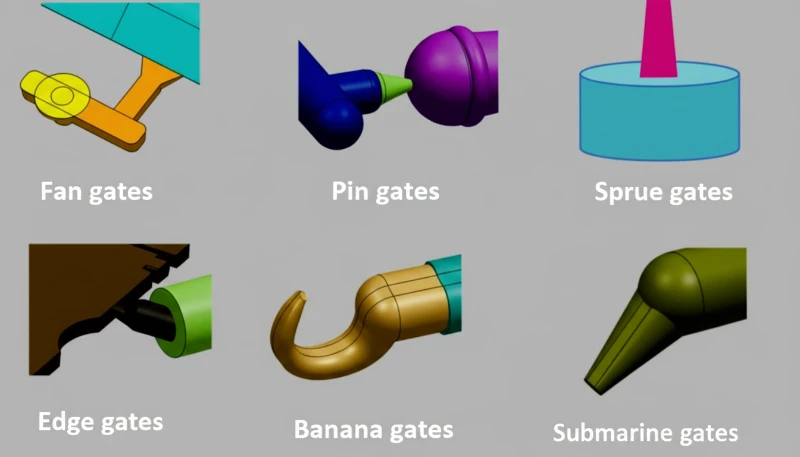
Een andere kritieke parameter die engineers vaak over het hoofd zien, is het schroefontwerp. POM wordt het best verwerkt met een schroef met geleidelijke overgang en een L/D-verhouding van 18:1 tot 20:1. Een universele schroef met een korte compressiezone kan ongelijkmatig smelten veroorzaken, wat leidt tot pulseren en een inconsistent productgewicht. Verwerkt u POM op een machine met een voor nylon geoptimaliseerde schroef, verwacht dan meer procesvariatie.
De koeltijd is de dominante factor in de POM-cyclustijd. Omdat POM semikristallijn is, moet het onderdeel voldoende lang in de matrijs blijven om vóór het uitwerpen goed te kristalliseren. Voortijdig uitwerpen leidt tot kromtrekken na het vormen doordat de kristallisatie buiten de matrijs doorgaat. Een goede vuistregel: de koeltijd in seconden is 2 tot 3 maal de maximale wanddikte in millimeters. Voor een wand van 2 mm is dat 4 tot 6 seconden koelen.
Hoe verschilt POM-homopolymeer in de praktijk van copolymeer?
De keuze tussen homopolymeer en copolymeer is niet academisch — het beïnvloedt direct de prestaties van je onderdeel, het verwerkingsvenster en zelfs het matrijsontwerp. Zo denken we er in de praktijk over.
POM-H (homopolymeer) biedt ~10% meer treksterkte en stijfheid. Het is de voor de hand liggende keuze voor tandwielen, clips en dragende klikverbindingen waarbij elke MPa telt. Het nadeel? Het is gevoeliger voor sterke zuren en oxiderende stoffen. Bij voortdurende blootstelling aan agressieve chemicaliën kan POM-H na verloop van tijd bros worden.
POM-C (copolymeer) levert wat mechanische prestaties in voor een bredere chemische compatibiliteit en een ruimer procesvenster. Het is beter bestand tegen heet water, logen en de meeste oplosmiddelen dan POM-H. Onze ervaring is dat POM-C de veiligere keuze is wanneer de chemische omgeving onzeker is — denk aan leidingfittingen, klephuizen en onderdelen van brandstofsystemen.
Vanuit het matrijsontwerp bezien betekent de iets hogere krimp van POM-C (2.0–2.5% versus 1.8–2.3%) dat in het staal van de spuitgietmatrijs iets meer compensatie nodig is. Beide materialen profiteren van ruime afrondingen en een uniforme wanddikte — scherpe hoeken vormen initiatiepunten voor scheuren in elk semikristallijn polymeer.
Kosten zijn een andere factor. POM-H-kwaliteiten (vooral Delrin) zijn vaak 5–15 % duurder dan vergelijkbare POM-C-kwaliteiten. Voor grote series auto-onderdelen, waar de materiaalkosten in de miljoenen kunnen lopen, loopt dat verschil snel op. We hebben veel klanten geholpen om van POM-H over te stappen op POM-C zonder functioneel verschil in het eindproduct — het is de moeite waard om beide te testen voordat je een keuze maakt.
“POM-copolymeer heeft een betere weerstand tegen heet water en logen dan homopolymeer.”True
De extra –CH₂–-eenheden in de copolymeerhoofdketen onderbreken de kristallijne gebieden enigszins, waardoor de gevoeligheid voor chemische aantasting in agressieve omgevingen afneemt. Dit is goed gedocumenteerd in technische gegevensbladen van Celanese en BASF.
“POM-onderdelen hoeven niet gedroogd te worden voor het spuitgieten omdat het materiaal bijna geen vocht opneemt.”False
Hoewel de vochtopname van POM inderdaad erg laag is (~0,2 %), kan oppervlaktevocht door opslag in vochtige omstandigheden sproeimarkeringen veroorzaken. Een droogbehandeling van 2–4 uur bij 80 °C is standaardpraktijk voor het spuitgieten.
Wat zijn veelvoorkomende defecten bij POM-spuitgieten en hoe voorkomt u ze?
POM is een betrouwbaar materiaal wanneer het correct wordt verwerkt, maar kent eigen faalwijzen. Dit zijn de defecten die we het vaakst tegenkomen — en de oplossingen die echt werken.
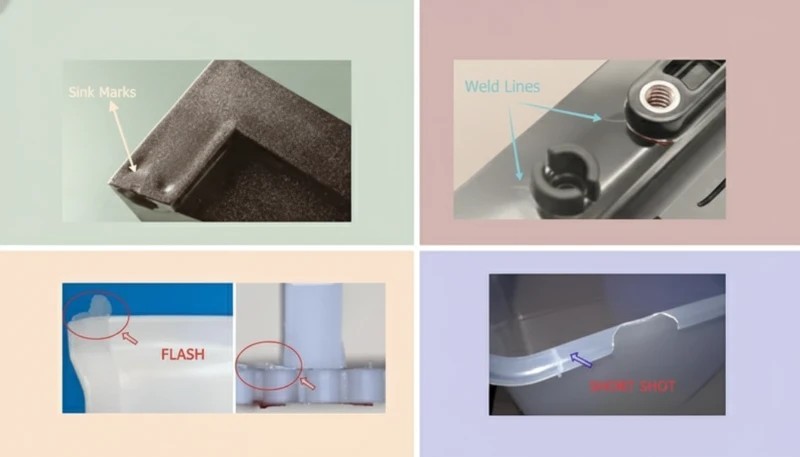
Braamvorming is het grootste probleem bij POM. Door de lage smeltviscositeit en goede vloeibaarheid kan POM in deellijnen, gaten voor uitwerppennen en schuifinterfaces sijpelen. De oplossing is niet altijd evident: meer sluitkracht helpt, maar vaak is de werkelijke oplossing een lagere injectiesnelheid tijdens het vullen en voldoende matrijsontluchting. Op een machine met een krappe sluitkracht is braamvorming bij POM vrijwel gegarandeerd.
Vlamstrepen of zilverstrepen op het productoppervlak duiden doorgaans op vocht of afgebroken materiaal. Hoewel POM zeer weinig water opneemt, kan condensatie aan het oppervlak bij vochtige opslag vlamstrepen veroorzaken. Dit verdwijnt na 2–4 uur drogen op 80 °C vóór het vormen. Helpt drogen niet, dan is waarschijnlijk sprake van thermische afbraak — verlaag de smelttemperatuur met 5–10 °C.
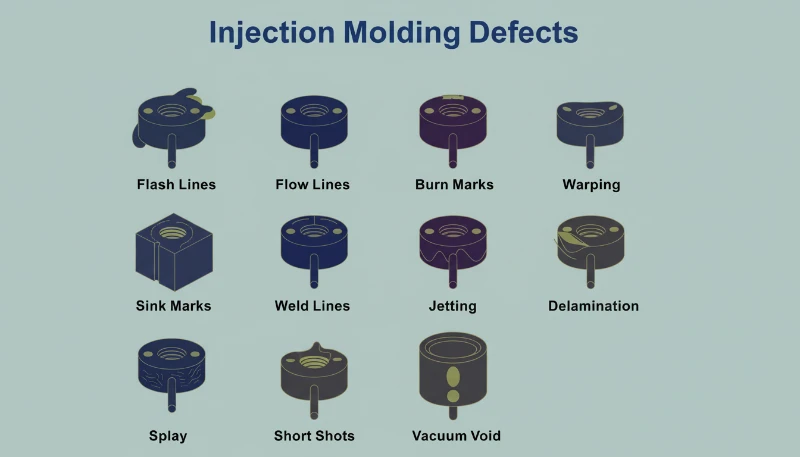
Holtes en invalplekken ontstaan in dikke secties waar het materiaal krimpt voordat de aanspuiting stolt. De door kristalliniteit veroorzaakte krimp van POM is aanzienlijk (ongeveer 2%), waardoor een uniforme wanddikte essentieel is. Is een dikke sectie onvermijdelijk, verhoog dan de nadruk en nadruktijd en gebruik een warmere matrijs om de kristallisatie aan het oppervlak te vertragen.
Kromtrekken van POM-onderdelen is eveneens een veelvoorkomend probleem, vooral bij vlakke, dunwandige ontwerpen. De hoofdoorzaak is doorgaans een verschil in krimp tussen de stroomrichting en de dwarsrichting. Deze anisotrope krimp is sterker bij glasvezelversterkte POM-kwaliteiten. Oplossingen in het matrijsontwerp zijn onder meer een uitgebalanceerde aanspuitpositie, uniforme koelkanalen en soms een lichte bolle welving in de holte ter compensatie van de verwachte kromtrekrichting.
Volgens onze productie-ervaring is vooraf tijd investeren in een goed matrijsontwerp de kosteneffectiefste manier om POM-defecten te verminderen. Een goed ontworpen matrijs met voldoende ontluchting, uitgebalanceerde koeling en correct gedimensioneerde aanspuitpunten blijft honderdduizenden cycli betrouwbaar draaien. Bezuinigen op matrijskwaliteit en dit proberen te compenseren met procesaanpassingen werkt niet bij POM, omdat het procesvenster eenvoudigweg niet breed genoeg is om een matige matrijs te compenseren.
Welke ontwerprichtlijnen moeten ingenieurs voor POM-onderdelen volgen?
Een goed ontwerp van POM-onderdelen volgt dezelfde principes als andere semikristallijne materialen, met enkele POM-specifieke aandachtspunten die het project kunnen maken of breken.
Wanddikte: streef naar 1.0–3.0 mm. POM vloeit goed, zodat bijzonder dunne wanden niet nodig zijn om de holte te vullen, maar dikke secties boven 4 mm geven krimpproblemen. Laat wanddiktes geleidelijk in elkaar overgaan — gebruik bij sprongsgewijze overgangen minimaal een conus van 1:2.
Afrondingsstralen: elke binnenhoek heeft een straal van minimaal 0.5 mm nodig, idealiter 0.8× de wanddikte. POM is kerfgevoelig — een scherpe binnenhoek concentreert spanning en wordt bij cyclische belasting een initiatiepunt voor scheuren. Dit is uiterst belangrijk voor klikverbindingen en filmscharnieren.
Lossingshoek: 0.5–1.0° per zijde is het minimum voor POM, maar 1.5–2.0° voorkomt veel problemen bij het uitwerpen. De lage wrijving van POM helpt, maar gestructureerde oppervlakken hebben nog steeds meer lossing nodig. Gebruik bij een matrijsafwerking van SPI B of grover minimaal 1.5°.
Ontwerp van klikverbindingen: hierin blinkt POM echt uit. De vermoeiingsweerstand (10⁷ cycli bij 40 MPa voor POM-H) en hoge veerkracht maken het ideaal voor uitkragende klikverbindingen. Houd tijdens de montage de rek onder 5% voor POM-H of 7% voor POM-C. Gebruik een taps balkprofiel om de rek gelijkmatig over de lengte te verdelen.
Schroefdraadinzetstukken en metalen inzetstukken worden voor assemblagedoeleinden vaak in POM-onderdelen overmold. De belangrijkste overweging is het ontwerp van het inzetstuk: gekartelde of gegroefde inzetstukken bieden de mechanische verankering die POM nodig heeft, omdat de lage oppervlakte-energie betekent dat lijm alleen niet betrouwbaar houdt. Verwarm metalen inzetstukken vóór het vormen voor tot 100 tot 120 graden Celsius om thermische schokken te beperken en de hechting tussen het inzetstuk en het POM-substraat te verbeteren.
Opties voor de oppervlakteafwerking van POM-onderdelen verdienen aandacht tijdens de ontwerpfase. POM accepteert uiteenlopende afwerkingen, van hoogglans (SPI A-2) tot een zware textuur (SPI D-2). Sterk gepolijste matrijsoppervlakken kunnen echter uitwerpproblemen veroorzaken, omdat POM aan glad staal blijft kleven. Een dampgestraalde of licht parelgestraalde afwerking van het caviteitsoppervlak biedt vaak de beste combinatie van uiterlijk en lossingseigenschappen. Textureren verbergt ook kleine vloeilijnen en aanspuitwaas die op een glanzend oppervlak zichtbaar zouden zijn.
Ja, POM-onderdelen kunnen worden gesteriliseerd met ethyleenoxidegassterilisatie en gammastraling bij standaard sterilisatiedoseringen voor medische hulpmiddelen. Deze methoden zijn compatibel met POM omdat het materiaal zijn mechanische eigenschappen behoudt bij de betrokken temperaturen en stralingsniveaus. POM is echter niet geschikt voor autoclaaf- of stoomsterilisatie bij 121 graden Celsius, aangezien deze temperatuur de warmtevervormingstemperatuur van het materiaal overschrijdt (ongeveer 158 tot 170 graden Celsius, afhankelijk van de kwaliteit) en permanente vervorming zou veroorzaken. Voor medische toepassingen die herhaalde sterilisatiecycli vereisen, worden over het algemeen POM-C-kwaliteiten de voorkeur gegeven vanwege hun iets betere thermische stabiliteit. Verifieer altijd de sterilisatiecompatibiliteit met de specifieke POM-kwaliteitsleverancier voordat een materiaal wordt gekwalificeerd voor een medisch hulpmiddel.
“POM kan meer dan 10 miljoen flexcycli aan bij gemiddelde stressniveaus, waardoor het ideaal is voor snap-fit en levende scharnierapplicaties.”True
POM-H-kwaliteiten vertonen vermoeiingsgrenzen van circa 35–40 MPa bij 10⁷ cycli. Deze uitzonderlijke vermoeiingslevensduur maakt POM het voorkeursmateriaal voor mechanismen van autodeursloten en schakels van transportkettingen die miljoenen cycli doorlopen.
“POM kan niet worden gebruikt in toepassingen die met voedsel in contact komen omdat het formaldehyde bevat.”False
Hoewel POM bij thermische afbraak formaldehyde afgeeft, is correct verwerkt POM stabiel en voldoen diverse kwaliteiten aan de FDA-eisen voor contact met levensmiddelen. Zowel Celanese Celcon als DuPont Delrin biedt FDA-conforme kwaliteiten die veel worden gebruikt in apparatuur voor voedselverwerking.
Wat zijn de beste toepassingen voor spuitgegoten POM-onderdelen?
De unieke combinatie van stijfheid, lage wrijving, dimensionale stabiliteit en vermoeiingsweerstand van POM maakt het de standaardkeuze in verschillende industrieën. Hier zien we het het vaakst op onze productievloer.
Automobiel: onderdelen van brandstofsystemen (tankdoppen, vlotterunits, klephuizen), deurslotmechanismen, tandwielen van raammechanismen en veiligheidsgordelonderdelen. POM-C domineert hier dankzij zijn superieure brandstof- en chemische bestendigheid. De productievolumes liggen doorgaans in de honderdduizenden.
Industriële machines: transportkettingschakels, tandwielen, lagers, bussen en kleponderdelen. De lage wrijving van POM maakt externe smering in veel toepassingen overbodig. Uit POM gesneden tandwieltanden lopen stiller dan metalen tanden en hebben geen vet nodig.
Consumentenproducten: ritssluitingen, penmechanismen, uurwerken, sproeikoppen en onderdelen van keukenmachines. Verschillende POM-kwaliteiten voldoen aan de FDA-eisen, waardoor toepassingen met voedselcontact mogelijk zijn.
Medische hulpmiddelen: onderdelen voor inhalatoren, mechanismen voor insulinepennen en handgrepen van chirurgische instrumenten. De maatvastheid van POM tijdens sterilisatie (met ethyleenoxidegas of straling) en de geringe vochtopname maken het betrouwbaar voor medische precisieassemblages.
Waarom ZetarMold kiezen voor POM-spuitgietprojecten?
POM goed verwerken vereist ervaring — het is geen materiaal waar je tijdens het werk wilt leren. ZetarMold heeft sinds 2005 POM-onderdelen gegoten, en onze Shanghai-faciliteit is ingericht om alles te behandelen van prototype runs tot productievolumes van miljoenen stukken.
Onze 45 spuitgietmachines (90T–1850T) dekken het volledige bereik van POM-onderdeelgroottes. Met eigen matrijsproductie (100+ sets per maand) beheersen we het hele proces van gereedschapsontwerp tot productie. Onze 8 senior engineers hebben elk 10+ jaar ervaring en onze ISO 9001 / 13485 / 14001 / 45001 certificeringen weerspiegelen de kwaliteitssystemen die we in twee decennia hebben opgebouwd.
Specifiek voor POM hanteren we gedocumenteerde verwerkingsparameters voor meer dan 30 POM-kwaliteiten van zes grote leveranciers. Ons kwaliteitscontroleproces in 6 stappen — van ingangsinspectie tot eindcontrole — onderschept defecten voordat ze uw assemblagelijn bereiken. En met meer dan 30 medewerkers die vloeiend Engels spreken, vormt communicatie nooit een knelpunt.
Of u nu een prototypevorm met één caviteit nodig hebt voor passingstests of een productievorm met 16 caviteiten die 24/7 draait, wij hebben dit al eerder met POM gedaan. Vraag uw offerte voor POM-spuitgieten aan en laten we uw project bespreken.
Veelgestelde vragen over POM-spuitgieten
Moet POM vóór het spuitgieten worden gedroogd?
Ja, POM moet vóór het spuitgieten worden gedroogd, hoewel het materiaal met ongeveer 0,2 procent een zeer lage vochtopname heeft. De reden is dat zich tijdens opslag in vochtige magazijnen condens op het oppervlak van de korrels kan verzamelen. Dit oppervlaktevocht veroorzaakt uitwaaierstrepen of zilverstrepen op het oppervlak van het eindproduct. De standaardpraktijk is POM gedurende 2–4 uur bij 80 °C te drogen in een ontvochtigende trechterdroger. Dit is een relatief korte droogcyclus vergeleken met hygroscopische materialen zoals nylon of polycarbonaat, die doorgaans 4–6 uur of langer nodig hebben.
Wat is de maximale smelttemperatuur voor het spuitgieten van POM?
De maximaal aanbevolen smelttemperatuur voor POM-spuitgieten is 220 degrees Celsius. Boven deze temperatuur begint POM thermisch af te breken, waarbij de moleculaire ketens uiteenvallen en formaldehydegas vrijkomt. Dit vormt zowel een gezondheidsrisico als een duidelijk signaal dat het materiaal wordt beschadigd. Het optimale verwerkingsbereik is 190 tot 210 degrees Celsius, wat uitstekende stromingseigenschappen biedt met behoud van de materiaaleigenschappen. Anders dan polypropyleen of polyethyleen, die een breder temperatuurbereik verdragen, heeft POM een relatief smal procesvenster. Als u een betere stroming nodig hebt, pas dan de injectiesnelheid of matrijstemperatuur aan in plaats van de smelttemperatuur verder te verhogen.
Kan POM worden gebruikt voor klikverbindingen?
Ja, POM is een van de beste beschikbare technische kunststoffen voor klikverbindingen. Dankzij de uitzonderlijke vermoeiingsweerstand kan het bij gemiddelde spanningsniveaus meer dan 10 miljoen buigcycli doorstaan. Daarom is het de dominante materiaalkeuze voor deurclips in auto’s, behuizingen voor consumentenelektronica en behuizingen van medische hulpmiddelen die herhaaldelijk moeten worden gemonteerd en gedemonteerd. Houd voor optimale prestaties van POM-klikverbindingen de montagerek onder 5 procent voor homopolymeerkwaliteiten en onder 7 procent voor copolymeerkwaliteiten. Een taps balkprofiel verdeelt de rek gelijkmatiger over de lengte van de uitkraging en verbetert de levensduur van de klikverbinding aanzienlijk ten opzichte van een ontwerp met een uniforme doorsnede.
Wat is het gebruikelijke krimppercentage bij het spuitgieten van POM?
POM-homopolymeer krimpt doorgaans tussen 1,8 en 2,3 procent, terwijl POM-copolymeer iets meer krimpt, namelijk 2,0 tot 2,5 procent. Deze krimp wordt voornamelijk veroorzaakt door het kristallisatieproces dat optreedt wanneer het gesmolten polymeer in de matrijsholte afkoelt en stolt. Verschillende verwerkingsparameters beïnvloeden de werkelijke krimpwaarde, waaronder de matrijstemperatuur (hogere matrijstemperaturen verhogen de kristalliniteit en daarmee de krimp), nadruk en nadruktijd (voldoende navulling vermindert krimpvariatie) en wanddikte (dikkere gedeelten krimpen doorgaans meer). Matrijsontwerpers moeten tijdens de gereedschapsconstructie rekening houden met deze krimp, doorgaans door de afmetingen van de holte dienovereenkomstig te vergroten. Het is ook belangrijk op te merken dat krimp anisotroop kan zijn bij glasgevulde POM-kwaliteiten.
Wat is het praktische verschil tussen POM-H en POM-C bij spuitgieten?
POM-H (homopolymeer, zoals DuPont Delrin) biedt ongeveer 10 procent meer treksterkte en buigmodulus dan POM-C (copolymeer, zoals Celanese Celcon of BASF Ultraform). Daardoor geniet homopolymeer de voorkeur voor zwaar belaste mechanische componenten zoals tandwielen en structurele clips. POM-C is echter aanzienlijk beter bestand tegen sterke basen, heet water en veel oplosmiddelen. Vanuit verwerkingsoogpunt heeft POM-C een iets ruimer verwerkingsvenster en is het toleranter voor temperatuurschommelingen tijdens het spuitgieten. Wat de kosten betreft, zijn POM-H-kwaliteiten doorgaans 5 tot 15 procent duurder dan vergelijkbare POM-C-kwaliteiten. Voor de meeste algemene toepassingen presteren beide materialen goed en hangt de keuze vaak af van de specifieke chemische en thermische omgeving waaraan het onderdeel wordt blootgesteld.
Kunnen spuitgegoten POM-onderdelen voor medische toepassingen worden gesteriliseerd?
Ja, POM-onderdelen kunnen worden gesteriliseerd met ethyleenoxidegas en gammastraling bij standaarddoses voor de sterilisatie van medische hulpmiddelen. Deze methoden zijn compatibel met POM omdat het materiaal zijn mechanische eigenschappen behoudt bij de betrokken temperaturen en stralingsniveaus. POM is echter niet geschikt voor autoclaaf- of stoomsterilisatie bij 121 graden Celsius, omdat deze temperatuur de warmtevervormingstemperatuur van het materiaal overschrijdt (ongeveer 158 tot 170 graden Celsius, afhankelijk van de kwaliteit) en permanente vervorming zou veroorzaken. Voor medische toepassingen die herhaalde sterilisatiecycli vereisen, hebben POM-C-kwaliteiten doorgaans de voorkeur vanwege hun iets betere thermische stabiliteit. Controleer altijd de sterilisatiecompatibiliteit bij de leverancier van de specifieke POM-kwaliteit voordat u een materiaal voor een medisch hulpmiddel kwalificeert.