Een offerte van een spuitgietleverancier vertelt zelden het hele verhaal. Achter de unit price1 zitten gereedschapsafschrijving, materiaalopslagen, instelkosten, ontwerpwijzigingen en andere posten die de werkelijke kosten 30-50% verhogen. Na 20+ jaar projecten als gereedschapmaker en productiepartner kennen we elke kostenstructuur, verborgen post en onderhandelingstactiek. Dit artikel splitst alle componenten uit zodat u offertes correct vergelijkt, geïnformeerd onderhandelt en verrassingen voorkomt.
- Gereedschap vormt uw grootste initiële kostenpost — matrijzen kosten $3,000 tot $100,000+, afhankelijk van het aantal holtes en de complexiteit
- De stukprijs hangt sterk af van het volume — bij 100,000+ stuks wordt gereedschapsafschrijving verwaarloosbaar
- Materiaalkeuze kan de onderdeelprijs met 300–500% doen variëren — basisharsen tegenover technische kunststoffen
- Verborgen kosten voor ontwerpwijzigingen, verzending en opslag kunnen 15–30% aan de offerteprijs toevoegen
- Vraag altijd een gespecificeerde kostenopbouw, niet alleen een totale stukprijs
Wat zijn de belangrijkste kostencomponenten van spuitgieten?
De belangrijkste kostencomponenten van spuitgieten zijn matrijzen, materialen, verwerking en bijkomende kosten. Matrijskosten omvatten de vervaardiging. Materialen zijn de kunststofkorrels. Verwerking omvat machinetijd, arbeid en energie. Bijkomende kosten omvatten verzending, kwaliteitscontrole, verpakking en verborgen toeslagen.
Hier volgt een typische kostenverdeling voor een middelgrote productieserie (10,000 tot 50,000 stuks). Gereedschap (matrijsfabricage) vertegenwoordigt 20 tot 40 procent van de totale kosten, doorgaans van 3,000 tot meer dan 100,000 dollar. Grondstof (hars) vertegenwoordigt 15 tot 35 procent, tegen 1 tot 15 dollar per pond afhankelijk van de kwaliteit. Verwerking (machinetijd en arbeid) neemt 15 tot 30 procent in, tegen 0.10 tot 5.00 dollar per onderdeel. Secundaire bewerkingen en kwaliteitscontrole vertegenwoordigen 5 tot 15 procent, tegen 0.05 tot 2.00 dollar per onderdeel. Verzending en verpakking vormen 3 tot 10 procent, afhankelijk van de bestemming.
Zie voor een breder procesoverzicht onze spuitgietgids.
Wat kost spuitgietgereedschap?
De matrijskosten domineren elke spuitgietofferte. Een enkelvoudige aluminium matrijs voor prototypes kost mogelijk 3,000 tot 8,000 dollar, terwijl een productiematrijs van staal met meerdere holtes, schuiven en schuine uitwerpers gemakkelijk meer dan 80,000 dollar kost. De prijs hangt af van vijf factoren: het aantal holtes, de matrijscomplexiteit zoals ondersnijdingen, schroefdraden en zijschuiven, de eisen aan de oppervlakteafwerking, de staalsoort P20, H13 of S136, en de verwachte standtijd uitgedrukt in het totale aantal shots. Inzicht in deze vijf variabelen helpt u beoordelen of de geoffreerde matrijsprijs eerlijk en concurrerend is voor uw specifieke onderdeelgeometrie en productievolume.
Dit kunt u verwachten voor verschillende productieniveaus en matrijsconfiguraties. Deze kostenbereiken weerspiegelen gangbare productieprijzen voor standaard stalen matrijzen met een matig complexe geometrie en standaard gepolijste oppervlakken. Een aluminium prototypematrijs met 1 holte kost 3.000 tot 8.000 dollar en gaat 1.000 tot 5.000 shots mee. Een stalen productiematrijs voor kleine volumes met 1 tot 2 holtes kost 8.000 tot 25.000 dollar en gaat 50.000 tot 100.000 shots mee. Een matrijs voor middelgrote volumes met 2 tot 4 holtes kost 25.000 tot 50.000 dollar en gaat 200.000 tot 500.000 shots mee. Een matrijs voor grote volumes met 4 tot 16 of meer holtes kost 50.000 tot meer dan 100.000 dollar en gaat 500.000 tot meer dan 1.000.000 shots mee.
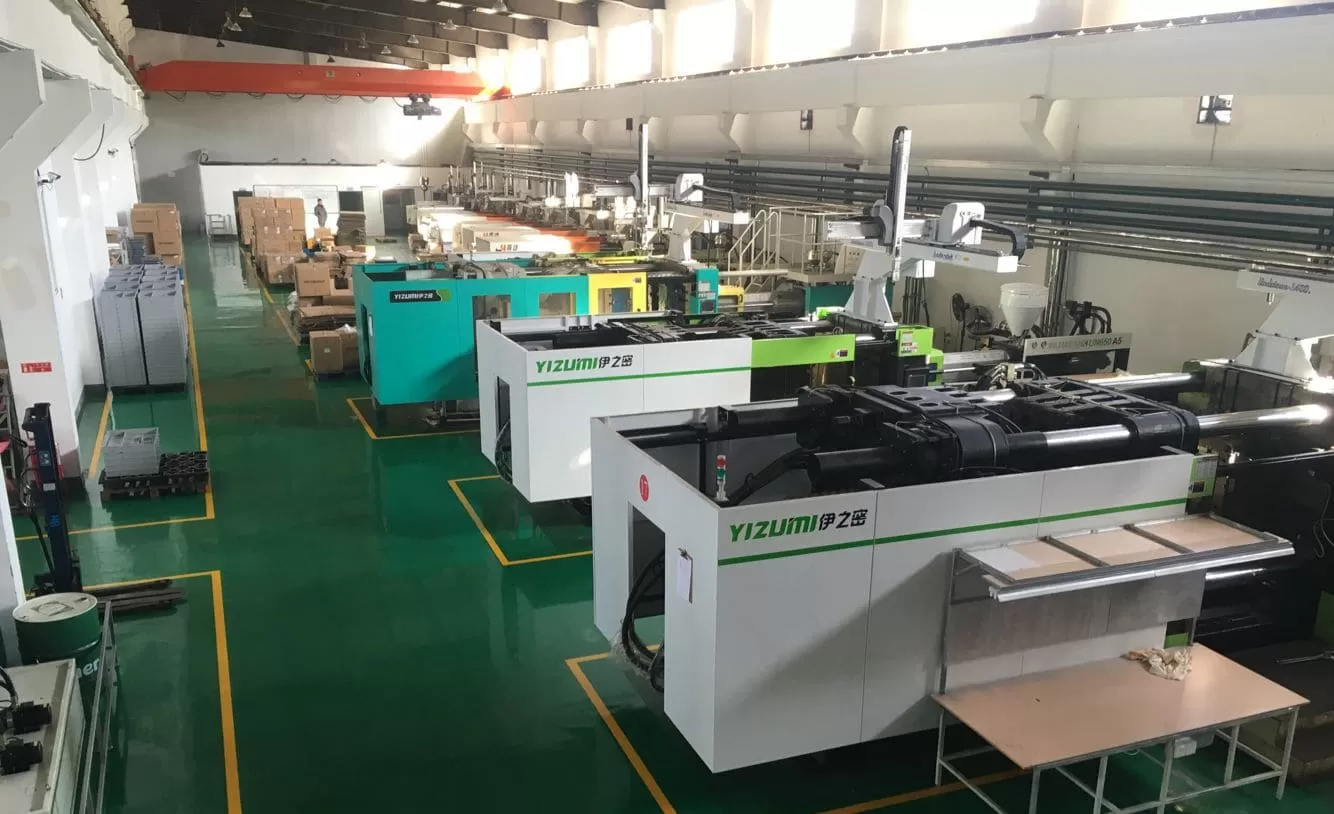
Eigen matrijsbouw en spuitgieten onder één dak voorkomt het gebruikelijke afschuiven van verantwoordelijkheid wanneer matrijzenmaker en spuitgieter elkaar de schuld geven van productieproblemen. Moet een matrijs tijdens een productieserie worden aangepast, dan kunnen bevoegde ingenieurs deze binnen enkele uren wijzigen en hertesten in plaats van weken op een externe matrijzenmaker te wachten. Met deze geïntegreerde aanpak vinden matrijsonderhoud, reparatie en procesoptimalisatie op dezelfde productievloer plaats, wat doorlooptijden verkort en de productconsistentie over iedere serie verbetert.
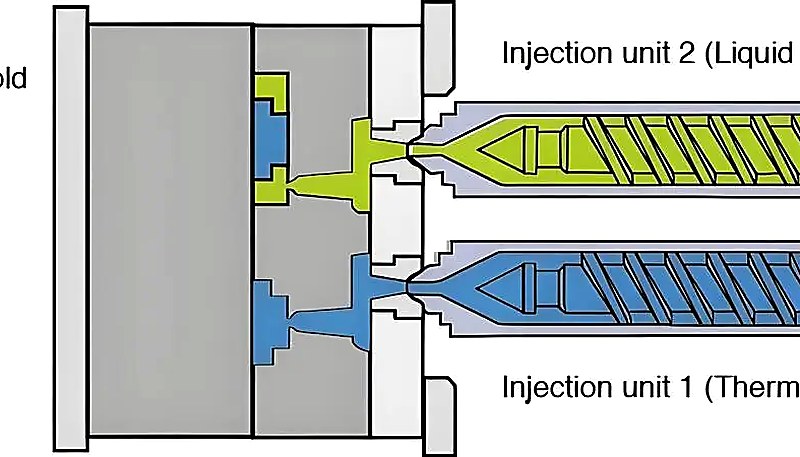
Gereedschapmakerij en spuitgieten onder één dak voorkomt wederzijdse verwijten tussen matrijzenmaker en spuitgieter. Als gereedschap moet worden aangepast, kunnen onze engineers dit binnen uren wijzigen en testen—niet weken.
Wat beïnvloedt de eenheidsprijs bij spuitgieten?
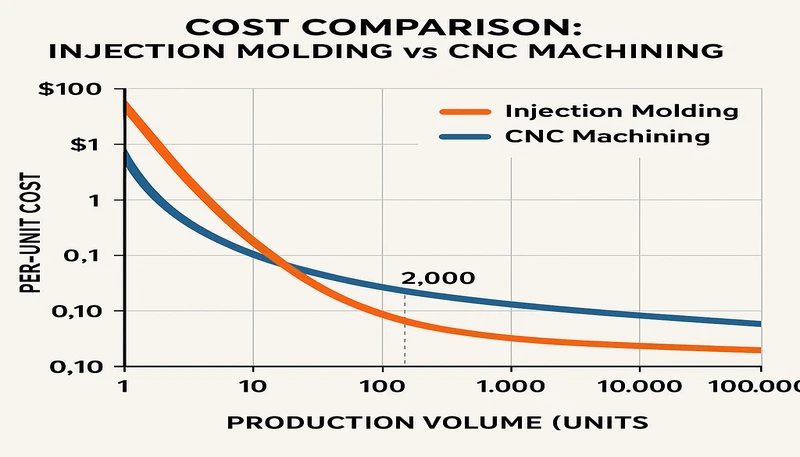
De stukprijs krijgt de meeste aandacht van inkopers — en verbergt de meeste verrassingen. De onderdeelprijs in een offerte is het resultaat van meerdere variabelen: cyclustijd, machinesluitkracht, arbeidskosten, overheadtoerekening en de marge van de leverancier. Cyclustijd is de grootste hefboom: een onderdeel met een cyclus van 15 seconden kost per stuk ongeveer de helft van een onderdeel met 30 seconden, bij dezelfde machine en hetzelfde materiaal. Het volume verandert de kostprijs per stuk ingrijpend.
Voorbeeld: een ABS-behuizing van 50 gram. Bij 1.000 stuks is matrijsafschrijving $8,00 per deel, material cost2 $0,15 en verwerking $0,80: stukprijs $9,00-$12,00. Bij 10.000 stuks daalt afschrijving naar $0,80, blijft materiaal $0,15 en verwerking $0,50: $1,80-$2,50. Bij 100.000 is afschrijving $0,08, materiaal $0,12 en verwerking $0,30: $0,60-$0,90.
Bij 1,000,000 of meer stuks worden de afgeschreven matrijskosten met 0.01 dollar verwaarloosbaar; materiaal kost 0.10 dollar en verwerking 0.20 dollar, voor een stukprijs van 0.35 tot 0.50 dollar. De stukprijs daalt dus 10 tot 20x wanneer het volume stijgt van 1,000 naar 100,000 stuks.
Dat komt niet door volumekorting op arbeid, maar doordat gereedschapsafschrijving van dominant naar verwaarloosbaar gaat. Zie voor het vinden van de juiste leverancier onze sourcinggids.
Met 8 senior engineers en 30+ Engelstalige projectmanagers helpen wij klanten de volume-kostencurve te optimaliseren door vroeg in de ontwerpfase de juiste cavitatiestrategie aan te bevelen.
Hoe beïnvloeden materiaalkosten uw totale budget?
Materiaalkosten zijn de meest volatiele component van uw spuitgietbudget. Bulkharsen zoals polypropyleen (PP) of hogedichtheidpolyethyleen (HDPE) kosten mogelijk 0.80 tot 1.50 dollar per pond, terwijl technische kunststoffen zoals PEEK of PEI (Ultem) 20 tot 60 dollar per pond kunnen kosten. Bij de meeste projecten vertegenwoordigt materiaal 15 tot 35 procent van de totale kosten, maar bij specialistische toepassingen (medisch, lucht- en ruimtevaart, onder de motorkap) kan dit meer dan 50 procent zijn.
Hier volgt een kostenvergelijking van veelgebruikte materialen. PP kost 0.80 tot 1.20 dollar per pond en wordt gebruikt voor verpakkingen en consumptiegoederen; het is licht en chemisch bestendig. ABS kost 1.20 tot 2.00 dollar per pond voor behuizingen en auto-interieurs en biedt slagvastheid en goede verwerkbaarheid. PC kost 2.50 tot 4.00 dollar per pond voor lenzen en elektronicabehuizingen en biedt transparantie en hoge hittebestendigheid. Nylon 6/6 kost 2.50 tot 4.50 dollar per pond voor tandwielen en constructiedelen en biedt sterkte en slijtvastheid. POM (Acetal) kost 2.00 tot 3.50 dollar per pond voor precisietandwielen en kleppen en biedt lage wrijving en maatvastheid.
PEEK kost voor luchtvaarttoepassingen en medische implantaten 25 tot 60 dollar per pond en biedt een uitzonderlijke temperatuur- en chemische bestendigheid.
Een veelgemaakte fout van inkopers is een technische materiaalkwaliteit voorschrijven terwijl een standaardhars met de juiste additieven voor een fractie van de kosten even goed zou presteren. Begin met functionele eisen, niet met de duurste catalogusoptie.

In ruim 20+ jaar spuitgieten hebben we 400+ materialen verwerkt — van standaardpolyolefinen tot hittebestendige PEEK en LCP.
Op welke verborgen kosten moet u letten?
Dit is de sectie die de meeste leveranciers liever niet laten lezen. Verborgen kosten zijn niet per se oneerlijk — veel zijn legitiem maar staan niet in een standaardofferte. Vraagt u er niet naar, dan ontdekt u ze pas op de factuur. De meest voorkomende verborgen kosten zijn: 1. Kosten voor ontwerpwijzigingen (500 tot 5,000 dollar per revisie): elke wijziging aan een goedgekeurd matrijsontwerp vereist engineering, staalbewerking en herkwalificatie. Zelfs 0.5mm wijziging in wanddikte kan nabewerking van een caviteit vereisen. 2. Overproductietolerantie (doorgaans 5 tot 10 procent): de meeste leveranciers produceren iets meer onderdelen om QC-uitval op te vangen. Deze meerproductie kan worden gefactureerd.
Leg dit vooraf vast. 3. Instelkosten (200 tot 1,500 dollars per serie): als u meerdere partijen bestelt in plaats van één productieserie, worden voor elke partij instelkosten berekend voor perstijd, materiaallading en inspectie van het eerste product. 4. Opslagkosten (0.50 tot 5.00 dollars per cubic foot/month): als uw onderdelen in het magazijn van de leverancier op verzending wachten, lopen opslagkosten op — vaak verborgen in verzendposten. 5. Inspectie en documentatie (100 tot 500 dollars per partij): maatrapporten, materiaalcertificeringen en PPAP-documentatie worden vaak afzonderlijk gefactureerd. 6. Spoedtoeslagen (15 tot 50 percent): versnelde planningen brengen vrijwel altijd een toeslag mee. De beste verdediging tegen verborgen kosten is één transparante, gespecificeerde offerte.
Wij zien dat klanten die hun kostenstructuur begrijpen terugkomen voor het volgende project. Een transparante, gespecificeerde offerte vormt de basis van dat vertrouwen.
Ons team van 120+ productiemedewerkers werkt volgens ISO 9001, ISO 13485, ISO 14001 en ISO 45001. Documentatie en traceerbaarheid zijn daardoor onderdeel van ons standaardproces en worden niet als extra's berekend.
Hoe kunt u de kosten van spuitgieten verlagen?
De effectiefste manieren om kosten te verlagen zijn DFM-optimalisatie, het juiste aantal caviteiten, materiaalvervanging en bundeling van zendingen. Elke strategie vergroot de besparing over de volledige productierun.
Bij 5.000-20.000 stuks per jaar is een matrijs met één holte, afgeschreven over drie jaar, vaak voordeliger dan vier holten die een half jaar stilstaan. Bij miljoenen delen verdient een matrijs met veel holten zich binnen maanden terug. Zie voor kosteneffectieve ontwerpprincipes onze gids voor spuitgietmatrijzen.
Onderhandel over gereedschapseigendom: sommige leveranciers verwerken tooling cost3 in de stukprijs. Dat klinkt aantrekkelijk maar bindt u. Eigen gereedschap geeft vrijheid om productie te verplaatsen en houdt de leverancier prijsconcurrerend.

"Standaardkunststoffen zoals PP en HDPE kunnen met de juiste additieven in veel toepassingen technische kunststoffen vervangen."True
In veel structurele en consumententoepassingen leveren gevuld polypropyleen of glasvezelversterkt nylon prestaties die vergelijkbaar zijn met die van technische materialen, tegen 30 tot 70 procent lagere materiaalkosten.
"Een stalen productiematrijs kost altijd meer dan 50,000 dollar."False
Stalen matrijzen variëren van 8.000 dollar voor eenvoudige enkelvoudige gereedschappen tot meer dan 100.000 dollar voor complexe meervoudige matrijzen. Veel productiekwaliteit stalen matrijzen vallen in het bereik van 15.000 tot 40.000 dollar.
Het begrijpen van deze veelvoorkomende misvattingen is essentieel voor een nauwkeurige begroting en effectieve onderhandelingen met leveranciers. Veel kopers gaan het offertetraject in met aannames over matrijsprijzen, volumekortingen en materiaalkosten die niet overeenkomen met de realiteit. De onderstaande beweringen behandelen aanvullende kostenveronderstellingen die vaak leiden tot verrassende kosten op leveranciersfacturen, met name rond volume-economie en kosten voor aanpassingen na gereedschapsbouw. Het testen van uw kennis over deze onderwerpen kan u helpen kostbare fouten te vermijden bij het evalueren van uw volgende spuitgietofferte.
"Ontwerpwijzigingen na de matrijsproductie kosten doorgaans meer dan 1,000 dollar per wijziging."True
Ontwerpwijzigingen na fabricage variëren van 500 tot meer dan 5.000 dollar per revisie. Zelfs kleine dimensionale aanpassingen vereisen staalbewerking, opnieuw polijsten en herkwalificatie. De beste aanpak is om ontwerpen te finaliseren via prototyping voordat u zich vastlegt op productiegereedschap.
"De stuksprijs daalt lineair naarmate het bestelvolume stijgt."False
De daling is logaritmisch, niet lineair. De grootste besparingen per eenheid vinden plaats tussen 1.000 en 50.000 eenheden, gedreven door gereedschapsafschrijving. Voorbij 100.000 eenheden zijn verdere verlagingen marginaal.
Veelgestelde vragen
Veelgestelde vragen
Hoeveel kost een typische spuitgietmatrijs?
Een typische spuitgietmatrijs kost tussen 3.000 en 100.000 dollar, afhankelijk van complexiteit, cavitatie en verwachte gereedschapslevensduur. Prototype aluminium matrijzen beginnen rond 3.000 dollar voor eenvoudige enkelvoudige gereedschappen voor korte series, terwijl productiekwaliteit stalen matrijzen met meerdere holtes, schuiven en lifters variëren van 15.000 tot 80.000 dollar. De belangrijkste kostendrijvers zijn het aantal holtes, vereisten voor oppervlakteafwerking, complexiteitskenmerken van de matrijs zoals ondervormen en zijacties, en het specifieke staalgehalte dat is geselecteerd voor de verwachte productievolume en onderdeelgeometrie-eisen.
Wat is de gemiddelde kosten per eenheid voor spuitgieten?
De gemiddelde kosten per eenheid variëren van 0,50 tot 15,00 dollar, afhankelijk van de onderdeelgrootte, materiaalkeuze en productievolume. Bij 100.000 eenheden van een middelgroot ABS-onderdeel kunt u 0,60 tot 1,50 dollar per eenheid verwachten. Bij 1.000 eenheden kan hetzelfde onderdeel 8,00 tot 12,00 dollar kosten omdat de afschrijving van gereedschapskosten de berekening van de kosten per eenheid domineert. Het aanvragen van een gespecificeerde kostenopbouw bij uw leverancier helpt u elk individueel kostenonderdeel te begrijpen en de beste mogelijkheden voor kostenoptimalisatie tijdens uw productierun te identificeren.
Hoe beïnvloedt materiaalkeuze de kosten van spuitgieten?
Materiaalkeuze kan uw onderdeelkosten met 300 tot 500 procent of meer doen schommelen. Bulkkunststoffen zoals PP kosten 0,80 tot 1,50 dollar per pond, terwijl technische materialen zoals PEEK 25 tot 60 dollar per pond kosten. Voor de meeste toepassingen is het selecteren van het goedkoopste materiaal dat aan uw functionele eisen voldoet, in plaats van standaard te kiezen voor de duurste optie, de meest effectieve kostenoptimalisatiestrategie. Glasgevuld nylon biedt bijvoorbeeld veel structurele eigenschappen van PEEK tegen ongeveer een tiende van de materiaalkosten.
Zijn spuitgietleveranciers in China goedkoper?
Chinese leveranciers bieden doorgaans 30 tot 60 procent lagere eenheidsprijzen dan westerse tegenhangers, voornamelijk vanwege lagere arbeids- en overheadkosten in de regio. De totale landed cost moet echter rekening houden met internationale verzendkosten, invoerrechten, communicatieoverhead en kwaliteitsborgingseisen. Samenwerken met een leverancier die actuele ISO-certificeringen heeft, waaronder 9001 en 13485, Engelssprekende projectmanagers in dienst heeft en eigen gereedschapsmogelijkheden onderhoudt, minimaliseert de operationele risico’s die deze initiële besparingen kunnen ondermijnen en zorgt voor consistente kwaliteit gedurende uw productieprogramma.
Welke verborgen kosten moet ik navragen bij het opvragen van een offerte?
Vraag specifiek naar kosten voor ontwerpwijzigingen die variëren van 500 tot 5.000 dollar per revisie, toleranties voor overproductie die doorgaans op 5 tot 10 procent boven de bestelhoeveelheid worden ingesteld, opstartkosten voor batchproductieruns van 200 tot 1.500 dollar per keer, opslagkosten in het magazijn, inspectie- en documentatiekosten, en toeslagen voor spoedorders van 15 tot 50 procent. Deze posten kunnen gezamenlijk 15 tot 30 procent toevoegen aan uw geoffreerde stukprijs. Een transparante leverancier zal vooraf een gespecificeerde uitsplitsing verstrekken in plaats van alles in één getal te bundelen.
Hoe kan ik mijn spuitgietkosten verlagen?
De meest effectieve strategieën voor kostenverlaging zijn optimalisatie van Ontwerp voor Productie, het correct dimensioneren van matrijscavitatie voor uw werkelijke productievolume, materiaalsubstitutie met goedkopere alternatieven, en het consolideren van zendingen om logistieke kosten te verlagen. DFM alleen al kan de gereedschapskosten met 20 tot 40 procent en de cyclusduur met 15 tot 30 procent verminderen. Vroege samenwerking met het technische team van uw leverancier tijdens de ontwerpfase is cruciaal, omdat het merendeel van de totale productiekosten wordt bepaald door beslissingen die worden genomen voordat de matrijs zelfs maar wordt gesneden.
Wat is de minimale bestelhoeveelheid voor spuitgieten?
Er is geen technische minimale bestelhoeveelheid voor spuitgieten, maar de economie verandert drastisch onder de 1.000 stuks. Bij zeer lage volumes kunt u 3D-printen of vacuümgieten overwegen als alternatieve productiemethoden. Voor spuitgieten is 1.000 tot 5.000 stuks typisch het break-evenpunt waar de gereedschapskosten per eenheid redelijk worden ten opzichte van andere productiemethoden. Sommige leveranciers bieden prototype-spuitgietprogramma’s die speciaal zijn ontworpen voor de behoeften van lage-volume productie, met aluminium matrijzen die aanzienlijk minder kosten dan productiestaal gereedschap, terwijl ze toch productiekwaliteit onderdelen leveren.
Hoe lang gaat een spuitgietmatrijs mee?
Een goed onderhouden stalen productiematrijs gaat doorgaans 200.000 tot meer dan 1.000.000 cycli mee, afhankelijk van het geselecteerde staalgehalte, onderdeelcomplexiteit en het specifieke materiaal dat tijdens de productie wordt gegoten. P20 stalen matrijzen gaan over het algemeen 200.000 tot 500.000 shots mee, terwijl hardere staalsoorten zoals H13 of S136 onder optimale omstandigheden meer dan 1.000.000 shots kunnen halen. Regelmatig onderhoud, inclusief het reinigen van holtes, oppervlaktepolijsten en tijdige vervanging van versleten componenten, verlengt de matrijslevensduur aanzienlijk en beschermt uw langetermijninvestering in gereedschap gedurende de gehele productielevenscyclus.
unit price: Stukprijseconomie is de logaritmische relatie tussen volume en kosten, waarbij de prijs per deel 10-20 keer daalt van 1.000 naar 100.000 stuks. ↩
material cost: Materiaalkostenvariatie is het prijsverschil van 300-500% tussen standaardharsen van $0,80-$1,50 per pond en technische kunststoffen van $25-$60 per pond. ↩
tooling cost: Gereedschapskosten voor spuitgietmatrijzen lopen van $3.000 tot meer dan $100.000, afhankelijk van complexiteit, aantal holten en levensduur. ↩