Der Stückpreis1 ist selten die ganze Geschichte. Wenn Sie ein Angebot von einem Spritzgusslieferanten anfordern, ist die Zahl, die Sie zurückerhalten, selten die ganze Geschichte.Dahinter verbergen sich Werkzeugabschreibungen, Materialaufschläge, Einrichtungsgebühren, Designänderungsgebühren und ein Dutzend anderer Einzelposten, die Ihre tatsächlichen Kosten um 30–50 % über dem ursprünglichen Angebot ansteigen lassen können.Nachdem wir mehr als 20 Jahre lang Spritzgussprojekte durchgeführt haben – zunächst als Werkzeugbauer, dann als Produktionspartner – haben wir jede Kostenstruktur, jede versteckte Gebühr und jede Verhandlungstaktik kennengelernt.In diesem Artikel werden alle Kostenkomponenten aufgeschlüsselt, damit Sie Lieferantenangebote genau vergleichen, aus einer fundierten Position verhandeln und Budgetüberraschungen vermeiden können.
- Werkzeuge sind die größte Anfangsinvestition – je nach Kavitätenzahl und Komplexität kosten Formen $3,000 bis $100,000+
- Der Stückpreis hängt stark von der Menge ab — ab 100,000+ Einheiten ist die Werkzeugamortisation vernachlässigbar
- Die Materialauswahl kann die Bauteilkosten um 300–500% verändern – Standardharze gegenüber technischen Kunststoffen
- Versteckte Kosten wie Konstruktionsänderungen, Versand und Lagerung können den Angebotspreis um 15–30% erhöhen
- Fordern Sie stets eine aufgeschlüsselte Kostenaufstellung an, nicht nur einen abschließenden Stückpreis
Was sind die wichtigsten Kostenbestandteile des Spritzgusses?
Die wichtigsten Kostenbestandteile des Spritzgießens sind Werkzeuge, Materialien, Verarbeitung und Nebengebühren. Die Werkzeugkosten umfassen die Herstellung der Form. Bei den Materialien handelt es sich um Kunststoffgranulat. Die Verarbeitung umfasst Maschinenzeit, Arbeit und Energie. Zu den Nebenkosten zählen Versand, Qualitätskontrolle, Verpackung und versteckte Gebühren.
Dies ist eine typische Kostenverteilung für eine mittlere Produktionsserie (10,000 bis 50,000 Stück). Werkzeuge (Formenbau) machen 20 bis 40 Prozent der Gesamtkosten aus und liegen typischerweise zwischen 3,000 und über 100,000 Dollar. Rohmaterial (Harz) stellt 15 bis 35 Prozent dar, je nach Typ bei 1 bis 15 Dollar pro Pfund. Die Verarbeitung (Maschinenzeit und Arbeit) beansprucht 15 bis 30 Prozent, bei 0.10 bis 5.00 Dollar pro Teil. Nachbearbeitung und Qualitätskontrolle machen 5 bis 15 Prozent aus, bei 0.05 bis 2.00 Dollar pro Teil. Versand und Verpackung entfallen auf 3 bis 10 Prozent und variieren je nach Zielort.
Einen umfassenderen Überblick über den Prozess selbst finden Sie in unserem Leitfaden zum Spritzgießen.
Wie viel kosten Spritzgießwerkzeuge?
Die Werkzeugkosten sind der größte Posten in jedem Spritzgussangebot. Ein Einkavitätenwerkzeug aus Aluminium für Prototypen kann 3,000 bis 8,000 Dollar kosten, während ein seriengeeignetes Stahlwerkzeug mit mehreren Kavitäten, Schiebern und Schrägauswerfern leicht 80,000 Dollar übersteigt. Der Preis hängt von fünf Faktoren ab: Kavitätenzahl, Werkzeugkomplexität etwa durch Hinterschneidungen, Gewinde und Seitenschieber, Anforderungen an die Oberflächengüte, Stahlsorte wie P20, H13 oder S136 sowie die in Gesamtschuss gemessene erwartete Werkzeuglebensdauer. Wer diese fünf Variablen versteht, kann beurteilen, ob der angebotene Werkzeugpreis für die konkrete Bauteilgeometrie und das Produktionsvolumen fair und wettbewerbsfähig ist.
Mit Folgendem sollten Sie bei unterschiedlichen Produktionsstufen und Werkzeugkonfigurationen rechnen. Diese Kostenbereiche entsprechen typischen Fertigungspreisen für Standardwerkzeuge aus Stahl mit mittlerer geometrischer Komplexität und standardmäßig polierten Oberflächen. Ein Aluminium-Prototypenwerkzeug mit 1 Kavität kostet 3,000 bis 8,000 Dollar und hält 1,000 bis 5,000 Schuss. Ein Stahlwerkzeug für Kleinserien mit 1 bis 2 Kavitäten kostet 8,000 bis 25,000 Dollar und hält 50,000 bis 100,000 Schuss. Ein Werkzeug für mittlere Serien mit 2 bis 4 Kavitäten kostet 25,000 bis 50,000 Dollar und hält 200,000 bis 500,000 Schuss. Ein Großserienwerkzeug mit 4 bis 16 oder mehr Kavitäten kostet 50,000 bis über 100,000 Dollar und hält 500,000 bis über 1,000,000 Schuss.
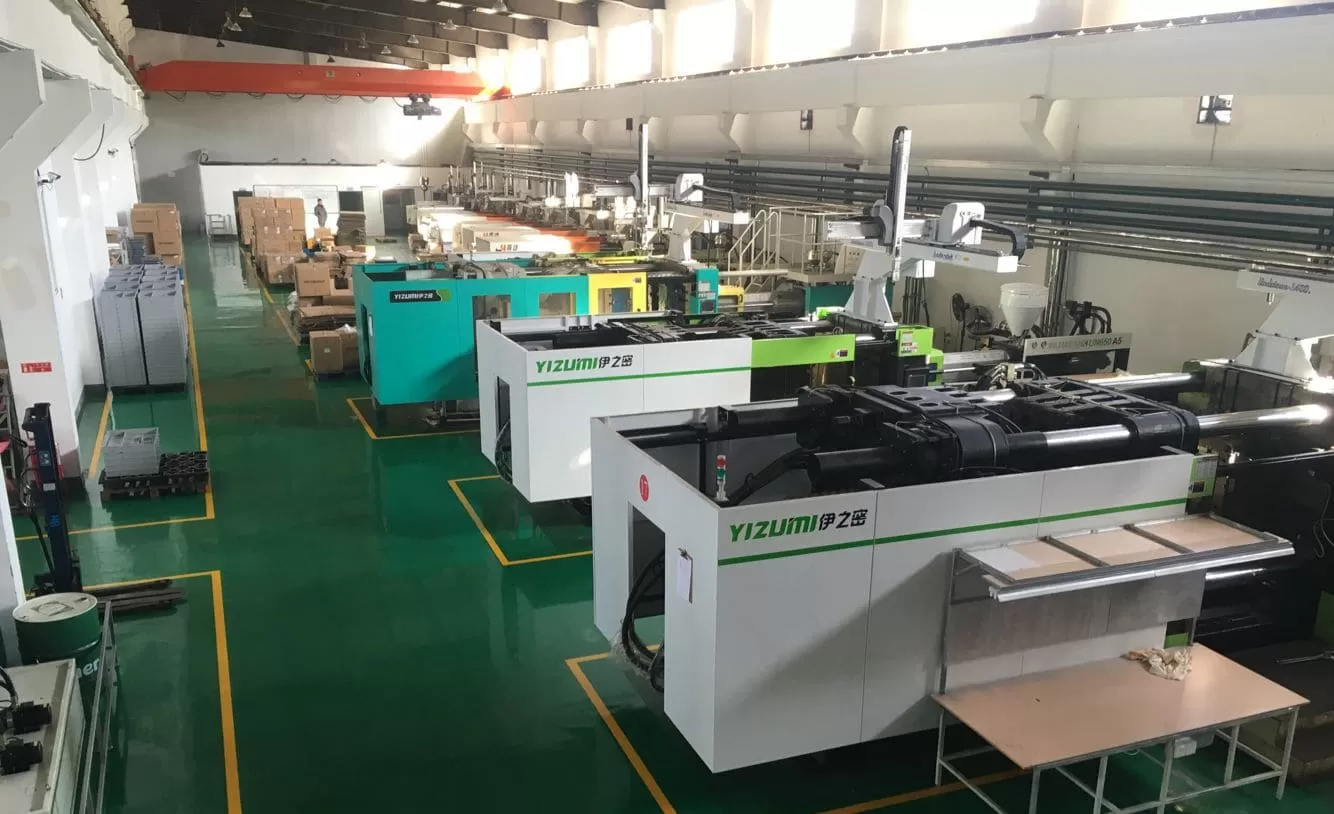
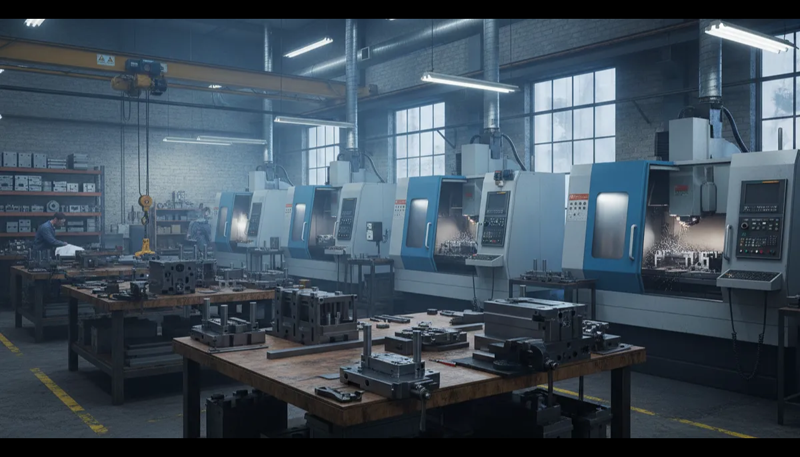
Eigener Werkzeugbau und Spritzguss unter einem Dach verhindern die üblichen gegenseitigen Schuldzuweisungen, wenn Werkzeugbauer und Spritzgießer einander für Qualitätsprobleme in der Produktion verantwortlich machen. Muss ein Werkzeug während eines Produktionslaufs angepasst werden, können qualifizierte Ingenieure es innerhalb weniger Stunden ändern und erneut testen, statt wochenlang auf einen externen Werkzeugbauer zu warten. Bei diesem integrierten Ansatz erfolgen Werkzeugwartung, Reparatur und Prozessoptimierung in derselben Fertigung. Das verkürzt Durchlaufzeiten und verbessert die Bauteilkonsistenz über alle Produktionsläufe hinweg.
Werkzeugbau und Spritzgießen unter einem Dach vermeiden gegenseitige Schuldzuweisungen, wenn der Werkzeugbauer den Spritzgießer verantwortlich macht oder umgekehrt. Muss ein Werkzeug angepasst werden, können unsere Ingenieure es innerhalb weniger Stunden statt Wochen ändern und testen.
Welche Faktoren beeinflussen den Stückpreis beim Spritzgießen?
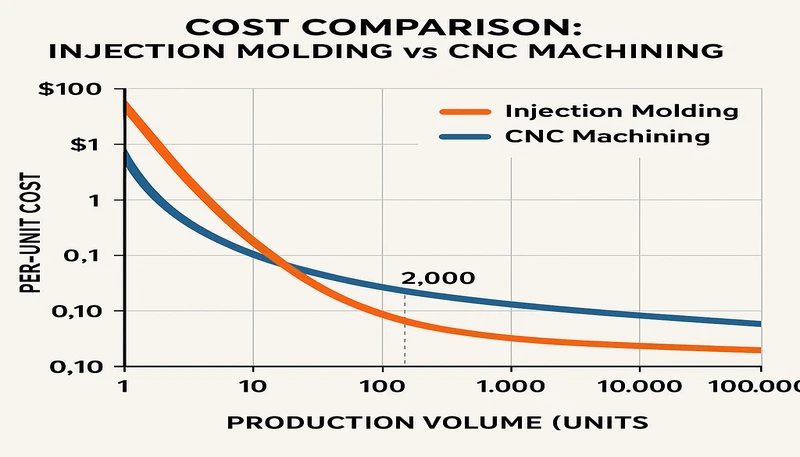
Auf den Stückpreis richten die meisten Käufer ihre Aufmerksamkeit — und dort verbergen sich die meisten Überraschungen. Der im Angebot ausgewiesene Teilepreis ergibt sich aus mehreren Variablen: Zykluszeit, Maschinentonnage, Lohnsatz, Gemeinkostenzuordnung und Lieferantenaufschlag. Die Zykluszeit ist der größte Hebel: Ein Teil mit einer Zykluszeit von 15 Sekunden kostet bei gleicher Presse und gleichem Werkstoff pro Stück ungefähr halb so viel wie ein Teil mit 30 Sekunden Zykluszeit. Das Volumen verändert die Stückkosten erheblich.
Hier ein vereinfachtes Beispiel für ein 50-Gramm-ABS-Gehäuse.Bei 1.000 Einheiten betragen die amortisierten Formkosten pro Teil 8,00 Dollar, Materialkosten2 0,15 Dollar, die Bearbeitung 0,80 Dollar, was einen typischen Stückpreis von 9,00 bis 12,00 Dollar ergibt.Bei 10.000 Einheiten sinken die amortisierten Formkosten auf 0,80 Dollar pro Teil, das Material bleibt bei 0,15 Dollar, die Verarbeitung sinkt auf 0,50 Dollar, was einem Stückpreis von 1,80 bis 2,50 Dollar entspricht.Bei 100.000 Einheiten betragen die amortisierten Formkosten nur 0,08 Dollar pro Teil, das Material 0,12 Dollar, die Verarbeitung 0,30 Dollar, bei einem Stückpreis von 0,60 bis 0,90 Dollar.
Bei 1,000,000 oder mehr Einheiten werden die amortisierten Formkosten mit 0.01 Dollar vernachlässigbar; das Material kostet 0.10 Dollar und die Verarbeitung 0.20 Dollar, sodass der Stückpreis 0.35 bis 0.50 Dollar beträgt. Beachten Sie, wie der Stückpreis beim Anstieg von 1,000 auf 100,000 Einheiten um 10 bis 20x sinkt.
Das liegt nicht daran, dass der Lieferant Ihnen einen Mengenrabatt auf die Arbeitsleistung gewährt, sondern daran, dass die Werkzeugamortisation von dominant auf vernachlässigbar ansteigt.Hinweise zur Suche nach der richtigen Lieferantenpartnerschaft finden Sie in unserem Beschaffungsleitfaden.
Mit 8 erfahrenen Ingenieuren und 30+ englischsprachigen Projektmanagern helfen wir Kunden, die Mengen-Kosten-Kurve zu optimieren, indem wir früh in der Konstruktionsphase die richtige Kavitätenstrategie empfehlen.
Wie beeinflussen Materialkosten Ihr Gesamtbudget?
Materialkosten sind der volatilste Bestandteil Ihres Spritzgießbudgets. Standardkunststoffe wie Polypropylen (PP) oder Polyethylen hoher Dichte (HDPE) kosten möglicherweise 0.80 bis 1.50 Dollar pro Pfund, während technische Werkstoffe wie PEEK oder PEI (Ultem) 20 bis 60 Dollar pro Pfund kosten können. Bei den meisten Projekten entfallen 15 bis 35 Prozent der Gesamtkosten auf das Material; bei Spezialanwendungen in Medizintechnik, Luft- und Raumfahrt oder im Motorraum von Fahrzeugen können es über 50 Prozent sein.
Nachfolgend finden Sie einen Kostenvergleich häufig verarbeiteter Materialien. PP kostet 0.80 bis 1.20 Dollar pro Pfund und wird für Verpackungen und Konsumgüter eingesetzt; es bietet Chemikalienbeständigkeit und ein geringes Gewicht. ABS kostet 1.20 bis 2.00 Dollar pro Pfund für Gehäuse und Fahrzeuginnenräume und bietet Schlagfestigkeit sowie gute Formbarkeit. PC kostet 2.50 bis 4.00 Dollar pro Pfund für Linsen und Elektronikgehäuse und zeichnet sich durch Transparenz und hohe Wärmebeständigkeit aus. Nylon 6/6 kostet 2.50 bis 4.50 Dollar pro Pfund für Zahnräder und Strukturbauteile und bietet Festigkeit und Verschleißbeständigkeit. POM (Acetal) kostet 2.00 bis 3.50 Dollar pro Pfund für Präzisionszahnräder und Ventile und bietet geringe Reibung und Maßstabilität.
PEEK kostet für Luftfahrtanwendungen und medizinische Implantate 25 bis 60 Dollar pro Pfund und bietet eine extreme Temperatur- und Chemikalienbeständigkeit.
Ein häufiger Fehler von Einkäufern ist die Spezifikation eines technischen Werkstoffs, obwohl ein Standardkunststoff mit den richtigen Additiven zu einem Bruchteil der Kosten ebenso gut funktionieren würde. Beginnen Sie mit den Funktionsanforderungen, nicht mit der teuersten Katalogoption.

In über 20+ Jahren im Spritzguss haben wir 400+ Materialien verarbeitet – von Standardpolyolefinen bis zu hochtemperaturbeständigem PEEK und LCP.
Auf welche versteckten Gebühren sollten Sie achten?
Diesen Abschnitt würden die meisten Lieferanten Ihnen lieber vorenthalten. Verdeckte Gebühren sind nicht zwangsläufig unseriös — häufig handelt es sich um berechtigte Kosten, die in einem Standardangebot lediglich nicht erscheinen. Wenn Sie jedoch nicht danach fragen, erfahren Sie möglicherweise erst bei der Rechnungsstellung davon. Zu den häufigsten verdeckten Gebühren gehören: 1. Kosten für Konstruktionsänderungen (500 bis 5,000 Dollar je Überarbeitung): Jede Änderung an einer freigegebenen Werkzeugkonstruktion verursacht Konstruktionsaufwand, Stahlbearbeitung und eine erneute Qualifizierung. Selbst eine Änderung der Wandstärke um 0.5mm kann eine Nachbearbeitung der Kavität erfordern. 2. Überlieferungstoleranz (üblicherweise 5 bis 10 Prozent): Die meisten Lieferanten produzieren etwas mehr Teile als bestellt, um Ausschuss aus der Qualitätskontrolle (QC) auszugleichen. Diese Mehrmengen können Ihnen in Rechnung gestellt werden.
Klären Sie dies im Voraus. 3. Rüstkosten (200 bis 1,500 Dollar pro Lauf): Wenn Sie statt eines einzigen Produktionslaufs mehrere Chargen bestellen, fällt für jede Charge eine Rüstgebühr für Maschinenzeit, Materialbeschickung und Erstmusterprüfung an. 4. Lagerkosten (0.50 bis 5.00 Dollar pro Kubikfuß/Monat): Wenn Ihre Teile bis zum Versand im Lager des Lieferanten verbleiben, fallen Lagerkosten an—häufig versteckt in den Versandpositionen. 5. Prüfung und Dokumentation (100 bis 500 Dollar pro Los): Maßberichte, Materialzertifikate und PPAP-Dokumentation werden häufig separat berechnet. 6. Eilzuschläge (15 bis 50 Prozent): Beschleunigte Terminpläne sind fast immer mit einem Aufpreis verbunden. Der beste Schutz vor versteckten Gebühren ist ein transparentes, detailliertes Angebot.
Unsere Erfahrung zeigt, dass Kunden, die ihre Kostenstruktur verstehen, mit dem nächsten Projekt zurückkehren. Ein transparentes, aufgeschlüsseltes Angebot bildet die Grundlage für dieses Vertrauen.
Unser Team aus 120+ Produktionsmitarbeitern arbeitet nach den Systemen ISO 9001, ISO 13485, ISO 14001 und ISO 45001. Dokumentation und Rückverfolgbarkeit sind daher Bestandteil unseres Standardprozesses und werden nicht als Zusatzleistungen berechnet.
Wie lassen sich die Spritzgießkosten senken?
Die wirksamsten Kostensenkungsmaßnahmen sind DFM-Optimierung, bedarfsgerechte Kavitätenzahl, Materialsubstitution und Versandbündelung. Jede Strategie vervielfacht die Einsparungen über den gesamten Produktionslauf.
Wenn Ihr Jahresvolumen 5.000 bis 20.000 Einheiten beträgt, ist ein Werkzeug mit einer Kavität, das sich über drei Jahre amortisiert, oft wirtschaftlicher als ein Werkzeug mit vier Kavitäten, das ein halbes Jahr lang stillsteht.Wenn Sie hingegen jährlich Millionen von Teilen verarbeiten, amortisiert sich die Investition in ein Werkzeug mit hoher Kavität innerhalb von Monaten.Informationen zu den Grundlagen des Formenbaus, die eine kostengünstige Produktion unterstützen, finden Sie in unserem Leitfaden für Spritzgussformen.
Verhandeln Sie über den Werkzeugbesitz: Einige Lieferanten schließen Werkzeugkosten3 im Stückpreis ein, was zwar attraktiv klingt, Sie aber bindet. Der Besitz Ihres Werkzeugs gibt Ihnen die Freiheit, die Produktion bei Bedarf zu verlagern – und dieser Hebel sorgt dafür, dass Ihr Lieferant bei der Preisgestaltung wettbewerbsfähig bleibt.

"Standardkunststoffe wie PP und HDPE können mit den richtigen Additiven technische Kunststoffe in vielen Anwendungen ersetzen."True
Bei vielen strukturellen Anwendungen und Konsumgüteranwendungen bieten gefülltes Polypropylen oder glasfaserverstärktes Nylon eine mit technischen Werkstoffen vergleichbare Leistung bei 30 bis 70 Prozent niedrigeren Materialkosten.
"Ein Serienwerkzeug aus Stahl kostet immer mehr als 50,000 Dollar."False
Stahlformen reichen von 8.000 Dollar für einfache Einfachkavitäten-Werkzeuge bis über 100.000 Dollar für komplexe Mehrfachkavitäten-Werkzeuge. Viele serientaugliche Stahlformen liegen im Bereich von 15.000 bis 40.000 Dollar.
Das Verständnis dieser häufigen Missverständnisse ist für eine genaue Budgetierung und effektive Lieferantenverhandlungen unerlässlich. Viele Käufer gehen mit Annahmen über Formenkosten, Mengenrabatte und Materialkosten in das Angebotsverfahren, die nicht der Realität entsprechen. Die folgenden Aussagen behandeln zusätzliche Kostenannahmen, die häufig zu überraschenden Gebühren auf Lieferantenrechnungen führen, insbesondere im Bereich der Mengenökonomie und der Kosten für Nachbearbeitungen am Werkzeug. Das Testen Ihres Wissens zu diesen Themen kann Ihnen helfen, kostspielige Fehler bei der Bewertung Ihres nächsten Spritzgussangebots zu vermeiden.
"Konstruktionsänderungen nach der Werkzeugfertigung kosten typischerweise über 1,000 Dollar pro Revision."True
Designänderungen nach der Werkzeugherstellung kosten zwischen 500 und über 5.000 Dollar pro Änderung. Selbst kleine Maßänderungen erfordern Stahlbearbeitung, Nachpolieren und Re-Qualifikation. Der beste Ansatz ist, Designs durch Prototyping abzuschließen, bevor man sich auf Serienwerkzeuge festlegt.
"Der Stückpreis sinkt mit zunehmender Bestellmenge linear."False
Der Rückgang ist logarithmisch, nicht linear. Die größten Stückkosteneinsparungen ergeben sich zwischen 1.000 und 50.000 Einheiten, getrieben durch die Amortisierung der Werkzeugkosten. Über 100.000 Einheiten hinaus sind weitere Reduktionen marginal.
Häufig gestellte Fragen
Häufig gestellte Fragen
Wie viel kostet eine typische Spritzgussform?
Eine typische Spritzgussform kostet je nach Komplexität, Kavitation und erwarteter Werkzeuglebensdauer zwischen 3.000 und 100.000 US-Dollar. Prototyp-Aluminiumformen beginnen bei etwa 3.000 US-Dollar für einfache Einzelkavitätswerkzeuge für kleine Serien, während produktionsreife Stahlformen mit mehreren Kavitäten, Schiebern und Auswerfern zwischen 15.000 und 80.000 US-Dollar kosten. Die wichtigsten Kostentreiber sind die Anzahl der Kavitäten, Anforderungen an die Oberflächengüte, komplexe Formmerkmale wie Hinterschneidungen und Seitenaktionen sowie die spezifische Stahlgüte, die für das erwartete Produktionsvolumen und die Bauteilgeometrieanforderungen ausgewählt wird.
Was sind die durchschnittlichen Kosten pro Einheit für Spritzguss?
Die durchschnittlichen Kosten pro Einheit liegen zwischen 0,50 und 15,00 Dollar, abhängig von Bauteilgröße, Materialwahl und Produktionsmenge. Bei 100.000 Einheiten eines mittelgroßen ABS-Teils liegen die Kosten bei etwa 0,60 bis 1,50 Dollar pro Stück. Bei 1.000 Einheiten könnte dasselbe Teil 8,00 bis 12,00 Dollar kosten, weil die Werkzeugamortisierung die Stückkostenberechnung dominiert. Die Anforderung einer detaillierten Aufschlüsselung von Ihrem Lieferanten hilft Ihnen, die einzelnen Kostenkomponenten zu verstehen und die besten Möglichkeiten zur Kostenoptimierung über Ihren Produktionslauf hinweg zu identifizieren.
Wie beeinflusst die Materialwahl die Spritzgusskosten?
Die Materialwahl kann Ihre Teilkosten um 300 bis 500 Prozent oder mehr verändern. Standardkunststoffe wie PP kosten 0,80 bis 1,50 Dollar pro Pfund, während technische Kunststoffe wie PEEK 25 bis 60 Dollar pro Pfund kosten. Für die meisten Anwendungen ist die Auswahl des kostengünstigsten Materials, das Ihren funktionalen Anforderungen entspricht, anstatt standardmäßig die teuerste Option zu wählen, die effektivste Strategie zur Kostenoptimierung. Glasfaserverstärktes Nylon bietet beispielsweise viele strukturelle Eigenschaften von PEEK bei etwa einem Zehntel der Materialkosten.
Sind Spritzgusslieferanten in China günstiger?
Chinesische Lieferanten bieten typischerweise 30 bis 60 Prozent niedrigere Stückpreise als westliche Anbieter, hauptsächlich aufgrund niedrigerer Arbeits- und Gemeinkosten in der Region. Die Gesamtkosten („landed cost“) müssen jedoch internationale Frachtkosten, Einfuhrzölle, Kommunikationsaufwand und Qualitätssicherungsanforderungen berücksichtigen. Die Zusammenarbeit mit einem Lieferanten, der über aktuelle ISO-Zertifizierungen (einschließlich 9001 und 13485) verfügt, englischsprachige Projektmanager beschäftigt und eigene Werkzeugfertigungskapazitäten vorhält, minimiert die betrieblichen Risiken, die diese anfänglichen Einsparungen zunichtemachen können, und gewährleistet eine gleichbleibende Qualität während Ihres gesamten Fertigungsprogramms.
Welche versteckten Kosten sollte ich bei einem Angebot ansprechen?
Fragen Sie gezielt nach Gebühren für Designänderungen (500 bis 5.000 Dollar pro Änderung), Überproduktionstoleranzen (typischerweise 5 bis 10 Prozent über der Bestellmenge), Rüstkosten für Chargenproduktion (200 bis 1.500 Dollar je Lauf), Lagerhaltungsgebühren, Inspektions- und Dokumentationskosten sowie Express-Zuschlägen (15 bis 50 Prozent). Diese Punkte können zusammen 15 bis 30 Prozent zu Ihrem angebotenen Stückpreis hinzufügen. Ein transparenter Lieferant wird von Anfang an eine detaillierte Aufschlüsselung liefern, anstatt alles in einer einzigen Zahl zu bündeln.
Wie kann ich meine Spritzgusskosten senken?
Die effektivsten Strategien zur Kostenreduzierung sind die Optimierung der fertigungsgerechten Konstruktion (Design for Manufacturing), die Anpassung der Formenkavitation an Ihr tatsächliches Produktionsvolumen, der Materialaustausch durch kostengünstigere Alternativen und die Konsolidierung von Sendungen zur Senkung der Logistikkosten. DFM allein kann die Werkzeugkosten um 20 bis 40 Prozent und die Zykluszeit um 15 bis 30 Prozent reduzieren. Eine frühzeitige Zusammenarbeit mit dem Engineering-Team Ihres Lieferanten während der Designphase ist entscheidend, da der Großteil der gesamten Produktionskosten durch Entscheidungen bestimmt wird, die noch vor dem Schneiden der Form getroffen werden.
Wie hoch ist die Mindestbestellmenge beim Spritzgießen?
Für das Spritzgießen gibt es keine technische Mindestbestellmenge, aber die Wirtschaftlichkeit ändert sich drastisch unter 1.000 Einheiten. Bei sehr geringen Stückzahlen sollten Sie den 3D-Druck oder das Vakuumgussverfahren als alternative Fertigungsmethoden in Betracht ziehen. Beim Spritzgießen liegt die Gewinnschwelle typischerweise bei 1.000 bis 5.000 Einheiten, bei der die Werkzeugkosten pro Einheit im Verhältnis zu anderen Fertigungsmethoden angemessen werden. Einige Lieferanten bieten speziell für den Kleinserienbedarf konzipierte Prototypen-Spritzgießprogramme an, bei denen Aluminiumformen verwendet werden, die deutlich weniger kosten als Stahl-Werkzeuge für die Serienfertigung, aber dennoch Serienqualität liefern.
Die Einholung von 3-5 Angeboten zeigt Preisunterschiede von 30-70 % zwischen Anbietern für identische Formenspezifikationen. Inländische Anbieter verlangen typischerweise 50–150 € pro Stunde für Konstruktionsleistungen, gegenüber 15–40 € pro Stunde bei Offshore-Anbietern, was erhebliche Kostendifferenzen schafft. Der Angebotsvergleich deckt versteckte Kosten auf wie Versand (500–3.000 €), Zollgebühren (6–25 %) und Änderungsgebühren (100–300 € pro Stunde). Regionale Spezialisten bieten oft 15–25 % bessere Preise für bestimmte Branchen oder Bauteiltypen. Die Qualitätsstandards variieren erheblich – manche Anbieter liefern Formen für 1 Million Zyklen, während andere Werkzeuge für 100.000 Zyklen zu ähnlichen Preisen anbieten. Die Qualität der Dokumentation, Garantiebedingungen (6–24 Monate) und die Unterstützung nach der Lieferung unterscheiden sich wesentlich, weshalb ein gründlicher Angebotsvergleich für einen optimalen Wert unerlässlich ist.
Eine ordnungsgemäß gewartete Stahlproduktionsform hält typischerweise 200.000 bis über 1.000.000 Zyklen, abhängig von der gewählten Stahlgüte, der Bauteilkomplexität und dem spezifischen Material, das während der Produktion verarbeitet wird. P20-Stahlformen halten im Allgemeinen 200.000 bis 500.000 Schüsse aus, während härtere Stahlgüten wie H13 oder S136 unter optimalen Bedingungen über 1.000.000 Schüsse erreichen können. Regelmäßige Wartung, einschließlich Kavitätenreinigung, Oberflächenpolitur und rechtzeitigem Austausch verschlissener Komponenten, verlängert die Formlebensdauer erheblich und schützt Ihre langfristige Werkzeuginvestition über den gesamten Produktionslebenszyklus hinweg.
Stückpreis: Die Stückpreisökonomie bezieht sich auf die logarithmische Beziehung zwischen Volumen und Kosten, wobei der Preis pro Einheit um das Zehn- bis Zwanzigfache sinkt, wenn das Volumen von 1.000 auf 100.000 Einheiten steigt.↩
Materialkosten: Die Materialkostenvarianz bezieht sich auf den Preisunterschied von 300 bis 500 Prozent zwischen Standardharzen mit 0,80 bis 1,50 Dollar pro Pfund und technischen Kunststoffen mit 25 bis 60 Dollar pro Pfund.↩
Werkzeugkosten: Die Werkzeugkosten liegen bei Spritzgussformen zwischen 3.000 und über 100.000 Dollar, je nach Komplexität, Kavitation und erwarteter Werkzeuglebensdauer.↩