 콘텐츠로 건너뛰기

- Stress whitening in injection molded parts is caused by localized micro-void formation under mechanical stress, most common in semi-crystalline polymers like PP and PE.
- Material selection, mold design, processing parameters, post-processing conditions, and storage environment all contribute to surface whitening.
- Adjusting melt temperature, injection speed, mold temperature, and ejection force can dramatically reduce or eliminate whitening defects.
- Some whitening (e.g., from sharp ejector pins) is 100% preventable with proper tooling design and surface treatment.
- Understanding the root cause before applying a fix is the fastest path to defect-free parts.
What Is Stress Whitening and Why Does It Happen in Injection Molded Parts?
Stress whitening is one of the most common surface defects in injection-molded plastic products. It manifests as opaque white or milky patches on an otherwise clear or colored part surface. The root mechanism is micro-void formation: when localized tensile or shear stress exceeds the polymer’s yield strength, the polymer chains separate, creating microscopic cavities that scatter light and produce the visible white haze.
This phenomenon occurs most readily in semi-crystalline thermoplastics such as polypropylene (PP) and polyethylene (PE), because their crystalline domains act as stress concentrators. Amorphous polymers like ABS tend to produce crazing rather than classical stress whitening, but the visual result is similar.
| Polymer Type | Whitening Mechanism | Susceptibility | Typical Trigger |
|---|---|---|---|
| PP(폴리프로필렌) | Micro-void formation | 높음 | Sharp ejection, over-packing |
| PE(폴리에틸렌) | Micro-void formation | 높음 | Excessive hold pressure |
| ABS | Crazing / splay | Medium | Moisture, high shear rate |
| PC(폴리카보네이트) | Crazing / stress cracking | Medium | Chemical contact, over-stress |
| 나일론(PA) | Crystallinity variation | Low–Medium | Rapid cooling, moisture |
| POM (Acetal) | Surface oxidation + stress | 낮음 | High melt temperature |
Stress whitening is not merely cosmetic—it signals material degradation that can compromise fatigue life, impact resistance, and long-term dimensional stability. Identifying whether the whitening stems from material properties, mold design, processing parameters, post-treatment, or storage conditions is the essential first diagnostic step in injection molding defect analysis1
Stress whitening only affects transparent plastics.False
Stress whitening affects any polymer that forms micro-voids under stress. Semi-crystalline polymers like PP and PE are most susceptible, and the defect appears regardless of original color because the micro-voids scatter light uniformly.
How Do Material Properties Determine Whether a Part Will Turn White?

The polymer’s molecular architecture, crystallinity, and additive package all govern its whitening resistance. Understanding these factors allows engineers to select materials that minimize cosmetic risk before the mold is even cut.
결정성: Semi-crystalline polymers (PP, PE, nylon) have ordered crystalline regions surrounded by amorphous zones. At stress concentrations, the amorphous zones yield first and form micro-voids, while crystalline domains remain intact—producing the classic bright-white appearance. Increasing nucleating agents can refine crystallite size and reduce the visual impact, though it does not eliminate the underlying mechanism.
Molecular weight distribution (MWD): A broader MWD increases the fraction of short chains that act as plasticizers, lowering yield strength locally. Materials with narrow, controlled MWD—engineered grades of PP or PE—show significantly lower whitening rates during PP 사출 성형2
Rubber toughening: Impact-modified PP grades incorporate ethylene-propylene rubber (EPR) or thermoplastic elastomers. These rubber particles act as energy absorbers and can actually promote controlled whitening as a toughening mechanism (stress-induced whitening is an intended feature in impact-modified grades). For parts where aesthetics are paramount, unpigmented impact-PP grades should be replaced with standard homopolymer or copolymer alternatives.
저온 금형 Hygroscopic materials (ABS, nylon, PC) release steam at the melt front if inadequately dried. This produces splay marks—often misidentified as stress whitening—on the part surface. Drying at manufacturer-specified conditions is mandatory before 사출 성형 부품에서 검은 반점, 번 마크, 검은 점이 발생하는 원인—열분해, 디젤 효과, 데드 존—을 이해하고 각 결함 유형을 체계적으로 제거하는 방법을 알아보세요.3
Colorant and additive compatibility: Titanium dioxide (TiO₂) white pigments can migrate to part surfaces under stress and amplify the visible white effect. Optical brighteners added for aesthetics can create secondary whitening near gate areas where shear stress is highest.
What Mold Design Factors Cause Surface Whitening?

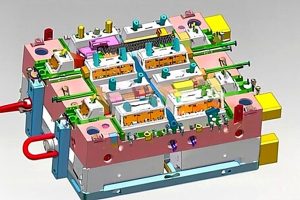
Mold design is a primary—and often overlooked—contributor to stress whitening. Unlike processing parameters that can be tuned in production, mold-related whitening often requires tooling modifications to fully resolve.
Gate location and size: A gate that is too small creates excessive shear stress in the melt as it enters the cavity. This shear stress is “frozen in” as the part cools, and any subsequent mechanical handling can trigger whitening at and around the gate area. Gates should be sized to allow the polymer to enter without exceeding its critical shear rate, and should be positioned away from cosmetically critical surfaces where possible.
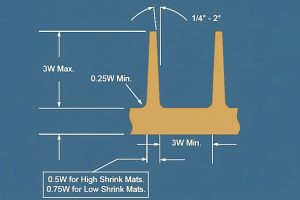
Wall thickness uniformity: Abrupt thickness transitions create differential cooling rates and internal stresses. Parts with sections where wall thickness changes by more than 25% of the nominal wall are especially prone to residual stress concentrations that manifest as whitening during ejection or later in service.
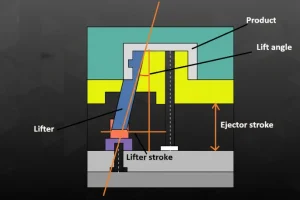
Ejector pin design: Ejector pins that are undersized for the part geometry concentrate ejection force on small contact areas. The result is localized yielding of the polymer surface at each pin location—the most visible and consistent whitening pattern on semi-crystalline parts. Using larger-diameter pins, blade ejectors for ribs, or air ejection systems distributes force and prevents this defect in 플라스틱 사출 금형 설계4
초안 각도: Insufficient draft forces the part to slide against the cavity wall during ejection, applying tensile stress to the outer surface. Minimum 1–2° draft per side is required for most resins; textured surfaces need 3–5° per side.
Cooling channel geometry: Non-uniform cooling creates differential shrinkage and residual stress. Areas that cool faster than adjacent sections are under tension, increasing whitening susceptibility when the part is stressed in service.
Enlarging ejector pins is often the single most effective fix for post-ejection stress whitening.True
When whitening appears only at ejector pin contact points, undersized pins are the definitive cause. Increasing pin diameter from 4 mm to 8 mm reduces contact pressure by 75% and typically eliminates the defect without any process adjustment.
Which Process Parameters Most Commonly Trigger Whitening Defects?
Process parameters can be adjusted without mold modifications, making them the first place to investigate when whitening appears.
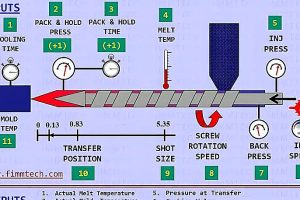
Hold pressure (packing pressure): Excessive hold pressure over-packs the cavity, creating compressive stress that rebounds as tensile stress on the part surface after ejection. Reducing hold pressure by 10–15% and extending hold time slightly often resolves whitening without causing sink marks.
Melt temperature: Running below the minimum recommended melt temperature increases polymer viscosity, raising shear stress at the gate and in thin sections. For PP, maintaining melt temperature in the 220–250 °C range is generally optimal. Too high a melt temperature can cause thermal degradation and chain scission, which weakens the polymer and increases whitening susceptibility over the part’s life.
주입 속도: Excessive injection speed generates high shear stress that can orient polymer chains in unfavorable directions, creating residual stress frozen into the part. Reducing injection speed in the first 30–40% of fill is particularly effective for gate-area whitening.
금형 온도: A mold temperature that is too low produces a steep thermal gradient between the melt and the mold surface, freezing in high residual stress. Increasing mold temperature within the recommended range for the resin allows more molecular relaxation before solidification, reducing residual stress. For PP, mold temperatures of 40–80 °C are typical; for engineering resins, higher mold temperatures (80–120 °C) are often required.
냉각 시간: Insufficient cooling time causes the part to be ejected before adequate rigidity has developed. The part then deforms under ejection force, causing stress whitening. Extending cooling time by 15–20% as a trial is a low-risk diagnostic step.
How Do Post-Processing and Storage Conditions Lead to Whitening?
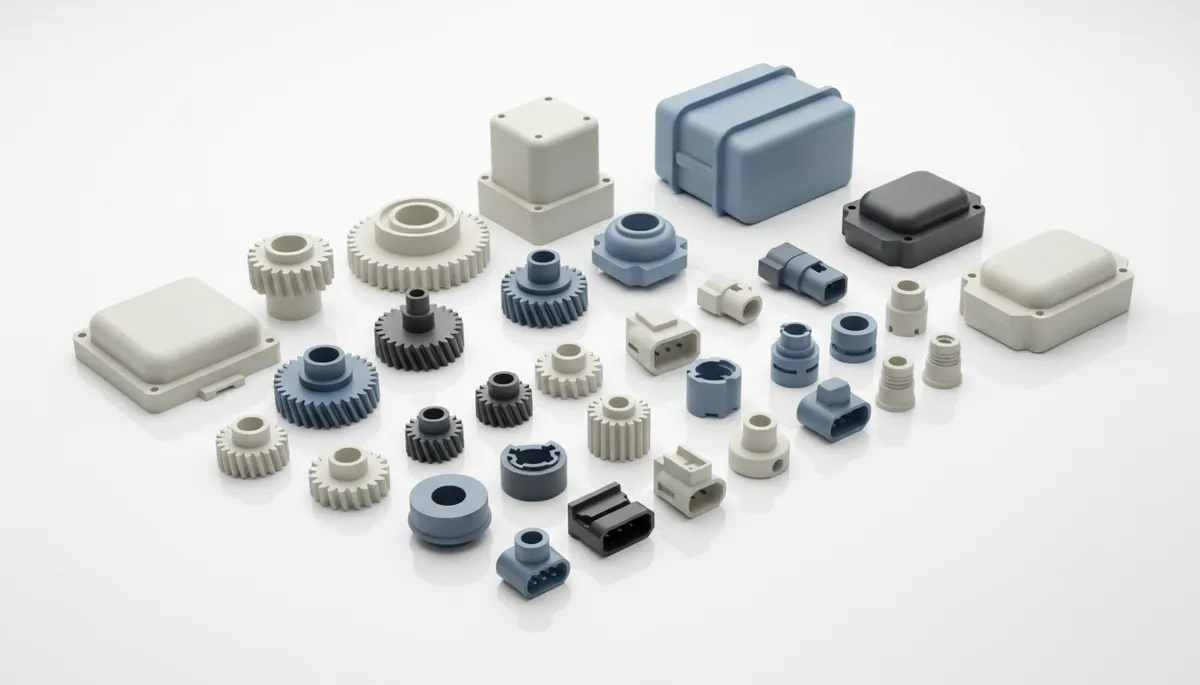
Whitening does not always appear immediately after molding. Parts that look perfect at ejection can develop white patches hours or days later due to post-processing or storage stress.
Mold release agent residue: Excessive or incompatible mold release agents deposited on part surfaces can act as stress concentrators or chemical agents that degrade surface integrity. Using release agents sparingly and selecting grades compatible with the specific resin minimizes this risk.
Assembly stress: Press-fit assembly operations, snap-fit closures, and over-tightened fasteners all apply localized stress to injection-molded components. For parts that will experience assembly stress, the combined stress (residual molding stress + assembly stress) must stay below the polymer’s yield point. Annealing parts before assembly is a standard practice for high-residual-stress components.
Chemical exposure: Cleaning agents, lubricants, and environmental chemicals can cause environmental stress cracking (ESC)—a phenomenon related to but distinct from thermal stress whitening. For PP, alcohols and certain surfactants are common culprits. For PC, ketones and aromatic solvents must be avoided entirely. Reviewing the chemical resistance profile of the chosen resin before finalizing product design is essential.
Temperature cycling: Rapid temperature swings in storage or shipping create differential thermal expansion stresses. Parts stored in thin-walled packaging in contact with other parts under stacking loads may develop localized whitening at contact points. Individual trays or foam separators mitigate this risk during transport.
UV exposure: Extended UV exposure degrades the polymer’s antioxidant package and can cause surface embrittlement that predisposes the surface to whitening under even minor mechanical contact. UV-stabilized grades and opaque packaging eliminate this pathway.
What Are the Most Effective Solutions for Each Whitening Cause?

Changing to a slower injection speed always eliminates whitening defects.False
Slower injection speed reduces shear stress but does not address all whitening causes—ejector pin sizing, mold surface texture, and gate location are equally critical factors.
Raising mold temperature reduces stress whitening caused by rapid surface solidification.True
Higher mold temperature allows the polymer skin to form more slowly, reducing internal stress concentrations that create micro-voids and visible stress whitening at the surface.
Effective whitening remediation requires matching the solution to the root cause. The following table maps causes to actionable solutions:
| Root Cause | Primary Solution | Secondary Solution | Expected Outcome |
|---|---|---|---|
| Excessive hold pressure | Reduce hold pressure 10–15% | Extend hold time | Eliminate over-packing stress |
| Low mold temperature | Raise mold temperature | — 최적화의 마지막 단계로서 등급 전환, 핵제 첨가, 건조 프로토콜 검증 — | Reduce frozen-in residual stress |
| High injection speed at gate | Reduce first-stage injection speed | Enlarge gate diameter | Lower gate-area shear stress |
| Undersized ejector pins | Increase pin diameter | Add blade ejectors for ribs | Distribute ejection force evenly |
| Insufficient cooling | Extend cooling time | Optimize coolant temperature | Part rigid enough at ejection |
| Wall thickness variation | Redesign to uniform wall | Use flow simulation to guide fill | Eliminate differential stress |
| Moisture in hygroscopic resin | Pre-dry at manufacturer specs | Use dehumidifying hopper dryer | Eliminate splay/steam marks |
| Impact-modified resin aesthetics | Switch to non-rubber-toughened grade | Add nucleating agent | Reduce crystallite size, hide whitening |
Frequently Asked Questions About Injection Molded Products Turning White

Q: Is stress whitening the same as splay marks?
A: No. Stress whitening is caused by mechanical stress creating micro-voids in the solid polymer. Splay marks (silver streaks) are caused by gas—either moisture or degradation gases—being dragged along the melt flow front during filling. Both appear as white or silvery discoloration but require different corrective actions: splay requires improved drying or lower melt temperature, while stress whitening requires pressure/design changes.
Q: Can surface coating prevent stress whitening from showing?
A: A paint or UV coating can mask mild stress whitening temporarily, but the underlying micro-void formation continues and can cause the coating to crack or delaminate later. Addressing root causes is always preferable to cosmetic masking.
Q: Why does whitening appear only after parts have been assembled?
A: Assembly adds mechanical stress (from press-fits, snap-fits, or fasteners) to existing residual molding stress. The combined stress exceeds the polymer’s yield point locally, forming micro-voids. Annealing parts before assembly to relieve residual stress is the standard engineering solution.
Q: Does color affect whitening visibility?
A: Yes significantly. White or light-colored parts may hide stress whitening entirely (the micro-voids produce white patches that blend in). Dark-colored and transparent parts show the defect most clearly. However, the underlying material degradation is identical regardless of part color.
Q: How can I tell if whitening is from stress or from a chemical reaction?
A: Stress whitening typically has sharp, localized boundaries at mechanical contact points (pins, gates, edges). Chemical-induced whitening (ESC) tends to appear in a diffuse network pattern following molding flow lines or stress-craze networks, and is confirmed by identifying the chemical agent that contacted the surface.
Q: Does annealing fix stress whitening after it has appeared?
A: Annealing at temperatures just below the polymer’s softening point can allow some micro-void closure through polymer chain mobility—this is most effective within 24–48 hours of molding. However, once severe whitening has occurred and voids have grown, annealing provides only partial cosmetic improvement. Prevention is far more effective than remediation.
Summary: Solving Injection Molding Whitening Defects Systematically

Injection molded products turn white because mechanical stress—from processing, ejection, assembly, or service—exceeds the local yield strength of the polymer and creates light-scattering micro-voids. The defect is most common in semi-crystalline polymers (PP, PE) but can affect any thermoplastic under the right conditions.
The diagnostic and remediation hierarchy is:
- Identify the location pattern — gate area, ejector pins, corners, or diffuse surface — to narrow the root cause category.
- Adjust process parameters first — reduce hold pressure, optimize melt and mold temperature, extend cooling — as these are low-cost, fast-turnaround interventions.
- Modify tooling if needed — enlarge ejector pins, adjust gate size, improve cooling channel layout, add draft — as permanent fixes for design-driven whitening.
- Evaluate material suitability — switch grades, add nucleating agents, verify drying protocol — as the final layer of optimization.
- 사출 성형 제품이 하얗게 변하는 이유는? 원인과 해결 방법 — manage chemical exposure, assembly stress, and storage conditions — to prevent service-induced whitening.
Addressing whitening systematically rather than arbitrarily adjusting process parameters saves time, reduces scrap, and produces more consistent long-term results through 사출 금형 온도 제어5
-
Stress whitening in semi-crystalline polymers is documented extensively in defect analysis literature, where localized micro-void formation is identified as the primary light-scattering mechanism. ↩
-
Molecular weight distribution and its effect on whitening susceptibility in polypropylene processing are key material selection criteria for cosmetically critical components. ↩
-
Moisture-induced splay in hygroscopic resins is a distinct mechanism from stress whitening; pre-drying at manufacturer-specified conditions is the standard corrective action. ↩
-
Ejector system design and its role in surface defect prevention are critical considerations in mold engineering, including pin sizing recommendations for different wall thicknesses. ↩
-
Systematic process optimization using mold temperature control reduces residual stress and whitening incidence; recommended settings vary by resin type and nominal wall thickness. ↩
Need a Quote for Your Injection Molding Project?
Get competitive pricing, DFM feedback, and production timeline from ZetarMold’s engineering team.
Request a Free Quote → See our Injection Molding Complete Guide for a comprehensive overview. See our Injection Molding Complete Guide for a comprehensive overview.


 EN
EN  ES
ES  FR
FR  DE
DE  PT
PT  AR
AR  RU
RU  JA
JA  KO
KO  IT
IT  NL
NL  TR
TR  PL
PL 