 콘텐츠로 건너뛰기

What Does the UK’s Injection Molding Market Look Like?
The uk’s 사출 성형 시장1 is a market defined by supplier mix, regional clusters, and sourcing constraints summarized in this section. The UK’s injection molding market generates roughly £7–8 billion in annual revenue and supports over 6,000 companies, making it one of Europe’s largest and most diversified plastics processing sectors.1 웨스트 미들랜즈의 자동차 트림부터 캠브리지의 의료 소모품에 이르기까지, 영국 성형 업체는 거의 모든 제조 업종에 서비스를 제공합니다.
- 영국 사출 성형 시장은 연간 약 70~80억 파운드의 가치가 있으며 6,000개 이상의 활성 기업이 있습니다.
- 주요 응용 분야는 자동차, 의료 기기, 포장, 전자 제품 및 소비재를 포함합니다.
- 세 가지 공급자 계층이 지배합니다: OEM 자회사 작업장, 계약 제조업체, 전문 의료 성형 업체.
- 브렉시트 이후의 리쇼어링과 공급망 회복력이 국내 생산 능력에 대한 새로운 투자를 주도하고 있습니다.
- ZetarMold와 같은 중국 기반 파트너는 대량, 비용 민감 프로그램에 대해 영국 공급업체를 보완할 수 있습니다.
시장은 실질적으로 매년 약 2~3% 성장하며, 이는 다음 분야의 강력한 수요에 기반합니다. 의료 기기, 자동차 경량화및 consumer electronics. 의료 부문만 해도 2020년 이후 두 자릿수 성장을 보였는데, NHS 조달 개혁과 확대되는 민간 의료 부문이 일회용 수술 부품, 진단 장비 하우징, 약물 전달 장치에 대한 수요를 주도했기 때문입니다.
공급자 측면에서 시장은 세 가지 광범위한 범주로 나뉩니다. OEM 자체 생산 공장 — think JLR’s internal plastics division or GSK’s packaging operations — handle proprietary, high-volume parts. 계약 제조업체, 가장 큰 그룹은 여러 OEM에 서비스를 제공하며 20대 기계 작업장부터 200대 이상 프레스 운영 규모까지 다양합니다. 마지막으로, 전문 사출 성형 업체 틈새 시장 집중: 클린룸 의료, 광학 렌즈, 또는 투 샷 소비자 가전. 어떤 계층이 귀하의 프로그램에 맞는지 이해하는 것이 조달 전쟁의 절반입니다.
For buyers evaluating options, the real question isn’t just “who’s nearby” — it’s 품질, 속도, 비용의 적절한 균형을 제공할 수 있는. 이는 종종 신속 대응 브릿지 생산을 위한 영국 사출 성형 업체와 다음과 같은 해외 파트너(예: ZetarMold)를 결합하는 것을 의미합니다. 사출 성형 대규모로. 아래 섹션에서는 그 결정을 내리는 정확한 방법을 안내합니다.

What Trends Are Shaping the UK’s Injection Molding Industry?
Five UK-specific trends are reshaping how injection molders operate, invest, and compete. Ignore them and you’ll pick a supplier optimized for 2015, not 2025.
1. 자동화와 무인 생산
UK labor costs run 30–40% above the EU average, so British molders are racing to automate. Leading firms like Nasalife and Broanmain have invested in robotic part removal, automated quality inspection (vision systems), and lights-out cells that run 120+ hours per week unstaffed. If a UK supplier isn’t talking about their automation roadmap, they’re falling behind.
2. 지속 가능한 소재와 순환 경제
The UK’s Plastic Packaging Tax (£210/tonne for packaging with less than 30% recycled content) has pushed molders toward post-consumer recycled (PCR) resins and bio-based polymers. Companies like Berry BPI and Faerch UK now mould CPET trays with 80–100% recycled content. Expect sustainability claims in every RFQ response — but verify actual PCR percentages and food-contact certifications.
3. 근접 해외 외주 및 공급망 복원력
브렉시트 마찰, COVID 차질, 홍해 물류 불안정성이 가속화했습니다. 니어쇼어링2 대화를 활용하세요.3 However, “nearshoring” for UK buyers doesn’t always mean UK production — many companies now dual-source: a UK molder for lead-time-critical parts and a China or Eastern Europe partner for cost-optimized volume. The smartest procurement teams run both lanes simultaneously.
4. 인더스트리 4.0과 실시간 공정 모니터링
인더스트리 4.03 도입이 빠르게 가속화되고 있습니다 — 모든 배럴에 센서, 실시간 SPC 대시보드, 예측적 유지보수 알림 및 디지털 트윈 시뮬레이션.4 몰드플로우 분석은 기본 요건입니다; 차별화 요소는 성형 업체가 생산 실행 중 실시간 캐비티 압력 데이터를 보여주고 모든 숏 샷을 포착했음을 입증할 수 있는지 여부입니다.
5. 의료 기기 성장과 청정실 역량
영국 의료 기기 시장은 2024년에 120억 파운드를 초과했으며, 사출 성형 부품은 점점 더 큰 비중을 차지하고 있습니다. ISO 134854인증 청정실 사출 성형2 는 경쟁적 장벽이 되었습니다 — TE Connectivity, Charlotte Knights, RPG International과 같은 성형 업체들은 ISO Class 7 및 8 시설에 수백만을 투자했습니다. 제품이 환자와 접촉한다면 이 인증은 필수입니다.
종합하면, 이러한 추세는 가치 사슬 상승을 위해 투자하는 영국 성형 부문을 가리킵니다 — 노동 비용 상쇄를 위한 자동화, 재료 포트폴리오의 친환경화, 더 높은 마진 작업을 확보하기 위한 의료 등급 클린룸 구축. 구매자에게 주는 함의: 표준 상용 부품에 대해서도 영국 성형 업체가 프리미엄 역량과 더 높은 단가를 제시할 것이라고 예상하십시오. 가치는 존재합니다 — 하지만 실제로 필요할 때만 그렇습니다.
“UK injection molders investing in automation can achieve 120+ hours of lights-out production per week, significantly reducing per-part labor cost.”True
주요 영국 성형 업체들은 보고하기를, 완전 자동화 셀 — 로봇 추출, 비전 검사, 컨베이어 포장 — 이 주말과 야간 교대 근무 동안 무인으로 운영되어 단일 교대 수작업 운영에 비해 매주 효과적으로 60–80 기계 시간을 추가한다고 합니다.
“Any UK injection molder with ISO 9001 certification is automatically qualified to produce medical device components.”False
ISO 9001은 일반 품질 경영 표준입니다. 의료 기기 생산에는 특히 ISO 13485가 필요하며, 이는 검증된 공정, 위험 관리(ISO 14971), 추적성, 그리고 ISO 9001이 다루지 않는 청정실 환경 관리 등을 요구합니다.
영국에서 사출 성형 공급자를 어떻게 선택하나요?
Choosing an injection molding supplier in the uk is about tooling capability, quality systems, communication, and commercial fit. Selecting a UK injection molding supplier comes down to five hard-nosed dimensions. Skip any one and you’ll pay for it — in scrap, delays, or legal liability. Use our injection molding supplier sourcing guide RFQ 체크리스트로.
1. Certifications and Regulatory Compliance
At minimum, demand ISO 9001. If you’re in medical, insist on ISO 13485 with cleanroom classification. Automotive? IATF 16949. Don’t accept “we’re working on certification” — the certification timeline is 6–12 months, and you’ll bear the risk in the meantime. Ask to see the actual certificate and its scope; some molders hold ISO 9001 for design only, not production.
2. Machine Fleet and Tonnage Range
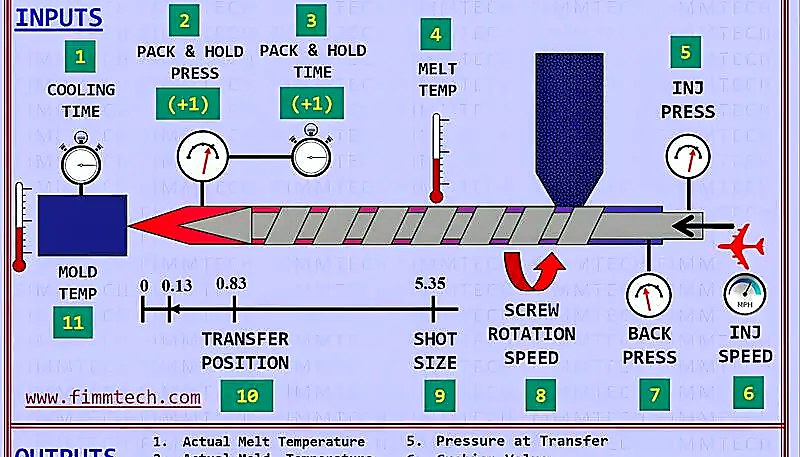
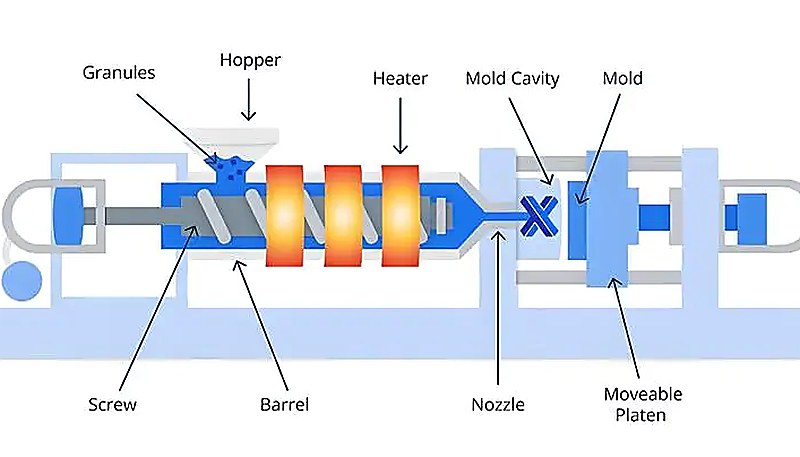
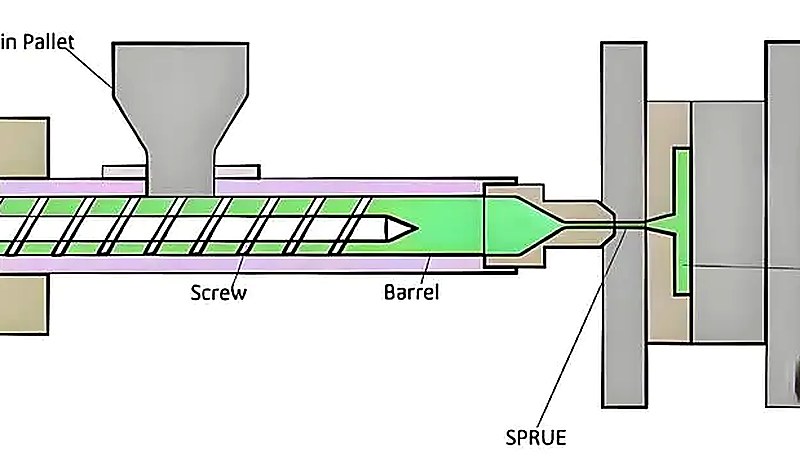
Match their press capacity to your part. A molder with 50–200T machines can’t efficiently run a 1,500T automotive bumper tool, and vice versa. Ask for a machine list (tonnage, shot size, controller type). If they have all-electric presses, that’s a positive signal for precision and energy cost — especially relevant as UK energy prices remain among Europe’s highest. For tooling checks, reference our 사출 금형. For machine setup basics, see our 스크류 사출 성형기 guide.
3. Minimum Order Quantity (MOQ) and Lead Time
UK molders typically set MOQs between 500 and 5,000 units — far higher than Chinese suppliers who’ll often run 100-piece batches. Tooling lead time in the UK runs 8–14 weeks (vs. 4–6 weeks in China). If your program needs < 2,000 units/year, a UK molder's setup amortization will kill your unit economics. Consider a lower-cost 사출 금형 from China for low-volume bridge work.
4. Quality Systems and Inspection Capability
A CMM (coordinate measuring machine) and optical comparator are baseline. For tight-tolerance work, ask about GD&T capability, SPC reporting frequency, and PPAP/IQOQ experience. The best UK molders will send you first-article inspection (FAI) reports with every dimension plotted — not just a pass/fail sheet.
5. Pitfall Avoidance: Three Red Flags
적신호 #1: The molder won’t let you visit. If they refuse a factory audit, walk away — there’s something to hide. 레드 플래그 #2: Tooling ownership is ambiguous. Insist that your tooling drawings and the physical mold are your property, documented in the supply agreement. 적신호 #3: Single-source material risk. A good molder carries 2–3 approved material alternatives for every specification. Ask for their material contingency plan. For a broader framework, consult our sourcing guide.
Which Are the Top 10 Injection Molding Companies in the UK?
The top 10 injection molding companies in the uk are the suppliers compared below based on capability, industry fit, and sourcing reliability. Below are ten UK injection molding companies worth shortlisting, selected based on revenue, technical capability, industry reputation, and geographic diversity. Each profile covers what they do best, where they serve, and what buyers should know before sending an RFQ.
1. Berry Global (UK Operations)
Founded: 1967 (parent) | UK Employees: 2,500+ | Locations: Multiple UK sites including Leeds, Poole, and Heanor
Berry Global is the UK’s largest injection molder by revenue, operating over 150 presses across its British facilities. The company dominates in rigid packaging (caps, closures, thin-wall containers), serving major FMCG brands like Unilever, Tesco, and Reckitt. Berry’s scale gives it unmatched purchasing power on resin — a critical advantage when polypropylene prices swing 20% in a quarter.
Their UK sites run both hydraulic and all-electric machines from 50T to 1,500T, with extensive in-mold labeling (IML) and cleanroom capability for dairy and pharmaceutical packaging. Berry holds BRC/IoP certification across its food-contact facilities. The downside for smaller buyers: MOQs start at 50,000+ units, and lead times for new tooling run 12–16 weeks. If you need 500 pieces of a custom part, Berry is not your shop.
2. Broanmain Plastics
Founded: 1958 | Employees: 80+ | 위치: Dorking, Surrey
Broanmain is a family-owned contract molder with a reputation for technical precision and flexibility. They operate 27 injection molding machines (40T–650T), including all-electric Toshiba and Fanuc presses optimized for tight-tolerance medical and electronics components.
Their sweet spot is low-to-medium volume (1,000–100,000 units) work that Tier 1 molders won’t touch. Broanmain holds ISO 9001 and ISO 14001, with cleanroom assembly capability. They’ve invested heavily in automation — robotic extractors, automated packing lines, and inline vision inspection. Managing director Charlotte Biddulph is well-known in UK plastics circles and speaks regularly on industry 4.0 adoption. A solid choice for medical devices, industrial components, and consumer electronics housings.
3. Nasalife (formerly Nasal Products)
Founded: 1986 | Employees: 120+ | 위치: Rochdale, Greater Manchester
Nasalife specializes in drug-delivery devices and medical consumables, operating from a purpose-built 50,000 sq ft facility with ISO Class 7 cleanrooms. They hold ISO 13485, ISO 9001, and FDA device registration — making them one of the few UK molders qualified to supply Class II medical devices directly into the US market.
Their 30+ injection molding machines (all-electric Arburg and Engel) run 24/7, producing nasal sprays, inhaler components, and diagnostic test housings. Nasalife offers full turnkey service: tool design, molding, assembly, and sterile packaging. Lead time for new medical tools runs 10–14 weeks. For pharma and medtech buyers, Nasalife is a genuine Tier 1 option.
4. TE Connectivity (UK Molding Operations)
Founded: 1941 (parent) | UK Employees: 500+ | Locations: Aberdeen, Swansea, and others
TE Connectivity’s UK molding operations focus on high-performance connector and sensor housings for oil & gas, aerospace, and defense applications. Their Aberdeen facility specializes in subsea connector molding — overmolding cables and connectors rated to 10,000+ PSI operating depth.
TE holds AS9100 (aerospace), ISO 13485 (medical), and IATF 16949 (automotive) certifications — a rare trifecta that speaks to their engineering rigor. Their UK presses range from 25T micro-molding machines to 1,000T multi-cavity tools. The trade-off: TE is expensive, with tooling costs 30–50% above independent UK molders. You’re paying for the name, the certifications, and the global supply-chain infrastructure.
5. Rutland Plastics
Founded: 1958 | Employees: 150+ | 위치: Oakham, Rutland
Rutland Plastics is one of the UK’s most experienced independent molders, with 40+ machines spanning 25T to 1,300T. They’re a go-to for medium-volume industrial and automotive components — think under-bonnet connectors, HVAC housings, and cable management systems.
Their engineering team (8 tooling engineers) handles mold design in-house using Moldflow simulation, and they offer rapid prototyping via 3D-printed injection mold tooling for sub-500-unit bridge runs. Rutland holds ISO 9001 and IATF 16949, with a particular strength in glass-filled nylon and high-temperature engineering polymers. Lead time for production tooling: 8–10 weeks. Competitive pricing for a UK-based operation — roughly 15–20% below the Big Three (Berry, novelis, TE) on comparable work.
6. M&H Plastics (M&H Group)
Founded: 1973 | Employees: 200+ | 위치: Beccles, Suffolk
M&H Plastics is the UK’s leading molder of rigid plastic packaging for the pharmaceutical, personal care, and nutritional sectors. Their 100,000 sq ft facility houses 40+ machines (40T–500T) with ISO Class 7 cleanrooms, producing pill bottles, supplement tubs, and cosmetic jars.
They hold ISO 9001, ISO 14001, and BRC/IoP Grade A certification — the gold standard for food and pharma packaging. M&H also operates extensive post-molding decoration (silk screening, heat-transfer labeling, tamper-evident sealing). Their minimum runs start at 5,000 units for standard packaging shapes, with custom tooling at 8–12 weeks. If you need a UK-source pill bottle or cosmetic jar, M&H should be your first call.
7. 샬럿 나이츠 플라스틱스
Founded: 1984 | Employees: 60+ | 위치: 베리 세인트 에드먼즈, 서퍽
샬럿 나이츠는 정밀 성형과 의료 기기 조립의 교차점에서 운영됩니다. 그들의 ISO 13485 인증 시설은 20대 이상의 전기식 기계(30T–350T)를 운영하며, 작고 복잡한 부품: 카테터 팁, 진단 카트리지 하우징, 미세 유체 장치에 특화되어 있습니다.
Their differentiator is vertical integration — they mold, assemble, test, and package medical devices under one roof. This eliminates the quality risk of shipping semi-finished parts between suppliers. CK holds ISO 13485, ISO 9001, and ISO 14001. They’re particularly strong in multi-shot molding (2K and 3K), enabling hard/soft overmolded grips and sealed housings in a single cycle. Volume range: 1,000–500,000 units/year.
8. 프리비(구 스텝 2 플라스틱스)
Founded: 1986 | Employees: 100+ | 위치: 헐, 이스트요크셔
프리비는 대형 부품 전문 대형 성형 업체입니다: 자동차 차체 하부 실드, 쓰레기통 부품, 놀이터 장비, 운송 포장 등이 있습니다. 그들의 장비는 최대 2,000톤까지 포함되어 있으며, 영국에서 가장 큰 규모 중 하나로, 10kg을 초과하는 사출 중량을 처리할 수 있습니다.
They hold ISO 9001 and ISO 14001, with growing IATF 16949 automotive business. Privi runs significant recycled-content programs, molding wheelie bins and recycling containers from 100% post-consumer polyethylene. If you need large parts (>1 kg shot weight) in volume, Privi’s tonnage capacity and material expertise make them a strong contender. Tooling lead time: 10–14 weeks for multi-cavity production molds.
9. 오메가 플라스틱스
Founded: 1994 | Employees: 70+ | 위치: 크레이들리 히스, 웨스트 미들랜즈
오메가 플라스틱스는 영국 제조업의 중심부에 위치하며 소량, 다품종 생산을 전문으로 합니다. 이는 스타트업, 브릿지-투-프로덕션 런, 교체 부품에 딱 맞는 프로필입니다. 그들은 20대의 장비(50톤~650톤)를 운영하며 2~3주 내에 알루미늄 프로토타입 금형을 제공합니다.
Their production tooling lead time is competitive at 6–8 weeks — among the fastest in the UK — thanks to in-house toolmaking. Omega holds ISO 9001 and serves automotive, defense, and industrial markets. They’re a pragmatic choice when you need 200–5,000 parts quickly and don’t want to wait for offshore tooling. Unit prices are higher than China but competitive within the UK market.
10. RPG 인터내셔널
Founded: 1979 | Employees: 300+ | Locations: 스윈던, 웸블리 및 기타 지역
RPG 인터내셔널은 영국 내 여러 시설에서 사출 성형, 블로우 성형, 압출을 포괄하는 다각화된 플라스틱 그룹입니다. 그들의 사출 부문은 60대 이상의 장비(50톤~1,600톤)를 운영하며, 자동차(JLR, 혼다), 건설, 소비자 전자 제품 시장에 서비스를 제공합니다.
RPG’s Swindon site holds IATF 16949 and ISO 14001, with dedicated paint and assembly lines for automotive interior trim. Their Wembley facility focuses on consumer electronics housings and cable management. RPG offers a full service from design support through to JIT delivery, with kanban inventory management for ongoing production. Tooling investment is mid-range — not the cheapest UK option, but their integrated services (mold, paint, assemble, ship) can reduce your total landed cost versus managing three separate suppliers.
| Company | Founded | Employees | Key Sectors | Certifications | Tonnage Range |
|---|---|---|---|---|---|
| 베리 글로벌 (영국) | 1967 | 2,500+ | 포장, FMCG | ISO 9001, BRC/IoP | 50T–1,500T |
| 브로안메인 플라스틱스 | 1958 | 80+ | 의료, 전자 | ISO 9001, 14001 | 40T–650T |
| 나사라이프 | 1986 | 120+ | 의료, 제약 | ISO 13485, FDA | All-electric |
| TE 커넥티비티 | 1941 | 500+ | Oil & Gas, Aerospace | AS9100, IATF 16949 | 25T–1,000T |
| Rutland Plastics | 1958 | 150+ | 자동차, 산업용 | ISO 9001, IATF 16949 | 25톤~1,300톤 |
| M&H Plastics | 1973 | 200+ | 제약 포장 | ISO 9001, BRC/IoP A | 40톤~500톤 |
| 샬럿 나이츠 | 1984 | 60+ | 의료 기기 | ISO 13485, 14001 | 30T–350T |
| 프리비 | 1986 | 100+ | 자동차, 쓰레기통 | ISO 9001, 14001 | 최대 2,000톤 |
| 오메가 플라스틱스 | 1994 | 70+ | 자동차, 방산 | ISO 9001 | 50T–650T |
| RPG 인터내셔널 | 1979 | 300+ | 자동차, 전자제품 | IATF 16949, ISO 14001 | 50톤~1,600톤 |
When shortlisting from this list, match your requirements to the molder’s strengths. Need cleanroom medical molding? Start with Nasalife or Charlotte Knights. Large-format automotive parts? Privi or RPG International. Low-volume bridge production? Omega Plastics. And for high-volume cost-optimized programs where UK pricing doesn’t work, a China-based partner like ZetarMold delivers the same quality at 40–60% lower tooling cost — with 30+ English-speaking PMs who understand UK procurement expectations.
How Does the UK’s Injection Molding Cost Compare to China?
The uk’s injection molding cost is more competitive than china when the cost, lead time, and quality tradeoffs below match your program needs. Let’s talk numbers. UK injection molding is 30–60% more expensive than China on a like-for-like basis. Here’s the breakdown. Compare cycle timing in our 사출 성형 생산 시간 guide.
| Cost Factor | UK (GBP) | China (USD, approx.) |
|---|---|---|
| Simple single-cavity mold | £8,000–£15,000 | $3,000–$6,000 |
| Multi-cavity production mold | £20,000–£50,000 | $8,000–$20,000 |
| Unit price (PP, 10K volume) | £0.35–£0.80/part | $0.15–$0.40/part |
| Unit price (PA66-GF30, 5K volume) | £1.20–£2.50/part | $0.50–$1.20/part |
| Tooling lead time | 8–14주 | 4–6 weeks |
| Shipping (LCL, per cbm) | Included (domestic) | $80–$150 |
| Shipping (FCL 20ft) | N/A | $2,500–$4,500 |
The headline cost gap is clear, but the total cost of ownership (TCO) narrows when you factor in hidden costs on both sides. UK molders have higher resin prices (UK PP averages £1.30–£1.60/kg vs. $1.20–$1.50/kg in China), but you save on freight, customs duty (most plastic parts enter the UK at 0% tariff, but molds attract 2.7%), and — critically — communication overhead.
On the China side, hidden costs include: import duties (6.5% on most plastic articles entering the UK), quality rework loops (budget 5–10% scrap allowance on first production runs), currency risk (GBP/CNY has moved 8% in the last 12 months), and travel costs if you insist on factory visits (£3,000–£5,000 per trip). A well-managed China sourcing program with a trusted partner still saves 25–40% on TCO for volumes above 10,000 units/year — but only if you get the execution right.
“UK injection molders with in-house toolmaking can deliver production molds 20–30% faster than those who outsource tool construction.”True
In-house tooling eliminates 2–4 weeks of logistics and communication overhead between molder and toolmaker. Omega Plastics and Rutland both report 6–8 week tooling cycles vs. the 10–14 week UK industry average for outsourced tooling.
“Injection molded parts imported from China to the UK always attract a 20% import duty, making domestic production cheaper in every scenario.”False
The actual UK import duty on most injection-molded plastic articles (HS 3926) is 6.5%, not 20%. VAT at 20% applies equally to domestic and imported goods. For high-volume programs, the 25–40% production cost advantage of China easily offsets the 6.5% duty, resulting in net savings.
When Is the UK the Right Sourcing Choice for Injection Molding?
Neither UK nor China is universally better — the right answer depends on your program’s specifics. Here’s a scenario-based framework to decide.
Choose UK When:
1. Ultra-short lead times dominate. If you need T1 samples in 3 weeks and production parts in 5, a UK molder like Omega Plastics with in-house tooling is your only realistic option. Airfreight from China adds 5–7 days and $3–5/kg to the equation.
2. JIT delivery with daily Kanban calls. Automotive OEMs like JLR require suppliers within 50 miles for sequenced-in-line delivery (SILS). If your customer mandates UK-based production, the decision is made for you.
3. ITAR or classified defense work. UK defense contracts often require domestic production under ITAR-equivalent restrictions. TE Connectivity’s UK facilities serve exactly this niche.
Choose China When:
1. Annual volume exceeds 20,000 units. The tooling and unit price savings become material at this volume. A $15,000 mold savings plus $0.30/part savings adds up to $21,000+ per year on a 20K program.
2. Multi-cavity, high-precision tooling is required. China’s mold-making infrastructure — particularly in the Yangtze River Delta around Shanghai — rivals anything in Europe at 40–60% lower cost. Companies like ZetarMold deliver 16+ cavity production molds with full Moldflow optimization.
3. Your product portfolio is broad. If you’re managing 50+ SKUs across different part families, a dedicated China partner provides the capacity and flexibility that no single UK molder can match cost-effectively.
ZetarMold’s Shanghai factory runs 45 injection molding machines (90T–1,850T) and produces 100+ molds per month. With 30+ English-speaking project managers and ISO 9001/13485/14001/45001 certifications, it’s built for export. UK buyers get China pricing with communication quality that closes the gap.
What Are the Most Common Questions About Injection Molding in the UK?
자주 묻는 질문
What is the average cost of an injection mold in the UK?
A single-cavity mold in the UK costs £8,000–£15,000. Multi-cavity production molds range from £20,000 to £50,000 depending on complexity, material, and surface finish requirements. This is roughly 2–3× the cost of equivalent tooling from China. For RFQ planning, ask whether the price includes DFM review, moldflow support, trial shots, texture, spare inserts, and ownership documents. Those line items decide the real comparison between UK tooling and offshore tooling. In practice, compare suppliers with the same drawing pack, resin grade, tolerance
How long does injection molding tooling take in the UK?
UK tooling lead times run 8–14 weeks for production molds. Molders with in-house toolmaking (Omega, Rutland) can deliver in 6–8 weeks. Prototype aluminum tooling is available in 2–3 weeks. China typically delivers production tooling in 4–6 weeks. Build the schedule backward from your launch date and reserve time for DFM changes, steel ordering, first-shot correction, texture approval, and packaging validation. A supplier promising production tooling in four weeks needs evidence. In practice, compare suppliers with the same drawing pack, resin
Which UK injection molding companies are ISO 13485 certified for medical work?
Nasalife, Charlotte Knights, and TE Connectivity hold ISO 13485 for medical device molding. Several others (Broanmain, Berry) have cleanroom capability but may hold ISO 9001 rather than 13485 depending on the site. Always verify the specific facility’s certification scope. Before awarding medical work, verify that the ISO 13485 scope covers injection molding or assembly, not only distribution. Also request validation samples, traceability records, and cleanroom classification before you issue the purchase order. In practice, compare suppliers with the same drawing
Can I use a Chinese injection molding supplier for products sold in the UK?
Absolutely. Most plastic articles (HS 3926) attract 6.5% import duty entering the UK. Add freight ($2,500–$4,500 per 20ft container) and 5–7 day transit. For volumes above 10,000 units/year, the unit price savings typically offset all import costs by 25–40%. The practical question is not legality but total landed risk. Include duty, freight, inspection, communication speed, tooling ownership, and rework loops. For stable annual demand, a qualified Chinese supplier can still outperform UK-only sourcing. In practice, compare suppliers with the same
What is the minimum order quantity (MOQ) for UK injection molders?
UK MOQs typically start at 500–5,000 units. Large molders like Berry require 50,000+ units. For lower volumes, smaller molders like Broanmain or Omega accept runs from 200–1,000 pieces. Chinese suppliers like ZetarMold often accommodate MOQs from 100–500 units. MOQ depends on resin, tool setup time, color changes, and whether the supplier has idle press capacity. Ask for a stepped quote at 500, 1,000, 5,000, and 20,000 pieces so you can see where the unit cost drops. In practice, compare suppliers
Are UK injection molding companies competitive for automotive production?
Yes, but selectively. UK molders with IATF 16949 (Rutland, RPG, TE) serve JLR, Honda, and BMW’s UK operations. They excel at JIT delivery and design collaboration. For high-volume commodity parts, China remains significantly cheaper on unit price. For automotive programs, confirm IATF 16949 scope, PPAP level, material traceability, and change-control discipline. UK molders are strongest when the program needs JIT delivery, close engineering collaboration, or direct OEM audit support. In practice, compare suppliers with the same drawing pack, resin grade,
How do I verify a UK injection molder’s quality credentials?
Request their ISO certificate (check the scope and expiry), ask for a copy of their quality manual, and insist on a factory audit. Legitimate UK molders welcome visits. Check Companies House for financial health — a molder in administration proceedings is a supply-chain risk. A real verification process also checks calibration records, nonconformance reports, corrective action history, and sample inspection data. If the supplier cannot provide those documents quickly, the certification badge alone is not enough. In practice, compare suppliers
What materials do UK injection molding companies commonly use?
PP, PE, ABS, and PA6/PA66 dominate. Engineering polymers (POM, PC, PBT, PPS) are available from larger molders. Medical-grade and food-contact grades require specific certifications. China-based suppliers like ZetarMold offer 400+ material options, often broader than mid-size UK molders. For buyer-side planning, always name the resin family, flame rating, color target, recycled-content requirement, and regulatory market. Material availability can change lead time and price more than the molding cycle itself. In practice, compare suppliers with the same drawing pack, resin grade,
Why Is ZetarMold the Right Partner for UK Buyers?
If you’ve read this far, you already know the UK has strong molders — and you also know they’re expensive and capacity-constrained. ZetarMold exists to fill the gap: China-scale manufacturing with export-grade quality and communication that actually works.
Founded in 2005, ZetarMold operates from a dedicated facility in 상하이 with 45 injection molding machines spanning 90T to 1,850T — covering everything from micro-molded medical components to large automotive housings. The factory produces 100+ molds per month, supported by 120+ production staff 그리고 8 senior engineers who average 15+ years of mold-design experience.
In our experience, what sets ZetarMold apart for UK buyers is the communication infrastructure: 30+ English-speaking project managers 저희 엔지니어는 초기 DFM 피드백부터 생산 일정, 품질 보고 및 물류 조정까지 모든 것을 처리합니다. 번역 계층 없음, 48시간 이메일 주기 없음. 귀하의 PM은 영국 업무 시간 내 4시간 이내에 응답합니다.
품질 시스템은 포괄적입니다: ISO 9001, ISO 13485, ISO 14001 및 ISO 45001 — 품질 관리, 의료 기기, 환경 책임 및 직업 건강을 포괄합니다. 공장은 400개 이상의 소재, 일반 폴리올레핀부터 의료용 TPE 및 고온 엔지니어링 수지까지 제공합니다. 모든 생산 런에는 FAI 보고서, 치수 검사 데이터 및 소재 인증서가 포함됩니다.
영국의 조달 관리자가 선택을 고려할 때 계산은 간단합니다: ZetarMold은 생산 금형을 4–6 weeks (영국 8–14주 대비), 40–60% 더 낮은 금형 비용, 함께 ISO 13485 의료 능력 그리고 가상 또는 직접 감사를 환영하는 상하이 시설이 있습니다.
견적을 비교할 준비가 되셨나요? 3D CAD 파일 및 사양을 ZetarMold로 보내 무료 견적 및 DFM 분석. 대부분의 견적은 24시간 이내에 전체 비용 내역, 공구 타임라인 및 재료 추천과 함께 제공됩니다. 지금 무료 견적 받기 →
-
injection molding market: 사출 성형 시장은 포장, 의료, 자동차 및 산업용 성형 플라스틱 부품을 생산하는 기업, 기계, 재료 및 구매자로 구성된 상업 부문입니다. ↩
-
니어쇼어링: 니어쇼어링은 물류 리드 타임 단축, 공급망 회복력 향상 및 총 소유 비용 절감을 위해 제조 운영을 지리적으로 가까운 국가로 이전하는 것을 말합니다. ↩
-
인더스트리 4.0: 인더스트리 4.0은 제조업에 IoT 센서, 실시간 데이터 분석, AI 기반 공정 제어 및 디지털 트윈을 통합하는 네 번째 산업 혁명을 의미합니다. ↩
-
ISO 13485: ISO 13485는 의료 기기 제조업체를 위한 국제 품질 관리 표준으로, 검증된 공정, 문서 관리, 위험 관리 및 완전한 추적성을 요구합니다. ↩



 EN
EN  ES
ES  FR
FR  DE
DE  PT
PT  AR
AR  RU
RU  JA
JA  KO
KO  IT
IT  NL
NL  TR
TR  PL
PL 