 콘텐츠로 건너뛰기

- The Philippine injection molding market is valued at USD 800–900 million with 5–6% annual growth, driven by packaging, electronics, and automotive sectors.
- Top suppliers include Advanz Tool & Die, Yasufuji, Mirai, and Calamba Shin-Ei — mostly Japanese-affiliated firms concentrated in Cavite, Laguna, and Cebu.
- China delivers 20–30% lower total landed cost despite lower Philippine wages, due to resin import dependence and smaller tooling scale.
- The Philippines is the right choice when GSP tariff savings, English fluency, or supply-chain diversification outweigh pure cost.
- ISO 9001 certification and in-house mold-making capability are the two non-negotiable criteria when evaluating Philippine suppliers.
What Does the Philippines’ Injection Molding Market Look Like?
The Philippines’ injection molding market is valued at USD 800–900 million with 5–6% annual growth. Roughly 150–200 active 사출 성형 companies operate across Metro Manila, Cavite, Laguna, Cebu, and Bataan, serving packaging, automotive, electronics, and medical buyers. Whether you need direct factory production or contract manufacturing1 partnerships, the country offers genuine advantages alongside clear limitations in total landed cost and lead-time predictability.
For injection molded thermoplastics parts, a shortlist should compare 사출 금형 design ownership, material experience, inspection discipline, secondary-process support, and response speed. A local supplier may be the right fit for urgent regional support, while an offshore supplier can be useful when tooling bandwidth, cost control, or broader production capacity becomes the bottleneck.
Are you looking for injection molding companies in The Philippines? We compiled this shortlist of established suppliers and added a buyer-side sourcing guide checklist so you can compare injection mold design depth, quality systems, and communication fit more efficiently.
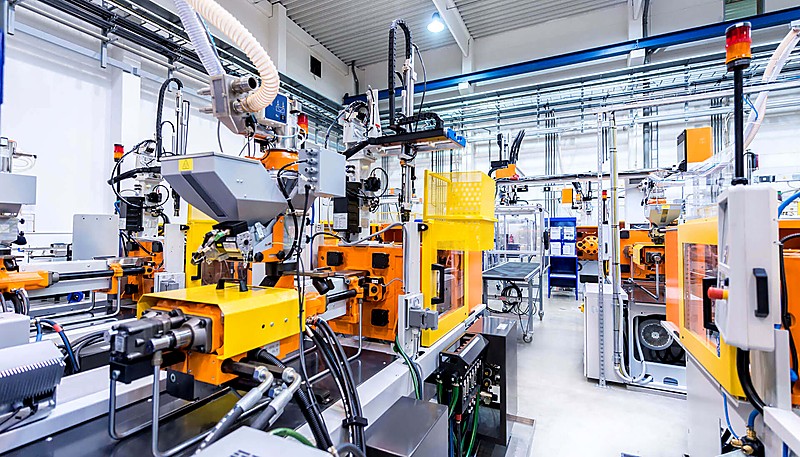
What Trends Are Shaping the Philippines’ Injection Molding Industry?
Five shifts are worth watching if you plan to source from the Philippines in the next few years.
1. Automation is accelerating. Between 2020 and 2024, roughly 30-40% of mid-to-large manufacturers invested in robotic pick-and-place systems and automated quality inspection. The driver is not just labor cost — it is consistency. Manual sorting at high cycle rates introduces variation that foreign buyers will not tolerate.
2. Sustainable materials are slowly gaining ground. Biodegradable and recycled-content 수지2 now make up about 15-20% of local production, pushed by government regulation (the Extended Producer Responsibility Act) and multinational brand requirements. Adoption is slower than in Thailand or Vietnam because imported green resins carry a 25-30% premium.
3. Supply-chain diversification is funneling projects into the country. Since 2022, the Philippines has captured an estimated 8-10% of redirected Southeast Asian manufacturing projects as companies hedge against China-plus-one risk. Most of these projects land in Laguna and Cavite export zones, according to Board of Investments Philippines Manufacturing Roadmap 2024.
4. Industry 4.0 adoption is real but uneven. About 25% of manufacturers with 100+ employees now run ERP-linked production floors and IoT-enabled machine monitoring. The rest still track orders on spreadsheets.
5. Medical-grade capacity tripled in five years. ISO 13485-certified molders grew from 3 in 2019 to 12 in 2024. That is still a small number, but it signals a credible push into regulated device manufacturing — a segment where margins are healthier and competition thinner.
How Do You Choose an Injection Molding Supplier in the Philippines?
The right approach is to evaluate certifications first, then mold-making capability, material expertise, and communication responsiveness. If a supplier cannot produce a current ISO 90013 certificate for medical and IATF 16949 for automotive, move on. Certification is table stakes, not a differentiator.
Next, verify injection mold capacity. Ask for the machine list — tonnage range and number of machines. A supplier running 50T-500T presses will struggle with large automotive housings. One with 50T-1500T coverage has more flexibility. Also check clamping force, shot weight range, and whether they have hot-runner capability.
Then evaluate material expertise. Many Philippine suppliers work primarily with PP and ABS. If your project needs glass-filled nylon, polycarbonate, or TPU, confirm experience with specific examples — not just a line in a brochure. Ask for material certification documents from past production runs.
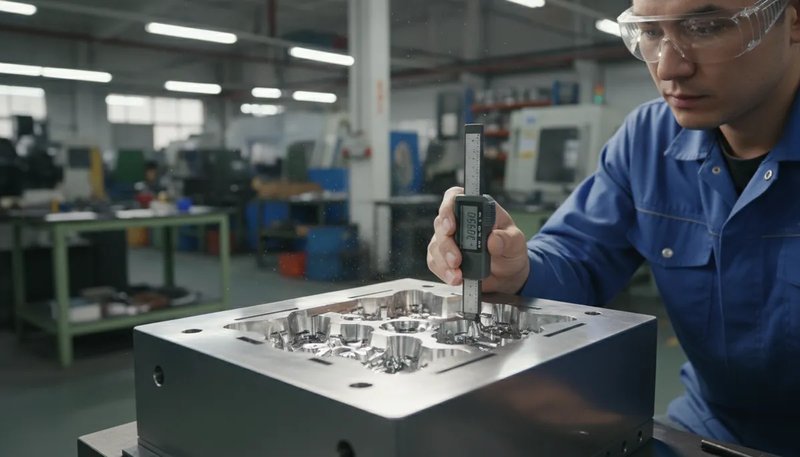
Review quality control infrastructure. Look for in-house CMM (coordinate measuring machine), hardness testers, and documented inspection procedures. A supplier that outsources all dimensional checking will slow your PPAP process by 1-2 weeks.
Finally, clarify MOQs and lead times. Typical MOQs in the Philippines run 1,000-10,000 units depending on complexity. Mold-making lead times are 4-6 weeks for standard tools and 6-10 weeks for multi-cavity or unscrewing molds. Production runs average 2-3 weeks. If you need faster turnaround, China-based suppliers typically deliver molds in 3-4 weeks and production in 1-2 weeks.
Who Are the Top Injection Molding Companies in The Philippines?
The top 10 are Advanz Tool & Die, Yasufuji, Mirai, Calamba Shin-Ei, Muramoto, CEBU YMTECH, Melchers, Ouplus, COFTA, and SUPERSONIC. These companies consistently appear on sourcing shortlists, ranked by production breadth, industry reputation, and verified capability.
1. 어드반즈 툴 & 다이 용품 — Founded in 2002 and headquartered in Metro Manila, Advanz employs 200-299 people and has spent two decades evolving from a tooling supply house into a full-service Total Molding Solutions Provider. Their core strengths are precision mold making, mold design, and production processing — essentially the complete injection molding value chain under one roof. That integrated model means you deal with one team from initial concept to final part, which cuts coordination overhead and reduces the risk of finger-pointing between mold builder and molder. Advanz serves packaging, consumer goods, and automotive components.
“Advanz Tool & Die is one of only a handful of Philippine injection molders that offers integrated mold design, mold making, and production processing under one roof.”True
True. Founded in 2002 in Metro Manila, Advanz evolved from a tooling supply house into a full-service Total Molding Solutions Provider covering the complete value chain.
“All injection molding companies in the Philippines specialize exclusively in automotive parts.”False
False. Most Philippine suppliers focus on packaging, electronics, consumer goods, and medical devices — not just automotive.
2. Yasufuji Mold Corporation — Established in 2007 in Cavite, Yasufuji is a Japanese-affiliated shop with 200-299 employees that merges Japanese precision standards with Filipino engineering talent. Forty-three Filipino engineers work under direct Japanese technical guidance, producing 20+ molds per month. Their specialty is advanced molding: mechanism element molds, double-shot (two-material) injection, and insert molding for threaded inserts or metal sub-components. These are the techniques you need when a single-shot molder cannot meet your design requirements — think overmolded soft-grip handles, dual-color automotive interior parts, or insert-molded electrical terminals. Yasufuji serves the electronics, automotive, and precision machinery sectors. If your project demands Japanese-level quality at Philippine cost structures, this is the short-list candidate.
3. 미라이 필리핀 주식회사 — Founded in 2017 in Laguna, Mirai scaled to 200-299 employees by focusing on packaging materials, component parts, and integrated plastic logistics products. E-commerce growth across Southeast Asia has driven demand for standardized logistics containers, pallets, and transit packaging. Mirai’s modern facility runs newer injection molding equipment with better energy efficiency than legacy shops. For buyers sourcing transit packaging or returnable container systems, Mirai is one of the few Philippine suppliers purpose-built for that application.
4. Calamba Shin-Ei — Operating since 2002 in Laguna with 200-299 employees, Calamba Shin-Ei focuses on injection products and sub-assembly manufacturing under a strict quality-first philosophy. Their differentiator is the combination of molding and assembly under one roof: instead of receiving loose molded parts that you then need to assemble elsewhere, Calamba Shin-Ei can deliver finished sub-assemblies — including ultrasonic welding, snap-fit assembly, and basic electrical integration. That capability matters for consumer electronics housings, automotive interior modules, and any application where post-molding assembly is a bottleneck. The company has built long-term relationships with Japanese OEMs, which speaks to their consistency over volume runs.
“Yasufuji Mold Corporation produces 20+ molds per month with 43 Filipino engineers under Japanese technical guidance.”True
The Cavite-based company combines Japanese precision standards with local engineering talent, specializing in mechanism element molds, double injection, and insert molding for automotive and electronics applications.
“All 150-200 injection molding companies in the Philippines hold ISO 9001 certification.”False
Only about 30-40% of Philippine suppliers hold ISO 9001, and even fewer have industry-specific certifications like IATF 16949 (automotive) or ISO 13485 (medical). Certification levels vary widely.
5. 무라모토 그룹 — Founded in 1935, Muramoto brings nearly ninety years of manufacturing heritage to its Cebu and Lapu-Lapu operations, where 200-299 employees produce automotive devices, AV equipment, information/industry equipment, and medical instruments. Their standout capability is a fully integrated manufacturing system: die design and fabrication, plastic molding, material procurement, sub-assembly, and logistics all linked in-house. For medical-device buyers especially, that integration translates into tighter traceability and faster corrective action when issues arise. Muramoto’s longevity also means they have survived multiple economic cycles without losing their client base — a reliability signal that matters when you are choosing a long-term molding partner.
6. CEBU YM테크놀로지 INC. — Established in 2004 in Cavite with 100-199 employees, CEBU YMTECHNOLOGY draws on Ibaraki Giken metal-forming technology for precision mold manufacturing, machining, and insert molding. Their sweet spot is micro-to-medium components — parts ranging from sub-gram precision pieces up to housings several hundred millimeters across — for telecommunications, electronics, and medical applications. The Ibaraki Giken technology transfer gives them an edge in stamping-die and progressive-die manufacturing that most Philippine molders cannot match. If your project involves tight-tolerance stamped inserts that then get overmolded, CEBU YMTECHNOLOGY is worth a conversation.
7. 멜처스 필리핀 — Founded in 1994 in Makati with 100-199 employees, Melchers is more than an injection molder — they operate across injection molding, plastic recycling, film blowing, and sheet extrusion, backed by pre-sales engineering support and after-sales service infrastructure. Their Plastics department has spent three decades building a reputation for machinery specification and commissioning as well as production. That breadth makes them useful when you need a partner who can advise on material selection, tooling approach, and secondary operations rather than simply quoting a part price. They serve packaging, consumer goods, and industrial clients.
“Muramoto Group has operated since 1935 and runs an integrated manufacturing system from die design through logistics.”True
With nearly 90 years of manufacturing experience, Muramoto produces automotive devices, AV equipment, and medical instruments at their Cebu/Lapu-Lapu facility with fully linked production stages.
“Philippines mold-making lead times are always faster than China’s.”False
Philippines mold making takes 4-6 weeks for standard molds and 6-10 weeks for complex tools, while China typically delivers in 3-4 weeks. Smaller scale and less developed supplier networks contribute to longer turnaround.
8. Ouplus Plastic Industrial Inc. — Established in 2001 in Bataan’s Subic Bay Freeport Zone with 100-199 employees, Ouplus runs one of the broadest plastic-processing portfolios in the country: injection molding, sheet and film extrusion, injection blow molding, injection stretch blow molding, compression molding, extrusion blow molding, pipe extrusion, and thermoforming. If you need a supplier that can produce both a blow-molded bottle and the injection-molded closure on the same purchase order, Ouplus is one of very few Philippine companies equipped for that. Their Subic Bay location also means fast customs clearance and port access, which matters when you are shipping resin in or finished goods out.
9. 코프타 몰딩 코퍼레이션 — Founded in 1988 in Quezon with 100-199 employees, COFTA is the pioneer of monobloc plastic chair manufacturing in the Philippines — a niche that demands extreme cycle-time optimization and high-cavitation tooling to hit viable unit costs. That expertise in high-volume, thin-wall, short-cycle molding transfers directly to food containers, utensils, and thin-wall packaging. COFTA has since expanded into sheet extrusion (Versaboard, Xanlite, SynRoof brands), blown film, cast film, and thermoforming. If you are sourcing disposable food packaging or monobloc furniture at scale, COFTA’s three decades of process refinement give them a cost-per-unit advantage that is hard to beat locally.
10. SUPERSONIC Multi-Products Sales Inc. — Originally founded in 1969 and rebranded in 2004 when the company relocated to Maysan, Valenzuela, SUPERSONIC operates with 100-199 employees providing both plastic injection and blow injection molding, plus metal product fabrication — a rare combination. That dual material capability lets them deliver sub-assemblies that combine plastic housings with metal brackets or fasteners, saving you a supplier coordination step. SUPERSONIC targets automotive, consumer goods, and industrial applications, with a focus on international-standard compliance. Their 55+ year track record through multiple economic cycles demonstrates the kind of supplier resilience that matters for long-term sourcing partnerships.
| Company | Founded | 위치 | Employees | Specialization | Key Industries |
|---|---|---|---|---|---|
| Advanz Tool & Die | 2002 | Metro Manila | 200-299 | Mold making & design | 포장, 자동차, 소비자 |
| Yasufuji Mold | 2007 | Cavite | 200-299 | Double-shot & insert molding | Electronics, automotive |
| Mirai Philippines | 2017 | Laguna | 200-299 | Packaging & logistics materials | Packaging, logistics |
| Calamba Shin-Ei | 2002 | Laguna | 200-299 | Molding & sub-assembly | Electronics, automotive |
| Muramoto Group | 1935 | Cebu | 200-299 | Integrated manufacturing | Automotive, medical, AV |
| CEBU YMTECH | 2004 | Cavite | 100-199 | Precision molds & machining | Telecom, electronics, medical |
| Melchers Philippines | 1994 | Makati | 100-199 | Multi-process plastics | Packaging, industrial |
| Ouplus Plastic | 2001 | Bataan | 100-199 | Full-range plastic processing | Packaging, consumer |
| COFTA Mouldings | 1988 | Quezon | 100-199 | Thin-wall & monobloc | Furniture, food packaging |
| SUPERSONIC | 1969 | Valenzuela | 100-199 | Plastic & metal products | Automotive, industrial |
How Does the Philippines’ Injection Molding Cost Compare to China?

China typically delivers 20–30% lower total landed cost for injection-molded parts, even though Philippine labor is 30–40% cheaper. The gap comes from material costs, mold-making scale, and supply-chain maturity, per Southeast Asia Manufacturing Cost Benchmark Report 2024.
Labor: Philippine manufacturing wages average USD 250-350 per month versus USD 400-600 in China’s coastal factory belt. That looks compelling — and it is, if labor is your biggest cost driver. But for most injection-molded parts, labor accounts for only 10-15% of unit cost, and the overall process flow depends far more on material availability and tooling lead times.
자료: Because the Philippines imports 70%+ of its plastic resins, material costs run 15-20% higher than in China, where domestic petrochemical production keeps resin prices competitive. For resin-heavy parts (large-volume, single-material items), this difference alone can erase the labor savings.
Tooling: Mold costs in the Philippines are 10-25% higher because local tool shops operate at smaller scale, buy less steel, and have fewer in-house CNC/EDM resources. A single-cavity P20 mold that costs USD 8,000-12,000 in China might run USD 10,000-15,000 in the Philippines.
Lead times: Philippine mold making takes 4-6 weeks versus China’s 3-4 weeks. Production runs take 2-3 weeks versus 1-2 weeks. That 1-2 week gap compounds if your project requires design iterations or tool modifications, stretching the total process flow from RFQ to delivery by 3-5 weeks.
Hidden costs to watch: Tariff structures vary by destination market — the Philippines enjoys GSP (Generalized System of Preferences) status for US imports, which can offset some cost disadvantage for specific product categories. But shipping from the Philippines to Europe or North America often requires transshipment through Singapore or Hong Kong, adding 3-7 days and USD 500-1,500 per container.
| Cost Factor | Philippines | China | 차이 |
|---|---|---|---|
| Labor (monthly wage) | USD 250-350 | USD 400-600 | PH 30-40% lower |
| Material cost (resin) | +15-20% vs CN | Baseline | PH 15-20% higher |
| Mold cost (single-cavity P20) | USD 10,000-15,000 | USD 8,000-12,000 | PH 10-25% higher |
| Mold lead time | 4-6 weeks | 3-4 weeks | PH 1-2 weeks slower |
| Production lead time | 2-3 weeks | 1-2 weeks | PH 1 week slower |
| Unit cost (high-volume) | +5-10% vs CN | Baseline | PH slightly higher |
| Unit cost (low-volume) | +15-20% vs CN | Baseline | PH notably higher |
When Is the Philippines the Right Sourcing Choice for Injection Molding?
The Philippines is the right sourcing choice when tariff savings, English fluency, or supply-chain diversification outweigh pure cost advantages. Choose the Philippines when: (1) GSP or ASEAN preferences offset higher base costs. (2) Communication quality matters more than rock-bottom pricing. (3) You are diversifying away from China and want a stable Southeast Asian partner. (4) Volumes are moderate (5,000-50,000 units/year). (5) You are sourcing packaging or furniture, segments where local suppliers have genuine specialization.

China is the better call if: (1) Lowest total cost is your primary driver, especially above 100,000 units. (2) You need the fastest possible mold and production turnaround. (3) Your product requires specialized materials, sourcing guide-level supply-chain depth, or advanced technologies (multi-shot, gas-assist, micro-molding). (4) You are building complex multi-component assemblies that need a mature supplier ecosystem within 50 km. (5) Your end markets are in Asia, so shipping from China minimizes freight cost and time.
At ZetarMold, we bring 20+ years of injection molding and tooling experience to every project. Our Shanghai factory runs 47 injection molding machines from 90T to 1850T, with an in-house mold manufacturing facility supporting 100+ mold sets per month. We work with 400+ plastic materials and operate under ISO 9001, ISO 13485, ISO 14001, and ISO 45001 systems. For Philippines-based buyers evaluating China versus local sourcing, that means DFM, tooling cost, and quality risk can be reviewed together before a project moves into mold build.
Frequently Asked Questions About Injection Molding in the Philippines
자주 묻는 질문
What is the average cost of injection molding in the Philippines?
Injection molding costs in the Philippines vary by part complexity, material, and volume. For a standard single-cavity P20 mold, expect USD 10,000-15,000 in tooling, with unit prices 5-20% higher than China depending on order size. A simple PP part at 50,000 units might cost USD 0.15-0.30 per piece including tooling amortization, while a multi-cavity mold for ABS housings at 100,000 units could run USD 0.08-0.18 per piece. Material premiums of 15-20% over Chinese resin prices are the main cost driver, since the Philippines imports over 70% of its plastic resins. Request itemized quotes that separate tooling, material, processing, and secondary operations so you can compare apples to apples across suppliers.
Does the Philippines have ISO 13485-certified injection molders for medical devices?
Yes, but the pool is small — roughly 12 ISO 13485-certified molders as of 2024, up from just 3 in 2019. These suppliers are concentrated in Cavite and Laguna, primarily serving multinational medical-device companies that require documented traceability and validated processes. If your project requires medical-grade molding, verify certification currency directly with the supplier and request device-history file examples from past production runs. Also confirm cleanroom availability, as not all ISO 13485 holders maintain dedicated cleanroom injection suites — some certify only their quality management system while molding in standard factory environments.
How long does it take to get an injection mold made in the Philippines?
Standard single-cavity molds take 4–6 weeks in the Philippines, while multi-cavity or unscrewing molds take 6–10 weeks. This compares to 3–4 weeks for standard molds in China. Add another 1–2 weeks if the supplier outsources EDM machining or CMM inspection rather than handling it in-house. For buyers on tight timelines, requesting a detailed tooling schedule upfront — including design review, steel cutting, T1 sampling, and correction loops — helps avoid surprises that can push delivery out by two to three weeks beyond the initial quote. Plan for at least one revision cycle in your project timeline.
What materials are most commonly used by Philippine injection molders?
PP(폴리프로필렌)와 ABS가 국내 생산을 주도하며, 전국적으로 포장, 소비재 및 자동차 내부 부품을 포함합니다. HDPE와 LDPE도 포장용 및 생활용품에 널리 사용됩니다. 특수 재료(유리 충진 나일론, 폴리카보네이트, TPU, POM 등)는 사전 확인이 필요합니다 — 많은 공급업체가 브로셔에 이를 명시하지만 해당 재료로의 생산 경험을 문서화하지 못했습니다. 결정하기 전에, 과거 생산 기록의 재료 인증 문서를 요청하고 공급업체가 실제로 프로젝트에 필요한 특정 등급 및 충진율을 처리했음을 확인하세요.
필리핀 사출 성형 업체는 대량 생산 런을 처리할 수 있을까요?
예, 하지만 주의사항이 있습니다. Advanz Tool & Die 및 Yasufuji 같은 최상위 공급업체는 특히 포장 및 소비재용 고캐비티 금형에서 월 500,000+ 단위 런을 유지할 수 있습니다. 그러나 대부분 중간 규모 필리핀 성형 업체는 프레스 용량 제한 및 단일 교대 운영으로 금형당 월 50,000-100,000 단위까지 최대 생산합니다. 500,000 단위 이상 런에는 공급업체가 중복 금형(복제 금형) 또는 다중 교대 능력을 갖추었음을 확인하고, 상류 수지 공급 계약을 확인하세요 — 공급 중단은 필리핀 대량 생산 런에서 배송 지연의 가장 일반적인 원인입니다.
필리핀 사출 성형 공급업체에서 어떤 인증을 찾아야 할까요?
최소한 품질 관리에 ISO 9001은 필수입니다. 자동차 부품에는 IATF 16949 인증이 필요합니다. 의료 기기에는 ISO 13485가 필수입니다. 또한 인증이 최신 상태인지 확인하세요 — 최신 감사 보고서와 인증 만료 날짜를 요청하세요. 사업 허가만 있고 ISO 등록이 없는 공급업체는 품질이 중요한 부품에 대한 경고 신호입니다. 추가 인증(ISO 14001(환경), ISO 45001(직업 건강))은 더 성숙한 관리 시스템을 나타내며, 이는 더 나은 프로세스 규율 및 문서화 관행과 관련이 있습니다.
필리핀은 사출 성형에서 중국의 좋은 대안일까요?
우선순위에 따라 다릅니다. 필리핀은 미국으로 향하는 상품에 대한 GSP 관세 혜택, 사양 오해를 줄이는 강력한 영어 의사소통, 중국 집중 위험을 벗어난 지리적 다양성을 제공합니다. 그러나 중국은 총 비용이 20-30% 낮고, 리드 타임이 1-2주 더 빠르며, 국내 50-80종 대비 수백 가지 인증 등급으로 재료 가용성이 더 넓고, 복잡한 다중 캐비티 금형에 대한 금형 전문성이 더 깊습니다. 단위당 비용이 가장 중요한 대량 상품 부품에는 중국이 더 강력한 선택입니다. 관세 절감, 의사소통 품질 또는 공급망 다양성이 더 중요한 중소량 프로젝트에는 필리핀이 평가할 가치 있는 신뢰성 있고 경쟁력 있는 옵션입니다.
필리핀 구매자에게 ZetarMold가 적합한 파트너인 이유는 무엇인가요?
대부분의 사출 성형 프로젝트에서 중국은 필리핀보다 총 비용이 15-30% 낮고 리드 타임이 더 빠릅니다. 신뢰성과 규모를 중시하는 구매자에게 중국 기반 파트너는 더 강력한 선택입니다.
ZetarMold에서는 2013년부터 상하이 공장에서 사출 성형 부품을 30개 이상 국가의 구매자에게 배송했습니다. 실제 현황은 다음과 같습니다: 47대 사출 성형기(90T-1850T), 월 배송 금형 100+세트, 인증 재료 400+종, ISO 9001/13485/14001/45001 인증, 24시간 내 응답하는 영어 가능 프로젝트 매니저 30+명입니다. 우리 경험상 필리핀 기반 소싱 팀은 국내 공급업체를 구조화된 방식으로 비교해야 합니다. supplier sourcing guide 도구 예산을 확정하기 전에. 일반적으로 현지 옵션보다 단위당 비용이 20-30% 낮고 납기가 1-2주 더 빠르며, 유사하거나 더 엄격한 치수 공차를 제공합니다.
자동차 구성 요소, 의료 기기 하우징, 소비재 제품 외관 또는 산업 부품이 필요한 경우, 24시간 내 프로젝트 견적을 제공하고 3-4주 내 초도품을 배송할 수 있습니다.
Get a Free Quote — 3D 파일과 재료 요구사항을 보내주시면, 당사 엔지니어링 팀이 1영업일 이내에 DFM 피드백과 확정 견적을 제공해 드립니다.



 EN
EN  ES
ES  FR
FR  DE
DE  PT
PT  AR
AR  RU
RU  JA
JA  KO
KO  IT
IT  NL
NL  TR
TR  PL
PL 