 콘텐츠로 건너뛰기

You designed the perfect part, your tooling is dialed in, and first-article inspection passed with flying colors. Then the shipment arrives at your customers dock — and 15% of the parts are scratched, warped, or cracked. Sound familiar? In our experience, packaging is the most underestimated step in the entire 사출 성형 supply chain. This guide breaks down the packaging requirements that actually prevent shipping damage, based on what we have seen work (and fail) across thousands of shipments from our Shanghai factory.
Every year, manufacturers lose millions to shipping damage that could have been prevented with proper packaging. For injection molded components specifically, the stakes are high because these parts often have tight tolerances, delicate surface finishes, and geometric features that are easily deformed under load. Whether you are shipping electronic housings, medical device components, or automotive trim pieces, the packaging strategy must be as carefully engineered as the parts themselves. This article covers the specific packaging requirements, materials, testing standards, and validation processes that separate reliable suppliers from those who leave your parts vulnerable to damage in transit.
- Scratches, cracks, and contamination account for over 80% of shipping damage claims on plastic parts
- Proper packaging starts at part design — sharp edges and thin walls demand extra protection
- ESD-safe and moisture-barrier materials are non-negotiable for electronic and medical components
- ISTA 3A and ASTM D4169 [astm-d4169] are the two testing standards every supplier should reference
- Custom packaging costs more upfront but cuts defect rates by 60-80% compared to generic solutions
What Are the Most Common Types of Shipping Damage for Injection Molded Parts?
Surface scratches, cracks, warpage, and particulate contamination are the four dominant failure modes we see in shipped injection molded parts. Surface damage tops the list — parts rubbing against each other inside a bag or tray is the number-one cause of rejected shipments. Cracks typically originate at stress-concentration points: sharp internal corners, thin wall transitions, or gate remnants that were not fully trimmed. Warpage during transit is less common but more expensive, usually caused by uneven temperature exposure inside shipping containers. Contamination — dust, metal shavings, or chemical residue — is a silent killer, especially for medical and optical parts where even microscopic particles trigger rejection.
According to ISTA [ista-3a1] data, roughly 70% of all package damage happens during last-mile handling — rough forklift moves, conveyor belt transfers, and waist-height drops. This means your packaging has to survive rough handling, not just gentle stacking inside a container.
Surface scratches — caused by part-to-part contact in bulk packaging. Aesthetic covers, lens bezels, and glossy housings are most at risk. Usually reworkable but costly at volume.
Cracks and fractures — caused by impact shock or stress at thin walls. Snap-fit clips, bayonet connectors, and thin ribs are the usual victims. Result: scrap loss.
뒤틀림 및 변형 — caused by temperature cycling or uneven stacking pressure. Large flat panels and long thin profiles suffer most. This is a 100% scrap event.
Particulate contamination — caused by open packaging or dirty transit environments. Medical components, optical lenses, and food-contact parts are affected. Leads to quarantine and expensive re-cleaning.
ESD damage — caused by static discharge during handling.
Electronic housings and sensor carriers are at risk, with latent field failures being the worst outcome.

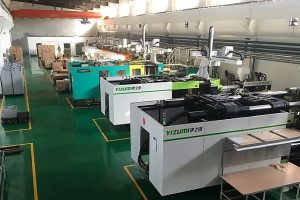
In our Shanghai factory, we run 47 injection molding machines ranging from 90T to 1850T, and we ship parts globally — from small precision components to large automotive panels. Over the years we have learned that packaging decisions must match part geometry and destination. A 500g electronic housing going to Germany by air freight needs completely different protection than a 2kg automotive trim piece going by sea to the US.
How Should Injection Molded Parts Be Packaged for Safe Transit?
사출 성형 부품 are best shipped in three layers: individual wrapping, inner trays, and a double-wall outer box. Layer 1 — Individual protection. Every part gets its own barrier. For small, high-value parts this means individual polybags (ideally with VCI or desiccant for corrosion-sensitive materials). For larger parts, a single wrap of PE foam or bubble wrap with tape securing the seam. The goal is zero part-to-part contact.
Layer 2 — Inner packaging. Parts are arranged in trays,egg-carton inserts, or custom-molded pulp trays that hold each part in a fixed position. The tray material matters: expanded polyethylene (EPE) foam trays are excellent for shock absorption, while corrugated pulp trays are cheaper and more environmentally friendly but offer less cushioning. For parts with Class A surfaces, we recommend PET sheet dividers — they are non-abrasive, transparent for inspection, and reusable. Layer 3 — Outer container. Double-wall corrugated cartons with a minimum Edge Crush Test (ECT) rating of 32 lb/in are the baseline for most 사출 금형 component shipments. Heavy or high-density parts may require triple-wall boxes or even wooden crates.
The inner dimensions of the outer box should leave no more than 25mm of void space on any side after the inner packaging is placed inside — excess space allows shifting, which causes damage.
“Individual polybag packaging for each part is one of the most effective ways to prevent surface scratches”True
True. Individual bags eliminate part-to-part contact, which is the leading cause of surface damage. The cost per bag is minimal compared to the rework or scrap cost of damaged parts.
“Standard single-wall corrugated boxes provide adequate protection for most injection molded parts”False
False. Single-wall boxes routinely fail under stacking loads and vibration during ocean freight. Double-wall cartons with ECT 32+ rating are the baseline minimum we specify for all shipments.
What Packaging Materials Work Best for Precision Plastic Components?
PE foam is the best all-around packaging material for precision plastic components. Add ESD-safe and moisture-barrier materials for sensitive electronic and medical parts. Material selection is not just about cushioning — it is about chemical compatibility, static control, and environmental conditions during transit.
For anything heavier, the bubbles compress permanently under load and you lose protection after the first impact. Use large-cell bubble wrap only as void fill, not as primary cushioning. Corrugated pulp trays are gaining popularity because they are recyclable and can be molded to fit specific part geometries. The downside: they provide almost no shock absorption. We use them for sturdy parts where positioning matters more than cushioning — think threaded inserts or heavy wall brackets.
Anti-static and ESD materials deserve their own conversation, which we cover in the next section. But the short version: if your parts are going anywhere near electronics assembly, you need ESD-safe packaging from the individual bag all the way to the outer carton.
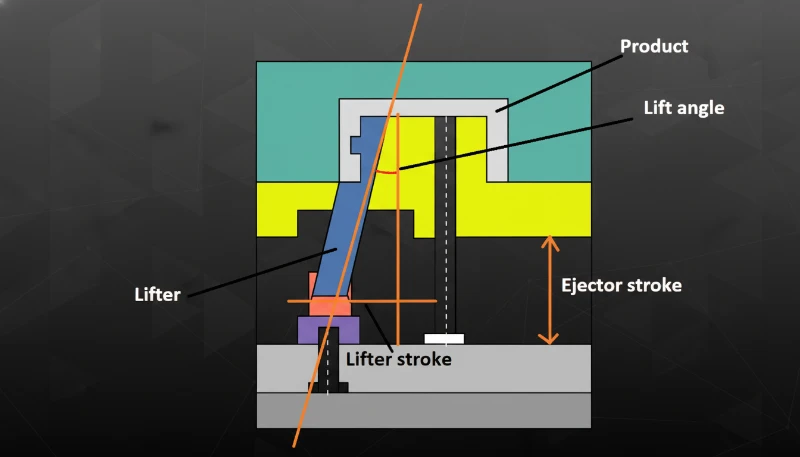
Even parts with complex mold lifter mechanisms or long ejector stroke features need trays that hold them securely. A part with a delicate lifter undercut can be damaged if the tray applies pressure at the wrong angle during the packaging process.
Why Do Moisture and Static Control Matter in Part Packaging?
Two environmental enemies destroy more shipped parts than physical impact: moisture and electrostatic discharge. Both are invisible until the damage is done, and both are preventable with the right packaging strategy. Moisture damage takes several forms. Hygroscopic materials like nylon (PA6, PA66) and polycarbonate absorb atmospheric moisture, which causes dimensional change — a part that was within spec at the factory can measure out of tolerance after a two-week ocean voyage through humid climates.
The fix is simple: desiccant packets (silica gel or molecular sieve) inside sealed moisture-barrier bags (MBBs). Military-grade packaging uses MIL-DTL-81705 rated barrier materials, but for most commercial applications, a PE-lined bag with 2-3 silica gel packets per cubic foot of void space is sufficient.
For maximum protection, vacuum-seal the bag after inserting the desiccant. Static discharge is the hidden killer for electronic-related components. When a PE bag rubs against a plastic part during transit, static charges build up to thousands of volts. If that part is an ESD-sensitive housing, sensor carrier, or connector body, the discharge can damage embedded circuitry or create latent defects that fail in the field. The solution is a layered ESD packaging system: pink poly bags (low-charging) or metallized shield bags for individual parts, pink foam or conductive trays for inner packaging, and ESD-safe outer cartons with grounding labels.
With over 20 years of injection molding experience and 8 senior engineers on staff, we have shipped parts to customers in over 50 countries. We have seen moisture damage destroy an entire container of nylon gears headed for Germany because the supplier skipped desiccant packs. That small decision cost a fortune in scrap and emergency air freight for a replacement shipment.
“ESD-safe packaging should cover every layer from individual bag to outer carton”True
True. A single ESD-safe layer does not provide adequate protection. Static can build up on any non-ESD surface and discharge through the protected layer. The full chain — bag, tray, and outer box — must be ESD-rated.
“Silica gel packets alone are sufficient to protect nylon parts from moisture damage during ocean freight”False
False. Silica gel works only inside a sealed moisture-barrier bag. In a standard carton, the desiccant saturates within hours and provides no further protection. You need a sealed PE-lined or metallized barrier bag plus desiccant.
What Industry Standards Govern Injection Molded Part Packaging?
ISTA 3A, ASTM D4169, and JEDEC J-STD-033 are the three primary standards governing injection molded part packaging validation. Each addresses a different risk profile, from parcel shipping hazards to medical device requirements to moisture sensitivity. Many suppliers use color-coded storage boxes to organize parts by batch and specification during the validation process, making it easier to trace packaging performance back to specific tray configurations.
ASTM D4169 [astm-d41692] is the medical device and pharmaceutical industry standard (often required by FDA). It defines performance testing of shipping containers through simulated hazard sequences. DC-13 is the most common test plan for small parcel shipments. ASTM D4169 [astm-d4169] is stricter than ISTA 3A and includes additional conditioning steps like temperature cycling and altitude simulation for air freight.
JEDEC J-STD-033 governs moisture-sensitive component handling. If you ship parts made from hygroscopic resins (nylon, polycarbonate, PBT), this standard defines the moisture barrier bag specifications, desiccant quantity calculations, and humidity indicator card requirements. It also specifies the floor life — how long a part can sit outside its barrier bag before it needs to be re-baked to remove absorbed moisture.
How Can Suppliers Validate Packaging Effectiveness Before Shipment?
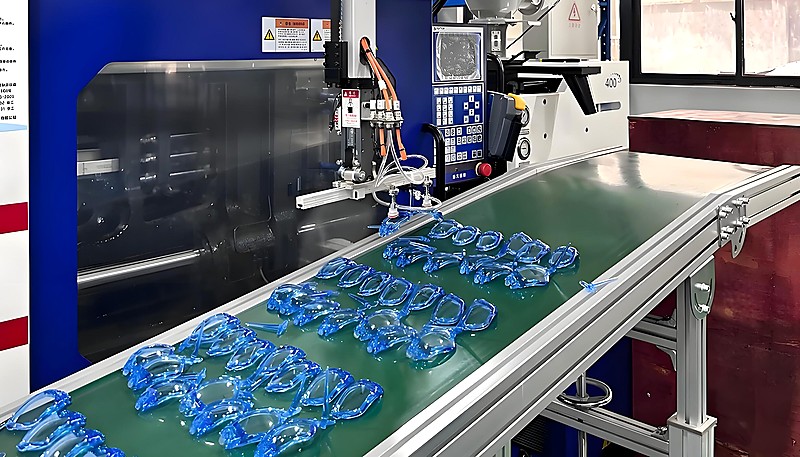
Packaging validation is a repeatable test protocol that suppliers run with actual production parts using ISTA 3A or ASTM D4169 standards. The key is testing with real parts, not dummy weights or empty boxes, because actual part geometry affects how loads distribute inside the package during drops and vibration. Package real production parts using the exact materials and configuration you plan to ship, then run the full test protocol and inspect every part afterward using the same criteria your customer will use for incoming quality inspection.
After testing, inspect every part using the same criteria your customer will use — not a visual once-over. For medical parts, this means dimensional measurement against the drawing specification. For aesthetic parts, it means checking for scratches under proper lighting at the correct viewing angle. Document results in a test report with photos of the packaging before and after testing. This report becomes your evidence base if the customer audits your packaging process. Step 3: Document and lock the packaging specification. Once you find a configuration that passes testing, document every detail: bag type, desiccant quantity, tray orientation, box dimensions, tape type, and label placement. Create a packaging work instruction with photos.
This becomes the locked standard under ISO 9001 [iso-90013] quality management — no changes without formal re-validation and documented approval. If your customer sends a packaging change request, always run a quick validation test before implementing it on the production line. We have seen cases where a well-meaning change from PE foam to corrugated inserts doubled the damage rate because the new material did not absorb vibration as effectively during simulated drop testing. Every modification, no matter how minor it seems, needs to go through the same validation protocol as the original specification. This discipline is what separates suppliers with consistently low damage rates from those who experience periodic quality spikes.
When Should You Choose Custom Packaging Over Standard Solutions?
Custom packaging is not always necessary, but when the situation calls for it, the ROI is undeniable. The decision comes down to part value, part fragility, and annual volume. Here is how to decide. Go custom when: your part has fragile features (thin ribs under 1mm, snap-fit clips, threaded metal inserts that protrude), when surface finish is Class A (automotive exterior, consumer electronics visible surfaces), or when your annual volume exceeds 10,000 units and the per-part packaging cost matters. Custom thermoformed trays molded to the exact part geometry are the single most effective packaging investment for medium-to-high volume production.
They lock each part in place, prevent any movement during transit, and can be designed to stack efficiently in standard carton sizes.
Stick with standard when: your parts are robust (wall thickness over 3mm, no fragile features), volumes are low (under 1,000 units per shipment), or the surface finish is functional rather than cosmetic. Standard PE foam sheets, bubble wrap, and double-wall cartons are perfectly adequate for these scenarios. The key is being honest with yourself about your parts vulnerability — optimism is not a packaging strategy. The cost trade-off looks like this: a custom thermoformed tray might cost $0.30 to $1.00 per unit at 5,000-piece volume, versus $0.08 to $0.15 for generic foam-and-bag packaging.
But if generic packaging gives you a 5% damage rate on a $20 part, your effective cost per good part is $21.00 — already more expensive than custom packaging at 0.5% damage rate. For parts over $5 unit value, custom packaging almost always pays for itself within the first year. For sourcing guidance on finding the right 사출 성형 공급업체 with proper packaging capabilities, see our comprehensive sourcing guide.
How Do Packaging Requirements Vary by Part Geometry and Material?
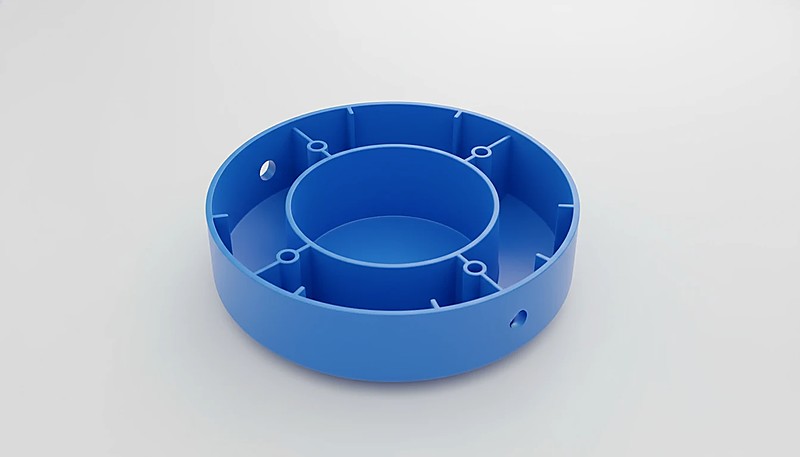
Part geometry and material are the two biggest factors driving packaging requirements. Thin walls demand rigid support, soft materials need breathing room, and brittle composites require targeted shock absorption.
Thin-wall parts (wall thickness under 1.5mm) are fragile under compressive loads and should never be stacked without rigid support. Use individual cavities in a molded tray with a rigid top cover that prevents vertical compression. Do not rely on the part itself to support stacking weight — it will crack. Large flat panels (over 300mm on any side) are susceptible to warpage from uneven pressure and temperature gradients. Ship these in single-layer trays with foam padding on both faces, oriented flat inside the carton. Never stack large panels vertically — the bending stress from vibration during transit causes permanent deformation.
Soft materials (TPE, TPU, LDPE) resist impact well but deform under sustained pressure. Do not pack them tightly — leave space so parts are not compressed against each other or tray walls. Individual bags with talc prevent tacky surfaces from adhering. For parts that require tight tolerance — whether from precision injection molding or secondary CNC machining operations — the packaging must prevent even minor deformation that could push dimensions out of spec.
Having worked with over 400 different plastic materials and producing 100+ mold sets per month, we know firsthand that packaging requirements vary dramatically by material. A soft TPU overmold grip needs completely different handling than a rigid glass-filled nylon gear — and getting this wrong at the packaging stage can undo weeks of careful molding work.
사출 성형 포장 요구사항에 관한 가장 일반적인 질문은 무엇인가요?
자주 묻는 질문
ISTA 3A 테스트란 무엇이며, 제 포장에 필요한가요?
ISTA 3A는 국제 안전 운송 협회(International Safe Transit Association)에서 개발한 표준화된 테스트 프로토콜로, 70kg 미만의 패키지가 택배 네트워크를 통해 운송될 때 실제 운송 위험을 시뮬레이션합니다. 이 테스트 프로토콜에는 모든 면, 모서리, 모서리에 대한 76cm 자유 낙하, 0.73 grms에서 60분 동안의 무작위 진동 테스트, 창고 적재 하중에 상응하는 정적 압축 테스트가 포함됩니다. 사출 성형 부품을 택배 또는 우편 서비스로 발송하는 경우, ISTA 3A 통과는 포장이 실제 운송 조건을 견딜 수 있다는 확신을 줍니다. 단위 가치가 3달러 이상이거나 외관 손상이 불량 기준인 모든 부품에 대해 ISTA 3A 인증을 권장합니다.
방습 백에 몇 개의 건제 패킷을 사용해야 하나요?
표준 계산은 JEDEC J-STD-033 지침을 따릅니다. 실용적인 경험 법칙으로, 7일 미만의 운송 기간에는 백 부피 1세제곱피트당 실리카 겔 1개를 사용하고, 해상 운송과 같은 장기 운송에는 1세제곱피트당 2개를 사용하십시오. 코발트가 없는 습도 지시 카드를 차단 백 내부에 항상 포함시켜 수신 품질 검사관이 운송 중 부품이 과도한 수분에 노출되었는지 한눈에 확인할 수 있도록 하십시오. 나일론이나 폴리카보네이트와 같이 특히 민감한 재료의 경우, 카톤 외부에 2차 습도 지시 라벨을 추가하는 것도 고려하십시오.
이전 운송에서 사용한 포장 트레이를 재사용할 수 있나요?
재사용 가능한 트레이는 PET나 견고한 PVC와 같은 내구성 있는 재료로 만들어지고, 사용 전마다 균열, 변형 또는 오염에 대한 육안 검사를 통과한 경우 허용됩니다. EPE 폼 트레이와 골판지 펄프 트레이는 일반적으로 재사용하지 않는 것이 좋습니다. 이는 하중 아래 압축되어 첫 운송 주기 후 완충 특성을 잃기 때문입니다. 일회용 트레이에서 재사용 가능 트레이로 전환하는 경우, 재사용된 트레이가 여전히 적절한 부품 보호를 제공하는지 확인하기 위해 항상 간소화된 ISTA 낙하 테스트를 재수행하십시오. 포장 작업 지침에 허용되는 최대 재사용 주기 수를 문서화하십시오.
의료용 사출 성형 부품에 대해 공급업체는 어떤 포장이 필요한가요?
의료 부품은 ASTM D4169 성능 테스트 표준을 충족하는 포장이 필요하며, 최종 멸균이 필요한 경우 무균 차단 시스템에 대한 ISO 11607 요구사항도 충족해야 합니다. 클린룸 호환 포장 재료(예: Tyvek 파우치, 의료용 폴리에틸렌 백, 검증된 필 오픈 헤더)는 업계 표준입니다. 로트 번호, 제조 일자, 멸균 배치 코드가 포함된 추적성 라벨은 포장의 모든 층에 부착되어야 합니다. 또한, 포장 공정 자체는 부품 청결도 요구사항에 맞는 통제된 환경에서 수행되어야 하며, 모든 포장 재료는 적합성 증명서 문서를 필요로 합니다.
맞춤형 포장과 표준 포장의 ROI(투자 수익률)는 어떻게 계산하나요?
먼저 현재 운송 손상으로 인한 연간 손실을 계산하십시오: 손상률 백분율에 단위 부품 가격과 연간 생산량을 곱하고, 반품 및 교체와 관련된 운송비를 더하십시오. 그런 다음 그 총액을 맞춤형 열성형 트레이로 전환하는 데 드는 연간 추가 비용과 비교하십시오. 당사의 경험에 따르면, 맞춤형 트레이는 일반적으로 단위 부품 가격이 5달러를 초과하고 연간 생산량이 1만 개 이상일 때 비용을 상쇄합니다. 이는 손상률을 약 5%에서 0.5% 미만으로 줄이기 때문입니다. 값비싼 표면 마감 처리 부품의 경우 손익분기점에 더 빨리 도달합니다.
대전 방지 포장과 ESD 안전 포장의 차이점은 무엇인가요?
대전 방지 소재는 일반적인 취급 중 정전기 발생을 억제하도록 설계되었습니다 — 단순히 전하가 쉽게 쌓이지 않습니다. ESD 안전 포장은 더 나아가 축적된 전하가 안전하게 접지로 서서히 방전되도록 제어된 방전 경로를 제공하여 부품 자체를 통한 갑작스러운 방전 사건을 방지합니다. 사출 성형된 전자 장치 하우징, 센서 캐리어 및 커넥터 본체의 경우, 올바른 사양은 표면 저항률이 평방당 10의 5제곱에서 10의 11제곱 옴 사이인 ESD 안전 포장입니다. 정전기 방지만으로는 전자 시스템에 조립될 부품에 불충분합니다.
검증된 포장이 포함된 사출 성형 부품을 위해 ZetarMold를 선택해야 하는 이유는 무엇인가요?
포장은 사후 고려 사항이 아닙니다 — 부품이 사양에 맞게 도착할지, 폐기물 처리함으로 갈지 결정하는 마지막 제조 단계입니다. ZetarMold에서는 30명 이상의 영어를 구사하는 프로젝트 관리자가 첫 생산 런 전에 모든 고객과 포장 사양을 조정합니다. 당사는 ISO 9001 [iso-9001] 및 ISO 13485 품질 관리 시스템을 따르며, 이는 모든 포장 결정이 문서화, 검증 및 반복 가능함을 의미합니다.
ISTA 3A 테스트를 통과한 택배 포장, 클린룸 호환 의료 포장, 정밀 부품용 맞춤형 열성형 트레이 중 무엇이 필요하든, 당사는 조립 준비가 된 상태로 부품이 도착하도록 전달할 경험과 시스템을 보유하고 있습니다. 무료 견적 받기 다음 사출 성형 프로젝트를 위해 — 그리고 포장 요구사항에 대해 알려주십시오.
견적서에 검증된 포장 사양을 추가 비용 없이 포함해 드립니다.





 EN
EN  ES
ES  FR
FR  DE
DE  PT
PT  AR
AR  RU
RU  JA
JA  KO
KO  IT
IT  NL
NL  TR
TR  PL
PL 