 Ir al contenido

depende del material: el PP puede llegar a ser tan fino como 0.8 mm para piezas pequeñas, mientras que el PC generalmente necesita un mínimo de 1.2 mm.
– Wall thickness is the single biggest lever — reducing it from 3.0 mm to 2.0 mm can cut part weight by over 30% while maintaining structural integrity with proper rib reinforcement.
– Microcellular foam injection molding (MuCell) creates internal cell structures that reduce density by 8–20% with minimal impact on mechanical properties.
– Material selection matters: switching from standard ABS (1.05 g/cm³) to PP (0.90 g/cm³) delivers an immediate 14% weight reduction at lower material cost.
– In our factory, we’ve helped automotive clients reduce part weight by 15–25% on dashboard components using a combination of thin-wall design and gas-assisted injection molding.
What Does It Mean to Reduce Part Weight in Injection Molding?
Reducing part weight in injection molding means designing and manufacturing plastic components that use less material while maintaining the required mechanical performance, dimensional accuracy, and surface quality. It is one of the most effective ways to cut material costs, shorten cycle times, and meet increasingly strict sustainability and fuel-efficiency requirements across industries.
In our experience at ZetarMold, weight reduction projects typically target 10–30% material savings. The approach depends on the part’s function, material, and production volume. A thin-walled consumer electronics housing requires different strategies than a structural automotive bracket. The key is understanding which combination of design, material, and process changes delivers the best weight-to-performance ratio for your specific application.
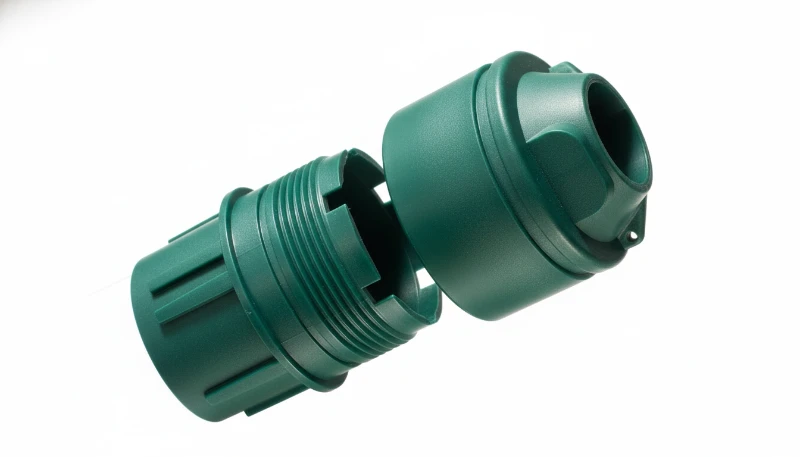
The demand for lighter injection molded parts is driven by several converging trends: automotive OEMs chasing fuel economy standards, consumer electronics brands seeking thinner devices, and sustainability mandates pushing for reduced plastic consumption. According to industry data, every 10% reduction in vehicle weight can improve fuel efficiency by 6–8%.
“Reducing wall thickness always weakens the part and causes failure.”Falso
When combined with proper rib reinforcement and material selection, thinner walls can maintain or even improve stiffness. Ribs at 60% of wall thickness add structural support without sink marks, allowing significant weight reduction with no loss in performance.
“Rib reinforcement allows thinner walls while maintaining part stiffness.”Verdadero
Properly designed ribs (50–60% of nominal wall thickness, with 1–3° of draft) increase the moment of inertia without adding significant material. This is the standard approach in automotive and electronics for weight-optimized parts.
What Are the Main Strategies to Reduce Part Weight?
There are five core strategies to reduce part weight in injection molding: wall thickness optimization, rib and structural reinforcement, material substitution, process modification, and part consolidation. Each addresses a different aspect of the weight equation, and the most effective projects combine multiple approaches.
| Strategy | Typical Weight Reduction | Complejidad | Lo mejor para |
|---|---|---|---|
| Wall thickness optimization | 15–35% | Medio | Housings, enclosures, panels |
| Rib reinforcement | 10–20% | Bajo | Structural parts, brackets |
| Material substitution | 10–25% | Low–Medium | All part types |
| Gas-assist / foam molding | 15–30% | Alta | Thick sections, handles, large panels |
| Part consolidation | 5–15% | Medium–High | Multi-component assemblies |
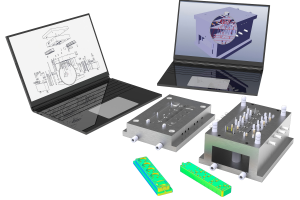
In our factory, we typically start with a análisis del flujo de moldes1 to identify where material can be removed without compromising fill patterns or structural performance. This simulation-first approach prevents costly mold revisions later.
How Does Wall Thickness Optimization Reduce Weight?
Wall thickness optimization is the most direct way to reduce part weight in injection molding. Since part weight is directly proportional to volume, reducing wall thickness from 3.0 mm to 2.0 mm on a flat panel reduces weight by approximately 33% — and often shortens cooling time by 40–50%, which also cuts cycle time.
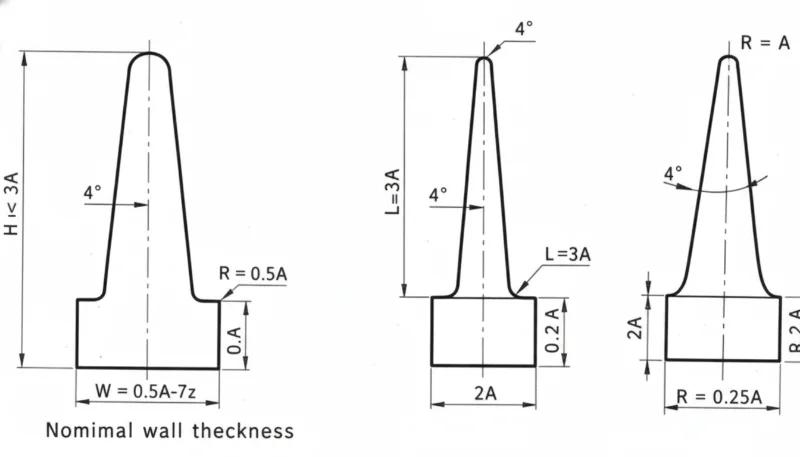
The challenge is maintaining adequate stiffness and avoiding molding defects. Thinner walls require higher injection pressures and faster fill speeds, and they’re more susceptible to short shots and warpage. Here’s what we’ve learned from hundreds of thin-wall projects:
- Minimum wall thickness depends on material: PP can go as thin as 0.8 mm for small parts, while PC typically needs 1.2 mm minimum.
- Espesor de pared uniforme La tecnología MuCell introduce nitrógeno o CO₂ supercrítico en el polímero fundido, creando millones de células microscópicas (5–100 μm) en toda la pieza. Esto logra:
- Flow length-to-thickness ratio must stay within the material’s limits (typically 150:1 for PP, 100:1 for PC).
- Gate location and size must be optimized for the thinner cross-section.
| Material | Densidad (g/cm³) | Min Wall Thickness (mm) | Max Flow Ratio | Aplicaciones típicas |
|---|---|---|---|---|
| PP | 0.90–0.91 | 0.8 | 150:1 | Packaging, containers |
| ABS | 1.04–1.07 | 1.0 | 120:1 | Electronics housings |
| PC | 1.20–1.22 | 1.2 | 100:1 | Lenses, safety components |
| PA (Nylon) | 1.13–1.15 | 0.8 | 130:1 | Automotive, structural |
| POM | 1.41–1.43 | 0.8 | 100:1 | Gears, precision parts |
How Do Rib Design and Structural Features Help?
Rib design is the complementary strategy to wall thickness reduction. When you make walls thinner, you compensate for the lost stiffness by adding ribs — thin, protruding features on the non-cosmetic side of the part. Properly designed ribs can increase part stiffness by 3–5 times with only a 10–15% increase in material usage compared to the weight saved from thinner walls.
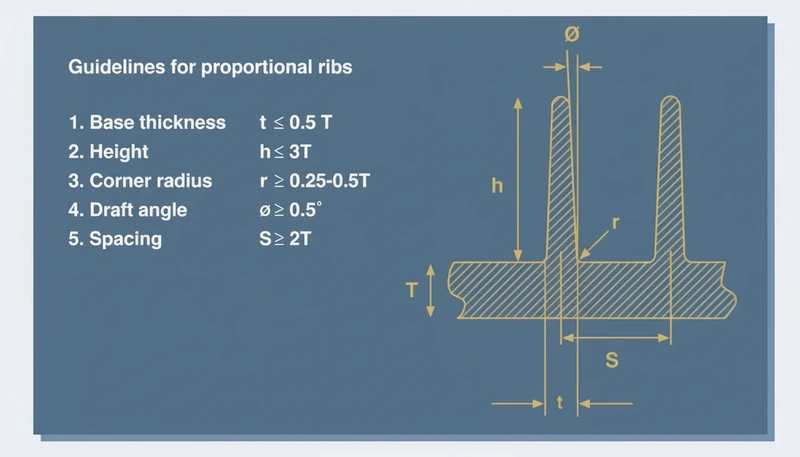
We follow these proven guidelines for rib design in weight reduction projects:
- Rib thickness: 50–60% of the adjacent wall thickness (e.g., 1.2 mm rib for a 2.0 mm wall)
- Rib height: Maximum 3× the wall thickness
- Ángulo de calado: 1–3° per side for clean ejection
- Rib spacing: Minimum 2× wall thickness between ribs
- Base radius: 0.25–0.5× wall thickness to reduce stress concentration
In one automotive project, we reduced a dashboard bracket’s wall from 2.8 mm to 1.8 mm and added a cross-rib pattern. The result: 28% weight reduction with only a 5% decrease in deflection under load. The thinner walls also cut cycle time from 45 to 32 seconds.
Which Materials Offer the Best Weight Reduction Potential?
Material selection is a powerful tool for weight reduction because different polymers have significantly different densities. Switching from a higher-density material to a lower-density alternative — or using filled compounds that enable thinner walls — can deliver 10–25% weight savings without changing part geometry.

Here are the material substitution strategies we use most often:
- PP for ABS: Switching from ABS (1.05 g/cm³) to PP (0.90 g/cm³) saves ~14% weight. PP is also cheaper per kg.
- Glass-filled PA for metal: PA6-GF30 (1.36 g/cm³) replacing die-cast zinc (6.6 g/cm³) saves ~80% weight in structural brackets.
- Long glass fiber (LGF) compounds: Enable thinner walls with higher stiffness, reducing weight through wall optimization.
- Foamable grades: Materials designed for foam injection molding contain chemical or physical blowing agents for 8–20% density reduction.
“Lighter materials always cost more, making weight reduction financially impractical.”Falso
PP is both lighter (0.90 g/cm³) and cheaper per kg than ABS (1.05 g/cm³) or PC (1.20 g/cm³). Many weight reduction projects actually lower material costs because you’re using less material per part, and lighter materials often have lower per-kilogram prices.
“Glass-fiber reinforcement allows thinner walls that offset the higher compound density.”Verdadero
While glass-filled compounds are denser (e.g., PA6-GF30 at 1.36 g/cm³ vs. unfilled PA6 at 1.13 g/cm³), the 2–3× improvement in stiffness enables wall thickness reductions of 30–40%, resulting in a net weight decrease of 15–20%.
How Do Gas-Assist and Foam Molding Processes Reduce Weight?
Gas-assisted injection molding and microcellular foam molding (MuCell®) are the two most effective process-based approaches to weight reduction. Both create hollow or cellular internal structures that reduce material usage by 15–30% while maintaining the part’s external dimensions and surface appearance.
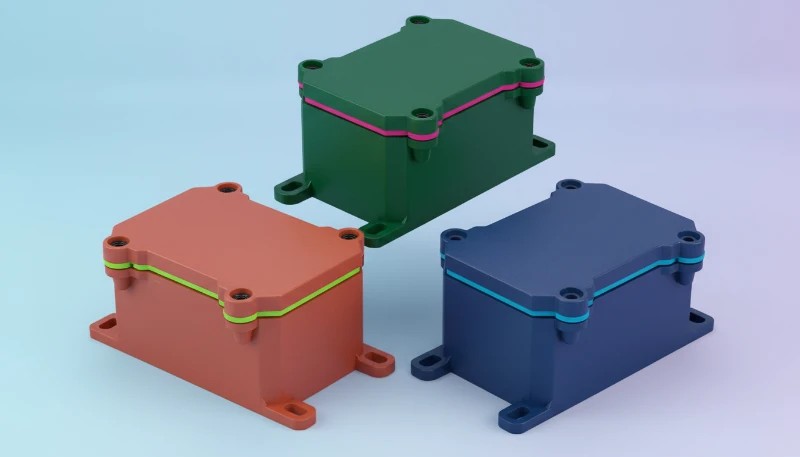
Moldeo por inyección asistida por gas
In gas-assist molding, nitrogen gas is injected into thick sections after the initial plastic shot. The gas creates hollow channels inside the part, reducing material usage by 20–40% in thick-walled components like handles, frames, and structural members. We’ve used this technique on furniture armrests where we reduced part weight from 380 g to 260 g — a 32% saving.
Microcellular Foam Molding (MuCell)
MuCell technology introduces supercritical nitrogen or CO₂ into the polymer melt, creating millions of microscopic cells (5–100 μm) throughout the part. This achieves:
- La mayoría de los proyectos de reducción de peso logran ahorros del 10–30%. La optimización del grosor de la pared por sí sola puede aportar un 15–35%, mientras que el moldeo de espuma microcelular añade otro 8–20%. Las estrategias combinadas en aplicaciones automotrices han logrado hasta un 50% de reducción de peso al cambiar de metal a plástico de ingeniería.
- 15–30% shorter cycle times (lower cooling time and no packing phase)
- Reduced clamp force requirements (up to 50% less)
- Virtually eliminated sink marks and warpage
The trade-off is a slight surface swirl pattern on uncoated parts, which limits MuCell to non-cosmetic surfaces or parts that will be painted or textured.
What Role Does Mold Design Play in Part Weight Reduction?
Mold design directly impacts how successfully you can reduce part weight. A mold designed for a 3.0 mm wall part cannot simply run a 1.5 mm wall without modifications. The mold design must support the specific weight reduction strategy through optimized gating, cooling, and venting.
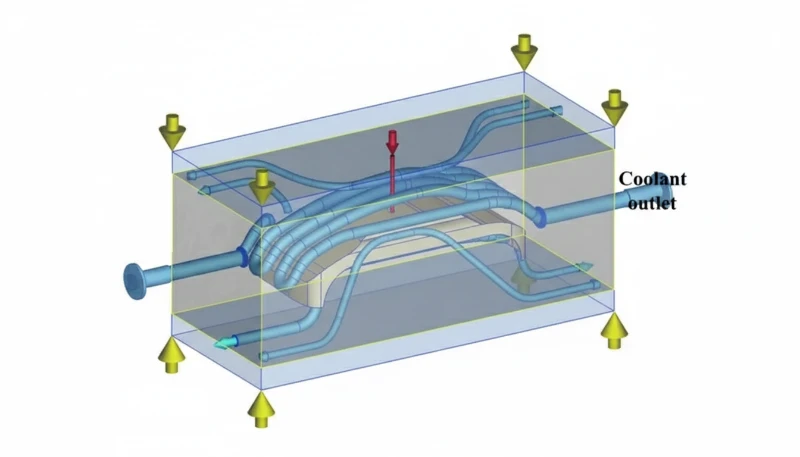
Critical mold design considerations for lightweight parts:
- Gate design: Thinner walls need larger or more gates to ensure complete fill before freeze-off. Hot runner systems with valve gates offer the best control.
- Cooling layout: Uniform cooling is even more critical for thin walls. Conformal cooling2 channels (3D-printed inserts) can reduce cooling time by 30–40%.
- Ventilación: Thin cavities fill faster, trapping air more easily. Vents should be 0.02–0.03 mm deep for most resins.
- Steel selection: High-thermal-conductivity steels (like copper-beryllium alloys) in critical areas improve heat extraction.
We’ve found that investing in mold flow simulation before cutting steel saves 2–3 mold revision cycles on thin-wall projects. It identifies fill balance issues, weld line locations, and cooling uniformity problems that would otherwise require expensive steel modifications.
What Are the Process Parameters to Optimize for Lighter Parts?
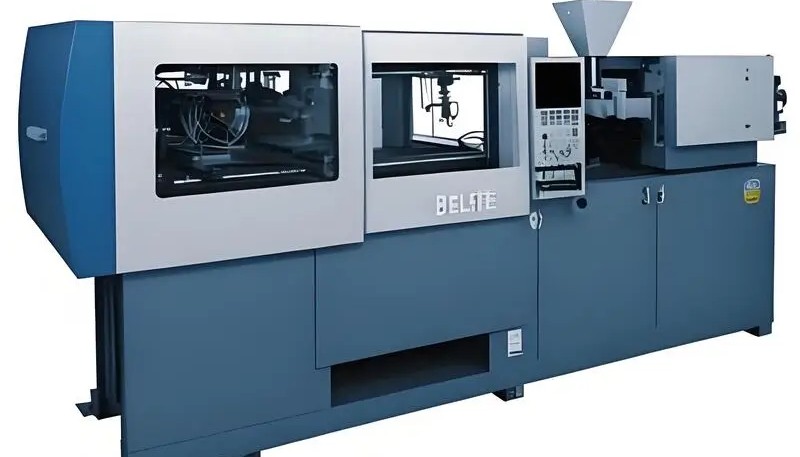
Optimizing injection molding process parameters is essential for producing lighter parts consistently. Thinner walls and lighter materials require different machine settings than conventional molding, and getting these parameters right is the difference between good parts and scrap.
| Parámetro | Standard Molding | Thin-Wall / Lightweight | Why It Changes |
|---|---|---|---|
| Velocidad de inyección | 50–100 mm/s | 200–500 mm/s | Prevents freeze-off in thin sections |
| Presión de inyección | 80–120 MPa | 120–200 MPa | Overcomes higher flow resistance |
| Temperatura de fusión | Standard range | Upper range (+10–20°C) | Improves flow in thin cavities |
| Temperatura del molde | 40–60°C | 60–90°C | Delays freeze-off for better fill |
| Presión de mantenimiento | 60–80% of injection | 40–60% of injection | Gate freezes faster, less packing needed |
| Tiempo de enfriamiento | 15–30 s | 8–15 s | Thinner walls cool faster |
One practical tip from our production floor: when transitioning to thinner walls, increase injection speed in 10% increments while monitoring part weight on a precision scale. Part weight stability (within ±0.5%) is the best indicator that your process is optimized for the new design.
What Are Real-World Applications of Weight Reduction in Injection Molding?
Weight reduction in injection molding delivers measurable benefits across automotive, consumer electronics, medical devices, and packaging. Here are specific examples from projects we’ve handled and industry benchmarks.
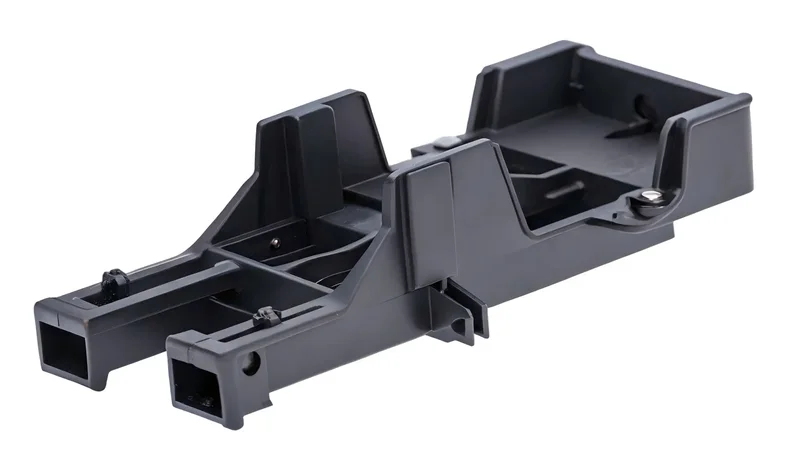
Automoción
A Tier-1 supplier we worked with replaced a die-cast aluminum HVAC bracket with PA66-GF50, reducing weight from 420 g to 185 g (56% reduction) while consolidating three parts into one. The injection molded part also eliminated secondary machining operations.
Electrónica de consumo
For a laptop housing, we optimized wall thickness from 2.0 mm to 1.4 mm using PC/ABS blend with 15% glass fiber. The weight dropped from 145 g to 98 g, and cycle time decreased from 28 s to 19 s. The thinner design required switching to a canal caliente3 system with 8 valve gates.
Productos sanitarios
Single-use medical device housings benefit from weight reduction through material savings at high volumes. We helped a client reduce a diagnostic cartridge weight by 18% using thin-wall PP molding, saving over $200,000 annually in material costs at 5 million units/year production.
Embalaje
Thin-wall packaging is the extreme case of weight reduction — yogurt cups at 0.4 mm wall thickness, food containers at 0.6 mm. These applications use high-MFI PP grades (MFI 50–100 g/10min) and injection speeds above 500 mm/s.
PREGUNTAS FRECUENTES
How much weight can you realistically reduce in an injection molded part?
Most weight reduction projects achieve 10–30% savings. Wall thickness optimization alone can deliver 15–35%, while microcellular foam molding adds another 8–20%. Combined strategies in automotive applications have achieved up to 50% weight reduction when switching from metal to engineered plastic.
Cómo Reducir el Peso de las Piezas en el Moldeo por Inyección | Zetar
Not necessarily. When you remove material strategically — thinning walls while adding ribs, using higher-stiffness materials, or employing foam cores — the strength-to-weight ratio actually improves. The key is using simulation tools like mold flow analysis and FEA to validate the design before production.
What is the cost impact of weight reduction?
Weight reduction typically reduces piece-part cost because you use less material per part. However, upfront tooling costs may increase for thin-wall molds (higher-grade steel, more complex cooling, hot runner systems). For production volumes above 50,000 parts, the material savings almost always outweigh the higher tooling investment.
Can existing molds be modified for lighter parts?
Sometimes. Adding ribs or coring out thick sections is feasible because it involves removing steel from the mold (which is “steel-safe”4). However, reducing wall thickness requires adding steel to the core side, which is more complex and sometimes requires new inserts or complete core replacement.
What is MuCell and how does it reduce weight?
MuCell (Microcellular Foam Injection Molding) is a process that introduces supercritical gas (N₂ or CO₂) into the polymer melt to create millions of microscopic cells. These cells reduce part density by 8–20% while also eliminating sink marks, reducing warpage, and cutting cycle times by 15–30%. It requires a special injection unit with a gas delivery system.
Which industries benefit most from injection molding weight reduction?
Automotive leads in demand due to fuel efficiency regulations — every kilogram matters. Consumer electronics follow closely, where lighter devices improve user experience. Medical packaging and single-use devices benefit from material cost savings at high volumes. Aerospace uses injection molded lightweight parts for non-structural interior components.
How do you verify that a lightweight part meets specifications?
We use a combination of: (1) part weight monitoring on every shot (±0.5% tolerance), (2) dimensional inspection via CMM, (3) mechanical testing (tensile, impact, flexural) per ASTM/ISO standards, and (4) functional testing in the application. For critical parts, CT scanning can verify internal structure in foam-molded components.
Resumen
Reducing part weight in injection molding is a systematic engineering challenge that combines design optimization, material science, and process technology. The most effective approach starts with wall thickness optimization and rib design — the lowest-cost, highest-impact changes. Material substitution offers easy wins when switching to lower-density polymers. For maximum weight reduction, advanced processes like gas-assist and microcellular foam molding push savings to 20–30% or more.
At ZetarMold, we approach every weight reduction project with simulation-driven design, backed by decades of production floor experience. Whether you need to trim 10% from a consumer product or 30% from an automotive component, the right combination of these strategies will get you there. Contact our engineering team to discuss your weight reduction goals.
-
Mold flow analysis is a computer simulation technique that predicts how molten plastic fills a mold cavity, identifying potential issues like air traps, weld lines, and uneven cooling before the mold is manufactured. ↩
-
Conformal cooling refers to cooling channels that follow the contour of the mold cavity, typically produced by 3D metal printing (DMLS). Unlike conventional straight-drilled channels, conformal cooling provides uniform heat extraction, reducing cooling time by 30–40% and improving part quality. ↩
-
A hot runner system maintains the plastic in the runner channels at melt temperature, eliminating runner waste and enabling faster cycle times. In thin-wall molding, hot runners with valve gates provide precise control over fill balance across multiple gates. ↩
-
Steel-safe refers to a mold modification direction where metal is removed from the mold rather than added. Core-outs and rib additions are steel-safe changes because they require cutting steel away, which is simpler and cheaper than welding or replacing inserts. ↩



 ES
ES  EN
EN  FR
FR  DE
DE  PT
PT  AR
AR  RU
RU  JA
JA  KO
KO  IT
IT  NL
NL  TR
TR  PL
PL 