Su equipo de diseño acaba de finalizar un nuevo recinto de plástico en CAD. Marketing quiere muestras físicas para una feria comercial en tres semanas. La pieza tiene bisagras vivas, ajustes por presión y una superficie A pulida, características que la impresión 3D no puede replicar con material de grado de producción. Aquí es donde entra la creación rápida de prototipos para moldura por inyección: obtiene piezas moldeadas reales, en la resina de producción real, sin esperar 8-12 semanas para una herramienta de producción de acero.
En esta guía, revisaré los métodos disponibles, los plazos realistas, las estructuras de costos y las compensaciones específicas que debe sopesar al elegir entre herramientas de aluminio, herramientas blandas y moldes fabricados de manera aditiva. El objetivo es ayudarlo a decidir qué camino le brinda piezas listas para prueba más rápido, sin crear problemas costosos cuando haga la transición a la producción.
- La moldura por inyección rápida entrega piezas de material de producción en 1-3 semanas
- La herramienta de aluminio admite de 100 a 10,000 disparos dependiendo de la geometría de la pieza
- Los moldes de prototipos rápidos cuestan un 40-70% menos que los moldes de producción de acero
- La geometría de la pieza debe estar lista para producción: los moldes rápidos no perdonan un mal DFM
- El utillaje puente llena el vacío entre el prototipado y la producción completa
¿Qué es la creación rápida de prototipos en moldura por inyección?
El prototipado rápido en moldeo por inyección es un enfoque de utillaje rápido para fabricar piezas moldeadas reales antes del molde de producción. Si compara proveedores o planifica compras, nuestro Guía de abastecimiento de proveedores de moldeo por inyección cubre la preparación de RFQ, la cualificación y los controles de riesgo comercial.
El prototipado rápido en moldeo por inyección se refiere al uso de herramientas simplificadas o más rápidas de construir —típicamente moldes de aluminio, moldes de acero blando o moldes fabricados aditivamente— para producir un lote pequeño de piezas funcionales que coincidan con la geometría, el material y las propiedades mecánicas de la pieza de producción final. La característica definitoria es la velocidad: se pasa de un CAD 3D aprobado a piezas moldeadas en 5-15 días laborables en lugar de las típicas 8-12 semanas para un molde de producción de acero endurecido.
La diferencia clave frente a otros métodos de prototipado (mecanizado CNC, SLA y FDM) es que la pieza se moldea realmente por inyección. Esto significa que el comportamiento del material, la tasa de contracción, las líneas de unión, las marcas de compuerta y el acabado superficial son representativos de lo que se obtendrá en producción. Un prototipo SLA impreso en 3D permite saber si las piezas encajan; un prototipo rápido moldeado por inyección permite saber si funciona el encaje a presión en el polipropileno real con el espesor de pared real.
La contrapartida es que la herramienta rápida tiene limitaciones. Los moldes de aluminio se desgastan más rápido que los de acero, el número de cavidades suele limitarse a 1-4, y las acciones laterales complejas (elevadores, correderas, núcleos colapsables) añaden costo y tiempo que reducen la ventaja de velocidad. El moldeo de prototipado rápido funciona mejor cuando su diseño está cerca del final y necesita validar la función, no explorar la forma.
¿Qué métodos están disponibles para el moldeo de prototipos rápidos?
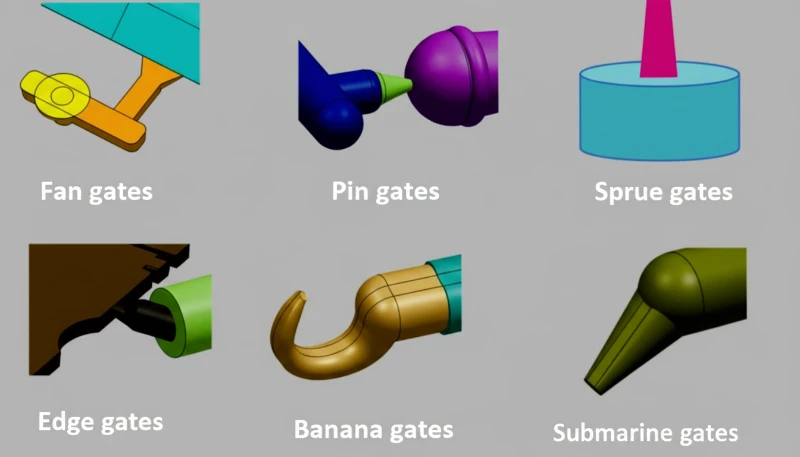
Los principales métodos de moldeo de prototipos rápidos son utillaje de aluminio, utillaje de acero blando, moldes de resina impresos en 3D y moldes de silicona. Cada ruta intercambia velocidad, costo, vida útil de disparo y calidad de la pieza de manera diferente, por lo que la elección correcta depende de lo que necesite validar antes de la producción.
| Método | Tiempo de herramientas | Vida útil en ciclos | Intervalo de costes |
|---|---|---|---|
| Molde de aluminio | 7–15 días | 1,000–10,000 | $1,500–$8,000 |
| Acero Blando (P20) | 15–25 días | 10,000–100,000 | $5,000–$20,000 |
| Resina impresa en 3D | 1–3 días | 10–100 | $200–$1,500 |
| Caucho de silicona | 3–5 días | 20–50 | $300–$2,000 |
El utillaje de aluminio es la opción más común para el moldeo por inyección rápido porque alcanza el punto óptimo de velocidad, costo y calidad de la pieza. El aluminio se mecaniza más rápido que el acero (aproximadamente 3-5 veces la velocidad de corte), se pule razonablemente bien para piezas de superficie A y puede manejar la mayoría de las resinas de ingeniería, incluyendo nailon relleno de vidrio, PC y POM. La principal limitación es el desgaste: después de unos miles de ciclos, las superficies de la cavidad comienzan a mostrar erosión, especialmente alrededor del área de la compuerta.
¿Cómo permiten las herramientas de aluminio un tiempo de entrega rápido?
La herramienta de aluminio permite un tiempo de entrega rápido porque el aluminio es más fácil de mecanizar y enfría las piezas moldeadas más rápido que el acero. En nuestra fábrica, un molde de aluminio de una sola cavidad para una carcasa de complejidad media a menudo se puede mecanizar, pulir, muestrear e inspeccionar en 5-7 días laborables cuando el DFM está limpio.
La ventaja de conductividad térmica también es real durante la producción. El aluminio conduce el calor aproximadamente 4-5 veces más rápido que el acero, lo que significa ciclos de enfriamiento más rápidos y tiempos entre disparos más cortos. Para series de prototipos de 500 a 2,000 piezas, esto se traduce en un rendimiento notablemente más rápido. Sin embargo, esta ventaja térmica desaparece para materiales de vidrio relleno a alta presión, donde la superficie de la cavidad de aluminio se erosiona rápidamente bajo el flujo abrasivo.
En nuestras instalaciones de Shanghái, ejecutamos moldes de prototipos rápidos en líneas de herramientas de aluminio dedicadas. Un molde típico de una sola cavidad sin acciones laterales toma de 5 a 7 días de mecanizado. Con nuestros 8 ingenieros senior revisando el DFM de antemano, detectamos la mayoría de los problemas potenciales (subcotas que necesitan correderas, violaciones de espesor de pared, problemas de ángulo de desmoldeo) antes de que comience el corte, lo que evita la costosa y lenta reelaboración que mata lo “rápido” en la creación rápida de prototipos.
"“Los moldes de aluminio pueden producir piezas con la misma precisión dimensional que los moldes de acero durante los primeros miles de disparos.”"True
El aluminio se mecaniza con tolerancias estrechas (±0,005 mm) y mantiene estabilidad dimensional durante los primeros 1,000 a 5,000 disparos. El problema de desgaste surge principalmente en áreas de alto desgaste como las entradas y los cierres, no en la geometría general de la cavidad. Para prototipado y producción puente, esta precisión es más que suficiente.
"“Los moldes impresos en 3D son una opción viable para el moldeo por inyección en cantidades de producción.”"False
Los moldes de resina impresos en 3D suelen sobrevivir de 10 a 100 disparos antes de agrietarse, deformarse o degradarse. Son útiles para la validación de conceptos muy temprana o para utillaje blando para menos de 20 piezas, pero el material no puede soportar el ciclo térmico repetido y la presión de inyección requerida para las series de producción. Tampoco pueden lograr el acabado superficial o la precisión dimensional de los moldes mecanizados.
¿Cuándo debe elegir la moldura por inyección rápida en lugar de la impresión 3D?
La moldura por inyección rápida es mejor cuando las pruebas de prototipos deben coincidir con el material de producción, la tolerancia, la resistencia y el acabado superficial. Use impresión 3D para verificaciones de forma tempranas; use prototipos moldeados cuando el resultado de la prueba deba predecir el rendimiento real de producción.
Las piezas impresas en 3D tienen propiedades mecánicas fundamentalmente diferentes a las piezas moldeadas por inyección, incluso en el material “mismo”. Una barra de tracción de PLA impresa en 3D muestra una elongación a la rotura entre un 30 % y un 50 % menor que una barra de PLA moldeada por inyección porque la deposición capa por capa crea una debilidad anisotrópica entre las capas. Para pruebas funcionales, esta discrepancia hace que los resultados impresos en 3D sean poco fiables como predictor del rendimiento de producción.
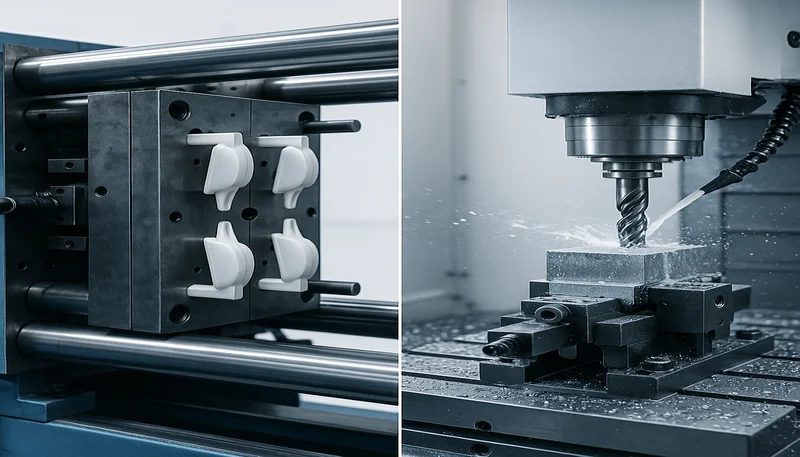
En cuanto a costos, el moldeo por inyección rápida se vuelve competitivo con la impresión 3D alrededor de 100-300 piezas, dependiendo del tamaño y complejidad de la pieza. Una sola pieza impresa en 3D podría costar entre 30 y 80 dólares, mientras que una pieza moldeada por inyección rápida (incluida la amortización de la herramienta) podría costar entre 15 y 40 dólares en 200 unidades. El punto de cruce cambia según la geometría de la pieza: las piezas complejas con características internas que aprovechan la ventaja de la impresión 3D aumentarán el punto de cruce, mientras que las piezas simples favorecen el moldeo antes.
¿Qué materiales funcionan para la moldura de prototipos rápidos?
Los moldes de prototipado rápido son compatibles con la mayoría de los termoplásticos de producción, excepto los grados altamente abrasivos o corrosivos que desgastan el aluminio rápidamente. En la práctica, ABS, PP, PC, PA6, POM y TPE cubren la mayoría de las series de validación de prototipos, mientras que los grados con carga de vidrio o retardantes a la llama requieren una revisión adicional de la herramienta.
Los materiales más comunes que vemos en las tiradas de prototipos rápidos son ABS, PP, PC, PA6, POM y TPE, que cubren la mayoría de las aplicaciones de consumo, automotrices e industriales. Estos materiales se moldean bien en herramientas de aluminio y proporcionan datos de prueba confiables para la validación funcional. Para piezas médicas o en contacto con alimentos, recomendamos usar la resina de producción exacta (incluidas las calificaciones regulatorias) en el molde prototipo para garantizar que los resultados de la prueba se transfieran directamente a la calificación de producción.
¿Cuánto cuesta la moldura por inyección de prototipos rápidos?
El costo de la moldura por inyección de prototipos rápidos es la herramienta más el material más el tiempo de máquina, a menudo $500-$2,000 para herramientas de aluminio. Para un molde de aluminio típico de una sola cavidad que produce 500 piezas de ABS, espere que la herramienta domine el presupuesto mientras cada pieza moldeada se vuelve más barata a medida que aumenta la cantidad.
El costo de la herramienta varía con la complejidad. Una pieza simple de abrir y cerrar sin acciones laterales cuesta entre 1,500 y 3,500 dólares en aluminio. Añada una corredera de acción lateral y estará en el rango de 4,000 a 6,000 dólares. Dos correderas con elevadores lo llevan a 6,000-10,000 dólares. Los insertos roscados, elevadores o núcleos colapsables pueden llevar la herramienta de aluminio por encima de los 15,000 dólares, momento en el que debería evaluar si un molde de acero blando P20 tiene más sentido, ya que ya está invirtiendo en una complejidad de herramienta de grado de producción.
"“Los moldes para prototipos rápidos pueden servir como moldes puente para la producción inicial mientras se fabrica el molde de producción de acero.”"True
La herramienta puente es exactamente esto: un molde de aluminio o acero blando que produce piezas comercializables durante el período de 8 a 12 semanas mientras se fabrica el molde de producción de acero. Muchas empresas de dispositivos médicos y productos electrónicos de consumo utilizan este enfoque para comenzar a vender productos o cumplir con pedidos anticipados sin esperar a la herramienta de producción. Los datos dimensionales del molde puente también ayudan a validar el diseño del molde de producción.
"“Los moldes de prototipado rápido producen un acabado superficial idéntico al de los moldes de producción de acero pulido.”"False
Los moldes de aluminio pueden lograr un buen acabado superficial (SPI B-2 o A-3), pero no pueden igualar el pulido espejo (SPI A-1) de los moldes de acero endurecido. El aluminio tampoco puede texturizarse mediante los procesos estándar de grabado fotoquímico utilizados en moldes de acero. Si el acabado superficial es un criterio de validación crítico, considere especificar un molde prototipo de acero blando (P20) en lugar de aluminio.
¿Cuáles son los errores comunes en la creación rápida de prototipos?
El error más común en el prototipado rápido para moldeo por inyección es tratar el molde de prototipo como un atajo para saltarse la revisión de DFM. Un mal diseño en un molde de aluminio es tan malo como un mal diseño en un molde de acero — y falla más rápido. Los subcortes sin ángulo de desmoldeo, paredes por debajo de 1 mm de grosor y esquinas internas afiladas causan problemas independientemente del material del molde. Revisamos cada proyecto de prototipo rápido con el mismo rigor de DFM que las herramientas de producción, porque el costo de recortar una cavidad de aluminio no es trivial cuando se enfrenta a un plazo de tres semanas.
El segundo error es descuidar diseño de moldes1 consideraciones que afectan a la calidad de la pieza con independencia del material del molde. La ubicación del punto de inyección, el diseño de los canales de alimentación, la colocación de los canales de enfriamiento y el venteo son tan importantes en los moldes de aluminio como en los de acero. Un molde de aluminio con un punto de inyección mal diseñado produce llenados incompletos, inyección en chorro y marcas de quemado, igual que uno de acero; la única diferencia es que lo descubre antes.
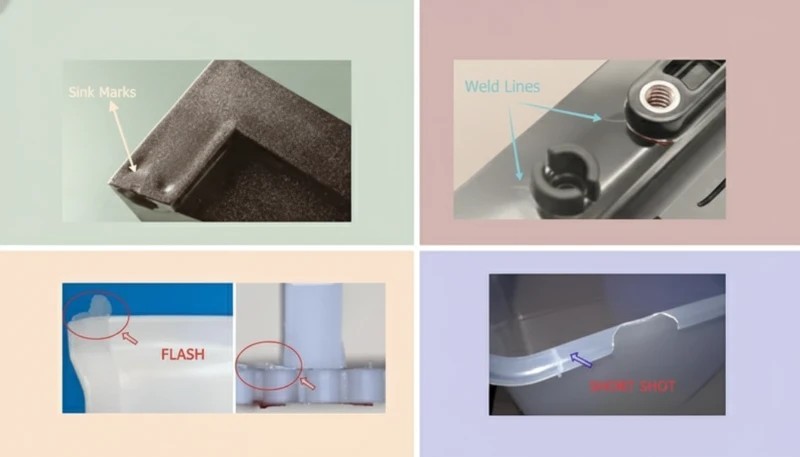
La tercera trampa es la falta de coincidencia de material entre prototipo y producción. Ejecutar un ABS de grado comercial en el molde de prototipo cuando su material de producción es un grado especial retardante de llama significa que los resultados de la prueba no se transfieren. Siempre prototipe con el material objetivo o un equivalente mecánico cercano.
¿Cómo se escala del prototipo a la producción?
Escalar de prototipo a producción es un problema de control de herramientas: bloquee el diseño, documente los resultados de las pruebas y transfiera el aprendizaje a las herramientas de acero. Usamos la corrida de prototipo para verificar la compuerta, contracción, enfriamiento, eyección y criterios de inspección antes de cortar el acero del molde de producción.
El enfoque más inteligente que vemos de los OEM experimentados es la fabricación paralela de moldes: iniciar el molde de prototipo rápido y el diseño del molde de producción simultáneamente. El molde de prototipo entrega piezas de prueba en 2 semanas. Durante las pruebas, el diseño del molde de producción se perfecciona en base a lo que se aprende. Para cuando se completa la prueba del prototipo, el diseño del molde de producción está finalizado y listo para cortar, ahorrando de 2 a 4 semanas en comparación con un enfoque secuencial.
Para empresas con necesidades continuas de moldeo por inyección de bajo volumen2 necesidades (menos de 10,000 piezas/año), el molde prototipo de aluminio suele convertirse de facto en la herramienta de producción. Con un mantenimiento adecuado y un pulido ocasional, un molde de aluminio bien fabricado puede realizar entre 5,000–10,000 ciclos con material sin carga, suficiente para muchos productos de nicho y especializados. En estos casos, no existe una etapa independiente de «escalado a producción»: la herramienta puente es el molde de producción.
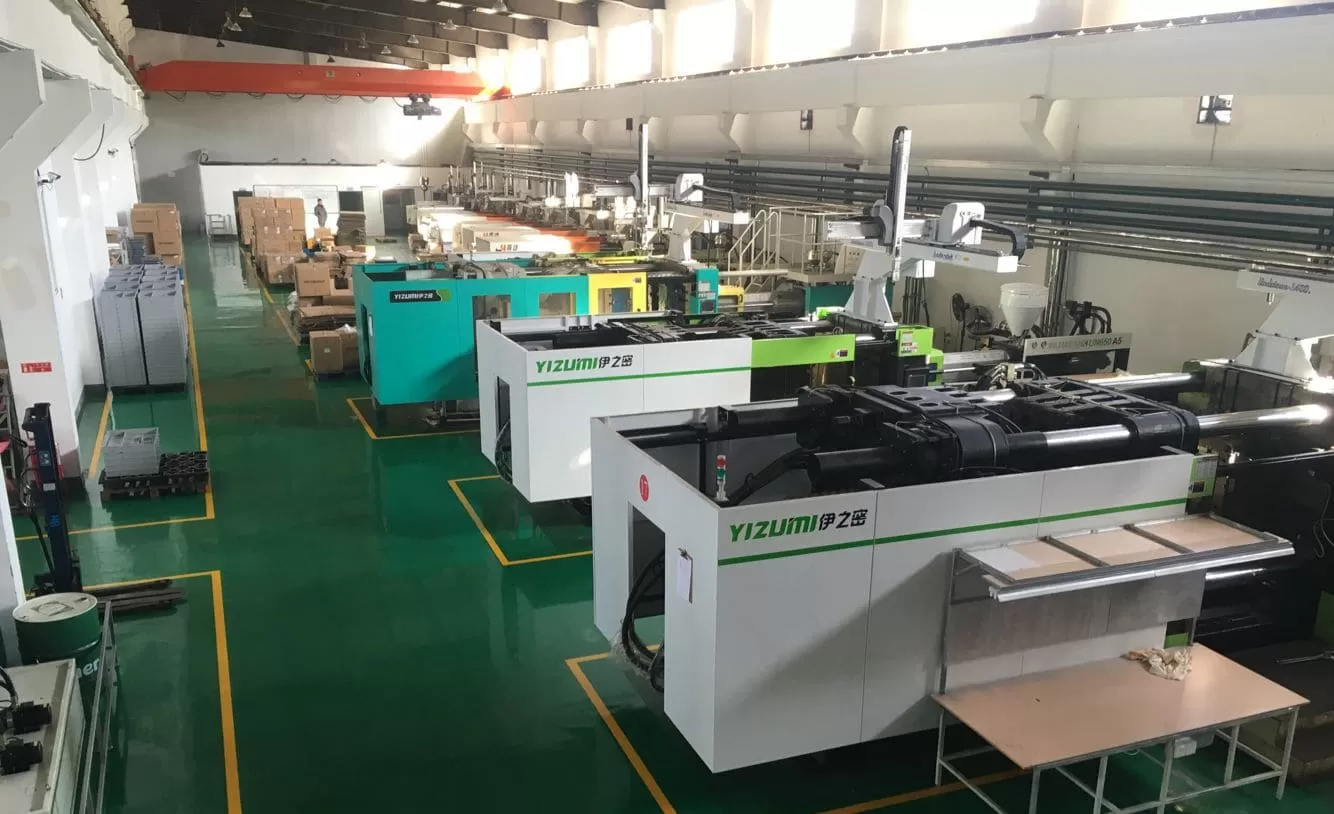
Con 45 máquinas inyectoras de entre 90T y 1850T, ZetarMold utiliza moldes tanto para prototipado rápido como para producción bajo el mismo techo en Shanghái. Esto significa que sus prototipos y piezas de producción proceden de las mismas instalaciones, del mismo moldeo por inyección3, los mismos parámetros de proceso y el mismo equipo de QC, lo que elimina la variabilidad derivada de cambiar de proveedor entre las fases de prototipo y producción.
Preguntas frecuentes sobre prototipado rápido para moldeo por inyección
¿Qué tan rápido se pueden obtener piezas prototipo moldeadas por inyección?
Las herramientas de aluminio típicamente entregan primeras piezas en 7–15 días hábiles desde el CAD aprobado. Los moldes de resina impresos en 3D pueden producir piezas en 1–3 días pero están limitados a 10–100 disparos. Para un molde de aluminio de una sola cavidad típico sin acciones laterales, espere 7–10 días hasta la primera inspección de artículo. Añada 3–5 días por cada corredera de acción lateral o característica compleja.
¿Cuál es el Pedido Mínimo para Moldeo por Inyección Rápido?
La mayoría de los proveedores establecen un mínimo práctico de 100 a 300 piezas para el moldeo por inyección rápido, impulsado por el tiempo de preparación y la carga de material. En ZetarMold, podemos prototipar tan solo 50 piezas en un molde de aluminio, aunque el costo por pieza en esa cantidad está dominado por la amortización de la herramienta. La economía mejora significativamente a partir de 500+ piezas.
¿Se pueden usar moldes de prototipo rápido para producción?
Los moldes de aluminio pueden servir como herramientas de producción puente para 1,000–10,000 piezas dependiendo de la abrasividad del material y la complejidad de la pieza. Para volúmenes anuales inferiores a 10,000 unidades de material sin relleno, un molde de aluminio puede servir como herramienta de producción permanente. Para volúmenes más altos o materiales abrasivos, planifique la transición a herramientas de acero endurecido.
¿Qué tan precisas son las piezas de moldeo por inyección rápido?
Los moldes de aluminio producen piezas con tolerancias de ±0.05–0.10 mm, comparables a los moldes de acero durante los primeros miles de disparos. La principal preocupación de precisión es el desgaste en áreas de alto flujo (compuertas, canales de alimentación) con el tiempo. Para características de tolerancia estrecha (±0.025 mm o mejor), especifique estas áreas para insertos de acero dentro de la base del molde de aluminio.
¿Cuál es la diferencia entre herramientas puente y prototipado rápido?
El prototipado rápido se centra en la velocidad para obtener primeras piezas para pruebas y validación. Las herramientas puente usan el mismo enfoque de construcción rápida pero apuntan a producir piezas de producción comercializables mientras se construye el molde de acero permanente. El diseño y construcción del molde son similares, pero las herramientas puente requieren mayor atención al acabado superficial, consistencia dimensional y documentación del proceso ya que las piezas van a los clientes.
¿Se pueden usar materiales de producción en moldes de prototipo rápido?
Sí, los moldes de prototipo rápido pueden ejecutar prácticamente cualquier termoplástico de producción. La excepción son los materiales rellenos altamente abrasivos (con vidrio, con fibra de carbono) que desgastan rápidamente las cavidades de aluminio. Para materiales abrasivos, use un grado sustituto sin relleno para pruebas o actualice a herramientas de acero blando (P20) que manejan mejor las resinas abrasivas.
diseño del molde: se refiere al proceso de ingeniería para crear la cavidad, el núcleo, los canales de enfriamiento y el sistema de expulsión de un molde de inyección, que afecta directamente a la calidad de la pieza y a la eficiencia de producción. ↩
moldeo por inyección de bajo volumen: es un método de producción que utiliza utillaje simplificado o de aluminio para fabricar lotes pequeños de piezas, normalmente de 50 a 10,000 unidades, sin el coste de los moldes de acero para producción a gran escala. ↩
moldeo por inyección: es un proceso de fabricación en el que se inyecta resina termoplástica fundida a presión en la cavidad de un molde metálico, se enfría hasta solidificar y se expulsa como pieza terminada. ↩