Ir al contenido
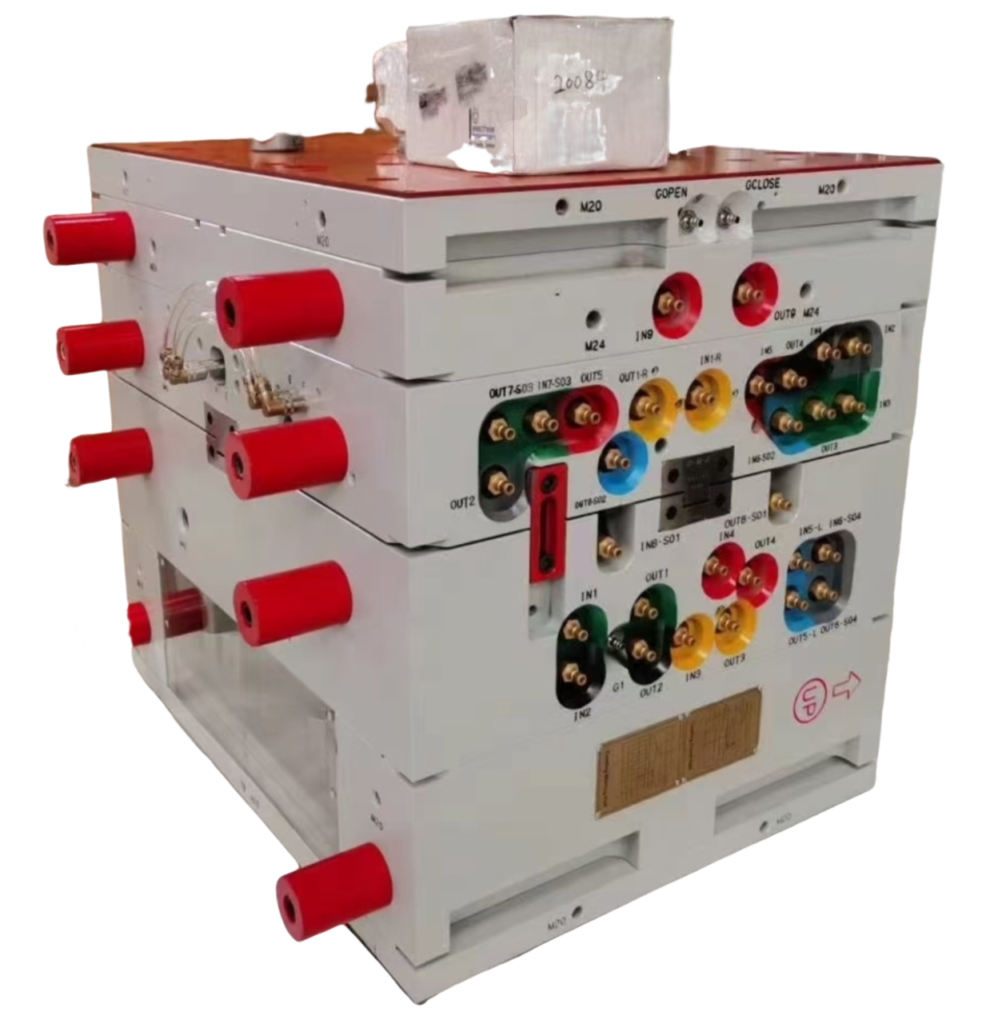
- Plastic molds fall into five main types: single-cavity, multi-cavity, family, hot runner, and cold runner—each suited to different production volumes and part geometries.
- Mold steel grade directly determines lifespan: aluminum prototypes last 5,000–50,000 cycles; P20 pre-hardened steel reaches 500,000 cycles; H13 hardened steel exceeds 1,000,000 cycles.
- Mold cost ranges from $3,000 for a simple single-cavity prototype to over $150,000 for a complex multi-cavity production mold—with steel grade, cavity count, and surface finish as the three biggest cost drivers.
- Every plastic mold requires proper venting (0.02–0.05 mm depth), draft angles (1–3° per side), and uniform wall thickness to prevent defects like flash, short shots, and warpage.
- ZetarMold builds plastic molds in P20, H13, S136, and NAK80 steels, with T1 samples delivered in as fast as 15 days.
What Are Plastic Molds?
Plastic molds are precision-machined steel or aluminum tools that shape molten thermoplastic or thermoset material into a finished part through the injection molding cycle. Each mold consists of two halves—the cavity (A-side) and core (B-side)—that close under clamping force, receive injected plastic at 150–370°C, and open to eject the cooled part in 15–120 seconds per cycle.
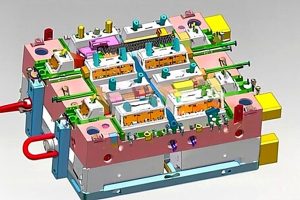
A complete mold assembly includes the cavity and core inserts, the runner system that channels plastic from the machine nozzle to the gate, a cooling circuit to extract heat uniformly, and an ejection system (pins, sleeves, or stripper plates) to release the part. The quality of every dimension, surface finish, and mechanical property in the final plastic part traces directly to how well the mold was designed and built.
Modern plastic molds are built to extremely tight tolerances—cavity dimensions are typically held to ±0.01–0.05 mm—because any deviation is multiplied across every part produced. A well-designed mold running 24/7 at a high-volume facility can produce millions of identical parts over its service life without significant dimensional drift. The mold is not a consumable; it is a capital investment that must be engineered with the same rigor as the part itself.
What Are the Main Types of Plastic Molds?
Five mold configurations cover the vast majority of injection molding applications, each optimized for specific volume, cost, and cycle-time requirements.
| Tipo de molde | Cavities | Lo mejor para | Relative Cost |
|---|---|---|---|
| Una sola cavidad | 1 | Prototypes, low volume (<10,000 parts/year) | Lowest |
| Multi-cavity | 2–128 | High-volume identical parts (>100,000/year) | Medium–High |
| Family mold | 2–8 (different parts) | Assemblies with multiple components | Medio |
| Hot runner | 1–128 | High volume, zero-waste, fast cycle time | Alta |
| Cold runner | 1–32 | Flexible material changes, lower upfront cost | Low–Medium |
Single-cavity molds minimize upfront tooling cost and are ideal for prototyping or low-demand parts. Multi-cavity molds—which can run 8, 16, 32, or 64 identical cavities simultaneously—dramatically reduce cost-per-part at volumes above 100,000 units annually. The clamping force and shot size required scale proportionally with cavity count, so the injection machine must be sized accordingly.
Family molds produce two or more different parts in one shot, which suits assembly components that are always used together, such as a housing top and bottom. The trade-off is that an engineering change to any single part puts the entire mold offline. For parts with uncertain design stability, separate single-cavity tools provide far greater flexibility.
Hot runner systems eliminate the cold sprue and runner scrap that cold runner molds generate. By keeping the runner manifold at melt temperature, hot runner molds reduce material waste by 15–30% per cycle and typically cut cycle time by 10–20%. The tradeoff is a higher mold cost—manifold components add $8,000–$30,000 to the tooling bill—and more complex maintenance. Cold runner molds are still preferred when material changes are frequent, when regrind is acceptable, or when the production volume does not justify the hot runner premium.
What Materials Are Plastic Molds Made From?
acero para moldes4 grade is the single most important factor in determining how many cycles a mold will produce before requiring repair or replacement. The four most common materials span a 20× range in both cost and lifespan.
| Material | Dureza | Ciclos esperados | Best Application |
|---|---|---|---|
| Aluminum 7075/6061 | 60–80 HB | 5,000–50,000 | Prototype, bridge tooling |
| P20 pre-hardened steel | 28–32 HRC | 300,000–500,000 | Standard production molds |
| H13 tool steel (hardened) | 48–52 HRC | 1,000,000+ | High-volume, abrasive materials |
| S136 stainless steel | 50–54 HRC | 1,000,000+ | Corrosive resins (PVC, flame retardants) |
| NAK80 pre-hardened | 37–43 HRC | 500,000–800,000 | High-polish optical or cosmetic parts |
Aluminum molds are machined in 5–10 days versus 3–6 weeks for hardened steel, making them the standard choice for pre-production validation and low-volume runs. P20 is the workhorse of the industry: it machines easily before heat treatment, takes a good polish, and delivers a reliable 300,000–500,000 cycle service life at a fraction of H13’s cost. The majority of consumer product molds worldwide run in P20 because the volume and resin combination—typically unfilled PP, ABS, or PE—does not justify upgrading to a harder steel.
H13 and S136 require post-machining vacuum heat treatment and more intensive EDM finishing, which adds cost and lead time. For glass-filled, mineral-filled, or flame-retardant materials that aggressively wear cavity surfaces, the investment pays back through reduced maintenance frequency and longer mold life. NAK80 is the preferred choice for consumer-product molds that demand mirror-finish surfaces (Ra ≤ 0.025 μm) because it polishes to optical quality without additional surface treatment. Selecting the wrong steel grade for a given resin-volume combination is one of the most common and costly mold specification errors.
How Is a Plastic Mold Designed?
Plastic mold design begins with a DFM3 review of the part—checking wall thickness uniformity, draft angles, undercuts, and gate location—before any steel is cut. Skipping this step is the single most common cause of costly mold revisions and delayed production launches. A DFM review typically costs $200–$800 and can identify issues that would otherwise require $5,000–$30,000 in mold rework after first trials.
The six critical design decisions every mold engineer must resolve are: (1) parting line location that minimizes flash risk and simplifies ejection; (2) gate type and position—typically edge, submarine, or hot tip—chosen to avoid visible gate marks on cosmetic surfaces; (3) runner balance for multi-cavity tools so all cavities fill simultaneously; (4) cooling layout with channels 10–15 mm from cavity walls for uniform heat extraction; (5) ejection system sized to release the part without distortion; and (6) venting, with 0.02–0.05 mm deep vents every 25–50 mm around the parting line to prevent burn marks and short shots.
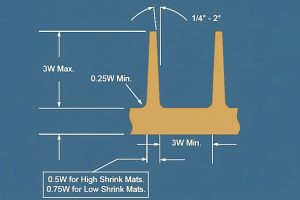
Wall thickness is a frequently underestimated design constraint. Walls thicker than 4 mm create sink marks on the opposite surface as plastic cools and shrinks. Walls thinner than 0.8 mm risk short shots because the melt front freezes before filling the cavity. The optimal range for most engineering resins is 1.5–3.5 mm, with transitions between thick and thin walls tapered at no more than a 3:1 ratio to prevent stress concentrations and knit line weakness.
“Uniform wall thickness reduces warpage and cycle time in plastic molds.”Verdadero
Walls thicker than 3–4 mm create localized hot spots that increase cooling time and cause differential shrinkage. Maintaining consistent wall thickness (typically 1.5–4 mm) across a part allows the cooling circuit to extract heat evenly, minimizing warp deflection and keeping cycle times at their minimum value for that part geometry.
“Any steel grade can be used for any plastic material without affecting mold life.”Falso
Abrasive materials—glass-filled nylon, mineral-filled PP, and flame-retardant compounds—wear P20 cavities 3–5× faster than unfilled resins. Using P20 for a glass-filled PA66 part running at 200,000+ cycles per year results in visible cavity wear within 18–24 months, requiring re-texturing or full insert replacement. Matching H13 or hardened S136 to abrasive materials is essential to achieving cost-effective mold life.
Mold flow simulation (CAE analysis) is strongly recommended before finalizing the design. Running a fill, pack, cooling, and warpage simulation takes 1–3 days and can identify weld line locations, air trap risks, and excessive clamp force requirements—each of which is far cheaper to fix in software than after the mold is cut. Studies across production molds show that pre-build simulation reduces first-shot revision rounds by 40–60% and shortens total time-to-production by 2–4 weeks on average.
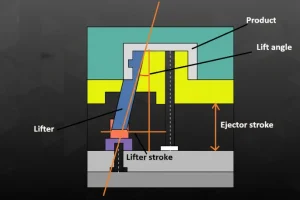
Undercuts—features that prevent the part from ejecting straight along the mold-open direction—must be resolved through side actions (sliding cores), lifters, or collapsible cores. Each undercut-resolving mechanism adds $500–$5,000 to mold cost and introduces a moving component that requires maintenance. Redesigning the part to eliminate undercuts through creative parting line placement or design simplification is always the first option to evaluate before committing to complex slide mechanisms.
How Much Do Plastic Molds Cost?
Plastic mold cost ranges from $3,000 for a simple single-cavity aluminum prototype to over $150,000 for a complex multi-cavity hardened-steel production tool—a 50× spread driven primarily by steel grade, number of cavities, and part complexity.

| Tipo de molde | Acero | Cavities | Estimated Cost (USD) |
|---|---|---|---|
| Simple prototype | Aluminio | 1 | $3,000–$8,000 |
| Standard production | P20 | 1 | $8,000–$25,000 |
| Multi-cavity production | P20/H13 | 4–8 | $20,000–$60,000 |
| High-volume hot runner | H13 | 16–32 | $50,000–$150,000 |
| Complex family mold | H13/S136 | 4–8 (diff. parts) | $30,000–$80,000 |
Beyond the upfront tooling investment, total cost of ownership includes maintenance (typically $500–$3,000 per 100,000 cycles), engineering changes ($1,000–$15,000 each), and eventual end-of-life replacement. High-volume buyers who run a mold 24/7 should model the full lifecycle cost—not just the purchase price—when comparing quotes. A $15,000 P20 single-cavity mold requiring three major repairs over five years may cost more over its lifetime than a $25,000 H13 mold that runs maintenance-free for the same period.
Lead time is closely tied to cost. Aluminum prototype molds deliver T1 samples in 10–15 days. P20 single-cavity molds take 3–4 weeks. Complex multi-cavity H13 tools typically require 6–10 weeks. Requesting a faster turnaround usually adds 15–30% to tooling cost due to overtime machining and expedited EDM slots. Providing complete, frozen 3D CAD data and completing the DFM review before purchase order is the single most effective way to maintain quoted lead time.
Geography affects mold price significantly. Chinese toolmakers typically quote 30–60% below European or North American shops for equivalent complexity and steel specification. The tradeoff involves longer shipping times (3–5 weeks by sea freight), potential IP concerns, and limited ability to make on-site adjustments during tryout. Many global manufacturers use China for production tooling while keeping prototype and critical molds onshore to manage these risks.
“Splitting a family mold into separate single-cavity tools increases flexibility for future design changes.”Verdadero
When two or more parts are built into one family mold, an engineering change to any single part requires the entire mold to go offline. Separate single-cavity molds can be revised independently, minimizing production interruption. For parts with different design freeze timelines, separate tooling is almost always the lower-risk strategy despite the higher initial investment.
“More mold cavities always reduce cost-per-part.”Falso
Cavity count reduces cost-per-part only when the production volume is high enough to offset the increased tooling investment. For annual volumes below 50,000 units, a 4-cavity mold’s higher tooling cost and maintenance complexity frequently makes the total cost per part higher than a single-cavity alternative. The breakeven point depends on machine hourly rate, material cost, and annual demand—and should always be calculated before selecting cavity count.
How Are Plastic Molds Manufactured?
Plastic mold manufacturing follows a precise sequence: 3D design and DFM review, steel procurement and mold base machining, CNC rough milling of cavity and core, EDM (electrical discharge machining) of fine details and textures, grinding and fitting, polishing to required surface finish, assembly of all components, and T1 trial sampling.
CNC milling handles the majority of metal removal and produces tolerances of ±0.02–0.05 mm. EDM—both sinker and wire—is used for sharp inside corners, ribs below 1 mm width, and complex contour surfaces that CNC cannot reach. The EDM process erodes material via controlled electrical discharges, achieving tolerances of ±0.005–0.01 mm without cutting forces that would deflect thin features. Sophisticated 5-axis CNC centers have reduced EDM dependency in recent years by accessing previously unreachable cavity angles directly with ball-end mills.
Surface finish is achieved through bench polishing with progressively finer abrasives (from 320 to 3000 grit) or by EDM texturing for matte and leather-grain surfaces. Optical surfaces require diamond paste lapping to achieve Ra ≤ 0.01 μm. The SPI (Society of the Plastics Industry) surface finish classification provides a standard reference: A-1 (super high gloss) through D-3 (rough matte) enables designers and moldmakers to communicate surface requirements unambiguously.
The final step before T1 trials is trial assembly—fitting the mold in the injection machine, checking shut-off surfaces for flash-free closure, and verifying cooling circuit flow rates. A pre-trial checklist should confirm: all cooling circuits are connected and leak-tested, ejector travel is set correctly, mold temperature is at the specified setpoint, and machine tonnage and shot size are within range. Skipping any of these steps risks a failed T1 shot that could damage the mold or part.
T1 evaluation follows a structured process. First-off parts are measured against the part drawing using CMM (coordinate measuring machine) inspection, with all critical dimensions reported in a first article inspection (FAI) report. Dimensional deviations are categorized as: acceptable within tolerance, correctable by process adjustment, or requiring mold modification. Steel-safe design—deliberately leaving cavity dimensions 0.1–0.2 mm undersized on non-draft surfaces—is a best practice that allows the mold to be opened up (removing metal) rather than welded (adding metal, which is harder and less reliable) during dimensional correction.
What Are Plastic Molds Used For?
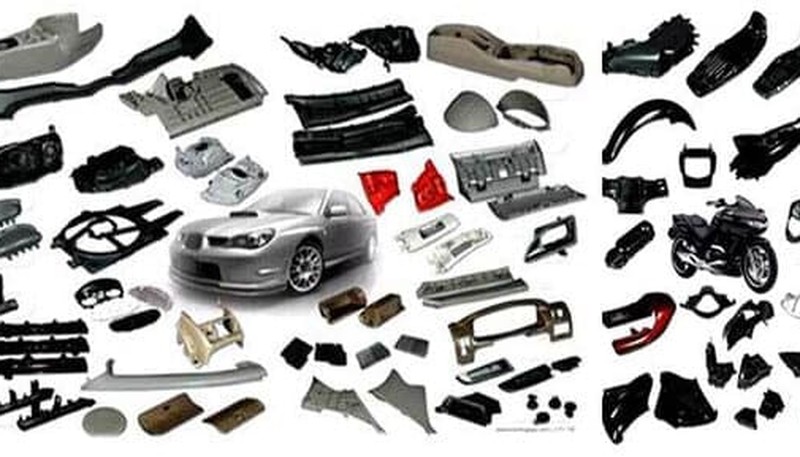
Plastic molds produce virtually every injection-molded component across all major industries. Automotive applications—bumper fascias, interior door panels, dashboard components, and lamp housings—account for approximately 35% of global injection molding output by value. Consumer electronics enclosures, medical device housings, and packaging closures each represent large and growing segments of the total market.
Industrial applications include pump housings, valve bodies, conveyor components, and electrical enclosures where dimensional accuracy and structural performance are critical. Packaging alone consumes more than 40% of all plastic resin produced globally, with high-speed thin-wall molds running at cycle times under 5 seconds for caps, closures, and containers. The design requirements for thin-wall packaging molds—fill speeds above 300 mm/s, injection pressures to 2,000 bar, and cavity tolerances to ±0.01 mm—represent some of the most demanding specifications in the industry.
Consumer electronics is one of the fastest-growing application segments for precision plastic molds. Smartphone housings, laptop bezels, and wearable device enclosures demand SPI A-1 or A-2 surface finishes on cosmetic surfaces, with gate vestige controlled to within 0.1 mm. Achieving these surface standards requires high-polish NAK80 or S136 cavities, carefully designed submarine or hot-tip gates, and precisely balanced cooling to prevent differential shrinkage that would create visible sink marks or waviness.

Advanced applications include multi-material molding—overmolding and insert molding—where a plastic mold is designed to receive a pre-placed metal insert or a previously molded part, bonding two materials in a single production step. These techniques eliminate secondary assembly operations and are widely used in medical devices (metal-to-plastic interfaces), automotive electronics (connector housings with metal terminals), and consumer products (soft-grip handles over rigid cores). Overmolding molds require precise shut-off surfaces where the second material interfaces with the substrate, with tolerances often held to ±0.02 mm to prevent flashing of the overmolded elastomer.
Medical-grade plastic molds demand the highest precision tier: cavity tolerances of ±0.005 mm, S136 corrosion-resistant steel to handle aggressive medical-grade resins (PEI, PEEK, POM), and cleanroom-compliant manufacturing environments. These molds are also subject to FDA validation requirements, including installation qualification (IQ), operational qualification (OQ), and performance qualification (PQ) documentation. A single medical mold project may require 300–500 pages of validation documentation in addition to the physical tool and sample parts.
Aerospace applications push tolerances and material requirements further still. Molds for structural aerospace plastic components must hold cavity dimensions to ±0.003–0.005 mm, use materials with demonstrated traceability, and produce parts that meet AS9100 quality system requirements. The mold cost for these applications routinely exceeds $100,000 for a single-cavity tool because of the precision machining, validation burden, and material certification requirements involved.
The range of plastic materials processed through injection molds spans from commodity resins—polypropylene (PP), polyethylene (PE), ABS, and polystyrene (PS)—to high-performance engineering polymers including PEEK, PEI, PPS, and LCP. Each resin class imposes different requirements on the mold: melt temperature range, shrinkage rate, moisture sensitivity, and corrosiveness all influence steel selection, surface finish, cooling design, and processing window. A mold designed for ABS cannot simply be repurposed for PEEK without mold temperature upgrades (PEEK requires 160–200°C mold temperature versus 40–80°C for ABS) and possibly steel replacement if the cavity was not originally hardened.
Regardless of industry, the economics of plastic molding are defined by the relationship between part volume and tooling cost. Every additional cavity, every side action, every hot runner drop, and every surface finish upgrade adds to the mold investment that must be recovered through production. Understanding this cost structure—and designing both the part and the mold with total lifecycle cost in mind—is the defining skill of an experienced injection molding engineer. Cheap molds that require frequent maintenance or early replacement invariably cost more over a three-to-five year production run than well-specified tools built to match the application’s actual demands.
Selecting a qualified mold supplier requires evaluating machining capability (5-axis CNC, EDM accuracy, CMM metrology), steel sourcing (certified domestic or European steel versus unverified spot-market material), process documentation (DFM reports, mold flow simulation, first article inspection), and after-sales support (modification capability, spare parts, on-site tryout assistance). Price alone is not a reliable proxy for quality; a thorough technical audit of the supplier’s capabilities, combined with reference checks on similar mold complexity, is the most reliable qualification approach.
For global brands sourcing plastic molds in China, the most effective risk mitigation strategy is a clearly written mold specification document covering: steel grade with material certification requirements, required surface finish (SPI classification), dimensional tolerances by feature category, acceptance criteria for first article inspection, delivery milestone schedule with penalty clauses, and IP ownership statements. A comprehensive mold specification reduces ambiguity and creates a contractual baseline that protects both buyer and supplier when disputes arise.
How Do You Maintain Plastic Molds?
Plastic mold maintenance is essential to sustaining part quality and avoiding unplanned downtime—a single mold failure can halt an entire production line for 12–72 hours. Preventive maintenance intervals are based on cycle count: minor service (cleaning, lubrication, vent cleaning) every 25,000–50,000 cycles; full inspection every 100,000–250,000 cycles; and major overhaul (insert replacement, cavity polishing) at 500,000 cycles or when dimensional drift exceeds tolerance.

The most common maintenance tasks are: (1) cleaning vents that clog with polymer degradation byproducts—blocked vents cause burn marks and short shots within days of buildup; (2) re-lubricating ejector pins and sliding cores on a cycle-count schedule to prevent galling and seizure; (3) inspecting and re-stoning parting line surfaces that develop burrs from flash wear; and (4) checking cooling circuit flow rates and inlet/outlet temperature differential—a delta above 10°C between inlet and outlet indicates fouling or blockage in the cooling channel.
El almacenamiento de moldes requiere una limpieza exhaustiva, aplicar un inhibidor de corrosión en todas las superficies de acero y almacenar el molde en un entorno de humedad controlada inferior a 60% HR. Los moldes dejados en condiciones húmedas sin protección desarrollan corrosión superficial en semanas, requiriendo repulido de la cavidad antes de la siguiente producción — un costo prevenible que normalmente oscila entre $500–$3,000 por inserto afectado. La mejor práctica es embolsar el molde en polietileno después de la aplicación del inhibidor y almacenarlo en un sistema de racks dedicado donde no pueda ser dañado por otros moldes o equipos.
Un libro de registro de mantenimiento de moldes—que registre cada evento de servicio, conteo de ciclos, problema observado y acción correctiva tomada—es indispensable para gestionar una flota de moldes de producción. Sin registros del conteo de ciclos, los intervalos de mantenimiento son conjeturas, y la causa raíz de defectos recurrentes no puede correlacionarse con eventos de mantenimiento específicos. Los talleres de moldes modernos implementan etiquetas RFID en los moldes que se vinculan a una base de datos que rastrea el conteo de ciclos, el historial de mantenimiento y la ubicación, permitiendo un mantenimiento predictivo en lugar de una reparación reactiva.
Frequently Asked Questions About Plastic Molds
¿Cuánto tiempo se tarda en construir un molde de plástico?
El plazo de entrega depende de la complejidad y el grado de acero. Los moldes prototipo de aluminio entregan muestras T1 en 10-15 días. Los moldes de producción de una cavidad en P20 tardan 3-4 semanas. Las herramientas complejas de múltiples cavidades en H13 requieren 6-10 semanas. Añadir sistemas de canal caliente extiende el plazo de entrega en 1-2 semanas. Proporcionar datos CAD 3D completos y congelados, y una revisión DFM finalizada al inicio del proyecto elimina los retrasos más comunes. Los cambios de diseño en etapas tardías son la causa más importante de retrasos en la entrega del molde—cada ronda de revisiones después de que comience la construcción del molde típicamente añade 1-2 semanas al cronograma.
¿Cuál es la cantidad mínima de pedido para moldes de plástico?
No hay una cantidad mínima de pedido para el utillaje de moldes—puedes encargar un solo molde prototipo para producir tan solo 50 piezas. La justificación de producción depende del costo de utillaje amortizado por pieza: con un costo de molde de $10,000, producir 10,000 piezas pone $1.00 de costo de utillaje en cada pieza. La mayoría de los clientes encuentran que el moldeo por inyección se vuelve competitivo en costos frente a la impresión 3D o el mecanizado CNC aproximadamente por encima de 1,000–5,000 piezas al año. Para volúmenes extremadamente bajos, el utillaje puente en aluminio de $3,000–$8,000 proporciona piezas de calidad de producción mientras el diseño se estabiliza antes de comprometerse con el utillaje de producción completo en acero endurecido.
¿Qué causa los defectos de rebaba en los moldes de plástico?
Rebaba — finas láminas de plástico que se forman en la línea de separación — es causada por fuerza de cierre insuficiente, superficies de separación gastadas, presión de inyección excesiva o placas del molde que se han deformado y perdido paralelismo. La causa principal debe ser identificada antes de aplicar una solución: aumentar la tonelada de cierre no ayudará si el problema es una línea de separación gastada. Las soluciones incluyen aumentar la fuerza de cierre al mínimo calculado (área proyectada × presión de cavidad), reacondicionar las superficies de separación para restaurar el cierre plano, reducir la velocidad de inyección o la presión de compactación para disminuir la presión máxima en la cavidad, y añadir bloqueos laterales para mantener la alineación de la línea de separación durante la inyección.
¿Cómo elijo entre un molde con canal caliente y uno con canal frío?
Elige un molde con canal caliente cuando el volumen anual supere las 500,000 piezas, el costo del material sea alto (resinas de ingeniería por encima de $5/kg), o el tiempo de ciclo sea crítico. Los moldes con canal frío son preferibles para colores o materiales que cambian con frecuencia, para producción de pequeño volumen donde el reprocesado del canal es aceptable, o cuando las restricciones presupuestarias hacen que la prima del canal caliente de $8,000–$30,000 sea impracticable. Para aplicaciones de volumen medio, un canal frío con un sistema de canal equilibrado bien diseñado a menudo ofrece el 80% de la eficiencia al 30% del costo del canal caliente. Siempre calcula el ahorro de material versus el período de recuperación de la inversión en canal caliente antes de especificar.
¿Qué ángulo de desmoldeo se requiere para los moldes de plástico?
Los requisitos de ángulo de desmoldeo dependen del polímero y del acabado superficial. Polímeros sin carga con superficies pulidas lisas requieren un mínimo de 0.5–1° por lado. Superficies texturizadas (grano de cuero, punteado) requieren 1.5–3° por cada 0.025 mm de profundidad de textura — un grano de cuero medio con 0.1 mm de profundidad requiere al menos 4° de desmoldeo. Polímeros con fibra o rígidos necesitan 2–3° mínimo para evitar marcas de arrastre durante la expulsión. El desmoldeo insuficiente es una de las causas más comunes de arañazos superficiales y daños por fuerza de expulsión en las primeras pruebas. Añadir desmoldeo en la etapa de diseño no tiene costo; corregir desmoldeo insuficiente después de la construcción del molde requiere soldadura de cavidad y remecanización, costando normalmente $1,000–$5,000.
¿Cuántas piezas puede producir un molde de plástico?
La vida útil del molde depende del grado de acero y del material. Moldes de aluminio duran 5,000–50,000 ciclos. Moldes de P20 alcanzan 300,000–500,000 ciclos en condiciones normales. Moldes endurecidos de H13 producen 1,000,000+ ciclos con fiabilidad. Usar polímeros abrasivos con carga de vidrio o mineral reduce la vida útil 40–60% si no se especifica un grado de acero mejorado desde el inicio. El mantenimiento preventivo adecuado — limpieza, lubricación y servicio de ventilación según un programa de conteo de ciclos — puede extender la vida útil del molde 20–30% más allá de la estimación base. La vida útil del molde también se ve afectada por la presión de inyección (mayor presión desgasta superficies de separación más rápido), temperatura del molde (polímeros de alta temperatura fatigan el acero más rápido) y la corrosividad del polímero procesado.
¿Cuál es la diferencia entre un molde y una matriz en la fabricación de plásticos?
En la fabricación de plásticos, 'molde' se refiere a la herramienta utilizada en moldeo por inyección, moldeo por soplado y moldeo por compresión donde el material plástico se forma llenando una cavidad cerrada bajo presión. 'Matriz' se usa en extrusión para describir el orificio abierto que da a perfiles continuos (tubos, láminas, conductos) su forma transversal. En fundición por presión, 'matriz' describe el equivalente de un molde de inyección para aleaciones metálicas. Los dos términos se usan indistintamente en contextos informales y regionales, pero molde es el término técnico correcto para herramientas de formación plástica de cavidad cerrada. En Reino Unido y Australia, 'mould' es la ortografía estándar.
-
injection mold design: El diseño de moldes de inyección se refiere al proceso de ingeniería de crear la cavidad, el núcleo, el sistema de distribución y los canales de refrigeración que transforman el plástico fundido en una pieza terminada. ↩
-
mold flow analysis: El análisis de flujo de moldeo es un método de simulación que predice cómo el plástico fundido llena la cavidad del molde, identificando posibles defectos como líneas de soldadura, atrapamientos de aire y marcas de hundimiento antes de que se corte el utillaje. ↩
-
DFM: El DFM (Diseño para la Fabricabilidad) es un proceso de revisión de diseño que evalúa la geometría de la pieza, el espesor de pared, los ángulos de desmoldeo y la estrategia de entrada para garantizar que una pieza plástica pueda moldearse de manera eficiente y sin defectos. ↩
-
mold steel: El acero para moldes se refiere a aceros para herramientas especializados—como P20, H13, S136 y NAK80—utilizados para mecanizar núcleos y cavidades de moldes, seleccionados según la dureza requerida, la capacidad de pulido y el volumen de producción. ↩
-
proceso de moldeo por inyección de plástico: El proceso de moldeo por inyección de plástico es un ciclo de fabricación en el que los gránulos de plástico se funden, se inyectan bajo presión en un molde cerrado, se enfrían y se expulsan como una pieza terminada, completando típicamente un ciclo en 15-120 segundos. ↩


 EN
EN  ES
ES  FR
FR  DE
DE  PT
PT  AR
AR  RU
RU  JA
JA  KO
KO  IT
IT  NL
NL  TR
TR  PL
PL