 Ir al contenido

What Is the SPI Surface Finish Standard?
En SPI1 El Estándar de Acabado Superficial es un sistema de cuatro grados (A a D) que define la calidad de la superficie de la cavidad del molde.
Consulte nuestra guía de selección de proveedores para la preparación de RFQ y calificación de vendedores.
For a broader look at diseño de moldes de inyección, our pillar guide covers tooling structure, thermal control, and manufacturability tradeoffs.
El Estándar de Acabado Superficial SPI es un sistema de clasificación utilizado en moldeo por inyección proyectos para definir los requisitos de acabado cosmético y táctil en piezas de plástico moldeadas. Para los compradores, proporciona un lenguaje común para la cotización, pulido de molde2, muestras de inspección y aprobación final de la pieza.
- El acabado superficial SPI es tanto un requisito cosmético como una decisión de costo de herramienta, no solo una nota en el plano.
- Elija el acabado junto con la resina, el ángulo de desmoldeo, el grado de acero, el diseño de eyección, las necesidades de pintura o textura y el método de inspección.
- Fije el acabado objetivo durante el DFM para que el pulido, el muestreo y la aprobación final no se conviertan en sorpresas de costo o plazo de entrega en etapas tardías.
Estos estándares proporcionan un lenguaje común entre diseñadores industriales, ingenieros, fabricantes de moldes, gerentes de proyecto y equipos de calidad. Cuando todos hacen referencia al mismo grado SPI, se elimina la ambigüedad sobre cómo debe verse una superficie, cuánto esfuerzo de pulido se requiere y qué costo y tiempo de entrega esperar. El sistema SPI también ayuda a cerrar las brechas de comunicación entre los OEMs y los talleres de moldes en el extranjero, donde una terminología diferente o estándares regionales como VDI 3400 podrían crear confusión.
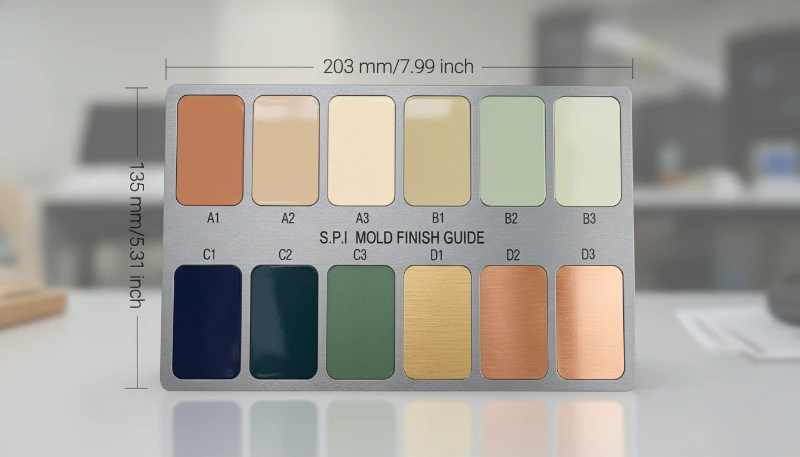
Los estándares se clasifican en cuatro grados principales, y cada grado debe vincularse a un objetivo cosmético claro, un método de inspección, una elección de resina y un presupuesto de herramienta antes de finalizar la cotización del molde:
Grade A (Gloss/Diamond Polish): Acabado tipo espejo para piezas ópticas, transparentes o cosméticas premium donde los arañazos y las marcas de hundimiento son muy visibles.
Grade B (Semi-Gloss/Paper): Smooth finish without high reflection.
Grade C (Matte/Stone): Non-reflective, standard industrial finish.
Grade D (Textured/Blast): Rough finish created via dry blasting or Electrical Discharge Machining (EDM).
What Are the Technical Parameters of SPI Finishes?
Los parámetros técnicos para los acabados SPI son la rugosidad superficial (Ra), el método de pulido y el ángulo de desmoldeo mínimo por grado.
To ensure manufacturability, engineers must adhere to specific roughness averages (Ra) and draft angle requirements. The following table details the twelve primary SPI designations.
| SPI Grade | Finish Description | Method of Application | Typical Ra (µm) | Typical Ra (µin) | Min. Draft Angle | Primary Use Case |
|---|---|---|---|---|---|---|
| A-1 | Super High Gloss | Grade #3 Diamond Buff | 0.012 – 0.025 | 0 – 1 | 1° | Lenses, mirrors, visors |
| A-2 | High Gloss | Grade #6 Diamond Buff | 0.025 – 0.05 | 1 – 2 | 1° | Cosmetic cases, electronics |
| A-3 | Texturizado / Mate | Grade #15 Diamond Buff | 0.05 – 0.10 | 2 – 4 | 2° | Household goods, opaque parts |
| B-1 | Smooth / Semi-Gloss | 600 Grit Paper | 0.05 – 0.10 | 2 – 3 | 1° | Medium polish parts |
| B-2 | Smooth / Medium | 400 Grit Paper | 0.10 – 0.15 | 4 – 5 | 1° | General molding, paintable parts |
| B-3 | Smooth / Low Gloss | 320 Grit Paper | 0.28 – 0.32 | 9 – 10 | 2° | Economy molding |
| C-1 | Matte / Fine | 600 Grit Stone | 0.35 – 0.40 | 10 – 12 | 1.5° | Die cast look, internal parts |
| C-2 | Matte / Medium | 400 Grit Stone | 0.80 – 0.95 | 25 – 28 | 1.5° | Structural parts, easy release |
| C-3 | Matte / Rough | 320 Grit Stone | 0.95 – 1.10 | 38 – 42 | 2° | Heavy utility parts |
| D-1 | Textured / Satin | Dry Blast (Glass Bead) | Varies | Varies | 2.5°+ | Satin finish handles |
| D-2 | Textured / Dull | terminado. La textura rompe la reflexión de la luz, haciendo que las marcas del lavabo sean casi invisibles a simple vista. | Varies | Varies | 3°+ | Industrial housing, grip |
| D-3 | Textured / Rough | Dry Blast (#24 Oxide) | Varies | Varies | 3°+ | Heavy texture, defect hiding |
Nota: Ra (Rugosidad Promedio)3 los valores son aproximados y dependen del tipo de acero y del equipo de medición.
How Is the Polishing Process Executed Step-by-Step?
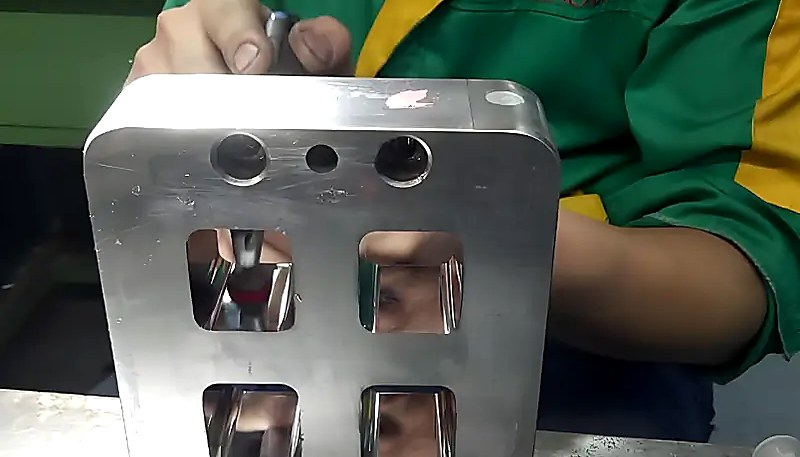
Achieving a specific SPI finish is a subtractive manufacturing process applied to the mold cavity steel.
Rough Machining: The mold core and cavity are CNC machined to the approximate shape. The surface is rough, often showing tool marks.
Stoning (Leveling): Toolmakers use abrasive stones to remove CNC tool marks and level the surface. This is the baseline for C-Grades.
Paper Polishing: If a smoother finish is required, the surface is sanded with progressively finer grit sandpaper (from 320 to 600 grit). This achieves B-Grades.
Visión de Fábrica: En nuestro taller de moldes de Shanghái, nuestro equipo verifica el acabado SPI junto con la elección de resina, el ángulo de desmoldeo, la disposición de los expulsores y la iluminación de inspección. Nuestros ingenieros comparan los objetivos de acabado con más de 400 opciones de materiales plásticos y 47 máquinas de moldeo por inyección antes de cotizar. También preguntamos si la superficie será pintada, marcada con láser, tocada por usuarios, limpiada con productos químicos o aprobada bajo luz fuerte, porque esos detalles deciden si el pulido espejo añade valor o solo costo.
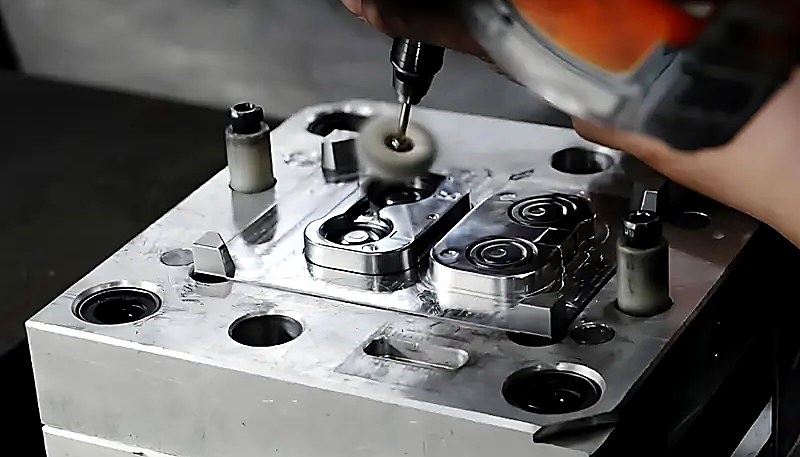
Diamond Buffing (Optional): Para A-Grades, a diamond paste is applied to a rotary buffing tool. The steel is polished until it reaches optical reflectivity.
What Are the Pros and Cons of Each Grade Category?
Las ventajas y desventajas de los grados SPI se definen por la compensación entre el nivel de pulido superficial, el costo de la herramienta y la visibilidad de defectos.
| SPI Category | Ventajas | Desventajas |
|---|---|---|
| Grade A (Gloss) | Highest aesthetic appeal; optical clarity for transparent parts; perceived high value. | Costo de herramienta más alto; propenso a adherencia por "sellado al vacío"; resalta defectos superficiales (arañazos, huellas dactilares, marcas de hundimiento). |
| Grade B (Semi-Gloss) | Good balance of cost and aesthetics; suitable for painting or plating; removes machining marks. | Can still show some molding defects; requires manual polishing labor. |
| Grade C (Matte) | Low tooling cost (fastest to machine); excellent for part release; hides minor tool marks. | Puede parecer "sin terminar" o industrial; no es adecuado para superficies de consumo de alta gama visibles. |
| Grade D (Textured) | Excellent for hiding sink marks and flow lines; improves grip; durable surface appearance. | Más difícil de limpiar (atrapa huellas dactilares); requiere ángulos de desmoldeo significativos para superficies texturizadas; difícil de reparar si el molde se daña. |
“Los acabados texturizados (serie D SPI) generalmente requieren un cono mayor por unidad de profundidad de textura que los acabados pulidos para evitar que la pieza se pegue.”Verdadero
Las texturas crean subcortes a nivel microscópico; una regla general es 1.5 grados de conicidad por cada 0.001 pulgada de profundidad de textura para evitar marcas de arrastre.
“Un grado de acabado SPI más alto (como A-1) siempre mejora la expulsión de la pieza.”Falso
Mirror finishes can actually create a vacuum seal effect between the part and the mold steel, causing parts to stick. This often requires air poppets or vacuum breakers to eject the part without deformation.
¿Qué Consejos Prácticos Ayudan a Optimizar la Selección del Acabado Superficial?
Compatibilidad de materiales: No todas las resinas pueden reproducir todos los grados SPI. PC, PMMA y ABS generalmente mantienen bien los acabados de alto brillo de grado A, mientras que PP, POM y nylon pueden mostrar textura diferente según la dirección del flujo. Los grados con carga de vidrio son los más difíciles porque la transparencia de las fibras aparece por encima de C-1. Si especifica una superficie Clase A en nylon con carga de vidrio 30%, presupueste acero S136 o H13, pulido extra y una aprobación de muestra realista.
La Estrategia de Marcas de Hundimiento: Las marcas de hundimiento son más visibles en superficies brillantes de grado A, donde incluso una depresión de 0.05 mm puede destacarse bajo la luz de inspección. En superficies mate de grado C o texturizadas de grado D, el mismo hundimiento es mucho menos obvio. Utilice el grado A solo en superficies visibles para el comprador, luego use C o D en los lados ocultos con nervaduras, refuerzos o variación de espesor. Este enfoque de grados divididos puede reducir el costo de pulido entre un 30% y un 50% mientras se preserva la calidad percibida.
Gestión de costes: La mano de obra de pulido es un costo variable importante en la fabricación de moldes. Pasar de C-1 a A-1 puede agregar entre un 15% y un 30% al costo del molde porque el pulido con diamante es un trabajo lento y especializado. Las nervaduras profundas, los subcortes y las líneas de partición complejas aumentan ese multiplicador. Mapee la pieza por grados: grado A en la cara cosmética principal, grado B en las superficies secundarias y C o D en las caras ocultas. Esto mantiene el molde competitivo y reduce el riesgo de mantenimiento durante la producción.
What Are Common Application Scenarios?
Los escenarios comunes de aplicación SPI se corresponden con el tipo de producto: las lentes ópticas usan A-1, las carcasas de consumo usan B-1 y los agarres de herramientas usan D-2.
SPI A-1 (Diamante #1): Lentes de faros automotrices, prismas ópticos, pipetas médicas y envases cosméticos premium donde la claridad impecable es el principal punto de venta. Cualquier defecto superficial, microarañazo o línea de flujo se vuelve inmediatamente visible bajo luz directa, por lo que solo el pulido de acero de grado más alto y un control meticuloso del proceso pueden lograr este acabado de manera consistente. A-1 también se especifica para ventanas de dispositivos médicos y componentes de ruta de fluidos donde la rugosidad superficial podría atrapar contaminantes o afectar la dinámica de fluidos.
SPI A-2 (Diamante #2): Pantallas de teléfonos inteligentes, compactos cosméticos de alta gama, molduras interiores automotrices y carcasas de productos de consumo premium donde el atractivo visual influye directamente en la calidad percibida del producto. A-2 ofrece una reflectividad casi espejo con un poco más de tolerancia para marcas de herramienta que A-1, lo que la convierte en una opción práctica para superficies visibles que aún exigen una apariencia pulida y profesional en entornos minoristas competitivos. Los fabricantes de electrónica de consumo eligen frecuentemente A-2 para biseles de pantalla y paneles de control que deben lucir premium sin incurrir en los costos de herramienta de A-1.
Cuándo Usar Acabados Texturizados e Industriales
SPI B-1 (Papel #1): Teclas de teclado, carcasas destinadas a pintura, cajas de electrónica de consumo y cubiertas de electrodomésticos. Los acabados de grado B proporcionan suficiente suavidad para operaciones posteriores al moldeo como pintura, impresión o aplicación de recubrimientos texturizados sin requerir el gasto del pulido con diamante. En nuestra experiencia, B-1 es el grado más rentable cuando la pieza recibirá un tratamiento superficial secundario después del moldeo. Este grado también se usa ampliamente para soportes estructurales internos y componentes ocultos que aún requieren una superficie limpia y uniforme para el ajuste del ensamblaje.
Grados SPI C-3 y D: Empuñaduras de herramientas eléctricas, cubiertas de columnas de dirección, carcasas de laptops reforzadas, envolventes de equipos para exteriores y cualquier aplicación donde una combinación de agarre, durabilidad y ocultación visual de artefactos de procesamiento sea más importante que el brillo. Los acabados texturizados de grado D son particularmente efectivos para ocultar marcas de hundimiento, líneas de soldadura y marcas de flujo que serían evidentes en una superficie pulida, por lo que son la elección predeterminada para componentes estructurales e industriales.
¿Cómo Se Elige el Acabado SPI Correcto Paso a Paso?
Elegir el acabado SPI correcto es un proceso de cinco pasos: definir la función, verificar el polímero, revisar la conicidad, establecer el presupuesto y luego consultar a su moldeador.
Define Functionality: ¿La pieza necesita ser transparente? (Elija A). ¿Necesita agarre o una superficie táctil? (Elija D). ¿Necesita desmoldarse fácilmente con un desmoldeo mínimo? (Elija C). Comience cada selección SPI anotando el requisito funcional, no la preferencia de apariencia. En muchos casos, el objetivo cosmético entra en conflicto con la necesidad funcional, y cuanto antes se detecte esa tensión, más rápido se resolverá con su socio de moldes.
Check the Polymer: ¿El material es sin carga o con carga de vidrio? Si es con carga de vidrio, limite sus expectativas a B-3 o C-1 porque la orientación de las fibras en la superficie crea vetas visibles que ningún pulido puede eliminar. Registre el grado de resina, el porcentaje de carga, el color, el objetivo de brillo y muestras de color en su documento de especificación SPI para que no haya ambigüedad entre el comprador y el moldeador.
Revisar los Requisitos de Cono: Revise su modelo CAD. Si tiene un cono de 0 grados o 0,5 grados en las paredes verticales, no puede usar una textura (grado D) porque la superficie rugosa aumenta la fricción durante la expulsión y hará que la pieza se pegue o se deforme. Debe agregar al menos 1 a 3 grados de desmoldeo para acabados texturizados, o cambiar a un acabado pulido que permita ángulos de desmoldeo más bajos.
Determine Budget: Si el costo es el factor principal, especifique SPI C-1. Es el acabado mecanizado estándar que requiere un postprocesado mínimo y es alcanzable en acero de herramienta estándar P20. Mejorar de C-1 a A-2 puede agregar 20% a 40% al costo del molde debido a las horas adicionales de pulido. Siempre obtenga una cotización de herramienta con el grado SPI exacto especificado, no solo un nivel de acabado por defecto.
Consult the Molder: Antes de finalizar, pregunte al moldeador por inyección si el acabado elegido requiere aceros específicos para moldes, como H13 frente a P20, lo que podría afectar el plazo de entrega y el costo. Un moldeador experimentado también puede aconsejar si el acabado interactuará bien con la resina elegida, si las marcas de los expulsores serán visibles en el nivel de acabado objetivo y si cualquier operación secundaria como pintura o texturas superpuestas es compatible con el grado SPI base.
“La selección del acabado SPI debe confirmarse antes del pulido final del acero del molde.”Verdadero
Los cambios tardíos en el acabado pueden requerir repulido, retexturizado, revisión adicional de desmoldeo y tiempo extra de muestreo, especialmente al pasar de superficies mate a superficies de alto brillo.
“Todos los acabados superficiales SPI requieren la misma conicidad de liberación del molde y configuraciones de expulsión.”Falso
Los acabados brillantes, mate y texturados se comportan de manera diferente durante la liberación, por lo que el conicidad, la dirección del pulido, la contracción del material y la fuerza de expulsión deben revisarse conjuntamente.
¿Qué preguntas frecuentes sobre acabado SPI hacen los compradores?
¿Cuál es la diferencia entre los estándares SPI y VDI 3400?
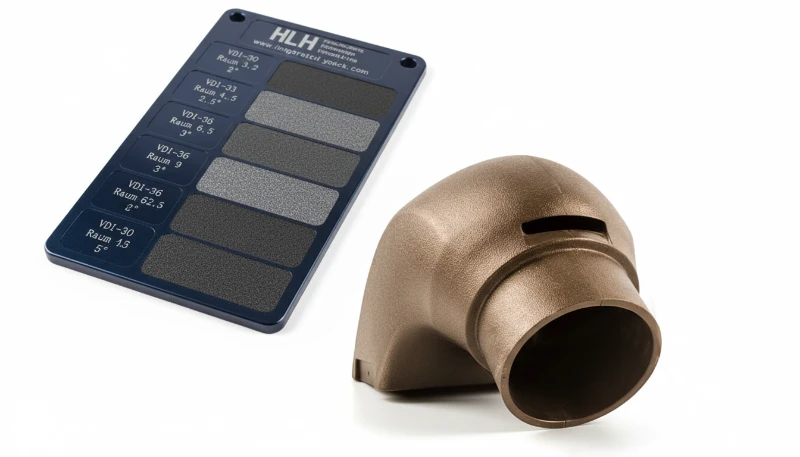
SPI se utiliza comúnmente en proyectos de moldeo por inyección en Norteamérica, mientras que VDI 3400 se emplea ampliamente en la comunicación de herramientas en Europa. Ambos describen la textura superficial, pero no se corresponden perfectamente porque los métodos de medición y las familias de texturas difieren. Si un plano menciona un estándar y el proveedor utiliza otro, solicite una tabla de conversión, una placa de textura o una muestra aprobada. Esto evita que la misma superficie sea interpretada de manera diferente por el diseñador, el fabricante del molde, el inspector final y el comprador durante la aprobación de producción.
¿Puedo cambiar el acabado superficial después de fabricar el molde?
En ocasiones, pero la dirección del cambio es muy importante. Pasar de una superficie pulida a una textura más rugosa es frecuentemente posible porque la herramienta puede ser pulverizada, grabada o texturada después del pulido. Pasar de una superficie rugosa o de EDM a un acabado brillante es mucho más difícil porque se debe remover y repulir el acero, lo cual puede alterar dimensiones críticas. Nervaduras profundas, zonas de cierre y paredes verticales texturadas también pueden requerir una revisión adicional de conicidad y muestras. Por eso la intención del acabado final debe ser definida durante el DFM, no después del primer muestreo, para evitar retrabajos costosos y demoras.
¿El acabado superficial afecta el tiempo de ciclo?
Sí. Un acabado brillante puede requerir un enfriamiento más cuidadoso, una expulsión más lenta y una mejor ventilación para evitar marcas de arrastre o estrés cosmético. Un acabado texturado puede aumentar la adherencia de la pieza si la conicidad es demasiado baja, lo cual puede retardar la expulsión o causar rozaduras. El acabado superficial también influye en los estándares de inspección porque los defectos cosméticos son más visibles en piezas brillantes. Para la planificación de producción, los ingenieros deben revisar conjuntamente el acabado, el material, el ángulo de conicidad, la disposición de expulsión, los criterios de defectos aceptables, las marcas de manejo esperadas y los objetivos de tiempo de ciclo antes del muestreo.
¿Qué acabado SPI es mejor para piezas plásticas pintadas?
SPI B-1 o B-2 suele ser un punto de partida práctico para piezas plásticas pintadas porque la superficie es lo suficientemente lisa para la adhesión del recubrimiento, pero no tan costosa como un acabado espejo grado A. La elección exacta depende del sistema de pintura, el tipo de resina, la compatibilidad del imprimante, el nivel de brillo esperado y si la pieza será lijada antes de pintar. Una superficie muy rugosa puede transmitir la textura a través de la pintura, mientras que una superficie excesivamente brillante puede reducir la adhesión del imprimante. Siempre confirme el proceso de recubrimiento con piezas de muestra antes de comprometerse con la producción en masa, especialmente para acabados multicapa o metálicos.
¿El acero del molde afecta el acabado SPI final?
Absolutamente. No se puede lograr cada acabado en cada grado de acero. Los acabados de espejo normalmente requieren acero de herramienta de alta calidad como H13 o S136 con pulido cuidadoso, mientras que materiales más blandos o herramientas de aluminio pueden limitar la calidad superficial alcanzable. La dureza del acero, la limpieza, la uniformidad del tratamiento térmico, las reparaciones por soldadura y las capas de recalcado por EDM pueden afectar la apariencia final. Para piezas cosméticas críticas, la cotización del molde debe especificar el tipo de acero, el objetivo de acabado, el método de inspección y cualquier muestra de textura o brillo necesaria para aprobación antes de liberar la herramienta para producción.
¿Cómo afecta el grado de acabado SPI al costo del moldeo por inyección?
El grado de acabado SPI tiene un impacto directo y significativo en el costo del molde. Pasar de un acabado de piedra grado C a un pulido de diamante grado A puede aumentar el tiempo de fabricación del molde entre un 15 y un 30 por ciento, ya que cada paso hacia arriba requiere progresivamente más trabajo manual de pulido. Los acabados de grado A también pueden requerir acero para herramientas de mayor calidad, rondas adicionales de muestreo y criterios de inspección cosmética más estrictos durante la producción. Para proyectos sensibles al presupuesto, los ingenieros a menudo especifican acabados de grado A solo en superficies visibles, mientras utilizan grados C o D en superficies no visibles o internas para equilibrar la apariencia con la inversión total en herramientas.
¿Cuál es la conclusión sobre los estándares de acabado superficial SPI?
La conclusión sobre los estándares de acabado superficial SPI está definida por la función, las restricciones y los trade-offs explicados en esta sección. Seleccionar el SPI Surface Finish no es solo una elección estética; dicta el acero del molde, la conicidad necesaria para una liberación limpia y el costo final de la herramienta. Mientras SPI A-Grades offer premium, optical-quality looks, they come with higher maintenance and manufacturing costs. SPI C and D Grades ¿Proyecto? Injection Mold Complete Guide for a comprehensive overview.
Need a Quote for Your Injection Molding Project?
Obtenga precios competitivos, comentarios de DFM y el cronograma de producción del equipo de ingeniería de ZetarMold. Para contexto de abastecimiento, consulte nuestra guía de abastecimiento de proveedores de moldeo por inyección.
Request a Free Quote →
-
SPI: SPI es una clasificación de acabado superficial utilizada para comunicar los requisitos cosméticos y de herramientas para piezas plásticas moldeadas. ↩
-
pulido del molde: El pulido se refiere al proceso de abrasión controlada aplicado a las superficies de acero de la cavidad del molde para lograr una rugosidad superficial y un grado cosmético especificados. ↩
-
Ra (Rugosidad Promedio): Ra (Rugosidad Media) es una medida cuantitativa de la textura superficial, calculada como la media aritmética de los valores absolutos de las desviaciones de altura superficial respecto a la línea media. ↩



 EN
EN  ES
ES  FR
FR  DE
DE  PT
PT  AR
AR  RU
RU  JA
JA  KO
KO  IT
IT  NL
NL  TR
TR  PL
PL 