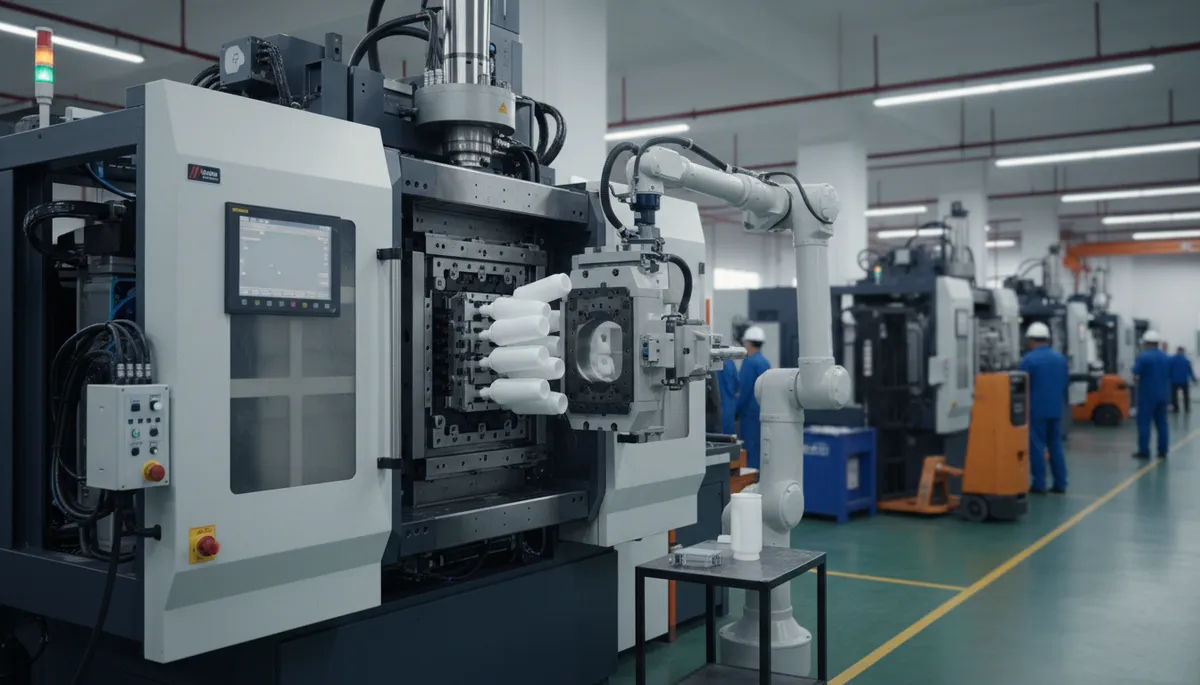
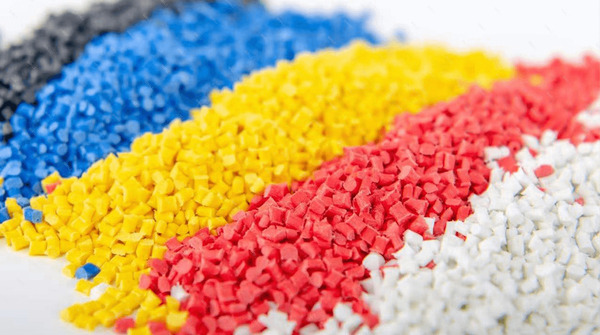
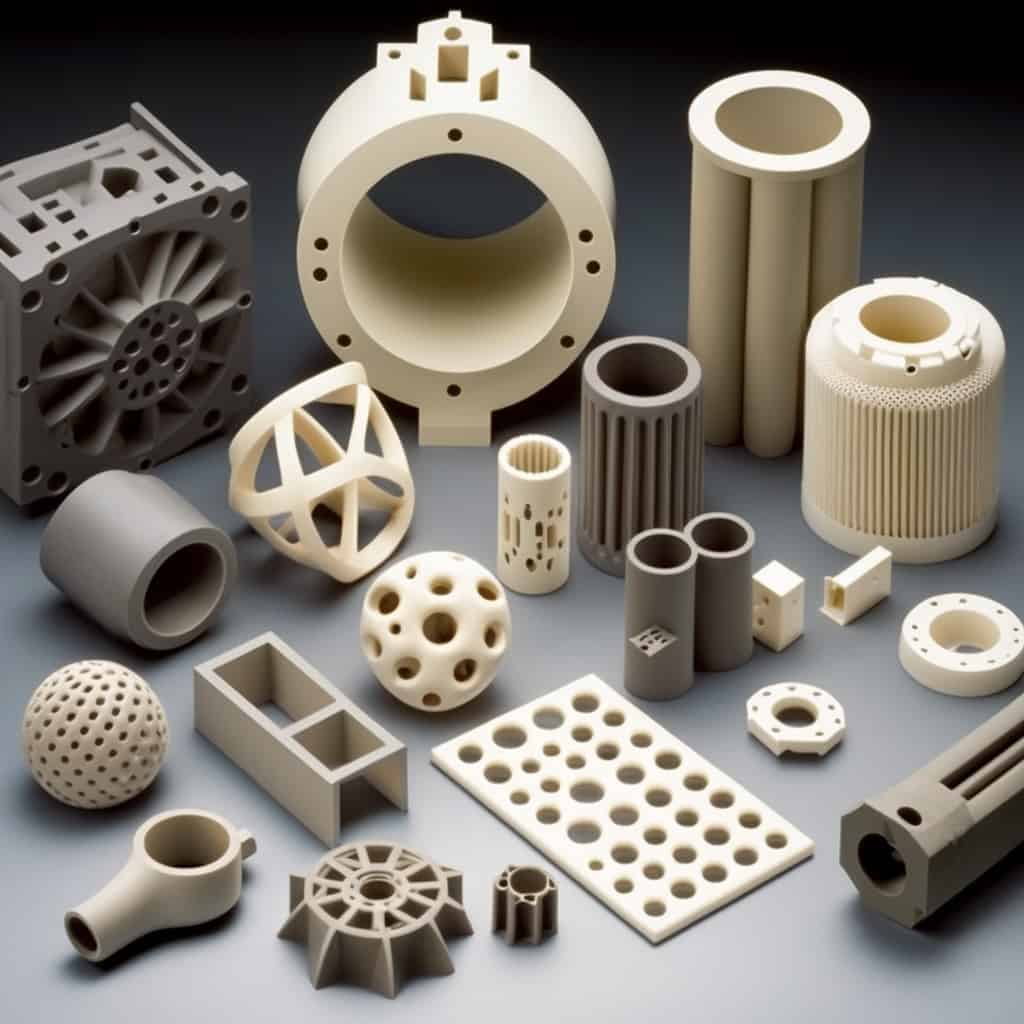
Nachdem wir in den letzten zwei Jahrzehnten Millionen Pfund Kunststoff auf unseren 47 Spritzgussmaschinen verarbeitet haben, habe ich miterlebt, wie sich recycelter Kunststoff von einer Nischenkuriosität zu einer gängigen Produktionsrealität entwickelt hat. Die Frage ist nicht, ob recycelte Kunststoffe funktionieren Spritzguss – das tun sie auf jeden Fall. Die eigentlichen Fragen sind, wann man sie verwendet, wie man sie richtig verarbeitet und welche Kompromisse man eingeht. Lassen Sie mich Ihnen mitteilen, was wir bei der Verarbeitung alles gelernt haben rPET1 Flaschen zu rHDPE2 Automobilkomponenten auf unseren 90T- bis 1850T-Maschinen.
- Recycelte Kunststoffe zeigen typischerweise eine 5-15% Reduktion der mechanischen Eigenschaften pro Recyclingzyklus, bleiben aber für die meisten nicht-strukturellen Anwendungen geeignet.
- Die Feuchtekontrolle wird entscheidend — rPET erfordert einen Feuchtegehalt von <0.02% und eine Trocknung über 4-6 Stunden bei 80-120°C, um Hydrolyse zu verhindern
- Die Materialkosten liegen 15-30% niedriger als bei Neuware, aber die Verarbeitung erfordert angepasste Parameter und strengere Qualitätskontrolle.
- rHDPE und rPP verarbeiten sich am zuverlässigsten, während rPET und rABS eine sorgfältigere Temperatur- und Trocknungssteuerung erfordern.
- Teiledesignänderungen wie erhöhte Wandstärke (10-15%) und optimierte Angussplatzierung helfen, die reduzierten Fließeigenschaften auszugleichen
Was ist recyceltes Kunststoff-Spritzgießen?
Das Spritzgießen von recyceltem Kunststoff ist ein Verfahren, bei dem Kunststoffabfälle durch mechanisches Recycling in neue Funktionsteile umgewandelt werden. Wenn Sie Anbieter vergleichen oder Beschaffung planen, ist unser Beschaffungsleitfaden für Spritzgusslieferanten umfasst RFQ-Vorbereitung, Qualifizierung und kommerzielle Risikoprüfungen.
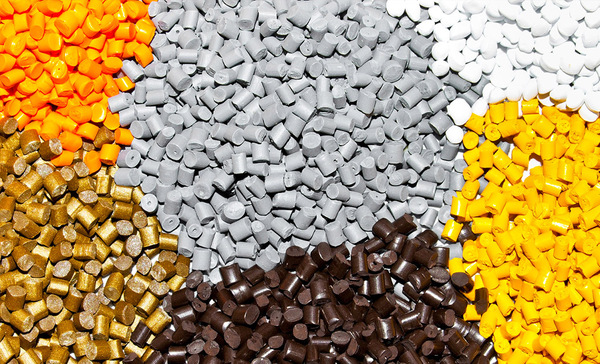
Recyceltes Kunststoff-Spritzgießen verwendet Post-Consumer- oder Post-Industrial-Kunststoffabfälle als Ausgangsmaterial anstelle von Neuware. Das Verfahren verwandelt weggeworfene Flaschen, Behälter und Produktionsabfälle durch mechanisches Recycling – Zerkleinern, Waschen, Schmelzen und Pelletisieren der Abfälle zu neuem Rohmaterial – zurück in funktionale Kunststoffteile.
Die vier wichtigsten Recyclingkunststoffe, die wir verarbeiten, haben jeweils eigene Eigenschaften. rPET stammt überwiegend aus Getränkeflaschen und Lebensmittelbehältern. Es behält gute Transparenz- und Barriereeigenschaften und eignet sich daher für Verpackungen, ist jedoch hygroskopisch und muss sorgfältig getrocknet werden. Typischerweise liegt die Zugfestigkeit bei etwa 45-50 MPa gegenüber 55-60 MPa bei Neuware-PET.
Zu den Quellen für rHDPE gehören Milchkännchen, Waschmittelflaschen und Rohre. Dieses Material lässt sich bemerkenswert gut verarbeiten – unserer Erfahrung nach ist es fast nicht von Neuware zu unterscheiden. Die chemische Beständigkeit bleibt ausgezeichnet und wir sehen selten eine Verringerung der Schlagfestigkeit um mehr als 5–8 %. rPP3 Ähnlich verhält es sich, das aus Autoteilen, Behältern und Textilien stammt. Beide Materialien bewältigen mehrere Recyclingkreisläufe besser als technische Kunststoffe.
rABS ist anspruchsvoller. Das aus Elektronikgehäusen, Fahrzeugverkleidungen und Haushaltsgeräten gewonnene Material reagiert bei der Wiederaufbereitung empfindlich auf thermischen Abbau. Es enthält häufig Flammschutzmittel und Farbstoffe, die das Recycling erschweren. Nach unserer Erfahrung funktioniert rABS am besten als Mischung mit Neuware — typischerweise sorgen 30-50% Rezyklatanteil für akzeptable Eigenschaften und senken zugleich die Kosten.
Welche recycelten Kunststoffe eignen sich am besten für das Spritzgießen?
Die besten recycelten Kunststoffe für das Spritzgießen sind rHDPE und rPP, die sich fast identisch zu Neuware verarbeiten lassen. Hier sind die Messwerte unseres Testlabors über 400+ Materialien in den letzten Jahren:
| Recyceltes Material | Zugfestigkeit (MPa) | Schlagzähigkeit (J/m) | Schmelzetemperatur (°C) | Typische Anwendungen |
|---|---|---|---|---|
| Rezyklat-PET (rPET) | 45-50 | 25-35 | 250-280 | Flaschen, Behälter, Schalen |
| Recyceltes HDPE (rHDPE) | 20-25 | 150-200 | 180-220 | Behälter, Autoteile, Rohre |
| Rezyklat-PP (rPP) | 25-30 | 20-40 | 180-200 | Automobilzubehör, Haushaltswaren |
| recyceltes ABS | 35-40 | 100-150 | 200-240 | Elektronik, Haushaltsgeräte |
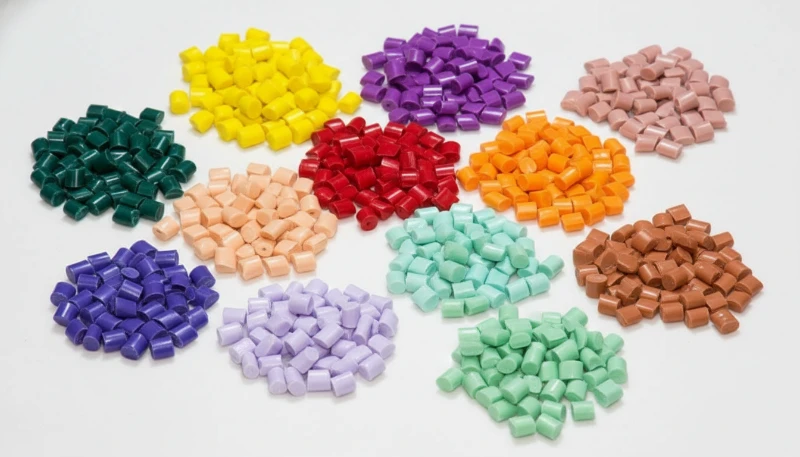
rHDPE bereitet uns durchweg die wenigsten Probleme. Das Material fließt vorhersehbar, schwindet gleichmäßig (etwa 1.5-2.0%) und verträgt Verunreinigungen besser als andere Kunststoffe. Wir haben damit erfolgreich alles von 50-Gramm-Aufbewahrungsbehältern bis zu 2-Kilogramm-Automobilkomponenten ohne größere Prozessanpassungen gefertigt.
"Recyceltes HDPE lässt sich nahezu identisch wie Neuware-HDPE verarbeiten und weist nur minimale Eigenschaftsverluste auf."True
rHDPE zeigt nur eine 5-8% Reduktion der Schlagzähigkeit und fließt vorhersehbar, was es zu einem der am einfachsten zu verarbeitenden recycelten Kunststoffe in Standardproduktionsumgebungen macht.
"Recyceltes PET benötigt vor dem Spritzgießen dieselbe Trocknungszeit wie Neuware-PET."False
Recyceltes PET erfordert 4-6 Stunden Trocknung bei 120°C im Vergleich zu 2-4 Stunden für neues PET aufgrund der erhöhten Feuchtigkeitsaufnahme durch größere Oberfläche und Mikrorisse im aufbereiteten Material.
rPET erfordert mehr Fingerspitzengefühl, bietet aber einen ausgezeichneten Wert für Verpackungsanwendungen. Der Schlüssel ist das Feuchtigkeitsmanagement – jeder Wassergehalt über 0,02% verursacht Kettenabbruch und erzeugt Acetaldehyd, was Lebensmittelkontakt-Anwendungen ruiniert. Wir betreiben unsere Entfeuchtungstrockner bei 120°C für mindestens 4-6 Stunden und überprüfen die Feuchtigkeitswerte mit unserem Karl-Fischer-Titrator.
Wie unterscheidet sich der Prozess des recycelten Kunststoff-Spritzgießens?
Der Hauptunterschied besteht darin, dass das Spritzgießen mit recyceltem Kunststoff längere Trocknungszeiten und strengere Qualitätskontrollen erfordert als die Neuwarenverarbeitung. Der Recyclingprozess beginnt lange bevor das Material unseren Fabrikboden erreicht.
Der schrittweise Recyclingprozess umfasst sechs Schlüsselphasen: (1) Sortierung — optische und Dichtetrennung entfernt Verunreinigungen; (2) Zerkleinern — Reduziert den Abfall auf 8–12 mm große Flocken; (3) Waschen — Heißes Laugenwaschmittel entfernt Klebstoffe und Etiketten. (4) Pelletieren — Durch das Schmelzen und erneute Pelletieren wird das Material homogenisiert. (5) Trocknen — kritische Feuchtigkeitsentfernung vor dem Formen; (6) Formen — Standard-Einspritzverfahren mit Parameteranpassungen.
Wir haben auf die harte Tour gelernt, dass recycelte Werkstoffe eine 15-20% längere Verweilzeit im Zylinder benötigen. Wird die Schmelze zu schnell verarbeitet, führt dies zu unvollständiger Homogenisierung und schwachen Bindenähten. Unsere Bediener fahren die Schneckendrehzahl jetzt 10-15% niedriger als bei Neuware, insbesondere auf unseren größeren 1200T+-Maschinen, bei denen die Wärmeübertragung länger dauert.
Kritische Verarbeitungsparameter müssen angepasst werden. Bei hygroskopischen Materialien muss der Feuchtegehalt unter 0.02% bleiben – wir prüfen jedes eingehende Los mit unserem Feuchtemessgerät. Die Schmelzetemperaturen liegen üblicherweise 10-15°C über denen von Neuware, um das vollständige Aufschmelzen degradierter Ketten sicherzustellen. Die Schneckendrehzahl wird auf 70-80% der Einstellungen für Neuware reduziert, um übermäßige Schererwärmung zu vermeiden.
Die Qualitätskontrolle wird intensiver. Wir prüfen den Schmelzflussindex jeder Charge, da Recyclingmaterialien stärkere Schwankungen zwischen den Chargen aufweisen. Unser Labor führt Zug- und Schlagprüfungen wöchentlich statt monatlich durch. Für die Farbabstimmung sind andere Masterbatch-Konzentrationen erforderlich, weil recycelte Basisharze häufig leichte Farbverschiebungen aufweisen.
Was sind die mechanischen Eigenschaften von recycelten gegenüber neuem Kunststoff?
Recycelte Kunststoffe behalten nach einem Recyclingzyklus typischerweise 85–95% der mechanischen Eigenschaften von Neuware, wobei die Zugfestigkeit zuerst abnimmt. Mit jedem weiteren Zyklus sinken die Eigenschaften um weitere 5–10%, stark abhängig vom Verunreinigungsgrad und der Verarbeitungshistorie. Rezyklate der ersten Generation (ein Verarbeitungszyklus) behalten 85-95% der Eigenschaften von Neuware.
Die Zugfestigkeit nimmt üblicherweise zuerst ab. rPET fällt von 60 MPa bei Neuware nach dem ersten Recycling auf 45-50 MPa. Die Schlagzähigkeit folgt ähnlichen Mustern — rHDPE sinkt von 250 J/m bei Neuware auf 180-200 J/m bei Recyclingmaterial. Der Biegemodul steigt durch kürzere Polymerketten häufig leicht an, wodurch die Teile spröder, aber steifer werden.
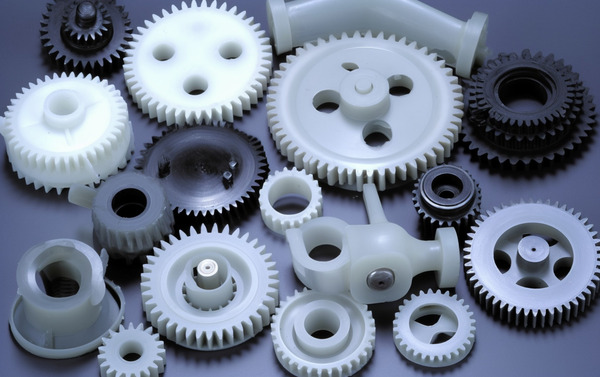
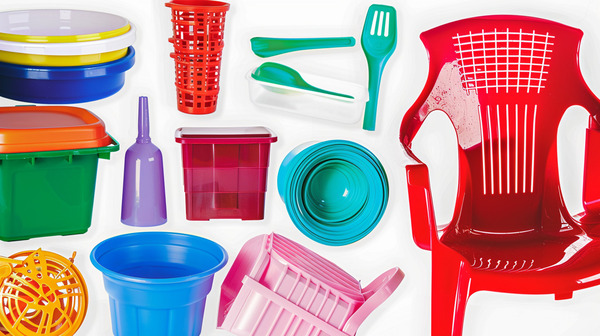
Die gute Nachricht: Die meisten Anwendungen benötigen keine Eigenschaften auf Neuware-Niveau. Lagerbehälter, nicht strukturelle Automobilteile, Elektronikgehäuse und Verpackungen funktionieren gut mit Recyclingmaterial. Wir haben Automobil-Türverkleidungen, Gerätegehäuse und Industriebehälter mit 100% Recyclinganteil erfolgreich gefertigt, die alle Leistungsanforderungen erfüllen.
Mischstrategien optimieren Kosten und Leistung. Eine Mischung aus Neuware und Recyclingmaterial im Verhältnis 70/30 behält typischerweise 95% der Eigenschaften der Neuware und senkt die Materialkosten um 20-25%. Bei kritischen Anwendungen verwenden wir teilweise Recyclingmaterial in unbelasteten Bereichen und Neuware in hochbelasteten Zonen — etwa rHDPE für den Behälterkörper und HDPE-Neuware für den Gewindehals.
„Eine Mischung aus 30% Recyclingmaterial und 70% Neuware behält typischerweise 95% der mechanischen Eigenschaften der Neuware.“True
Eine Mischung aus Neuware und Recyclingmaterial im Verhältnis 70/30 ist eine bewährte Strategie. Sie senkt die Materialkosten um 20-25% und erhält zugleich ein Leistungsniveau, das für die meisten gewerblichen und industriellen Anwendungen geeignet ist.
"Recycelte Kunststoffe ergeben im Vergleich zu Neuware immer Bauteile mit sichtbar schlechterer Oberflächenqualität."False
Bei sachgerechter Verarbeitung mit ausreichender Trocknung, angepassten Schmelzetemperaturen und optimierten Einspritzgeschwindigkeiten erzielen Recyclingkunststoffe Oberflächen, die von Neuware praktisch nicht zu unterscheiden sind.
Warum ist die Feuchtigkeitskontrolle bei recycelten Kunststoffen wichtiger?
Die Feuchtekontrolle ist bei Recyclingkunststoffen entscheidend, weil durch die Wiederaufbereitung Mikrorisse entstehen, die deutlich mehr Wasser aufnehmen als Neuware. Diese Feuchtigkeit verursacht beim Aufschmelzen Hydrolyse: Polymerketten werden abgebaut, wodurch Schwachstellen und sichtbare Fehler wie Silberschlieren entstehen.
rPET stellt die größte Herausforderung dar. Das Polyester-Rückgrat hydrolysiert in Gegenwart von Wasser oberhalb von 200°C schnell. Wir halten die Feuchtigkeit unter 0.02% — messbar trockener als die bei einigen Neuware-Typen zulässigen 0.04%. Unsere Entfeuchtungstrockner laufen 24/7 bei 120°C mit Umluft bei einem Taupunkt von -40°C.
Die Trocknungszeiten verlängern sich deutlich. Neuware-PET benötigt 2-4 Stunden bei 120°C, recyceltes PET dagegen mindestens 4-6 Stunden. Nach unserer Erfahrung liefert eine Trocknung über Nacht (8+ Stunden) die gleichmäßigsten Ergebnisse. rABS erfordert eine ähnliche Behandlung — 3-4 Stunden bei 80°C gegenüber 2-3 Stunden bei Neuware.
Auch rHDPE und rPP, die nicht hygroskopisch sind, profitieren von der Vortrocknung. Oberflächenfeuchte aus Waschprozessen oder feuchter Lagerung kann Dampfblasen verursachen. Wir führen einen einfachen 2-Stunden-Zyklus bei 60°C durch, um Oberflächenfeuchte zu entfernen — besonders in den feuchten Sommern Shanghais, wenn die Umgebungsfeuchte 80-90% erreicht.
Wie gestaltet man Teile für das Spritzgießen mit recyceltem Kunststoff?
Bei der Bauteilkonstruktion für Recyclingwerkstoffe müssen die geringeren Fließeigenschaften und mögliche Eigenschaftsschwankungen berücksichtigt werden. Die Wanddicke wird gegenüber Konstruktionen für Neuware typischerweise um 10-15% erhöht. Während bei neuem rHDPE Wanddicken von 1.5mm ausreichen können, fließt Recyclingmaterial bei 1.7-1.8mm Wanddicke besser.
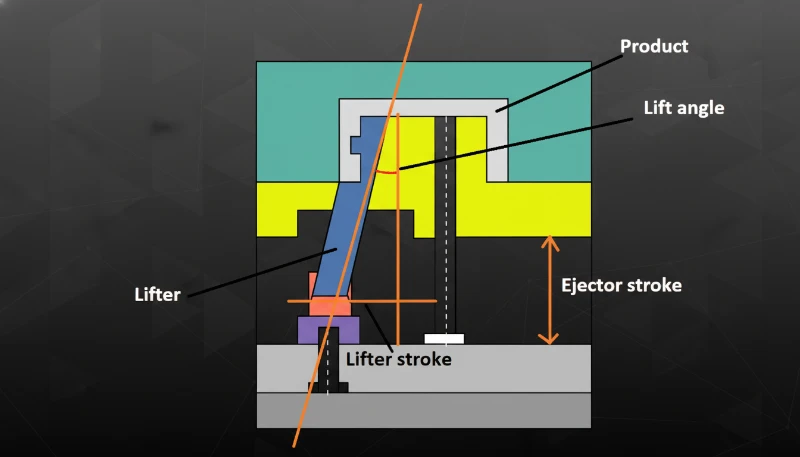
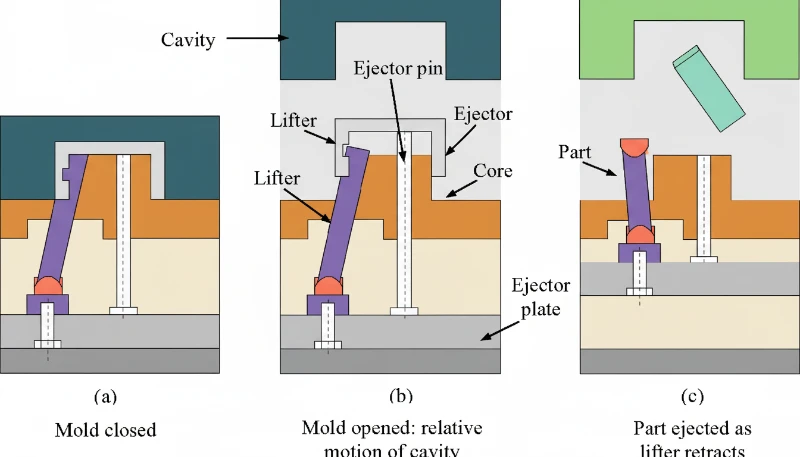
Entformungsschrägen erfordern besondere Aufmerksamkeit, da recycelte Materialien häufig stärkere Schwankungen der Schwindung aufweisen. Bei tiefen Merkmalen ergänzen wir eine zusätzliche Entformungsschräge von 0.5° und verwenden mindestens 2° statt 1.5°. Dies verhindert ein Festhaften beim Auswerfen, was besonders wichtig ist, da recycelte Materialien mitunter höhere Reibungskoeffizienten besitzen.
Aufgrund der eingeschränkten Fließeigenschaften recycelter Materialien wird die Torkonstruktion entscheidend. Wir verwenden größere Anschnitte – typischerweise 15–20 % größer als der Neumaterialbedarf. Heißkanalsysteme funktionieren gut, da sie Angussreste beseitigen und den Druckabfall reduzieren. Für Kaltläufer SpritzgussformenWir bevorzugen Kantenanschnitte gegenüber Stiftanschnitten, um die Erwärmung durch Scherung zu minimieren.
Rippen und Strukturmerkmale müssen verstärkt werden. Statt der bei Neuware üblichen Rippen mit 0.6x Wanddicke legen wir sie mit 0.7-0.8x Wanddicke aus. Scharfe Ecken erhalten größere Radien — mindestens 0.5mm statt 0.3mm —, um Spannungskonzentrationen zu vermeiden, die sich im potenziell spröderen Recyclingmaterial als Risse ausbreiten könnten.
Welche Qualitätsstandards gelten für Teile aus recyceltem Kunststoff?
Für Teile aus Recyclingkunststoff gelten dieselben Qualitätsstandards wie für Teile aus Neuware, ergänzt um zusätzliche Chargenprüfungen. Unsere ISO 9001-Zertifizierung deckt Recyclingwerkstoffe ab; zusätzlich haben wir spezielle Verfahren zur Überwachung von Schwankungen zwischen Chargen eingeführt, die bei Neuware nicht erforderlich waren.
Das Umweltmanagement nach ISO 14001 wird relevant, wenn Kunden Lebenszyklusbewertungen verlangen. Wir erfassen Energieverbrauch, Wasserverbrauch und Abfallaufkommen bei der Verarbeitung von Rezyklat gegenüber Neuware. Rezyklate benötigen aufgrund längerer Trocknungszeiten und höherer Verarbeitungstemperaturen häufig 15-20% mehr Energie.
Die Prüfprotokolle für Werkstoffe werden erheblich erweitert. Der Schmelzflussindex wird für jede Charge statt nur durch wöchentliche Stichproben geprüft. Bei rPET messen wir die intrinsische Viskosität, um Materialabbau zu erkennen. Die Farbkonsistenz erfordert Spektralphotometermessungen, da Recyclingmaterialien stärkere Chargenschwankungen aufweisen — bei kritischen Anwendungen gelten Delta-E-Werte unter 2.0.
Die Einhaltung von REACH und RoHS kann bei Recyclingmaterialien schwierig sein, da die Vorgeschichte möglicher Verunreinigungen nicht immer bekannt ist. Wir verlangen Analysezertifikate, die den Schwermetallgehalt ausweisen, insbesondere für rABS, das ältere Flammschutzmittel enthalten kann. Manche Kunden schreiben ausschließlich postindustrielle Recyclinganteile vor, um die Kontrolle von Verunreinigungen sicherzustellen.
Wann sollten Sie recycelten statt neuem Kunststoff wählen?
Wählen Sie recycelten Kunststoff anstelle von Neuware, wenn Ihre Anwendung eine Verringerung der Eigenschaften um 5–15% toleriert und die Kosteneinsparungen die Prozessanpassungen rechtfertigen. Recycelte Kunststoffe eignen sich hervorragend für nicht tragende Anwendungen, bei denen eine Verringerung der Eigenschaften um 10-15% keine Rolle spielt. Lagerbehälter, Innenverkleidungen für Kraftfahrzeuge, Gerätegehäuse und Verpackungen sind ideale Anwendungen.
Rezyklate sind wirtschaftlich sinnvoll, wenn die Verarbeitungskomplexität die Materialeinsparung nicht aufzehrt. rHDPE und rPP lassen sich so ähnlich wie Neuware verarbeiten, dass wir sie empfehlen, sobald die Eigenschaften die Anforderungen erfüllen. rPET und rABS müssen sorgfältiger bewertet werden, da zusätzliche Trocknungs- und Verarbeitungskosten die Rohmaterialeinsparung von 15-30% mindern können.
Vermeiden Sie Recyclingmaterialien für tragende Komponenten, dünnwandige Verpackungen mit hohen Fließanforderungen oder Anwendungen, bei denen konstante Eigenschaften wichtiger sind als die Kosten. Medizinprodukte, Luft- und Raumfahrtkomponenten sowie mechanische Präzisionsteile erfordern üblicherweise Neuware. Unkritische Komponenten innerhalb dieser Baugruppen können jedoch häufig problemlos Recyclinganteile enthalten.
Häufig gestellte Fragen
Kann recycelter Kunststoff für das Spritzgießen verwendet werden?
Ja, recycelte Kunststoffe eignen sich bei geeigneten Prozessanpassungen und Qualitätskontrollprotokollen gut für den Spritzguss. rHDPE und rPP lassen sich nahezu identisch wie Neuware verarbeiten und sind daher ausgezeichnete Optionen für die meisten nichttragenden Anwendungen. rPET und rABS erfordern eine sorgfältigere Feuchteregelung, längere Trocknungszeiten und ein angepasstes Temperaturmanagement, liefern bei korrekter Verarbeitung jedoch zuverlässig akzeptable Teile. In den vergangenen zwei Jahrzehnten haben wir auf unseren 47 Spritzgussmaschinen erfolgreich Millionen von Teilen mit Rezyklatanteil gefertigt – von Konsumgüterverpackungen bis zu Komponenten für Fahrzeuginnenräume.
Wie groß ist der Kostenunterschied zwischen recyceltem Kunststoff und Neuware?
Recycelte Kunststoffrohstoffe kosten auf Rohstoffebene üblicherweise 15-30% weniger als Neuware. Die Gesamtkosten umfassen jedoch zusätzliche Verarbeitungsanforderungen, die die Nettoeinsparung verringern. Längere Trocknungszeiten verursachen zusätzliche Energiekosten, häufigere Qualitätsprüfungen erhöhen die Laborkosten, und höhere Schmelzetemperaturen verbrauchen pro Zyklus mehr Strom. Nach unserer Erfahrung liegt die effektive Nettoeinsparung unter Berücksichtigung dieser zusätzlichen Verarbeitungskosten üblicherweise bei 10-20%, abhängig von der jeweiligen Materialsorte und der Komplexität Ihrer Anwendungsanforderungen.
Wie oft kann Kunststoff für das Spritzgießen recycelt werden?
Die meisten Thermoplaste können für Spritzgießanwendungen 3-5-mal recycelt werden, bevor ihre mechanischen Eigenschaften unter ein nutzbares Leistungsniveau fallen. rHDPE und rPP vertragen aufgrund ihrer einfacheren Molekülstrukturen und geringeren Empfindlichkeit gegenüber thermischem Abbau bei der Wiederverarbeitung im Allgemeinen mehr Recyclingzyklen als rPET oder rABS. Jeder Recyclingzyklus reduziert Zugfestigkeit und Schlagzähigkeit typischerweise um 5-10%. Die Eignung stark recycelten Materials hängt daher vollständig von den spezifischen Anwendungsanforderungen und den einzuhaltenden Mindestleistungswerten ab.
Schwächt recycelter Kunststoff Spritzgussteile?
Rezyklate weisen gegenüber Neuware vorhersehbar 5-15% geringere Zugfestigkeit und Schlagzähigkeit auf, abhängig von der Anzahl vorheriger Verarbeitungszyklen und der Gesamtverunreinigung des Recyclingmaterials. Für die meisten nicht tragenden Anwendungen wie Lagerbehälter, Elektronikgehäuse und Verkleidungsteile im Fahrzeuginnenraum ist diese Verringerung unkritisch. Sicherheitsrelevante Strukturbauteile, mechanische Präzisionsbaugruppen und lasttragende Anwendungen erfordern gewöhnlich Neuware oder gezielt ausgelegte Mischungen aus Neuware und Rezyklat, die die festgelegten Mindestleistungswerte einhalten.
Welche Anforderungen gelten für den Feuchtigkeitsgehalt von recyceltem PET?
Recyceltes PET erfordert einen Feuchtigkeitsgehalt unter 0,02% (200 ppm), um eine Hydrolyse während der Spritzgießverarbeitung zu verhindern. Um diesen strengen Feuchtigkeitsgrad zu erreichen, sind 4-6 Stunden kontinuierliches Trocknen bei 120°C mit entfeuchteter Luft mit einem Taupunkt von -40°C oder niedriger erforderlich. Höhere Feuchtigkeitswerte verursachen irreversible Kettenbrüche im Polyestergerüst, was das Molekulargewicht und die mechanischen Eigenschaften erheblich reduziert und gleichzeitig Acetaldehyd als Abbauprodukt erzeugt, das Geruchs- und Geschmacksprobleme verursacht und das Material für Lebensmittelkontaktanwendungen vollständig disqualifiziert.
Können recycelte Kunststoffe lebensmitteltechnische Standards erfüllen?
Ja, recycelte Kunststoffe können lebensmitteltechnische Standards erfüllen, jedoch nur mit entsprechender Zertifizierung, vollständig dokumentierter Rückverfolgbarkeit und strengen Kontaminationskontrollprotokollen während des gesamten Recyclingprozesses. rPET aus kontrollierten Flasche-zu-Flasche-Recyclingströmen erfüllt die FDA-Anforderungen für Lebensmittelkontaktanwendungen in den USA. Post-industrielle recycelte Materialien mit bekannter Verarbeitungshistorie funktionieren am besten, da das Kontaminationsprofil gut dokumentiert ist. Post-Consumer-recycelte Materialien erfordern umfangreiche Migrationsprüfungen und oft ein formelles Schreiben ohne Einwände von relevanten Aufsichtsbehörden, bevor eine Zulassung für Lebensmittelkontakt erteilt werden kann.
Wie testen Sie die Qualität von recycelten Kunststoffpellets?
Qualitätstests für recycelte Kunststoffpellets umfassen die Messung des Schmelzfließindex nach ASTM D1238, die Feuchtigkeitsgehaltsanalyse via Karl-Fischer-Titration, Zug- und Schlagzähigkeitstests nach ASTM D638 bzw. D256 und die visuelle Kontaminationsbewertung mittels Mikroskopie. Wir testen jede eingehende Charge, anstatt uns auf periodische Stichproben zu verlassen, wie sie üblicherweise für Neuware verwendet werden. Zusätzliche Tests umfassen die Messung der intrinsischen Viskosität für rPET, um den Abbau des Molekulargewichts zu erkennen, und Spektrophotometer-Messungen für Farbkonsistenz mit Delta-E-Werten, die für kritische, erscheinungsempfindliche Anwendungen unter 2,0 gehalten werden.
Bei ZetarMold haben wir auf unseren 47 Spritzgießmaschinen mit Kapazitäten von 90T bis 1850T über 400 verschiedene Rezepturen aus recyceltem Kunststoff verarbeitet. Unser ISO-zertifiziertes Werk in Shanghai verbindet 20+ Jahre Verarbeitungserfahrung mit umfassender Qualitätskontrolle, um Sie bei der erfolgreichen Einführung recycelter Materialien zu unterstützen. Ganz gleich, ob Sie Kosten senken, Nachhaltigkeitsziele erreichen oder beides anstreben: Unser Ingenieurteam kann Sie bei der Materialauswahl beraten und die Verarbeitungsparameter für Ihre spezifischen Anwendungsanforderungen optimieren.
rPET: rPET bezieht sich auf recyceltes Polyethylenterephthalat (rPET). Dabei handelt es sich um recycelten Kunststoff, der aus PET-Flaschen und -Behältern gewonnen wird und häufig in Verpackungsanwendungen verwendet wird, wobei gute Transparenz und Barriereeigenschaften erhalten bleiben. ↩
rHDPE: rHDPE bezieht sich auf recyceltes Polyethylen hoher Dichte (rHDPE), das aus Post-Consumer-Containern und Industrieabfällen verarbeitet wird und eine hervorragende chemische Beständigkeit und ähnliche Verarbeitungseigenschaften wie Neumaterial bietet. ↩
rPP: rPP bezieht sich auf recyceltes Polypropylen (rPP), das aus Autoteilen, Behältern und Textilabfällen gewonnen wird und über mehrere Recyclingzyklen hinweg eine gute chemische Beständigkeit und mechanische Eigenschaften beibehält. ↩