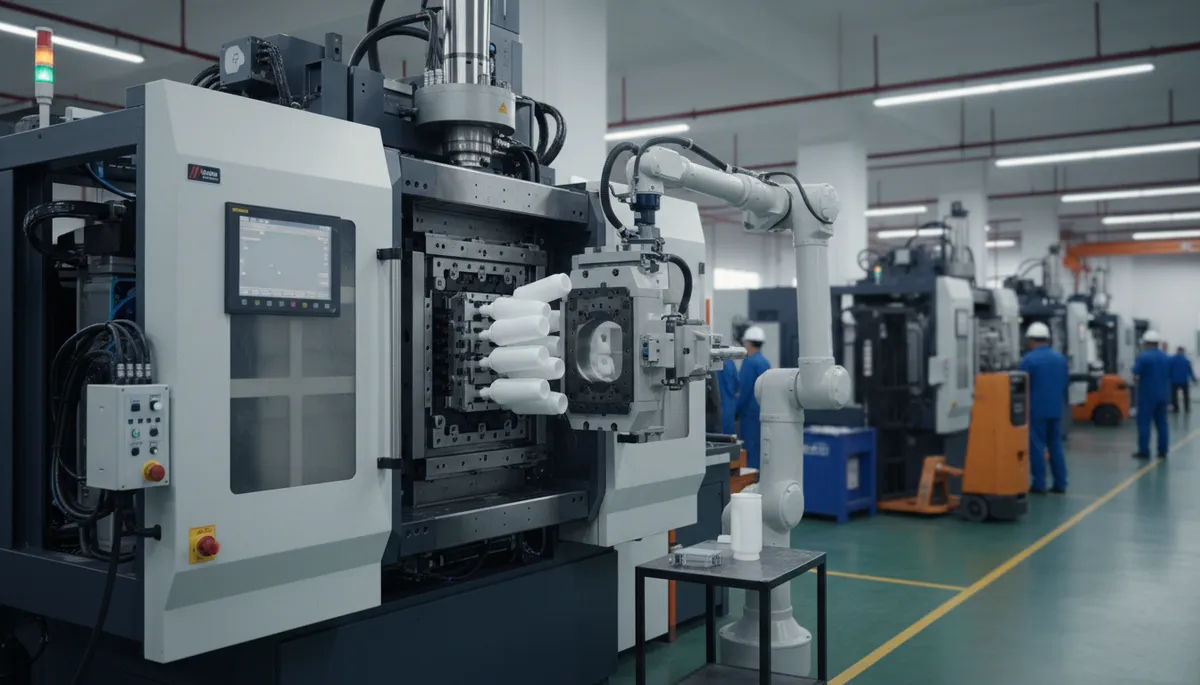
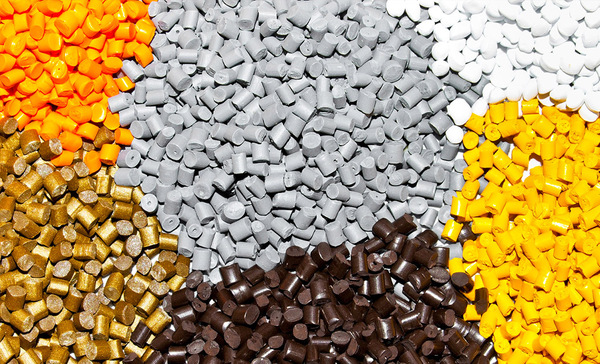
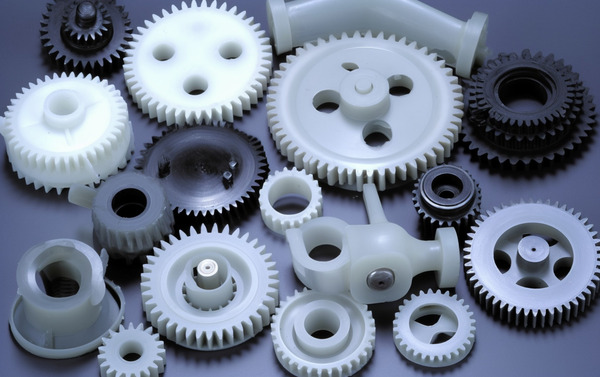
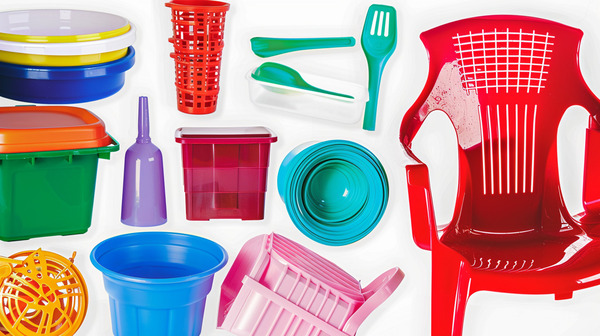
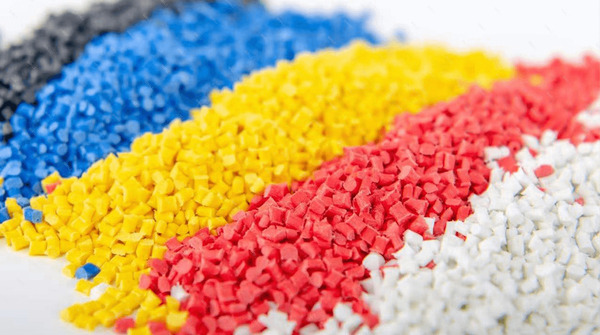
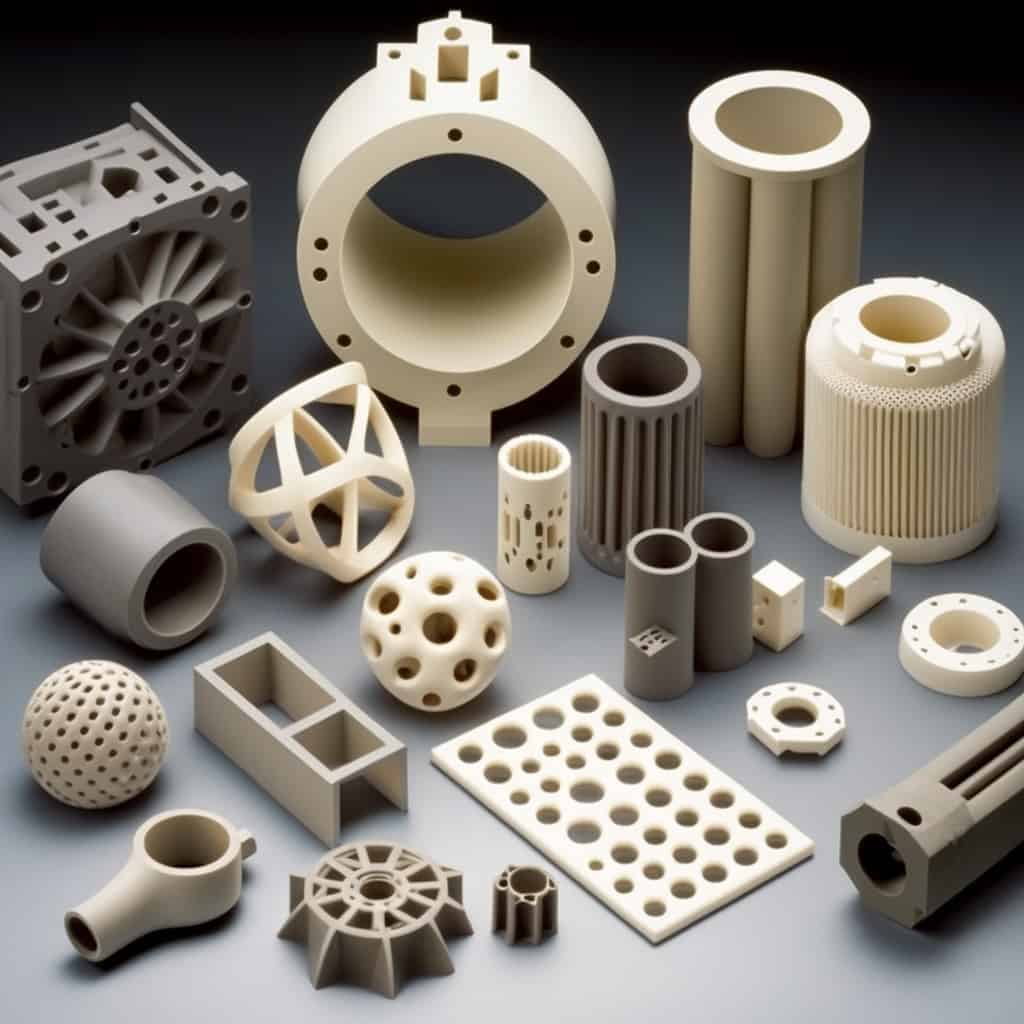
Après avoir traité des millions de kilos de plastique dans nos 47 machines de moulage par injection au cours des deux dernières décennies, j’ai vu le plastique recyclé évoluer d’une curiosité de niche à une réalité manufacturière grand public. La question n’est pas de savoir si les plastiques recyclés fonctionnent pour moulage par injection – ils le font absolument. Les vraies questions sont de savoir quand les utiliser, comment les traiter correctement et quels compromis vous faites. Permettez-moi de partager ce que nous avons appris en traitant tout de rPET1 bouteilles à PEHDr2 composants automobiles sur nos machines de 90T à 1850T.
- Les plastiques recyclés présentent généralement une réduction de 5 à 15 % des propriétés mécaniques par cycle de recyclage, mais restent adaptés à la plupart des applications non structurelles
- La maîtrise de l’humidité devient critique : le rPET exige une teneur en humidité <0.02% et un séchage de 4-6 heures à 80-120°C pour éviter l’hydrolyse
- Les coûts des matériaux sont inférieurs de 15 à 30 % à ceux des plastiques vierges, mais le traitement nécessite des paramètres ajustés et un contrôle qualité plus rigoureux
- Le rHDPE et le rPP se traitent de manière la plus fiable, tandis que le rPET et le rABS nécessitent une gestion plus prudente de la température et du séchage
- Les modifications de conception des pièces comme l'augmentation de l'épaisseur des parois (10-15%) et l'optimisation du placement des points d'injection aident à compenser les propriétés d'écoulement réduites
Qu’est-ce que le moulage par injection de plastique recyclé ?
Le moulage par injection de plastique recyclé est un processus qui transforme les déchets plastiques en de nouvelles pièces fonctionnelles grâce au recyclage mécanique. Si vous comparez des fournisseurs ou planifiez des achats, notre Guide d’approvisionnement des fournisseurs de moulage par injection couvre la préparation, la qualification et les contrôles des risques commerciaux du RFQ.
Le moulage par injection de plastique recyclé utilise des déchets plastiques post-consommation ou post-industriels comme matière première au lieu de résine vierge. Le processus transforme les bouteilles, conteneurs et chutes de fabrication jetés en pièces plastiques fonctionnelles par recyclage mécanique — broyage, lavage, fusion et granulation des déchets en nouvelle matière première.
Les quatre principaux plastiques recyclés que nous utilisons présentent chacun des caractéristiques distinctes. Le rPET provient principalement de bouteilles de boissons et de contenants alimentaires. Il conserve une bonne transparence et de bonnes propriétés barrières, ce qui le rend adapté aux applications d’emballage, mais il est hygroscopique et nécessite un séchage soigneux. Nous observons généralement une résistance à la traction d’environ 45-50 MPa, contre 55-60 MPa pour le PET vierge.
Les sources de rHDPE comprennent les cruches à lait, les bouteilles de détergent et les tuyaux. Ce matériau se transforme remarquablement bien – presque impossible à distinguer du vierge d’après notre expérience. La résistance chimique reste excellente et on constate rarement une réduction de plus de 5 à 8 % de la résistance aux chocs. rPP3 se comporte de manière similaire, provenant de pièces automobiles, de conteneurs et de textiles. Les deux matériaux supportent mieux plusieurs cycles de recyclage que les plastiques techniques.
Le rABS présente davantage de difficultés. Issu de boîtiers électroniques, de garnitures automobiles et d’appareils électroménagers, il est sensible à la dégradation thermique pendant le retraitement. Il contient souvent des retardateurs de flamme et des colorants qui compliquent le recyclage. D’après notre expérience, le rABS donne les meilleurs résultats mélangé à de la matière vierge — une teneur recyclée de 30-50% maintient généralement des propriétés acceptables tout en réduisant les coûts.
Quels plastiques recyclés fonctionnent le mieux pour le moulage par injection ?
Les meilleurs plastiques recyclés utilisés pour le moulage par injection sont le rHDPE et le rPP, qui se traitent presque comme les matières vierges. Voici ce que notre laboratoire d’essai a mesuré sur plus de 400 matériaux au fil des ans :
| Matériau recyclé | Résistance à la traction (MPa) | Résistance aux chocs (J/m) | Température de matière fondue (°C) | Applications typiques |
|---|---|---|---|---|
| PET recyclé (rPET) | 45-50 | 25-35 | 250-280 | Bouteilles, contenants, plateaux |
| PEHD recyclé | 20-25 | 150-200 | 180-220 | Bacs, pièces automobiles, tuyaux |
| PP recyclé (rPP) | 25-30 | 20-40 | 180-200 | Garnitures automobiles, articles ménagers |
| ABS recyclé | 35-40 | 100-150 | 200-240 | Électronique, appareils électroménagers |
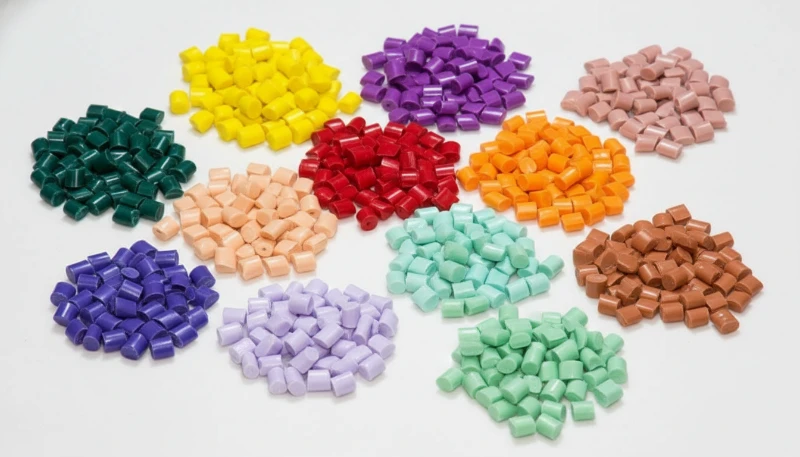
Le rHDPE nous pose systématiquement le moins de difficultés. La matière s’écoule de façon prévisible, se rétracte uniformément, autour de 1.5-2.0%, et tolère mieux la contamination que les autres plastiques. Nous avons moulé avec succès des produits allant de bacs de rangement de 50 grammes à des composants automobiles de 2 kilogrammes sans ajustement majeur du procédé.
"Le HDPE recyclé se transforme presque comme le HDPE vierge, avec une perte de propriétés minimale."True
Le rHDPE ne montre qu'une réduction de 5-8% de la résistance aux chocs et s'écoule de manière prévisible, ce qui en fait l'un des plastiques recyclés les plus faciles à utiliser dans des environnements de production standard.
"Le PET recyclé exige le même temps de séchage que le PET vierge avant le moulage par injection."False
Le PET recyclé nécessite 4 à 6 heures de séchage à 120°C contre 2 à 4 heures pour le PET vierge, en raison d'une absorption d'humidité accrue due à une surface plus grande et à des micro-fissures dans le matériau retraité.
Le rPET demande plus de finesse mais offre un excellent rapport qualité-prix pour les applications d’emballage. La clé est la gestion de l’humidité — toute teneur en eau supérieure à 0,02 % provoque une coupure de chaîne et génère de l’acétaldéhyde, ce qui ruine les applications en contact alimentaire. Nous faisons fonctionner nos sécheurs déshumidifiants à 120 °C pendant au moins 4 à 6 heures, en vérifiant les niveaux d’humidité avec notre titrateur Karl Fischer.
En quoi le processus de moulage par injection de plastique recyclé diffère-t-il ?
La différence principale est que le moulage de plastique recyclé nécessite un séchage plus long et un contrôle qualité plus strict que le traitement de matière vierge. Le processus de recyclage commence bien avant que la matière n’arrive sur le sol de notre usine.
Le processus de recyclage étape par étape comprend six étapes clés : (1) Tri — la séparation optique et par densité élimine les contaminants ; (2) Déchiquetage — réduit les déchets à des flocons de 8 à 12 mm ; (3) Lavage — le lavage caustique chaud enlève les adhésifs et les étiquettes ; (4) Pelletisation — la fusion et la regranulation homogénéisent le matériau ; (5) Séchage — élimination critique de l’humidité avant le moulage ; (6) Moulage — processus d’injection standard avec ajustements des paramètres.
Nous avons appris à nos dépens que les matières recyclées exigent un temps de séjour dans le fourreau supérieur de 15-20%. Une fusion trop rapide entraîne une homogénéisation incomplète et des lignes de soudure fragiles. Nos opérateurs utilisent désormais des vitesses de vis inférieures de 10-15% à celles des matières vierges, surtout sur nos grandes machines de 1200T+ où le transfert thermique est plus lent.
Les paramètres critiques de mise en œuvre doivent être ajustés. La teneur en humidité doit rester inférieure à 0.02% pour les matériaux hygroscopiques — nous contrôlons chaque lot entrant avec notre analyseur d’humidité. Les températures de fusion sont généralement supérieures de 10-15°C à celles de la matière vierge afin d’assurer la fusion complète des chaînes dégradées. La vitesse de vis est ramenée à 70-80% du réglage pour matière vierge afin d’éviter un échauffement excessif par cisaillement.
Le contrôle qualité devient plus intensif. Nous testons l’indice de fluidité à chaque lot — les matières recyclées présentent une variabilité plus élevée d’un lot à l’autre. Notre laboratoire effectue des essais de traction et de choc chaque semaine plutôt que chaque mois. La correspondance des couleurs exige des concentrations différentes de mélange-maître, car les résines de base recyclées présentent souvent de légères variations de teinte.
Quelles sont les propriétés mécaniques des plastiques recyclés par rapport aux vierges ?
Les plastiques recyclés conservent généralement 85–95% des propriétés mécaniques de la matière vierge après un cycle de recyclage, la résistance à la traction se dégradant en premier. Chaque cycle ultérieur réduit encore les propriétés de 5–10%, selon notamment le niveau de contamination et l’historique de transformation. Les matières recyclées de première génération — un seul cycle de transformation — conservent 85-95% des propriétés vierges.
La résistance à la traction se dégrade généralement en premier. Le rPET passe de 60 MPa à l’état vierge à 45-50 MPa après un premier recyclage. La résistance aux chocs suit une évolution similaire : le rHDPE passe de 250 J/m vierge à 180-200 J/m recyclé. Le module de flexion augmente souvent légèrement avec le raccourcissement des chaînes polymères, ce qui rend les pièces plus cassantes mais plus rigides.
Bonne nouvelle : la plupart des applications n’exigent pas les propriétés d’une matière vierge. Les bacs de rangement, pièces automobiles non structurelles, boîtiers électroniques et emballages fonctionnent bien avec du recyclé. Nous avons injecté avec succès des panneaux de portes automobiles, boîtiers d’appareils et conteneurs industriels répondant à toutes les exigences avec 100% de contenu recyclé.
Les stratégies de mélange optimisent coût et performance. Un mélange vierge/recyclé 70/30 conserve généralement 95% des propriétés du matériau vierge tout en réduisant le coût de 20-25%. Pour les applications critiques, nous utilisons parfois du recyclé dans les zones non sollicitées et du plastique vierge dans les zones fortement chargées, par exemple du rHDPE pour le corps d’un récipient et du HDPE vierge pour son col fileté.
"Un mélange de 30% de matière recyclée et 70% de plastique vierge conserve généralement 95% des propriétés mécaniques du matériau vierge."True
Un mélange 70/30 de matière vierge et recyclée est une stratégie éprouvée qui réduit les coûts matière de 20-25% tout en conservant des performances adaptées à la plupart des applications commerciales et industrielles.
"Les plastiques recyclés produisent toujours des pièces dont l’état de surface est visiblement inférieur à celui des matières vierges."False
Avec une transformation correcte — séchage suffisant, températures de fusion ajustées et vitesses optimisées — les plastiques recyclés obtiennent des surfaces presque indiscernables de la matière vierge.
Pourquoi la gestion de l’humidité est-elle plus critique avec les plastiques recyclés ?
La maîtrise de l’humidité est critique avec les plastiques recyclés, car le retraitement crée des microfissures qui absorbent beaucoup plus d’eau que la résine vierge. À la fusion, cette humidité provoque une hydrolyse : les chaînes polymères se rompent et créent des zones faibles ainsi que des défauts visibles comme les stries argentées.
Le rPET pose le plus grand défi. Son squelette polyester s’hydrolyse rapidement au-dessus de 200°C en présence d’eau. Nous maintenons l’humidité sous 0.02%, soit un niveau mesurablement inférieur aux 0.04% acceptables pour certaines qualités vierges. Nos sécheurs déshumidificateurs fonctionnent 24/7 à 120°C avec une circulation d’air au point de rosée de -40°C.
Les temps de séchage augmentent fortement. Le PET vierge exige 2-4 heures à 120°C, mais le PET recyclé au moins 4-6 heures. Nous constatons qu’un séchage nocturne (8+ heures) donne les résultats les plus réguliers. Le rABS requiert un traitement similaire: 3-4 heures à 80°C, contre 2-3 heures pour la matière vierge.
Même le rHDPE et le rPP, qui ne sont pas hygroscopiques, bénéficient d’un préséchage. L’humidité superficielle provenant du lavage ou d’un stockage humide peut créer des cavités de vapeur. Nous appliquons un cycle simple de 2 heures à 60°C pour éliminer cette humidité, notamment pendant les étés humides de Shanghai où l’humidité ambiante atteint 80-90%.
Comment concevoir des pièces pour le moulage par injection de plastique recyclé ?
La conception de pièces en matériaux recyclés doit tenir compte de propriétés d’écoulement réduites et de variations potentielles des caractéristiques. L’épaisseur de paroi augmente généralement de 10-15% par rapport aux conceptions en matière vierge. Là où nous pourrions utiliser des parois de 1.5mm avec du rHDPE vierge, le matériau recyclé s’écoule mieux avec une épaisseur de 1.7-1.8mm.
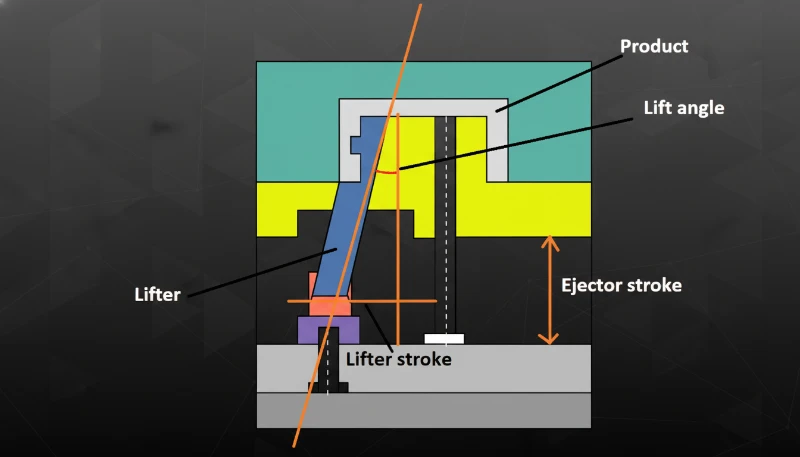
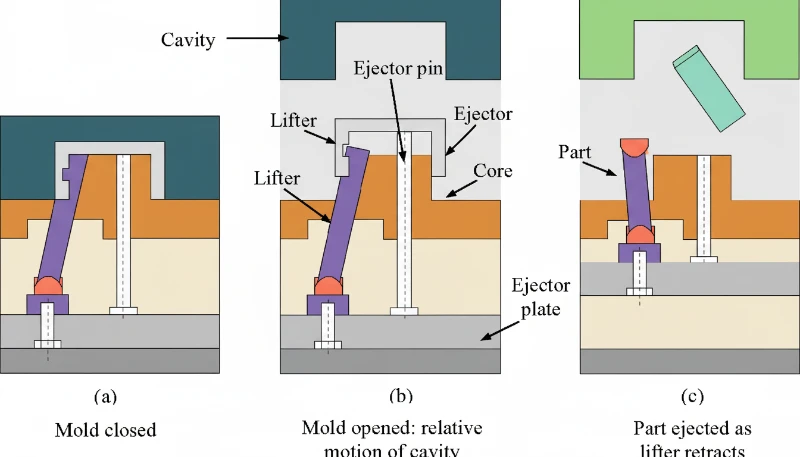
Les angles de dépouille demandent une attention particulière, car les matériaux recyclés présentent souvent de plus grandes variations de retrait. Nous ajoutons 0.5° de dépouille sur les formes profondes et utilisons un minimum de 2° au lieu de 1.5°. Cela évite le collage lors de l’éjection, point particulièrement important puisque les matériaux recyclés ont parfois un coefficient de frottement supérieur.
La conception des vannes devient essentielle en raison des propriétés de flux réduit des matériaux recyclés. Nous utilisons des portes plus grandes – généralement 15 à 20 % plus grandes que les matériaux vierges requis. Les systèmes à canaux chauds fonctionnent bien car ils éliminent les vestiges de porte et réduisent les chutes de pression. Pour canal froid moules à injection, nous préférons les portes de bord aux portes à broches pour minimiser l’échauffement par cisaillement.
Les nervures et éléments structurels doivent être renforcés. Au lieu de nervures de 0.6x l’épaisseur de paroi avec matière vierge, nous utilisons 0.7-0.8x. Les angles vifs reçoivent des rayons plus grands — 0.5mm minimum contre 0.3mm — pour éviter des concentrations de contraintes susceptibles de fissurer la matière recyclée, potentiellement plus fragile.
Quelles normes de qualité s’appliquent aux pièces en plastique recyclé ?
Les normes qualité des pièces recyclées sont identiques à celles des pièces vierges, avec des essais supplémentaires par lot. Notre certification ISO 9001 couvre les matières recyclées, mais nous avons ajouté des procédures spécifiques de suivi des variations entre lots, inutiles avec les résines vierges.
La gestion environnementale ISO 14001 devient pertinente lorsque les clients demandent des analyses du cycle de vie. Nous suivons la consommation d’énergie et d’eau ainsi que la production de déchets pour les matières recyclées et vierges. Fait notable, les matières recyclées exigent souvent 15-20% d’énergie supplémentaire en raison d’un séchage plus long et de températures de transformation plus élevées.
Les protocoles d’essai des matériaux s’étoffent considérablement. L’indice de fluidité est contrôlé sur chaque lot plutôt que par échantillonnage hebdomadaire. Nous mesurons la viscosité intrinsèque du rPET pour détecter sa dégradation. La régularité des couleurs exige des mesures au spectrophotomètre, car les matériaux recyclés varient davantage d’un lot à l’autre — valeurs Delta E inférieures à 2.0 pour les applications critiques.
La conformité REACH et RoHS peut être difficile avec les matériaux recyclés, car l’historique de contamination n’est pas toujours connu. Nous exigeons des certificats d’analyse indiquant la teneur en métaux lourds, surtout pour le rABS susceptible de contenir d’anciens retardateurs de flamme. Certains clients n’acceptent que du contenu recyclé post-industriel afin de maîtriser la contamination.
Quand faut-il choisir le plastique recyclé plutôt que le plastique vierge ?
Choisissez un plastique recyclé plutôt qu’une résine vierge si votre application tolère une baisse de propriétés de 5–15% et si les économies justifient les ajustements du procédé. Les plastiques recyclés conviennent très bien aux applications non structurelles où une baisse de 10-15% des propriétés est sans incidence. Les bacs de rangement, les garnitures intérieures automobiles, les boîtiers d’appareils et les emballages sont des applications idéales.
Les économies justifient les matières recyclées lorsque la complexité de transformation n’annule pas le gain matière. Le rHDPE et le rPP se transforment presque comme les matières vierges ; nous les recommandons dès que leurs propriétés répondent aux exigences. Le rPET et le rABS exigent une évaluation plus attentive, car le séchage et la transformation supplémentaires peuvent absorber les 15-30% d’économie sur la matière première.
Évitez les matériaux recyclés pour les composants structurels, les emballages à paroi mince exigeant une grande fluidité ou les applications où la constance des propriétés importe plus que le coût. Les dispositifs médicaux, composants aérospatiaux et pièces mécaniques de précision nécessitent généralement des matières vierges. Des composants non critiques de ces ensembles peuvent toutefois convenir parfaitement avec une teneur en matière recyclée.
Questions fréquemment posées
Peut-on utiliser du plastique recyclé pour le moulage par injection ?
Oui, les plastiques recyclés conviennent bien au moulage par injection avec des ajustements de procédé et des protocoles de contrôle qualité adaptés. Le rHDPE et le rPP se transforment presque comme des matières vierges, ce qui en fait d’excellents choix pour la plupart des applications non structurelles. Le rPET et le rABS exigent un contrôle plus rigoureux de l’humidité, des temps de séchage prolongés et une gestion ajustée des températures, mais produisent régulièrement des pièces acceptables lorsqu’ils sont correctement transformés. Au cours des deux dernières décennies, nous avons moulé avec succès des millions de pièces contenant des matières recyclées sur nos 47 presses à injecter, des emballages grand public aux composants d’habitacle automobile.
Quelle est la différence de coût entre le plastique recyclé et le plastique vierge ?
Les matières premières plastiques recyclées coûtent généralement 15 à 30 % moins cher que les résines vierges au niveau des matières premières. Toutefois, le coût total comprend des exigences de transformation supplémentaires qui réduisent les économies nettes. Des temps de séchage prolongés augmentent les coûts énergétiques, des contrôles qualité plus fréquents accroissent les frais de laboratoire et des températures de fusion plus élevées consomment davantage d’électricité par cycle. D’après notre expérience, les économies nettes réelles, après prise en compte de ces coûts de transformation supplémentaires, se situent généralement entre 10 et 20 %, selon la qualité précise du matériau et la complexité des exigences de votre application.
Combien de fois le plastique peut-il être recyclé pour le moulage par injection ?
La plupart des thermoplastiques peuvent être recyclés 3-5 fois pour l’injection avant que leurs propriétés mécaniques deviennent insuffisantes. Le rHDPE et le rPP supportent généralement plus de cycles que le rPET ou le rABS grâce à leurs structures moléculaires plus simples et à leur moindre sensibilité à la dégradation thermique. Chaque cycle réduit généralement la résistance à la traction et aux chocs de 5-10% ; l’aptitude d’une matière fortement recyclée dépend donc des exigences de l’application et des seuils minimaux à maintenir.
Le plastique recyclé affaiblit-il les pièces moulées par injection ?
Les plastiques recyclés présentent une réduction prévisible de 5-15% de la résistance à la traction et aux chocs par rapport aux matières vierges, selon le nombre de cycles de transformation antérieurs et le niveau global de contamination de la matière recyclée. Cette réduction convient parfaitement à la plupart des applications non structurelles, notamment les conteneurs de stockage, les boîtiers électroniques et les garnitures intérieures automobiles. Les composants structurels critiques, les assemblages mécaniques de précision et les applications porteuses nécessitent généralement des matières vierges ou des mélanges vierges-recyclés soigneusement formulés qui maintiennent les seuils minimaux de performance spécifiés pour toutes les applications critiques pour la sécurité.
Quelle teneur en humidité le PET recyclé doit-il respecter ?
Le PET recyclé nécessite une teneur en humidité inférieure à 0,02% (200 ppm) pour éviter l’hydrolyse pendant le traitement par moulage par injection. Atteindre ce niveau d’humidité strict exige 4 à 6 heures de séchage continu à 120°C en utilisant de l’air déshumidifié avec un point de rosée de -40°C ou inférieur. Des niveaux d’humidité plus élevés provoquent une coupure de chaîne irréversible dans la structure du polyester, réduisant significativement le poids moléculaire et les propriétés mécaniques tout en générant de l’acétaldéhyde comme sous-produit de dégradation, créant des problèmes d’odeur et de goût qui disqualifient complètement le matériau pour les applications de contact alimentaire.
Les plastiques recyclés peuvent-ils répondre aux normes alimentaires ?
Oui, les plastiques recyclés peuvent répondre aux normes alimentaires, mais uniquement avec une certification appropriée, une traçabilité entièrement documentée et des protocoles de contrôle de la contamination rigoureux tout au long du processus de recyclage. Le rPET provenant de flux de recyclage bouteille-à-bouteille contrôlés répond aux exigences de la FDA pour les applications de contact alimentaire aux États-Unis. Les matériaux recyclés post-industriels avec un historique de traitement connu fonctionnent le mieux car le profil de contamination est bien documenté. Les matériaux recyclés post-consommation nécessitent des tests de migration approfondis et souvent une lettre formelle de non-objection des autorités réglementaires concernées avant que l’approbation pour le contact alimentaire puisse être accordée.
Comment testez-vous la qualité des granulés de plastique recyclé ?
Les tests de qualité pour les granulés de plastique recyclé incluent la mesure de l’indice de fluidité à l’état fondu selon ASTM D1238, l’analyse de la teneur en humidité par titrage Karl Fischer, les tests de traction et de résistance aux chocs selon ASTM D638 et D256 respectivement, et l’évaluation visuelle de la contamination par microscopie. Nous testons chaque lot entrant plutôt que de nous fier à l’échantillonnage périodique couramment utilisé pour les matériaux vierges. Des tests supplémentaires incluent la mesure de la viscosité intrinsèque pour le rPET afin de détecter la dégradation du poids moléculaire, et des lectures au spectrophotomètre pour la cohérence des couleurs avec des valeurs Delta E maintenues en dessous de 2,0 pour les applications critiques sensibles à l’apparence.
Chez ZetarMold, nous avons transformé plus de 400 formulations différentes de plastiques recyclés sur nos 47 presses à injecter d’une capacité de 90T à 1850T. Notre site certifié ISO à Shanghai associe 20+ ans d’expertise en transformation à un contrôle qualité complet pour vous aider à intégrer avec succès les matériaux recyclés. Que votre objectif soit de réduire les coûts, d’atteindre vos objectifs de durabilité ou les deux, notre équipe d’ingénierie peut orienter le choix des matériaux et optimiser les paramètres de transformation selon les exigences de votre application.
rPET: rPET fait référence au polyéthylène téréphtalate recyclé (rPET). Il s'agit d'un plastique recyclé dérivé de bouteilles et de conteneurs en PET, couramment utilisé dans les applications d'emballage tout en conservant une bonne clarté et des propriétés barrières. ↩
PEHDr: Le rHDPE fait référence au polyéthylène haute densité recyclé (rHDPE) traité à partir de conteneurs post-consommation et de déchets industriels, offrant une excellente résistance chimique et des caractéristiques de traitement similaires à celles des matériaux vierges. ↩
rPP: rPP fait référence au polypropylène recyclé (rPP) dérivé de pièces automobiles, de conteneurs et de déchets textiles, conservant une bonne résistance chimique et des propriétés mécaniques grâce à de multiples cycles de recyclage. ↩