 Zum Inhalt springen

Look, waste in Spritzgießen isn’t just an environmental problem—it’s money walking out your door. After 20+ years in this business, I’ve seen too many operations hemorrhaging profits because they treat scrap as inevitable. It’s not. With proper regrind strategies and closed-loop systems, you can cut material waste by 80-90% while maintaining quality standards.
- Regrind ratios of 10-25% maintain part quality for most applications while reducing material costs by 15-20%
- Closed-loop recycling systems can achieve material utilization rates above 95% when properly implemented
- Quality control protocols are essential—bad regrind ruins entire production runs
- Sprues, runners, and flash typically represent 30-40% of total material usage in standard injection molding operations
What Are the Main Sources of Waste in Injection Molding?
The main waste sources in injection molding are sprues, runners, flash, rejected parts, and purge material—totaling 25-45% of resin. If comparing vendors, see our injection molding supplier sourcing guide for RFQ prep and qualification.
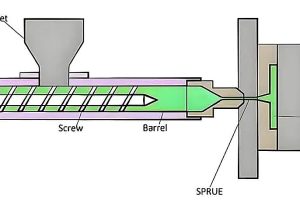
The main sources of waste from your Spritzgussform in injection molding are sprues, runners, flash, rejected parts, and purge material—collectively accounting for 25-45% of your total resin consumption. Let me break this down because understanding where waste comes from is the first step to eliminating it. Sprue and runner systems are your biggest culprit, especially in single-cavity molds. I’ve audited operations where runner weight exceeded part weight by 3:1. That’s insane. Heißkanalsysteme1 eliminate most of this waste, but they’re not always practical for every application. Cold runners can be optimized—reduce runner diameter to the minimum that maintains proper flow, use balanced designs, and consider sequential valve gating for multi-cavity molds. Flash is pure waste, period.
If you’re getting consistent flash, your process is wrong. Either your clamp tonnage is insufficient, your injection pressure is too high, or your mold needs maintenance. I’ve seen operators just accept flash as normal—that’s leaving money on the table. Rejected parts hurt twice: you’ve wasted material and lost production time. Most rejects come from process instability, inadequate quality systems, or rushing startups. The key is identifying root causes fast and fixing them permanently. Purge material varies wildly depending on your color changes and material switches. Smart scheduling minimizes this—group similar colors together, use intermediate purging compounds, and optimize your changeover procedures.
How Does Plastic Regrind Work in Practice?
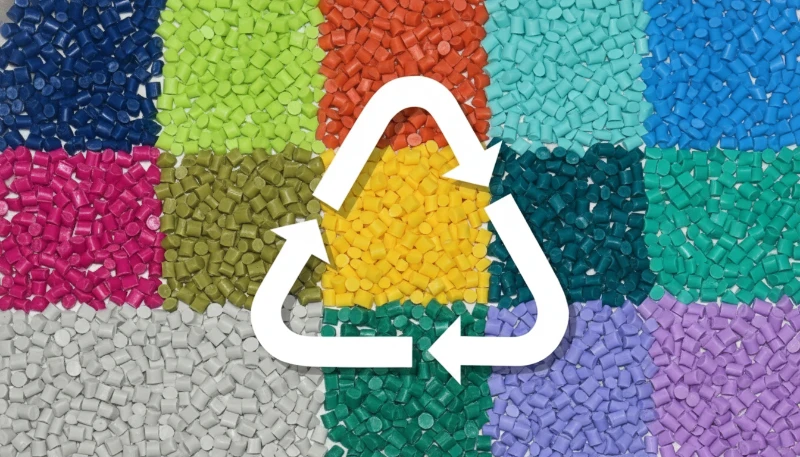
In practice, regrind is the mechanical grinding of waste into uniform pellets blended with virgin resin at controlled ratios. Here’s what actually matters in real production. First, your grinder setup is critical. Granulator blade clearance should be 0.002-0.005 inches—too tight and you generate heat that degrades the plastic, too loose and you get inconsistent particle size. Screen size determines your regrind particle dimensions. I recommend 3/8-inch screens for most applications, though some demanding parts need 1/4-inch. Temperature control during grinding is huge. Thermoplastics can degrade from grinding heat, especially materials like PVC or POM. Good granulators have water cooling or forced air circulation.
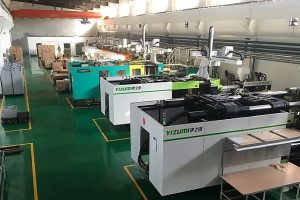
We’ve seen regrind work beautifully across 400+ materials on our floor — but only when operators follow strict material segregation. Our 47 injection molding machines run everything from commodity PP to high-temp PEEK, and cross-contamination between resin families is the single fastest way to scrap an entire shift’s output.
If your regrind feels warm coming off the grinder, you’re cooking it. Contamination kills regrind quality faster than anything else. Metal fragments from worn grinder blades, paper labels, different plastic types, colorants—they all create problems. Install magnetic separators for metal contamination and density separation for different plastic types. Particle size distribution affects flow properties and mixing. Oversized particles create feeding problems and surface defects. Undersized particles (dust) can cause degradation from overheating. Use vibrating screens to remove both extremes. Storage matters too. Regrind absorbs moisture faster than virgin pellets because of the increased surface area. Keep it in sealed containers with desiccant, especially Hygroscopic materials2 like nylon or PET.
| Material Typ | Screen Size | Anmerkungen |
|---|---|---|
| PP / PE / PS | 3 mm | Standard particle size |
| ABS / SAN | 4 mm | Moderate grinding for uniform flow |
| Glasgefüllte Sorten | 6–8 mm | Larger screen reduces fiber damage |
| Nylon / PC | 3 mm | Must dry immediately after grinding |
Here’s what most people get wrong about regrind: the particle size matters more than the ratio. If your granulator produces flakes instead of uniform pellets, you’ll get inconsistent feeding in the hopper. That means shot-to-shot variation, and your parts start failing dimensional checks. The standard practice is to use a 3–5 mm screen in your granulator for most thermoplastics. For glass-filled materials, you want a larger screen (6–8 mm) because the glass fibers create fines that degrade properties further. We’ve tested this extensively—uniform regrind particles within ±1 mm give you 20–30% better melt consistency compared to random flake sizes. Also critical: regrind must be dried before reuse.
Just like virgin material, regrind absorbs moisture, and in some cases it absorbs faster because of the increased surface area. For hygroscopic materials like nylon or polycarbonate, you’re looking at 3–4 hours in a dehumidifying dryer at material-specific temperatures before it goes back into the machine.
When Should You Regrind vs. Use Virgin Material?
Use regrind at 10-25% for non-critical parts; stick to virgin material for structural, food-contact, and certified applications. The decision comes down to part requirements and economics. For commodity parts like housings, containers, or toys, regrind ratios of 20-30% work fine. I’ve run production with 50% regrind on non-critical components without issues. The key is understanding property degradation—tensile strength typically drops 5-15%, impact resistance can decrease 10-25%, and molecular weight reduces with each processing cycle. Never use regrind for medical devices, food packaging, or aerospace components. These applications require virgin material certification and material traceability.
Even small amounts of regrind void certifications and create liability issues. Structural parts need case-by-case evaluation. Load-bearing components, snap-fit features, and living hinges are sensitive to property degradation. I’ve seen snap-fit failures from excessive regrind use—the reduced molecular weight makes the plastic more brittle. Economics drive most decisions. Regrind typically costs 60-80% of virgin material prices, but processing costs increase slightly due to drying requirements and quality control. Calculate your true savings including labor, energy, and quality losses. Color matching is another factor. Natural or black parts hide regrind easily, but achieving consistent color in transparent or light-colored parts with regrind is challenging. You’ll need color dosing systems and careful ratio control.
| Application Class | Max Regrind % | Key Rationale |
|---|---|---|
| Structural/Load-bearing | 0–10% | Tensile and impact properties degrade per heat cycle |
| Cosmetic/Visible parts | 15–25% | Color shift and splay visible above 25% |
| Hidden/Internal | 25–50% | Nicht sichtbar und nicht strukturell; Regranulat akzeptabel |
| Verpackung/Einweg | Bis zu 100% | Postindustrielles Regranulat wird in hohen Anteilen verarbeitet |
Die wahre Antwort ist nuancenreicher als „kritisch vs. nicht-kritisch“. Was zählt, ist die Toleranz Ihrer Anwendung für Eigenschaftsverschlechterung und die Spezifikation Ihres Kunden.
Nach 3–4 Wärmegeschichten ergeben sich eine Reduzierung der Bruchdehnung um 10–20% und ein Abfall der Schlagzähigkeit um 5–15%. Das ist keine Spekulation – das ist, was der MFI (Schmelzflussindex3) Daten zeigen es Ihnen. Für medizinische oder lebensmittelkontaktfähige Teile verlangen die meisten regulatorischen Rahmenwerke (FDA, EU 10/2011) ausschließlich dokumentiertes Neumaterial oder streng kontrolliertes Regranulat mit vollständiger Rückverfolgbarkeit. Hier sollten keine Kompromisse gemacht werden.
Eine Sache, die ich unseren Kunden immer sage: Jedes Mal, wenn Kunststoff durch die Zylinderschnecke läuft, verliert er Molekulargewicht. Nach 3–4 Wärmegeschichten sehen Sie eine Reduzierung der Bruchdehnung um 10–20% und einen Abfall der Schlagzähigkeit um 5–15%. Das ist keine Spekulation – das zeigt Ihnen der MFI-Daten (Schmelzflussindex).
Was ist ein geschlossenes Recyclingsystem im Spritzguss?
Ein geschlossenes Kreislaufsystem erfasst alle Produktionsabfälle und verarbeitet sie zu nutzbarem Material zurück, wodurch die Materialkosten um 15-25% gesenkt werden. Das ist nicht nur ein ökologisches Wohlfühlprogramm – es ist eine bewährte Wirtschaftsstrategie. Das System beginnt mit der Abfalltrennung an der Spritzgießmaschine. Angüsse, Läufer und Ausschussteile gelangen direkt in spezielle Behälter – keine Vermischung mit anderen Materialien oder Kontamination. Automatische Angussentnahme- und Förderersysteme eignen sich am besten für Hochvolumenbetrieb.
Die Granulierung vor Ort ist das Herzstück des Systems. Installieren Sie Granulatoren in der Nähe der Produktionslinien, um Handhabung und Kontamination zu minimieren. Dimensionieren Sie Ihre Granulatoren für 150-200% des erwarteten Abfallaufkommens, um Produktionsspitzen zu bewältigen.
Beinhalten Sie magnetische Trennung und Staubabsaugung – diese sind nicht optional. Die Materialmischung erfordert präzise Kontrolle. Die meisten geschlossenen Kreislaufsysteme verwenden gravimetrische Mischer, die Neu- und Regranulatmaterial nach Gewicht und nicht nach Volumen dosieren. Typische Anteile beginnen bei 10-15% Regranulat und können basierend auf Teileanforderungen und Materialtests auf 25-30% erhöht werden. Qualitätsüberwachung ist unerlässlich. Testen Sie regelmäßig die Materialeigenschaften des Regranulats – Schmelzflussindex, Zugfestigkeit und Schlagzähigkeit. Legen Sie Annahmekriterien fest und weisen Sie Chargen zurück, die den Spezifikationen nicht entsprechen. Schlechtes Regranulat kontaminiert gutes Material und ruiniert Produktionsläufe. Materialverfolgung schließt den Kreislauf. Verwenden Sie Chargencodierung, um Materialverbrauch, Regranulatanteile und Teileleistung zu verfolgen. Diese Daten helfen, Mischungsverhältnisse zu optimieren und Prozessverbesserungen zu identifizieren.
| Komponente | Funktion | Key Consideration |
|---|---|---|
| Automatischer Separator | Trennt Angüsse von Teilen nach dem Auswerfen | Roboterpicker reduzieren manuelle Sortierfehler |
| Inline-Granulator | Zerkleinert Läufer und Ausschuss an der Presse | Siebgöße 3-5mm für gleichmäßige Partikel |
| Gravimetrischer Mischer | Mischt Neuware und Regenerat nach Gewicht | ±0,5% Genauigkeit verhindert Verhältnisabweichungen |
| Entfeuchtungstrockner | Entzieht dem Regranulat vor der Wiederverwendung Feuchtigkeit | Regenerat nimmt Feuchtigkeit schneller auf als Granulat |
| MFI-Prüfstation | Überwacht den Schmelzindex pro Charge | Ausschuss-Chargen mit >15% Abweichung vom Basiswert |
Einige Systeme umfassen automatische Materialidentifikation mittels Nahinfrarotspektroskopie, um Verwechslungen zu vermeiden. Ein gut gestaltetes Closed-Loop-System beinhaltet typischerweise:
1. Automatische Anguss-/Läufertrennung — roboter- oder schwerkraftbasierte Picker, die Läufer unmittelbar nach dem Auswerfen von den Teilen trennen
2. Inlinemahlung — Granulator neben der Presse positioniert, zerkleinert Angüsse und Ausschuss in Echtzeit
3. Spezielle Lagerung und Mischung — Regranulat, nach Materialtyp und Farbe gelagert, wird mit Neuware in kontrollierten Verhältnissen mit gravimetrischen Mischern gemischt
4. Qualitätskontrollpunkte — MFI-Test, Sichtprüfung und Verunreinigungsprüfung, bevor Regenerat wieder in die Produktion eintritt
Der Schlüsselindikator ist Ihre Regeneratverwertungsrate – welcher Prozentsatz des erzeugten Regenerats geht tatsächlich zurück in die Produktion gegenüber dem, der downgecycelt oder deponiert wird. Beste Betriebe erreichen 85–95% Verwertung. Durchschnittliche Betriebe?
Vielleicht 40–60%, weil sie nicht über die Systeme zur Verfolgung und Kontrolle verfügen. Für Betriebe mit mehreren Materialien oder Farben (was die meisten Auftragshersteller sind), ist die größte Herausforderung nicht die Ausrüstung – sondern die Logistik, die Regranulatströme getrennt zu halten. Ein einziger Kontaminationsvorfall (z.B. ABS-Regranulat, das in einen PC-Lauf gelangt) kann eine gesamte Produktionscharge verschrotten.
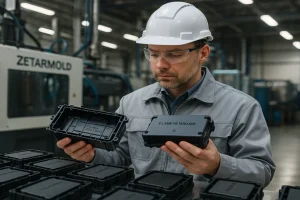
Factory Insight: Bei ZetarMold behandeln wir Regranulat nicht als gemischten Bodenabfall. In unserem Werk in Shanghai trennen die Bediener Materialfamilien und Farben, genehmigte Mischungsverhältnisse sind an die Projektspezifikation gebunden, und Regranulatprüfungen sind Teil desselben 6-stufigen Qualitätsprozesses, der auch für geformte Teile verwendet wird. Diese Prozessdisziplin ist wichtig, wenn man über 400 Materialien auf 47 Spritzgießmaschinen von 90T bis 1850T unterstützt.
Wie kontrolliert man die Qualität bei der Verwendung von Regranulat?
Die Qualitätskontrolle von Regenerat ist der systematische Prozess des Testens von Chargeneigenschaften, der Vermeidung von Verunreinigungen und der Echtzeitüberwachung der Produktion. Man kann nicht einfach Regenerat in den Trichter werfen und auf das Beste hoffen. Zuerst kommt die Prüfung der Materialeigenschaften. Legen Sie Basiswerte für Ihr Neuwarenmaterial fest – Zugfestigkeit, Schlagzähigkeit, Schmelzindex und thermische Eigenschaften. Testen Sie jede Regeneratcharge auf dieselben Eigenschaften und vergleichen Sie sie mit den Akzeptanzkriterien. Ich erlaube typischerweise eine Eigenschaftsverschlechterung von 10-15% für nicht kritische Teile, aber strukturelle Komponenten benötigen strengere Grenzwerte. Die Kontaminationseindämmung ist absolut entscheidend. Unterschiedliche Kunststoffarten, Metallpartikel, Papieretiketten oder Fremdmaterialien können ganze Chargen ruinieren. Setzen Sie Sichtprüfung, Dichtetrennung und magnetische Trennung ein.
Schulen Sie Bediener darin, Kontamination zu erkennen – ein einziges PVC-Teil, das mit ABS-Regranulat vermischt ist, kann Korrosion und Geräteschäden verursachen. Die Überprüfung des Mischungsverhältnisses gewährleistet konsistente Materialeigenschaften. Verwenden Sie gravimetrische Dosierer, nicht volumetrische – die Kunststoffdichte ändert sich mit dem Regranulatanteil. Dokumentieren Sie die tatsächlichen Mischungsverhältnisse für jede Charge und korrelieren Sie sie mit Teilequalitätsdaten. Passen Sie die Verhältnisse basierend auf Testergebnissen und Kundenanforderungen an. Die Anpassung der Prozessparameter berücksichtigt Fließunterschiede des Regranulats. Regranulat hat typischerweise andere Viskositäts- und thermische Eigenschaften als Neuware. Möglicherweise müssen Sie den Einspritzdruck, die Werkzeugtemperatur oder die Zykluszeiten anpassen. Dokumentieren Sie diese Änderungen und erstellen Sie Prozessblätter für jedes spezifische Mischungsverhältnis. Die statistische Prozessregelung verfolgt Qualitätstrends über die Zeit. Überwachen Sie wichtige Teileabmessungen, mechanische Eigenschaften und Erscheinungsmerkmale.
Verwenden Sie Regelkarten, um Prozessabweichungen zu erkennen und Änderungen mit Regeneratnutzungsmustern zu korrelieren.
Kann man im Spritzguss Null Abfall erreichen?
Nahezu null Abfall ist mit Heißkanälen, optimiertem Design und Regenerat erreichbar – aber echter Nullabfall lohnt den Aufwand selten. Lassen Sie mich erklären, was tatsächlich möglich ist. Heißkanalsysteme eliminieren Anguss- und Lauabfall vollständig, sind aber keine universellen Lösungen. Die Anfangskosten sind 2-3 mal höher als bei Kaltkanälen und sie sind auf spezifische Materialtypen beschränkt. Farb- oder Materialwechsel sind nicht einfach möglich und der Wartungsaufwand steigt erheblich. Für die Serienfertigung mit Einzelmaterialien machen Heißkanäle Sinn. Die Bauteiloptimierung reduziert den Materialverbrauch durch Reduzierung der Wandstärke, Eliminierung unnötiger Merkmale und Optimierung der Angussstellen.
Ich habe eine Materialreduktion von 20-30% durch intelligente Designänderungen gesehen. Verwenden Sie Finite-Elemente-Analyse, um Spannungskonzentrationen zu identifizieren und Wandstärkengradienten zu optimieren.
100% Regeneratverwertung ist theoretisch möglich, aber praktisch schwierig. Jeder Verarbeitungszyklus verschlechtert die Materialeigenschaften, so dass man schließlich einen Punkt erreicht, an dem der Kunststoff die Leistungsanforderungen nicht mehr erfüllen kann. Die meisten Betriebe können 80-90% Regeneratverwertung erreichen, bevor Qualitätsgrenzen erreicht werden. Moderne Prozessregelung minimiert Ausschuss durch Echtzeitüberwachung und geschlossene Regelkreise. Kavitätsdrucksensoren, Schmelztemperaturüberwachung und Maßmesssysteme erkennen Probleme, bevor sie zu Ausschuss führen. Investitionen in Industrie-4.0-Technologien zahlen sich durch reduzierte Abfälle und verbesserte Qualität aus. Die wirtschaftliche Realität zählt. Die letzten 5-10% Abfallreduktion kosten oft mehr, als die Materialeinsparungen rechtfertigen.
| Priorität | Strategy | Auswirkung auf Materialabfall |
|---|---|---|
| 1. Eliminieren | Heißkanalsysteme entfernen Angüsse vollständig | 15-30 % Abfallreduktion |
| 2. Minimieren | Prozessparameter optimieren, um Ausschuss zu reduzieren | 5-10% Abfallreduzierung |
| 3. Regranulat | Angüsse, Läufer und Ausschuss erfassen und wiederverwenden | 10-20% Materialrückgewinnung |
| 4. Downcycling | Unverunreinigtes Regranulat an Compoundierer verkaufen | Einnahmen aus Abfallströmen |
| 5. Energierückgewinnung | Verbrennung mit Energierückgewinnung (letztes Mittel) | 2-5 % verbleibender Abfall |
Konzentrieren Sie sich zuerst auf die größten Abfallströme – Läufersysteme, Ausschussreduktion und Regranulatoptimierung liefern die beste Kapitalrendite. Seien wir ehrlich: Echter Null-Abfall ist im Spritzgießen extrem schwierig. Es wird immer Materialverluste geben – Reinigungscompound, Anlaufschrott, Farbwechselabfälle und Reinigung bei Maschinenwartung. Aber man kann nahe herankommen.
Praktische Abfallreduktionshierarchie:
1. Eliminieren — Verwenden Sie Heißkanalsysteme, um Angüsse vollständig zu eliminieren. Diese einzelne Änderung kann Materialabfälle um 15–30% reduzieren.
2. Minimieren — Optimieren Spritzgießen Prozessparameter zur Reduzierung der Ausschussquote.
Jede Reduzierung von Ausschuss um 1% ist reiner Gewinn.
3. Regranulat — Fangen und verwenden Sie Anguss, Angüsse und nicht konforme Teile intern wieder.
4. Downcycling — Unverunreinigtes Regranulat an Compoundierer oder Hersteller mit Anwendungen geringerer Spezifikation verkaufen.
5. Energierückgewinnung — Letztes Mittel; Verbrennung mit Energierückgewinnung für wirklich nicht recycelbares Material. Die wirtschaftliche Rechnung ist klar: In großem Maßstab kann ein gut verwaltetes Regranulatprogramm 8–15% der Rohmaterialkosten einsparen. Für einen Betrieb, der 1.000 Tonnen Material pro Jahr bei durchschnittlichen Harzkosten von $2/kg verarbeitet, sind das $16.000–$30.000 jährliche Einsparungen. Zusätzlich reduzierte Abfallentsorgungskosten. Was oft übersehen wird, ist der ISO-14001-Aspekt.
Wenn Ihr Betrieb ISO 14001 zertifiziert ist (wie unser Betrieb), unterstützen Ihre Abfallreduktionskennzahlen direkt die Einhaltung Ihres Umweltmanagementsystems und können bei Audits und Kundenbewertungen ein Unterscheidungsmerkmal sein.

„Regranulatmaterial hat typischerweise eine 5-15 % geringere Zugfestigkeit als Neukunststoff“Wahr
Mechanisches Zerkleinern und Wiederaufbereiten bricht Polymerketten, reduziert das Molekulargewicht und die mechanischen Eigenschaften. Diese Degradation ist gut dokumentiert und variiert je nach Materialtyp und Verarbeitungsbedingungen.
„Sobald Regranulat einen Materialtest besteht, können Sie die gleichen Maschineneinstellungen wie bei Neuwarenharz beibehalten.“Falsch
Regranulat verändert oft die Viskosität, Feuchtigkeitsempfindlichkeit und das Oberflächenverhalten, daher sollten Mischverhältnis, Trocknung und Prozesseinstellungen chargeweise überprüft und dokumentiert werden.
Das Verständnis dieser Wahr/Falsch-Unterscheidungen hilft Spritzgießern, häufige Regranulatfehler zu vermeiden und effektivere Abfallreduzierungsstrategien in ihren Betrieben umzusetzen. Nach unserer Erfahrung mit über 400 Materialien auf 47 Maschinen in Shanghai kommt der Unterschied zwischen einem erfolgreichen Regranulatprogramm und einem, das Qualitätsprobleme verursacht, auf Prozessdisziplin an: konsistente Tests, ordnungsgemäße Materialtrennung und strikte Einhaltung der maximalen Regranulatanteile für jede Anwendungsklasse. Die häufigste Fehlerquelle sehen wir in Betrieben, die mit guten Absichten beginnen, aber ihre Qualitätskontrollen allmählich schleifen lassen, weil der Produktionsdruck Vorrang vor der Materialtestdisziplin hat.
„Heißkanalsysteme können 90 % des Spritzgießabfalls eliminieren“Wahr
Heißkanäle eliminieren Anguss- und Läuferabfall, der typischerweise 25-40 % des gesamten Materialverbrauchs ausmacht. Kombiniert mit optimierter Bauteilgestaltung und Regranulatnutzung ist eine Abfallreduktion von 90 % erreichbar.
„Sie können beliebige Kunststofftypen in Regranulatanwendungen mischen“Falsch
Das Mischen inkompatibler Kunststoffe führt zu Verunreinigungen, die Eigenschaften verschlechtern und Anlagen beschädigen können. Unterschiedliche Kunststofftypen haben inkompatible chemische Strukturen, Verarbeitungstemperaturen und thermische Ausdehnungsraten.
Häufig gestellte Fragen
Wie viel Prozent Regranulat kann ich sicher verwenden, ohne die Bauteilqualität zu beeinträchtigen?
Für nicht-kritische Anwendungen können Sie sicher 20–30 % Regranulat verwenden, ohne merkliche Eigenschaftsänderungen. Für Strukturbauteile sollte der Anteil unter 10 % bleiben. Entscheidend ist die Überwachung des MFI (Schmelzflussindex) – wenn Ihre Regranulat-Neumaterial-Mischung mehr als 15 % vom Neumaterial-Baseline abweicht, reduzieren Sie sofort den Regranulatanteil. Qualifizieren Sie jeden Regranulatprozentsatz stets durch mechanische Tests vor Serienproduktion. In der Praxis hat sich ein Regranulatanteil von 15 % bei den meisten Standard-Thermoplasten bewährt, während technische Kunststoffe wie PC oder Nylon unter strenger MFI-Kontrolle bei oder unter 10 % bleiben sollten.
Wie verhindere ich Kontamination in meinem Regranulatmaterial?
Spezielle Lagerbehälter mit klarer Kennzeichnung nach Materialtyp, Farbe und Datum sind Ihre erste Verteidigungslinie. Verwenden Sie geschlossene Behälter – keine offenen Behälter – da Regranulat schneller Feuchtigkeit aufnimmt als Granulat. Implementieren Sie ein First-in-First-out (FIFO)-System, damit Regranulat nicht herumliegt und Staub ansammelt oder degradiert. Kennzeichnen Sie Ihre Granulator-Zuführbereiche farblich und verarbeiten Sie niemals unterschiedliche Materialien auf demselben Granulator ohne gründliche Reinigung zwischen den Wechseln. Ein einziges PC-Granulat in einem ABS-Lauf kann Delamination verursachen, die eine gesamte Charge ruiniert.
Kann ich Regranulatmaterial für Lebensmittelverpackungen verwenden?
Im Allgemeinen nein — nicht ohne spezielle regulatorische Genehmigung. FDA 21 CFR und die EU-Verordnung 10/2011 verlangen, dass Lebensmittelkontaktmaterialien strenge Migrationsgrenzwerte einhalten, und Regranulat führt zusätzliche Variablen wie mehrere Wärmegeschichten und potenzielle Kontamination ein, die die Konformitätsprüfung erschweren. Einige Rechtsgebiete erlauben post-industrielles Regranulat in Lebensmittelkontaktanwendungen mit vollständiger Rückverfolgbarkeitsdokumentation und Chargenverfolgung, aber Sie müssen die Konformität für jeden spezifischen Anwendungsfall mit Ihrem regulatorischen Team überprüfen. Im Zweifel verwenden Sie immer zertifiziertes Neuwarenmaterial für jede Lebensmittelkontakt- oder medizinische Anwendung.
Welche Kosteneinsparungen sind typisch bei der Einführung eines Regranulatsystems?
Die meisten Betriebe sparen mit einem gut gemanagten Regranulatprogramm 8–15 % der Rohmaterialkosten. Bei einem Jahresverbrauch von 500 Tonnen Material und durchschnittlichen Harzkosten von 2,50 €/kg spart eine Regranulatnutzung von 10 % etwa 12.500 € jährlich allein an Materialkosten. Zusätzlich reduzierte Entsorgungskosten (2.000–5.000 €/Jahr für mittlere Betriebe) können die Gesamtersparnis auf 15.000–20.000 € pro Jahr steigern. Die Amortisationszeit für einen einfachen Granulator und ein gravimetrisches Mischsystem liegt typischerweise bei 6–12 Monaten, was es zu einer der Investitionen mit der schnellsten ROI auf der Produktionsfläche macht.
Wie oft sollte ich die Materialeigenschaften von Regranulat testen?
Testen Sie jede Regranulat-Charge, bevor sie zurück in die Produktion geht — ohne Ausnahmen. Führen Sie mindestens MFI-Tests und visuelle Kontaminationsprüfungen für jede Charge durch. Für kritische Anwendungen fügen Sie monatlich Zugfestigkeits- und Schlagzähigkeitstests hinzu. Führen Sie ein fortlaufendes Protokoll der MFI-Werte, da Trends Ihnen weit mehr sagen als einzelne Messwerte. Wenn der MFI-Wert über mehrere Chargen hinweg konsequent nach oben driftet, verschlechtert sich Ihr Regranulat schneller als erwartet und Sie müssen die Anzahl der zulässigen Wärmegeschichten reduzieren.
Benötige ich spezielle Ausrüstung zur Verarbeitung von Regranulatmaterial?
Sie benötigen drei Kernausrüstungsgegenstände: einen Granulator, der auf Ihren Pressenausgang abgestimmt ist, einen gravimetrischen Mischer für genaues Neuware-Regranulat-Mischen und einen Entfeuchtertrockner für das Regranulatmaterial. Der Granulator ist die größte Investition – rechnen Sie mit 5.000–15.000 € für eine Qualitätseinheit für eine Mittelklasse-Presse. Gravimetrische Mischer kosten 3.000–8.000 €. Viele Betriebe beginnen mit volumetrischem Mischen (billiger, aber weniger präzise) und rüsten auf gravimetrisch um, sobald sie die Konsistenzverbesserung in ihren Teilen sehen. Überspringen Sie nicht den Trockner – feuchtes Regranulat verursacht Sprühnebel und Sprödigkeit.
Kann ich in Spritzgussbetrieben Null-Abfall erreichen?
Wahrer Null-Abfall ist im Spritzguss nahezu unmöglich aufgrund von Spülmassen, Anlaufabfällen und Materialverlusten bei Farbwechseln, die nicht effektiv zurückgewonnen werden können. Sie können jedoch eine Materialausnutzung von 95–98% erreichen, indem Sie Heißkanalsysteme, Inline-Granulation und ein diszipliniertes Regranulat-Managementprogramm kombinieren. Die verbleibenden 2–5% gehen typischerweise ins Downcycling oder zur Energierückgewinnung. ISO 14001-zertifizierte Anlagen verfolgen und melden diese Abfallkennzahlen jährlich, und die meisten nutzen sie als kontinuierliche Verbesserungs-KPIs von Jahr zu Jahr, um inkrementelle Gewinne zu erzielen.
Welche Materialien eignen sich am besten für Regranulat-Anwendungen?
Thermoplaste mit guter thermischer Stabilität eignen sich am besten zum Regranulieren: Polypropylen (PP), Polyethylen (PE), ABS und Polystyrol (PS) sind alle ausgezeichnete Kandidaten, da sie mehrere Wärmebelastungen mit minimalem Eigenschaftsverlust vertragen. Technische Kunststoffe wie Nylon und Polycarbonat können regranuliert werden, erfordern jedoch strenge Feuchtigkeitskontrolle und MFI-Überwachung nach jedem Zyklus. Vermeiden Sie das Regranulieren von gefüllten Materialien wie glasfaserverstärkten oder flammhemmenden Sorten mehr als einmal, da die Füllstoffe überproportional abbauen und ihre Wirksamkeit verlieren. PVC und Duroplaste können nicht effektiv regranuliert werden, da sie abbauen anstatt wieder zu schmelzen.
Bereit, Strategien zur Abfallreduzierung in Ihren Spritzgussbetrieben umzusetzen? Das erfahrene Ingenieurteam von ZetarMold kann Ihnen helfen, effiziente Regranulatsysteme zu entwerfen und die Materialausnutzung über unsere 45 Spritzgießmaschinen hinweg zu optimieren. Unsere ISO-zertifizierte Anlage hat erfolgreich geschlossenes Recycling für über 400 Materialien implementiert. Kontaktieren Sie uns noch heute, um zu besprechen, wie wir Ihre Materialkosten senken können, während wir die Bauteilqualität durch bewährte Abfallreduktionstechniken aufrechterhalten.
-
Heißkanalsysteme: Heißkanalsysteme beziehen sich auf ein Form-Fütterungssystem, das Kunststoff in der Form in einem geschmolzenen Zustand hält und Angussabfälle vollständig eliminiert. Heißkanalsysteme können den Materialabfall im Vergleich zu Kaltkanalsystemen um 15–30% reduzieren. ↩
-
Hygroscopic materials: Hygroskopische Materialien beziehen sich auf Kunststoffe, die leicht Feuchtigkeit aus der Luft aufnehmen, einschließlich Nylon, PET, PC und PBT, die vor der Verarbeitung kontrolliert getrocknet werden müssen, um Hydrolyse und Eigenschaftsverschlechterung zu verhindern. ↩
-
Schmelzflussindex: Schmelzflussindex bezieht sich auf ein Maß für die Fließfähigkeit der Schmelze eines thermoplastischen Polymers, standardisiert nach ASTM D1238. Wird als Qualitätskontrollmetrik verwendet, um Polymerabbau in Regranulatmaterialien zu erkennen. ↩



 EN
EN  ES
ES  FR
FR  DE
DE  PT
PT  AR
AR  RU
RU  JA
JA  KO
KO  IT
IT  NL
NL  TR
TR  PL
PL 