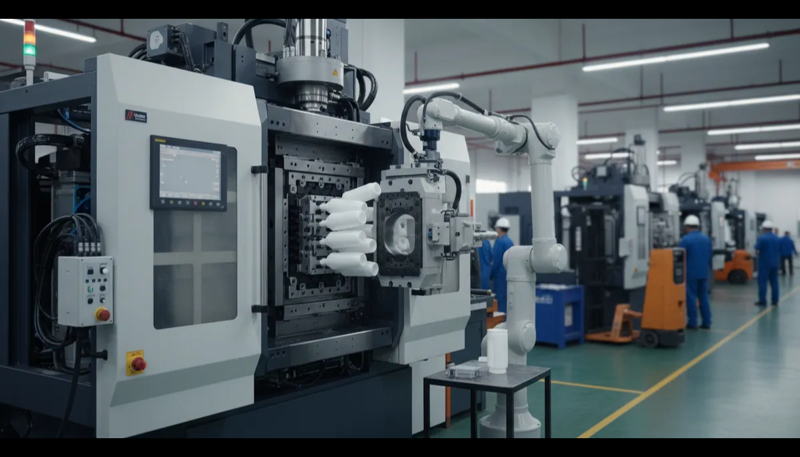
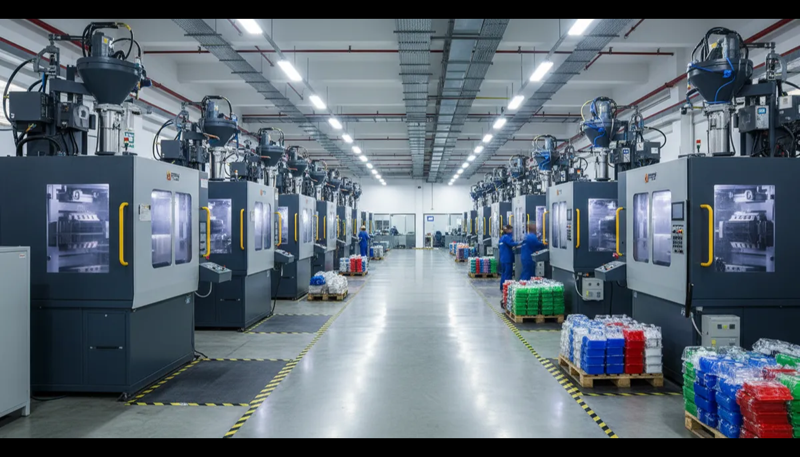
Afval bij spuitgieten is niet alleen een milieuprobleem — het is geld dat de deur uitloopt. In meer dan twintig jaar heb ik te veel bedrijven winst zien verliezen doordat zij uitval als onvermijdelijk behandelen. Dat is het niet. Met goede maalgoedstrategieën en gesloten kringlopen kunt u materiaalafval met 80–90% verminderen en tegelijk de kwaliteitsnormen handhaven.
- Maalgoedpercentages van 10-25% behouden voor de meeste toepassingen de onderdeelkwaliteit en verlagen de materiaalkosten met 15-20%
- Gesloten recyclingsystemen kunnen bij correcte toepassing materiaalbenuttingsgraden boven 95% behalen
- Kwaliteitscontroleprotocollen zijn essentieel — slecht maalgoed ruïneert volledige productieruns
- Aanspuitingen, aanspuitkanalen en bramen vertegenwoordigen doorgaans 30-40% van het totale materiaalgebruik bij standaardspuitgieten
Wat zijn de belangrijkste bronnen van afval bij spuitgieten?
De belangrijkste afvalbronnen bij spuitgieten zijn aanspuitingen, kanalen, braam, afgekeurde onderdelen en spoelmateriaal — samen 25–45% van de hars. Vergelijkt u leveranciers, bekijk dan onze gids voor de selectie van spuitgietleveranciers voor RFQ-voorbereiding en kwalificatie.
De belangrijkste afvalbronnen van uw spuitgietmatrijs zijn aanspuitingen, kanalen, braam, afgekeurde onderdelen en spoelmateriaal — samen 25–45% van het harsverbruik. Begrijpen waar afval ontstaat is de eerste stap om het te elimineren. Aanspuit- en kanaalsystemen zijn de grootste boosdoener, vooral bij matrijzen met één holte. Ik heb processen gezien waarbij het kanaalgewicht drie keer het onderdeelgewicht was. Heetkanaalsystemen1 elimineren het meeste afval, maar zijn niet altijd praktisch. Optimaliseer koudkanalen: beperk de diameter tot het minimum voor goede stroming, gebruik uitgebalanceerde ontwerpen en overweeg sequentiële klepaanspuiting bij meervoudige matrijzen. Braam is volledig afval.
Als u voortdurend braamvorming ziet, klopt uw proces niet. Ofwel is de sluitkracht onvoldoende, is de injectiedruk te hoog of heeft de matrijs onderhoud nodig. Ik heb operators braamvorming gewoon als normaal zien accepteren — dat is geld laten liggen. Afgekeurde onderdelen doen dubbel pijn: u verspilt materiaal en verliest productietijd. De meeste afkeur komt door procesinstabiliteit, ontoereikende kwaliteitssystemen of gehaaste opstarts. De sleutel is grondoorzaken snel vaststellen en blijvend oplossen. De hoeveelheid spoelmateriaal varieert sterk afhankelijk van kleur- en materiaalwissels. Slim plannen beperkt dit: groepeer vergelijkbare kleuren, gebruik tussentijdse reinigingscompounds en optimaliseer uw omstelprocedures.
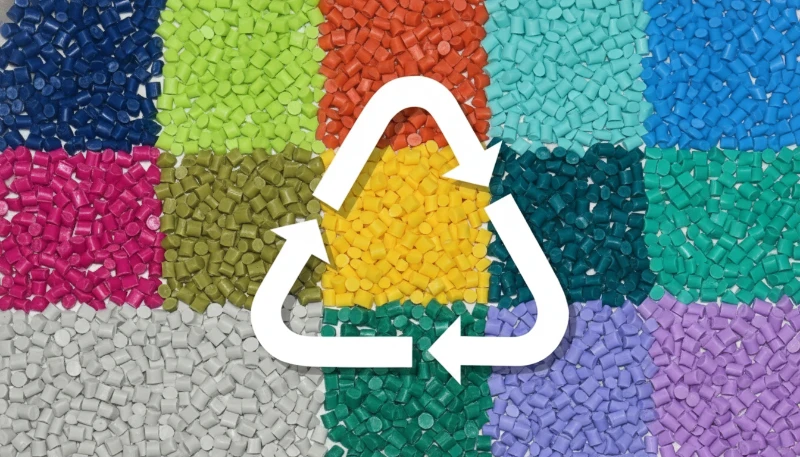
Hoe werkt kunststofregranulaat in de praktijk?
In de praktijk is regranulaat afval dat mechanisch tot uniforme korrels wordt vermalen en in beheerste verhoudingen met nieuwe hars wordt gemengd. In echte productie is eerst de moleninstelling cruciaal. De messpeling van de granulator moet 0.002-0.005 inches zijn: te nauw veroorzaakt warmte die de kunststof degradeert, te ruim geeft een inconsistente deeltjesgrootte. De zeefmaat bepaalt de afmetingen van het regranulaat. Voor de meeste toepassingen adviseer ik 3/8-inch zeven; sommige veeleisende onderdelen vereisen 1/4-inch. Temperatuurbeheersing tijdens het malen is zeer belangrijk. Thermoplasten, vooral PVC en POM, kunnen door maalwarmte degraderen. Goede granulatoren hebben waterkoeling of geforceerde luchtcirculatie.
We hebben maalgoed uitstekend zien presteren bij 400+ materialen op onze werkvloer — maar alleen bij strikte materiaalscheiding. Onze 47 spuitgietmachines verwerken alles van standaard-PP tot hittebestendig PEEK; kruisbesmetting tussen harsfamilies is de snelste manier om de productie van een hele dienst af te keuren.
Voelt maalgoed warm wanneer het uit de molen komt, dan wordt het te heet. Verontreiniging tast de kwaliteit het snelst aan. Metaaldeeltjes van versleten messen, papieren etiketten, andere kunststoffen en kleurstoffen veroorzaken allemaal problemen. Gebruik magneetscheiders voor metaal en dichtheidsscheiding voor verschillende kunststoffen. De deeltjesgrootte beïnvloedt stroming en menging. Te grote deeltjes veroorzaken toevoerproblemen en oppervlaktefouten; stof kan door oververhitting degraderen. Zeef beide uitersten uit. Ook opslag telt: maalgoed neemt door het grotere oppervlak sneller vocht op dan nieuw granulaat. Bewaar het afgesloten met droogmiddel, vooral hygroscopische materialen2 zoals nylon of PET.
| Type materiaal | Schermgrootte | Opmerkingen |
|---|---|---|
| PP / PE / PS | 3 mm | Standaard deeltjesgrootte |
| ABS / SAN | 4 mm | Matig slijpen voor een gelijkmatige stroming |
| Met glasvezel versterkte kwaliteiten | 6–8 mm | Een grotere zeef beperkt vezelbeschadiging |
| Nylon / PC-materialen | 3 mm | Direct na het vermalen drogen |
Dit begrijpen de meeste mensen verkeerd aan maalgoed: de deeltjesgrootte is belangrijker dan de verhouding. Als uw granulator vlokken produceert in plaats van uniforme korrels, wordt de toevoer in de trechter onregelmatig. Dit veroorzaakt variatie tussen schoten en onderdelen voldoen niet meer aan de maatcontrole. Voor de meeste thermoplasten is een zeef van 3–5 mm standaard. Voor glasgevulde materialen gebruikt u een grotere zeef (6–8 mm), omdat glasvezels fijnstof vormen dat de eigenschappen verder aantast. Onze uitgebreide tests tonen dat uniforme maalgoeddeeltjes binnen ±1 mm een 20–30% consistentere smelt geven dan willekeurige vlokgroottes. Ook essentieel: maalgoed moet vóór hergebruik worden gedroogd.
Net als nieuw materiaal neemt maalgoed vocht op, in sommige gevallen sneller door het grotere oppervlak. Hygroscopische materialen zoals nylon of polycarbonaat moeten vóór hergebruik in de machine 3–4 uur bij materiaalspecifieke temperaturen in een ontvochtigingsdroger worden gedroogd.
Wanneer gebruikt u maalgoed en wanneer nieuw materiaal?
Gebruik 10-25% maalgoed voor niet-kritische onderdelen en nieuw materiaal voor structurele toepassingen, voedselcontact en gecertificeerde toepassingen. De keuze hangt af van onderdeeleisen en economie. Voor standaardonderdelen zoals behuizingen, containers of speelgoed werkt 20-30% maalgoed goed. Ik heb 50% maalgoed zonder problemen gebruikt voor niet-kritische componenten. Begrijp wel de eigenschapsafname: treksterkte daalt doorgaans 5-15%, slagvastheid 10-25% en molecuulgewicht bij elke verwerkingscyclus. Gebruik nooit maalgoed voor medische hulpmiddelen, voedselverpakkingen of luchtvaartcomponenten; deze vereisen certificering en traceerbaarheid van nieuw materiaal.
Zelfs weinig maalgoed maakt certificeringen ongeldig en creëert aansprakelijkheidsrisico. Structurele delen vereisen beoordeling per geval; dragende delen, klikverbindingen en filmscharnieren zijn gevoelig voor eigenschapsverlies. Overmatig maalgoed verlaagt het molecuulgewicht en maakt kunststof bros. Maalgoed kost doorgaans 60-80% van nieuw materiaal, maar droging en kwaliteitscontrole verhogen de verwerkingkosten. Bereken de werkelijke besparing inclusief arbeid, energie en kwaliteitsverlies. Ook kleurafstemming telt: naturel en zwart verbergen maalgoed, maar transparante of lichte delen vereisen doseersystemen en nauwkeurige mengverhoudingen.
| Toepassingsklasse | Max. percentage maalgoed | Belangrijkste onderbouwing |
|---|---|---|
| Structureel/dragend | Professionele spuitgietmachine in productiefaciliteit | Trek- en slageigenschappen nemen per warmtecyclus af |
| Cosmetische/zichtbare onderdelen | 15–25% | Kleurverschuiving en zilverstrepen zichtbaar boven 25% |
| Verborgen/intern | 25–50% | Niet-zichtbaar en niet-constructief; maalgoed toegestaan |
| Verpakkingen/eenmalig gebruik | Tot 100% | Hoge aandelen postindustrieel maalgoed verwerken |
Het echte antwoord is genuanceerder dan ‘kritiek versus niet-kritiek’. Van belang zijn de tolerantie van uw toepassing voor verslechtering van eigenschappen en de specificatie van uw klant.
Na 3–4 warmtecycli daalt de rek bij breuk met 10–20% en de slagsterkte met 5–15%. Dat is geen speculatie — de MFI-gegevens (smeltvloei-index3) tonen het. Voor medische onderdelen of voedselcontact vereisen de meeste regels (FDA, EU 10/2011) uitsluitend gedocumenteerd nieuw materiaal, of streng gecontroleerd maalgoed met volledige traceerbaarheid. Neem hier geen risico’s.
Eén ding vertel ik klanten altijd: telkens wanneer kunststof door de cilinder gaat, neemt het molecuulgewicht af. Na 3–4 thermische cycli daalt de rek bij breuk met 10–20% en de slagsterkte met 5–15%. Dat is geen aanname—dat blijkt uit de MFI-gegevens (Melt Flow Index).
Wat is een gesloten recyclingsysteem bij spuitgieten?
Een gesloten kringloop verzamelt al het productieafval en verwerkt het opnieuw tot bruikbaar materiaal, wat de materiaalkosten met 15-25% verlaagt. Dit is niet alleen goed voor het milieu, maar een bewezen economische strategie. Het begint met afvalscheiding bij de pers. Sprues, runners en afgekeurde onderdelen gaan direct in aparte bakken, zonder vermenging of verontreiniging. Automatische spruepickers en transportsystemen werken het best bij grote volumes.
Granuleren op locatie vormt de kern van het systeem. Installeer granulatoren bij productielijnen om handling en verontreiniging te beperken. Dimensioneer uw granulatoren op 150-200% van het verwachte afvalvolume om productiepieken op te vangen.
Neem magnetische scheiding en stofafzuiging op—deze zijn verplicht. Materiaalmenging vereist nauwkeurige regeling. De meeste gesloten systemen gebruiken gravimetrische mengers die nieuw materiaal en maalgoed op gewicht doseren, niet op volume. Gebruikelijke verhoudingen beginnen bij 10-15% maalgoed en kunnen op basis van onderdeeleisen en materiaaltests stijgen tot 25-30%. Kwaliteitsbewaking is essentieel. Test regelmatig smeltindex, treksterkte en slagvastheid van maalgoed. Stel acceptatiecriteria vast en keur batches af die niet voldoen. Slecht maalgoed vervuilt goed materiaal en ruïneert productieruns. Materiaaltracering sluit de kringloop: gebruik batchcodes voor materiaalgebruik, maalgoedpercentages en onderdeelprestaties. Deze gegevens optimaliseren mengverhoudingen en tonen procesverbeteringen.
| Onderdeel | Functie | Belangrijk aandachtspunt |
|---|---|---|
| Geautomatiseerde afscheider | Scheidt lopers na het uitwerpen van onderdelen | Robotgrijpers verminderen handmatige sorteerfouten |
| Inline-granulator | Maalt aanspuitkanalen en afkeur direct bij de pers | Zeefmaat 3-5mm voor uniforme deeltjes |
| Gravimetrische menger | Mengt nieuw materiaal en maalgoed op gewicht | Een nauwkeurigheid van ±0.5% voorkomt afwijking van de mengverhouding |
| Ontvochtigingsdroger | Verwijdert vóór hergebruik vocht uit maalgoed | Maalgoed neemt sneller vocht op dan granulaat |
| MFI-teststation | Bewaakt de smeltindex per batch | Keur batches af bij >15% afwijking van de uitgangswaarde |
Sommige systemen gebruiken nabij-infraroodspectroscopie voor automatische materiaalidentificatie. Een goede gesloten kringloop omvat doorgaans: 1. Automatische scheiding van aanspuitingen en kanalen — robots of zwaartekrachtscheiders direct na uitwerpen; 2. Inline granuleren — een molen naast de pers verwerkt kanalen en afkeur direct; 3. Aparte opslag en menging — maalgoed per materiaal en kleur, in beheerste verhoudingen gemengd met nieuw materiaal via gravimetrische doseerders; 4. Kwaliteitscontroles — MFI, visuele inspectie en verontreinigingscontrole vóór hergebruik. De kernmaatstaf is de benuttingsgraad: welk percentage terugkeert in productie in plaats van te worden gedowncycled of gestort. De beste bedrijven halen 85–95%. Gemiddelde bedrijven?
Misschien 40–60%, omdat zij niet over de systemen beschikken om dit te volgen en te beheersen. Voor bedrijven die meerdere materialen of kleuren verwerken (de meeste loonproducenten) is de grootste uitdaging niet de apparatuur, maar de logistiek om maalgoedstromen gescheiden te houden. Eén verontreinigingsincident (ABS-maalgoed mengen in een PC-productierun) kan een volledige productiebatch tot afval maken.
Fabrieksinzicht: Bij ZetarMold behandelen we maalgoed niet als gemengd vloerafval. In onze fabriek in Shanghai houden operators harsfamilies en kleuren gescheiden, zijn goedgekeurde mengverhoudingen gekoppeld aan de projectspecificatie en vallen maalgoedcontroles onder dezelfde zesstaps kwaliteitsworkflow als spuitgietonderdelen. Die procesdiscipline is essentieel bij meer dan 400 materialen op 47 machines van 90T tot 1850T.
Hoe beheerst u de kwaliteit bij gebruik van maalgoed?
Kwaliteitscontrole van maalgoed is het systematische proces van het testen van batcheigenschappen, voorkomen van verontreiniging en realtime bewaken van de productie. U kunt maalgoed niet zomaar in de trechter gooien en op het beste hopen. Het testen van materiaaleigenschappen komt eerst. Stel basiswaarden vast voor uw nieuwe materiaal—treksterkte, slagvastheid, smeltstroomindex en thermische eigenschappen. Test elke batch maalgoed op dezelfde eigenschappen en vergelijk deze met acceptatiecriteria. Ik sta doorgaans 10-15% achteruitgang van eigenschappen toe voor niet-kritieke onderdelen, maar constructieve componenten vereisen strengere grenzen. Verontreinigingsbeheersing is absoluut cruciaal. Verschillende soorten kunststof, metaaldeeltjes, papieren etiketten of vreemde materialen ruïneren volledige batches. Voer visuele inspectie, dichtheidsscheiding en magnetische scheiding in.
Train operators om verontreiniging te herkennen—één PVC-onderdeel tussen ABS-regranulaat kan corrosie en machineschade veroorzaken. Controle van de mengverhouding waarborgt consistente materiaaleigenschappen. Gebruik gravimetrische doseerders, geen volumetrische—de kunststofdichtheid verandert met het aandeel regranulaat. Documenteer de werkelijke mengverhouding voor elke batch en koppel deze aan kwaliteitsgegevens van onderdelen. Pas verhoudingen aan op basis van testresultaten en klanteisen. Aanpassing van procesparameters compenseert verschillen in de vloei van regranulaat. Regranulaat heeft doorgaans een andere viscositeit en andere thermische eigenschappen dan nieuw materiaal. Mogelijk moeten injectiedruk, matrijstemperatuur of cyclustijden worden aangepast. Documenteer deze wijzigingen en maak processheets voor elke mengverhouding. Statistische procesbeheersing volgt kwaliteitstrends in de tijd. Bewaak kritieke onderdeelafmetingen, mechanische eigenschappen en uiterlijke kenmerken.
Gebruik regelkaarten om procesverloop te herkennen en veranderingen te correleren met patronen in het gebruik van regranulaat.
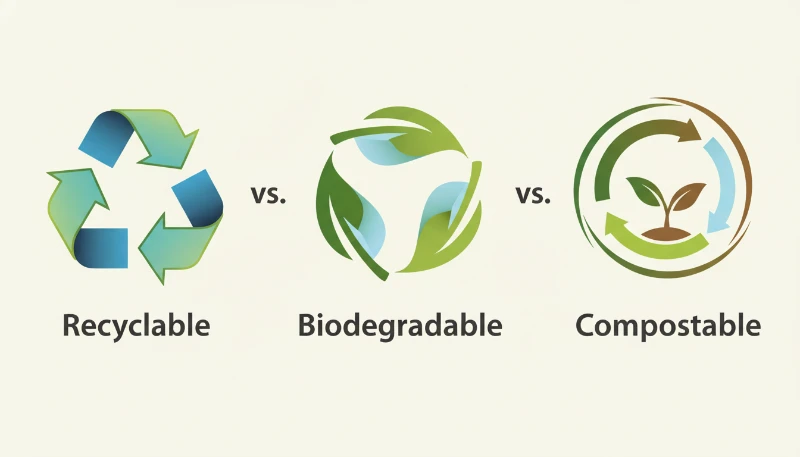
Is afvalvrij spuitgieten haalbaar?
Met hotrunners, een geoptimaliseerd ontwerp en maalgoed is vrijwel geen afval haalbaar—maar werkelijk afvalvrij produceren is de kosten zelden waard. Ik leg uit wat daadwerkelijk mogelijk is. Hotrunnersystemen elimineren spuit- en aanspuitkanaalafval volledig, maar zijn geen universele oplossing. De initiële kosten zijn 2-3x hoger dan bij koude aanspuitsystemen en ze zijn beperkt tot bepaalde materiaaltypen. U kunt niet eenvoudig van kleur of materiaal wisselen en de onderhoudscomplexiteit neemt aanzienlijk toe. Voor productie van één materiaal in grote volumes zijn hotrunners zinvol. Optimalisatie van het onderdeelontwerp vermindert materiaalgebruik door wanddiktes te reduceren, onnodige kenmerken te elimineren en aanspuitlocaties te optimaliseren.
Met slimme ontwerpwijzigingen heb ik 20-30% materiaalbesparing gezien. Gebruik eindige-elementenanalyse om spanningsconcentraties te vinden en wanddiktegradiënten te optimaliseren. 100% maalgoed gebruiken is theoretisch mogelijk, maar praktisch lastig. Elke verwerkingscyclus verslechtert de materiaaleigenschappen, totdat de kunststof niet meer aan de prestatie-eisen voldoet. De meeste processen halen 80-90% maalgoed voordat kwaliteitsgrenzen worden bereikt. Geavanceerde procesregeling beperkt uitval via realtimebewaking en gesloten terugkoppeling. Caviteitsdruksensoren, smelttemperatuurbewaking en dimensionale meetsystemen signaleren problemen voordat schroot ontstaat. Investeringen in Industry 4.0 verlagen afval en verbeteren kwaliteit. Economisch gezien kost de laatste 5-10% afvalreductie vaak meer dan de materiaalbesparing oplevert.
| Prioriteit | Strategie | Invloed op materiaalafval |
|---|---|---|
| 1. Elimineren | Heetkanaalsystemen verwijderen lopers volledig | 15-30% afvalreductie |
| 2. Minimaliseer | Optimaliseer procesparameters om afkeur te verminderen | 5-10% afvalvermindering |
| 3. Maalgoed | Vang gietkanalen, lopers en afgekeurde producten op en hergebruik ze | 10-20% materiaalherwinning |
| 4. Downcyclen | Verkoop onvervuild regrind aan compoundeerders | Inkomsten uit afvalstroom |
| 5. Energierecuperatie | Verbranding met energieopvang (laatste redmiddel) | 2-5% restafval |
Pak eerst de grootste afvalstromen aan — kanaalsystemen, minder afkeur en optimalisatie van maalgoed leveren het hoogste rendement. Echte nulafvalproductie is bij spuitgieten uiterst moeilijk. Er blijft materiaalverlies door spoelen, opstartuitval, kleurwissels en machineonderhoud, maar u kunt dichtbij komen. Praktische hiërarchie: 1. Elimineren — gebruik heetkanalen en verminder materiaalafval met 15–30%. 2. Minimaliseren — optimaliseer spuitgietprocesparameters om afkeur te verminderen.
Elke 1% minder uitval is pure winst. 3. Maalgoed — vang aanspuitingen, kanalen en afwijkende onderdelen op en hergebruik ze intern. 4. Downcycling — verkoop schoon maalgoed aan compoundeurs of fabrikanten met lagere specificaties. 5. Energieterugwinning — laatste redmiddel: verbranding met energieterugwinning voor niet-recyclebaar materiaal. Een goed beheerd maalgoedprogramma kan op schaal 8–15% grondstofkosten besparen. Bij 1.000 ton per jaar en gemiddeld $2/kg is dat $16.000–$30.000 per jaar, plus lagere afvalkosten. Vaak wordt ook het ISO 14001-aspect gemist.
Als uw faciliteit ISO 14001 gecertificeerd is (zoals de onze), ondersteunen uw afvalreductiemetrieken direct uw naleving van het milieumanagementsysteem en kunnen ze een onderscheidende factor zijn bij audits en klantevaluaties.
"Hergemalen materiaal heeft doorgaans een 5-15% lagere treksterkte dan nieuw kunststof"True
Mechanisch malen en opnieuw verwerken breekt polymeerketens, waardoor het molecuulgewicht en de mechanische eigenschappen afnemen. Deze degradatie is goed gedocumenteerd en varieert per materiaaltype en verwerkingsomstandigheden.
"Zodra maalsel één materiaaltest doorstaat, kunt u dezelfde machine-instellingen blijven gebruiken als voor nieuw granulaat."False
Regrind verandert vaak de viscositeit, vochtgevoeligheid en cosmetisch gedrag, dus de mengverhouding, droging en procesinstellingen moeten batch voor batch worden geverifieerd en gedocumenteerd.
Het begrijpen van deze waar/onwaar verschillen helpt spuitgieters veelgemaakte hermalingsfouten te vermijden en effectievere afvalreductiestrategieën in hun operaties te implementeren. In onze ervaring met het verwerken van 400+ materialen over 47 machines in Shanghai, komt het verschil tussen een succesvol hermalingsprogramma en een dat kwaliteitsproblemen veroorzaakt neer op procesdiscipline: consistente testen, juiste materiaalsegregatie en strikte naleving van maximale hermalingsratio’s voor elke toepassingsklasse. We zien de meest voorkomende faalmodus in bedrijven die met goede intenties beginnen maar geleidelijk hun kwaliteitscontroles laten verslappen omdat productiedruk voorrang krijgt op materiaaltestdiscipline.
"Hotrunnersystemen kunnen 90% van het spuitgietafval elimineren"True
Heetkanalen elimineren spruw- en loopkanaalafval, wat normaal gesproken 25-40% van het totale materiaalgebruik vertegenwoordigt. In combinatie met geoptimaliseerd onderdeelontwerp en gebruik van regranulaat is een afvalreductie van 90% haalbaar.
"U kunt bij toepassingen met maalgoed alle soorten kunststof met elkaar mengen"False
Het mengen van incompatibele kunststoffen veroorzaakt verontreiniging die eigenschappen aantast en apparatuur kan beschadigen. Verschillende kunststofsoorten hebben incompatibele chemische structuren, verwerkingstemperaturen en thermische uitzettingscoëfficiënten.
Veelgestelde vragen
Welk percentage regranulaat kan ik veilig gebruiken zonder de onderdeelkwaliteit te beïnvloeden?
Voor niet-kritische toepassingen kunt u veilig 20–30% maalgoed gebruiken zonder merkbare verandering van eigenschappen. Houd dit voor constructieve onderdelen onder 10%. Essentieel is bewaking van de MFI (Melt Flow Index): wijkt het mengsel van maalgoed en nieuw materiaal meer dan 15% af van de uitgangswaarde van nieuw materiaal, verlaag dan direct het aandeel maalgoed. Kwalificeer elk percentage vóór productie altijd met mechanische tests. In de praktijk werkt 15% maalgoed betrouwbaar voor de meeste standaardthermoplasten; technische kwaliteiten zoals PC of nylon moeten bij strikte MFI-bewaking op of onder 10% blijven.
Hoe voorkom ik verontreiniging in mijn hermalingsmateriaal?
Afgesloten opslagcontainers met duidelijke labels voor materiaaltype, kleur en datum vormen de eerste bescherming. Gebruik geen open bakken, want maalgoed neemt sneller vocht op dan granulaat. Pas first-in, first-out (FIFO) toe zodat maalgoed geen stof verzamelt of degradeert. Geef toevoerzones van granulatoren kleurcodes en verwerk nooit verschillende materialen zonder grondige reiniging bij een wissel. Eén PC-korrel in een ABS-run kan delaminatie veroorzaken en een hele partij afkeuren.
Kan ik regrind-materiaal gebruiken voor voedselverpakkingsapplicaties?
Over het algemeen, nee — niet zonder specifieke regelgevende goedkeuring. FDA 21 CFR en EU Verordening 10/2011 vereisen dat materialen voor voedselcontact strikte migratielimieten halen, en hermalingsmateriaal introduceert extra variabelen zoals meerdere warmtegeschiedenissen en mogelijke verontreiniging die de nalevingstesten bemoeilijken. Sommige rechtsgebieden staan post-industrieel hermalingsmateriaal toe in voedselcontacttoepassingen met volledige traceerbaarheidsdocumentatie en lotregistratie, maar u moet de naleving voor elk specifiek gebruik controleren met uw regelgevingsteam. Bij twijfel, gebruik altijd gecertificeerd virgin materiaal voor elke voedselcontact- of medische toepassing.
Wat is de gebruikelijke kostenbesparing bij invoering van een maalgoedsysteem?
De meeste bedrijven besparen 8–15% op grondstofkosten met een goed beheerd maalgoedprogramma. Als u jaarlijks 500 ton materiaal verwerkt tegen gemiddeld $2.50/kg aan harskosten, bespaart een maalgoedgebruik van 10% alleen al ongeveer $12,500 per jaar aan materiaalkosten. Voeg lagere afvalverwerkingskosten toe ($2,000–$5,000/year voor middelgrote bedrijven) en de totale besparing kan $15,000–$20,000 per jaar bedragen. De terugverdientijd van een eenvoudige granulator en een gravimetrisch mengsysteem bedraagt doorgaans 6–12 maanden, waarmee dit een van de snelste ROI-investeringen op de productievloer is.
Hoe vaak moet ik de materiaaleigenschappen van regranulaat testen?
Test elke regrind-batch voordat deze teruggaat naar de productie – geen uitzonderingen. Voer minimaal MFI-tests en visuele contaminatiecontroles uit voor elke batch. Voor kritieke toepassingen voeg je maandelijks trekproeven en impacttests toe. Houd een lopend logboek bij van MFI-waarden, omdat trends veel meer zeggen dan individuele metingen. Als de MFI consistent over batches omhoog begint te gaan, degradeert je regrind sneller dan verwacht en moet je het aantal toegestane warmtegeschiedenissen verminderen.
Heb ik speciale apparatuur nodig voor het verwerken van hergebruikt materiaal?
U hebt drie kernapparaten nodig: een granulator afgestemd op de productie van uw pers, een gravimetrische menger voor nauwkeurige menging van nieuw materiaal en regranulaat, en een ontvochtigingsdroger voor het regranulaat. De granulator is de grootste investering — reken op $5,000–$15,000 voor een kwalitatieve eenheid voor een middelgrote pers. Gravimetrische mengers kosten $3,000–$8,000. Veel werkplaatsen beginnen met volumetrisch mengen (goedkoper maar minder nauwkeurig) en stappen over op gravimetrisch zodra zij de betere consistentie van hun onderdelen zien. Sla de droger niet over — nat regranulaat veroorzaakt zilverstrepen en brosheid.
Kan ik nul afval bereiken in spuitgietoperaties?
Echt nul afval is bijna onmogelijk bij spuitgieten vanwege spoelcompound, opstartafval en materiaalverlies bij kleurwisselingen die niet effectief kunnen worden teruggewonnen. Je kunt echter 95–98% materiaalbenutting bereiken door heetkanaalsystemen, inline-granulatie en een gedisciplineerd hergebruiksbeheerprogramma te combineren. De overige 2–5% gaat meestal naar downcycling of energieterugwinning. ISO 14001-gecertificeerde faciliteiten volgen en rapporteren deze afvalmetrieken jaarlijks, en de meeste gebruiken ze als continue verbeterings-KPI’s jaar na jaar om incrementele winsten te behalen.
Welke materialen werken het beste voor hergebruiktoepassingen?
Thermoplasten met goede thermische stabiliteit zijn het beste voor hergebruik: polypropyleen (PP), polyethyleen (PE), ABS en polystyreen (PS) zijn allemaal uitstekende kandidaten omdat ze meerdere warmtegeschiedenissen verdragen met minimale eigenschapsdegradatie. Technische kunststoffen zoals nylon en polycarbonaat kunnen worden hergebruikt maar vereisen strikte vochtcontrole en MFI-monitoring na elke cyclus. Vermijd het hergebruiken van gevulde materialen zoals glasgevulde of vlamvertragende kwaliteiten meer dan één keer, omdat de vulstoffen onevenredig degraderen en hun effectiviteit verliezen. PVC en thermoharders kunnen niet effectief worden hergebruikt omdat ze degraderen in plaats van opnieuw smelten.
Klaar om afvalreductiestrategieën in uw spuitgietactiviteiten toe te passen? Het ervaren engineeringteam van ZetarMold kan u helpen efficiënte systemen voor maalgoed te ontwerpen en het materiaalgebruik op onze 45 spuitgietmachines te optimaliseren. Onze ISO-gecertificeerde fabriek heeft voor meer dan 400 materialen met succes gesloten kringlooprecycling ingevoerd. Neem vandaag nog contact met ons op om te bespreken hoe we met bewezen afvalreductietechnieken uw materiaalkosten kunnen verlagen en tegelijk de onderdeelkwaliteit kunnen handhaven.
Heetkanaalsystemen: een matrijstoevoersysteem dat kunststof in de matrijs gesmolten houdt en kanaalafval volledig elimineert. Heetkanalen kunnen 15–30% materiaalafval besparen ten opzichte van koudkanalen. ↩
Hygroscopische materialen: kunststoffen die gemakkelijk luchtvochtigheid opnemen, waaronder nylon, PET, PC en PBT, en daarom vóór verwerking beheerst moeten worden gedroogd om hydrolyse en verlies van eigenschappen te voorkomen. ↩
Smeltvloei-index: maat voor het vloeigemak van de smelt van een thermoplastisch polymeer, gestandaardiseerd in ASTM D1238. Wordt gebruikt voor kwaliteitscontrole om polymeerdegradatie in maalgoed vast te stellen. ↩