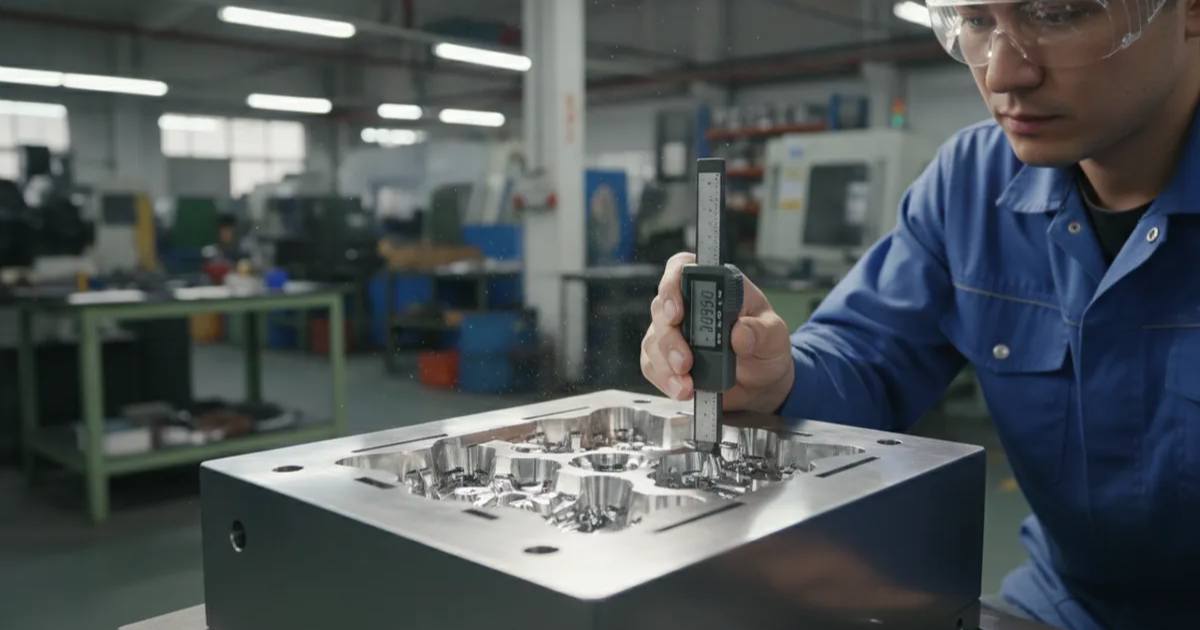
Selecting a reliable injection molding supplier in China is an engineering risk gate, not only a procurement workflow. Teams often move from sample approval to tooling after one good run and learn too late that process stability, material handling, or mold conditioning was never fully verified. This framework gives a practical due diligence structure to shortlist suppliers before committing to tooling and large NRE spending.
Before shortlisting starts, align design, quality, and sourcing on one technical definition of success. For every project, define:
- what “acceptable” repeatability means,
- what evidence is required before RFQ,
- and who can approve exceptions. That one step prevents teams from over-relying on first-run confidence or price appeal.
What does supplier due diligence mean in practical engineering terms?
Direct answer: It means proving, before tooling, that a supplier can produce parts that repeatedly meet your specification envelope under controlled process conditions.
In practice this has three buckets. First, capability proof: can the supplier hold critical features with your required tolerance stack and surface quality? Second, process control proof: can they measure, track, and react to drift before you notice defects in the field? Third, governance proof: can they show traceability, change control, and accountability when materials, tool updates, or operators change?
A useful way to avoid false confidence is to score technical proof and commercial terms separately. Do not trade repeatability for a lower quoted unit price.
Which process variables should an engineer establish and monitor first?
Direct answer: Start by locking a minimum closed set of machine, material, and mold variables, then track their drift from first pilot onward.
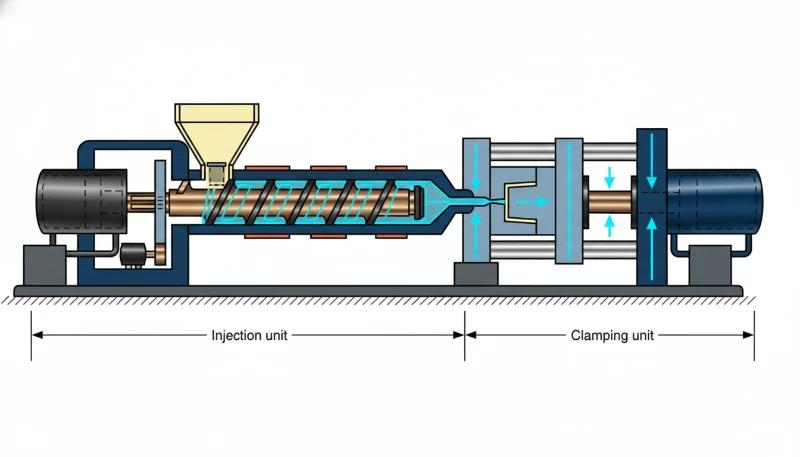
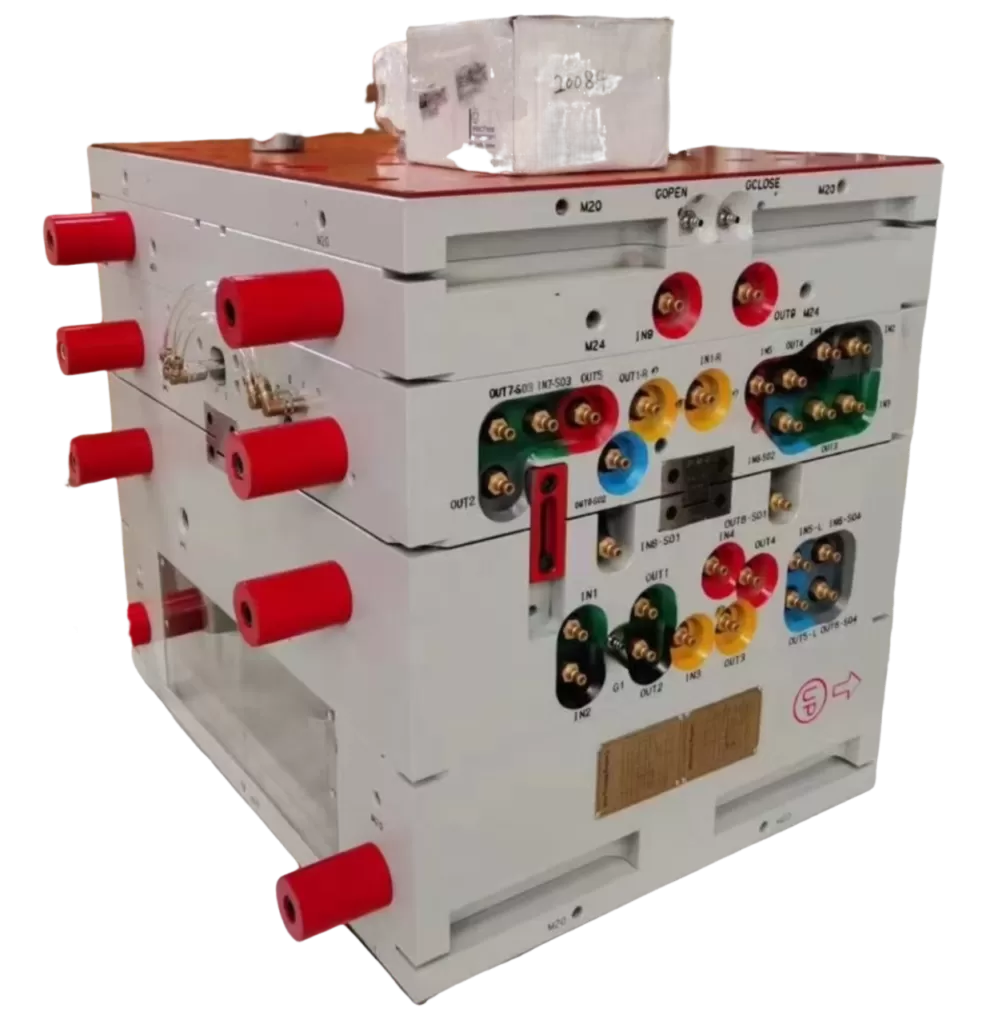
Core machine variables include barrel and nozzle temperature profiles, injection speed profile, hold pressure and time, cooling time, mold temperature, and cycle-time distribution. Material variables include incoming lot identification, moisture level, and dryer profile. Mold variables include venting behavior, ejection force, and cavity-specific balance.
Define a recipe table with target ranges, alarm bands, and owner. If you do not define this early, you are auditing a moving target.
Also set approval rules for adjustments. If any operator or planner can change a setting without documented reason, your repeatability risk rises immediately.
How can a team separate machine settings from material and mold behavior?
Direct answer: Keep everything else constant during trials, then isolate one factor family at a time.
Use controlled experiment design. Hold mold geometry and maintenance state constant for the first window. Run one matrix for machine parameters, one for material lot/conditioning, and one for mold-state checks.
By separating these loops, you can identify whether a dimension shift is caused by machine tuning, material lot variation, or mold imbalance. The NIST/SEMATECH approach to designed experiments is built exactly for this attribution problem.
For example, if drift appears across multiple cavities but disappears after cleaning vents and re-leveling clamp force, the change is likely mold-state related. If shift follows only one machine line, material conditioning may be the root cause.
What evidence shows that the process is repeatable rather than merely producing one good part?
Direct answer: Require stable control behavior and capability evidence across multiple lots, shifts, and no-change windows.
You want two signals together. First, statistical control behavior: control charts should remain stable with no unexplained spikes or drift during a stable period. Second, capability evidence: repeated Cpk/Ppk behavior against your critical dimensions over pilot and pre-production samples. Third, test specimen discipline: ASTM D3641-style specimens are useful for dimensional and physical consistency checks where relevant.
This is not a one-day audit. FDA process validation logic is still useful: objective evidence should cover the lifecycle from development through pilot and low-volume pre-production.
A single high Cpk point is not enough. You need evidence of recovery when disturbances happen, and then stable behavior once corrected.
What should teams check before requesting quotation or full process review?
Direct answer: Require technical readiness before commercial discussion, not after price terms are agreed.
Before RFQ, ask for signed process windows, calibration records, pilot lot reports from at least two shifts, material genealogy, NCR closure trends, and drawing-change governance. If these are not in place, request an engineering review first.
A supplier that cannot show repeatability readiness often shifts technical risk into your launch calendar.
Engineered diligence workflow and checklist
Use this in sequence; skipping steps is the most common failure mode.
- Define critical-to-engineer characteristics and acceptance windows.
- Collect baseline evidence for two normal production weeks.
- Run a capability audit with both supplier and project team participants.
- Compare supplier data to your own process risk limits.
- Score candidates with a shared matrix before quoting.
| Stage | What to verify | Minimum evidence | Go / No-go gate |
|---|---|---|---|
| 1) Baseline evidence | Lot records, process map, machine IDs | Signed traceability and dimensional trend | Pass only if complete |
| 2) Recipe control | Temperature, pressure, cycle, material prep limits | 95% chart coverage and defined alarm bands | Hold until stable |
| 3) Material robustness | Incoming lot checks and moisture controls | At least two lots reviewed | Re-test and escalate if unstable |
| 4) Mold behavior | Cavity balance and venting checks | Preventive maintenance and balance logs | Pause if imbalance repeats |
| 5) Repeatability | Two pilot lots + re-run | Consistency across lots | Stop if Cpk trend degrades |
| 6) Corrective action | CAPA logic and response time | Closed actions within SLA | Escalate if repeated open issues |
| 7) Communication | Change notification timing | Bilingual technical change log | Require communication test |
| 8) Commercial fit | Lead-time reliability and NRE policy | Signed commercial plan aligned with tech plan | Re-score if gaps remain |
Store all artifacts in one shared folder: recipes, SPC charts, calibration evidence, CAPA tickets, and corrective action outcomes. That archive is your dispute prevention mechanism during NRE budgeting.
How to shortlist safely before tooling and protect schedule
A technical scorecard should dominate early selection. Weight process capability at 45, mold maintenance transparency at 20, material and change-management maturity at 20, metrology at 10, and communication at 5.
If this score is not strong, do not advance tooling despite attractive pricing. You still need to send your first drawing package for a feasibility and drawing review discussion when a supplier passes the technical gates.
For in-process context, use these internal references:
- Injection molding process complete guide
- Injection mold complete guide
- Drawing-and-requirements review + quotation request
Use only verified facts in decision discussions.
- ZetarMold was founded in Shanghai in 2005 and has over 20 years of molding experience.
- The Shanghai operation runs 47 injection molding machines from 90T to 1850T.
- The team includes 8 senior engineers and 10+ QC specialists.
- The factory works with 400+ materials and certifications include ISO 9001, ISO 13485, ISO 14001, ISO 45001.
- In-house mold manufacturing supports 100+ mold sets per month.
These facts support practical evaluation around capacity fit, schedule realism, and engineering responsiveness.
Limitations and trade-offs
A neat-looking dashboard can still hide unresolved risk. Ask where exceptions hide: hidden regrind use, undocumented operator overrides, skipped re-verification after material change, and rushed mold repairs.
Common trade-offs are speed versus maturity, low cost versus audit depth, and short sample cycles versus stable long-run confidence. Document your acceptable risk level so everyone signs the same standard before release.
For example, a supplier with excellent first-week results but weak post-change revalidation should be marked for pre-production hold until the revalidation protocol is proven on the same tolerance stack.
Frequently asked questions
FAQ 1: Can I shortlist from one pilot lot only?
A single lot is a warning signal only. Ask for a second lot or shift confirmation and clear re-run checkpoints.
FAQ 2: What sample size is enough for capability proof?
No single number fits all. Use your critical feature tolerance, risk level, and confidence requirements to set the sample design.
FAQ 3: Is Cpk above 1.33 always required?
Not always. It is a useful benchmark, but final thresholds should follow product risk and your quality policy.
FAQ 4: When should a supplier be rejected early?
When repeatability evidence is repeatedly weak and root-cause closure is delayed beyond agreed correction windows.
FAQ 5: Where can these methods be referenced?
- NIST statistical methods
- FDA process validation concept
- ASTM D3641 specimen practice
- ISO 20457 tolerance framework
Need a drawing-and-requirements review before committing tooling? Send your first drawing package and required controls for engineering feasibility and quotation discussion at https://zetarmold.com/contact-us/.