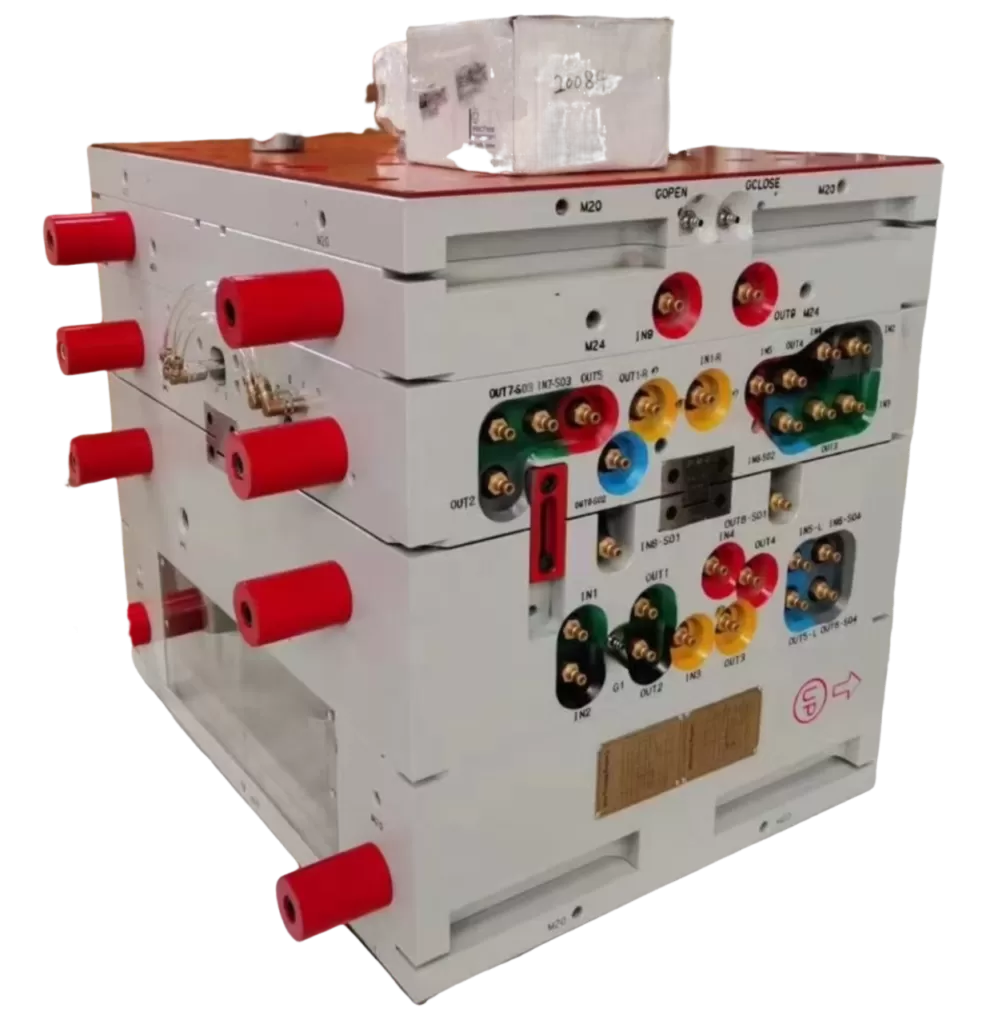
Developing an injection mold in China without a clean ownership and handover boundary is one of the most frequent roots of project friction. Tooling teams can pass initial tests, yet disputes appear when trial approval, change requests, and rework ownership are interpreted differently. The highest cost overruns are often not from hardware complexity alone, but from unclear responsibility maps.
A practical rule is simple. Before mold development proceeds from design to cutting and from cutting to pilot production, decide exactly what each party owns, who may modify what, who approves changes, and where acceptance ends. This contract-like discipline protects schedule confidence and reduces later legal and production escalation.
For technical context, review the process foundations first: Injection molding complete guide and Injection mold complete guide. Then layer this ownership framework on top of engineering execution.

What should a buyer confirm before mold development starts?
Quick answer: confirm ownership of design data, tooling rights, process knowledge, and acceptance responsibility in a single signed matrix before sample cutting begins.
Do this as a practical baseline:
- Ownership scope: CAD files, mold design files, process settings, trial reports, and inspection data.
- Usage rights: where the mold can run, how it can be reassigned, and whether parameter history can be reused.
- Change authority: who can approve revisions after sampling and after transfer.
- Acceptance rules: what defects are repair defects, what are process faults, and who pays for each category.
If any line item is undefined, you are inviting scope drift and delay claims. A safer pattern is a RACI-style table for each project gate with owner, reviewer, approver, and signed evidence file.
What is an injection mold ownership agreement in practical engineering terms?
Quick answer: it is a technical responsibility map, not only legal wording.
The most useful version is structured by gate, because mold projects change risk from design to tooling, to DFM checks, pilot, and then stable production. At every gate, assign what can be accepted, what must be corrected, and which artifact proves transfer.
A practical clause set usually includes:
- Design-to-mold transfer: acceptance of 3D model, drawing, and die-set list.
- Tooling transfer: how core, cavity, plates, and ejector systems are physically handed over.
- Parameter custody: ownership of valid injection profiles and change log.
- IP and confidentiality: whether documentation can be shared inside the buyer network.
- Post-trial obligations: obligations for pilot failure, early drift, and repeat failure in transfer.
A strict clause set may slow first approvals but greatly reduces hidden redesign after mass production starts. For complex parts, this controlled delay is usually cheaper than emergency field rework.
Which process variables should an engineer establish and monitor?
Quick answer: lock a stable list of variables, define limits, and review drift at every gate.
Engineering teams often confuse what can be changed with what must be reported. Variables are measurable proof items; decision rights are governance.
A baseline list should include:
| Variable | Why it matters | Where to monitor | Acceptable evidence |
|---|---|---|---|
| Melt temperature | Affects flow, sink, and weld behavior | Machine controller and data logger | Stable trend with alarm limits |
| Mold temperature | Controls shrink and dimensional repeatability | Thermocouple logs and mold inspection | Repeatable cavity temperature map |
| Injection pressure and speed | Influences fill quality and short-shot risk | Shot trace and pressure curve | DOE baseline with repeated runs |
| Holding pressure/time | Influences cavity packing and void prevention | Control trace + weight sampling | Stable repeat after change sequence |
| Cooling time and die thermal balance | Affects warpage and dimensional drift | Timer and thermal distribution checks | Similar profile across test points |
| Clamp/cling force | Prevents flash and ejection shift | Load feedback and alarm events | No upward trend during extended runs |
NIST guidance supports designed experiments, control charts, and capability analysis to measure variation in a disciplined way. Use these methods before approving final settings.
Authority references used:
How should a team separate machine settings from material and mold behavior?
Quick answer: treat machine profile, material lot, and mold build as three separate evidence dimensions and never blame only one before proving the other two are stable.
Most repeatability confusions come from mixed causality. A trial can pass under one machine and fail in transfer when environment or lot condition changes. Split proof as:
- Freeze the machine profile for a chosen machine family and version-control it.
- Freeze the material lot and preconditioning method and track lot-level evidence.
- Track mold maintenance state, polishing condition, and wear-sensitive inserts separately.
If variation remains after these are fixed, the root cause is usually sequence control, not hidden mold design issues.
ISO 20457 helps define acceptance and tolerance context for molded parts, which improves communication between buyer and supplier teams when setting the boundary between process adjustment and design correction.
What evidence shows that the process is repeatable rather than merely producing one good part?
Quick answer: repeatability is proven by repeated qualified runs that meet predefined acceptance criteria under controlled change conditions.
One good run shows feasibility. Repeatability requires multiple lots, operator changes, and checkpoint sign-off. A stable process is shown when:
- The same recipe can be repeated across multiple lots.
- Warnings are reviewed and corrected in sequence.
- Mold maintenance checkpoints are complete.
- Warning limits do not drift before gate sign-off.
FDA guidance defines process validation as evidence across lifecycle that a process consistently meets requirements. In practice, use this logic: Stage 1 baseline, Stage 2 pilot stress, Stage 3 pre-production proof.
If a single change appears to fix a visible issue, keep traceability and run additional cycles before acceptance.
What should buyers verify before requesting a quotation or process review?
Quick answer: request a pre-quotation package that proves ownership and reproducibility, not only drawings and target dates.
Before requesting quotation, require:
- A signed ownership matrix with revision date.
- Process-variable sheet with limits and DOE plan.
- Gate acceptance rules and defect categories.
- Material declaration, quantities, and target production environment.
- First-article acceptance rule for dimensional, visual, and functional checks.
If the supplier only sends rough drawings and verbal commitments, this is a warning signal. Ask for review meeting and correction plan before finaling price.
Common shortcuts that create false confidence or hide variation
Common shortcuts save time but hide risk:
- Showing only good photos and keeping batch data private.
- Using verbal approvals instead of gate signatures.
- Changing multiple parameters at once without controlled DOE.
- Skipping gate sign-off and maintenance checkpoints.
- Reusing old DOE templates for new materials.
- Treating parameter files as informal notes, not controlled artifacts.
The safer approach is one extra controlled iteration. Faster now is more expensive than slower and traceable.
Factory Insight
- ZetarMold was founded in Shanghai in 2005 and has more than 20 years of molding experience.
- The Shanghai operation runs 47 injection molding machines from 90T to 1850T.
- The team includes 8 senior engineers and 10+ QC specialists.
- ZetarMold works with 400+ materials and holds ISO 9001, ISO 13485, ISO 14001, and ISO 45001 certifications.
- In-house mold manufacturing supports 100+ mold sets per month.
Use these facts as factual context, not as blanket guarantees for every project.
Printable engineering checklist (ownership and repeatability)
| Phase | Decision required | Evidence to attach | Sign-off |
|---|---|---|---|
| Quote readiness | Ownership matrix complete | Scope list and signature block | Buyer and supplier leads |
| Sample plan | Variable set and limits frozen | Variable sheet and DOE matrix | Buyer engineer + supplier engineer |
| Prototype | First-article acceptance boundaries | Trace charts and defect map | QA + program manager |
| Pilot | Repeatability proof | Trend charts and material logs | Buyer and supplier |
| Release | Liability and correction path | Closed change log and rework rule | Director-level review |
| Transfer | Data rights and archive rights | Final archive index and rights statement | Operations/legal |
FAQ
Q1: Can we quote with only a drawing and verbal approval?
No. A drawing is required, but ownership rights, data custody, and revision responsibility are required for stable execution.
Q2: Who owns parameter adjustments after first sampling?
Ownership should be defined by contract: either supplier proposes and buyer approves, or shared approval is required. Both options must be documented.
Q3: Is one successful pilot enough to release the mold?
No. A single successful pilot proves feasibility only. You still need repeated controlled runs at planned conditions.
Q4: Do we include SPC and process files in ownership rights?
Yes. In most disputes, ownership over process history is as important as ownership over hardware.
Q5: What is the fastest way to avoid later disputes?
Start with a signed ownership matrix and request a drawing review before commercial negotiation.
Drawing-review and quotation request CTA
If your goal is cleaner handover, lower change friction, and reliable repeatability, request a drawing review first.
Send your drawing package, material constraints, and planned run profile to Contact us for mold ownership and process review. A structured review helps lock ownership zones, acceptance boundaries, and evidence format before quotation commitment.