Buying molded parts from a China supplier is not only a price exercise. Before you send drawings, material targets, tolerances, annual volume, or RFQ details, you need to know whether the supplier can control the process you are asking them to quote.
Good due diligence looks at evidence, not confidence. A factory may show clean machines, attractive sample parts, and a fast quotation, yet still lack the discipline to separate molding variables, mold condition, material behavior, and measurement error. The goal is not to find a perfect supplier. The goal is to find a supplier whose limits are visible early enough to manage.
This guide is written for engineers, procurement teams, and product owners who need a practical way to qualify a China injection molding supplier before the commercial process goes too far.
Key Takeaways
- Treat supplier due diligence as a process-control review, not only a factory audit.
- Ask for evidence that separates machine settings, mold behavior, material condition, and inspection method.
- One good sample is useful, but repeatable production evidence is more important.
- Check whether the supplier can explain trade-offs before asking for aggressive cost or lead-time targets.
- Use a short RFQ gate so drawings, tolerances, and quality expectations are not shared without context.
- A qualified supplier should be able to discuss risks plainly, not only promise capability.
What Does China Injection Molding Supplier Due Diligence Mean in Engineering Terms?
China injection molding supplier due diligence means checking whether the supplier can define, run, measure, and improve the molding process that your part requires. It is not just checking a business license, machine list, or sample room.
Start with the part function. Is the part cosmetic, structural, sealing, medical-adjacent, electrical, moving, or assembled with tight interfaces? That answer changes the level of process evidence you need. A decorative cover may require color control and surface inspection. A gear, latch, connector housing, or fluid path component may require dimensional stability, material traceability, and a clear measurement plan.
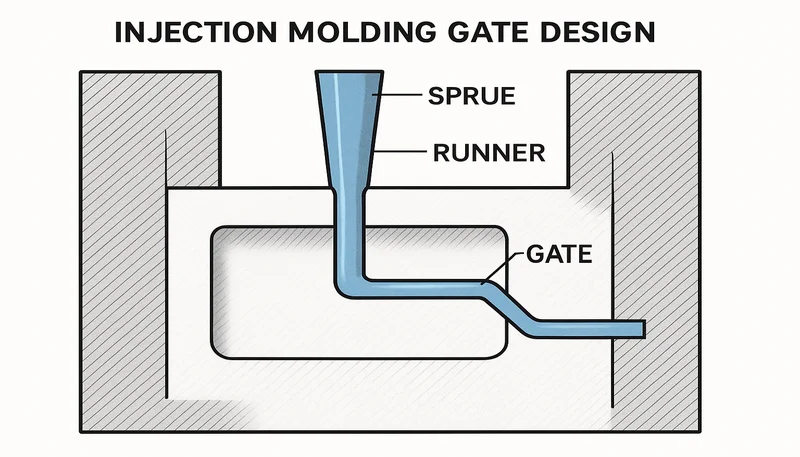
Then look at the process route. A practical review connects part geometry, gate strategy, material drying, melt temperature, mold temperature, packing profile, cooling time, ejection, inspection, and packaging. If the supplier cannot describe that chain, the quotation may be based on assumptions rather than manufacturable risk.
For basic process context, a buyer should understand the main steps in the injection molding process guide before judging a supplier response. The same drawing can behave very differently when resin grade, wall thickness, flow length, gate location, and cooling layout change.
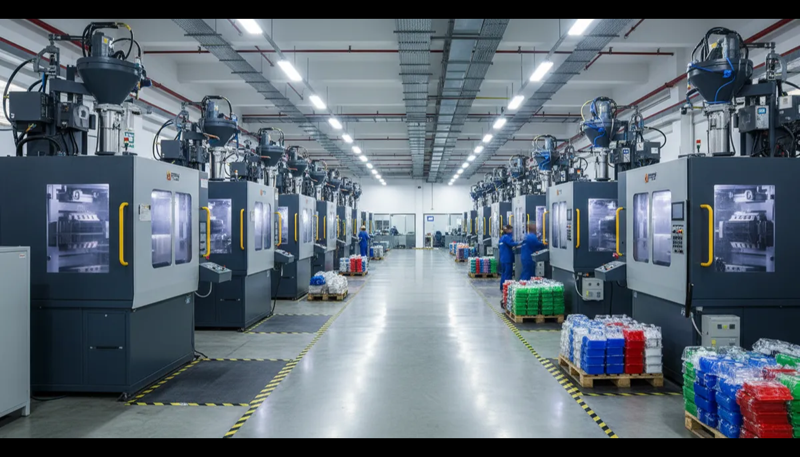
Due diligence should also define what is not yet proven. Early supplier claims often mix proven capability, past experience, and optimistic estimates. Keep those categories separate. A molded sample from another project does not prove your mold will fill evenly. A machine range does not prove your specific part will run in a stable process window1. A certificate does not replace dimensional evidence.
TRUE: A clean production floor is useful evidence, but it is not enough to qualify a supplier. Explanation: Floor condition can support discipline and organization, yet process records, measurement methods, and repeatability data are needed before technical risk is understood.
FALSE: The lowest first quotation usually identifies the most efficient supplier. Explanation: A low quote may omit mold risk, inspection time, material conditioning, engineering review, rework allowance, or realistic production yield.
Which Process Variables Should You Ask the Supplier to Establish?
Ask the supplier to identify the variables that will be controlled, recorded, and adjusted during trial and production. A serious answer should include both machine settings and part-quality responses.
At minimum, discuss melt temperature, mold temperature, injection speed, transfer position, holding pressure, holding time, cooling time, screw recovery, cushion, clamp force, drying conditions, and cycle time. These are not just numbers on a setup sheet. They are levers that influence filling, shrinkage, warpage, flash, sink marks, weld lines, voids, and dimensional repeatability.
The supplier should also explain which variables are critical for your geometry. Thin ribs may be sensitive to fill speed and venting. Flat housings may be sensitive to packing balance and cooling. Glass-filled materials may need attention to fiber orientation and wear. Moisture-sensitive resins may need drying discipline before molding.
This is where statistical thinking matters. NIST/SEMATECH explains that designed experiments, control charts, capability analysis2, and related methods help teams understand and control variation source. You do not need a full statistical package for every project, but the supplier should know how variation will be observed instead of guessed.
Control check: Process-variable evidence to request
| Data to request | Why it reduces risk |
|---|---|
| Capability study | Shows variation against the tolerance |
| Material certificates | Links each lot to the resin grade |
| Maintenance log | Exposes tool condition before the run |
A useful supplier will not promise that every variable is equally important. They will rank likely drivers and say what evidence is needed. For example, they may recommend a short trial matrix around packing pressure and cooling time, then inspect critical dimensions after parts stabilize. That is more useful than a generic statement that the process is controlled.
How Do You Separate Machine Settings From Material and Mold Behavior?
Separate them by asking the supplier to connect each quality result to a likely cause, then prove or disprove that cause with controlled checks. Machine adjustment alone cannot explain every molded-part problem.
A mold can cause imbalance, flash, sticking, poor venting, cooling variation, and cosmetic defects. Material can introduce moisture, viscosity variation, color variation, contamination, or batch-to-batch changes. Machine settings can hide some of these issues for a short trial, but they usually cannot remove them permanently.
The mold review should include parting line condition, gate location, runner balance, venting, cooling layout, ejector layout, steel selection where relevant, and maintenance access. Buyers can review the fundamentals in the injection mold guide before comparing supplier comments. The supplier does not need to disclose every proprietary method, but they should be able to discuss the practical limitations of the tool design.
Material review should include resin grade, drying requirement, regrind policy if any, colorant control, certificate availability, and storage practice. ASTM D3641 concerns injection-molded test specimens of thermoplastic molding and extrusion materials source, which is a reminder that specimen preparation and molding condition matter when material behavior is being compared.
A practical way to separate causes is to ask for a cause-and-check table during trial planning:
| Symptom | Possible machine cause | Possible mold cause | Possible material cause | First check |
|---|---|---|---|---|
| Short shot | Low fill speed or pressure limit | Poor venting or thin steel-safe area | High viscosity or moisture issue | Fill study with pressure record |
| Flash | Excess clamp or pack issue | Parting line damage or poor shutoff | Material viscosity change | Parting-line inspection and pack reduction test |
| Warpage | Uneven packing or cooling time | Cooling imbalance or gate location | Shrinkage variation | Dimensional map after conditioning |
| Sink mark | Low hold pressure or short hold time | Thick section or poor gate freeze control | Material shrink behavior | Gate-freeze and section review |
The table should not be treated as a final diagnosis. It is a disciplined starting point. If the supplier jumps directly from defect to conclusion without a test, you may get a fast answer but not a reliable one.
What Evidence Shows Repeatability, Not One Good Shot?
Repeatability is shown by multiple parts, made under controlled conditions, measured with an agreed method, and compared against predetermined requirements. One good part only proves that one good part was possible.
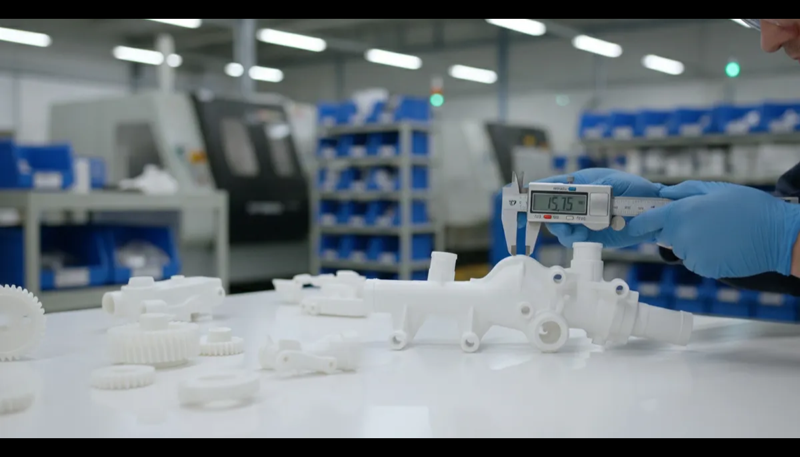
Ask for trial records that show stable settings, sample timing, and measured results. The number of samples depends on part risk and stage, but the logic is consistent: define the requirement, run the process, measure parts, and look for variation. If the drawing has tight tolerances, ask how the supplier will handle measurement uncertainty and fixture repeatability.
For regulated or high-risk industries, the FDA process validation guidance describes using objective evidence across the product lifecycle to show that a process can consistently deliver results meeting predetermined requirements source. Even when your product is not regulated, the principle is useful: repeatability should be demonstrated over time, not assumed from a first article.
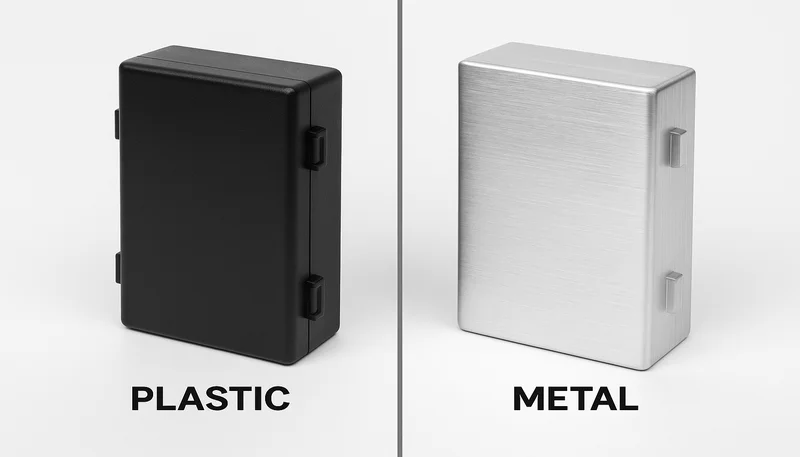
A supplier should be comfortable discussing first-article inspection3, in-process checks, final inspection, and what happens when data drifts. ISO 20457 addresses tolerances and acceptance conditions for plastics moulded parts source, so tolerance discussion should be tied to molded-part reality rather than metal-part assumptions.
TRUE: Process records are more valuable when they include both settings and measured part results. Explanation: Settings show how the machine was run, while measured results show whether the part response stayed inside the agreed requirement.
FALSE: Passing a first sample automatically means the production process is ready. Explanation: A first sample can miss warm-up effects, material-lot variation, tool wear, operator differences, and measurement-system problems.
Which Shortcuts Create False Confidence?
The most common shortcut is judging supplier capability from a sample that is not linked to records. A sample can be polished, selected, reworked, or made under special attention. It may still be useful, but it should not carry more meaning than the evidence behind it.
Another shortcut is asking for a final price before the supplier understands the tolerance stack, material risk, cosmetic requirement, and inspection load. This creates pressure to quote around missing assumptions. Later, the missing assumptions return as tooling changes, quality disputes, or lead-time delays.
A third shortcut is accepting broad statements such as “we have experience with this material” without asking what grade, drying condition, tool type, wall thickness, and quality requirement were involved. Material families are not enough. A glass-filled nylon housing, clear polycarbonate lens, and soft-touch overmold each create different risks.
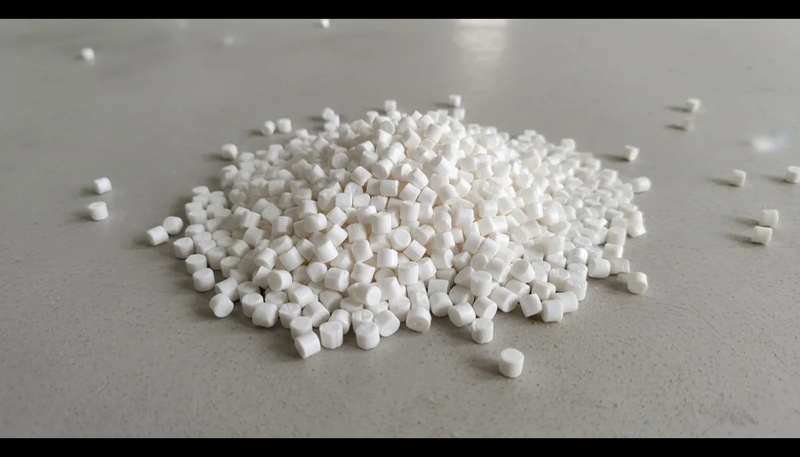
Be cautious when a supplier cannot explain limits. Every factory has limits. Machine tonnage range, mold shop capacity, engineering bandwidth, inspection resources, and material experience all create boundaries. A supplier who explains limits early is often easier to manage than one who accepts every requirement without discussion.
Also avoid treating certificates as complete proof. Certifications can support a quality system, but they do not prove that one project has an acceptable process. Ask how the system appears in daily work: incoming material checks, mold maintenance records, trial reports, nonconformance handling, and corrective action.
A final shortcut is skipping the mold-risk conversation because the buyer wants a fast RFQ. If the part needs tight flatness, sealing, snap-fit control, or cosmetic texture, the supplier should identify likely mold-design trade-offs before committing to price and schedule. This is especially important when the quotation includes both mold manufacturing and production molding.
Factory Insight: What ZetarMold Checks Before Quoting Risk
ZetarMold was founded in Shanghai in 2005 and has more than 20 years of molding experience. The Shanghai operation runs 47 injection molding machines from 90T to 1850T, and the team includes 8 senior engineers and 10+ QC specialists. Those facts matter only when they are used to ask better engineering questions, not as decoration.
In a due-diligence review, the first practical question is fit. Does the part belong on a small precision machine, a high-tonnage press, or somewhere between? Oversizing or undersizing the press can affect process stability, cost, and scheduling. The next question is mold readiness. If the in-house mold manufacturing operation supports 100+ mold sets per month, the engineering gate still needs to identify which details deserve attention before steel is cut.
Practical check: ZetarMold quotation-risk controls
| Control point | What to verify before release |
|---|---|
| Process parameters | Settings recorded for the approved sample |
| Inspection plan | Method and frequency tied to your drawing |
| Change control | Written approval before a material or tool change |
ZetarMold works with 400+ materials and lists ISO 9001, ISO 13485, ISO 14001, and ISO 45001 certifications. For a buyer, the useful action is to connect material selection with processing risk. Moisture, shrinkage, flame rating, wear, color, and application environment should be reviewed before the RFQ is treated as a purchasing formality.
A supplier should be willing to say, “This tolerance needs measurement planning,” or “This wall transition may create sink,” or “This resin choice may require drying control.” That is not negative. It is the kind of early friction that prevents expensive surprises.
What Should You Verify Before Requesting a Quotation or Process Review?
Before requesting a quotation, verify the information needed to make the quote technically honest. This protects both sides and reduces rework after the first price is issued.
Start with drawings, 3D data, material target, annual volume, cosmetic class, tolerance priorities, assembly interfaces, testing requirements, packaging needs, and expected launch timing. Mark critical-to-function dimensions clearly. If you do not know which dimensions are critical, ask the supplier to help identify likely risk areas before quoting.
Because this is a supplier and sourcing topic, use a structured comparison process like the injection molding supplier sourcing guide instead of comparing only unit price. Procurement should compare quotation assumptions, tooling approach, inspection scope, communication quality, and risk disclosure.
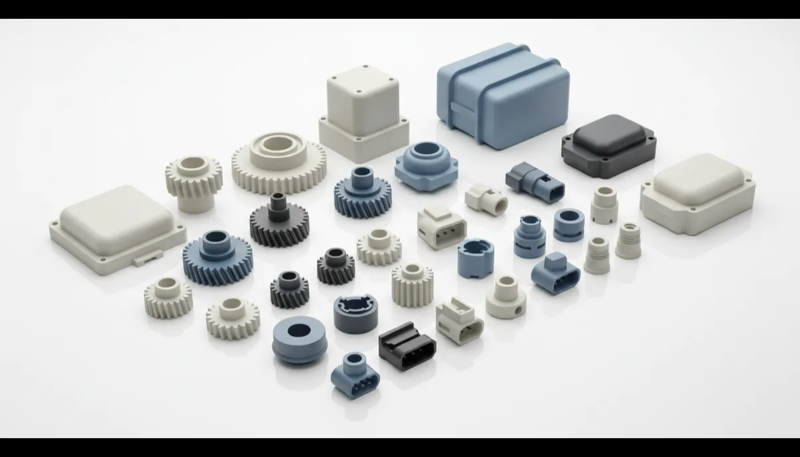
After the fourth image, keep the gate simple. A long audit form is often ignored, but a short engineering gate is hard to bypass.
| RFQ gate item | Pass signal | Risk if missing |
|---|---|---|
| Critical dimensions identified | Drawing notes or buyer-supplier review | Quote ignores inspection cost and process risk |
| Material condition defined | Resin grade, drying need, and traceability expectation | Trial result cannot be repeated reliably |
| Mold-risk comments received | Gate, cooling, ejection, and parting-line risks discussed | Tool changes appear after price approval |
| Measurement method agreed | Fixture, gauge, sample timing, and report format known | Dimensional disputes after sampling |
| Quotation assumptions stated | Lead time, cavity count, inspection scope, and exclusions visible | Low price hides later change requests |
If the project is ready for review, send drawings and requirements through the approved engineering review and quotation request. A good RFQ package does not need to be perfect, but it should make the main risks visible enough for the supplier to respond honestly.
FAQ
Is a factory audit enough to qualify a China injection molding supplier?
No. A factory audit is useful, but it should be paired with process records, mold-risk review, material handling checks, and measurement evidence. The audit tells you whether the supplier looks organized; the engineering review tells you whether the project can be controlled.
How many samples are needed before trusting a supplier?
There is no universal number. The sample plan should match part risk, tolerance difficulty, material sensitivity, and production volume. What matters is whether the samples are tied to stable settings, clear measurement methods, and agreed acceptance criteria.
Decision check: How many samples are needed before trusting a supplier
| Stage | Practical guard |
|---|---|
| Quotation review | Cost drivers stated separately from assumptions |
| Tool build | Milestone dates with a named owner |
| Production ramp | First-article data before volume release |
Should I ask for a process window before the mold is built?
You can ask for the expected process window, but it will be an engineering estimate until the mold is trialed. The supplier should explain assumptions and identify which variables will be confirmed during sampling.
What if the supplier refuses to discuss process variables?
That is a warning sign. Some details may be proprietary, but a supplier should still be able to discuss critical variables, likely risks, inspection approach, and how repeatability will be checked.
Are ISO certificates enough for supplier due diligence?
No. Certificates can support confidence in a management system, but they do not prove that a specific part, mold, material, and inspection plan will meet requirements. Use certificates as supporting evidence, not as the whole qualification.
When should procurement request the final quote?
Request the final quote after the main engineering assumptions are visible. Cavity count, material, tolerance priorities, cosmetic needs, inspection scope, and lead-time expectations should be clear enough that the supplier is not guessing.
Footnotes
-
Process window is a defined range of molding conditions where the part can be produced within agreed quality limits. ↩
-
Capability analysis is a statistical method used to compare process variation with specified tolerance limits. ↩
-
First-article inspection is a documented check of initial production parts against drawing and specification requirements. ↩