Enjeksiyon kalıbı maliyetlerini tahmin etmek, eskiden bir tedarikçi teklifi için günlerce beklemek anlamına gelirdi. Enjeksiyon Kalıbı Maliyet Hesaplayıcımız size saniyeler içinde yaklaşık bir rakam verir — kalıp takımı, parça başına fiyat ve toplam proje maliyeti, paranın nereye gittiğini görebilmeniz için hepsi ayrıntılı olarak dökümlenmiştir.
Bu araç gerçek endüstri fiyatlandırma verilerine dayanmaktadır: kalıp taban maliyetleri boyut ve çelik kalitesine göre, kilogram başına malzeme fiyatları, pres tonajına göre makine-saat ücretleri ve hacim indirim eğrileri. Resmi bir teklifin yerine geçmez, ancak erken aşama kararlar almanız için yeterince yakın sonuçlar verir — hızlıca.
Enjeksiyon Kalıp Maliyet Hesaplayıcısını Nasıl Kullanırsınız?
Hesaplayıcı, 30 saniyeden kısa sürede eksiksiz bir maliyet dökümü üreten ücretsiz bir araçtır. Kalıp takım maliyetini, parça başına fiyatı ve toplam proje maliyetini yan yana görmek için parça boyutlarınızı, malzemenizi, kalıp tipinizi ve hacminizi girin. RFQ hazırlığı ve tedarikçi karşılaştırması için, enjeksiyon kalıplama tedarikçisi kaynak bulma kılavuzumuz yeterlilik ve ticari riski kapsar.
Enjeksiyon kalıplamanın daha geniş bir görünümü için, ana rehberimiz süreç temellerini, malzeme davranışını ve üretim kararlarını kapsar.
Hesaplayıcının üç girdi grubu vardır. Parça Tasarımı bölümünde, parça boyutunuzu, karmaşıklığınızı (alt kesimler, dişler, yan maçalar), yüzey işleminizi (SPI1/VDI standartları) [fn:1] [fn:2] ve tolerans sınıfınızı ayarlayın. Kalıp ve Üretim bölümünde, kalıp tipini (prototip alüminyum, üretim P20 veya sertleştirilmiş H13/S136), gözenek sayısını, reçineyi ve beklenen kalıp ömrünü seçin. Üretim Hacmi bölümünde, kaydırıcıyı yıllık miktarınıza sürükleyin — araç, 5K, 10K, 50K ve 100K adedin üzerinde hacim indirimlerini otomatik olarak uygular.
Tam maliyet dökümünü görmek için Tahmini Hesapla'ya tıklayın: kalıp imalat maliyeti, parça başına birim fiyat, parça başına malzeme maliyeti, tahmini çevrim süresi, parça başına amortize edilmiş kalıp maliyeti ve kendi hacminizde parça başına efektif fiyat.
Enjeksiyon Kalıp Maliyetini Ne Belirler?
Parça karmaşıklığı, boşluk sayısı, yüzey bitirişi ve kalıp çelik kalitesi dört maliyet belirleyicisidir. Tek boşluklu alüminyum prototip kalıp 1500 ila 5000 USD arasında; çok boşluklu üretim çelik kalıp kolayca 50.000 USD'yi aşar.
Malzeme seçimi de parça başı maliyeti önemli ölçüde değiştirir. PP veya ABS gibi standart reçineler $1.80–$2.50/kg iken, PEEK gibi mühendislik sınıfı malzemeler $55/kg veya daha fazladır. Boyut ve duvar kalınlığından kaynaklanan parça ağırlığı bu farkı katlar. Orta boy bir parça için 60 gramda, sadece PEEK malzeme maliyeti ~$3.80/enjeksiyon iken — PP için bu $0.14'dür.
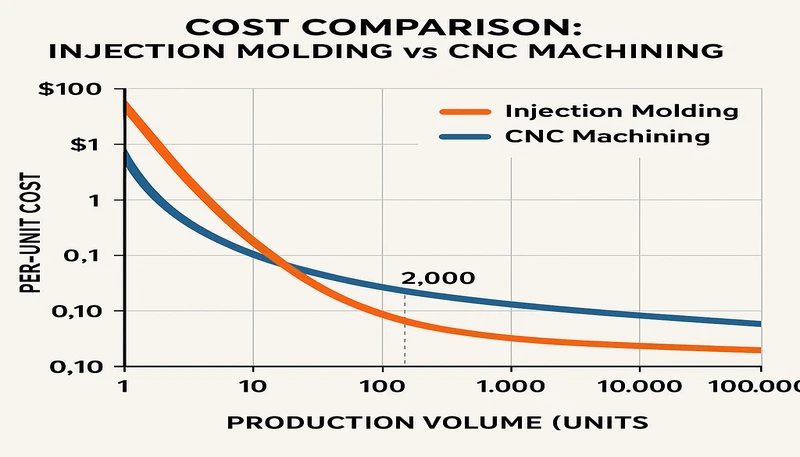
Hacim, enjeksiyon kalıplama ekonomisinde büyük dengeleyicidir. 20.000 dolarlık bir kalıbın maliyetini 100.000 parçaya böldüğünüzde parça başına sadece 0.20 dolar eklenir. 1.000 parçada ise aynı kalıp parça başına 20 dolar ekler. Zetar'da parça üretimi deneyimimize göre, sertleştirilmiş çelik bir kalıbın parça başı maliyetinin alüminyum kalıptan daha ucuz hale geldiği geçiş noktası genellikle 5.000 ile 10.000 birim arasındadır. Bu eşiğin altında, alüminyumun sağladığı kalıp tasarrufu daha kısa kalıp ömrünü dengeler. Üstünde ise, çelik kalıbın daha uzun hizmet ömrü ve daha sıkı toleransları net bir parça başı maliyet avantajı sağlar.
Çoklu boşluk düzenleri bu etkiyi daha da artırır: dört boşluklu bir kalıp, tek boşluklu bir kalıptan iki ila üç kat daha pahalı olabilir, ancak her döngüde dört parça üretir ve parça başına işleme maliyetini kabaca yüzde 75 azaltır. Yıllık 100.000'den fazla birim üreten programlar için, çoklu boşluklu sertleştirilmiş bir kalıptan elde edilen parça başına tasarruflar genellikle takım maliyeti primini ilk üretim sezonunda karşılar.
“Çok gözlü sertleştirilmiş çelik kalıp, tek gözlü bir kalıba kıyasla parça başına işleme maliyetini yüzde 75 azaltabilir.”Doğru
Doğru. Dört boşluk her döngüde dört parça üretir, bu nedenle makine-saat ücreti dört parçaya yayılır. Takım başlangıçta daha pahalıdır, ancak parça başına tasarruflar 50.000 birimin üzerindeki hacimlerde yatırımı geri kazandırır.
“Malzeme maliyeti, tüm hacim düzeylerinde enjeksiyon kalıplamadaki en büyük tek maliyet bileşenidir.”Yanlış
Yanlış. Düşük hacimlerde (5.000 parçanın altında), takım amortismanı parça başına maliyete hakimdir. Yüksek hacimlerde, işleme maliyeti (makine süresi ve işçilik) genellikle standart reçineler için malzeme maliyetini aşar.
Parça Boyutuna Göre Tipik Maliyat Kıyaslamaları Nelerdir?
Hızlı bir kontrol için, orta karmaşıklıkta, tek boşluklu bir üretim kalıbı için tipik kalıp takım aralıkları şöyledir (P20 çelik2, cilalı yüzey):
| Parça Boyutu | Tipik Kalıp Maliyet Aralığı | Döngü Süresi Tahmini |
|---|---|---|
| Küçük (< 50 mm) | $1.800 – $3.000 | 12–18 saniye |
| Orta (50–150 mm) | $3.200 – $5.500 | 20–30 saniye |
| Büyük (150–300 mm) | $6.000 – $10.500 | 34–44 saniye |
| Çok Büyük (> 300 mm) | $12.000 – $22.000+ | 50–66 saniye |

Bu aralıklar, bazı alt kesimler, standart yan hareket ve parlatılmış bir VDI 3400 yüzey işlemi3 [fn:3] ile orta düzeyde bir karmaşıklık varsayar. Çok gözlü düzenler, hassas toleranslar (artı veya eksi 0,05 mm'nin altında) veya dişli özellikler için vidalı çıkarma çekirdekleri eklemek, maliyetleri bir sonraki kademeye taşır. Yolluk atığını ortadan kaldıran ve çevrim süresini azaltan sıcak yolluk sistemleri, göz başına 3.000 ila 8.000 dolar ekler ancak 50.000 parçanın üzerindeki hacimlerde kısa sürede kendini amorti eder. İç alt kesimler için kaldırıcı mekanizmalar ve ters çekimli özellikler için katlanabilir çekirdekler, kalıp üreticilerinin duruma göre fiyatlandırdığı ek maliyet unsurlarıdır.
Parça Başına Maliyet Nasıl Hesaplanır?
Parça başına maliyet, malzeme, işleme ve genel giderlerin toplamıdır. Orta hacimdeki emtia reçineleri için tipik dağılım yaklaşık yüzde 30 malzeme, yüzde 50 işleme ve yüzde 20 genel giderdir. Hesaplayıcı, paranın nereye gittiğini görebilmeniz ve kendi özel programınız için en büyük maliyet düşürme kaldıracını belirleyebilmeniz için her bileşeni ayrı ayrı gösterir.
Malzeme maliyeti basit bir formülü izler: kilogram başına reçine fiyatı çarpı kilogram cinsinden parça ağırlığı çarpı yolluklar, sprü ve başlangıç ıskartasını hesaba katmak için 1.15 fire faktörü. Kg başına 2.50 dolar olan ABS ve 60 gramlık bir parça için malzeme maliyeti parça başına yaklaşık 0.17 dolar olur. Kg başına 4.00 dolar olan cam dolgulu naylona geçmek bunu parça başına 0.33 dolara iki katına çıkarır. Kg başına 55 dolar olan PEEK için malzeme tek başına atış başına 3.80 dolara ulaşır — aynı parça ağırlığında emtia PP'ye göre yirmi iki kat artış. İşte bu yüzden malzeme seçimi, özellikle daha ağır parçalar için parça başına fiyatlandırma üzerinde bu kadar dramatik bir etkiye sahiptir.
İşleme maliyeti; makine-saat oranı, çevrim süresi ve göz sayısı tarafından belirlenir. Formül şudur: makine-saat oranı 3600'e bölünür, saniye cinsinden çevrim süresiyle çarpılır ve göz sayısına bölünür. Saatte 75 dolarlık 75 tonluk bir pres, tek gözde 25 saniyelik çevrimlerle çalıştığında parça başına yaklaşık 0.52 dolara mal olur. Aynı presde dört gözlü bir kalıba geçmek, işleme maliyetini parça başına yaklaşık 0.13 dolara düşürür — yüzde 75'lik bir azalma. Zetar'da müşterilerin prototip tek gözlü kalıptan çok gözlü üretim kalıplarına geçtiklerinde bu tür tasarruflar elde ettiğini rutin olarak görüyoruz.
Genel giderler, kalite kontrol muayenesi, ambalaj malzemeleri, ikincil kesme veya montaj işlemleri ve lojistik elleçlemeyi kapsayacak şekilde, malzeme artı işleme maliyetinin üzerine tipik olarak yüzde 20 ila 30 ekler. Gelen malzeme muayene sertifikaları, ilk numune muayene raporları veya istatistiksel proses kontrol dokümantasyonu gerektiren tıbbi veya otomotiv parçaları için genel giderler yüzde 35 veya daha yükseğe çıkabilir. Hesaplayıcı, standart ticari sınıf üretimi kapsayan varsayılan yüzde 25 genel gider marjını kullanır.

“Alüminyum kalıplar, daha hızlı ısı yayılımı nedeniyle çelik kalıplara kıyasla çevrim sürelerini yüzde 15 ila 30 azaltabilir.”Doğru
Doğru. Alüminyum termal iletkenliği P20 çeliğinden yaklaşık dört kat daha yüksektir, bu da daha hızlı soğutma ve daha kısa çevrim süreleri sağlar. Bu avantaj, kalın duvar kesitlerine sahip parçalar için en önemlisidir.
“Sertleştirilmiş çelik kalıplar (H13/S136), herhangi bir enjeksiyon kalıplama projesi için her zaman en uygun maliyetli seçimdir.”Yanlış
Yanlış. 5.000 parçanın altındaki hacimlerde, sertleştirilmiş çeliğin daha yüksek takım maliyeti asla geri kazanılmaz. Alüminyum veya P20 takım, düşük ila orta hacimlerde daha düşük toplam program maliyeti sağlar.
Hesaplayıcı, %25'lik bir genel gider marjı uygular ve ardından hacim indirimleri ekler: 5.000 adette %5, 10.000'de %10, 50.000'de %15 ve 100.000 veya daha fazlasında %20. Bu eşikler, tedarikçilerin anlamlı parça başına indirimler sunmaya başladığı yaygın endüstri fiyatlandırma kademelerini yansıtır. Özel veya mühendislik reçineleri için, malzeme maliyeti toplam parça başına fiyatın daha büyük bir payını temsil ettiğinden hacim etkisi daha da belirgindir. İndirim eğrisi, çoğu durumda 200.000 adedin üzerinde düzleşir, çünkü baskın faktör takım amortismanından ziyade işleme maliyeti olur.
Ne Zaman Prototipten Üretim Kalıbına Geçmelisiniz?
Yıllık hacminiz 5,000 parçanın altındaysa ve tasarım hâlâ değişiyorsa, alüminyum prototip kalıbı neredeyse her zaman doğru tercihtir. Kalıp maliyeti çelikten yüzde 40 ila 70 daha ucuzdur, teslim süresi daha kısadır (tipik olarak çelik için 5 ila 8 haftaya karşı 2 ila 4 hafta) ve modifikasyonlar daha ucuzdur. Zetar'daki takım atölyemizde, basit geometri değişiklikleri için bir alüminyum kalıp boşluğunu bir gün gibi kısa sürede ayarlayabiliyoruz. Ödünleşim: kalıp ömrü tipik olarak 100,000 atışın altındadır, toleranslar daha gevşektir ve yüzey işleme seçenekleri sertleştirilmiş çelik kalıba kıyasla sınırlıdır [fn:2].
Alüminyum ayrıca ısıyı çelikten daha hızlı dağıtır; bu da çevrim sürelerini yüzde 15 ila 30 azaltabilir — kısa süreli üretim için anlamlı bir maliyet avantajı.
Kararlı bir tasarıma sahip, yılda 10.000 parçanın üzerindeki programlar için, P20 takım çeliğinden üretilmiş bir seri üretim çelik kalıbı ilk seride kendini amorti eder. Daha iyi yüzey işlemi, daha sıkı toleranslar, daha uzun kalıp ömrü ve çok boşluklu seçeneklerin tümü parça başına maliyeti düşürür. Yılda 50.000 veya daha fazla parçada, sertleştirilmiş çelik (H13 veya S136) uygun maliyetli hale gelir çünkü 500.000 ila bir milyonun üzerinde atışlık uzatılmış kalıp ömrü, yeniden takımlama duruş süresini ortadan kaldırır ve tüm üretim serisi boyunca tutarlı parça kalitesini korur.
Yıllık 200.000 birimin üzerinde üretilen parçalarda tek gözlü bir P20 kalıptan iki gözlü bir H13 kalıba geçerek toplam program maliyetlerini yüzde 30 ila 40 azaltan müşteriler gördük — daha yüksek kalıp yatırımı ilk üretim lotu içinde geri kazanılıyor.

Hassas Bir Enjeksiyon Kalıbı Teklifini Nasıl Alırsınız?
Kesin bir teklif, 3D modelinizi ve parça özelliklerinizi gönderdikten sonra genellikle 24 saat içinde geri verilir.
3D modelinizi ve gereksinimlerinizi gönderin, 24 saat içinde hassas, kalem kalem ayrıntılı bir teklif alın. Mühendislerimiz parça geometrisini değerlendirir, kalıp çeliği ve gözenek düzeni önerir ve hızlı bir şekilde bilinçli bir karar verebilmeniz için eksiksiz bir maliyet dökümü sunar.
Sıkça Sorulan Sorular
Sıkça Sorulan Sorular
Enjeksiyon kalıbı maliyet hesaplayıcısı ne kadar doğrudur?
Enjeksiyon kalıp maliyetleri parça boyutuna, karmaşıklığına ve kalıp kalitesine bağlı olarak geniş bir aralıkta değişir. Basit bir parça için tek boşluklu bir prototip alüminyum kalıp tipik olarak 800 ile 2.000 dolar civarında başlar. P20 çeliğinde orta karmaşıklıkta tek boşluklu bir üretim kalıbı genellikle küçük parçalar için 1.800 ile 3.000 dolar, orta parçalar için 3.200 ile 5.500 dolar ve büyük parçalar için kabaca 6.000 ile 10.500 dolar civarındadır. Dar toleranslı yüksek hacimli üretim için ekstra büyük çok boşluklu sertleştirilmiş çelik kalıplar (H13/S136) 30.000 doları aşabilir ve karmaşık yapılar için 60.000 doları+ bulabilir. Coğrafi konum, teslim süresi, doğrulama kapsamı ve numune alma dahil olması da fiyatlandırmayı etkiler. –bölüm 28
Bir enjeksiyon kalıbının tipik maliyeti nedir?
Enjeksiyon kalıp maliyetleri parça boyutuna, karmaşıklığına ve kalıp kalitesine bağlı olarak geniş bir aralıkta değişir. Basit bir parça için tek boşluklu bir prototip alüminyum kalıp tipik olarak 800 ile 2.000 dolar civarında başlar. P20 çeliğinde orta karmaşıklıkta tek boşluklu bir üretim kalıbı genellikle küçük parçalar için 1.800 ile 3.000 dolar, orta parçalar için 3.200 ile 5.500 dolar ve büyük parçalar için kabaca 6.000 ile 10.500 dolar civarındadır. Dar toleranslı yüksek hacimli üretim için ekstra büyük çok boşluklu sertleştirilmiş çelik kalıplar (H13/S136) 30.000 doları aşabilir ve karmaşık yapılar için 60.000 doları+ bulabilir. Coğrafi konum, teslim süresi, doğrulama kapsamı ve numune alma dahil olması da fiyatlandırmayı etkiler.
Parça başına kalıp maliyeti daha yüksek hacimle azalır mı?
Evet, kalıp amortismanı, enjeksiyon kalıplamadaki en önemli maliyet faktörlerinden biridir. 10.000 parçaya dağıtılan 15.000 dolarlık bir üretim kalıbı, her parçaya 1,50 dolar ekler. Aynı kalıp 100.000 parçaya dağıtıldığında parça başına yalnızca 0,15 dolar ekler. Bir milyon parçaya dağıtıldığında, kalıp katkısı yalnızca 0,015 dolara düşer. Bu ilişki, yüksek hacimli programların pahalı, çok gözlü sertleştirilmiş çelik kalıpları haklı çıkarabilmesinin başlıca nedenidir — daha hızlı çevrimlerden ve daha yüksek göz sayılarından elde edilen parça başına tasarruf, daha yüksek ön kalıp yatırımını hızla geride bırakır.
Enjeksiyon kalıplama için en ucuz malzeme hangisidir?
Yaygın enjeksiyon kalıplama reçineleri arasında, kilogram başına yaklaşık $1.80 olan polipropilen (PP) ve polietilen (PE) en düşük maliyetli emtia malzemeleridir. Yaklaşık $2.50/kg olan ABS de yaygın olarak kullanılır ve rekabetçi fiyatlıdır. Maliyet merdiveninde yukarı çıkıldığında, naylon (PA6/PA66) ve POM, $3.50–$4.00/kg ile orta seviyededir. PEEK ($55/kg) ve LCP ($18/kg) gibi yüksek performanslı mühendislik reçineleri önemli ölçüde daha pahalıdır ve yalnızca mekanik, termal veya kimyasal özellikleri uygulama tarafından gerektirildiğinde seçilir. Parça başına malzeme maliyeti, hem kilogram başına reçine fiyatına hem de parça boyutu ve duvar kalınlığı tarafından belirlenen parça ağırlığına bağlıdır — nihai malzeme seçimini yapmadan önce her zaman kendi geometriniz için hesaplamaları yapın.
Enjeksiyon kalıplama maliyetlerimi nasıl azaltabilirim?
Enjeksiyon kalıplama maliyetini üç ana kaldıraç kontrol eder: tasarım optimizasyonu, hacim stratejisi ve kalıp çeliği seçimi. Üretilebilirlik için tasarım (DFM), alt kesimleri azaltır, tek biçimli duvar kalınlığını korur ve yan hareket karmaşıklığını en aza indirir ki bu da doğrudan kalıp maliyetini düşürür. Üretim hacmini artırmak, kalıp yatırımını daha fazla parçaya yayarak parça başına kalıp katkısını azaltır. Son olarak, doğru kalıp çeliğini seçmek — 50 binin altındaki üretimler için prototip alüminyum, orta hacim için üretim P20 ve 500 bin+ atış için sertleştirilmiş H13/S136 — hem yetersiz yatırımı (kalıp arızası) hem de aşırı yatırımı (gereksiz kalıp masrafı) önler.
Üretim serileri için alüminyum kalıp kullanabilir miyim?
Alüminyum kalıplar, düşük ile orta hacimli üretim çalışmaları için, genellikle orta düzeyde parça karmaşıklığıyla 50.000 atıma kadar pratik bir seçimdir. Çelik takımdan %40 ila %70 daha ucuza mal olurlar ve daha kısa teslim sürelerine sahiptirler (çelik için 5–8 haftaya karşı 2–4 hafta). Alüminyum ayrıca ısıyı çelikten daha hızlı dağıtır; bu da çevrim sürelerini %15–30 azaltabilir. Ancak, sıkı toleranslar (±0.05 mm'nin altında), yüksek parlaklıktaki yüzey işlemleri (SPI A-1), aşındırıcı veya cam dolgulu reçineler veya 100.000 atımı aşan üretim hacimleri için sertleştirilmiş çelik takım, uzun vadede daha güvenilir ve uygun maliyetli bir seçimdir.
- SPI: SPI Yüzey İşlemi Standartları, kalıp boşluğu yüzey dokularını A-1 (ayna parlaklığı, elmas cilalı) ile D-3 (ince kumlanmış taş) arasında sınıflandıran, Plastik Endüstrisi Derneği tarafından geliştirilmiş bir sınıflandırma sistemidir. Daha yüksek yüzey dereceleri giderek daha fazla parlatma süresi gerektirir ve
- P20 çeliği: P20 kalıp çeliği, 100K ila 500K enjeksiyon için derecelendirilmiş üretim enjeksiyon kalıplarında yaygın olarak kullanılan, ön sertleştirilmiş krom-molibden alaşımlı bir takım çeliğidir (AISI P20 / DIN 1.2311). 28–36 HRC sertlikte tedarik edilir, kolayca işlenir ve parlatma, dokulandırma dahil standart yüzey işlemlerini kabul eder
- VDI 3400 yüzey işlemi: VDI 3400, Verein Deutscher Ingenieure tarafından yayımlanan ve EDM (elektro erozyon işleme) yüzey işlemlerini ortalama pürüzlülük derinliğine göre tanımlayan bir yüzey dokusu standardıdır; VDI 0'dan (en pürüzsüz, Ra < 0,1 μm) VDI 45'e (Ra ~18 μm) kadar değişir. Yaygın olarak SPI kad ile birlikte kullanılır
SPI: SPI Yüzey İşlemi Standartları, kalıp boşluğu yüzey dokularını A-1 (ayna parlaklığı, elmas cilalı) ile D-3 (ince kumlanmış taş) arasında sınıflandıran, Plastik Endüstrisi Derneği tarafından geliştirilmiş bir sınıflandırma sistemidir. Daha yüksek yüzey dereceleri giderek daha fazla parlatma süresi gerektirir ve kalıp üretim maliyetini doğrudan artırır. ↩
P20 çeliği: P20 kalıp çeliği, 100K ila 500K enjeksiyon için derecelendirilmiş üretim enjeksiyon kalıplarında yaygın olarak kullanılan, ön sertleştirilmiş krom-molibden alaşımlı bir takım çeliğidir (AISI P20 / DIN 1.2311). 28–36 HRC sertlikte tedarik edilir, kolayca işlenir ve parlatma, dokulandırma ve kaplama dahil standart yüzey işlemlerini kabul eder. ↩
VDI 3400 yüzey işlemi: VDI 3400, Verein Deutscher Ingenieure tarafından yayımlanan ve EDM (elektro erozyon işleme) yüzey işlemlerini ortalama pürüzlülük derinliğine göre tanımlayan bir yüzey dokusu standardıdır; VDI 0'dan (en pürüzsüz, Ra < 0,1 μm) VDI 45'e (Ra ~18 μm) kadar değişir. Kalıp yüzey dokusunu belirtmek için yaygın olarak SPI kaliteleriyle birlikte kullanılır. ↩

