 İçeriğe geç

Sadece 3.000 parçayı hurdaya çıkardınız çünkü sink mark1müfettiş çok geç fark etti. Asıl sorun? Enjeksiyon sırasında kalıp boşluğu içinde olanları kimse izlemiyordu. Boşluk basıncı izleme, doldurma, sıkıştırma ve tutma aşamalarına gerçek zamanlı bir pencere açar — böylece kusurları sevkiyat iskelesinde değil, makinede yakalarsınız. Bu makale, boşluk basınç sensörlerinin nasıl çalıştığını, basınç eğrilerinin ne anlattığını ve yatırımın ne zaman gerçekten karşılığını verdiğini açıklamaktadır.
- Boşluk basınç sensörleri, kalıp içinde olanları gerçek zamanlı ölçer
- Basınç eğrileri, dışarıdan görünmeyen doldurma, sıkıştırma ve soğutma davranışını ortaya çıkarır
- Bilimsel kalıplama, tekrarlanabilir, ayrıştırılmış süreçler oluşturmak için kavite verilerini kullanır
- ROI, sıkı toleranslı, yüksek hacimli veya tıbbi sınıf parçalar için en güçlüdür
- Sensör seçimi ve yerleşimi, izleme sistemi kadar kritiktir
Enjeksiyon Kalıplamada Boşluk Basıncı İzleme Nedir?
Boşluk basıncı izleme, her enjeksiyon döngüsü sırasında gerçek zamanlı eriyik basıncını ölçmek için kalıp boşluğu içine gömülü sensörlerin kullanılmasıdır. Size, plastiğin dolum, paketleme ve tutma sırasında ne yaşadığına dair doğrudan bir görüş sağlar - ki bu makine tarafı basıncının size söyleyemeyeceği bir şeydir.
Uygulama, bir kalıp boşluğu içine basınç sensörleri yerleştirmeyi içerir enjeksiyon kalıbı2 her döngüde belirli konumlarda eriyik basıncını ölçmek için. Sadece vidanın ne yaptığını söyleyen makine tarafı basınç sensörlerinin aksine, boşluk sensörleri plastiğin boşluk içinde gerçekte ne yaşadığını söyler. Bu ayrım önemlidir. Hem de çok.
Geleneksel bir kurulumda, proses teknisyeniniz enjeksiyon hızını, sıkıştırma basıncını ve tutma süresini dış gözlemlere dayanarak ayarlar — eksik dolum, taşma, çökme izleri, boyutsal raporlar. Kusuru gördüğünüzde döngü çoktan bitmiştir. Boşluk basıncı izleme, geri bildirim döngüsünü şuradan kaydırır: sonradan inceleme ile işlem içi tespit.
Kavram, bilimsel kalıplama metodolojisinden kaynaklanmaktadır; buradaki amaç, dört aşamayı birbirinden ayırmak ve her birini sezgi yerine verilerle bağımsız olarak kontrol etmektir. Bu metodolojide boşluk basıncı en bilgilendirici değişkendir. enjeksiyon kalıplama — doldurma, sıkıştırma, tutma ve soğutma — ve her birini sezgi yerine verilerle bağımsız olarak kontrol etmektir. Boşluk basıncı bu metodolojideki en bilgilendirici değişkendir.
| Parametre | Makine Basıncı | Boşluk Basıncı |
|---|---|---|
| Ölçüm konumu | Vida / nozul | Boşluk içinde |
| Size ne söyler | Makine çabası | Malzeme davranışı |
| Eksik dolumu tespit eder mi? | Dolaylı olarak | Doğrudan, gerçek zamanlı |
| Çökme izlerini tespit eder mi? | Hayır | Evet — paketleme açığı görünür |
| Kalıp tasarımından etkilenir mi? | Hayır | Evet — dağıtıcı geometrisi önemlidir |
| Kalıp başına sensör maliyeti | $0 (dahili) | Sensör başına $500–$3,000 |
Boşluk Basıncı Parça Kalitesi İçin Neden Önemlidir?
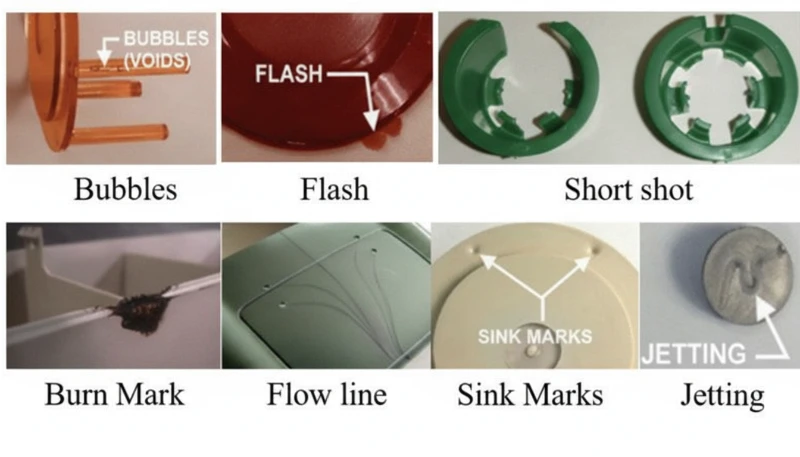
Boşluk basıncı, kalıplama döngüsü sırasında parça ağırlığını, boyutlarını ve kusur oluşumunu doğrudan kontrol eden tek kalıp içi değişkendir. Enjeksiyon kalıplama kusurlarının çoğu doldurma ve sıkıştırma aşamalarında ortaya çıkar — ve boşluk basıncı her ikisini de doğrudan ölçen tek değişkendir. Bitmiş parça üzerinde bir çökme izi, boyutsal kayma veya kaynak çizgisi sorunu gördüğünüzde, kök neden saniyeler önce boşluk içinde gerçekleşen bir basınç olayıdır.
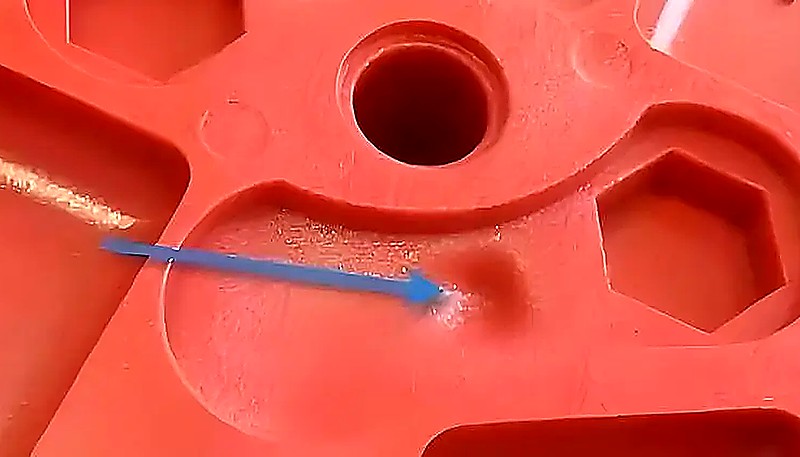
İşte pratik bir örnek. Diyelim ki 3mm nominal duvar kalınlığına sahip bir polikarbonat muhafaza kalıplıyorsunuz ve 5mm kalınlığında bir bölüm oluşturan bir kaburga var. Paketleme aşamasında kaburga konumundaki boşluk basıncı çok hızlı düşerse, kalın bölüm yeterince paketlenmez. Sonuç: görsel muayeneden geçemeyecek bir çökme izi. Boşluk basıncı verisi olmadan, proses mühendisiniz paketleme basıncı ve süresi için tahminde bulunur. Bu veriyle, basıncın tam olarak ne zaman düştüğünü görür ve telafi etmek için tutma profilini ayarlar.
Kavite basınç izlemenin en etkili şekilde ele aldığı dört hata kategorisi şunlardır:
1. Kısa çekimler ve eksik dolum. Basınç eğrisi dolum sonu sensör konumunda beklenen tepe noktasına asla ulaşmazsa, kavite tam olarak dolmamıştır. Bunu ilk döngüde yakalarsınız — 500 parçalık bir üretim serisinden sonra değil.
2. Çökme izleri ve boşluklar. Bunlar doğrudan paketleme basıncı düşüşü ile ilişkilidir. Basınç eğrisi, tutma aşamasında boşluğun hacimsel büzülmeyi telafi edecek kadar malzeme alıp almadığını gösterir.
3. Taşma. Aşırı kavite basıncı — özellikle makinenin kapatma kuvveti eşiğinin üzerine çıktığında — taşma öncüsüdür. Basınç eğrisi, taşma parça üzerinde görülmeden sizi uyarır.
4. Boyutsal değişkenlik. Paketleme aşamasındaki kavite basıncı, parça ağırlığını ve boyutlarını doğrudan belirler. Çalışmalar, tepe kavite basıncını ±2% içinde kontrol etmenin, sıkı toleranslı parçalarda kritik boyutları ±0,05mm içinde tutabileceğini göstermektedir.
Bir Boşluk Basınç Sensörü Nasıl Çalışır?
Kavite basınç sensörü, eriyik basıncını gerçek zamanlı olarak elektrik sinyaline dönüştüren, kalıba gömülü bir dönüştürücüdür. Piyasada iki sensör türü hakimdir: doğrudan temaslı (piezoelektrik) ve dolaylı (gerinim tabanlı). Her birinin, onları nereye yerleştirdiğinizi ve üretimde ne kadar süre dayandıklarını etkileyen avantaj ve dezavantajları vardır.
Direkt piezoelektrik sensör3s kalıp boşluğu yüzeyi ile aynı hizada oturur ve plastiğe doğrudan temas eden bir diyafram aracılığıyla eriyik basıncını ölçer. En hızlı tepki süresini (milisaniyenin altında) ve gerçek eriyik basıncının en doğru okumasını sunarlar. Dezavantajı: kalıp çeliğinde işlenmiş bir yuva gerektirirler, kalıp taşıma sırasında mekanik hasara karşı hassastırlar ve piezo sinyalini kullanılabilir bir voltaja dönüştürmek için şarj amplifikatörlerine ihtiyaç duyarlar.
Dolaylı gerinim ölçer sensörler bir ejektör pimi veya boşluk insertinin arkasına monte edilir. Erimiş malzemeye temas etmezler — bunun yerine, boşluk basıncı altında kalıp çeliğinin elastik deformasyonunu ölçerler. Daha dayanıklıdırlar, mevcut kalıplara daha kolay retrofitting yapılır ve daha ucuzdurlar. Ancak daha yavaş tepki verirler ve basınç okuması mekanik transfer yoluna (pim çapı, uyum boşluğu, çelik sertliği) bağlıdır, bu da kalibrasyon karmaşıklığını ortaya çıkarır.
Yaygınlaşan üçüncü bir seçenek ise temassız ultrasonik sensörler kalıp dışına monte edilir ve çelik duvar üzerinden basıncı ölçer. Bunlar sensör yuvalarına olan ihtiyacı tamamen ortadan kaldırır, ancak doğruluk şu anda sınırlıdır — mutlak basınç ölçümünden ziyade eğilim izleme için daha uygundurlar.
| Özellik | Piezoelektrik (Doğrudan) | Gerinim Ölçer (Dolaylı) | Ultrasonik |
|---|---|---|---|
| Tepki süresi | < 1 ms | 2–5 ms | 5–10 ms |
| Doğruluk | ±0.5% FS | ±1–2% FS | ±3–5% FS |
| Kalıp modifikasyonu | Yuva gereklidir | Ejektör pimi arkasında | Harici montaj |
| Dayanıklılık | Orta düzeyde | Yüksek | Yüksek |
| Kanal başına maliyet | $1,500–$3,000 | $500–$1,500 | $800–$2,000 |
| En iyi kullanım senaryosu | Hassas kalıplama | General production | Retrofit izleme |
Kavite Basınç Eğrilerindeki Temel Parametreler Nelerdir?
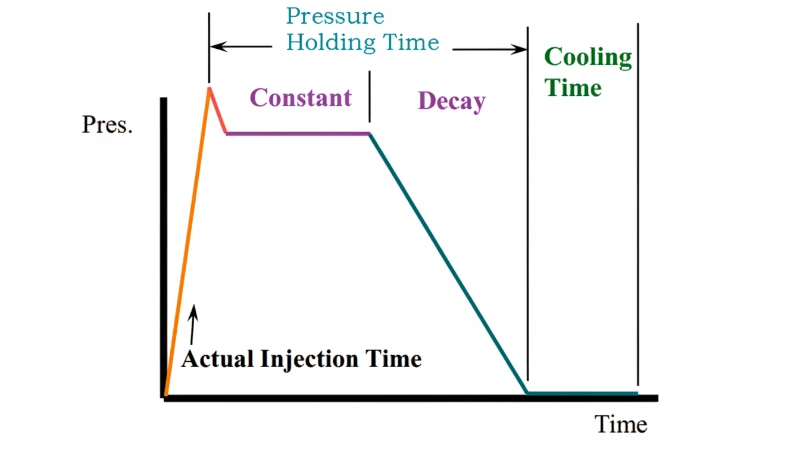
Bir boşluk basınç eğrisindeki anahtar parametreler dolum eğimi, anahtarlama noktası, paketleme platosu, kapı donma süresi ve soğuma bozunma oranıdır. Tipik bir kavite basınç eğrisi, belirgin zirveleri ve vadileri olan bir dağ sırası gibi görünür. Eğrinin her bölgesi, enjeksiyon kalıplama döngüsünün belirli bir aşamasına karşılık gelir ve deneyimli proses mühendisleri bu eğrileri bir tanı grafiği gibi okur.
Dolum aşaması (zirveye yükseliş). Eriyik boşluğa girdikçe eğri dik bir şekilde yükselir. Eğim size dolum hızını söyler. Daha dik bir eğim daha hızlı enjeksiyon anlamına gelir. Eğim yükseliş sırasında değişirse, akış direnci değişikliklerini görüyorsunuz — belki de eriyik, boşluk geometrisinde ince bir bölümü veya keskin bir dönüşü aşmaktadır.
Anahtarlama noktası. Burası makinenin hız kontrollü dolumdan basınç kontrollü paketlemeye geçiş yaptığı noktadır. Eğride, yükselişin tepesindeki dönüm noktasıdır. Yumuşak bir geçiş yuvarlak bir tepe üretir. Sert bir makine geçişi, keskin bir zirve ve ardından bir düşüş yaratır — bu aşım taşma veya parça ağırlığı varyasyonuna neden olabilir.
Paketleme aşaması (plato). Anahtarlamadan sonra, boşluk basıncı bir plato seviyesinde stabilize olmalıdır — bu, parça soğurken hacimsel büzülmeyi telafi etmek için boşluğa itilen ek malzemedir. Bu platonun yüksekliği ve süresi, parça ağırlığını, boyutlarını ve çökme izlerinin olasılığını doğrudan belirler.
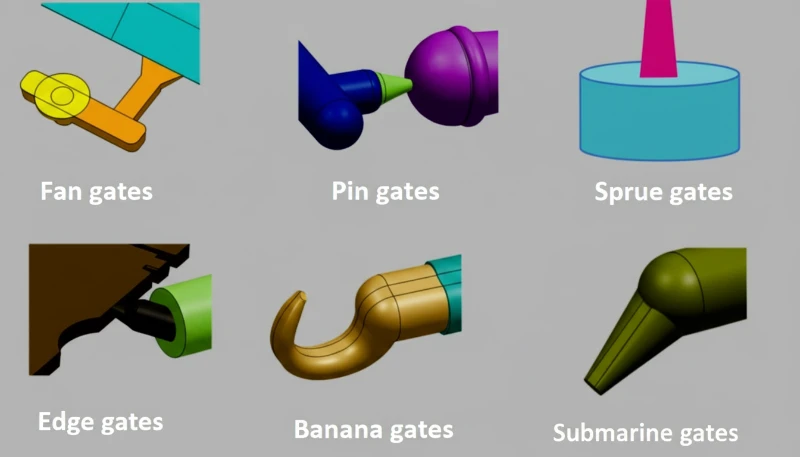
Geçit donması. Tutma aşamasının bir noktasında, geçit katılaşır ve akış yolunu keser. Basınç eğrisinde, platonun sona erdiğini ve basıncın düşmeye başladığını görürsünüz — makine hâlâ tutma basıncı uyguluyor olsa bile. Bu geçit donma noktası kritiktir: geçit donmasından sonraki herhangi bir ek tutma süresi boşa harcanmış enerjidir. Geçidin tam olarak ne zaman donduğunu bilmek, tutma süresini tam olarak optimize etmenizi sağlar.
Cooling and decay. After gate freeze, pressure decays as the material contracts and cools. The rate of decay depends on part geometry, material shrinkage behavior, and mold temperature. Anomalously fast decay in one region can signal a hot spot in the mold or an insufficient cooling circuit.
““Gate freeze-off time can be identified directly from the cavity pressure curve.””Doğru
The pressure curve shows a clear inflection point where cavity pressure starts dropping despite continued machine holding pressure — that is the gate seal point. Beyond this, additional hold time adds no value.
““Higher machine injection pressure always produces higher cavity pressure.””Yanlış
Cavity pressure depends on flow resistance, gate design, and melt viscosity. A restrictive gate or long runner can absorb most of the machine pressure, leaving cavity pressure unchanged even when you increase injection pressure significantly.
Kavite Basınç Verilerini İşlem Penceresini Optimize Etmek İçin Nasıl Kullanırsınız?
Collecting cavity pressure data is one thing. Acting on it is another. The practical workflow looks like this:
Step 1: Establish a golden curve. Run 50–100 cycles at your validated process settings. Record cavity pressure at each sensor location. Average the curves to create a reference — your “golden curve.” This becomes the baseline that every production cycle is compared against.
Step 2: Set tolerance bands. Define acceptable upper and lower limits for key curve parameters: peak pressure, packing plateau level, gate freeze time, pressure at end of hold. These limits should be based on dimensional and visual quality data — not arbitrary percentages.
Step 3: Monitor in real time. Modern monitoring systems (Priamus, Kistler, RJG) compare each cycle’s pressure curve against the golden curve within the tolerance bands. If a cycle falls outside the band, the system flags it — and can optionally divert the part to a quarantine bin automatically.
Step 4: Diagnose root causes from curve deviations. This is where experience matters. A lower-than-normal peak pressure usually means either insufficient fill speed or a viscosity change in the material. A shorter packing plateau suggests the gate froze earlier — possibly because of lower melt temperature. A shifted switchover point indicates machine inconsistency.
Boşluk Basıncı İzlemeye Ne Zaman Yatırım Yapmalısınız?
Cavity pressure monitoring is worth the investment when your part tolerances are under ±0.1mm or when regulatory compliance requires documented process validation. Not every mold needs cavity pressure sensors. If you’re running commodity parts with ±0.5mm tolerances and wide aesthetic specifications, the investment is hard to justify. But for specific situations, the ROI is clear and fast.
Medical and automotive parts. Regulatory requirements (FDA, ISO 13485, IATF 16949) increasingly expect documented process validation. Cavity pressure data provides objective evidence that each cycle met validated conditions — not just that a random sample passed inspection.
High-cavitation molds. When you’re running a 32-cavity mold, cavity pressure monitoring can detect individual cavity blockages or imbalances that would be invisible from machine data alone. One blocked cavity out of 32 means 3% scrap — which adds up fast at 500,000 cycles per year.
Tight-tolerance engineering plastics. Materials like PEEK, LCP, and glass-filled nylons have narrow processing windows. Cavity pressure monitoring catches viscosity shifts from lot-to-lot material variation before they produce out-of-spec parts.
Long production runs. The per-part cost of monitoring drops dramatically as volume increases. A $10,000 monitoring system amortized over 2 million parts adds half a cent per part — trivial compared to the cost of a single rejected shipment.
““Cavity pressure monitoring can detect individual cavity blockages in multi-cavity molds in real time.””Doğru
Each sensor monitors its own cavity independently. A sudden pressure drop or complete absence of signal at one sensor location immediately flags a blocked or underfilled cavity, while neighboring cavities continue showing normal curves.
““Cavity pressure monitoring eliminates the need for post-molding quality inspection entirely.””Yanlış
Cavity pressure catches process-related defects like short shots, sink marks, and dimensional variation. But it cannot detect cosmetic defects like color inconsistency, surface contamination, or assembly errors. Final visual and dimensional inspection remains necessary.
Boşluk Basıncı İzlemenin Sınırlamaları Nelerdir?
Cavity pressure monitoring is limited by sensor fragility, placement sensitivity, data overload, and inability to detect cosmetic defects. Here’s what the sensor vendors won’t tell you on the first call.
Sensors fail. Piezoelectric sensors in particular are fragile. A careless mold setter can destroy a $2,000 sensor during mold installation. Thermal cycling degrades sensor performance over thousands of cycles. You need a maintenance and recalibration plan — or you’ll be making decisions based on drifting data.
Placement is everything. A sensor in the wrong location gives you misleading data. Too close to the gate and you measure runner pressure, not cavity behavior. Too far from the last-to-fill point and you miss the most critical region. Most engineers place sensors at two locations: near the gate (to monitor injection and packing) and near the end of fill (to confirm complete filling).
Data overload is real. A single sensor generates thousands of data points per cycle. A 4-sensor mold running 24/7 produces terabytes per year. Without proper software to filter, trend, and alert, you end up with a massive database nobody looks at. The monitoring system is only as useful as the analytics behind it.
Cost adds up on multi-cavity molds. If each cavity needs its own sensor, a 16-cavity mold requires 32 sensors (gate + end-of-fill per cavity). At $1,500–$3,000 per channel, that’s $48,000–$96,000 in sensor hardware alone — before the monitoring system, cabling, and installation.
Not all defects are pressure-related. Color streaks, contamination, ejector pin marks, and mold surface defects have nothing to do with cavity pressure. Monitoring pressure won’t prevent these issues. It’s a powerful tool, but it’s one tool — not a complete quality system.
Bottom line: If you’re scrapping more than 2% of parts from process-related defects, cavity pressure monitoring usually pays for itself within 6–12 months. Start with one sensor on your highest-volume, tightest-tolerance mold. Prove the ROI on that tool, then scale.
If you are comparing vendors for a monitored production program, use our injection molding supplier sourcing guide to check process-control maturity, validation records, sensor maintenance discipline, and quality escalation rules before awarding the tool.
Kavite Basınç İzleme Hakkında Sıkça Sorulan Sorular
What is cavity pressure in injection molding?
Cavity pressure is the force per unit area exerted by the molten plastic inside the mold cavity during the injection, packing, and holding phases of the molding cycle. It is typically measured in bar or psi using pressure sensors embedded directly in the mold steel. This measurement reflects the actual conditions the material experiences inside the cavity — unlike machine-side pressure, which only shows what the injection unit is delivering from the nozzle. Cavity pressure directly influences part weight, dimensions, surface quality, and structural integrity of the final molded component.
How many cavity pressure sensors do I need per mold?
Çoğu üretim uygulamasında her boşluk için iki sensör kullanılır: biri enjeksiyon ve paketleme davranışını izlemek için kapı yakınına, diğeri de boşluğun tamamen dolduğunu doğrulamak için dolum sonuna yakın konumlandırılır. Geniş toleranslara sahip basit parçalar için tek bir sensör yeterli olabilir. Çoklu boşluklu kalıplar için pratik bir yaklaşım, her bir boşluğu değil, temsili boşlukları donatmak ve ardından sonuçları tahmin etmektir. Tam sayı, parça geometri karmaşıklığına, tolerans gereksinimlerine, bütçenize ve müşterinizin veya düzenleyici kurumun talep ettiği kalite belgelendirme seviyesine bağlıdır.
Kalıp içi basınç ve nozul basıncı arasındaki fark nedir?
Nozul basıncı makinenin enjeksiyon nozulunda ölçülür ve enjeksiyon sırasında screw'un ürettiği kuvveti yansıtır. Kalıp içi basınç kalıp içinde ölçülür ve plastiğin kalıp içinde dolma, paketleme ve soğuma sırasında gerçekte maruz kaldığı basıncı yansıtır. Bu ikisi arasındaki fark, sprue, runner sistemi ve gate'den kaybedilen basıncı temsil eder. Bu basınç düşüşü önemli olabilir — runner uzunluğu, çapı ve gate tasarımına bağlı olarak, melt kalıp içine girmeden önce nozul basıncının –60'ı kaybedilir.
Kalıp içi basınç izleme kaynak hatası kalitesini belirleyebilir mi?
Evet, kalıp içi basınç izleme kaynak hatası oluşumu ve mukavemeti için direkt bilgi sağlar. Kalıp içinde iki akış önü karşılaştığında, kaynak hatası lokasyonundaki basınç, önlerin ne kadar iyi kaynaştığını gösterir. Kaynak hatası lokasyonunda daha yüksek kalıp içi basınç, interface üzerinde daha iyi moleküler entanglement anlamına gelir ve daha güçlü kaynak hatası mukavemeti sağlar. Bu, kaynak hatası integrity'si kritik performans parametresi olan ve kaynak hatasındaki failure tüm assembly'yi tehlikeye atabilecek structural parçalar için özellikle değerlidir.
Bilimsel kalıplama nedir ve kalıp içi basınç bunla nasıl ilişkilidir?
Bilimsel kalıplama, enjeksiyon kalıplama prosesini dört ayrı faz — dolum, sıkıştırma, tutma ve soğutma — olarak ayıran ve her birini yalnızca makine ayarları yerine ölçülebilir değişkenlere dayanarak bağımsız olarak kontrol eden veri odaklı bir metodolojidir. Boşluk basıncı, bilimsel kalıplamadaki birincil ölçüm değişkenidir çünkü malzemenin kalıp içinde gerçekte ne yaptığını doğrudan yansıtır. Kilit konumlarda boşluk basıncını izleyerek mühendisler, hangi makine veya tesisin kalıbı çalıştırdığına bakılmaksızın tutarlı parçalar üreten tekrarlanabilir, aktarılabilir proses parametreleri oluşturabilir.
Kalıp içi basınç izleme implementasyonu ne kadar maliyet gerektirir?
Temel iki kanallı izleme sistemi — boşluk basınç sensörleri, şarj amplifikatörü veya sinyal koşullandırıcı, veri toplama donanımı ve temel analiz yazılımını içeren — tek boşluklu bir uygulama için tipik olarak $5.000 ile $15.000 arasında maliyetlidir. Kapsamlı analiz yazılımı, otomatik parça yönlendirme yetenekleri ve geçmiş trend panoları ile çok boşluklu bir üretim kalıbında tam üretim izleme için maliyetler $30.000'den $100.000'in üzerine kadar değişebilir. Toplam yatırım, sensör kanal sayısı, analiz platformu karmaşıklığı ve fabrika entegrasyon gereksinimleriyle doğrudan ölçeklenir.
Kalıp içi basınç sensörlerini mevcut bir kalıba uyarlayabilir miyim?
Evet, uyarlama yaygın ve pratik bir uygulamadır. Mevcut ejector pimlerinin arkasına monte edilen strain-gauge sensörler, en popüler uyarlama seçeneğidir çünkü minimal kalıp modifikasyonu gerektirir — genellikle mevcut bir pinin arkasında bir yuva delinmesi ve kablonun ejector plakasından geçirilmesi yeterlidir. Direkt piezoelektrik sensörler de uyarlama için mümkündür ancak sensör diyaframı için flush-mount yuva oluşturmak için kalıp çeliğinde daha kapsamlı bir makine işleme gerektirir. Uyarlama maliyeti, sensörleri bir kalıba sıfırdan entegre etmekten önemli derecede daha düşüktür.
Kalıp içi basınç izleme tüm plastik malzemelerle çalışır mı?
Kalıp içi basınç izleme, PP ve PE gibi standart reçinelerden polikarbonat, naylon ve PEEK gibi yüksek performanslı mühendislik plastiklerine kadar tüm termoplastik malzemelerle çalışır. Ancak, basınç eğrisi karakteristikleri malzemeler arasında önemli farklılıklar gösterir. Polikarbonat ve PEEK gibi yüksek viskoziteye sahip malzemeler, polipropilen gibi düşük viskoziteye sahip malzemelerle karşılaştırıldığında daha yüksek dolum basıncı ve farklı eğri şekilleri üretir. İzleme eşikleri, tolerans bandları ve referans eğri parametreleri, üretim sırasında anlamlı proses kontrol verileri sağlamak için her spesifik malzeme ve kalıp kombinasyonu için bağımsız olarak kalibrasyon gerektirir.
Boşluk Basıncı İzlemeyi Uygulamaya Hazır mısınız?
Özellikle tıbbi, otomotiv veya elektronik gibi sıkı toleranslı hassas parçalar üretiyorsanız — boşluk basıncı izleme artık bir seçenek değil. Bu, "prosesin iyi olduğunu düşünüyoruz"dan "her döngünün spesifikasyonlara uyduğunu kanıtlayabiliriz"e geçiş yolunuzdur.
Fabrikamızda, mühendislerimiz Shanghai tesisinde proses izleme kullanırlar, çünkü regülasyonlu müşteriler kayıt altına alınmış, veri destekli proses kontrol talep ederler. 400+ malzeme kalifikasyonu ve gelen kontrolden giden kontrolüne kadar 6 adımlı kalite kontrol prosesi ile, kalıp içinde olanları anlamanın kalitenin başlangıcı olduğunu biliriz.
Kalıp içi basınç izleme için sonraki tooling projenizi tartışmak ister misiniz? Bir enjeksiyon kalıplama üreticisiyle görüşün — parça geometrisini, toleranslarını ve üretim hacmini gözden geçirerek, uygulamanız için doğru proses izleme seviyesini öneririz.
-
sink mark: sink mark, hold phase sırasında insufficient packing pressure nedeniyle molded parçalarda görülen surface depression'ı ifade eder. ↩
-
injection mold: injection mold, kalıplama işleminde bir veya birden fazla boşluğu olan ve plastik parçaları şekillendiren hassas bir aleti ifade eder. ↩
-
piezoelektrik sensör: piezoelektrik sensör, uygulanan melt basıncına proporcional elektrik yükü üreten direkt-contact basınç transducerini ifade eder. ↩




 EN
EN  ES
ES  FR
FR  DE
DE  PT
PT  AR
AR  RU
RU  JA
JA  KO
KO  IT
IT  NL
NL  TR
TR  PL
PL 