

You just got an RFQ back from a Chinese injection molding supplier. The mold cost looks reasonable — $8,500 for a single-cavity production tool. But then you see it: Minimum order: 10,000 pieces per run. Your annual demand is 3,000 units. This is the MOQ trap. In this guide, I break down what drives minimum order quantities, what numbers are realistic, and how to negotiate a setup that matches your actual demand.
- Typical injection molding MOQs range from 500 to 50,000+ pieces depending on part complexity
- Mold cost recovery is the single biggest driver of MOQ requirements
- Multi-cavity molds reduce per-part cost but increase the minimum order
- Aluminum tooling can cut MOQs to 100–500 units for prototyping runs
- Negotiating MOQ is easier when you understand the supplier’s cost structure
What Is MOQ in Injection Molding?
MOQ (Minimum Order Quantity) in injection molding is the smallest number of parts a supplier agrees to produce in a single production run. It typically ranges from 500 to 50,000 pieces depending on part complexity, material requirements, and tooling investment. Understanding what drives your supplier’s MOQ is the first step to negotiating a quantity that works for both sides.

“Most injection molding delays are caused by mold manufacturing problems.”Правда
In practice, the majority of delays come from slow buyer feedback during DFM review and sample approval, not from mold manufacturing. A responsive buyer can shave 1–2 weeks off the total timeline.
“A higher MOQ always results in a lower per-part price.”Ложь
Per-part price depends on tooling amortization, material cost, setup time, and machine rate. Beyond a certain quantity, the per-part savings plateau because tooling cost is fully amortized and material discounts stabilize. Doubling the MOQ from 50K to 100K might only reduce unit price by 2–5%, not the 50% some buyers expect.
What Determines the MOQ for Injection Molded Parts?
Five factors drive injection molding MOQ: mold cost amortization ($3,000–$50,000+), machine setup time (2–6 hours), raw material minimums (25–500 kg), part size and weight, and factory scheduling constraints — ranked roughly in order of impact. Let’s break each one down, because understanding these is what lets you negotiate intelligently instead of just asking “can you do less?”
1. Mold Cost Amortization
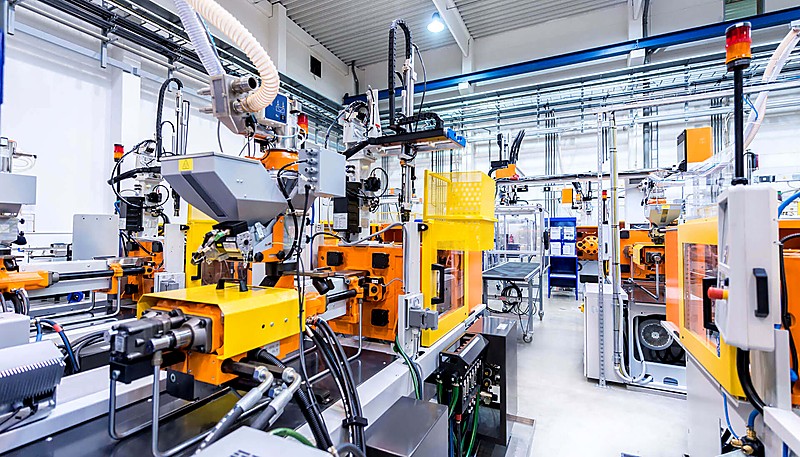
This is the big one. If your production mold costs $15,000 and your supplier wants to amortize it over a reasonable number of units, they’ll set the MOQ accordingly.
| Стоимость плесени | Amortization Target | Implied MOQ |
|---|---|---|
| $3,000 – $5,000 | 1,000 – 3,000 units | 500 – 1,000 |
| $5,000 – $15,000 | 3,000 – 10,000 units | 1,000 – 5,000 |
| $15,000 – $50,000 | 10,000 – 50,000 units | 5,000 – 10,000 |
| $50,000+ | 50,000+ units | 10,000 – 50,000+ |
The logic is straightforward: a supplier doesn’t want to build a $25,000 mold for a customer who orders 500 pieces and disappears. The MOQ ensures they recover their tooling investment within a predictable timeframe.
2. Machine Setup and Changeover
Every production run requires setup: mounting the mold, setting temperature profiles, tuning injection parameters, and running first-article inspection1 (FAI). This typically takes 2–6 hours for a standard mold. During that time, the machine isn’t producing revenue-generating parts. A small order means the setup cost per part balloons — and at some point, it doesn’t make sense for either side.
3. Raw Material Minimums
Material suppliers have their own MOQs. A standard bag of ABS pellets might be 25 kg. If your part weighs 15 grams, that bag covers roughly 1,666 pieces. But for specialty materials — glass-filled nylon, PEEK, medical-grade polymers — the minimum purchase might be 100–500 kg, which can push your effective MOQ up significantly regardless of what the molder wants.
4. Part Size and Complexity
Larger parts take more machine time and more material per shot, which naturally raises the MOQ. A housing cover that weighs 200 grams and needs a 650T machine has a very different cost structure than a 5-gram clip running on a 90T machine.
5. Factory Scheduling Constraints
Most Chinese injection molding factories run 20–30 active molds in rotation. Your small order competes for press time with larger, more profitable runs. A supplier might accept a 500-piece order if they can fit it between bigger jobs — but they won’t disrupt a 100,000-piece production schedule for it.
What Is a Realistic MOQ for Injection Molding?
Realistic injection molding MOQs fall into three tiers: 100–1,000 units for bridge tooling, 1,000–10,000 units for standard single-cavity production, and 10,000–100,000+ units for high-volume multi-cavity molds. Most Chinese factories quote 1,000–5,000 as a starting point for standard consumer and industrial parts.
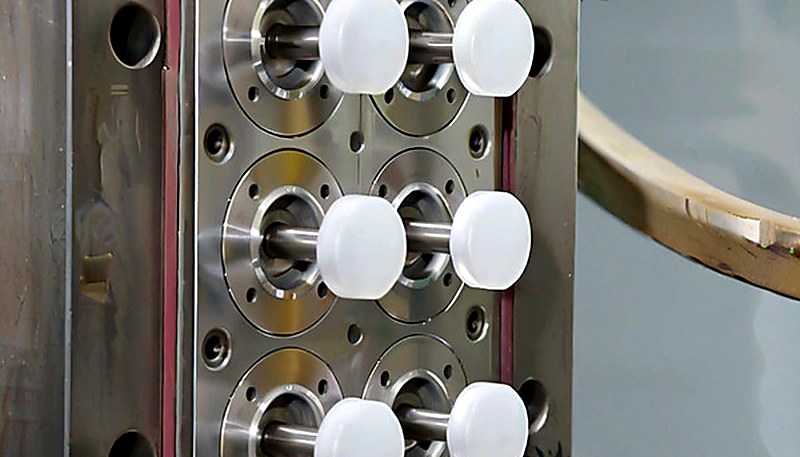
Here’s the thing — there’s no single “industry standard” MOQ. Anyone who tells you “the standard MOQ is 5,000” is oversimplifying. The realistic number depends entirely on the intersection of your part, your tooling, and your supplier’s operation.
| Production Type | Typical MOQ Range | Tooling Type | Лучшее для |
|---|---|---|---|
| Prototype / Bridge | 100 – 1,000 | Aluminum or soft steel | Market testing, early-stage products |
| Малосерийное производство | 500 – 5,000 | Single-cavity steel | Niche products, medical devices |
| Standard Production | 1,000 – 10,000 | Production steel | Consumer goods, industrial parts |
| Крупносерийное производство | 10,000 – 100,000+ | Multi-cavity steel | Automotive, electronics, packaging |
I’ve seen factories in China quote MOQs of 500 pieces for simple single-cavity molds on standard materials, and I’ve seen the same factory quote 30,000 pieces for a 16-cavity mold running glass-filled PBT. The range is that wide, and it’s driven by real economics — not arbitrary policy.
“Shorter lead times always result in lower quality molded parts.”Правда
Lead time and quality are not directly correlated. A well-planned project with clear DFM criteria, responsive buyer feedback, and experienced toolmakers can deliver both fast turnaround and high quality. Quality problems come from poor process control, not from speed.
“You should always wait for T1 sample approval before ordering production materials.”Ложь
Pre-ordering materials during mold build is a standard practice that saves 1–2 weeks. The risk is minimal if you have already specified the exact grade and supplier during quotation.
For buyers sourcing from China specifically, expect MOQs between 1,000 and 5,000 pieces for a typical consumer or industrial part. If the part uses a specialty material or requires a multi-cavity mold, the minimum typically jumps to 2,000–10,000.
How Does Mold Cavity Count Affect Your MOQ?
This is the tradeoff most buyers don’t fully grasp. A 4-cavity mold sounds great — four parts per cycle instead of one! — but it also means higher mold cost, higher MOQ, more material per run, and less flexibility for small batches.
| Cavity Count | Mold Cost (Est.) | Cycle Output | Typical MOQ |
|---|---|---|---|
| 1 (single cavity) | $3,000 – $8,000 | 1 part/cycle | 500 – 2,000 |
| 2–4 cavities | $8,000 – $25,000 | 2–4 parts/cycle | 2,000 – 10,000 |
| 8–16 cavities | $25,000 – $80,000 | 8–16 parts/cycle | 10,000 – 50,000+ |
| 32+ cavities | $80,000+ | 32+ parts/cycle | 50,000 – 500,000+ |
The decision on cavity count should match your annual demand. If you need 5,000 pieces per year, a single-cavity mold is almost always the right call. If you need 500,000 per year, an 8- or 16-cavity mold makes economic sense. The gray zone — 10,000 to 100,000 annual demand — is where the decision gets interesting and where good проектирование пресс-форм2 advice matters.
In our experience, the sweet spot for most mid-volume projects (10,000–50,000 units/year) is a 2- to 4-cavity mold with a production-grade steel like P20 or 718H. You get decent per-part economics without overcommitting on tooling.
How Can You Reduce the MOQ for Your Project?
The five most effective ways to reduce injection molding MOQ without sacrificing part quality or supplier willingness:
“An in-house tooling shop gives better control over mold delivery schedule than outsourcing.”Правда
When tooling and molding are under one roof, the mold goes from the tooling bench to the press in hours instead of days. There is also no logistics delay or miscommunication between separate tooling and molding companies.
“More cavities always means lower total project cost.”Ложь
More cavities lower per-part cost but increase mold cost, maintenance complexity, and material waste. For low-volume projects, the higher tooling investment may never be recovered. Cavity count should match demand, not just maximize output.
Option 1: Use Aluminum or Bridge Tooling
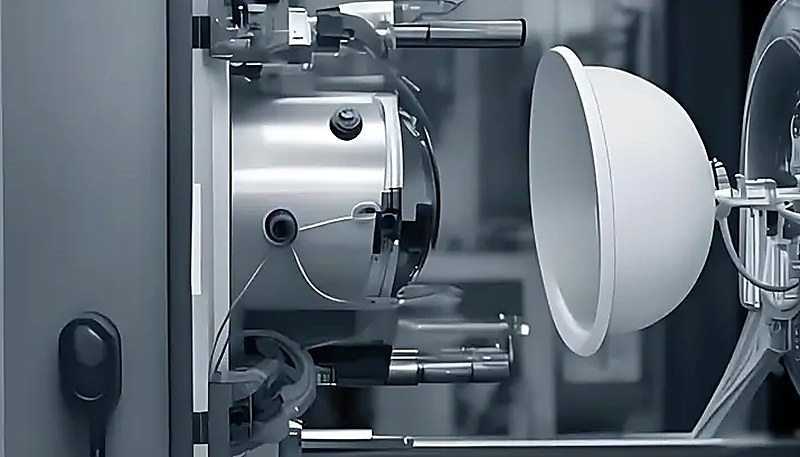
Aluminum molds cost 40–60% less than hardened steel and can produce 1,000–10,000 parts depending on the material and geometry. If your demand is under 5,000 units per year, this is often the most cost-effective path. The tradeoff: aluminum molds wear faster and aren’t suitable for abrasive materials like glass-filled nylon.
Option 2: Choose Standard Materials
Materials like ABS, PP, and HDPE are stocked in bulk by virtually every molding factory. Choosing a standard grade eliminates the raw material MOQ problem entirely. Specialty grades (PEEK, PEI, medical-grade polymers) often require 100–500 kg minimum orders, which can force your part MOQ up.
Option 3: Accept Flexible Scheduling
If you can accept a wider delivery window (e.g., “ship within 4 weeks instead of 2”), the factory can slot your order into machine downtime instead of scheduling a dedicated production block. This can cut MOQ requirements by 50% or more because the setup cost is absorbed into their regular schedule.
Option 4: Family Molds for Multiple Parts
If your product has several plastic components (say, a top cover, bottom cover, and button panel), you can run them all in a single family mold. One setup, one material, one production run — and the MOQ applies to the total output, not each individual part. This works best when the parts are similar in size and use the same material.
Option 5: Stock and Release Agreements
Some suppliers will produce a larger batch (meeting their MOQ) but ship it to you in smaller increments. You pay for storage instead of producing below the economic minimum. This works well if you have predictable demand over 6–12 months and the parts don’t have shelf-life concerns.
With 8 senior mold engineers and an in-house mold manufacturing facility producing 100+ mold sets per month, ZetarMold can quickly assess whether your project is better suited for single-cavity production tooling or bridge tooling. We’ll tell you upfront — not every project needs a $20,000 mold, and sometimes the smartest engineering decision is a simpler tool at a lower MOQ.
What Is the Difference Between MOQ and MEA?
MOQ is the supplier’s minimum accepted order quantity (typically 500–50,000 pieces), while MEA (Minimum Efficient Amount) is the production volume at which per-part cost becomes competitive — usually 3,000–5,000 units for standard injection molding.
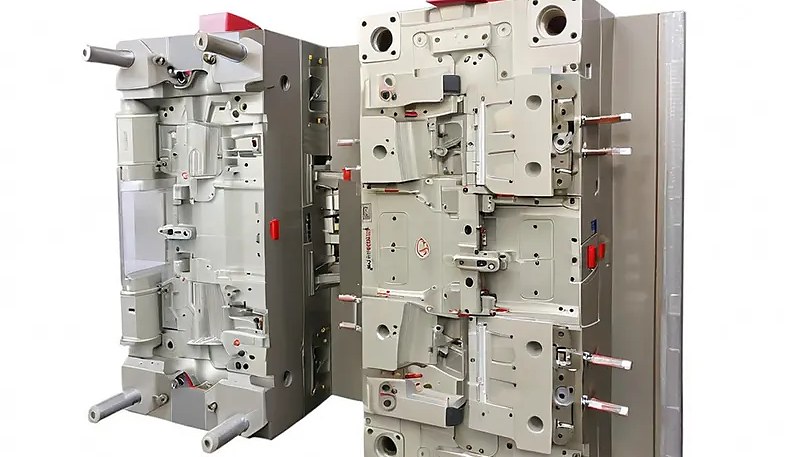
This distinction matters because you can sometimes get an order of 500 pieces placed (the supplier accepts it), but at 500 pieces the per-part cost might be 4–6× what it would be at 5,000 pieces. The question isn’t always “will they take my order?” — sometimes it’s “does this order make economic sense for me?”
“Pre-ordering production materials during mold build saves 1–2 weeks of total lead time.”Правда
Material procurement and mold manufacturing are independent streams that can run in parallel. Placing material orders when the mold design is approved means resin arrives while the mold is being cut, eliminating the procurement gap after sampling.
“A cheaper mold quote always means a shorter build time.”Ложь
Lower cost may reflect simpler construction, lower-grade steel, or less experienced labor — any of which can extend build time through rework or tool failure. Price and lead time are independent variables that should be evaluated separately.
| Фактор | MOQ | MEA |
|---|---|---|
| Определение | Minimum order supplier will accept | Volume where per-part cost becomes competitive |
| Typical Range | 500 – 50,000 pieces | 3,000 – 5,000 pieces |
| Driven By | Supplier policy, setup cost | Tooling amortization economics |
| Can You Negotiate? | Yes, with flexibility | Only by changing tooling or material |
Understanding this difference helps you frame the conversation with suppliers. If you’re below the MEA, you know you’re paying a premium — and you can decide whether that premium is worth it for your specific situation.
How Do You Negotiate a Lower MOQ with a Supplier?
Five negotiation tactics that actually work — because they address the supplier’s real cost concerns rather than just asking for a favor:
Step 1: Understand Their Cost Structure
Ask the supplier to break down their quote into mold cost, material cost, processing cost, and setup cost. When you can see where the MOQ floor comes from, you can address it specifically instead of pushing blindly on the total quantity.
Step 2: Pay for Tooling Separately
If you pay for the mold as a separate line item (not amortized into the per-part price), the supplier’s tooling risk drops to zero. This often unlocks significantly lower MOQs because the biggest cost driver has been removed from their equation.
“Paying for mold separately from piece price often results in a lower effective MOQ.”Правда
When mold cost is unbundled from per-part pricing, the supplier has no need to recover tooling investment through volume. This removes the biggest single driver of high MOQs, often cutting minimum orders by 50–70%.
“MOQ and MEA are the same thing — the minimum number of parts you can order.”Ложь
MOQ is the supplier’s minimum accepted order quantity. MEA (Minimum Economic Amount) is the quantity at which per-part cost becomes economically sensible. A supplier may accept 500 pieces (MOQ) but the unit cost might only become competitive at 5,000 pieces (MEA).
Step 3: Accept Flexible Delivery Windows
“I need 1,000 pieces, but I can wait until you have a gap in your schedule” is one of the most powerful things you can say to a factory. It turns your small order from an inconvenience into filler for their production planning.
Step 4: Start with a Pilot Order
Propose a trial run at 500–1,000 pieces with the understanding that a successful pilot leads to regular orders. Many suppliers will accept a below-normal MOQ for the first order as a qualified sample run, especially if the mold is already built.
Step 5: Commit to Annual Volume
If you can project annual demand (even roughly), share that with the supplier. A commitment of “10,000 pieces over the next 12 months, delivered in 2,000-piece batches” gives them confidence to lower the per-run MOQ because the total volume justifies their investment.
One thing we’ve seen work repeatedly: the buyers who get the best MOQ terms are the ones who treat the negotiation like a partnership discussion, not a transactional haggle. If the supplier sees you as a long-term customer with growing demand, the MOQ becomes a lot more flexible.
With 30+ English-speaking project managers handling international orders since 2013, we’re used to having the MOQ conversation with first-time buyers. Our approach: we’ll show you the cost breakdown, tell you where the minimum comes from, and work with you to find a quantity that makes economic sense for both sides. Sometimes that means single-cavity tooling; sometimes it means a stock-and-ship arrangement. The point is, there’s always a solution if both sides are transparent about what they need.
Frequently Asked Questions About Injection Molding MOQ
“For annual demand under 10,000 units, a single-cavity mold almost always gives the best total cost.”Правда
Below 10,000 units per year, the tooling savings from a single-cavity mold ($3,000–$8,000 vs. $15,000–$25,000 for multi-cavity) far outweigh the slightly higher per-part production cost. The break-even on multi-cavity tooling typically falls between 30,000–100,000 total lifetime units.
“Multi-cavity molds always reduce overall lead time compared to single-cavity molds.”Ложь
Multi-cavity molds take longer to build (5–7 additional days per cavity) but produce parts faster in production. The total project lead time increases because the tooling phase is longer, even though per-part production time decreases.

What Is a Typical MOQ for Injection Molding in China?
Most Chinese injection molding factories set MOQs between 1,000 and 5,000 pieces for standard production parts, though this varies widely based on part complexity, mold cost, and material requirements.
Can You Injection Mold 100 Parts?
Yes, 100 parts is possible with prototype or bridge tooling (aluminum molds). Some suppliers offer малосерийное литье под давлением services specifically for quantities as low as 50–500 pieces.
Why Do Injection Molding Suppliers Have Minimum Orders?
Minimum orders exist because each production run requires 2–6 hours of machine setup, mold mounting, parameter tuning, and first-article inspection. These fixed costs must be spread across enough parts to make the run economically viable for the supplier.
Does MOQ Apply to the First Order Only?
MOQ typically applies to every production run, not just the first order. However, some suppliers offer lower repeat MOQs once tooling is proven and the production process is established, because setup time decreases with familiar molds.
How Does Part Size Affect Injection Molding MOQ?
Larger parts require bigger machines (higher tonnage), more material per shot, and longer cycle times, which all increase per-part cost and typically push MOQs higher. A 5-gram part might have an MOQ of 1,000, while a 500-gram part might require 5,000+.
Can You Negotiate MOQ After the First Order?
Yes, repeat orders often qualify for lower MOQs because the mold is already set up, parameters are proven, and the supplier has confidence in the business relationship. A 5,000-piece first-order MOQ might drop to 2,000 on repeat runs.
What Is the MOQ for Multi-Material or Overmolded Parts?
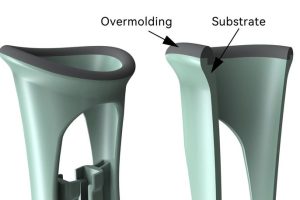
Overmolded and multi-material parts typically have MOQs 2–3× higher than single-material parts because they require specialized machines (two-shot or overmolding presses), longer setup times, and more complex mold design.
Is There an MOQ for Injection Mold Manufacturing Itself?
Mold manufacturing (tooling) typically has no quantity minimum — you commission one mold. However, the mold cost itself may be quoted with the expectation of a certain production volume to justify the investment in mold steel quality and complexity.
Quick Decision Framework
Before you send that next RFQ, use this checklist to estimate what MOQ you should expect — and what to push back on:

- Under 1,000 units total demand → Look for aluminum tooling or low-volume molding services
- 1,000 – 5,000 units/year → Single-cavity steel mold, expect MOQ of 1,000–2,000
- 5,000 – 50,000 units/year → 2–4 cavity mold, MOQ of 2,000–5,000 is standard
- 50,000+ units/year → Multi-cavity production mold, negotiate on price not MOQ
And one last rule: if a supplier quotes you an MOQ that’s more than 3× your annual demand, don’t just accept it. Either the mold is over-specified for your needs, or you’re talking to the wrong supplier. There’s almost always a way to match tooling to actual demand — it just takes the right conversation.
Need help figuring out the right MOQ and tooling strategy for your project? The ZetarMold team is ready to review your part design, give you an honest assessment of what quantities make sense, and quote accordingly — no inflated MOQs, no unnecessary complexity. See our complete injection molding supplier evaluation guide3 for more details.
-
First-article inspection is a quality control process where the first produced parts from a new mold are measured against design specifications to verify dimensional accuracy, surface finish, and material properties before full production begins. ↩
-
Конструкция пресс-формы refers to the engineering process of creating the cavity, core, cooling channels, and ejection system for an injection mold, directly affecting part quality and production efficiency. ↩
-
Supplier sourcing is the process of evaluating and selecting a manufacturing partner based on capabilities, quality systems, communication, and cost structure — critical for ensuring the supplier’s MOQ policy aligns with your actual demand. ↩


 EN
EN  ES
ES  FR
FR  DE
DE  PT
PT  AR
AR  RU
RU  JA
JA  KO
KO  IT
IT  NL
NL  TR
TR  PL
PL 