- An injection mold is the physical steel tooling that shapes plastic parts; injection molding is the manufacturing process that uses the mold.
- Confusing the two leads to incorrect quotes, misaligned timelines, and costly misunderstandings between buyers and suppliers.
- Mold cost is a one-time capital investment; molding cost is the per-part production expense — they follow completely different pricing models.
- Understanding which you are buying — or asking about — determines who you talk to, what lead times apply, and how you budget your project.
What Confusion About Mold vs Molding Costs Buyers Money?
A few years back, a product manager sent us an inquiry: “We need a quote for литьевая форма1ing. Our quantity is 500 units.” Fair enough. But buried in the email was a second question: “And how long does the mold last?” Two questions. Two completely different subjects. The first asked about per-part production cost; the second asked about tooling lifespan. He didn’t know he was talking about two different things.
At ZetarMold, 40% of quoted tooling cost goes to CNC machining and EDM. Customers who approve DFM before tool authorization save an average of 2.3 revision rounds — worth $8,000–$25,000 in rework avoidance on a typical production mold.
This happens constantly. Buyers ask for “injection molding quotes” and expect a single number — but suppliers must ask: do you want a mold quote, a molding quote, or both? The terminology gap causes budget surprises, misaligned timelines, and factory relationships that start on the wrong foot. Getting this straight before you issue an RFQ will save you real money.
What Exactly Is an Injection Mold?
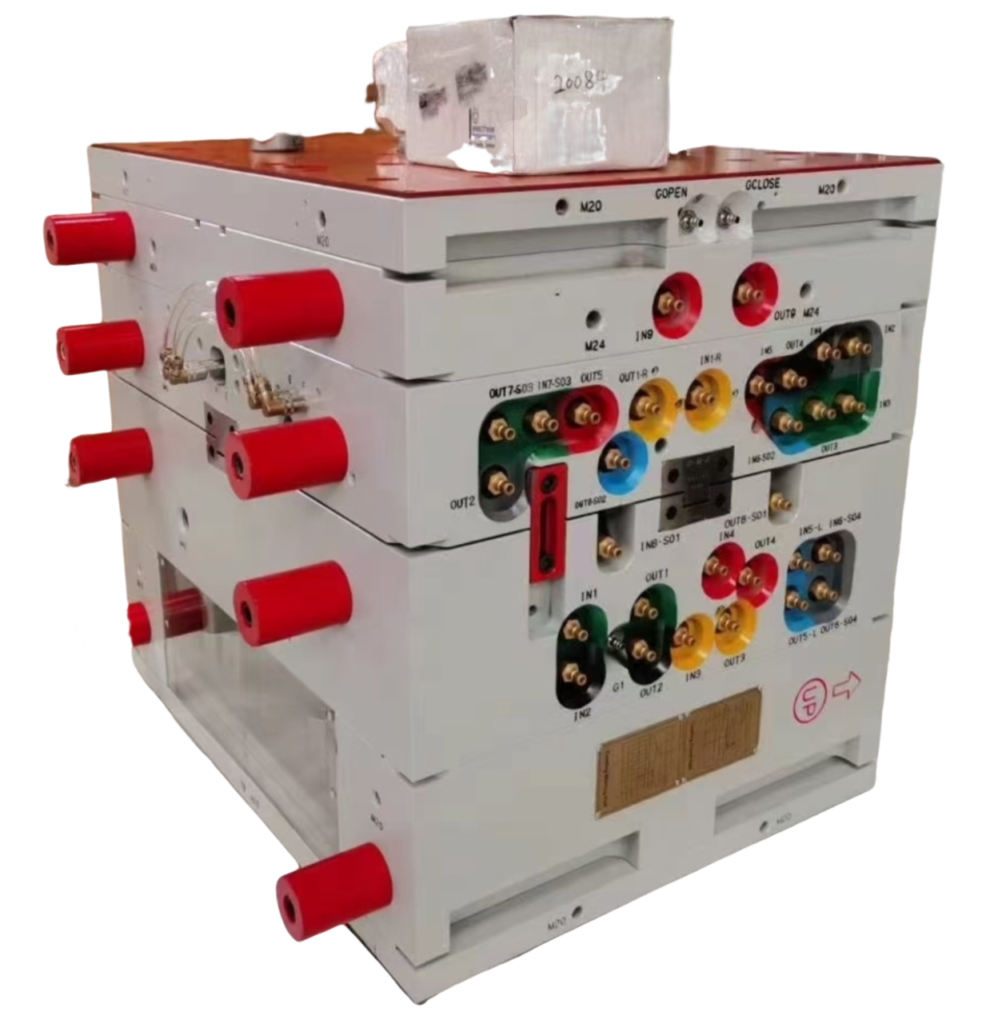
An injection mold is a physical steel or aluminum tool — a precision-machined assembly that defines the shape of a plastic part. It consists of two main halves (core and cavity), a runner system to deliver molten plastic, a cooling channel network, and ejector pins to release finished parts. Think of it as a very expensive, very precise die that stamps the same shape thousands or millions of times.
The mold is a capital asset. You pay for it once, upfront, and it depreciates over its production lifetime. A simple single-cavity mold for low-volume production might cost $3,000–$8,000. A complex multi-cavity production mold in hardened H13 формовочная сталь2 can exceed $80,000. Lead time to build a mold is typically 3–8 weeks, depending on complexity.
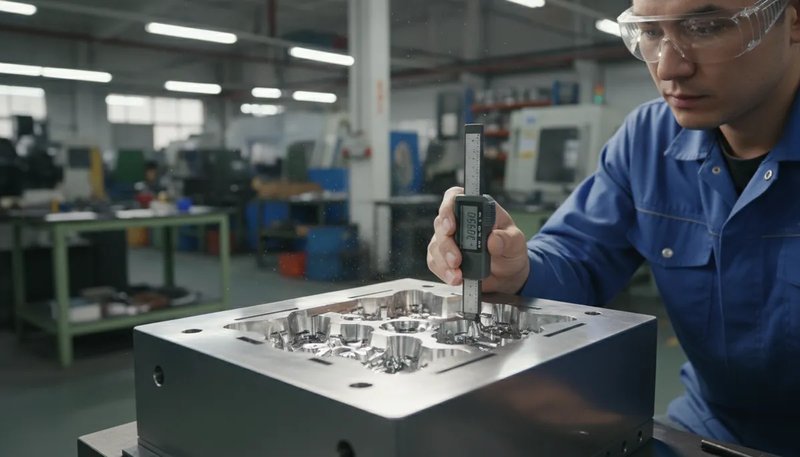
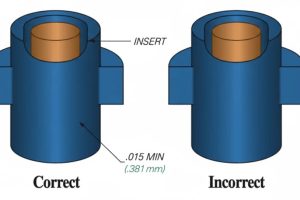
Key structural components of an injection mold include: the cavity side (A plate), the core side (B plate), side actions or lifters for undercuts, hot or cold runner systems, cooling lines designed for uniform heat removal, and the ejection system. Each of these components is engineered and machined to tolerances often within ±0.01 mm.
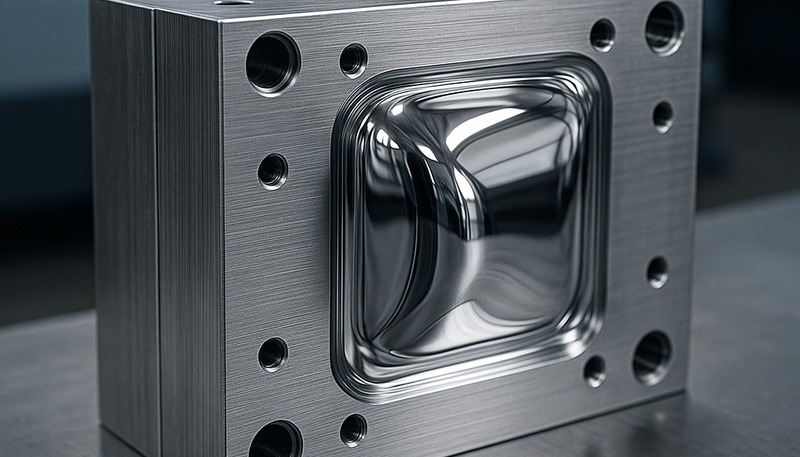
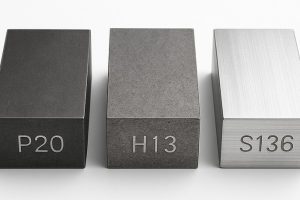
The mold’s lifespan is measured in shots (cycles). A prototype aluminum mold might handle 5,000–10,000 shots before wear degrades part quality. A production-grade P20 mold steel tool is typically rated for 500,000 shots. A hardened H13 tool can run 1,000,000+ shots. Choosing the right mold grade for your volume is one of the most critical decisions in a project — and it affects your per-part cost significantly.
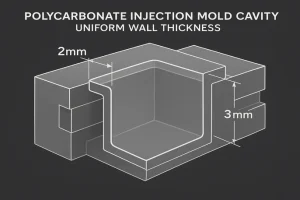
The mold also directly determines part quality. Gate location, cooling layout, draft angles, and wall thickness uniformity bake in quality characteristics that cannot be easily corrected after tooling is cut. This is why experienced manufacturers invest heavily in mold flow analysis before a single line of steel is cut.
Mold maintenance is an often-overlooked cost that affects total project economics. Regular cleaning of vents, inspection of parting surfaces, and lubrication of moving components should be scheduled every 50,000–100,000 shots. A well-maintained mold will consistently deliver better part quality and lower scrap rates than a neglected one — and avoiding a major rebuild can save tens of thousands of dollars over the mold’s lifetime.
What Is the Injection Molding Process?
Сайт процесс литья под давлением3 is the manufacturing cycle that uses the mold to produce plastic parts. It is a repeatable, high-speed process: plastic pellets are fed into a heated barrel, melted and homogenized by a reciprocating screw, then injected under pressure (typically 500–2,000 bar) into the closed mold cavity. The melt fills the cavity, is held under packing pressure to compensate for shrinkage, cooled until rigid, then ejected. The cycle repeats.
Unlike the mold (which you build once), the injection molding process runs continuously for every part you produce. Its cost is measured per shot or per thousand parts. Key variables that determine per-part cost include: machine tonnage required, cycle time (10–120 seconds for most consumer parts), material cost per gram, cavitation (single vs. multi-cavity), and reject rate.

The process has four distinct phases: (1) Injection — the screw advances, pushing melt through the gate into the cavity; (2) Packing and Holding — additional material is packed under reduced pressure to compensate for volumetric shrinkage as the melt cools; (3) Cooling — the part solidifies while the screw retracts and recovers material for the next shot; (4) Ejection — the mold opens, ejector pins push the part free, the mold closes and the next cycle begins.
Process parameters — melt temperature, injection speed, packing pressure, cooling time, mold temperature — must be dialed in during first article inspection (FAI) and documented in a validated process sheet. Changing materials, switching machines, or adjusting these settings can all affect part dimensions, warpage, and surface finish. Getting these parameters right is a separate technical discipline from building the mold itself.
“An injection mold and the injection molding process have separate cost structures.”Правда
The mold is a capital expense paid once, upfront — typically $3,000 to $80,000+ depending on complexity and steel grade. The molding process is an ongoing operating cost charged per part or per thousand shots, covering machine time, labor, material, and overhead. Treating them as a single combined cost is a common budgeting mistake that leads to sticker shock when a supplier separates the tooling quote from the production quote.
“You can replace a worn injection mold without affecting the molding process.”Ложь
When a mold is replaced or rebuilt, process parameters almost always need to be re-validated. Even an identical replacement mold will have subtle dimensional differences from the original, different steel surface finish after rework, and potentially different cooling channel geometry. This means a new first article inspection (FAI) and process qualification run are typically required — adding cost and lead time that buyers often do not plan for.
Both the mold and the molding process contribute independently to final part quality. A well-designed mold with poor process control produces bad parts. A perfect process running in a worn-out mold also produces bad parts. The two must be optimized together — which is one reason vertical integration (building the mold and running the production in-house) tends to produce better first-run results than split-sourcing across two different suppliers who may assign blame to each other when defects appear on inspection.
“Mold flow analysis before tooling reduces injection molding defects significantly.”Правда
Mold flow simulation predicts how molten plastic fills the cavity, identifies potential weld lines, air traps, sink marks, and warpage before any steel is cut. Studies show that mold design corrections made at the simulation stage cost 10–50x less than changes made after tooling is complete. Running simulation is standard practice for any mold where production volumes justify the $500–$3,000 analysis fee.
“Low-volume injection molding always requires the same mold as high-volume production.”Ложь
Low-volume runs (under 10,000 parts) can use aluminum or soft P20 steel molds that cost a fraction of production tooling. These bridge molds sacrifice shot life (typically 5,000–50,000 cycles) for dramatically lower upfront investment and faster lead time — often 1–2 weeks vs. 6–8 weeks for hardened production tools. Choosing production-grade tooling for a 500-unit pilot run is a common and expensive over-investment.
What Are the Key Differences Between Mold and Molding?
The simplest way to understand the difference: the mold is the noun (the thing), and molding is the verb (the action). Here is a side-by-side breakdown across the dimensions that matter most for buyers:
One useful mental model: think of the injection mold as a printing press and injection molding as the act of printing. You buy the press once; you pay for each print run. The press determines what can be printed and at what quality; the printing process determines how fast and at what cost each copy is produced. Mixing up the two leads to budgeting a printing cost when you actually need to buy a press first.
| Dimension | Литьевая форма | Процесс литья под давлением |
|---|---|---|
| Определение | Steel/aluminum tooling that shapes the part | Manufacturing cycle that produces parts |
| Cost type | One-time capital investment | Per-part / per-thousand operating cost |
| Typical cost range | $3,000–$80,000+ | $0.10–$5.00+ per part (volume-dependent) |
| Lead time | 3–8 weeks to build | Days to weeks per production run |
| Lifespan | 5,000–1,000,000+ shots by grade | Indefinite while mold is serviceable |
| Who owns it? | Usually the buyer (or shared) | Performed by the molder |
| What changes it? | Design revisions, wear, damage | Parameter tuning, material changes |
| Quality impact | Gate location, cooling, draft angles | Temperature, pressure, cycle time |
Notice the ownership row: in most contract manufacturing relationships, the buyer pays for and owns the mold, while the molder owns the machine and performs the process. This has important implications for IP, supplier switching, and quality control. If you ever need to move production to a different factory, the mold (your asset) goes with you — provided the contract makes this clear.
Another critical difference is what you’re actually buying when you place an order. When you pay for a mold, you’re buying a designed, machined, trialed, and approved tool that will produce parts to your drawing. The mold quote should include DFM review, mold design, machining, steel material, T1 sample production, and any required revision cycles.
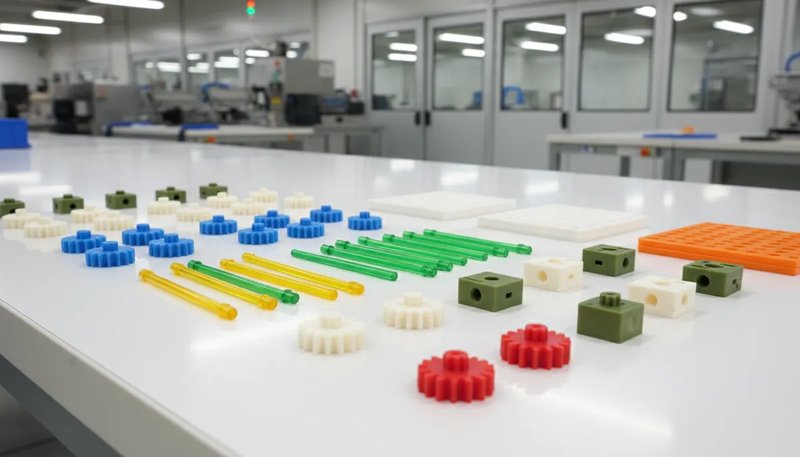
When you pay for molding, you’re buying production capacity: machine hours, operator time, material, and quality inspection. Always ask for a line-item breakdown: mold tooling cost separately from per-part production cost. This lets you evaluate each on its own merits and compare suppliers accurately.
Why Does the Distinction Between Mold and Molding Matter for Your Project?
Getting the terminology right is not pedantic — it directly affects project outcomes. Here are the three most common ways the confusion causes real-world budget and timeline problems:
Budget Allocation Errors
When buyers budget a single line item for injection molding, they often discover midway through a project that the mold cost alone exceeded their total budget. Tooling costs are front-loaded and can represent 60–80% of total project spend at low volumes. Separating your capital budget (mold) from your operating budget (production) prevents this surprise and forces an honest conversation with your supplier upfront.
Timeline Mismatches
Mold lead time (3–8 weeks) and production lead time (1–3 weeks per run) are sequential, not parallel. A buyer who assumes “8 weeks to launch” without accounting for mold build time will miss their deadline. The mold must be built, sampled, approved, and validated before a single production part ships. Factoring both into your critical path is non-negotiable.
Supplier Scope Confusion
Not all injection molding suppliers also build molds — and not all mold builders also run production. When you send an RFQ, be explicit: “We need both tooling and production” vs. “We have existing tooling and need only production runs.” Low-volume injection molding suppliers often specialize in fast-turn molds plus short production runs, while high-volume production houses want validated tooling brought to them.
How Does ZetarMold Handle Both Mold Design and Injection Molding?
our factory operates as a vertically integrated manufacturer: we build the mold and run the production under one roof. Our 47 injection molding machines (50–1,000 tons) run 24/7 alongside our in-house tooling shop. This eliminates the handoff risk that comes with buying a mold from one supplier and production from another — a common source of finger-pointing when quality issues arise.
When a new project comes in, our process is: (1) DFM review within 24 hours of receiving a 3D file; (2) mold design with simulation validation before any steel is cut; (3) T1 samples within 3–4 weeks for standard complexity; (4) first article inspection against customer drawing; (5) process validation and documentation; (6) production run with full quality records. At any step, the mold engineer and the process engineer are talking to each other — because they work in the same building.
Transparent Quoting and Mold Ownership
Our quoting process always separates tooling cost from production cost, with a clear statement of mold ownership (buyer-owned), mold warranty (free revisions through T2 sampling for drawing-conformant designs), and per-part pricing tiers at different volumes. We have found this transparency reduces project misunderstandings by more than half compared to bundled pricing.
If you already have an existing mold from another supplier, we can evaluate it for production suitability. We perform a mold audit — measuring cavity dimensions, inspecting wear surfaces, checking cooling circuit integrity — before committing to a production price. Many molds that seem ready have hidden issues that only appear at production-level cycle rates. Our 92% first-pass quality rate reflects years of refining both the mold-building and the molding process side by side.
For a deeper dive into each topic, see our complete руководство по литью под давлением and our dedicated injection mold complete guide.
Frequently Asked Questions About Injection Mold vs Injection Molding?
Can I buy just the injection mold without the molding service?
Yes. Buying only the mold is common when you want to qualify a tool before committing to long-term production, or when you plan to run production at a different factory. our factory and most full-service toolmakers will sell tooling separately. However, a mold built and qualified in one factory may require re-qualification (new FAI, process development) when transferred to a different machine or facility. Steel grades, runner dimensions, and cooling performance vary enough that the receiving factory will need to develop their own validated process sheet — which typically takes 2–5 days and 50–200 sample shots.
Is injection molding cheaper with my own mold?
Yes, per-part injection molding cost decreases significantly when you own the mold versus renting access to a shared or amortized tool. When the mold cost is fully paid, your per-part cost drops to pure production variables: material, machine time, labor, and overhead. Mold ownership also gives you price transparency — you can get competing production quotes from multiple molders using your mold, rather than being locked into one supplier’s bundled pricing. The crossover point where mold ownership becomes cost-effective typically occurs between 500 and 5,000 parts, depending on part complexity and material cost.
How long does it take to go from mold order to first parts?
Total lead time from mold order to first approved production parts is typically 5–12 weeks. The breakdown: mold design takes 3–7 days; steel procurement and rough machining takes 1–2 weeks; finish machining, EDM, and polishing takes 1–3 weeks; assembly and T1 trial takes 2–5 days. If T1 samples meet drawing requirements, production can begin immediately. If revisions are needed (T2 or T3 trials), add 1–2 weeks per revision cycle. Planning a 10-week total mold-to-production timeline is a reasonable conservative estimate for most standard complexity parts.

What causes a mold to wear out during injection molding?
Injection mold wear is caused by several mechanisms that accumulate over production lifetime. The primary wear mechanism is abrasion from glass-fiber or mineral-filled materials (e.g., 30% GF nylon) which erode gate inserts, core pins, and cavity surfaces faster than unfilled resins. Corrosion from halogenated flame retardants or PVC off-gassing attacks unprotected steel surfaces, requiring corrosion-resistant grades like S136. Thermal fatigue from repeated heating and cooling cycles creates micro-cracks in steel near hot gate zones. Mechanical wear in sliding components — side actions, lifters, ejector pins — causes dimensional drift over time. Preventive maintenance every 50,000–100,000 shots extends mold life significantly.
Do I need to understand both the mold and the molding process to get a good quote?
Yes, understanding both is essential for getting accurate, comparable quotes. When requesting a mold quote, specify: part geometry (3D file or 2D drawing), material, required tolerances, production volume (determines mold grade and cavitation), and surface finish requirements. When requesting a production quote, additionally specify: annual volume tiers, packaging and shipping requirements, quality documentation needs (PPAP, ISIR, etc.), and whether you want statistical process control records. Suppliers who receive complete specifications give firm pricing; those who receive incomplete specs add contingency buffers — making their quotes look artificially high. The few hours spent writing a clear RFQ return significant savings in negotiation.
Can the terms “mold” and “molding” be used interchangeably in manufacturing?
In casual conversation, people often use both terms loosely. However, in a technical or procurement context, the distinction matters. “Mold” refers to the tool itself, and “molding” refers to the process. Confusing them can lead to miscommunication about whether you need a tool ($10K-$100K) or a production service ($0.10-$5.00 per part).
Ссылки
- Rosato, D.V. & Rosato, M.G. Injection Molding Handbook, 3rd ed. Springer, 2000. Mold steel grades and production volume thresholds.
- Bryce, D.M. Plastic Injection Molding: Manufacturing Process Fundamentals. Society of Manufacturing Engineers, 1996. Cycle time benchmarks.
- American Mold Builders Association (AMBA). 2023 Mold Cost Survey. Tooling cost ranges ($3,000–$80,000+) for standard complexity molds.
- Society of Plastics Engineers (SPE). Injection Molding Division Technical Papers. Per-part cost structures and machine tonnage guidelines.
- Autodesk Moldflow Adviser Documentation, 2023. Design change cost ratio (10–50×) at simulation stage vs. post-tooling.
-
injection mold: An injection mold is a precision steel or aluminum tooling assembly — consisting of a cavity, core, runner system, and cooling channels — used to shape molten plastic into a specific part geometry during the injection molding process. ↩
-
mold steel: Mold steel refers to tool steels such as P20, H13, and S136 that are used to fabricate injection mold components; selection is based on production volume, corrosion resistance requirements, and thermal conductivity. ↩
-
injection molding process: The injection molding process is a cyclic manufacturing method in which molten thermoplastic is injected under high pressure into a closed mold cavity, cooled, and ejected as a finished part; cycle times typically range from 10 to 120 seconds depending on part geometry and material. ↩


 EN
EN  ES
ES  FR
FR  DE
DE  PT
PT  AR
AR  RU
RU  JA
JA  KO
KO  IT
IT  NL
NL  TR
TR  PL
PL