- Czterostopniowy audyt podcięć: po pierwsze, zdefiniuj linię podziału i kierunek wyciągania. Po drugie, przeprowadź analizę pochylenia w kierunku otwierania formy. Po trzecie, dla każdej zaznaczonej powierzchni zadaj pytanie: czy mogę dodać pochylenie i wyeliminować podcięcie? Czy mogę zastosować zamknięcie? Czy ta cecha jest mi rzeczywiście potrzebna? Po czwarte, dla cech, które przetrwały wszystkie trzy pytania, zaplanuj typ mechanizmu – suwak lub podnośnik – i uwzględnij liczbę mechanizmów w szacunkowym budżecie narzędziowym.
- Istnieją trzy sposoby wykonania podcięcia: suwak boczny, wypychacz skośny lub przeprojektowanie w celu jego wyeliminowania. Przeprojektowanie jest niemal zawsze najtańsze — jeśli można zachować funkcję.
- Suwaki lepiej nadają się do podcięć zewnętrznych (otworów bocznych, zatrzasków, króćców). Wypychacze skośne są lepsze do podcięć wewnętrznych (połączeń zatrzaskowych, żeber na ściankach wewnętrznych). Zastosowanie niewłaściwego mechanizmu niepotrzebnie zwiększa złożoność.
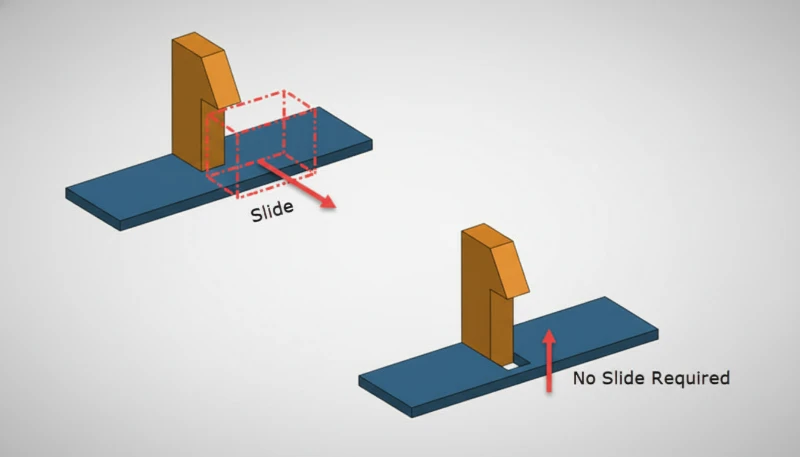
- Zamknięcie przelotowe może zastąpić suwak w wielu zatrzaskach i występach dzięki umieszczeniu otworu w dnie części bezpośrednio pod danym elementem — bez dodatkowego kosztu oprzyrządowania.
- Reguła 5 stopni: podcięcie o kącie zwalniania mniejszym niż 5 stopni naraża mechanizm formy na zatarcia, przywieranie i przedwczesne zużycie.
Zaprojektowano zatrzask, połączenie zatrzaskowe i boczny króciec. W modelu CAD wszystko miało sens. Potem wrócił raport DFM1, a narzędziowiec zakreślił na czerwono: „element z podcięciem2 — wymaga suwaka”. Wycena wzrosła o $8,000, a termin wydłużył się o trzy tygodnie.
Ta historia powtarza się setki razy dziennie podczas opracowywania produktów. Najbardziej frustrujące jest to, że większość podcięć nie jest konieczna — wynika jedynie z nawyku modelowania, którego nie wykryto odpowiednio wcześnie. W tym przewodniku wyjaśniamy, jakie koszty powodują podcięcia, skąd bierze się ich wysokość, jak postępować z podcięciami, których nie można wyeliminować, oraz jak ustalić, jakiego rodzaju mechanizmu rzeczywiście wymaga dany projekt.
Czym jest podcięcie i dlaczego uniemożliwia wyjęcie detalu?
Podcięcie to każdy element formowanego detalu, który uniemożliwia wypchnięcie go w linii prostej — części nie można wyjąć z formy bez zastosowania specjalnego mechanizmu. Po otwarciu formy rdzeń cofa się, a wypychacze zsuwają z niego detal. Aby było to możliwe, każda powierzchnia detalu musi być widoczna z kierunku Z, co oznacza brak elementów, które mechanicznie blokowałyby detal w formie.
Podcięciem jest każdy element, który uniemożliwia wypchnięcie w linii prostej. Najczęstsze przykłady to: otwór w bocznej ściance części (prostopadły do kierunku otwierania formy), ramię zatrzaskowe wygięte do wewnątrz, gwint na elemencie cylindrycznym, zagłębiony rowek biegnący wokół obwodu części lub hak skierowany z powrotem ku linii podziału.
Problem jest mechaniczny, a nie kosmetyczny. Próba wyciągnięcia części prosto z formy mimo podcięcia kończy się rozerwaniem części, uszkodzeniem formy albo jednym i drugim. Forma musi mieć mechanizm, który usuwa się z drogi przed wypchnięciem części. To właśnie ten mechanizm generuje koszt.
Dlaczego podcięcia tak znacznie zwiększają koszt form wtryskowych?
Poniżej przedstawiono, za co faktycznie płacisz, gdy narzędziownia wycenia mechanizm do formowania podcięcia. Zrozumienie tej struktury kosztów ułatwia ocenę, czy koszt mechanizmu jest uzasadniony, czy też przeprojektowanie części jest warte czasu pracy inżynierów.
Jeden zewnętrzny suwak boczny3 wymaga: zaprojektowania i obróbki trzpienia krzywkowego ($800–$2,000), wykonania korpusu suwaka ze stali narzędziowej ($1,500–$4,000), prowadnic i płyt ścieralnych ($400–$800), przedłużenia obiegu chłodzenia do suwaka ($300–$600, jeśli potrzebne) oraz testów integracyjnych podczas prób T1 (1–2 dodatkowe rundy prób, $1,000–$2,500). Łącznie za jeden suwak: $4,000–$10,000 w typowej chińskiej narzędziowni i $8,000–$20,000 w zakładzie północnoamerykańskim.
Wewnętrzny wypychacz skośny4 jest na ogół tańszy: $1,500–$4,000 za sztukę w chińskiej narzędziowni. Trudniej go jednak chłodzić — znajduje się głęboko w rdzeniu, gdzie kanały chłodzące nie sięgają łatwo — i jest bardziej podatny na zatarcie przy dużych siłach wypychania. W produkcji wielkoseryjnej (500K+ cykli) wypychacze skośne trzeba wymieniać częściej niż suwaki.
Wpływ na czas cyklu to kolejny koszt niewidoczny w wycenie oprzyrządowania. Suwaki i wypychacze skośne spowalniają otwieranie formy i sekwencję wypychania. Forma z dwoma suwakami pracuje zwykle o 3–8 sekund wolniej na cykl niż równoważna forma bez nich. Przy 100,000 cykli rocznie oznacza to 83–222 maszynogodzin rocznie — realny koszt stały oprócz dopłaty za oprzyrządowanie.
"Każdy suwak boczny zwiększa koszt oprzyrządowania w typowej narzędziowni o 4,000–10,000 USD."True
Koszt wynika z projektu trzpienia skośnego, obróbki korpusu suwaka z hartowanej stali narzędziowej, montażu prowadnic i dodatkowych prób T1 potrzebnych do sprawdzenia czasu oraz skoku suwaka. Złożone suwaki z napędem hydraulicznym mogą kosztować ponad 15 000 USD za sztukę.
"Wypychacze skośne są zawsze tańsze i prostsze niż suwaki boczne stosowane do formowania podcięć."False
Wypychacze skośne są początkowo tańsze w przypadku prostych podcięć wewnętrznych, lecz w produkcji wielkoseryjnej często kosztują więcej w całym okresie eksploatacji narzędzia. Pracują w wyższej temperaturze (trudno je chłodzić), są podatne na zacieranie pod połączonym działaniem sił wypychania i bocznych oraz wymagają częstszej wymiany. W przypadku podcięć zewnętrznych suwak jest niemal zawsze właściwym rozwiązaniem mechanicznym.
Czy można przeprojektować część tak, aby wyeliminować podcięcie?
Przeprojektowanie części jest najtańszym sposobem usunięcia podcięcia — w naszych przeglądach DFM około 30% podcięć eliminuje się bez żadnych kosztów.
Najczęstsze strategie eliminacji to: zmiana orientacji części w formie (czasem obrót o 90 stopni całkowicie usuwa podcięcie), dodanie otworu przelotowego pod zatrzaskiem (technika zamknięcia), podział części w miejscu podcięcia, aby każda połowa mogła być formowana bez przeszkód, albo przekształcenie zatrzasku z podcięciem w zatrzask wspornikowy, który ugina się podczas montażu zamiast wymagać mechanizmu formy.
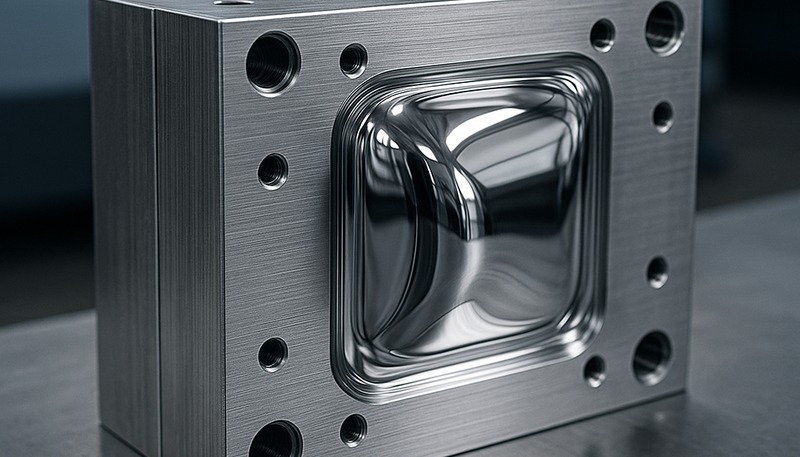
Zalecamy, aby w pierwszej kolejności rozważyć technikę zamknięcia, ponieważ jest to najczęściej pomijane rozwiązanie. Jeżeli ramię zatrzasku wystaje do wewnątrz ze ścianki, umieszczenie okna lub otworu bezpośrednio pod nim pozwala powierzchniom stalowym formy zetknąć się („zamknąć”) przez ten otwór — element powstaje bez żadnego mechanizmu suwakowego. W detalu pozostaje niewielki otwór, który można uwzględnić w większości konstrukcji. Wpływ na koszt: zerowy. Wpływ na termin realizacji: zerowy. To rozwiązanie należy zawsze oceniać jako pierwsze.
Kiedy należy zastosować suwak boczny?
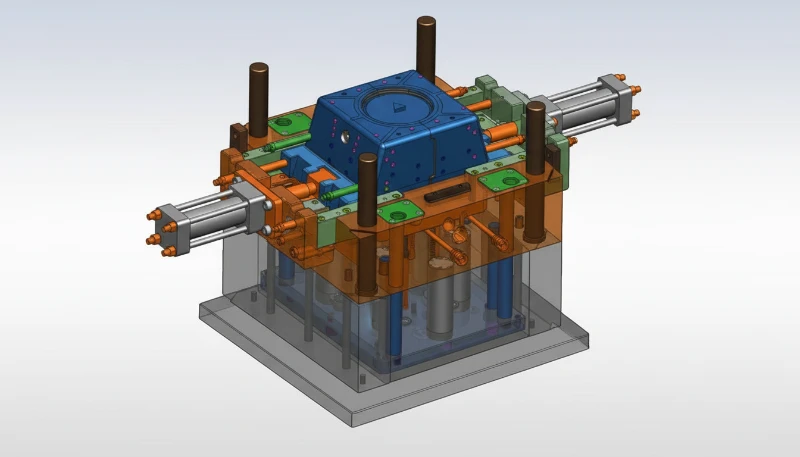
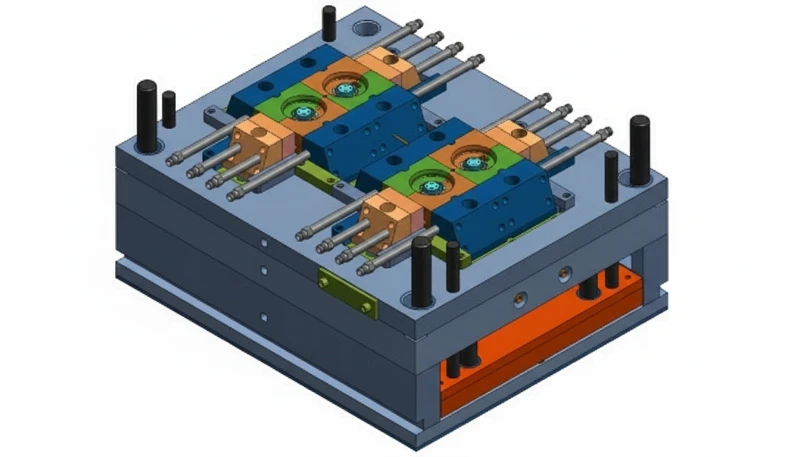
Suwak boczny jest standardowym mechanizmem do wykonywania zewnętrznych podcięć — bocznych otworów, zaczepów, gwintów i króćców. Podczas wtrysku suwak kształtuje podcięcie, a następnie cofa się przy otwieraniu formy, zanim część zostanie wypchnięta.
Suwaki ze sworzniem skośnym są napędzane skośnymi sworzniami przymocowanymi do nieruchomej połowy formy. Podczas otwierania skośny sworzeń wymusza cofanie suwaka prostopadle do kierunku otwierania. Kąt krzywki zwykle wynosi 15–25 stopni. Poniżej 15 stopni siła jest niewystarczająca. Powyżej 25 stopni siła boczna podczas otwierania tworzy niebezpieczne obciążenia płyty formy. Suwaki hydrauliczne omijają to ograniczenie i są stosowane, gdy wymagany skok przekracza możliwości geometrii krzywki albo forma jest zbyt zwarta na standardową długość sworznia.
Zasady projektowania suwaków: co najmniej 5° pochylenia na wszystkich powierzchniach suwaka — nasze formy pracują w temperaturze od 80,0°C do 120,0°C, a tarcie stali o stal w tych warunkach powoduje szybkie zużycie; co najmniej 2,0 mm styku stal–stal na linii podziału na wszystkich powierzchniach (jest to tzw. zamknięcie, które zapobiega powstawaniu wypływek podczas wtrysku); oraz odpowietrzenie kieszeni suwaka, aby nie powstawały pułapki powietrzne. Głębokość podcięcia wyznacza wymagany skok suwaka: na każdy 1 mm głębokości podcięcia potrzeba co najmniej 1,5 mm skoku suwaka oraz dodatkowego marginesu bezpieczeństwa 3 mm, umożliwiającego uwolnienie części.
"Suwaki napędzane trzpieniami krzywkowymi muszą pracować przy kącie krzywki w zakresie 15–25 stopni, aby zapewnić niezawodne działanie."True
Przy kącie poniżej 15 stopni pozioma składowa siły od trzpienia krzywkowego jest zbyt mała, aby niezawodnie cofnąć suwak wbrew tarciu i pozostałemu zaciskaniu części. Powyżej 25 stopni obciążenie boczne przenoszone na płytę formy podczas otwierania staje się na tyle duże, że powoduje uszkodzenia linii podziału i przedwczesne zużycie trzpienia krzywkowego oraz kieszeni suwaka.
"Suwak można zaprojektować tak, aby uwalniał każde podcięcie niezależnie od jego głębokości i geometrii."False
Suwaki mają ograniczenia geometryczne. Bardzo głębokie podcięcia (wymagające skoku >25 mm) potrzebują dużych korpusów suwaków, które konkurują o miejsce z kanałami chłodzącymi i wypychaczami. Podcięcia o złożonej geometrii — z powierzchniami krzywoliniowymi lub kątami wklęsłymi — mogą wymagać mechanizmu suwaka dwustopniowego albo obrotowego, co zwiększa koszt o 8 000–20 000 USD i znacznie komplikuje konstrukcję. Czasami uczciwą odpowiedzią jest konieczność zmiany geometrii części.
Kiedy wewnętrzne wypychacze skośne są właściwym wyborem?
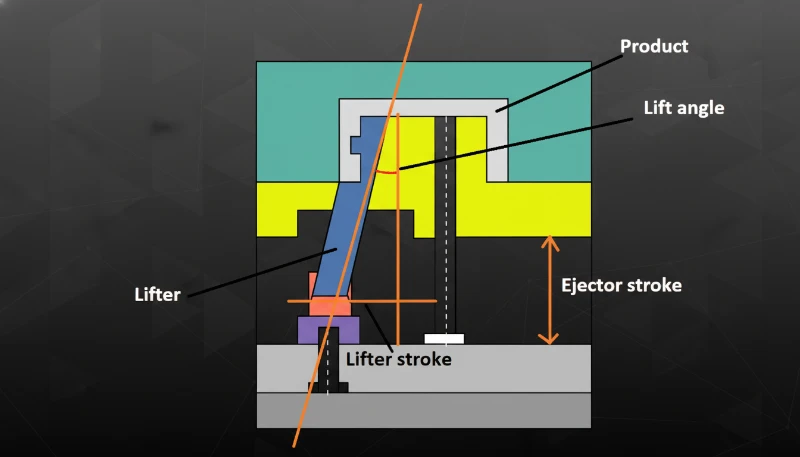
Wypychacze skośne to ustawione pod kątem kołki wypychające, które uwalniają wewnętrzne podcięcia — zatrzaski, żebra i rowki niedostępne dla suwaków. Typowe zastosowania wypychaczy skośnych to haki zatrzaskowe wewnątrz obudowy, żebra z ujemnym pochyleniem, wewnętrzne rowki i skierowane do wewnątrz pierścienie ustalające nadlewów.
Wypychacz skośny jest w istocie wypychaczem ustawionym pod kątem. Gdy płyta wypychaczy przesuwa się do przodu, aby zsunąć część z rdzenia, kąt wypychacza powoduje jednocześnie jego ruch na bok, co uwalnia podcięcie wewnętrzne. Typowy kąt wypychacza skośnego wynosi od 5 do 15 stopni względem pionu. Kąt mniejszy niż 5 stopni nie zapewnia wystarczającego przesunięcia bocznego do uwolnienia części. Kąt większy niż 15 stopni powoduje nadmierne zużycie prowadnicy wypychacza i gniazda w rdzeniu.
Wymiarowanie wypychacza skośnego ma znaczenie. W naszym zakładzie inżynierowie wymieniali zbyt małe wypychacze skośne w trzech różnych formach produkcyjnych pracujących na naszych 45 maszynach — wypychacz niedostosowany do siły wypychania będzie się zacierał i blokował, pozostawiając osady aluminium lub stali w gnieździe i ostatecznie unieruchamiając układ wypychania. Przekrój wypychacza należy dobrać tak, aby przenosił co najmniej 2× przewidywaną siłę wypychania, a w każdej formie produkcyjnej pracującej powyżej 100,000 cykli korpus wypychacza powinien być wykonany ze stali H13.
Jak sprawdzić projekt pod kątem podcięć przed wykonaniem oprzyrządowania?
Analiza pochylenia to najszybszy sposób wykrywania podcięć — każda powierzchnia z ujemnym pochyleniem w kierunku otwierania formy jest automatycznie oznaczana. W każdym nowoczesnym systemie CAD narzędzie analizy pochylenia wyróżnia takie powierzchnie. Należy je uruchomić przed zatwierdzeniem projektu. W ZetarMold widzimy to w każdym nowym projekcie — każda czerwona powierzchnia jest podcięciem albo powierzchnią bez pochylenia, a oba problemy generują koszty.
Czteroetapowy audyt podcięć: po pierwsze określ linię podziału i kierunek wyjmowania. Po drugie wykonaj analizę pochyleń w kierunku otwierania formy. Po trzecie dla każdej oznaczonej powierzchni zapytaj: czy można dodać pochylenie i wyeliminować podcięcie? Czy można zastosować zamknięcie? Czy ta cecha jest rzeczywiście potrzebna? Po czwarte dla cech, które pozostaną po tych trzech pytaniach, zaplanuj typ mechanizmu — suwak lub wypychacz skośny — i uwzględnij liczbę mechanizmów w szacunkowym budżecie oprzyrządowania.
W ZetarMold przed wyceną oprzyrządowania przeprowadzamy przegląd DFM każdej nowej części. W ciągu 20 lat realizacji tego procesu stwierdziliśmy, że typowa nowa część zaprojektowana przez inżyniera bez wcześniejszego doświadczenia w formowaniu wtryskowym ma 3–5 niezamierzonych podcięć. Po analizie DFM 70–80% z nich zostaje wyeliminowanych lub przekształconych w zamknięcia bez zwiększania kosztu oprzyrządowania. Pozostałe 20–30% wymaga mechanizmów — ale przynajmniej przed rozpoczęciem obróbki stali wiadomo dokładnie, za co się płaci.
| Rodzaj podcięcia | Lokalizacja | Najlepsze rozwiązanie | Przybliżony dodatkowy koszt |
|---|---|---|---|
| Otwór boczny / port | Ściana zewnętrzna | Suwak boczny | $4,000–$10,000 |
| Zewnętrzny zatrzask / klips | Ścianka zewnętrzna | Suwak lub zamknięcie | $0 (powierzchnia odcinająca) lub $4K–$8K (suwak) |
| Wewnętrzne połączenie zatrzaskowe | Ścianka wewnętrzna | Podnośnik skośny lub zamknięcie | $0 (zamknięcie) lub $1.5K–$4K (wypychacz skośny) |
| Gwint zewnętrzny | Cylinder zewnętrzny | Obrotowy mechanizm wykręcania | $8,000–$20,000 |
| Gwint wewnętrzny | Cylinder wewnętrzny | Rdzeń składany lub wykręcany | $10,000–$25,000 |
| Rowek obwodowy | Wokół obwodu | Przeniesienie suwaka lub linii podziału | $4,000–$12,000 |
| Podcięcie wyeliminowane | Dowolny | Przeprojektowanie / odcięcie / modyfikacja pochylenia | $0 |
Gwinty wymagają osobnego omówienia. Gwinty zewnętrzne na części cylindrycznej są rutynowo wykonywane przez umieszczenie linii podziału wzdłuż osi gwintu — gwint jest formowany w obu połówkach formy, a część łatwo się uwalnia. Gwinty wewnętrzne niemal zawsze wymagają mechanizmu wykręcającego (kosztownego i wolnego) albo ręcznie ładowanej wkładki usuwanej po wtrysku (pracochłonnego). Jeśli gwint wewnętrzny jest konieczny, należy rozważyć, czy może go zastąpić występ pod wkręt samogwintujący lub wkładka osadzana na gorąco. Wkładki montowane po formowaniu są dostępne z mosiądzu lub stali nierdzewnej w standardowych rozmiarach metrycznych od M2 do M12 i można je niezawodnie instalować w każdym tworzywie termoplastycznym za pomocą prostej prasy termicznej.
Jak strategia linii podziału może bezkosztowo wyeliminować podcięcia?
Przeniesienie linii podziału jest jedynym rozwiązaniem podcięcia, które kosztuje $0 — przekształca podcięcie w powierzchnię z pochyleniem. Przesunięcie lub zmiana kształtu linii podziału może przekształcić podcięcie w standardową powierzchnię z pochyleniem bez żadnych dodatkowych kosztów oprzyrządowania. Poradniki konkurencji niemal nigdy nie omawiają szczegółowo tego podejścia, choć właśnie tutaj doświadczenie ma największe znaczenie.
Podstawowa zasada jest następująca: jeśli dana powierzchnia tworzy podcięcie przy płaskiej linii podziału, spróbuj poprowadzić linię podziału wzdłuż tej powierzchni, stosując uskoki, pochylenia lub kontury. Otwór boczny, który przy płaskiej linii podziału wymagałby suwaka, może zostać całkowicie uwolniony przez schodkową linię podziału przecinającą otwór. Ograniczeniem jest dłuższy czas obróbki złożonych linii podziału oraz konieczność precyzyjnego dopasowania rdzenia i gniazda. Zwiększa to koszt obróbki o 1 000–4 000 USD, lecz zwykle jest znacznie tańsze niż kompletny mechanizm suwakowy.
Trzy strategie prowadzenia linii podziału eliminujące typowe podcięcia to: schodkowa linia podziału (dla bossów, żeber i występów w pobliżu strefy podziału), ukośna linia podziału (dla elementów na powierzchniach stożkowych lub nachylonych) oraz konturowa linia podziału, która przebiega zgodnie z naturalną geometrią detalu. Podczas przeglądu DFM modelujemy wszystkie trzy warianty i przedstawiamy różnice kosztów, aby klient mógł zdecydować, czy zmiana konstrukcji jest opłacalna.
Najczęściej zadawane pytania o projektowanie podcięć w formie wtryskowej
Ile dodaje pojedynczy suwak do kosztu narzędzia formującego?
Pojedynczy suwak boczny napędzany trzpieniem krzywkowym zwiększa koszt oprzyrządowania o $4,000 do $10,000 w typowej chińskiej narzędziowni oraz o $8,000 do $20,000 w zakładach północnoamerykańskich lub europejskich. Koszt obejmuje projekt i obróbkę trzpienia krzywkowego, korpus suwaka z hartowanej stali narzędziowej H13, montaż prowadnic, płyty ścierne oraz dodatkowe próby T1 i T2 potrzebne do weryfikacji czasu działania suwaka, skoku i szczelności linii podziału na powierzchniach zamykających. Suwaki hydrauliczne lub dwustopniowe kosztują proporcjonalnie więcej ze względu na osprzęt napędowy.
Jaka jest różnica między suwakiem a podnośnikiem w formowaniu wtryskowym?
Suwak obsługuje zewnętrzne podcięcia na zewnętrznych powierzchniach części, poruszając się prostopadle do kierunku otwierania formy za pomocą trzpienia skośnego lub cylindra hydraulicznego zamontowanego na płytach formy. Wypychacz skośny obsługuje wewnętrzne podcięcia na wewnętrznych powierzchniach części i porusza się pod kątem podczas skoku wypychania — jego ruch jest zintegrowany z ruchem płyty wypychaczy. Suwaki znajdują się w obszarze linii podziału, a wypychacze skośne są osadzone wewnątrz rdzenia. Do zewnętrznych otworów bocznych i zaczepów należy użyć suwaka. Do wewnętrznych zatrzasków i cech ścianek wewnętrznych należy użyć wypychacza skośnego lub rozważyć zamknięcie formujące.
Czy mogę wyeliminować podcięcie za pomocą elastycznego materiału?
Czasami tak. W przypadku płytkich zatrzasków i małych haków bardziej miękkie tworzywa, takie jak TPE, TPU lub polipropylen o niskiej twardości, mogą podczas wypychania odkształcić się na tyle, aby zejść z niewielkiego podcięcia bez dodatkowego mechanizmu — technikę tę nazywa się wypychaniem wymuszonym. Zgodnie z zasadą konstrukcyjną głębokość podcięcia nie może przekraczać 2 do 5 procent lokalnej średnicy części, aby rozwiązanie działało niezawodnie bez widocznych śladów naprężeń lub pęknięć. Sztywnych materiałów, takich jak ABS, PC lub poliamid wzmacniany włóknem szklanym, nie można wypychać w sposób wymuszony z podcięć bez ich uszkodzenia.
Skąd mam wiedzieć, czy moja część wymaga suwaka czy podnośnika?
Przeprowadź analizę pochylenia w narzędziu CAD, używając kierunku otwierania formy jako odniesienia. Jeśli oznaczona powierzchnia znajduje się na zewnętrznej ściance części — jest widoczna z zewnątrz i dostępna od strony linii podziału — potrzebny jest suwak lub zmiana konstrukcji. Jeśli oznaczona powierzchnia leży na ściance wewnętrznej albo w zagłębionej cesze wewnątrz gniazda części, potrzebny jest wypychacz skośny lub otwór zamykający. W razie wątpliwości prześlij pliki części do przeglądu DFM — jest on standardem w większości narzędziowni i zwykle wykonywany bezpłatnie dla nowych projektów.
Jak najtaniej radzić sobie z podcięciem w formowaniu wtryskowym?
Najtańszym rozwiązaniem zawsze jest wyeliminowanie podcięcia przez zmianę projektu — zerowy koszt oprzyrządowania i zerowy wpływ na czas cyklu. Drugim najtańszym rozwiązaniem jest powierzchnia zamknięcia lub otwór przelotowy: dodanie okna lub otworu bezpośrednio pod zatrzaskiem albo występem, co pozwala stali formy utworzyć element bez ruchomego mechanizmu. Jeśli żadne rozwiązanie nie działa, najtańszym mechanizmem jest standardowy suwak napędzany sworzniem kątowym, kosztujący od $4,000 do $10,000. Najdroższymi dostępnymi rozwiązaniami podcięć są złożone mechanizmy obrotowe lub wielostopniowe do gwintów wewnętrznych.
Czy podcięcie zawsze zwiększa czas cyklu formowania?
Tak, ale wielkość wpływu zależy od typu mechanizmu. Dobrze zaprojektowany suwak napędzany trzpieniem krzywkowym wydłuża sekwencję otwierania formy o 2 do 5 sekund, ponieważ suwak musi się wycofać przed rozpoczęciem wypychania. Suwak hydrauliczny wymagający dodatkowego skoku siłownika może wydłużyć każdy cykl o 5 do 10 sekund. Przy 100,000 wtrysków rocznie nawet dodatkowe 5 sekund oznacza 139 dodatkowych maszynogodzin rocznie — rzeczywisty stały koszt produkcji ponad wyższą cenę oprzyrządowania. Wypychacze skośne zwykle wydłużają cykl mniej niż suwaki, ponieważ ich ruch jest zintegrowany ze skokiem wypychania.
DFM: DFM (projektowanie pod kątem możliwości produkcyjnych) oznacza systematyczny przegląd geometrii części przed wykonaniem oprzyrządowania w celu wskazania cech zwiększających złożoność formy, koszt lub ryzyko wad oraz zaproponowania zmian konstrukcyjnych ograniczających te zagrożenia. ↩
podcięcie: Podcięcie to cecha części formowanej wtryskowo — na przykład hak, gwint, zatrzask lub boczny otwór — która uniemożliwia proste wypchnięcie części z formy w głównym kierunku odformowania. ↩
suwak boczny: Suwak boczny to mechaniczny element formy, który podczas wypychania porusza się prostopadle do kierunku otwierania formy, aby uwolnić podcięcia; jest napędzany skośnym trzpieniem krzywkowym lub siłownikiem hydraulicznym. ↩
wypychacz skośny: Wypychacz skośny to ustawiony pod kątem trzpień lub płytka wypychająca wewnątrz formy wtryskowej, która podczas skoku wypychania porusza się po skosie, uwalniając wewnętrzne podcięcia lub zatrzaski na wewnętrznych ściankach części. ↩