 Przejdź do treści
Usługi niestandardowego wtrysku TPU i nakładania
Szukasz profesjonalnego wtrysku TPU? Oferujemy wysokoprecyzyjne niestandardowe części TPU, nakładanie (60A-85D) i prototypowanie.

Zasoby dotyczące Kompletnego Przewodnika po Procesie Formowania Wtryskowego TPU
Co to jest TPU (Poliuretan termoplastyczny)?
TPU (poliuretan termoplastyczny) to wysokowydajny, przetwarzalny w stanie stopionym kopolimer blokowy, który wypełnia lukę inżynieryjną między elastycznymi gumami a sztywnymi tworzywami sztucznymi. Znany z wyjątkowej odporności na zużycie i wszechstronności, może być wielokrotnie topiony i poddawany recyklingowi przy użyciu standardowego sprzętu do wtryskiwania termoplastycznego, będąc materiałem pierwszego wyboru dla ciężkich zastosowań przemysłowych i konsumenckich (B2B).
Ten liniowy segmentowy kopolimer blokowy składa się z naprzemiennych segmentów twardych (izocyjaniany i krótkołańcuchowe diole) oraz segmentów miękkich (poliole). Precyzyjna równowaga między tymi segmentami molekularnymi nadaje TPU unikalną zdolność do zapewnienia sprężystej odzyskiwalności wraz ze sztywną wytrzymałością mechaniczną.
W przeciwieństwie do tradycyjnych kauczuków termoutwardzalnych, które wymagają czasochłonnego procesu wulkanizacji, TPU zachowuje się jak prawdziwy termoplast. W zaawansowanej produkcji przemysłowej żywice TPU dzielą się na dwie główne rodziny chemiczne: TPU na bazie poliestru (oferujące niezrównaną wytrzymałość mechaniczną, odporność na rozdarcie i ochronę przed olejami) oraz TPU na bazie polieteru (zapewniające doskonałą elastyczność w niskich temperaturach, odporność na mikroorganizmy i znakomitą odporność na hydrolizę).

Jakie są charakterystyki TPU?
Kluczowe cechy TPU obejmują niezrównaną odporność na ścieranie, wysoką wytrzymałość na rozciąganie, ekstremalną elastyczność w szerokim zakresie twardości (60A do 85D) oraz doskonałą odporność na oleje, chemikalia i starzenie środowiskowe. Te unikalne właściwości pozwalają formowanym komponentom TPU przetrwać ekstremalne naprężenia mechaniczne i surowe warunki chemiczne, w których tradycyjne tworzywa sztuczne i standardowe elastomery szybko ulegają uszkodzeniu.
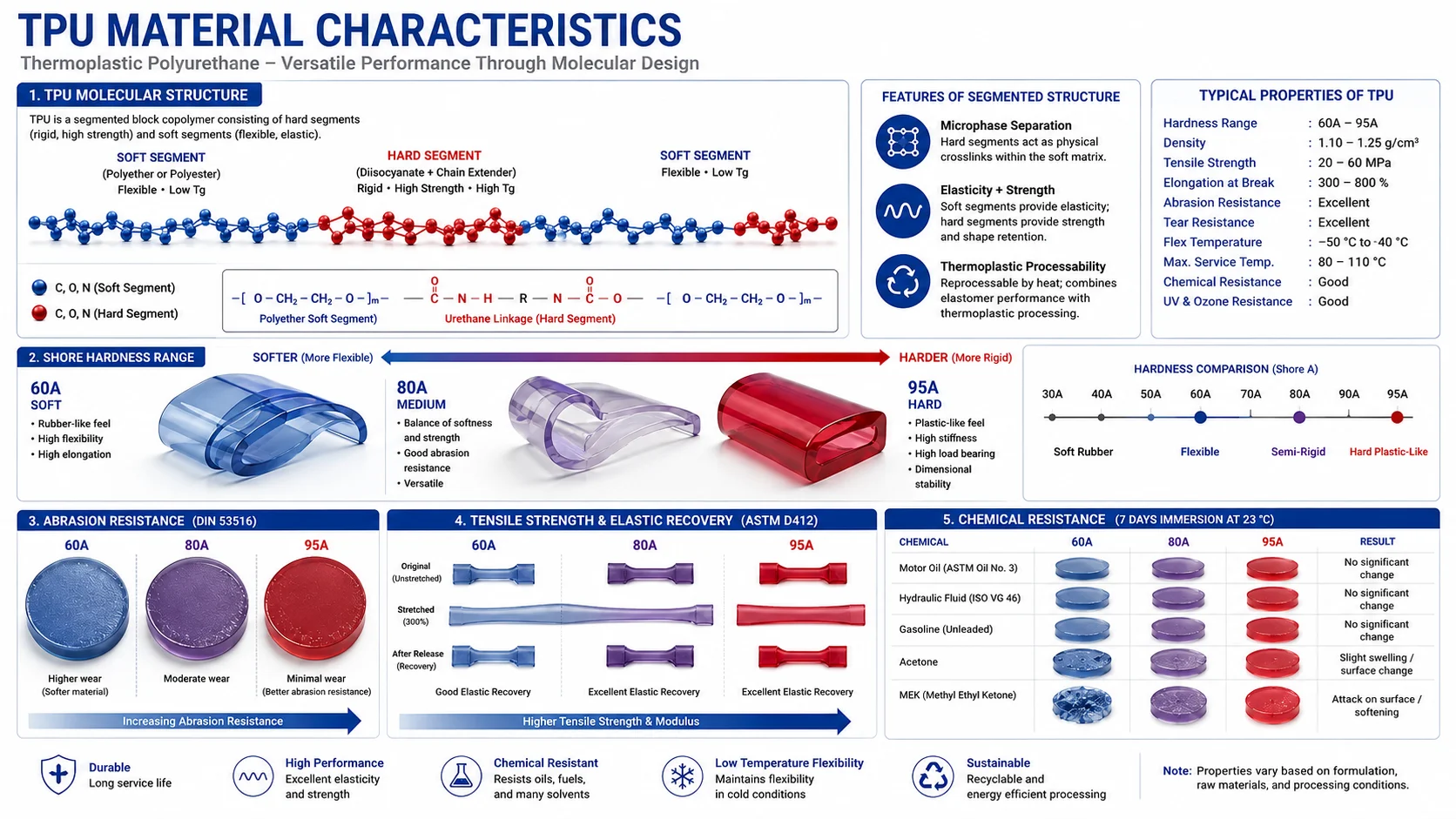
TPU jest wysoko cenione w ciężkich i wysokoprecyzyjnych zastosowaniach inżynieryjnych dzięki wyjątkowym właściwościom fizycznym i chemicznym:
Wyjątkowa odporność na ścieranie i zużycie:
TPU konsekwentnie przewyższa większość innych elastomerów i tworzyw sztucznych konstrukcyjnych poddanych intensywnemu tarciu, ścieraniu i ciągłemu przesuwaniu mechanicznemu, co czyni go standardem branżowym dla ruchomych elementów narażonych na zużycie.
Wysoka wytrzymałość na rozciąganie i elastyczność:
Wykazuje wysoką nośność, doskonałą absorpcję wstrząsów oraz wysoką wydłużalność przy zerwaniu. Pozwala to formowanym częściom absorbować silne uderzenia i szybko odzyskiwać kształt po odkształceniu bez trwałego odkształcenia strukturalnego.
Doskonała odporność na oleje, chemikalia i smary:
TPU zachowuje swoją integralność strukturalną i stabilność wymiarową podczas ciągłego narażenia na płyny samochodowe, smary przemysłowe, węglowodory oraz różne rozpuszczalniki.
Odporność środowiskowa i mikroskopowa:
W zależności od wybranego gatunku chemicznego (szczególnie polieterowego), TPU oferuje wysoką odporność na degradację ozonową, promieniowanie UV, atak mikrobiologiczny i długotrwałą ekspozycję na wodę (odporność na hydrolizę).
Czy materiały TPU można formować wtryskowo?
Tak, materiały TPU można z powodzeniem formować wtryskowo przy użyciu standardowych maszyn do przetwórstwa termoplastycznego wyposażonych w konwencjonalne ślimaki trójstrefowe. Jednak osiągnięcie najwyższej jakości detali wymaga ścisłej kontroli procesu, precyzyjnego profilowania temperatury cylindra oraz rygorystycznego protokołu wstępnego suszenia żywicy, aby uzyskać wilgotność poniżej 0,021% przed przetworzeniem.
Ponieważ TPU topi się i płynie po podgrzaniu, a krzepnie po ochłodzeniu, doskonale wpasowuje się w procesy wtrysku masowej produkcji. Jednak formowanie TPU wymaga skrupulatnej wiedzy inżynierskiej ze względu na jego wysoką wrażliwość na ścinanie i higroskopijność.
Udane formowanie wtryskowe TPU wymaga precyzyjnego strefowania temperatury cylindra (zwykle od 180°C do 230°C w zależności od twardości) i kontrolowanego przeciwciśnienia, aby zapobiec degradacji materiału. Niezbędne jest również solidne odpowietrzanie formy, aby uniknąć uwięzienia gazów i śladów przepalenia.
Co najważniejsze, ponieważ surowe żywice TPU szybko absorbują wilgoć atmosferyczną, materiał musi być wstępnie suszony w suszarkach z osuszaniem ziębnikowym przez 3 do 4 godzin, aby zapobiec srebrzystym smugom, wewnętrznym pęcherzykom lub poważnej degradacji struktury w gotowych formowanych komponentach.
Kluczowe parametry procesu:
- Temperatura beczki: 180-230°C (w zależności od twardości)
- Protokół suszenia: 3-4 godziny w temperaturze 80-90°C
- Zawartość wilgoci: < 0,021% przed przetworzeniem
- Punkt rosy: ≤ -40°C
- Ciśnienie wsteczne: Kontrolowane, aby zapobiec degradacji


Jak wybrać odpowiednią twardość Shore'a (60A do 85D) dla formowanych części TPU?
Wybór odpowiedniej twardości Shore'a dla TPU wiąże się z równoważeniem elastyczności, absorpcji uderzeń i sztywności strukturalnej w całym spektrum od Shore 60A (miękka guma) do 85D (półsztywne tworzywo sztuczne). Zastosowania przemysłowe polegają na precyzyjnym doborze twardości, aby dopasować ją do obciążeń mechanicznych i wymagań dotykowych środowiska.
| Zakres twardości w skali Shore'a | Analogia dotykowa materiału | Typowe zastosowania przemysłowe |
|---|---|---|
| 60A - 75A | Miękka gumka recepturka / Gumka do mazania | Uszczelnienia wysokoflex, niestandardowe uszczelki, miękkie okładziny chwytne, podkładki antywibracyjne. |
| 80A - IIIA | Etui na smartfon / podeszwa buta | Najczęstszy zakres formowania. Osłony ochronne, koła przemysłowe, listwy zabezpieczające przed zużyciem, elektronika konsumencka. |
| 95A - 64D | Koło deskorolki / Młotek twardy | Ciężkie koła zębate, paski napędowe, uszczelnienia hydrauliczne wysokociśnieniowe, tuleje przemysłowe. |
| 70D - 85D | Sztywny plastik / Kask ochronny | Konstrukcyjne elementy przemysłowe wymagające wysokiej odporności na uderzenia i minimalnej elastyczności. |
TPU vs. TPE vs. Silikon: Który elastomer jest najlepszy dla Twojego projektu?
Wybór między TPU, TPE i silikonem zależy od potrzeb mechanicznych, temperatur środowiskowych i budżetu: TPU zapewnia niezrównaną odporność na ścieranie i oleje; TPE oferuje ekonomiczne, ultra-miękkie tekstury; a silikon zapewnia wysoką biokompatybilność oraz odporność na ekstremalne temperatury od -40°C do ponad 200°C.
Projektując elastyczne elementy, inżynierowie często dyskutują między TPU, TPE (elastomery termoplastyczne) a ciekłym silikonem (LSR). Wybór odpowiedniego materiału w dużej mierze zależy od środowiska pracy aplikacji:

Wybierz TPU, jeśli:
Twój projekt wymaga najwyższej możliwej odporności na zużycie, wytrzymałości na rozdarcie i odporności na chemikalia/oleje. TPU jest znacznie lepsze od TPE pod względem trwałości mechanicznej, nośności przy rozciąganiu oraz wyjątkowo dobrze łączy się z twardymi tworzywami podczas wielomateriałowego formowania nakładkowego.

Wybierz TPE, jeśli:
Wymagasz ultra-miękkiego dotyku (poniżej 60A twardości Shore), krótszego czasu cyklu formowania dla efektywności kosztowej przy dużych nakładach lub bardziej opłacalnej alternatywy dla dóbr konsumpcyjnych, gdzie ekstremalna odporność na zużycie mechaniczne nie jest kluczowa.

Wybierz silikon, jeśli:
Twój produkt działa w ekstremalnych temperaturach (powyżej 150°C lub poniżej -40°C), wymaga absolutnej biokompatybilności klasy medycznej (ISO 10993) lub potrzebuje wysokiej odporności na trwałe odkształcenie ściskające. W przeciwieństwie do TPU i TPE, silikon jest materiałem termoutwardzalnym i nie nadaje się do recyklingu.
Jakie są typowe zastosowania przemysłowe detali TPU formowanych wtryskowo?
Wtryskiwane elementy TPU są szeroko stosowane w przemyśle motoryzacyjnym, maszyn przemysłowych, elektroniki użytkowej, urządzeń medycznych i produktów dla zwierząt. Unikalna zdolność do wytrzymywania silnych uderzeń i środowisk o wysokim tarciu sprawia, że TPU jest materiałem wybieranym na ciężkie elementy na całym świecie.

1. Przemysł motoryzacyjny
Osłony przegubów równobieżnych (CV), wewnętrzne uszczelnienia olejowe, przepusty kablowe, tłumiki drgań kabiny oraz miękkie elementy konsoli wnętrza.

2. Inżynieria przemysłowa:
Wytrzymałe kółka jezdne, pasy napędowe o wysokim napięciu, uszczelnienia tłoków hydraulicznych, węże pneumatyczne, sprzęgła elastyczne oraz ostrza zgarniaków do przetwarzania minerałów.

3. Elektronika użytkowa:
Ochronne etui na smartfony, wytrzymałe zderzaki do laptopów, paski do inteligentnych zegarków oraz wodoodporne elementy słuchawek dousznych.

4. Sprzęt medyczny:
Biokompatybilne złączki do rurek, zawory do podawania płynów, obudowy urządzeń diagnostycznych oraz ergonomiczne uchwyty narzędzi chirurgicznych.

5. Produkty dla zwierząt i sprzęt outdoorowy:
Trwałe zabawki dla psów, odporne na gryzienie akcesoria treningowe, skorupy butów narciarskich, profesjonalne sprzączki plecaków oraz wytrzymałe obudowy elektronicznych obroży.
Niestandardowe Usługi Formowania Wtryskowego TPU
Projektowanie wysokowydajnych elementów elastomerowych dla doskonałości przemysłowej.

Zasoby dotyczące Kompletnego Przewodnika po Procesie Formowania Wtryskowego TPU
Jakie są zalety wtrysku TPU?
Podstawowe zalety wtryskiwania TPU obejmują wysoką wydajność masowej produkcji, ekstremalną powtarzalność właściwości mechanicznych, doskonałe możliwości nakładania wielomateriałowego oraz znakomitą wszechstronność kosmetyczną. Ten proces umożliwia szybką produkcję wysoce trwałych, złożonych geometrycznie elementów elastomerowych.
Wydajność masowej produkcji:
Formowanie wtryskowe umożliwia szybką produkcję złożonych geometrycznie części z TPU o wąskich tolerancjach wymiarowych, drastycznie obniżając koszt jednostkowy w porównaniu z obróbką CNC lub drukiem 3D.
Wyjątkowe właściwości mechaniczne:
Formowane elementy w pełni przejmują wytrzymałość surowego polimeru TPU, zapewniając bezkonkurencyjną odporność na ścieranie, wysoką absorpcję uderzeń i doskonałą regenerację zmęczeniową pod obciążeniem cyklicznym.
Znakomita zdolność do nakładania:
TPU łatwo osiąga silne molekularne wiązanie stopu z sztywnymi podłożami, takimi jak ABS, poliwęglan (PC) i nylon (PA), tworząc niezniszczalny komponent dwumateriałowy bez toksycznych klejów chemicznych.
Żywa kolorystyka i teksturyzacja:
Żywice TPU bezproblemowo mieszają się z koncentratami barwiącymi, umożliwiając uzyskanie żywych jednolitych kolorów, półprzezroczystych wykończeń lub specjalistycznych tekstur formy (takich jak matowa, błyszcząca lub teksturowana ziarnistość) bezpośrednio z powierzchni narzędzia.
Jakie są wady formowania wtryskowego TPU?
Główne wady wtrysku TPU obejmują ścisłe przepisy dotyczące wstępnego suszenia, bardzo wąskie okno temperatury przetwarzania, podwyższone początkowe koszty narzędziowe ze względu na duży skurcz materiału oraz nieco dłuższe cykle chłodzenia w porównaniu z sztywnymi tworzywami sztucznymi.
Wymagania dotyczące dokładnego suszenia materiału:
TPU jest silnie higroskopijne. Jeśli zignoruje się procedury suszenia, wilgoć powoduje degradację hydrolityczną podczas formowania, drastycznie pogarszając wytrzymałość fizyczną i wykończenie powierzchni części.
Wąski zakres temperatury przetwarzania:
TPU ma wysoką wrażliwość na ścinanie. Jeśli prędkość wtrysku lub temperatura stopu jest nieco za wysoka, łańcuchy polimerowe ulegają degradacji; jeśli za niska, powoduje to niedolanie lub słabe wykończenie powierzchni.
Wyższe koszty przygotowania narzędzi:
Ze względu na naturalną lepkość TPU i wysoki współczynnik skurczu (0,5% do 2,0%), formy muszą być precyzyjnie zaprojektowane z wyspecjalizowanym systemem odpowietrzania, zaawansowanymi mechanizmami wypychania i wysokiej jakości stali narzędziowej, co sprawia, że początkowe koszty są wysokie.
Dłuższe cykle chłodzenia:
Materiały elastomerowe dłużej zatrzymują ciepło niż sztywne tworzywa sztuczne, często wymagając wydłużonych czasów chłodzenia w cyklu formowania, aby zapobiec odkształceniu części podczas wypychania.
Czym jest nakładanie TPU i jak działa?
Formowanie nakładkowe TPU to zaawansowany proces formowania wtryskowego wielomateriałowego, w którym miękkie TPU jest wtryskiwane bezpośrednio na sztywny podkład z tworzywa sztucznego (np. ABS lub PC), aby uzyskać trwałe, bezklejowe połączenie na poziomie molekularnym. Technika ta jest szeroko stosowana do dodawania ergonomicznych miękkich uchwytów, szczelnych uszczelek i zderzaków pochłaniających uderzenia do sztywnych obudów.
Proces ten realizowany jest za pomocą dwóch głównych metod: wtrysku dwustopniowego (wielostopniowego) z wykorzystaniem specjalistycznej maszyny z obrotowym narzędziem lub wtrysku wstawkowego, gdzie wstępnie uformowana sztywna część jest ręcznie lub robotycznie umieszczana w drugiej wnęce formy w celu nałożenia wtrysku TPU.
Magia nakładania TPU polega na molekularnej dyfuzji międzyfazowej. Gdy gorące, stopione TPU uderza w podgrzany sztywny podłoże pod wysokim ciśnieniem wtrysku, warstwa graniczna częściowo się topi, tworząc trwałe wiązanie chemiczne. To całkowicie eliminuje potrzebę ręcznego nakładania kleju lub dodatkowych mechanicznych elementów złącznych, drastycznie poprawiając szybkość montażu i trwałość produktu.
Korzyści nakładania:
- Ergonomiczne miękkie chwyty: Komfortowe, antypoślizgowe powierzchnie
- Szczelność powietrzna: Wodoodporność i pyłoszczelność
- Absorpcja uderzeń: Bumpery tłumiące wstrząsy
- Bez klejów: Trwałe wiązanie molekularne
- Wydajność montażu: Zmniejszony nakład pracy i koszty


Typowe problemy i rozwiązania w formowaniu wtryskowym TPU
Typowe wady wtrysku TPU obejmują rozpryskiwanie na powierzchni, przywieranie do formy podczas wypychania oraz srebrzyste smugi spowodowane uwięzioną wilgocią. Doświadczone zespoły inżynieryjne eliminują te problemy poprzez optymalne rozmieszczenie wlotów, precyzyjne teksturowanie formy i ścisłą kontrolę suszenia za pomocą środków pochłaniających wilgoć.
Formowanie TPU wiąże się z wyraźnymi wyzwaniami. Oto najczęstsze wady napotykane podczas produkcji i jak nasz zespół inżynieryjny je eliminuje:
Problem: Strumieniowanie / Ślady wężowe (faliste linie na powierzchni w pobliżu wlewka)
Przyczyna: Stopione TPU wnika do wnęki z nadmierną prędkością, powodując jego „wystrzelenie” do przodu i przedwczesne schłodzenie przed wypełnieniem reszty formy.
Rozwiązanie: Optymalizujemy konstrukcję formy, stosując wlot wentylatorowy lub wlot krawędziowy, aby rozproszyć prędkość, spowolnić początkowy wielostopniowy profil wtrysku i zwiększyć grubość wlotu.
Problem: Przywieranie do formy / Zniekształcenie przy wypychaniu (odkształcanie się lub bielenie podczas wypychania)
Przyczyna: Naturalna elastyczność TPU sprawia, że przylega ono do powierzchni rdzenia i wnęki, lub forma nie ma wystarczających kątów odciągu.
Rozwiązanie: Stosujemy specjalistyczne matowe teksturowanie lub piaskowanie powierzchni formy, aby zmniejszyć napięcie powierzchniowe, wykorzystujemy większe wypychacze i włączamy lekki środek antyadhezyjny do wytycznych przetwórstwa.
Problem: Srebrzyste smugi / ślady rozprysku
Przyczyna: Nadmiar wilgoci w żywicy TPU lub nadmierne ścinanie w ślimaku powodujące uwięzienie gazu.
Rozwiązanie: Ponownie zweryfikuj system osuszania z użyciem środka suszącego, aby zapewnić punkt rosy poniżej -40°C i zmniejsz ciśnienie wsteczne wtrysku.
Czy Możecie Wspierać Prototypowanie w Małych Nakładach Przed Przejściem do Pełnoskalowej Produkcji TPU?
Tak, oferujemy specjalistyczne prototypowanie małoseryjne z TPU z wykorzystaniem szybkiego narzędziownictwa (podstawy form z aluminium lub stali utwardzonej wstępnie) do produkcji od 50 do ponad 5000 rzeczywistych, wtryskiwanych części. Usługa ta pozwala zespołom rozwoju produktu na walidację twardości w skali Shore, reakcji dotykowej i funkcjonalnego dopasowania przed inwestycją w formy do produkcji wielkoseryjnej.
Dlaczego prototypowanie małoseryjne ma znaczenie?
Rozumiemy, że rozwój produktów B2B wymaga rygorystycznej walidacji przed zaangażowaniem się w budżety na narzędzia do produkcji wysokonakładowej. Aby zminimalizować ryzyko inżynieryjne, oferujemy dedykowane Usługa prototypowania niskonakładowego dla komponentów z TPU.
Dzięki zastosowaniu szybkich metod narzędziowych omijamy długie czasy realizacji związane z formami do produkcji masowej. Twoje prototypy są formowane przy użyciu dokładnie określonego gatunku żywicy produkcyjnej, co zapewnia, że wszystkie testy fizyczne – takie jak testy upadku w rzeczywistych warunkach, sprawdzanie szczelności środowiskowej i testy narażenia na działanie chemikaliów – dokładnie odzwierciedlają wydajność i wytrzymałość mechaniczną finalnego produktu.
Korzyści szybkiego wykonywania narzędzi:
- Czas realizacji 2–4 tygodnie
- 50–5000+ części na serię
- Materiały klasy produkcyjnej
- Pełna walidacja wymiarowa
- Opłacalne iteracje
Testy walidacyjne:
- Testy upadku/uderzenia
- Uszczelnienie środowiskowe
- Chemical exposure
- Tensile strength
- Abrasion resistance
Frequently Asked Questions (FAQs)
What file formats do you accept for FDM printing orders?
We accept STL, STEP, OBJ, and IGES formats. STEP is recommended for complex assemblies as it retains dimensional accuracy.
Can you sign an NDA to protect our design files and intellectual property?
Yes. We routinely sign NDAs prior to receiving any design files and all data is handled under strict confidentiality protocols.
Jaki jest typowy współczynnik skurczu TPU podczas wtryskiwania?
Typowy współczynnik skurczu objętościowego TPU wynosi od 0,51% do 2,01%. Jednakże wartość ta znacznie się różni w zależności od twardości Shore (miększe TPU kurczą się bardziej), grubości ścianki części, temperatury formy oraz tego, czy materiał jest typu poliestrowego czy polieterowego. Zawsze wykorzystujemy precyzyjną analizę przepływu w formie, aby odpowiednio dostosować wymiary narzędzia.
Dlaczego powinienem wybrać TPU polieterowe zamiast poliestrowego?
Powinieneś wybrać TPU polieterowe, jeśli Twój element będzie narażony na wilgotne środowiska, zanurzenie w wodzie lub ekstremalnie niskie temperatury, ponieważ oferuje ono doskonałą odporność na hydrolizę i elastyczność w niskich temperaturach. Wybierz TPU poliestrowe, jeśli Twoimi priorytetami są ekstremalna odporność na ścieranie, większa wytrzymałość na rozciąganie i doskonała odporność na oleje/chemikalia w suchych środowiskach.
Czy wasza fabryka może dopasować kolory do niestandardowych części wtryskiwanych z TPU?
Tak. Możemy dopasować dowolny konkretny kod koloru Pantone lub RAL przy użyciu specjalistycznych koncentratów barwiących kompatybilnych z TPU. Zapewniamy równomierną dyspersję koloru bez zmiany właściwości fizycznych lub profilu twardości Shore materiału.
Czy TPU dobrze wiąże się z wkładkami metalowymi?
Tak, TPU można nakładać na wstawki metalowe (np. gwinty mosiężne lub wsporniki stalowe). Aby uzyskać niezniszczalną więź, metalową wstawkę należy dokładnie odtłuścić, wstępnie podgrzać i potraktować specjalistycznym podkładem adhezyjnym przed umieszczeniem w formie wtryskowej.


How to Evaluate Injection Molding Supplier Supplier Selection Before Production
You get three injection molding quotes for your project, and one is 30% cheaper than the others. Before you sign that purchase order, stop and run through this evaluation checklist.
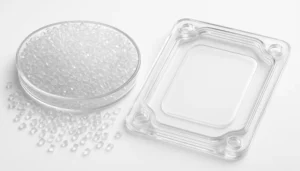
Injection Molding Supplier Material Certification: What Buyers Should Verify
When you source injection-molded parts overseas, material certification is the difference between a reliable product and a liability nightmare. Yet many buyers treat it as paperwork — sign the CoC,
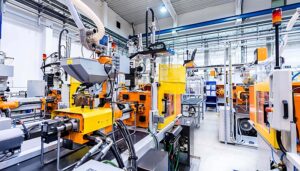
Injection Molding Supplier Delivery Management Mistakes That Cause Delays and Rework
You found what looks like the perfect injection molding supplier. Their quote is competitive, their samples look clean, and their sales team responds within hours. Then the delays start —
Dostarczane rozwiązania optymalizacyjne Za darmo
- Dostarczanie informacji zwrotnych i rozwiązań optymalizacyjnych
- Optymalizacja struktury i redukcja kosztów formowania
- Bezpośrednia rozmowa z inżynierami jeden na jeden


 EN
EN  ES
ES  FR
FR  DE
DE  PT
PT  AR
AR  RU
RU  JA
JA  KO
KO  IT
IT  NL
NL  TR
TR  PL
PL 