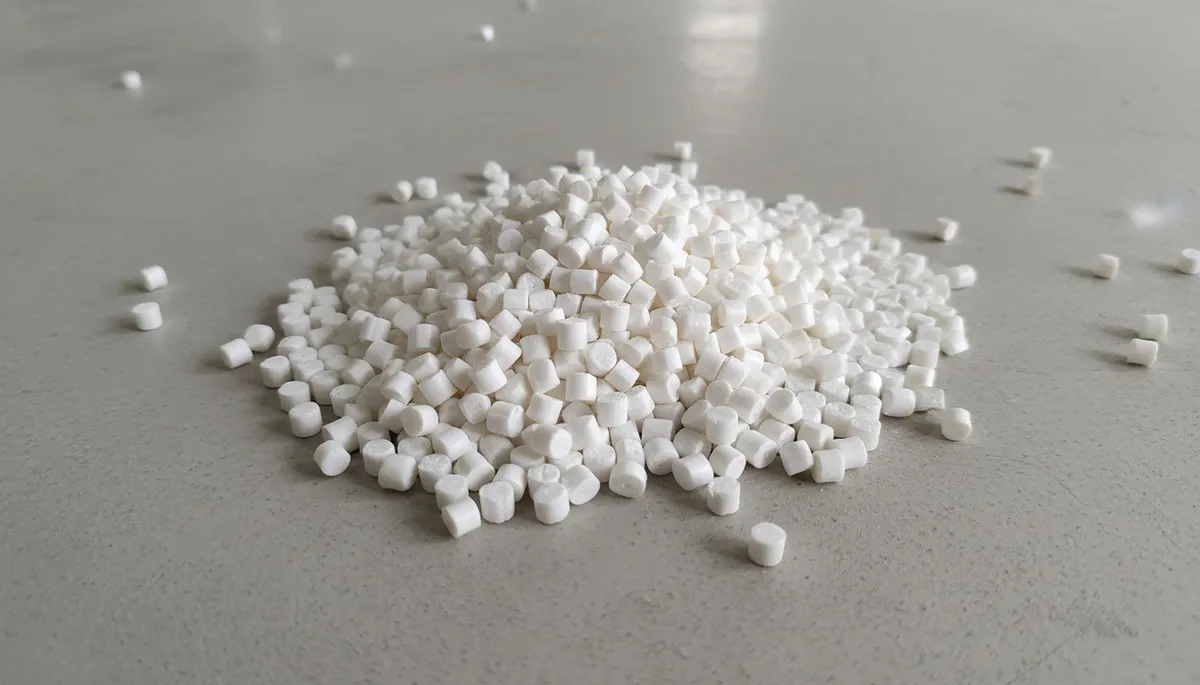
- Hotrunnersystemen elimineren afval van koudlopers en verlagen het materiaalverbruik per shot met 10–25% in matrijzen met meerdere caviteiten.
- Een hotrunnermatrijs verhoogt de matrijskosten met $5,000–$20,000, maar verdient zich bij volumes van 100,000+ onderdelen terug door materiaalbesparing.
- De temperatuur van het verdeelstuk moet binnen ±1–2°C worden geregeld om materiaaldegradatie en nadruppelen bij de aanspuiting tussen cycli te voorkomen.
- Hotrunners met naaldafsluiting bereiken aanspuitresten van minder dan 0.1 mm, vergeleken met 0.5–2 mm voor hotrunnernozzles met open punt.
- Hotrunners hebben vóór de productie 30–60 minuten nodig om de temperatuur te stabiliseren, waardoor ze voor korte runs minder efficiënt zijn.
- De verblijftijd van materiaal in het verdeelstuk mag voor warmtegevoelige harsen zoals PVC en POM niet langer zijn dan 5–15 minuten.
Wat is een hotrunnersysteem bij spuitgieten?
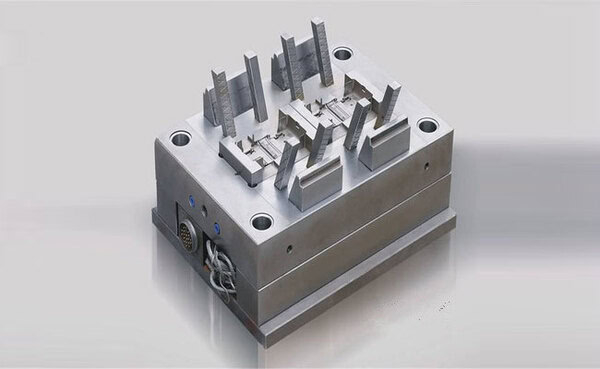
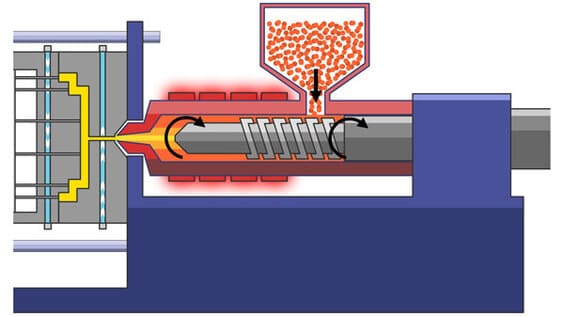
Een hotrunnersysteem is een thermisch geregeld toevoersysteem in de spuitgietmatrijs dat de kunststof gedurende de hele productierun vloeibaar houdt in de runnerkanalen. Anders dan bij een koudrunner, waarbij de kunststof in de spuitmond en runners bij elk shot stolt en moet worden uitgeworpen en afgevoerd, blijft de kunststof in een hotrunnerverdeelblok op de volledige smelttemperatuur — doorgaans 180–380°C — en wordt deze nooit uitgeworpen. Wanneer de matrijs opent, worden alleen de afgewerkte onderdelen verwijderd; het runnermateriaal blijft vloeibaar in het verdeelblok, gereed voor het volgende shot.
Bij ZetarMold installeren we hotrunnersystemen in ongeveer 40% van onze nieuwe spuitgietmatrijzen — vooral bij hoogvolume-gereedschappen met een lange productieleven, waarbij materiaalbesparing en kortere cyclustijden de hogere investering rechtvaardigen. Onze ervaring varieert van eenvoudige open-tip-systemen met 2 matrijsholten tot complexe klepaanspuitverdelers met 32 matrijsholten voor auto- en consumentenelektronicatoepassingen. Kennis van hotrunnerselectie en -werking is essentieel voor elke engineer die spuitgietgereedschappen specificeert.
Onderdelen van een hotrunnersysteem en hun werking
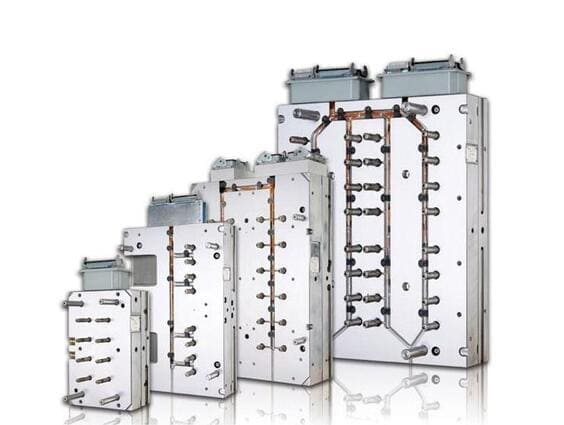
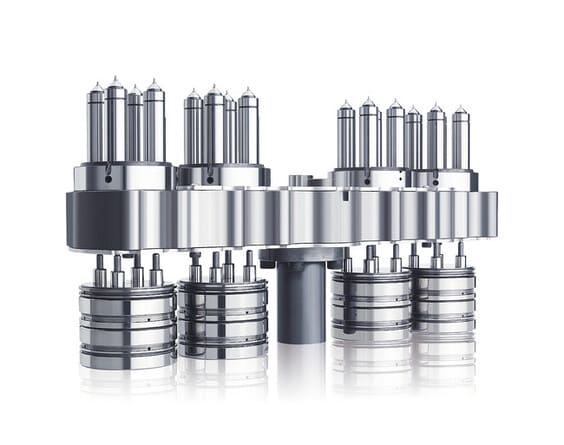
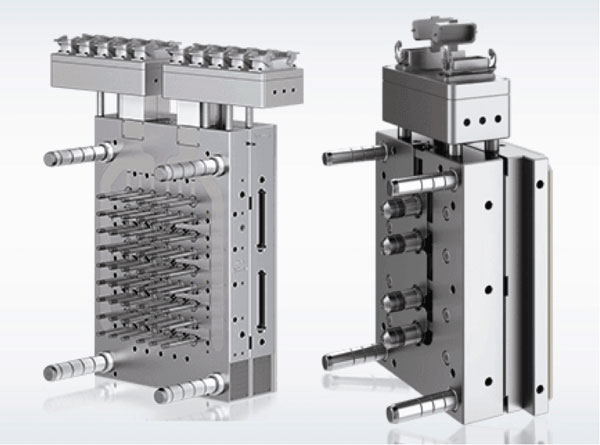
Een compleet hotrunnersysteem bestaat uit vier hoofdcomponenten: het verdeelblok, de inspuitnozzles (ook drops of torpedo’s genoemd), de verwarmingselementen en thermokoppels, en de temperatuurregelaar. Het verdeelblok is het centrale verwarmde blok dat kunststof uit de nozzle van de spuitgietmachine ontvangt en via interne kanalen naar elke inspuitnozzle verdeelt. De inspuitnozzles lopen vanuit het verdeelblok door de B-plaat van de matrijs en positioneren de aanspuittip exact bij de ingang van elke caviteit.
Verwarmingselementen — doorgaans patroon- of spiraalverwarmers — zijn in het verdeelblok en elke spuitmond ingebouwd om de temperatuur te handhaven. Thermokoppels meten de temperatuur op meerdere punten in het systeem en sturen gegevens terug naar de temperatuurregelaar. Een moderne hotrunnerregelaar handhaaft in alle zones een temperatuur van ±1–2°C en compenseert warmteverlies naar het omliggende matrijsstaal en variaties in de frequentie van de injectiecyclus.
Het beheersen van thermische uitzetting4 is een cruciale technische uitdaging bij het ontwerpen van hotrunners. Wanneer het verdeelblok van kamertemperatuur (20°C) opwarmt tot de verwerkingstemperatuur (250–350°C), zet het lineair 0.015–0.025 mm per graad Celsius uit. Voor een verdeelblok van 500 mm bij een verwerkingstemperatuur van 300°C betekent dit een totale uitzetting van 2.1–3.75 mm. De montage moet deze uitzetting toelaten zonder spanning op de spuitmondpunten of matrijsconstructie. In de matrijsplaat worden centreerknoppen en uitzettingsuitsparingen aangebracht om gecontroleerde beweging mogelijk te maken.
Drukverlies in het hotrunnersysteem is een belangrijke ontwerpparameter. De kunststof moet alle holten gelijktijdig en met gelijke druk vullen; drukonbalans tussen spuitmonden veroorzaakt maatvariatie. Kanaaldiameter (doorgaans 8–16 mm), kanaallengte en aantal bochten in het verdeelblok dragen bij aan drukverlies. Gebalanceerde verdeelblokken (symmetrische H-boomvertakking) bieden elke spuitmond gelijke stromingsweerstand.
Hotrunners met open spuitmond versus naaldafsluiting: welke kiest u?
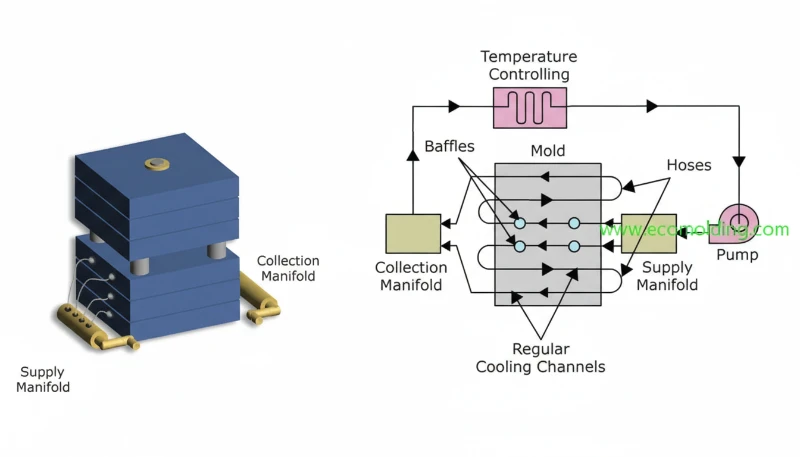
De twee voornaamste ontwerpen van hotrunner-nozzles zijn de open tip (ook thermische aanspuiting genoemd) en de naaldafsluiter. Nozzles met open tip vertrouwen uitsluitend op het bevriezen van de kunststof bij de nauwe aanspuitopening om tussen de cycli af te dichten — wanneer de injectie eindigt, koelt het kleine kunststofvolume in de aanspuittip door geleiding naar het koelere omliggende matrijsstaal af en stolt het, waardoor de matrijsholte wordt afgedicht. Nozzles met naaldafsluiter gebruiken een mechanisch bediende stalen pen die de aanspuitopening fysiek sluit wanneer de injectie eindigt, zodat ongeacht de kunststofviscositeit een mechanische afdichting ontstaat.
Hotrunners met open tip zijn eenvoudiger, goedkoper ($500–$1,500 per spuitmond tegenover $1,500–$4,000 voor een klepaanspuiting) en hebben minder bewegende onderhoudsdelen. Ze zijn geschikt voor de meeste standaardharsen (PP, PE, ABS, PS) bij gemiddelde productiesnelheden. Het aanspuitrestant is doorgaans 0.3–1.5 mm in diameter en 0.1–0.5 mm hoog — aanvaardbaar op niet-cosmetische oppervlakken, maar voor Class A-toepassingen vaak nabewerking nodig.
Naaldafsluiter-hotrunners voorkomen nadruppelen, bieden nauwkeurige aanspuittiming en een uitstekend aanspuitrestant — doorgaans minder dan 0.1 mm. Ze zijn essentieel voor hoogviskeuze materialen die moeilijk afsluiten (PC, PEI, PA66-GF30), hogedruktoepassingen waarbij open nozzles onder nadruk nadruppelen, meervoudige matrijzen met sequentiële aanspuitregeling en zichtdelen waarbij aanspuitmarkeringen kritisch zijn. Actuatoren kunnen pneumatisch (luchtcilinder), hydraulisch of elektrisch servogestuurd zijn.
“Hotrunnersystemen kunnen de cyclustijd met 5–15% verkorten ten opzichte van koudlopermatrijzen doordat de koeltijd voor het bevriezen van het aanspuitstelsel vervalt.”True
Bij een coldrunnermatrijs kan de cyclus pas openen wanneer zowel het onderdeel als het runnersysteem voldoende zijn uitgehard voor uitwerping. De runner — doorgaans 4–8 mm in diameter — heeft aanzienlijk veel koeltijd nodig om volledig uit te harden. Bij een hotrunnermatrijs vervalt deze koeltijd omdat de runner nooit uithardt. De cyclus kan openen zodra het onderdeel in de holte vast is, waardoor de totale cyclustijd afneemt. Voor een onderdeel met een cyclus van 20 seconden op een coldrunner kan overschakeling naar een hotrunner de cyclustijd verkorten tot 17–19 seconden — een betekenisvolle verbetering bij grote productievolumes.
“Temperatuurregelaars voor hotrunners zijn optionele accessoires — de matrijzen kunnen zonder deze regelaars draaien met handmatige temperatuurinstelling.”False
Dit is onjuist en gevaarlijk. Hotrunnersystemen zonder actieve temperatuurregeling raken bij langdurige productie oververhit, omdat de warmtetoevoer continu is terwijl de matrijsconstructie alleen tijdens injectie als koellichaam werkt. Dit leidt tot materiaalafbraak, verbranding en blokkering van de verdeelkanalen. De temperatuurregelaar is een essentieel veiligheids- en procesonderdeel: hij houdt de verdeelbloktemperatuur binnen ±1–2°C en voorkomt zowel oververhitting als onderverhitting, die koude proppen en vulproblemen veroorzaakt. Moderne hotrunnerregelaars hebben alarm- en uitschakelfuncties die het verwarmingsvermogen automatisch onderbreken als een zone de ingestelde waarde met meer dan 10–15°C overschrijdt.
De keuze tussen een open nozzle en een naaldafsluiter wordt bepaald door materiaal, cosmetische eisen en budget. Voor een standaard PP-sluitingsmatrijs met 16 caviteiten bieden open nozzles voldoende prestaties tegen lagere kosten. Voor een matrijs met 4 caviteiten voor een transparante PC-autolens is een naaldafsluiter noodzakelijk voor het aanspuitbeeld en de vulregeling. In ons ontwerpproces voor spuitgietmatrijzen leggen we het nozzletype vast tijdens de eerste beoordeling van het matrijsconcept, niet nadat de matrijs is gebouwd.
Materiaalcompatibiliteit met heetlopersystemen
Niet alle kunststoffen zijn even geschikt voor hotrunnerverwerking. De hoofdkwestie is de verblijftijd: hoe lang gesmolten kunststof tussen shots in het verdeelblok blijft. Bij warmtegevoelige materialen veroorzaakt een te lange verblijftijd degradatie, verkleuring en verlies van mechanische eigenschappen. PVC, POM (acetaal) en bepaalde vlamvertragende grades degraderen snel boven hun verwerkingstemperatuur en vereisen hotrunnersystemen met minimale verblijftijd en snelle spoeling bij productiestop.
De verblijftijd wordt berekend door het volume van het verdeelblok te delen door het schotvolume per cyclus. Bij een verdeelblok van 200 cm³ en 50 cm³ per cyclus bedraagt de verblijftijd 4 schoten — bij een cyclustijd van 30 seconden is de gemiddelde verblijftijd 2 minuten. Voor POM, dat na 5–8 minuten bij 200°C begint te degraderen, is dit aanvaardbaar. Bij PVC boven 200°C kan zelfs een verblijftijd van 2 minuten leiden tot het vrijkomen van HCl en corrosie van de matrijs — waardoor hotrunners riskant zijn voor standaard PVC-kwaliteiten.
Hoogwaardige thermoplasten zoals PEEK, PPS en LCP vereisen speciale hotrunnersystemen met spuitmondlichamen van Incoloy of titanium, omdat standaard gereedschapsstaal snel corrodeert bij PEEK-verwerkingstemperaturen van 360–400°C. Deze hoogwaardige spuitmonden kosten 2–3× meer dan standaardsystemen. PEEK verwerken in een standaard hotrunner van P20-staal is niet haalbaar: de combinatie van temperatuur, slijtage en chemische activiteit zou de spuitmond binnen enkele duizenden cycli vernielen.
Kleurwisselen in hotrunner-matrijzen is moeilijker dan in koudlopermatrijzen. In een koudlopermatrijs wordt de nieuwe kleur binnen 2–3 shots door het systeem gespoeld omdat de runner elke cyclus wordt uitgeworpen. In een hotrunner-matrijs blijft de oude kleur in het verdeelstukvolume en zijn 10–50 shots nieuw materiaal nodig om volledig door te spoelen, afhankelijk van de kanaalgeometrie en de effectiviteit van het reinigingscompound. Voor high-mix-productie met frequente kleurwisselingen kan een koudloper ondanks het materiaalverlies praktischer zijn.
Rendement van hotrunners: wanneer is de investering gerechtvaardigd?
De economische onderbouwing voor hotrunners berust op drie besparingscategorieën: materiaalbesparing door het wegvallen van kanaalafval, cyclustijdbesparing doordat kanalen niet meer hoeven af te koelen en lagere kosten voor het beheer van maalgoed. Bij een matrijs met 16 caviteiten voor onderdelen van 10 gram en een koud kanaal van 3 gram per caviteit (in totaal 48 gram kanaal per shot) bespaart de overstap op een hotrunner 48 gram materiaal per cyclus. Bij 1,000 cycli per uur en materiaalkosten van $4/kg levert dit $115 materiaalbesparing per uur op — $276,000 per jaar bij productie in één ploeg.
Hotrunnergereedschap kost $5,000–$20,000 extra, maar de jaarlijkse materiaalbesparing in het bovenstaande voorbeeld verdient de investering in minder dan één maand terug. Deze economische verhouding verklaart waarom hotrunners standaard zijn voor matrijzen met hoge volumes en een lange productielevenstijd. Voor matrijzen die in totaal minder dan 100,000 cycli draaien, wordt de economische haalbaarheid marginaal — de materiaalbesparing compenseert mogelijk niet de hogere gereedschapskosten plus de extra onderhoudskosten van het hotrunnersysteem.
Onderhoudskosten zijn een reële maar beheersbare factor. Hotrunnersystemen vereisen periodiek onderhoud, waaronder vervanging van verwarmingselementen (elke 500,000–2,000,000 cycli), kalibratie van thermokoppels (jaarlijks), reiniging van spuitmondtips en incidentele reiniging van kanalen in het verdeelblok. De jaarlijkse onderhoudskosten voor een hotrunnersysteem met 16 drops bedragen doorgaans $500–$2,000 — bescheiden ten opzichte van de materiaalbesparing, maar wel iets om te begroten. Onze fabriek houdt reserveverwarmingselementen en thermokoppels voor alle hotrunnersystemen op voorraad om ongeplande stilstand te minimaliseren.
“Materiaalbesparingen door hotrunnersystemen verdienen de extra matrijsinvestering bij technische harsen doorgaans binnen 50,000–200,000 productiecycli terug.”True
De terugverdientijd is eenvoudig: deel de hotrunnermeerkosten ($5,000–$20,000) door de bespaarde materiaalkosten per cyclus. Bij een 4-caviteitsmatrijs met onderdelen van 50 gram en een aanspuitkanaal van 15 gram per caviteit in nylon à $4/kg kost afval $0.24 per cyclus. Een meerprijs van $10,000 verdient zich terug in 41,667 cycli, bij 500 cycli per uur in circa 6 productieweken.
“Hotrunnersystemen kunnen zonder aanpassing van de matrijsstructuur in elke spuitgietmatrijs worden geïnstalleerd.”False
Hotrunnersystemen kunnen niet zonder ingrijpende wijzigingen in bestaande koudkanaalmatrijzen worden ingebouwd. Het hotrunnerverdeelblok vereist speciale montageruimte in de A-plaat, doorgaans 50–100 mm extra bouwhoogte. Spuitneusboringen moeten voor correcte zitting exact op tolerantie (±0.01 mm) worden bewerkt. Het koelsysteem moet worden herontworpen om overkoeling rond het verdeelblok te voorkomen en tegelijk voldoende productkoeling in de holtes te behouden. Aanspuitlocaties moeten mogelijk worden verplaatst voor de geometrie van de hotrunnerspuitneus. Meestal kost ombouw evenveel als een nieuwe matrijs en is deze alleen zinvol in zeer specifieke situaties.
Problemen met hotrunners oplossen: veelvoorkomende problemen en oplossingen
Nadruppelen bij de aanspuiting — kunststof die tussen schoten uit de aanspuittip lekt — is het meest voorkomende productieprobleem bij hotrunners. Het ontstaat wanneer de tiptemperatuur te hoog is, de nadruk te vroeg wordt vrijgegeven voordat de aanspuiting bevriest, of de speling tussen spuitneus en matrijs te groot is. Oplossingen zijn de spuitneustemperatuur in stappen van 5°C verlagen, de nadruktijd verlengen en de spleet tussen aanspuiting en spuitneustip controleren (doorgaans 0.03–0.07 mm voor standaardtoepassingen).
Een defect verwarmingselement is de meest voorkomende onderhoudsgebeurtenis bij hotrunners. Patroonverwarmers hebben een eindige levensduur van 500,000–2,000,000 cycli, afhankelijk van temperatuur, frequentie van thermische cycli en blootstelling aan vocht. Defecte verwarmers laten de zone afkoelen tot onder de verwerkingstemperatuur, wat onvolledige vulling of geblokkeerde stroming naar de betrokken caviteiten veroorzaakt. Ons onderhoudsprotocol omvat controle van de stroomopname van elke verwarmer bij iedere productiestart — een daling van 20% wijst erop dat een verwarmer het einde van zijn levensduur nadert.
Zwarte spikkels in productieonderdelen uit een hotrunner-matrijs wijzen op materiaaldegradatie in het verdeelblok — doorgaans door hotspots waar de temperatuur de ingestelde waarde overschrijdt, door materiaalophoping in dode zones met slechte doorstroming of door verontreiniging tijdens een kleurwissel. Om de oorsprong van zwarte spikkels vast te stellen, is een systematische aanpak nodig: de ingestelde temperatuur zone voor zone verlagen en tegelijk de frequentie van de spikkels bewaken, het systeem spoelen met een degradatieremmer en, indien nodig, het verdeelblok demonteren en reinigen. Ons engineeringteam documenteert alle gevallen van zwarte spikkels met een analyse van de hoofdoorzaak om herhaling te voorkomen.
Voor matrijzen die de hoogste hotrunnerprestaties vereisen — sequentiële klepaanspuitingsregeling voor grote auto-onderdelen, co-injectiesystemen voor meerdere materialen of microspuitgieten met ultrakleine schotgewichten — specificeren we elektrische servoaandrijvingen voor klepaanspuitingen met positieterugkoppeling. Deze systemen bieden per matrijsholte onafhankelijk programmeerbare openingstijd, positie en snelheid, waardoor een vullingsoptimalisatie mogelijk is die met pneumatische klepaanspuitsystemen niet haalbaar is. De meerprijs van $500–$2,000 per aandrijving wordt voor kritische toepassingen gerechtvaardigd door de betere kwaliteit en procesbeheersing.
| Invloedsfactor | Kies een heetkanaal | Kies een koudloper |
|---|---|---|
| Productievolume | 100,000+ onderdelen | Minder dan 50,000 onderdelen |
| Materiële kosten | Hoog (>$3/kg) | Laag (<$2/kg) |
| Kleurveranderingen | Zeldzaam (zelfde kleur run) | Frequente kleurveranderingen |
| Inlaatuiterlijk | Klasse A, geen rest | Niet-cosmetisch acceptabel |
| Hittegevoelig Materiaal | Lage verblijftijd OK | Volledige reiniging elke cyclus |
| Matrijsbudget | >$15.000 totaal | <$10,000 totaal |
| Cyclus Tijd Prioriteit | Maximale snelheid nodig | Cyclus tijd minder kritisch |
Voor klanten die spuitgieten in kleine series overwegen, zijn koudlopersystemen in aluminium matrijzen vrijwel altijd geschikter dan hotrunnersystemen. De hotrunnerinvestering is niet te rechtvaardigen voor series onder 50,000 onderdelen en het onderhoud is onnodig complex voor een productieomgeving met kleine volumes.
Veelgestelde vragen
Wat is het verschil tussen een hot runner en een cold runner systeem?
Een heetkanalenstelsel houdt de kunststof in de kanaalbanen gesmolten gedurende de hele productiecyclus met behulp van interne verwarmingselementen en temperatuurregelaars, zodat er geen kanaalmateriaal wordt uitgeworpen bij elke injectie. Een koudkanalenstelsel gebruikt niet-verwarmde kanalen waar de kunststof elke cyclus stolt en samen met de gevormde onderdelen wordt uitgeworpen, wat kanaalafval creëert van 10–25% van het injectiegewicht. Heetkanalenstelsels elimineren dit afval, verkorten de cyclustijd met 5–15% en verbeteren de onderdelenconsistentie door een constante smelttemperatuur bij elke inlaat te handhaven. De keerzijde is hogere gereedschapskosten ($5.000–$20.000 extra) en complexere onderhoudsvereisten. Koudkanalen zijn eenvoudiger, goedkoper en beter geschikt voor productie met veel kleurwisselingen of warmtegevoelige materialen die elke cyclus volledig moeten worden gereinigd.
Hoe kies ik tussen een open tip en een klepport heetkanaalsysteem?
Kies een open tip heetkanaal voor standaardharsen (PP, PE, ABS, PS) in niet-cosmetische toepassingen waar een inlaatrest van 0,3–1,5 mm acceptabel is, de productiesnelheden matig zijn en het budget een beperking vormt. Open tip-spuitmonden kosten $500–$1.500 per stuk en hebben minder bewegende delen om te onderhouden. Kies klepinlaat heetkanalen voor hoogviskeuze technische harsen (PC, PA-GF, PEI), cosmetische toepassingen waarbij het inlaatmerk onder de 0,1 mm moet zijn, mallen met meerdere holtes die sequentiële inlaatcontrole vereisen, of toepassingen waarbij druppelen bij open tip een kwaliteitsrisico vormt. Klepinlaat-spuitmonden kosten $1.500–$4.000 per stuk maar bieden een positieve mechanische inlaatsluiting, elimineren druppelen en maken precieze individuele holtecontrole mogelijk. Bij twijfel, specificeer klepinlaat — de kwaliteitsvoordelen rechtvaardigen doorgaans het kostenverschil voor productievolumes boven de 100.000 cycli.
Welke materialen zijn niet geschikt voor heetkanaalsystemen?
Verscheidene materiaalcategorieën zijn problematisch voor standaard hotrunnersystemen. PVC is bijzonder lastig omdat het bij oververhitting zoutzuur afgeeft, dat standaard verdeelblokken en spuitmonden van gereedschapsstaal aantast. Standaard PVC-kwaliteiten vereisen koudlopers, tenzij corrosiebestendige hotrunnercomponenten worden gebruikt. POM (acetaal) ontleedt boven 230°C tot formaldehydegas en kan drukopbouw in het verdeelblok veroorzaken, wat een veiligheidsrisico vormt. Vlamvertragende kwaliteiten met halogeengebaseerde FR-systemen ontleden vaak in dode zones en veroorzaken zwarte verontreinigingen. Sterk gevulde materialen met meer dan 40% glas of mineraal veroorzaken overmatige slijtage van standaard spuitmondpunten en vereisen geharde inzetstukken. Raadpleeg altijd de spuitgietgids van de materiaalleverancier voordat u een hotrunnersysteem specificeert.
Hoe lang duurt het voordat een hot runner systeem stabiliseert voor de productie?
Heetkanalenstelsels hebben doorgaans 30–60 minuten voorverwarmingstijd nodig voordat ze thermisch evenwicht bereiken en productiegereed zijn. Gedurende deze opwarmperiode moeten het spruitstuk en de spuitmonden geleidelijk hun ingestelde temperatuur bereiken — snel opwarmen kan thermische schok in de verwarmingselementen veroorzaken en ongelijke uitzetting die de verbindingen tussen spuitmond en spruitstuk belast. Moderne temperatuurregelaars gebruiken langzame opwarmprofielen (30–60 minuten van omgevingstemperatuur naar ingestelde temperatuur) om de systeemcomponenten te beschermen. Na het bereiken van de ingestelde temperatuur zorgt een extra doortrekperiode van 10–20 minuten ervoor dat de temperatuur in de gehele spruitstukmassa gelijkmatig wordt voordat de eerste injectie plaatsvindt. Deze opstarttijd maakt heetkanalen minder efficiënt voor productieschema’s met frequente start-/stopcycli, wat benadrukt waarom ze het meest geschikt zijn voor lange, continue productieruns.
Welk onderhoud vereist een hot runner-systeem?
Hot runner-onderhoud heeft geplande en ongeplande componenten. Gepland onderhoud omvat heater element inspectie en vervanging elke 500.000–2.000.000 cycli (of wanneer current draw meer dan 20% daalt), thermocouple calibratie verificatie jaarlijks, nozzle tip inspectie en reiniging elke 100.000–500.000 cycli, manifold druk relief check, en elektrische connector inspectie voor corrosie. Ongepland onderhoud reageert op specifieke problemen: gate drool (temperatuur aanpassen, tip gap verifiëren), black specks (manifold purgen, check voor dead zones), short shots naar specifieke cavities (check heater voor die zone), en valve gate pin binding (pin bore reinigen, actuator druk checken). Het onderhouden van een spare parts kit met vervangingsheaters, thermocouples, en nozzle tips voor elk hot runner-systeem reduceert ongeplande downtime. Jaarlijks onderhoudskost voor een 16-drop systeem is typisch €500–€2.000.
hotrunnersysteem: Een hotrunnersysteem is een thermisch geregeld samenstel van verdeelblok en spuitmonden in een spuitgietmatrijs, dat gesmolten kunststof gedurende de volledige productiecyclus op verwerkingstemperatuur houdt en koudloperafval voorkomt doordat de toevoerkanalen tussen de cycli niet stollen. ↩
verdeelblok: Een verdeelblok is een intern verwarmd stalen blok in een hotrunnersysteem dat gesmolten kunststof van de spuitmond van de machine over afzonderlijke spuitmonden verdeelt en, afhankelijk van het materiaal, op 180–400°C wordt gehouden. ↩
naaldafsluiter: Een naaldafsluiter is een hotrunnerspuitmond met een mechanisch bediende pen die de aanspuitopening fysiek opent en sluit. Dit maakt nauwkeurige regeling van het vultijdstip, verwijdering van aanspuitresten en afzonderlijke holteregeling in meervoudige matrijzen mogelijk. ↩
thermische uitzetting: Thermische uitzetting is de maatgroei van het hotrunnerverdeelblok en de spuitmondcomponenten wanneer die van omgevingstemperatuur tot verwerkingstemperatuur opwarmen. Voor gereedschapsstaal bedraagt dit doorgaans 0.015–0.025 mm/°C en de montage moet deze groei toelaten om schade te voorkomen. ↩
Ontvang concurrerende prijzen, DFM-feedback en een productieplanning van het engineeringteam van ZetarMold.
Vraag een gratis offerte aan → Bekijk onze Complete gids voor spuitgietmatrijzen voor een uitgebreid overzicht.