

Inleiding
ABS (Acrylonitrile Butadiene Styrene) is one of the most widely used thermoplastics in spuitgieten1—and for good reason. It balances strength, surface finish quality, and processing ease in a way few other materials can match. From automotive interior trim to consumer electronics housings, medical device enclosures to power tool casings, ABS shows up everywhere engineers need a tough, paintable, and dimensionally stable part.
But here’s what most guides won’t tell you: ABS is forgiving to mold, but ruthless when you cut corners. Get the melt temperature wrong by 15°C, and your parts will show sink marks or weld lines that no amount of post-processing can hide. Design your wall sections unevenly, and you’ll fight warpage on every single cycle. This guide walks through the parameters, design rules, and real-world tradeoffs that actually matter when you’re molding ABS parts at production scale.
- ABS processes best at 220–260°C melt temperature with 40–80°C mold temperature
- Uniform wall thickness (2–3 mm ideal) prevents sink marks and warpage
- MFI grades range from 5 to 35 g/10 min—match the grade to your part geometry
- Drying at 80–85°C for 2–4 hours before molding is non-negotiable
- ABS offers excellent surface finish for painting, plating, and texture molding
What Is ABS Plastic and Why Is It So Popular in Injection Molding?
ABS is a terpolymer—three monomers blended to give a material that none of them could deliver alone. Acrylonitrile contributes chemical resistance and thermal stability. Butadiene adds toughness and impact strength. Styrene provides rigidity, a glossy surface, and easy processability. The result is an amorphous thermoplastic that doesn’t have a sharp melting point but gradually softens over a range, making it remarkably tolerant of minor processing variations.
In our experience running ABS across dozens of production programs, what sets it apart from other commodity plastics is its versatility in secondary operations. You can paint it, plate it with chrome, ultrasonically weld it, solvent-bond it, and apply textures directly in the spuitgietvorm2. That’s why it dominates in applications where the part has to look as good as it performs.
The material also fills molds cleanly. Its relatively low viscosity at processing temperatures means you can pack complex geometries—thin ribs, boss features, snap-fit clips—without excessive injection pressure. This is a practical advantage that reduces wear on both the mold and the machine, extending tooling life in high-volume programs.
What Are the Key Material Properties of ABS?
The key material properties of abs are the main categories or options explained in this section. Understanding ABS properties at a glance helps you predict how the material will behave during processing and in service. The following table summarizes the critical specifications engineers need when specifying ABS for injection molding projects.
| Eigendom | Typical Range | Why It Matters |
|---|---|---|
| Treksterkte | 29–48 MPa | Determines load-bearing capability of structural parts |
| Izod Impact (Notched) | 200–400 J/m | Drop-test and impact resistance for enclosures |
| Hitte Afbuiging Temp (HDT) | 85–100°C @ 0.45 MPa | Upper service temperature limit for automotive and appliance parts |
| Smeltindex (MFI) | 5–35 g/10 min | Higher MFI = easier flow for thin-wall parts; lower MFI = better mechanical strength |
| Glass Transition Temp (Tg) | ~105°C | Defines the upper limit before the material softens significantly |
| Dichtheid | 1.04–1.07 g/cm³ | Lightweight advantage over metals and some engineering plastics |
| Mold Shrinkage | 0.4–0.7% | Critical for dimensional accuracy—dictates mold steel sizing |
| Rockwell Hardness | R100–R115 | Surface scratch and dent resistance |
One detail that catches engineers off guard: the glass transition temperature3 of standard ABS sits around 105°C, but continuous-use temperature is typically rated at 60–80°C. If your part needs to survive under-hood automotive temperatures or sustained heat above 80°C, you should be looking at ABS-PC blends or heat-stabilized ABS grades, not standard ABS.
How Do You Set Optimal Injection Molding Parameters for ABS?
Getting ABS parameters right is less about memorizing numbers and more about understanding the interaction between temperature, pressure, and time. Here’s what actually works in production.
Smelttemperatuur
Target 220–260°C, with 240°C as a reliable starting point for most general-purpose grades. Go below 220°C and you’ll see short shots, poor weld line strength, and noticeable flow marks. Push above 260°C and the material starts to degrade—you’ll see silver streaks (moisture or gas), reduced mechanical properties, and potential discoloration. The Melt Flow Index of your specific grade should guide where you land: high-MFI grades (20+ g/10 min) process well at 220–240°C, while low-MFI structural grades need 240–260°C to fill properly.
Schimmel Temperatuur
Run your mold at 40–80°C. The lower end (40–50°C) gives faster cycle times and is fine for simple geometries. The higher end (60–80°C) improves surface finish, reduces weld line visibility, and minimizes internal stresses—critical for parts that will be painted or chrome-plated. At our facility, we typically run ABS molds at 60°C for visible-surface parts and 50°C for structural parts where cycle time matters more than cosmetics.
Injectiesnelheid en -druk
ABS responds well to moderate-to-fast injection speeds (40–80 mm/s on most machines). Thin-wall parts need higher speeds to prevent premature freezing; thick-wall parts can use slower fills to minimize air traps. Injection pressure typically lands between 70–120 MPa, with hold pressure at 40–70% of peak injection pressure. Hold time should be maintained until the gate freezes—usually 2–5 seconds depending on wall thickness and gate size.
Drying Requirements
This is non-negotiable: dry ABS at 80–85°C for 2–4 hours before molding, targeting moisture content below 0.1%. Skip this step and you’ll see splay marks, reduced impact strength, and dimensional instability. In humid climates or during rainy seasons, extend drying time or use a dehumidifying hopper dryer. We’ve seen parts from undried ABS fail drop tests at half the expected impact energy—that’s how much moisture degrades the material.
What Mold Design Considerations Apply to ABS Parts?

Good ABS parts start with good mold design. The material is forgiving, but it has specific design rules that, when ignored, guarantee production headaches.
Wall thickness should be uniform, ideally 2.0–3.0 mm. Variations beyond ±10% across the part will cause differential shrinkage, leading to warpage and sink marks. When thickness transitions are unavoidable, use a gradual taper (1:3 ratio minimum) rather than a sharp step. Bosses should be cored to maintain uniform wall thickness—the outside diameter should be 2.0–2.5 times the nominal wall, with a core diameter that leaves 50–60% wall thickness in the boss sidewall.
Draft angles of 1–2° per side are sufficient for most ABS parts, thanks to the material’s relatively low shrinkage and good release characteristics. For deep draws or textured surfaces, increase to 3° per side. The textured surface itself adds effective draft—a coarse texture (VDI 33+) might need an extra 1.5° per 0.025 mm of texture depth.
Gate design for ABS typically favors edge gates or submarine gates for aesthetic parts, and direct sprue gates for structural parts where gate vestige is acceptable. Gate diameter should be 50–80% of the wall thickness at the gate location—too small and you get shear-induced discoloration, too large and you extend cycle time with excessive gate freeze time. Runner systems should be balanced, full-round, and sized to deliver adequate pressure without excessive material waste.
“ABS parts require drying at 80–85°C for 2–4 hours before molding to prevent splay marks and reduced impact strength.”Echt
ABS is moderately hygroscopic and absorbs moisture from the atmosphere. Without proper drying (targeting <0.1% moisture content), trapped water vapor creates splay marks on the part surface and hydrolytically degrades the polymer chains, significantly reducing impact resistance.
“ABS has a sharp melting point at 180°C, so you must maintain melt temperature within ±2°C of that target.”Vals
ABS is an amorphous thermoplastic—it has no sharp melting point. Instead, it gradually softens over a temperature range, which is actually one of its processing advantages: it tolerates minor temperature variations (typically ±10°C) without catastrophic defects, unlike semi-crystalline materials like POM or PEEK.
What Are Common ABS Injection Molding Defects and How Do You Fix Them?
Common abs injection molding defects and how do you fix them are the main categories or options explained in this section. Even with ABS’s process-friendly nature, defects happen. Here are the ones we see most often in production, ranked by frequency, along with their root causes and fixes.
| Defect | Root Cause | Fix |
|---|---|---|
| Als het materiaal bevriest voordat het vult, verhoog dan de injectiesnelheid (vulsnelheid). | Thick sections shrinking more than surrounding thin walls | Core out thick areas, reduce wall ratio below 1.5:1, increase hold pressure and time |
| Splay / silver streaks | Moisture in melt or excessive melt temperature | Dry material thoroughly (80–85°C, 2–4 hrs), reduce barrel temperature 5–10°C |
| Laslijnen | Flow fronts meeting around an obstacle (hole, boss, core) | Increase melt and mold temperature, move weld line to non-cosmetic area, add overflow well |
| Vervorming | Uneven cooling or non-uniform wall thickness | Equalize wall thickness, optimize cooling channel layout, reduce injection speed for thick parts |
| Short shots | Insufficient fill—low melt temp, inadequate pressure, blocked vent | Increase melt temperature 5–10°C, raise injection pressure, verify vent clearance (0.01–0.02 mm) |
| Jetting | Melt streaming through gate without spreading | Reduce injection speed, increase gate size, relocate gate to create flow impingement |
The single most impactful thing you can do to prevent defects: optimize your cooling circuit layout before cutting steel. In our mold shop, we run mold flow simulations on every new ABS tool to identify hot spots and ensure balanced cooling. Fixing cooling in the design phase costs nothing compared to reworking a hardened steel mold after you discover uneven shrinkage on your first trial run.
How Does ABS Compare to Other Common Injection Molding Materials?
Engineers rarely choose ABS in isolation. Here’s how it stacks up against the materials it most often competes with for similar applications.
| Eigendom | ABS | Polycarbonaat (PC) | PP | Nylon 6 (PA6) |
|---|---|---|---|---|
| Treksterkte | 29–48 MPa | 60–70 MPa | 25–40 MPa | 50–85 MPa |
| Slagsterkte | Hoog | Zeer hoog | Low (notched) | Moderate (dry) |
| Processing Temp | 220–260°C | 280–320°C | 200–250°C | 240–280°C |
| Mold Temp | 40–80°C | 80–120°C | 20–60°C | 60–90°C |
| Moisture Absorption | Low (0.2–0.4%) | Low (0.15–0.2%) | Very Low (<0.01%) | High (1.5–2.5%) |
| Afwerking oppervlak | Uitstekend | Uitstekend | Poor–Fair | Goed |
| Cost (relative) | $$ | $$$ | $ | $$ |
| Beste voor | Housings, trim, enclosures | Transparent/bullet-resistant parts | Living hinges, containers | Gears, bearings, structural |
ABS-PC blends deserve special mention. They combine ABS’s processability with PC’s impact resistance and heat performance. If your application needs better impact strength than standard ABS but doesn’t justify the cost of pure PC, ABS-PC (typically 50/50 or 70/30 blends) is often the sweet spot. These blends process at 240–280°C and offer HDT values of 95–110°C—significantly better than standard ABS.
For applications requiring chemical resistance that ABS can’t provide—exposure to oils, fuels, or aggressive solvents—nylon variants like PA6 or PA66 are the usual upgrade path. However, nylon’s high moisture absorption means dimensional stability suffers in humid environments, and you’re trading surface finish quality for chemical resistance.
“ABS-PC blends offer higher heat deflection temperature (95–110°C) than standard ABS (85–100°C) while maintaining better processability than pure polycarbonate.”Echt
The addition of polycarbonate raises the thermal performance ceiling, while the ABS component keeps processing temperatures 20–40°C lower than pure PC would require, reducing energy costs and extending equipment life.
“ABS absorbs more moisture than nylon (PA6), so it requires longer and more aggressive drying before molding.”Vals
The opposite is true. ABS absorbs only 0.2–0.4% moisture at equilibrium, while PA6 absorbs 1.5–2.5%. Nylon requires more stringent drying (often 6+ hours at 80°C) compared to ABS’s 2–4 hours. ABS is actually one of the easier materials to dry properly.
What Quality Standards and Testing Apply to ABS Molded Parts?
Quality control for ABS injection molding isn’t just about measuring parts at the end of the line—it’s a layered system that starts before material hits the hopper and continues through every stage of production.
Incoming material verification includes checking the MFI against the supplier’s certificate of analysis, visual inspection of pellet color and consistency, and moisture testing with a halogen or Karl Fischer moisture analyzer. If the MFI is more than 15% outside specification, reject the lot—it indicates either degradation during transport or a grade mix-up that will cause processing problems.
In-process quality checks should cover critical dimensions (using CMM or calibrated gauges), visual inspection for surface defects (splay, sink, weld lines, color consistency), and weight monitoring as a proxy for fill consistency. A part weight variation exceeding ±0.5% from the established baseline signals a process drift that needs investigation.
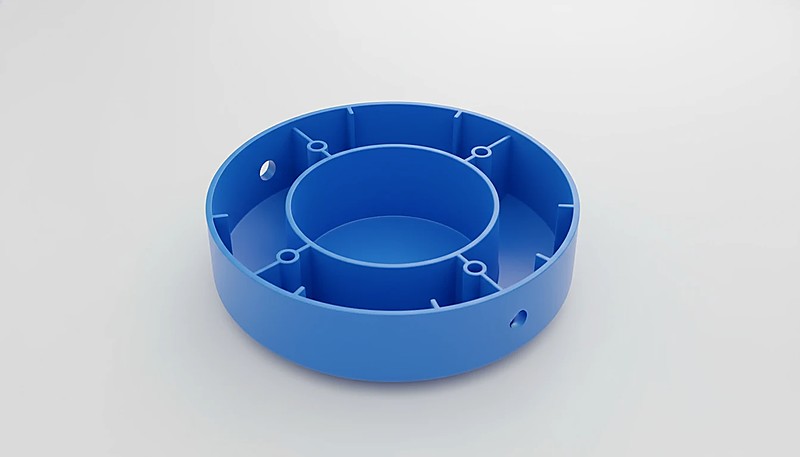
In onze fabriek in Shanghai voeren we een zesstappen kwaliteitscontrolewerkstroom uit—IQC, tussentijdse steekproefcontroles, procesinspectie, verpakkings- en assemblage-inspectie, FQC en OQC—over 45 spuitgietmachines variërend van 90T tot 1850T. Met 10+ toegewijde QC-specialisten en meetinstrumenten inclusief CMM's, profielprojectoren en hardheidsmeters, vangen we gebreken op voordat ze de klant bereiken. Het is geen glamoureus werk, maar het maakt het verschil tussen een betrouwbare toeleveringsketen en een die kostbare verrassingen genereert.
How to Choose the Right ABS Injection Molding Partner?
Het selecteren van een spuitgietleverancier voor ABS-onderdelen komt neer op drie praktische vragen: Kunnen ze de matrijs bouwen? Kunnen ze consistente kwaliteit op volume handhaven? En kunnen ze effectief communiceren wanneer problemen zich voordoen?
De mogelijkheid tot interne matrijsproductie is belangrijker dan de meeste kopers beseffen. Wanneer uw matrijs aanpassing nodig heeft—wat vrijwel zeker het geval zal zijn tijdens de kwalificatie—voegt het wachten van 3–4 weken op een externe matrijswerkplaats die u in hun planning moet proppen direct toe aan uw tijdlijn. Een leverancier met een eigen matrijswerkplaats kan aanpassingen in dagen, niet weken, realiseren. Zoek naar CNC-bewerkingscentra, EDM-mogelijkheden, draadsnijden en precisieslijpapparatuur op locatie.
Het tonnagebereik van de machine geeft informatie over de capaciteiten van de leverancier. ABS-onderdelen variëren van kleine elektronische clips (die 50–90T machines nodig hebben) tot grote autopanelen (die 800–1500T vereisen). Als een leverancier alleen machines in één tonnagebereik heeft, zijn ze geoptimaliseerd voor een beperkt scala aan onderdelen. Een breder bereik—zoals onze vloot van 90T tot 1850T met 45 machines—betekent dat ze uw huidige onderdelen aankunnen en kunnen opschalen naar grotere of complexere geometrieën zonder dat u een andere leverancier hoeft te zoeken.
Materiaalkennis is de derde onderscheidende factor. Een leverancier die met 400+ materialen werkt, heeft de uitzonderlijke gevallen gezien—hoe verschillende ABS-kwaliteiten zich gedragen, welke mengverhoudingen werken voor specifieke toepassingen, en hoe de gebreken die zich voordoen in echte productieomgevingen op te lossen, niet alleen in een leerboek. Vraag potentiële leveranciers naar hun droogprotocollen, hun typische procesparameterbereiken voor ABS, en hoe ze omgaan met materiaalvariatie van partij tot partij. De antwoorden vertellen je of ze een commodity-spuitgietoperatie of een precisieproductieproces runnen.
Communicatievermogen rondt de evaluatie af. Als uw technische team niet rechtstreeks kan communiceren met de mensen die de machines bedienen, wordt elk probleem een spel van doorgeven. Wij hebben 30+ Engelssprekende projectmanagers in dienst, juist omdat miscommunicatie in de productie duur is—vaak duurder dan de kostprijs van de onderdelen zelf. Wanneer u leveranciers evalueert, test dit direct: bel hun technische contactpersoon, niet alleen de verkoop, en kijk hoe snel u een technisch competente reactie krijgt.
“Interne matrijsproductiecapaciteit kan de doorlooptijd voor matrijswijzigingen tijdens onderdeelkwalificatie van weken tot dagen reduceren.”Echt
Externe matrijzenwerkplaatsen hebben doorgaans 3–4 weken nodig voor aanpassingen omdat uw werk in hun wachtrij komt. Een interne matrijzenwerkplaats kan uw aanpassingen direct prioriteren en vaak eenvoudige staalaanpassingen binnen 1–3 dagen afronden, wat uw tijd tot productiegerechte onderdelen direct verkort.
“ABS-spuitgieten vereist gespecialiseerde machines die geen andere thermoplastische materialen kunnen verwerken.”Vals
Standaard terugslagschroef-spuitgietmachines verwerken ABS prima—dezelfde machines kunnen ook PP, PE, PS, PC en de meeste andere thermoplasten verwerken met de juiste schroefontwerpen en temperatuurprofielaanpassingen. De machine-eisen voor ABS zijn eigenlijk heel gangbaar.
Veelgestelde vragen
Op welke temperatuur moet ik de ABS-injectiegietmachine instellen?
Streef naar een smelttemperatuur van 220–260°C (beginnend bij 240°C voor de meeste algemene kwaliteiten) en een matrijstemperatuur van 40–80°C. Hogere matrijstemperaturen (60–80°C) verbeteren de oppervlakteafwerking en verminderen de zichtbaarheid van laslijnen, maar verlengen de cyclustijd. Lagere matrijstemperaturen (40–60°C) versnellen de koeling voor structurele onderdelen. Pas altijd binnen dit bereik aan op basis van de specifieke Melt Flow Index van de ABS-kwaliteit—hoge-MFI-kwaliteiten vloeien beter bij lagere temperaturen, terwijl lage-MFI-kwaliteiten meer warmte nodig hebben om volledig te vullen en een goede pakking door de gehele matrijs te bereiken.
Moet ABS worden gedroogd voordat het wordt gespoten?
Ja, absoluut. Droog ABS bij 80–85°C gedurende 2–4 uur om het vochtgehalte onder 0,1% te brengen vóór verwerking. Hoewel ABS aanzienlijk minder vocht opneemt dan hygroscopische materialen zoals nylon of polycarbonaat, zal ongedroogd ABS nog steeds sproeimarkeringen (zilveren strepen) op het onderdeeloppervlak veroorzaken en verminderde slagvastheid hebben door hydrolytische degradatie van polymeerketens tijdens het smelten. Gebruik een adsorptiedroger en controleer het vochtgehalte met een dauwpuntmeter voor de beste resultaten bij kritieke onderdelen, vooral die met cosmetische oppervlakte-eisen.
Wat is de typische krimp van mal voor ABS?
ABS-krimp varieert van 0,4–0,7%, afhankelijk van de specifieke kwaliteit, wanddikte en verwerkingsomstandigheden. Deze relatief lage en voorspelbare krimp maakt ABS een van de meer dimensionaal stabiele standaard thermoplasten die vandaag beschikbaar zijn, wat precies de reden is waarom het favoriet is voor precisiepassende behuizingen, geassembleerde componenten en onderdelen die worden gecombineerd met metalen inserts. Houd altijd rekening met deze krimp tijdens het matrijzenontwerp door de holtedimensies dienovereenkomstig te schalen en test uw eerste artikelen om compensatiefactoren te verfijnen voordat u overgaat tot volledige productieseries en kostbare gereedschapsaanpassingen.
Kan ABS worden gebruikt voor voedselcontact of medische applicaties?
Standaard ABS-kwaliteiten zijn niet FDA-goedgekeurd voor direct voedselcontact. Er zijn echter specifieke ABS-kwaliteiten beschikbaar met FDA-conforme formuleringen voor indirect voedselcontact. Voor medische apparaatbehuizingen (niet-implanteerbare omhulsels, apparatuurbehuizingen) wordt ABS veel gebruikt vanwege de uitstekende oppervlakteafwerking en steriliseerbaarheid. Controleer altijd de wettelijke conformiteitsdocumentatie van de specifieke kwaliteit rechtstreeks bij de materiaalleverancier voordat u deze specificeert voor gereguleerde voedsel- of medische toepassingen om kostbare herkwalificatievertragingen, regelgevingsovertredingen of herontwerpen later in de ontwikkeling te voorkomen.
Hoe verhoudt ABS-PC blend zich tot standaard ABS voor spuitgieten?
ABS-PC-mengsels bieden 20–40% hogere slagvastheid en 10–15°C hogere hittevervormingstemperatuur dan standaard ABS, terwijl ze bij slechts iets hogere temperaturen worden verwerkt (240–280°C versus 220–260°C). Het nadeel is een hogere materiaalkost (doorgaans 30–50% meer) en iets meer aandacht voor droogvereisten (85–90°C gedurende 3–4 uur). ABS-PC is de juiste keuze wanneer standaard ABS niet voldoet aan de impact- of thermische eisen, maar zuiver PC overgedimensioneerd en te duur is voor de specifieke prestatie-eisen en budgetbeperkingen van de toepassing, waardoor het een ideale tussenoplossing is.
Welke injectiedruk is nodig voor ABS-spuitgieten?
De typische spuitdruk voor ABS varieert van 70–120 MPa (10.000–17.000 psi), waarbij de nahoouddruk wordt ingesteld op 40–70% van de piekspuitdruk. Dunwandige onderdelen en complexe geometrieën vereisen het hogere einde van dit bereik om een volledige vulling te garanderen. Het is essentieel om voldoende nahoouddruk te handhaven totdat de poort bevriest (meestal 2–5 seconden, afhankelijk van de wanddikte) om zinkplekken te voorkomen en dimensionale stabiliteit gedurende de afkoelfase te waarborgen. Onvoldoende nahoouddruk leidt tot holtes, zwakke laslijnen en verminderde algehele onderdeelsterkte.
Waarom heeft mijn ABS-onderdeel zinkmarkeringen en hoe los ik ze op?
Zinkplekken ontstaan wanneer dikke secties (zoas versterkingsribben of kruispunten) tijdens het koelen meer krimpen dan omliggende dunnere wanden. Los ze op door dikke gebieden uit te hollen om een uniforme wanddikte te behouden, de wanddikteverhoudingen onder 1,5:1 te reduceren, de nahoouddruk en -tijd te verhogen, en de smelttemperatuur te verlagen om volumetrische krimp te verminderen. Preventie in het ontwerpstadium door uniforme wanddikte is veel effectiever dan het proberen te fixen van zinkplekken met alleen procesaanpassingen, wat kan leiden tot andere gebreken zoals uitstulpingen of vervorming.
Welke wanddikte wordt aanbevolen voor ABS-spuitgietonderdelen?
De ideale wanddikte voor ABS-onderdelen is 2,0–3,0 mm, waarbij uniformiteit belangrijker is dan de absolute waarde. Houd de variatie in wanddikte binnen ±10% over het gehele onderdeel. Wanden onder 1,0 mm lopen het risico op onvolledige vullingen en vulproblemen; wanden boven 4,0 mm veroorzaken overmatige cyclustijden, interne holtes en zinkplekken. Wanneer overgangen noodzakelijk zijn, gebruik geleidelijke overgangen met een minimale verhouding van 1:3 om spanningsconcentraties te minimaliseren en een soepele stroming tijdens het vullen te garanderen, terwijl consistente koelsnelheden door de gehele onderdeelgeometrie worden gehandhaafd.
-
injection molding: Spuitgieten verwijst naar een productieproces waarbij gesmolten thermoplast in een matrijs wordt geïnjecteerd om precisie-onderdelen op grote schaal te produceren. ↩
-
injection mold: spuitgietmatrijs verwijst naar een op maat gemaakt gereedschap, meestal van staal of aluminium, dat gesmolten kunststof vormt tot een specifieke onderdeelgeometrie tijdens de spuitgietcyclus. ↩
-
glass transition temperature: glasovergangstemperatuur verwijst naar het temperatuurbereik waarin een amorfe polymeer overgaat van een harde, glasachtige toestand naar een zachte, rubberachtige toestand, wat cruciaal is voor het bepalen van verwerkings- en gebruiks-temperatuurgrenzen. ↩





 EN
EN  ES
ES  FR
FR  DE
DE  PT
PT  AR
AR  RU
RU  JA
JA  KO
KO  IT
IT  NL
NL  TR
TR  PL
PL 