 콘텐츠로 건너뛰기

Struggling with warped HDPE parts or inconsistent quality? You’re not alone. HDPE injection molding presents unique challenges that trip up even experienced manufacturers. The material’s high shrinkage rates, crystallization behavior, and temperature sensitivity demand precise control at every step. One wrong parameter setting can turn profitable runs into costly scrap. Yet when done right, HDPE delivers unmatched chemical resistance and durability for demanding applications.
- HDPE requires melt temperatures of 180-280°C and careful cooling control to manage 1.5-3.0% shrinkage rates
- Material density of 0.93-0.97 g/cm³ provides excellent chemical resistance while maintaining FDA compliance for food contact
- Wall thickness should stay between 1.0-6.0mm with uniform distribution to prevent warpage and sink marks
- Draft angles of 1-2° minimum are essential due to HDPE’s high shrinkage and semi-crystalline structure
- Common defects include warpage from uneven cooling and sink marks in thick sections, both preventable with proper processing
What Is HDPE Injection Molding?
HDPE 사출 성형1 is a manufacturing process that melts high-density polyethylene resin and injects it into closed molds to create precise plastic parts. This process leverages HDPE’s thermoplastic properties to repeatedly melt, shape, and solidify the material without chemical degradation.
High-density polyethylene (HDPE) is a semi-crystalline thermoplastic polymer with a linear molecular structure. Unlike branched polyethylene variants, HDPE’s tight molecular packing creates a density range of 0.93-0.97 g/cm³. This structure delivers superior strength and chemical resistance compared to lower-density alternatives.
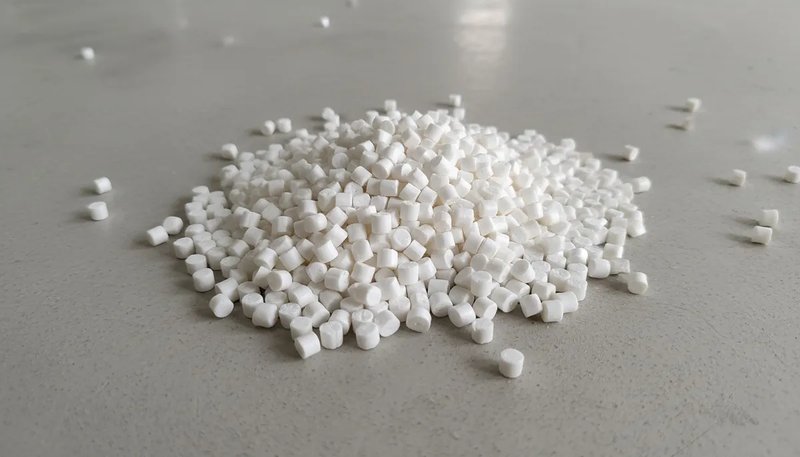
Processing HDPE requires careful attention to screw speed and back pressure settings. A screw speed of 40-80 RPM works well for most HDPE grades, while back pressure of 0.5-1.5 MPa ensures consistent melt homogeneity without excessive shear heating that could degrade the polymer chains.
The high crystallinity of HDPE means that cooling time directly impacts part dimensions and mechanical properties. Faster cooling produces smaller spherulites and higher impact resistance, while slower cooling increases stiffness but reduces toughness. This trade-off between impact strength and rigidity is one of the key decisions in HDPE process optimization.
The material melts at 130-180°C and processes well at injection temperatures of 180-280°C. HDPE exhibits excellent chemical resistance to acids, bases, and organic solvents. FDA-compliant grades make it ideal for food contact applications. However, its semi-crystalline nature creates higher shrinkage rates than amorphous plastics.
For 사출 성형 응용 분야, HDPE offers a unique combination of processability and performance. The material flows well at proper temperatures, fills complex geometries, and delivers consistent part-to-part properties when processing parameters are controlled correctly.
What Properties Make HDPE Unique for Injection Molding?
HDPE’s property profile creates both opportunities and challenges for injection molders. Understanding these characteristics helps optimize processing parameters and avoid common defects that plague HDPE production runs.
| 속성 | Value | Impact on Molding |
|---|---|---|
| 밀도 | 0.93-0.97 g/cm³ | Higher strength, increased shrinkage |
| 인장 강도 | 20-37 MPa | Excellent mechanical performance |
| Melt Flow Index | 0.1-20 g/10min | Processing ease varies by grade |
| 수축률 | 1.5-3.0% | Requires careful mold design |
| Crystallinity | 60-80% | Slower cooling, dimensional stability |
Chemical resistance stands as HDPE’s strongest asset. The material resists most acids, bases, alcohols, and oils at room temperature. This resistance stems from the polymer’s non-polar structure and high crystallinity. However, strong oxidizing agents and certain hydrocarbons can cause stress cracking or swelling.
HDPE crystallinity ranges from 60% to 80% depending on processing conditions and cooling rate. Higher crystallinity increases tensile strength and chemical resistance but reduces impact strength. This fundamental structure-property relationship drives every processing and design decision you make with HDPE.
The semi-crystalline nature of HDPE also means that annealing after molding can further improve dimensional stability. For precision applications requiring tight tolerances, a post-molding anneal at 80-100 degrees Celsius for 30-60 minutes relieves residual stresses and stabilizes crystalline structure.

Moisture absorption remains negligible at less than 0.01%, eliminating predrying requirements for most grades. This low absorption maintains dimensional stability in humid environments. UV resistance requires stabilizer additives, as unprotected HDPE degrades under prolonged sunlight exposure.
“HDPE requires no predrying before injection molding under normal storage conditions”True
With moisture absorption below 0.01%, HDPE can be processed straight from sealed bags without a drying cycle, saving 2-4 hours of production setup time.
“HDPE shrinkage is negligible and does not affect dimensional accuracy”False
HDPE has one of the highest shrinkage rates among commodity plastics at 1.5-3.0%, requiring careful mold cavity compensation and uniform wall thickness design.
What Are the Key HDPE Injection Molding Parameters?
Successful HDPE injection molding depends on precise control of temperature, pressure, and timing parameters. Each setting affects material flow, part quality, and cycle efficiency in interconnected ways that require systematic optimization.
Melt temperature typically ranges from 180-280°C, varying by HDPE grade and part complexity. Higher temperatures improve flow but risk thermal degradation. Lower temperatures may cause short shots or poor surface finish. Start with 220°C and adjust based on flow behavior and part filling.
Mold temperature affects crystallization and shrinkage control. Settings of 20-70°C work for most applications, with higher temperatures promoting crystallinity and reducing internal stresses. Cold molds (20-40°C) speed cycles but may increase warpage. Hot molds (50-70°C) improve surface finish but extend cooling time.
Injection pressure requirements span 70-120 MPa depending on part geometry and wall thickness. HDPE’s good flow characteristics often allow lower pressures than engineering plastics. Excessive pressure causes flash and internal stress. Insufficient pressure creates short shots or incomplete filling.
“HDPE can be processed at lower injection pressures than most engineering plastics”True
The low melt viscosity of HDPE at processing temperatures means injection pressures of 70-120 MPa are sufficient, reducing machine wear and energy costs.
“Any mold temperature setting produces acceptable HDPE parts”False
Mold temperature directly controls crystallization rate. Too cold causes warpage from uneven crystallization. Too hot extends cycle time. The optimal range is 40-60C.
Cooling time dominates cycle length due to HDPE’s crystallization requirements. Allow 10-30 seconds per millimeter of wall thickness for proper cooling. Holding pressure maintains dimensional accuracy during initial cooling phases. Apply 40-60% of injection pressure for 50-80% of total cooling time.
What Design Rules Apply to HDPE Molded Parts?
HDPE part design must account for the material’s high shrinkage, semi-crystalline behavior, and flow characteristics. Following proven design guidelines prevents costly mold modifications and quality issues during production.
For more on 사출 금형 설계2 principles, see our engineering reference.
Wall thickness should range from 1.0-6.0mm with uniform distribution throughout the part. Thick sections cause sink marks and longer cooling times. Thin sections may not fill completely or exhibit weak weld lines. Maintain thickness variations within 25% when possible to promote even cooling and minimize warpage.
Draft and Radii Guidelines
When evaluating HDPE suppliers, always request melt flow index (MFI) certificates for each batch. MFI variation of more than 10% from specification indicates inconsistent material that will cause processing problems and dimensional variation in your molded parts.
Draft angles of 1-2° minimum accommodate HDPE’s high shrinkage and prevent ejection damage. Deeper draws or textured surfaces require increased draft. The material’s flexibility allows some deformation during ejection, but repeated stress causes cracking or dimensional instability over time.
Corner radii of 0.5mm minimum prevent stress concentration and improve material flow. HDPE handles sharp corners poorly due to its semi-crystalline structure. Generous radii also reduce injection pressure requirements and improve part strength. Rib design should limit thickness to 40-60% of adjacent walls.
Gate selection affects filling pattern and weld line placement. Edge gates and submarine gates work well for most HDPE applications. Avoid pin gates on thick sections as they restrict flow and cause jetting. Gate size should accommodate HDPE’s shrinkage without creating excessive shear heating.
What Are Common HDPE Injection Molding Defects and Solutions?
HDPE injection molding faces predictable defect patterns related to the material’s crystalline structure and thermal behavior. Recognizing these issues early and applying systematic corrections saves time and material costs during production troubleshooting.
Warpage occurs frequently due to uneven crystallization rates across part geometry. Thick and thin sections cool at different rates, creating internal stresses that distort the part after ejection. This defect particularly affects flat parts with varying wall thickness or parts with metal inserts.
| 결함 | Primary Cause | 솔루션 |
|---|---|---|
| 뒤틀림 | Uneven crystallization | Uniform wall thickness, controlled cooling |
| 금형 수명 종료: | Thick sections, inadequate packing | Reduce thickness, increase hold pressure |
| Short shots | Low melt temperature, insufficient pressure | Increase temperature and injection pressure |
| 플래시 | Excessive pressure, poor mold fit | Reduce pressure, check mold condition |
| 용접 라인 | Poor knit line strength | Increase melt temperature, optimize gate placement |
Process monitoring through cavity pressure sensors provides real-time feedback on fill consistency. For HDPE, tracking peak cavity pressure helps identify viscosity changes that indicate material contamination or incorrect temperature settings before defective parts accumulate in production.
Color consistency in HDPE parts depends on proper masterbatch dispersion during the screw plasticizing phase. Using a screw with a mixing section and ensuring adequate back pressure of 0.5-1.5 MPa achieves uniform pigment distribution throughout the melt.
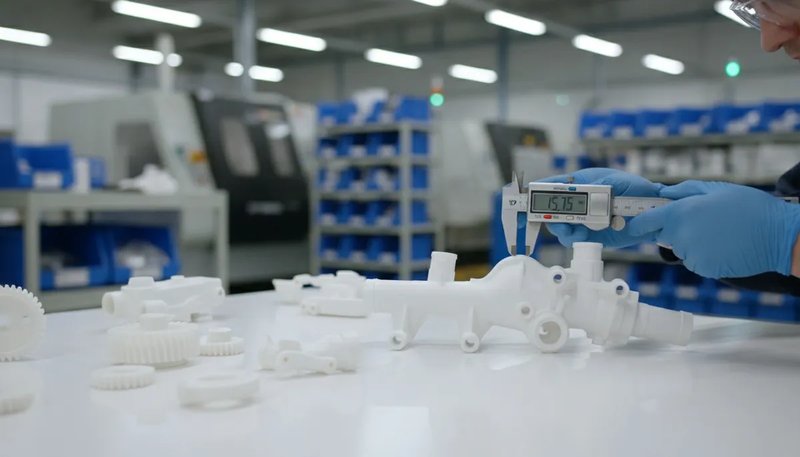
Sink marks appear on thick sections where inadequate packing pressure fails to compensate for material shrinkage. The part surface develops visible depressions opposite thick ribs or bosses. Prevention requires balanced part design and optimized packing pressure profiles.
Short shots result from insufficient material reaching part extremities. Low melt temperature, inadequate injection pressure, or restricted gates cause this defect. Flash occurs when excessive pressure forces material into mold parting lines or ejector pin clearances, creating thin fins that require secondary trimming.
What Industries Use HDPE Injection Molded Parts?
HDPE’s combination of chemical resistance, FDA compliance, and cost-effectiveness drives adoption across diverse industries. Each application leverages specific material properties while working within HDPE’s processing limitations.
Packaging applications dominate HDPE consumption, including bottle caps, closures, and rigid containers. The material’s chemical resistance prevents product contamination while FDA-approved grades ensure food safety compliance. Excellent moisture barrier properties extend shelf life for sensitive products.
| 산업 | Common Parts | Key Advantage |
|---|---|---|
| 패키징 | Caps, closures, bottles | FDA compliance, chemical resistance |
| 자동차 | Fuel tanks, fluid reservoirs | Lightweight, impact resistant |
| Consumer | Toys, containers, housewares | Low cost, durable |
| 의료 | Pharmaceutical bottles, labware | Sterilizable, non-toxic |
Automotive components utilize HDPE for fuel tanks, windshield washer reservoirs, and various fluid containers. The material resists automotive chemicals while maintaining flexibility at low temperatures. Cost advantages over engineering plastics make HDPE attractive for high-volume applications with moderate performance requirements.
Consumer goods benefit from HDPE’s durability and safety profile in toys, storage containers, and household items. The material’s toughness withstands repeated use and abuse. Medical applications include pharmaceutical bottles, laboratory consumables, and disposable medical devices where chemical compatibility and sterilization resistance matter most.
Construction markets use HDPE for pipe fittings, electrical enclosures, and geosynthetic components. The material’s weather resistance and chemical stability suit outdoor applications. However, UV stabilization becomes critical for prolonged sunlight exposure in these demanding environments.
HDPE vs Other Polyethylene Grades — When Does HDPE Win?
Polyethylene grade selection affects part performance, processing requirements, and cost structures. Understanding the trade-offs between HDPE, LDPE, MDPE, and UHMWPE helps optimize material choice for specific injection molding applications.
HDPE versus LDPE comparison favors HDPE for applications requiring rigidity and chemical resistance. HDPE’s linear structure creates higher density and strength, while LDPE’s branched chains provide flexibility and clarity. Processing parameters differ significantly, with HDPE requiring higher temperatures and pressures.
| Grade | 밀도(g/cm³) | Key Advantage | Injection Molding Suitability |
|---|---|---|---|
| LDPE | 0.91-0.93 | Flexibility, clarity | Easy processing, low shrinkage |
| MDPE | 0.93-0.94 | 균형 잡힌 특성 | 우수한 유동성, 중간 정도의 수축률 |
| HDPE | 0.94-0.97 | 강도, 내화학성 | 도전적이지만 다용도 |
| UHMWPE | >0.93 | 극한의 내마모성 | 어려운, 특수 가공 |
MDPE는 LDPE와 HDPE 사이의 중간 특성을 제공하며, HDPE보다 가공이 용이하지만 LDPE보다 더 나은 성능을 발휘합니다. 사출 성형의 경우, MDPE는 HDPE보다 더 쉽게 흐르고 더 낮은 수축을 보입니다. 그러나 HDPE의 우수한 강도와 내화학성은 까다로운 적용 분야에서 추가적인 가공 복잡성을 정당화합니다.
UHMWPE는 탁월한 내마모성과 충격 강도를 제공하지만 상당한 사출 성형 문제를 야기합니다. 극히 높은 분자량은 흐름을 제한하고 특수 가공 장비를 필요로 합니다. HDPE는 일반적인 사출 성형 작업에서 성능과 가공성의 최상의 균형을 제공합니다.
Frequently Asked Questions About HDPE Injection Molding
HDPE 사출 성형에 사용해야 하는 용융 온도는 얼마입니까?
HDPE 용융 온도는 일반적으로 등급 및 부품 복잡성에 따라 180-280°C 범위입니다. 대부분의 응용 분야에 대해 220°C부터 시작하고 충전 거동에 따라 조정하십시오. 더 높은 온도는 유동성을 향상시키지만 열 분해 위험이 있으며, 더 낮은 온도는 숏 샷 또는 불량한 표면 마감을 유발할 수 있습니다. 일관된 부품 품질을 위해 ±5°C 내에서 용융 온도 안정성을 모니터링하십시오. 초기 온도 설정 시 특정 HDPE 등급의 용융 유동 지수를 고려하십시오. 대부분의 HDPE 등급의 경우, 낮은 쪽인 220°C에서 시작하면 열 분해에 대한 안전 마진을 제공하면서도 생산 런 전체에 걸쳐 일관된 부품 품질을 위한 완전한 용융 균일성을 제공합니다.
왜 제 HDPE 부품이 사출 후 계속 뒤틀리나요?
HDPE 부품의 뒤틀림은 일반적으로 냉각 중 불균일한 결정화로 인해 발생합니다. 두꺼운 부분과 얇은 부분이 다른 속도로 냉각되어 부품을 변형시키는 내부 응력을 생성합니다. 해결책에는 균일한 벽 두께 유지, 균일한 열 제거를 위한 냉각 라인 설계 최적화, 결정화 속도를 제어하기 위한 금형 온도 조정이 포함됩니다. 홀딩 압력 및 시간 또한 초기 냉각 단계에서의 수축을 보상함으로써 뒤틀림에 영향을 미칩니다. 40-50°C로 설정된 금형 온도 컨트롤러를 사용하고 부품 설계 전체에 걸쳐 균일한 벽 두께를 보장하면 뒤틀림이 크게 감소합니다. 더 느린 냉각 속도 또한 균일한 결정화를 촉진하며, 이는 HDPE 구성 요소의 치수 안정성 뒤에 있는 주요 기계적 요인입니다.
HDPE는 사전 건조 없이 사출 성형이 가능한가요?
예, HDPE는 일반적으로 0.01% 미만의 극히 낮은 수분 흡수율로 인해 사전 건조가 필요하지 않습니다. 나일론이나 PET와 같은 흡습성 물질과 달리, HDPE는 일반적인 저장 조건에서 유의미한 대기 중 수분을 흡수하지 않습니다. 그러나 특정 권장 사항에 대해서는 재료 증명서를 확인하고, 재료가 비정상적인 습도나 오염에 노출된 경우 건조를 고려하십시오. 밀폐 용기에 대한 적절한 저장은 대부분의 수분 관련 문제를 방지합니다. 그러나 재료가 습한 조건에 보관되었거나 포장이 장기간 열려 있었다면, 80°C에서 2-3시간의 짧은 건조 사이클로 최종 부품에서 스프레이 마크나 기계적 성능 저하를 일으킬 수 있는 표면 수분을 제거할 수 있습니다.
두꺼운 HDPE 단면에서 싱크 마크가 발생하는 원인은 무엇입니까?
싱크 마크는 두꺼운 부위에서의 재료 수축이 패킹 압력의 보상 능력을 초과할 때 발생합니다. HDPE의 1.5-3.0% 수축률은 특히 4mm 이상의 두께 부위에 영향을 미칩니다. 해결책에는 가능한 경우 벽 두께 감소, 홀딩 압력 및 시간 증가, 더 나은 패킹을 위한 게이트 크기 및 위치 최적화, 두꺼운 부위 코어링 아웃이 포함됩니다. 인접 벽 두께의 40-60%로 리브를 설계하여 이 문제를 최소화하십시오. 균일한 벽 두께로 설계하고 단단한 두꺼운 부위 대신 코어링 또는 리브 구조를 사용하면 싱크 마크를 유발하는 체적 수축을 방지할 수 있습니다. 두꺼운 부위가 불가피한 경우, 홀딩 압력 시간 연장 및 더 높은 패킹 압력 사용은 결정화 과정 중 재료 수축을 보상하는 데 도움이 됩니다.
HDPE 수축이 금형 설계에 어떤 영향을 미치나요?
HDPE의 1.5-3.0% 높은 수축률은 목표 부품 크기를 달성하기 위해 신중한 금형 치수 계산이 필요합니다. 수축률은 벽 두께, 가공 조건 및 결정화 속도에 따라 달라집니다. 목표 치수보다 2-3% 크게 금형을 설계하고 부품 형상 및 가공 매개변수에 따라 조정하십시오. 유동 방향은 분자 배향으로 인해 횡방향과 다르게 수축에 영향을 미칩니다. 이젝션 후 24-48시간 동안 지속되는 성형 후 수축을 고려하십시오. 공구 설계자는 일반적으로 HDPE 등급 및 부품 형상에 따라 캐비티를 1.5-3.0% 과대하게 설계합니다. 강철 절삭 전 금형 유동 시뮬레이션을 실행하면 특정 부품에 대한 실제 수축 값을 예측하여 치수 정확도를 달성하는 데 필요한 공구 반복 횟수를 줄일 수 있습니다.
HDPE 사출 성형 부품에 가장 적합한 드래프트 각도는 무엇인가요?
HDPE 부품은 금형 표면을 잡는 높은 수축률과 반결정 구조로 인해 1-2°의 최소 드래프트 각도가 필요합니다. 더 깊은 드로우, 복잡한 형상 또는 텍스처 표면은 최대 3-5°까지 드래프트 각도 증가가 필요합니다. HDPE의 유연성은 이젝션 중 일부 변형을 허용하지만, 불충분한 드래프트는 표면 스크래치, 치수 변형 또는 부품 고착을 유발합니다. 최적의 결과를 위해 부품 깊이, 표면 마감 요구 사항 및 이젝션 시스템 설계를 기반으로 드래프트를 계산하십시오. HDPE의 경우, 재료의 높은 마찰 계수와 코어 핀 위로 수축하는 경향으로 인해 측면당 1.5~2도가 권장됩니다. 텍스처 표면은 이젝션 중 외관 손상을 방지하기 위해 추가 드래프트(일반적으로 텍스처 깊이 0.025mm당 1도 추가)가 필요합니다.
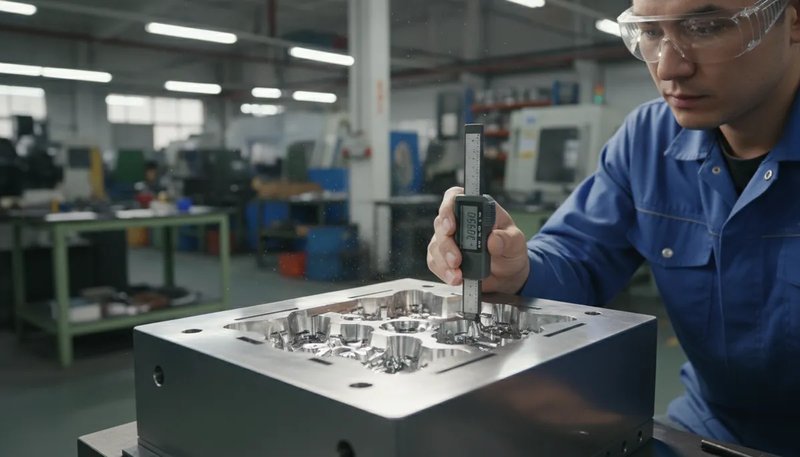
Why Choose ZetarMold for HDPE Injection Molding?
2025년, 우리는 포장 및 자동차 응용 분야에서 200만 개 이상의 HDPE 구성 요소를 생산했습니다. 우리의 상하이 시설은 90톤에서 1850톤까지 45대의 기계를 운영하며, 엔지니어링 팀은 10년 이상의 HDPE 특화 가공 경험을 보유하고 있습니다.
ZetarMold의 상하이 공장은 정밀한 치수 제어와 무결점 생산을 요구하는 까다로운 HDPE 적용 분야를 전문으로 합니다. 우리의 엔지니어링 팀은 각 프로젝트에 맞춰 가공 매개변수를 최적화하고, 체계적인 접근 방식과 첨단 공정 제어를 통해 뒤틀림과 센크 마크와 같은 일반적인 문제들을 제거합니다.
HDPE 사출 성형 과제를 해결할 준비가 되셨나요? 우리의 경험 많은 엔지니어들이 설계 최적화부터 생산 확장까지 포괄적인 지원을 제공합니다. 사출 성형3 귀사의 가장 까다로운 응용 분야에 일관된 품질과 비용 효율적인 생산을 제공하는 전문 HDPE 가공 솔루션을 위해.
Sources
- 고밀도 폴리에틸렌 가공 지침. LyondellBasell 기술 서비스. lyondellbasell.com
- 폴리에틸렌에 대한 FDA 식품 접촉 규정. 미국 식품의약국, 21 CFR §177.1520. fda.gov
- 사출 성형: 기술과 기본 원리. Rosato, D.V. & Rosato, M.G. Hanser Publications. ISBN 978-1569903995.
-
injection molding: 이것은 용융된 열가소성 플라스틱을 압력 하에 금형 캐비티에 주입하여 냉각되고 응고되어 완성 부품이 되는 제조 공정입니다. ↩
-
injection mold design: 정밀 플라스틱 부품을 위한 금형 형상, 냉각, 게이팅 및 이젝션의 엔지니어링. ↩
-
injection moulding: This is a polymer shaping process in which heated thermoplastic material is forced into a closed mould under pressure, where it cools and solidifies into the final part geometry. ↩



 EN
EN  ES
ES  FR
FR  DE
DE  PT
PT  AR
AR  RU
RU  JA
JA  KO
KO  IT
IT  NL
NL  TR
TR  PL
PL 