 콘텐츠로 건너뛰기

"“급속 프로토타입 금형은 연마된 강철 생산 금형과 동일한 표면 마감을 생산합니다.”"
In this guide, I will walk through the available methods, realistic timelines, cost structures, and the specific trade-offs you need to weigh when choosing between aluminum tooling, soft tooling, and additive-manufactured molds. The goal is to help you decide which path gets you test-ready parts fastest — without creating costly problems when you transition to production.
- Rapid injection molding delivers production-material parts in 1–3 weeks
- Aluminum tooling supports 100–10,000 shots depending on part geometry
- Rapid prototype molds cost 40–70% less than production steel molds
- Part geometry must be production-ready — rapid molds do not forgive bad DFM
- Bridge tooling fills the gap between prototyping and full production
What Is Rapid Prototyping in Injection Molding?
Rapid prototyping in injection molding is a fast tooling approach for producing real molded parts before production tooling. If you are comparing vendors or planning procurement, our injection molding supplier sourcing guide covers RFQ prep, qualification, and commercial risk checks.
Rapid prototyping in injection molding refers to using simplified or faster-to-build tooling — typically aluminum molds, soft steel molds, or additive-manufactured molds — to produce a small batch of functional parts that match the geometry, material, and mechanical properties of the final production part. The defining characteristic is speed: you go from approved 3D CAD to molded parts in 5–15 business days instead of the typical 8–12 weeks for a hardened steel production mold.
The key distinction from other prototyping methods (CNC machining, SLA, FDM) is that you are actually injection molding the part. This means the material behavior, shrink rate, knit lines, gate marks, and surface finish are all representative of what you will get in production. A 3D-printed SLA prototype can tell you if the part fits together; a rapid injection molded prototype tells you if the snap fit works in the actual polypropylene at the actual wall thickness.
The trade-off is that rapid tooling has limitations. Aluminum molds wear faster than steel, cavity count is usually limited to 1–4, and complex side actions (lifters, slides, collapsible cores) add cost and time that eat into the speed advantage. Rapid prototyping molding works best when your design is close to final and you need to validate function, not explore form.
What Methods Are Available for Rapid Prototype Molding?
The main rapid prototype molding methods are aluminum tooling, soft steel tooling, 3D-printed resin molds, and silicone molds. Each route trades speed, cost, shot life, and part quality differently, so the right choice depends on what you need to validate before production.
| Method | Tooling Time | Shot Life | Cost Range |
|---|---|---|---|
| 알루미늄 몰드 | 7–15 days | 1,000–10,000 | $1,500–$8,000 |
| Soft Steel (P20) | 15–25 days | 10,000–100,000 | $5,000–$20,000 |
| 3D-Printed Resin | 1–3 days | 10–100 | $200–$1,500 |
| Silicone Rubber | 3–5 days | 20–50 | $300–$2,000 |
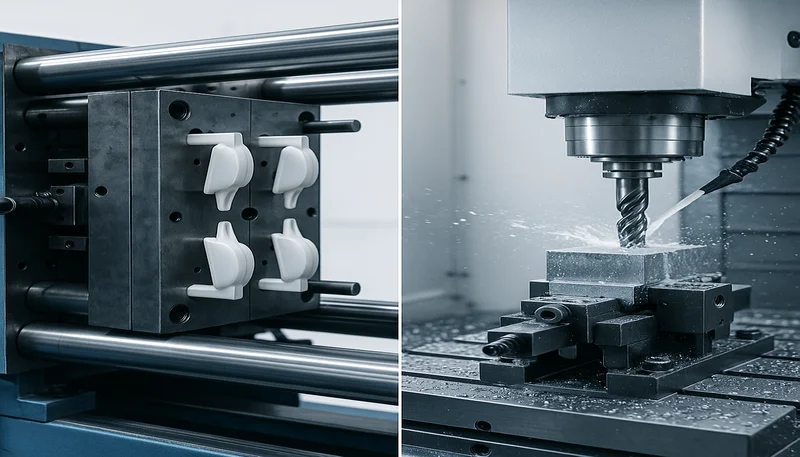
Aluminum tooling is the most common choice for rapid injection molding because it hits the sweet spot of speed, cost, and part quality. Aluminum machines faster than steel (roughly 3–5x cutting speed), polishes reasonably well for A-surface parts, and can handle most engineering resins including glass-filled nylon, PC, and POM. The main limitation is wear: after a few thousand cycles, the cavity surfaces start showing erosion, especially around the gate area.
How Does Aluminum Tooling Enable Fast Turnaround?
Aluminum tooling enables fast turnaround because aluminum is easier to machine and cools molded parts faster than steel. In our factory, a single-cavity aluminum mold for a medium-complexity enclosure can often be machined, polished, sampled, and inspected in 5-7 working days when DFM is clean.
The thermal conductivity advantage is real during production too. Aluminum conducts heat roughly 4–5x faster than steel, which means faster cooling cycles and shorter shot-to-shot times. For prototyping runs of 500–2,000 parts, this translates to noticeably faster throughput. However, this thermal advantage disappears for high-pressure glass-filled materials, where the aluminum cavity surface erodes quickly under abrasive flow.
At our Shanghai facility, we run rapid prototype molds on dedicated aluminum tooling lines. A typical single-cavity mold without side actions takes 5–7 machining days. With our 8 senior engineers reviewing the DFM upfront, we catch most potential issues (undercuts that need slides, wall thickness violations, draft angle problems) before cutting starts — which prevents the expensive and time-consuming rework that kills the “rapid” in rapid prototyping.
““Aluminum molds can produce parts with the same dimensional accuracy as steel molds for the first several thousand shots.””True
Aluminum machines to tight tolerances (±0.005 mm) and maintains dimensional stability for the first 1,000–5,000 shots. The wear issue surfaces primarily in high-wear areas like gates and shut-offs, not in the overall cavity geometry. For prototyping and bridge production, this accuracy is more than adequate.
““3D-printed molds are a viable option for production-quantity injection molding.””False
3D-printed resin molds typically survive 10–100 shots before cracking, warping, or degrading. They are useful for very early concept validation or soft tooling for under 20 parts, but the material cannot withstand the repeated thermal cycling and injection pressure required for production runs. They also cannot achieve the surface finish or dimensional accuracy of machined molds.
When Should You Choose Rapid Injection Molding Over 3D Printing?
Rapid injection molding is best when prototype tests must match production material, tolerance, strength, and surface finish. Use 3D printing for early form checks; use molded prototypes when the test result must predict real production performance.
3D-printed parts have fundamentally different mechanical properties than injection molded parts, even in the “same” material. A 3D-printed PLA tensile bar shows 30–50% lower elongation at break than an injection molded PLA bar because the layer-by-layer deposition creates anisotropic weakness between layers. For functional testing, this discrepancy makes 3D-printed results unreliable as a predictor of production performance.
Cost-wise, rapid injection molding becomes competitive with 3D printing at around 100–300 parts, depending on part size and complexity. A single 3D-printed part might cost $30–$80, while a rapid injection molded part (including tooling amortization) might cost $15–$40 at 200 units. The crossover point shifts based on part geometry — complex parts with internal features that support 3D printing’s advantage will push the crossover higher, while simple parts favor molding sooner.
What Materials Work for Rapid Prototype Molding?
Rapid prototype molds are compatible with most production thermoplastics, except highly abrasive or corrosive grades that wear aluminum quickly. In practice, ABS, PP, PC, PA6, POM, and TPE cover most prototype validation runs, while glass-filled or flame-retardant grades need extra tooling review.
The most common materials we see in rapid prototyping runs are ABS, PP, PC, PA6, POM, and TPE — covering the majority of consumer, automotive, and industrial applications. These materials mold well in aluminum tooling and provide reliable test data for functional validation. For medical or food-contact parts, we recommend using the exact production resin (including any regulatory grades) in the prototype mold to ensure test results transfer directly to production qualification.
How Much Does Rapid Prototype Injection Molding Cost?
Rapid prototype injection molding cost is tooling plus material plus machine time, often ,500-,000 for aluminum tooling. For a typical single-cavity aluminum mold producing 500 ABS parts, expect tooling to dominate the budget while each molded part becomes cheaper as quantity rises.
The tooling cost varies with complexity. A simple open-and-shut part with no side actions runs $1,500–$3,500 in aluminum. Add one side-action slide and you are in the $4,000–$6,000 range. Two slides with lifters pushes it to $6,000–$10,000. Threaded inserts, lifters, or collapsing cores can push aluminum tooling above $15,000 — at which point you should evaluate whether a P20 soft steel mold makes more sense, since you are already investing in production-grade tooling complexity.
““Rapid prototype molds can serve as bridge tooling for early production while the steel production mold is being built.””True
Bridge tooling is exactly this — an aluminum or soft steel mold that produces marketable parts during the 8–12 week window while the production steel mold is being manufactured. Many medical device and consumer electronics companies use this approach to start selling products or fulfilling early orders without waiting for production tooling. The bridge mold dimensional data also helps validate the production mold design.
““Rapid prototype molds produce identical surface finish to polished steel production molds.””False
신속 프로토타이핑 사출 성형: CAD에서 테스트 부품까지
What Are the Common Pitfalls in Rapid Prototyping?
The single most common mistake in rapid prototyping for injection molding is treating the prototype mold as a shortcut to skip DFM review. A bad design in an aluminum mold is just as bad as a bad design in a steel mold — and it fails faster. Undercuts without draft, walls below 1 mm thickness, and sharp internal corners all cause problems regardless of mold material. We review every rapid prototype project with the same DFM rigor as production tools, because the cost of re-cutting an aluminum cavity is not trivial when you are up against a three-week deadline.
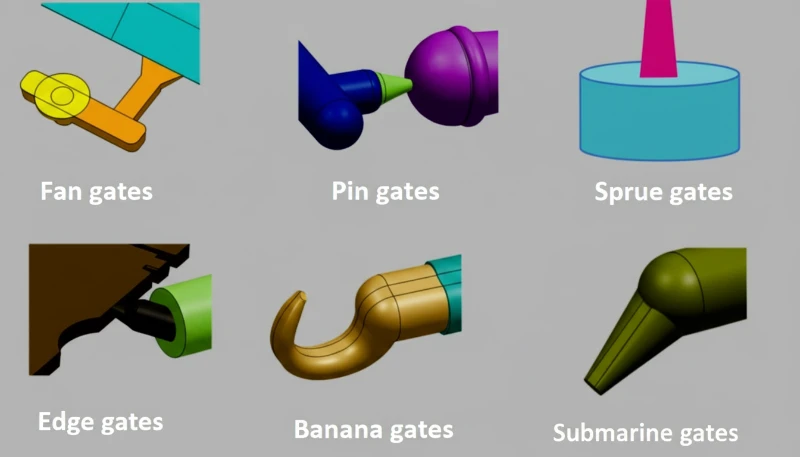
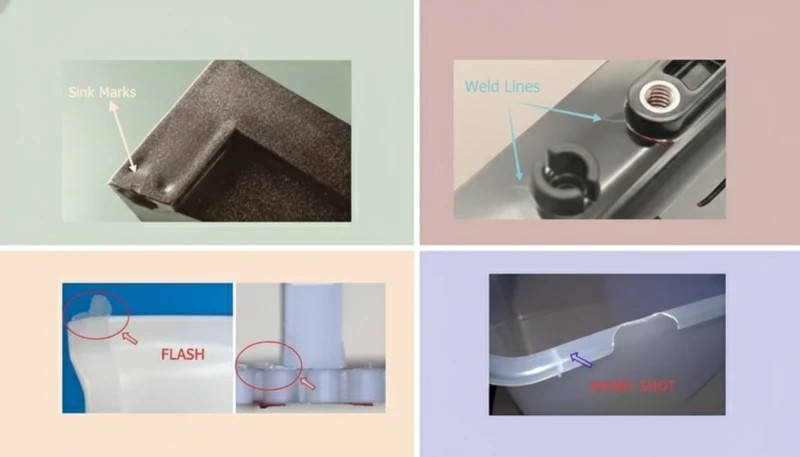
The second pitfall is neglecting 금형 설계1 considerations that affect part quality independent of mold material. Gate location, runner design, cooling channel placement, and venting all matter in aluminum molds just as much as in steel. A poorly gated aluminum mold produces short shots, jetting, and burn marks just like a poorly gated steel mold — the only difference is you discover it faster.
The third pitfall is material mismatch between prototype and production. Running a commodity-grade ABS in the prototype mold when your production material is a specialty flame-retardant grade means the test results do not transfer. Always prototype in the target material or a close mechanical equivalent.
How Do You Scale from Prototype to Production?
Scaling from prototype to production is a tooling-control problem: lock the design, document test results, and transfer learning into steel tooling. We use the prototype run to verify gating, shrinkage, cooling, ejection, and inspection criteria before production mold steel is cut.
The smartest approach we see from experienced OEMs is parallel tooling: start the rapid prototype mold and the production mold design simultaneously. The prototype mold delivers test parts in 2 weeks. During testing, the production mold design gets refined based on what you learn. By the time prototype testing is complete, the production mold design is finalized and ready to cut — saving 2–4 weeks compared to a sequential approach.
For companies with ongoing 소량 사출 성형2 needs (under 10,000 parts/year), the aluminum prototype mold often becomes the de facto production tool. With proper maintenance and occasional polishing, a well-built aluminum mold can deliver 5,000–10,000 shots of unfilled material, which is sufficient for many niche and specialty products. In these cases, there is no separate “scale to production” step — the bridge tool is the production tool.
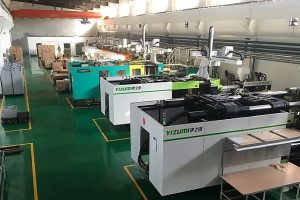
With 45 injection molding machines ranging from 90T to 1850T, ZetarMold runs both rapid prototype and production molds under the same roof in Shanghai. This means your prototype and production parts come from the same facility, the same 사출 성형3 process parameters, and the same QC team — eliminating the variability that comes from switching suppliers between prototype and production phases.
Frequently Asked Questions About Rapid Prototyping for Injection Molding
How Fast Can You Get Injection Molded Prototype Parts?
Aluminum tooling typically delivers first shots in 7–15 business days from approved CAD. 3D-printed resin molds can produce parts in 1–3 days but are limited to 10–100 shots. For a typical single-cavity aluminum mold without side actions, expect 7–10 days to first article inspection. Add 3–5 days for each side-action slide or complex feature.
What Is the Minimum Order for Rapid Injection Molding?
Most suppliers set a practical minimum of 100–300 pieces for rapid injection molding, driven by setup time and material loading. At ZetarMold, we can prototype as few as 50 pieces on an aluminum mold, though the per-part cost at that quantity is dominated by tooling amortization. The economics improve significantly at 500+ pieces.
Can Rapid Prototype Molds Be Used for Production?
Aluminum molds can serve as bridge production tools for 1,000–10,000 parts depending on material abrasiveness and part complexity. For annual volumes under 10,000 units of unfilled material, an aluminum mold may serve as the permanent production tool. For higher volumes or abrasive materials, plan to transition to hardened steel tooling.
How Accurate Are Rapid Injection Molded Parts?
Aluminum molds produce parts with tolerances of ±0.05–0.10 mm, comparable to steel molds for the first several thousand shots. The primary accuracy concern is wear in high-flow areas (gates, runners) over time. For tight-tolerance features (±0.025 mm or better), specify these areas for steel inserts within the aluminum mold base.
What Is the Difference Between Bridge Tooling and Rapid Prototyping?
Rapid prototyping focuses on speed-to-first-parts for testing and validation. Bridge tooling uses the same fast-build approach but aims to produce marketable production parts while the permanent steel mold is being built. The mold design and construction are similar, but bridge tooling requires higher attention to surface finish, dimensional consistency, and process documentation since the parts go to customers.
Can You Use Production Materials in Rapid Prototype Molds?
Yes, rapid prototype molds can run virtually any production thermoplastic. The exception is highly abrasive filled materials (glass-filled, carbon-fiber-filled) which wear aluminum cavities rapidly. For abrasive materials, use either an unfilled proxy grade for testing or upgrade to soft steel (P20) tooling which handles abrasive resins better.
-
mold design: refers to the engineering process of creating the cavity, core, cooling channels, and ejection system for an injection mold, directly affecting part quality and production efficiency. ↩
-
low-volume injection molding: is a production approach using simplified or aluminum tooling to manufacture small batches of parts, typically 50 to 10,000 units, without the cost of full production steel molds. ↩
-
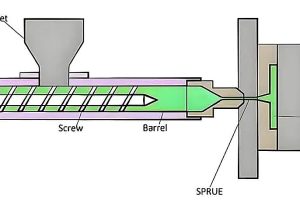
injection molding: is a manufacturing process in which molten thermoplastic resin is injected under pressure into a metal mold cavity, cooled to solidify, and ejected as a finished part. ↩


 EN
EN  ES
ES  FR
FR  DE
DE  PT
PT  AR
AR  RU
RU  JA
JA  KO
KO  IT
IT  NL
NL  TR
TR  PL
PL 