 콘텐츠로 건너뛰기

- 8개 이상의 캐비티를 갖춘 다중 캐비티 몰드에는 강력히 권장됩니다. 핫 러너는 채널 내부에서 폴리머를 용융 상태로 유지하기 위해 가열된 매니폴드를 사용하여, 재분쇄되거나 폐기되어야 할 콜드 러너 폐기물을 없앱니다. 핫 러너는 또한 각 게이트에서 더 일관된 온도 제어를 제공하여 모든 캐비티 간의 충전 균일성을 향상시킵니다.
- Runner balancing and symmetrical cavity layouts are essential to ensure every cavity fills uniformly.
- Advanced cooling strategies—especially conformal channels—can reduce cycle time by up to 30%.
- Proper validation through short-shot analysis and cavity pressure monitoring prevents costly production defects.
- Choosing the right tooling material and surface coating extends mold life to millions of cycles.
In modern plastic manufacturing, designing multi-cavity molds is one of the most effective ways to scale production without proportionally increasing costs. A multi-cavity mold contains two or more identical cavities, allowing an 사출 성형 machine to produce several parts in a single cycle. This approach is indispensable for industries that require millions of identical components—think bottle caps, medical syringes, electronic connectors, and automotive clips. The payoff is significant: higher throughput, lower per-part cost, and improved consistency across large production runs.
However, the benefits come with increased engineering complexity. Each additional cavity introduces new variables—flow resistance, thermal distribution, ejection timing—that must be precisely managed. This guide walks through every critical aspect of multi-cavity injection mold design, from fundamental principles and Runner Balancing1 to cooling strategies, validation methods, and cost analysis.
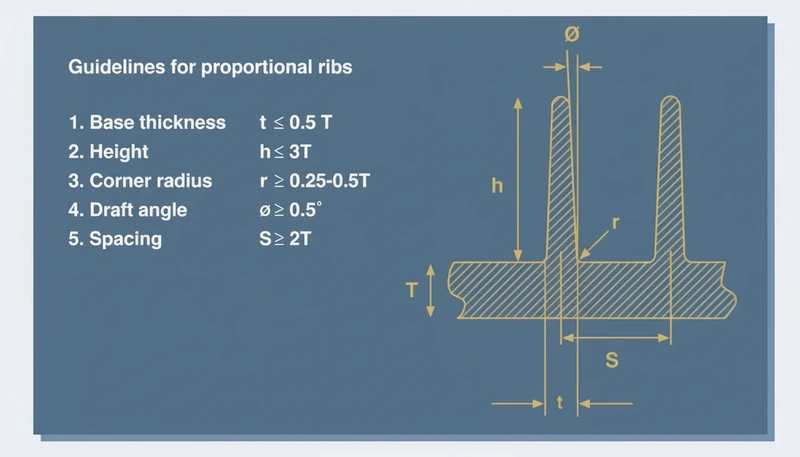
What Is a Multi-Cavity Mold and How Does It Work?
A multi-cavity mold is a specialized tool used in plastic injection manufacturing that contains multiple identical cavities within a single mold base. When the machine injects molten polymer into the mold, the material flows through a runner system and simultaneously fills every cavity, producing several finished parts in one cycle. The number of cavities can range from as few as two to over sixty-four, depending on part size, machine tonnage, and production requirements.
The core principle is simple: instead of molding one part per cycle and waiting for the next shot, you mold many. This dramatically increases effective output. For example, a machine running a 16-cavity mold with a 22-second cycle can produce over 2,500 parts per hour, compared to roughly 160 parts per hour with a single-cavity mold running a slightly shorter 18-second cycle.
There is an important distinction between multi-cavity molds and family molds. In a multi-cavity mold, every cavity produces the same part, ensuring uniform flow characteristics and quality. In a family mold, different cavities produce different parts, which complicates flow balancing because each cavity has a unique volume and geometry. For consistent, high-quality output, true multi-cavity designs are strongly preferred.
The decision to use a multi-cavity mold should be driven by a careful analysis of annual production volume, part complexity, and available press capacity. When production volumes justify the additional tooling investment, the return on investment is typically realized within the first production run. If you are comparing vendors or planning procurement, our injection molding sourcing guide covers RFQ preparation, supplier qualification, and commercial risk assessment in detail.
In our Shanghai factory, our team runs 47 injection molding machines from 90T to 1850T, which supports multi-cavity tools from low-volume pilot runs to high-volume production molds. That tonnage range matters because cavity count changes shot size, clamp-force demand, and validation risk.
Why Should You Choose a Multi-Cavity Mold for High-Volume Production?
This section is about choose a multi-cavity mold for high-volume production and its impact on cost, quality, timing, or sourcing risk. The primary driver for choosing a multi-cavity mold is economic: spreading the fixed cost of machine time, energy, and labor across many more parts per cycle significantly reduces the cost per unit. While the initial tooling investment is higher—often three to five times the cost of a single-cavity mold—the per-part savings become substantial once production volumes exceed the break-even threshold, typically around 500,000 to 1,000,000 parts.
Beyond cost, multi-cavity molds improve dimensional consistency. Because all parts are molded under the same machine settings, temperature, and pressure profile, the variation between parts from different cavities is typically smaller than the variation you would see between parts produced on different machines or in different runs. This is especially important in regulated industries such as medical devices and automotive, where tight tolerances are mandatory.
| 요인 | 단일 캐비티 몰드 | 8-Cavity Mold | 16 캐비티 몰드 |
|---|---|---|---|
| Approximate Tooling Cost | $8,000–$15,000 | $25,000–$45,000 | $45,000–$80,000 |
| 주기 시간 | 18 sec | 22초 | 24 sec |
| Parts per Hour | ~200 | ~1,300 | ~2,400 |
| Cost per Part (at 1M units) | $0.12 | $0.05 | $0.035 |
| Break-Even Volume | - | ~400,000 parts | ~600,000 parts |
The table above illustrates a key insight: cycle time increases only slightly as you add cavities, while output scales almost linearly. The result is a dramatic reduction in per-part cost that accelerates return on investment for any high-volume project.
How Do You Achieve Runner Balance in Multi-Cavity Molds?
Runner balancing is arguably the most critical engineering challenge in multi-cavity mold design. When molten plastic enters the mold, it must reach every cavity at the same time, at the same pressure, and with the same temperature profile. If one cavity fills before another, the result is over-packing, flash, short shots, or dimensional variation. The same logic applies to 러너 및 게이트 디자인, where small geometry differences can turn into repeatable production defects.
The runner system is the network of channels that carries molten polymer from the machine nozzle through the sprue and into each cavity. In a naturally balanced runner, every cavity is equidistant from the sprue, meaning the flow path length and resistance are identical. This is achieved through symmetrical layouts such as radial (cavities arranged in a circle around the sprue) or H-pattern configurations.
When natural balancing is impractical—often due to mold size constraints or part geometry—engineers use artificially balanced runners, adjusting the diameter and length of individual runner branches to equalize flow resistance. This requires precise simulation using Moldflow or similar software to model pressure drops and filling patterns before the steel is ever cut.
“A naturally balanced runner layout ensures that every cavity has an identical flow path length from the sprue.”True
In a naturally balanced system, cavities are arranged symmetrically—such as in an H-pattern—so the distance and resistance from the sprue to each cavity are equal, promoting simultaneous fill without artificial adjustments.
“Increasing runner diameter always improves cavity fill balance in a multi-cavity mold.”False
While larger runners reduce pressure drop, they also increase material waste and can cause excessive packing in cavities closer to the sprue. Balance is achieved through precise sizing, not simply by making runners larger.
Hot runner systems are strongly recommended for multi-cavity molds with eight or more cavities. A hot runner uses heated manifolds to keep the polymer molten inside the channel, eliminating the cold runner waste that would otherwise need to be reground or discarded. Hot runners also provide more consistent temperature control at each gate, improving fill uniformity across all cavities.
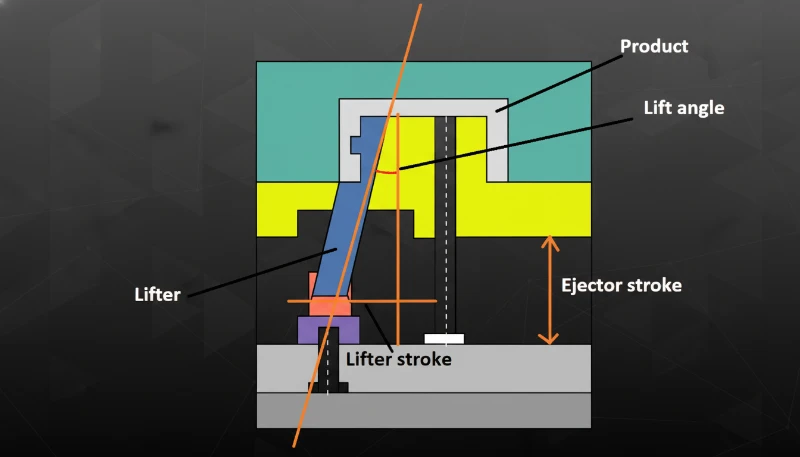
What Role Does Cooling Play in Multi-Cavity Mold Performance?
Cooling accounts for approximately 70% of the total injection molding cycle time, making it the single largest factor in determining throughput. In a multi-cavity mold, the cooling challenge is amplified because every cavity must solidify at the same rate. If one cavity cools faster than another, parts will have different shrinkage, warpage, and dimensional accuracy.
Traditional drilled cooling channels follow straight paths and cannot closely follow the contours of complex part geometries. This creates hot spots—areas where heat removal is slower—leading to uneven cooling and part defects. 컨포멀 냉각2 channels, made possible by metal additive manufacturing, follow the exact shape of the cavity surface and provide uniform heat extraction across the entire mold. Studies have demonstrated that conformal cooling can reduce cycle time by 20–40% compared to conventional drilled channels.
Effective cooling design in a multi-cavity mold also requires parallel cooling circuits rather than series circuits. In a series circuit, coolant absorbs heat from the first cavity and arrives at the last cavity at a higher temperature, creating a thermal gradient. Parallel circuits deliver coolant at the same inlet temperature to every cavity, ensuring uniform cooling performance across the entire mold.
Thermal simulation software such as Moldex3D or Autodesk Moldflow allows engineers to visualize temperature distribution across the mold and optimize channel placement before manufacturing. Proper baffle and bubbler placement within each cavity ensures that even thick-wall sections receive adequate cooling. For high-cavity-count molds, investing in thorough thermal simulation during the design phase can prevent weeks of troubleshooting during production qualification.
“Parallel cooling circuits provide more uniform temperature distribution across all cavities compared to series circuits.”True
Parallel circuits deliver coolant at the same inlet temperature to every cavity simultaneously. In series circuits, coolant heats up progressively as it passes through successive cavities, creating thermal gradients that cause inconsistent part quality.
“Using softer mold steel like P20 is always the best choice for multi-cavity molds because it reduces initial tooling cost.”False
While P20 reduces upfront cost, it wears faster under high-volume production. For molds expected to run millions of cycles, harder steels like H13 or S136 provide better long-term value by maintaining cavity dimensions and surface finish over a much longer service life.
How Do Venting and Ejection Systems Affect Part Quality?
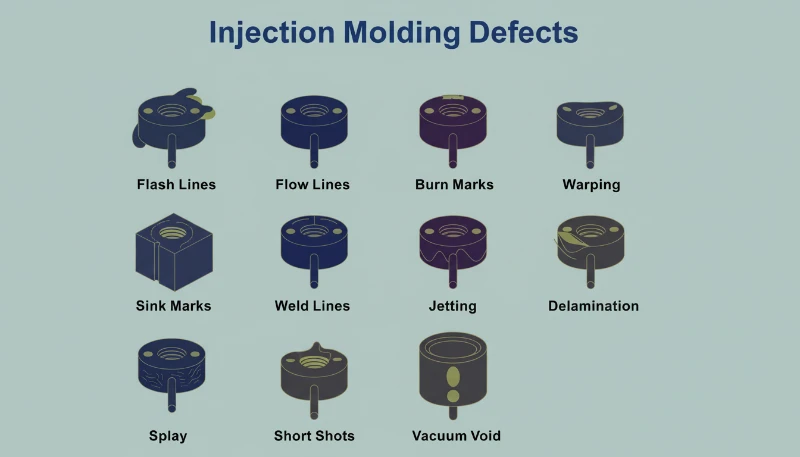
This section is about venting and ejection systems affect part quality and its impact on cost, quality, timing, or sourcing risk. When molten plastic fills a cavity, it displaces air and any moisture or gases from the polymer itself. If this trapped gas cannot escape quickly enough, it compresses, heats up, and causes diesel burns—small charred spots on the part surface known as burn marks. In multi-cavity molds, venting must be carefully engineered at every cavity because the rapid filling of multiple cavities simultaneously generates a large volume of displaced gas in a very short time. Poor venting is one of the recurring causes behind 사출 성형 결함 in high-cavity tools.
Vents are thin channels, typically 0.01–0.02 mm deep, ground into the parting line or insert surfaces of each cavity. They are deep enough to allow gas to escape but shallow enough to prevent molten plastic from leaking through. In complex geometries, additional venting may be provided through porous steel inserts or vent pins placed at specific locations identified by simulation.
Ejection is equally critical. In a single-cavity mold, one central ejector pin may suffice. In a multi-cavity mold, however, each cavity requires its own set of ejector pins, and all must operate in perfect synchronization. Any timing difference can cause parts to stick, deform, or fall inconsistently. Synchronized ejection plates, stripper rings, or pneumatic ejectors are commonly used to ensure every part releases cleanly and simultaneously.
When Should You Use a Hot Runner vs. Cold Runner System?
The choice between hot runner and cold runner systems has a significant impact on material waste, cycle time, and part quality in multi-cavity molds. A cold runner system is the simpler and less expensive option: molten plastic flows through unheated channels and solidifies along with the parts. The solidified runner must then be separated from the parts and either reground or discarded. For low-cavity molds (two to four cavities) running commodity materials, cold runners can be cost-effective.
However, as cavity count increases, cold runner waste becomes a serious economic concern. In a 16-cavity mold, the cold runner may represent 20–40% of the total shot weight, meaning a significant portion of every cycle is wasted material. A Hot Runner System3 eliminates this waste by maintaining the polymer in a molten state within heated channels, so no solidified runner is produced.
Hot runners also offer superior gate control. Valve gates can be opened and closed sequentially, allowing engineers to fine-tune the filling sequence and reduce weld-line visibility. Thermal gates provide clean separation without gate vestige, improving part aesthetics. For engineering-grade resins that are sensitive to thermal degradation, hot runners with individually controlled zones ensure each cavity receives material at the optimal temperature.
The trade-off is cost and maintenance complexity. A hot runner system adds $5,000–$20,000 or more to the tooling cost and requires periodic maintenance of heaters, thermocouples, and manifold seals. For production runs under 100,000 parts, the material savings may not justify the additional investment. The following table summarizes the key differences:
| 특징 | Cold Runner | 핫 러너 |
|---|---|---|
| Initial Tooling Cost | Lower ($2,000–$5,000) | Higher ($7,000–$20,000+) |
| 재료 낭비 | High (runner solidifies) | Minimal (no solidified runner) |
| Cycle Time Impact | Neutral | Slightly faster (no runner cooling) |
| Gate Quality | May leave vestige | Clean, controlled separation |
| 유지 관리 | Simple | Requires heater/thermocouple service |
| 최상의 대상 | Low-cavity, short runs | High-cavity, long production runs |
What Materials and Coatings Maximize Mold Longevity?
The choice of mold steel directly impacts tool life, part surface finish, and maintenance frequency. For multi-cavity molds running millions of cycles, material selection is not an area to economize. The most commonly used steels in high-production molds include P20 (pre-hardened to 30–36 HRC for moderate volume), H13 (hot-work steel hardened to 44–52 HRC for high-volume, high-temperature applications), and S136 (stainless steel with excellent polishability for optical and medical parts).
Surface coatings further extend tool life by reducing friction, preventing corrosion, and improving polymer release. Diamond-Like Carbon (DLC) coatings provide exceptional hardness and low friction, reducing wear on high-contact surfaces such as cores and slides. Titanium Nitride (TiN) and Chromium Nitride (CrN) coatings offer good corrosion resistance and are widely used in molds processing glass-filled or corrosive polymers.
Regular maintenance is essential to preserve mold performance over time. Cooling channels should be flushed and descaled periodically to maintain heat transfer efficiency. Ejector pins and guide bushings should be inspected for wear and replaced before they begin to score the mold surfaces. A well-maintained multi-cavity mold can reliably produce 5–10 million parts or more over its service life.
How Do You Validate and Balance a Multi-Cavity Mold Before Production?
Validation is the critical bridge between mold design and production readiness. Even the most carefully designed mold can exhibit unexpected behavior when it encounters real-world processing conditions. A structured validation process identifies and corrects issues before they reach full-scale manufacturing, saving time and preventing costly scrap.
The first validation step is short-shot analysis. By intentionally injecting less than the full shot volume, engineers can observe the filling pattern of each cavity. In a perfectly balanced mold, every cavity should show the same degree of partial fill. Any discrepancy indicates a flow imbalance that must be corrected through runner adjustments or gate size modifications.
Cavity pressure monitoring provides quantitative data on fill uniformity. Pressure sensors installed in each cavity record the filling profile in real time, allowing engineers to compare peak pressures, fill times, and packing behavior across cavities. This data is invaluable for fine-tuning process parameters and verifying that every cavity produces parts within specification.
Finally, dimensional capability studies (Cp/Cpk) confirm that parts from all cavities meet the required tolerances. A minimum Cpk of 1.33 is typically required for production approval, indicating that the process is capable of producing parts well within specification limits. Parts from each cavity are measured using coordinate measuring machines (CMMs) or optical inspection systems, and the data is analyzed to identify any cavity-specific deviations that require correction.
With 20+ years of injection molding and tooling experience, our engineers validate multi-cavity molds with short-shot studies, cavity-balance checks, dimensional sampling, and process-window testing before production approval. Machines from 90T to 1850T give our team room to match the tool to the right press instead of forcing a high-cavity mold into marginal clamp capacity.
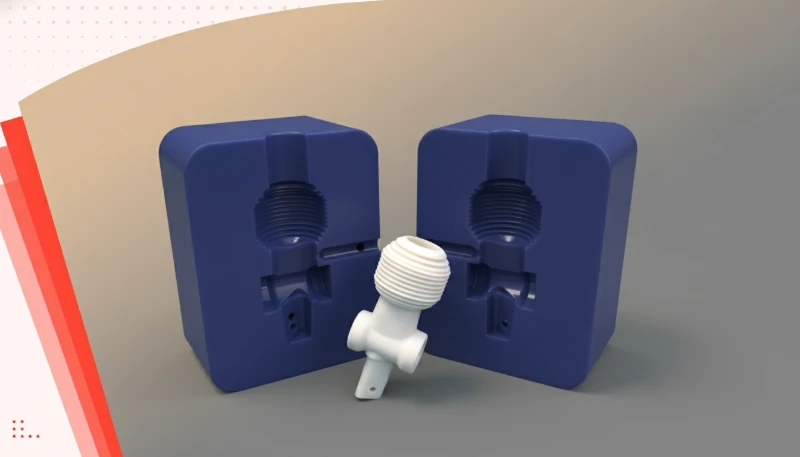
What Questions Do Buyers Ask About Designing Multi-Cavity Molds?
자주 묻는 질문
What Is the Ideal Number of Cavities for a Multi-Cavity Mold?
There is no universal ideal cavity count. The right number depends on part size, projected annual volume, material flow behavior, available press tonnage, and the tolerance risk of the part. For many production programs, 4 to 32 cavities is the practical range. Small caps, seals, and connectors can go higher because shot size and clamp force stay manageable. Larger parts usually need fewer cavities. The safe method is to compare tooling cost, cycle time, scrap risk, and demand forecast before locking the cavity count.
How Much More Does a Multi-Cavity Mold Cost Compared to a Single-Cavity Mold?
A multi-cavity mold costs more than a single-cavity mold because the tool needs more cavities, gates, runners, cooling circuits, ejection components, and validation work. An 8-cavity mold may cost three to four times more than a single-cavity tool, while a 16-cavity mold can cost five to seven times more. That does not automatically make it expensive per part. If annual demand is high, the extra tooling cost is spread across more parts, often reducing unit cost by 50 to 70 percent.
Can a Multi-Cavity Mold Produce Different Parts Simultaneously?
Yes, one mold can make different parts at the same time, but that is usually called a family mold, not a true multi-cavity mold. Family molds are useful when several low-volume parts are consumed together in one assembly. The risk is flow imbalance because each part has different volume, wall thickness, and pressure demand. One cavity may over-pack while another short-shots. For high-volume production where dimensional consistency matters, dedicated multi-cavity molds with identical cavities are usually safer and easier to validate.
Why Is Runner Balancing So Important in Multi-Cavity Molds?
러너 밸런싱은 모든 캐비티가 거의 동일한 시간, 압력 및 온도로 채워져야 하기 때문에 매우 중요합니다. 스프루 근처의 캐비티가 먼저 채워지면 과압축 및 플래시가 발생할 수 있습니다. 멀리 떨어진 캐비티는 숏샷이 발생하거나 약한 용접선이 나타날 수 있습니다. 결과는 일관되지 않은 치수와 높은 불량률입니다. 균형 잡힌 러너 레이아웃은 동일한 유동 길이, 제어된 러너 직경 및 시뮬레이션 데이터를 사용하여 캐비티 간 저항을 유사하게 유지합니다. 고캐비티 금형의 경우 이 작업은 시운전 중에 수정하는 것이 아니라 강철 절단 전에 완료되어야 합니다.
다중 캐비티 금형 제작에는 얼마나 걸리나요?
다중 캐비티 금형의 리드 타임은 일반적으로 6주에서 16주 사이입니다. 부품이 단순하고 재료 특성이 익숙한 경우, 간단한 4캐비티 콜드 러너 금형은 6~8주 내에 완성될 수 있습니다. 핫 러너, 슬라이드, 엄격한 공차 또는 컨포멀 냉각이 포함된 32캐비티 금형은 12~16주가 소요될 수 있습니다. 일정상 가장 큰 위험 요소는 늦은 설계 변경, 확인되지 않은 수지 등급, 지연된 DFM 승인 및 반복되는 T1 수정입니다. 초기 생산성 검토는 이러한 지연을 줄이고 출시 일정을 보호합니다.
다중 캐비티 금형은 어떤 유지보수가 필요한가요?
다중 캐비티 금형은 캐비티 간의 작은 마모 차이가 시간이 지남에 따라 품질 변동으로 이어지기 때문에 예방 정기 유지보수가 필요합니다. 일반적인 유지보수에는 캐비티 표면 청소, 냉각 채널 플러싱, 벤트 점검, 슬라이드 윤활, 이젝터 핀 검사 및 핫 러너 히터 또는 열전대 테스트가 포함됩니다. 많은 작업장에서는 생산 금형을 100,000~200,000 사이클마다 서비스하며, 마모성이나 부식성 재료의 경우 더 짧은 간격으로 진행합니다. 핵심은 금형별 사이클 수를 추적하고 캐비티별 문제를 기록하여 하나의 약한 캐비티가 출력 품질을 조용히 손상시키지 않도록 하는 것입니다.
다중 캐비티 금형에 적합한 사출 성형 파트너는 어떻게 선택하나요?
파트너를 선택할 때는 이전에 유사한 캐비티 수, 재료, 공차 및 검증 요구 사항을 처리한 경험이 있는지 확인하세요. 다중 캐비티 금형 사례, 기계 토너지 범위, 사내 금형 설계 능력 및 캐비티 균형에 사용하는 검증 방법을 요청하세요. 신뢰할 수 있는 공급업체는 숏 샷 연구, 캐비티별 치수 샘플링, Cpk 목표, 냉각 점검 및 유지보수 계획을 설명해야 합니다. 견적된 금형 가격만으로 판단하지 마세요. 캐비티 간 균형을 유지하지 못하는 더 저렴한 금형은 스크랩과 가동 중지 시간으로 인해 더 많은 비용이 발생합니다.
다중 캐비티 금형 설계에는 어떤 시뮬레이션 도구가 사용되나요?
다중 캐비티 금형 설계에 일반적으로 사용되는 시뮬레이션 도구로는 Autodesk Moldflow, Moldex3D, SolidWorks Plastics 등이 있습니다. 이러한 프로그램들은 금형이 제작되기 전에 충전 압력, 러너 균형, 용접선 위치, 냉각 효율, 수축 및 뒤틀림을 모델링합니다. 시뮬레이션은 금형 시험을 대체하지는 않지만, 불균형 러너, 불량 게이트 위치, 두꺼운 단면 주변의 핫 스팟과 같은 명백한 실수를 방지합니다. 고캐비티 금형의 경우, 강철 발주 전에 금형 레이아웃, 냉각 회로 설계 및 예상 프레스 용량과 함께 시뮬레이션을 검토해야 합니다.
다중 캐비티 금형으로 생산을 어떻게 최적화할 수 있나요?
Designing multi-cavity molds is a strategic investment that pays dividends through higher output, lower per-part costs, and improved consistency. Whether you need a 4-cavity mold for mid-volume production or a 32-cavity mold for high-volume manufacturing, the engineering principles covered in this guide—runner balancing, cooling optimization, venting design, and thorough validation—are the foundation of success.
ZetarMold은 20년 이상의 금형 설계 및 제조 경험을 바탕으로 90톤에서 1850톤에 이르는 47대의 사출 성형기를 보유하고 있습니다. 컨셉부터 생산 검증까지, 모든 사출 금형 프로젝트는 신뢰성, 캐비티 균형 및 생산 효율성을 위해 설계됩니다.
Get a free quote and DFM review for your multi-cavity mold project today. Contact ZetarMold’s engineering team to discuss your requirements and discover how optimized mold design can transform your production economics.
-
Runner Balancing: Runner Balancing refers to the process of adjusting runner dimensions so that every cavity in a multi-cavity mold fills at the same time and pressure, as defined by flow simulation standards. ↩
-
Conformal Cooling: 컨포멀 냉각은 일반적으로 금속 적층 제조를 사용하여 금형 캐비티의 윤곽을 따라 제작된 냉각 채널을 의미하며, 직선 드릴 채널보다 더 균일한 열 추출을 제공합니다. ↩
-
핫 러너 시스템: 다중 캐비티 금형 설계: 효율성과 정밀성을 위한 완벽한 가이드 ↩




 EN
EN  ES
ES  FR
FR  DE
DE  PT
PT  AR
AR  RU
RU  JA
JA  KO
KO  IT
IT  NL
NL  TR
TR  PL
PL 