What should buyers know first?
This section is about buyers know first and its impact on cost, quality, timing, or sourcing risk. If you have ever struggled to mold metal inserts into plastic parts, or wished your production floor could fit one more machine without a costly expansion, 射出成形 in a vertical configuration might be exactly what you need. vertical injection molding1 machines solve real manufacturing headaches that horizontal machines simply cannot address — from gravity-assisted insert placement to a dramatically smaller footprint.
In this guide, we break down the 縦型射出成形の利点 with the kind of detail you need to make an informed equipment decision. We cover how these machines work, when they outperform horizontal alternatives, and what to look for when specifying one for your production line.
- Vertical machines take up 30–50% less floor space than comparable horizontal presses
- Gravity naturally holds inserts in place, reducing fixture complexity and defect rates
- Ideal for insert molding, overmolding, and multi-component assemblies
- Rotary table options enable continuous multi-station production cycles
- Lower upfront cost and energy consumption for many insert-molding applications

What Is Vertical Injection Molding?
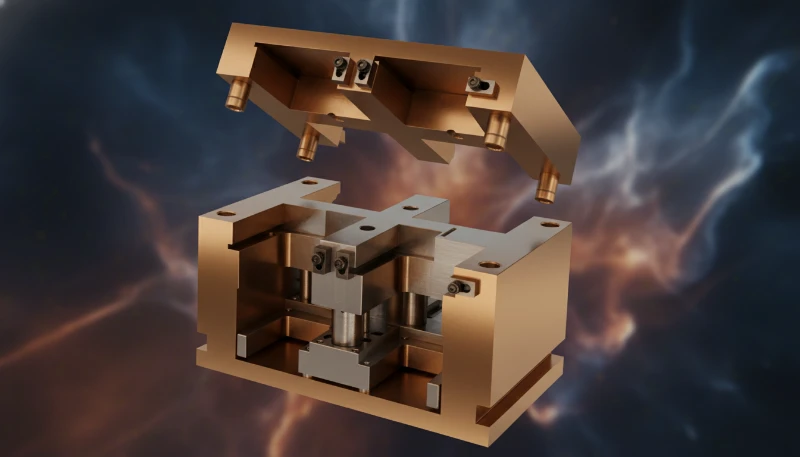
Vertical injection molding is defined by the function, constraints, and tradeoffs explained in this section. Vertical injection molding¹ is a specialized form of plastic injection molding where the 射出成形金型 opens and closes along a vertical axis rather than the horizontal axis used by conventional machines. The injection unit sits directly above the mold, and the clamping mechanism pushes the lower mold half upward to meet the upper half.
This vertical orientation changes the physics of the injection molding process steps in useful ways. Gravity pulls molten plastic downward into the cavity, helping to fill complex geometries. More importantly, when you need to place metal inserts, electronic components, or threaded fasteners into the mold before each shot, gravity holds them firmly in position on the lower mold half — no elaborate fixtures required.
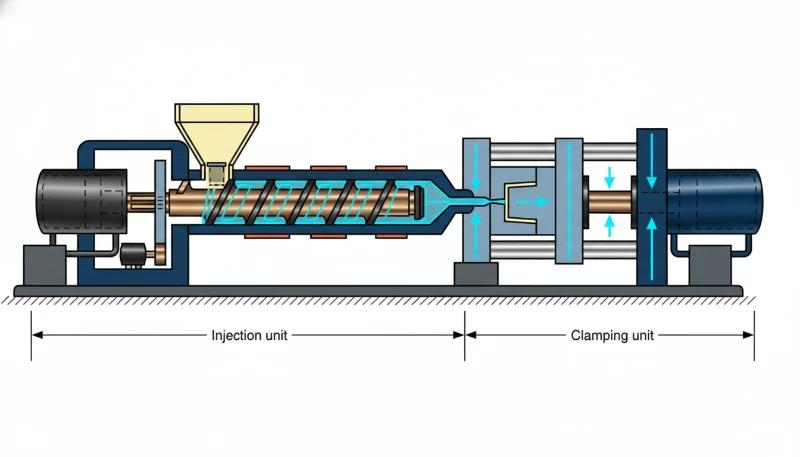
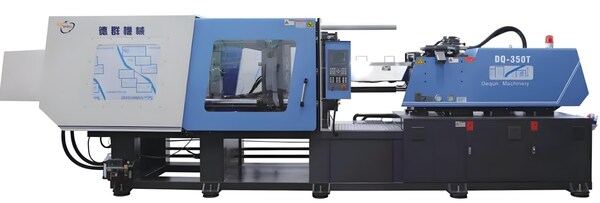
The core components are the same as any injection molding machine: a hopper, barrel, screw, heaters, clamping unit, and mold. The difference is purely in orientation. Vertical machines typically use a shuttle or rotary table³ system that moves the lower mold half between stations, so an operator or robot can load inserts at one station while the machine injects at another.
In our Shanghai factory, our team operates 47 injection molding machines ranging from 90T to 1850T. In our experience, vertical machines are most useful for インサート成形2 そして オーバーモールディング3 jobs where gravity-assisted positioning delivers measurable quality improvements.
What Are the Key Benefits of Vertical Injection Molding?
Space Efficiency and Compact Footprint
Vertical machines occupy significantly less floor space than horizontal machines of equivalent clamping force. Because the clamp and injection units are stacked vertically rather than laid out horizontally, a vertical press with 100 tons of クランプ力⁵ can fit into roughly half the footprint of a comparable horizontal machine.
This is a real advantage for facilities where floor space is at a premium. If you are running a factory in a high-rent industrial zone, every square meter matters. We have seen shops add two or three vertical machines in the space previously occupied by a single horizontal press, effectively doubling or tripling their insert-molding capacity without expanding the building.
Superior Insert Molding and Overmolding Performance
This is where vertical machines truly shine. インサート成形² — the process of molding plastic around a pre-placed metal or electronic component — is dramatically easier on a vertical machine. Gravity keeps the insert seated on the lower mold half. On a horizontal machine, you need complex fixtures, magnets, or robotic arms to hold inserts in the correct position during mold closing.
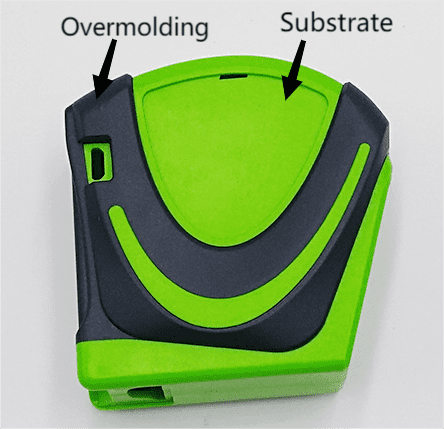
The same principle applies to オーバーモールディング⁴. When you mold a second material over a previously formed substrate, the vertical orientation ensures the substrate stays firmly in place. In practice, we see insert rejection rates drop by 60–80% when moving complex insert jobs from horizontal to vertical machines, because gravity does the work that expensive fixtures used to do.
“Vertical injection molding machines can reduce insert rejection rates by 60–80% compared to horizontal machines on complex insert jobs.”真
True. The vertical orientation allows gravity to hold inserts firmly in place, eliminating the need for complex fixtures that can fail and cause misalignment or displacement during mold closing.
“Horizontal injection molding machines are always better than vertical machines for insert molding applications.”偽
False. Vertical machines are specifically superior for insert molding because gravity naturally holds inserts in position on the lower mold half, reducing fixture complexity and defect rates. Horizontal machines require additional fixtures or robotic systems to achieve the same result.
Lower Tooling and Fixture Costs
Because gravity holds inserts and substrates in position, you can often skip the custom fixtures and magnetic holders that horizontal machines require. For a typical insert-molded connector with four brass threaded inserts, the fixture savings alone can run $2,000–$5,000 per mold — and the fixture maintenance costs disappear entirely.
Mold design is also simpler in some cases. The lower mold half acts as a natural shelf for inserts, reducing the complexity of the mold itself. Combined with in-house mold manufacturing capabilities, the total tooling investment for a vertical molding project can be 15–25% lower than the equivalent horizontal setup.
Multi-Station Rotary Tables for Continuous Production
Many vertical machines come with rotary table or shuttle table options that enable continuous multi-station production. While the machine injects plastic into a mold at station A, an operator loads inserts into the mold at station B. The table rotates, and the cycle repeats without pause.
This setup effectively gives you two production cycles overlapping in time. For high-volume insert molding jobs — think automotive connectors, medical device housings, or consumer electronics components — rotary table vertical machines can match or exceed the throughput of horizontal machines at a lower total cost per part, but the final plan should still be checked against realistic 射出成形の生産時間.
“Rotary table vertical injection molding machines allow insert loading and injection to occur simultaneously at different stations.”真
True. Rotary tables have multiple stations that index between positions. While one station is under the injection unit being filled with plastic, another station is accessible to the operator for loading inserts, enabling continuous production without stopping the machine cycle.
“Vertical injection molding machines are slower than horizontal machines in all production scenarios.”偽
False. While vertical machines may have slightly slower cycle times for simple parts, rotary table configurations enable overlapping cycles where insert loading happens concurrently with injection. For insert molding applications specifically, vertical machines can match or exceed horizontal machine throughput.

How Does Vertical Injection Molding Compare to Horizontal?
Vertical injection molding is more competitive than horizontal when the cost, lead time, and quality tradeoffs below match your program needs. The choice between vertical and horizontal injection molding is not about one being universally better — it is about matching the machine orientation to the application requirements. Here is an honest comparison based on two decades of hands-on experience with both machine types.
Vertical machines are the best choice when your part requires インサート成形, オーバーモールディングあるいは multi-component assembly. They also excel in low-to-medium volume production of parts with embedded components, and in any application where floor space is constrained. If your part has metal inserts, threaded fasteners, electronic components, or requires a second material overmold, a vertical machine is almost always the better choice.
Horizontal machines are the better choice for 大量生産 of standard plastic parts without inserts, multi-cavity molds producing large numbers of identical parts, very large parts that exceed the clamping capacity of available vertical machines, and applications where fully automated robotic part removal is the primary goal.
In terms of cost, vertical machines in the 50–200 ton range typically cost 20–30% less than equivalent horizontal machines. The savings come from simpler construction (no need for the large horizontal platen and tie-bar assembly), smaller footprint, and lower shipping and installation costs.
“Vertical injection molding machines in the 50–200 ton range typically cost 20–30% less than equivalent horizontal machines.”真
True. Vertical machines have simpler mechanical construction, smaller footprints, and lower shipping/installation costs, which translates to a meaningful price advantage in the small-to-medium tonnage range.
“Vertical injection molding machines can handle any part size that horizontal machines can produce.”偽
False. Vertical machines are generally limited to smaller part sizes and lower clamping forces than horizontal machines. For very large parts or high-cavitation production molds, horizontal machines remain the practical choice due to their larger platen sizes and higher available clamping forces.
What Are Common Applications of Vertical Injection Molding?
Common applications of vertical injection molding are the main categories or options explained in this section. Vertical machines also offer easier access to the mold cavity. The operator can see and reach the mold surface from above, which simplifies insert loading, mold inspection, and part removal. On a horizontal machine, the mold faces are oriented vertically, making access more awkward and increasing the risk of dropping inserts into the mechanism. This ergonomic advantage translates to faster operator training and fewer handling errors on the production floor.
In the automotive industry, vertical molding produces connectors and sensor housings with precisely placed brass or steel inserts. Modern vehicles contain dozens of such components, and vertical machines handle these insert-molding jobs efficiently, producing parts with strong material bonds and accurate insert positioning that meets strict automotive quality standards.
Medical device manufacturing relies on vertical molding for overmolding soft, biocompatible materials over rigid substrates. The vertical orientation ensures the substrate stays firmly positioned during the second-shot injection, which is critical for maintaining consistent wall thickness and seal integrity in devices that must meet FDA biocompatibility requirements.
Vertical injection molding is widely used across industries for producing parts that require embedded components. The electronics industry relies on it for USB connectors and cable assemblies, while automotive manufacturers use it for sensor housings and connector blocks with integrated metal terminals.
Choose vertical injection molding when your part requires insert molding, overmolding, or embedded components. Best suited for vertical machines: parts with metal inserts, threaded fasteners, electronic components, or second-material overmolds. The gravity advantage alone can save thousands of dollars per year in fixture costs and scrap reduction. If your application involves placing anything inside the mold before each shot, a vertical machine is almost always the better choice.
With experience across 400+ materials and over 20 years in production, we regularly run vertical molding jobs for automotive, medical, and electronics clients. The vertical machines are dedicated to insert and overmolding work where the gravity advantage is most valuable.

How to Choose the Right Vertical Injection Molding Machine?
This section is about to choose the right vertical injection molding machine and its impact on cost, quality, timing, or sourcing risk. Selecting the right vertical machine requires evaluating several key specifications. Here is what matters most in practice:
クランプ力: Calculate the projected area of your part (including the runner system) and multiply by the injection pressure, then add a 10–20% safety margin. For most insert-molded parts, 50–150 tons is sufficient. Do not oversize — a larger machine costs more, uses more energy, and cycles slower.
Injection capacity: Match the shot volume to your part weight plus runner weight. The injection unit should be rated for 1.2–1.5× your required shot volume for optimal fill consistency and pressure retention.
Table configuration: Decide between a single-station fixed table, a shuttle table (two stations), or a rotary table (3–4 stations). Shuttle tables are the most common compromise between cost and productivity. Rotary tables maximize throughput but add machine complexity and cost.
Platen size: Ensure the platen can accommodate your mold plus any required insert loading fixtures. Leave at least 50mm clearance on all sides. For multi-cavity molds, verify that the platen is large enough for the full mold layout.
If you are unsure about the specifications for your specific part, our engineering team can review your part design and recommend the appropriate machine configuration. Having run 射出成形サプライヤー operations for over 20 years, we can tell you pretty quickly whether a vertical machine is the right fit for your project.
What is the final takeaway?
Vertical injection molding is not a replacement for horizontal machines — it is a complementary technology that excels in specific applications. When your project involves インサート成形, オーバーモールディングあるいは multi-component assembly, the gravity-assisted process, compact footprint, and lower tooling costs make vertical machines the clear choice.
The key benefits are straightforward: smaller floor footprint, natural insert positioning, lower fixture costs, rotary table productivity, and lower machine cost in the small-to-medium tonnage range. These advantages add up to real cost savings on the production floor.
If you have an insert molding or overmolding project in development, we can help you evaluate whether a vertical machine configuration is the right approach. Our engineering team will review your part geometry, material requirements, and production volume targets to recommend the most cost-effective production method.
Interested in a quote for your injection molding project? Get pricing, DFM feedback, and a production timeline from our engineering team.
Get competitive pricing, DFM feedback, and a production timeline from ZetarMold’s engineering team. With ISO 9001, ISO 13485, ISO 14001, and ISO 45001 certified operations, we deliver precision-molded parts on time and on budget.
Request a free quote from our engineering team to discuss your vertical injection molding project. We provide competitive pricing, DFM feedback, and a detailed production timeline within 24 hours. Request a Free Quote
よくある質問
What is the main advantage of vertical injection molding?
The primary advantage of vertical injection molding is gravity-assisted insert placement during the molding cycle. Unlike horizontal machines where metal inserts must be held in position using expensive custom fixtures, magnets, or robotic arms, vertical machines let gravity do the work naturally by holding inserts firmly on the lower mold half. This reduces fixture costs by thousands of dollars per mold, lowers defect rates significantly, and simplifies the overall production process. Vertical machines also have a substantially smaller footprint than horizontal presses, making them an excellent choice for facilities where production floor space is constrained.
Can vertical injection molding machines handle multi-material parts?
Yes, vertical machines are particularly well suited for overmolding and multi-material applications because the vertical orientation keeps the first-shot substrate firmly in position during the second injection cycle. This ensures consistent material bonding and uniform wall thickness across the entire finished part. The process is especially valuable for medical devices where a soft biocompatible TPE layer is overmolded onto a rigid polycarbonate substrate for improved grip and patient comfort, or for power tools where a rubberized grip surface is permanently molded over a hard nylon housing to provide ergonomic comfort and long-lasting impact resistance in demanding industrial environments.
How much floor space does a vertical injection molding machine save?
Vertical injection molding machines typically occupy 30 to 50 percent less floor space than horizontal machines with equivalent clamping force. The reason is straightforward: the clamp and injection units are stacked vertically rather than laid out horizontally, which dramatically reduces the machine footprint on the production floor. This compact size makes vertical machines ideal for manufacturing facilities where space is at a premium, or for companies that want to add production capacity by installing additional machines without constructing new building space.
What types of inserts work best in vertical injection molding?
A wide variety of inserts work well in vertical injection molding, including brass threaded inserts for mechanical fastening, steel fasteners for structural reinforcement, stamped metal terminals for electrical connectivity, metal shielding cans for EMI protection, and pre-molded plastic substrates for multi-shot assemblies. Essentially, any component that requires precise positioning inside a molded plastic part will benefit from the gravity-assisted placement that a vertical machine provides. Common production examples range from automotive sensor housings with brass thread inserts to USB-C connectors with stamped metal contact terminals.
垂直射出成形は水平成形よりも高価ですか?
いいえ、垂直射出成形は、インサート成形およびオーバーモールディングアプリケーションにおいて、一般的に水平成形よりも費用が低くなります。50から200トンのクランプ力範囲では、垂直機は通常、同じ製造業者の同等の水平機よりも20から30%低いコストです。重力がインサートを正しい位置に保持するため、金型コストも明らかに低くなり、高価なカスタム固定具、磁石、またはロボット積込システムが必要なくなります。このトン数範囲の垂直機は、よりシンプルな油圧または全電駆動システムを持ち、サイクルごとに消費エネルギーが少ないため、運営コストも通常低くなります。
垂直射出成形機の回転テーブルとは何ですか?
回転テーブルは、垂直射出成形機上で連続的かつ重複的な生産サイクルを可能にする、二つ以上の金型ステーションを持つ電動回転プラットフォームです。その動作方法は単純です:射出装置が一つのステーションで溶融プラスチックを金型に充填する間に、オペレーターまたはロボットアームが隣接するステーションの空の金型に金属インサートを積込します。射出が完了すると、回転テーブルがインデックスし、積込された金型を射出位置に移動させ、同時に成形された部品が冷却された金型から取り出されます。この重複プロセスは、第二の機械を必要とせずに、インサート成形アプリケーションの生産能力を効果的に倍増させます。
垂直射出成形を水平射出成形よりも選択するべきのはいつですか?
部品設計がインサート成形、オーバーモールディング、またはプラスチック筐体内に金属部品を埋め込む必要がある場合は、垂直射出成形を選択するべきです。垂直機は、生産現場のスペースが限られている場合、生産量が低から中範囲の場合、またはインサート保持固定具のコストと複雑さを減らしたい場合にも、より良い選択です。逆に、インサートを含まない標準プラスチック部品を大量生産する場合、部品が非常に大型で高クランプ力を必要とする場合、または生産プロセスが最大速度で動作する完全自動ロボット部品取り出しシステムに依存する場合は、水平機を選択します。
垂直射出成形にはどのクランプ力が必要ですか?
インサート成形生産部品の大半は、50から150トンのクランプ力を必要とします。アプリケーションに適した仕様を決定するには、完成部品の投影表面面積(ラナーシステムを含む)を計算し、その面積を選択したプラスチック材料に必要な射出圧力で乗算します。その基準数値を得たら、材料粘度の変動とプロセス変動を考慮して10から20%の安全マージンを追加します。機械を過大サイズにしないことが重要です。なぜなら、大型プレスは購入および運営コストが高く、サイクルごとに消費エネルギーが多く、通常、部品要件に正確に適合した機械よりも低速で動作します。
-
垂直射出成形: 垂直射出成形とは、射出装置とクランプ装置が垂直方向に配置され、金型が垂直軸に沿って開閉する製造プロセスを指し、インサート成形およびオーバーモールディングアプリケーションに理想的です。 ↩
-
insert molding: インサート成形とは、成形前に成形金型のキャビティに予成形された部品(金属インサート、電子部品、または他のプラスチック部品)を配置し、その周囲に溶融プラスチックを射出して単一の統合部品を作成する射出成形プロセスを指します。 ↩
-
overmolding: オーバーモールディングとは、事前に成形された基材の上に第二層の材料を成形する二段階の射出成形プロセスを指し、グリップ、シール、または構造特性を強化した多材料部品を作成します。 ↩