Qual è la definizione di sottosquadro nello stampaggio a iniezione?
Se stai valutando dei fornitori, consulta la nostra guida all’approvvigionamento.
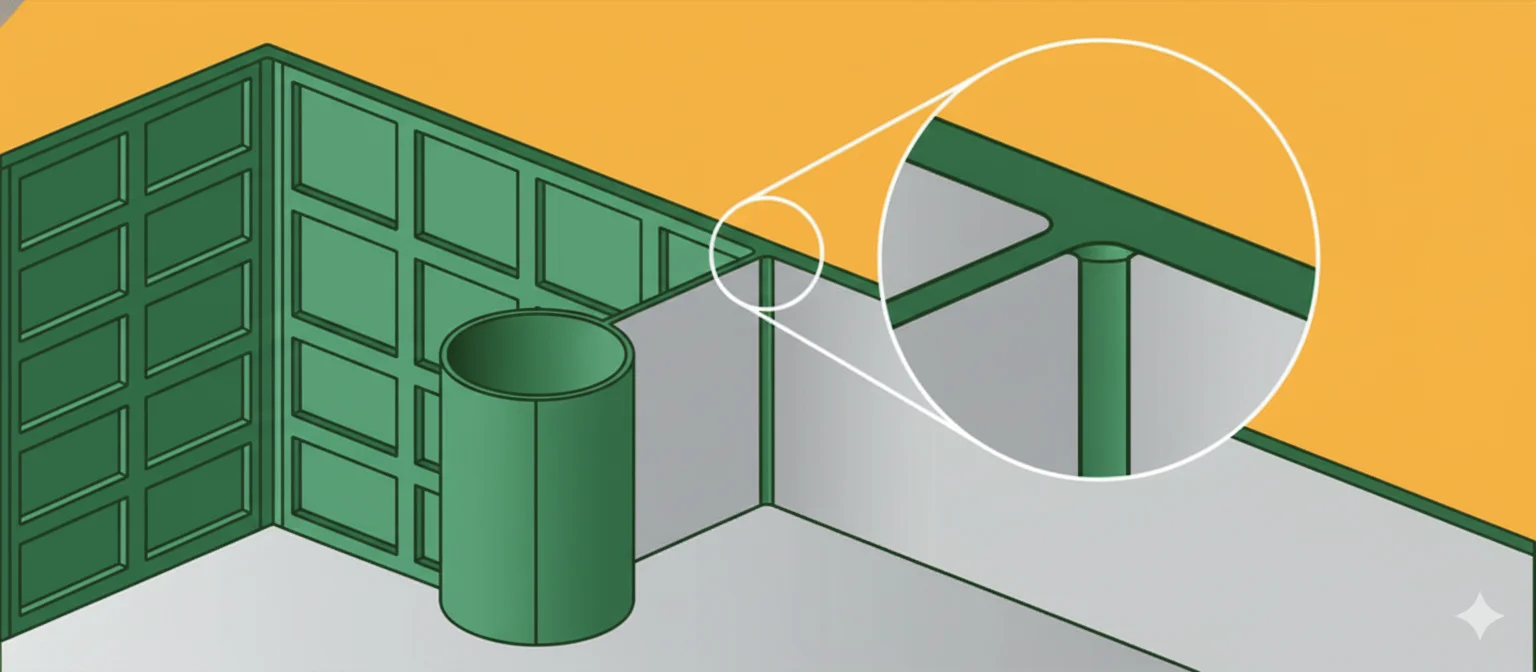
Nello stampaggio a iniezione, un sottosquadro è qualsiasi elemento del componente che impedisca l’espulsione lungo la direzione principale di apertura. Esempi tipici sono fori laterali, ganci a scatto, filettature interne, finestre di aggancio e scanalature incassate che intrappolano meccanicamente l’acciaio se lo stampo non dispone di un meccanismo di rilascio. Quanto prima questo elemento viene individuato durante l’analisi di progettazione per la produzione (DFM), tanto più facile è confrontare riprogettazione, geometrie di chiusura, estrazione per deformazione, carrelli laterali1, estrattori inclinati o anime collassabili prima che costi e tempi di consegna siano definitivi.
I sottosquadri sono tra i fattori più comuni che aumentano i costi di attrezzatura e i tempi di consegna, perché quasi sempre richiedono componenti mobili aggiuntivi all’interno dello stampo. Una revisione DFM ben condotta può ridurre i costi di attrezzatura legati ai sottosquadri del 20-40% semplicemente individuando le caratteristiche che possono essere eliminate o semplificate prima che il design dello stampo sia finalizzato. Nella nostra fabbrica, vediamo richieste di rielaborazione legate ai sottosquadri in circa uno su tre nuovi progetti di stampi, motivo per cui diamo priorità alla selezione precoce del meccanismo.
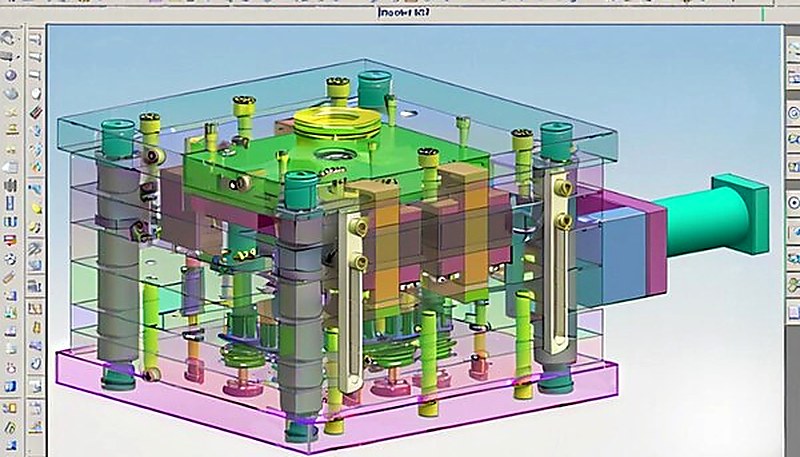
- Le caratteristiche sottosquadra devono essere classificate prima del preventivo perché il metodo di rilascio modifica il costo dello stampo, il tempo di consegna e il rischio di manutenzione.
- Azioni laterali, espulsori inclinati e anime collassabili risolvono problemi geometrici differenti, quindi la scelta del meccanismo deve dipendere dalla direzione di rilascio, dalla corsa, dalla resina, dalla tolleranza e dal volume di produzione.
- Il percorso DFM a rischio minimo consiste prima nel semplificare la geometria e poi nell'aggiungere componenti mobili allo stampo soltanto quando la funzione giustifica la maggiore complessità.
Senza un meccanismo specifico per liberare l’elemento, l’acciaio della cavità dello stampo intrappolerebbe fisicamente la plastica solidificata, danneggiando il componente o lo stampo durante l’espulsione. Risolvere questa difficoltà è il fulcro della progettazione di stampi complessi.
I meccanismi comunemente utilizzati per risolvere i sottosquadri comprendono:
Carrelli laterali: blocchi azionati da camme che si muovono perpendicolarmente all’apertura dello stampo.
"L'inserimento di leggeri angoli di sformo nelle caratteristiche in sottosquadro riduce significativamente la forza necessaria per disimpegnare azionamenti laterali ed estrattori inclinati."True
L'aggiunta di sformo all'elemento sottosquadro riduce l'attrito e la resistenza durante la retrazione del componente metallico, prolungando la vita dell'utensile e riducendo il rischio di deformazione del pezzo.
"Tutti i sottosquadri nella progettazione di un pezzo richiedono costosi azionamenti laterali meccanici o sollevatori per poter essere stampati correttamente."False
È un'idea errata. Molti sottosquadri minori possono essere risolti mediante espulsione forzata se il materiale è flessibile, oppure riprogettando la parte con aperture passanti o chiusure per eliminare completamente il sottosquadro.
Estrattori inclinati: anime interne che durante l’espulsione si muovono obliquamente per liberare gli elementi interni.
Anime collassabili: anime segmentate che si contraggono verso l’interno per liberare filettature o sottosquadri interni profondi.
Quali sono i parametri chiave per definire una camma ad azione laterale?
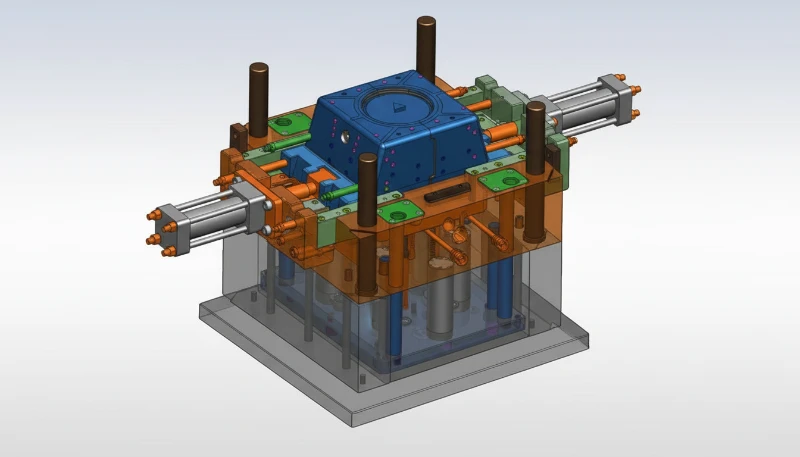
Un carrello laterale (spesso chiamato slitta o carrello a camma) è il metodo più robusto per gestire i sottosquadri esterni nello stampaggio a iniezione. È generalmente costituito da un perno inclinato, un corpo scorrevole e un blocco di chiusura.
Quando lo stampo si apre, il perno inclinato costringe la slitta ad arretrare allontanandosi dal pezzo. Quando lo stampo si chiude, il blocco di chiusura (heel block) mantiene saldamente la slitta in posizione contro la pressione di iniezione.
Tabella 1: parametri progettuali critici per gli azionamenti laterali
| Parametro | Valore tipico / Intervallo | Note |
|---|---|---|
| Angolo del perno inclinato | 10° – 25° | L'angolo del perno determina la distanza di corsa. Angoli più ripidi consentono una corsa maggiore, ma offrono un vantaggio meccanico inferiore. |
| Angolo del blocco di contrasto | Angolo del perno + (da 2° a 5°) | L'angolo di bloccaggio deve essere più ripido dell'angolo del perno per impedire l'arretramento del carrello durante l'iniezione. |
| Materiale del cursore | Acciaio per utensili H13, P20 o S7 | I componenti mobili richiedono acciaio temprato (48–52 HRC) per resistere all'usura e al grippaggio. |
| Piastre antiusura | Bronzo all'alluminio / acciaio grafitico | Utilizzato sotto la slitta per prevenire il grippaggio acciaio su acciaio; generalmente autolubrificante. |
| Gioco | 0.012 – 0.025 mm (0.0005" – 0.001") | Sono necessarie tolleranze strette per evitare la "bava" (fuoriuscita di plastica in eccesso) sulla linea di divisione. |
Come si progettano gli estrattori inclinati per gli stampi?
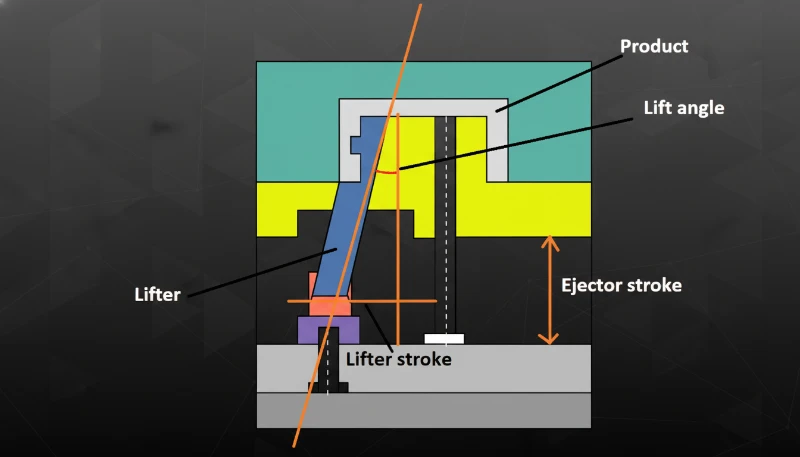
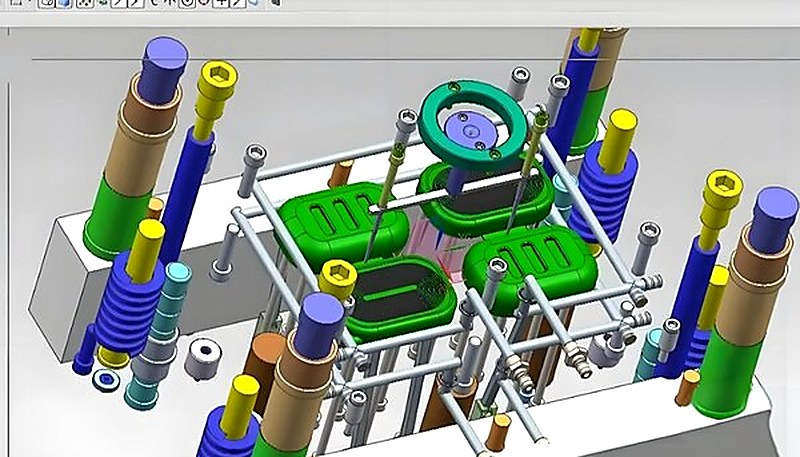
La progettazione degli estrattori inclinati per stampi è necessaria quando il sottosquadro si trova all’interno del componente, dove un carrello laterale non può arrivare. Un estrattore inclinato2 fa parte del sistema di espulsione. Quando le piastre di espulsione avanzano, l’estrattore si muove obliquamente verso l’alto e verso l’interno (lateralmente), liberando il sottosquadro.
Funzionamento del sollevatore passo dopo passo:
Iniezione: l’estrattore inclinato forma una parte della parete interna o del dettaglio a clip.
Apertura dello stampo: il lato A (cavità) si separa dal lato B (anima). Il componente rimane sull’anima.
"L'uso di 'chiusure' o 'passaggi' consente agli ingegneri di stampare caratteristiche simili a sottosquadri senza meccanismi mobili."True
Progettando un foro sul fondo del pezzo direttamente sotto una clip o un accoppiamento a scatto, gli acciai di anima e cavità possono combaciare (chiudersi) per formare la caratteristica, eliminando la necessità di movimenti laterali.
"Gli estrattori inclinati sono generalmente meno costosi e richiedono una manutenzione più semplice rispetto ai carrelli esterni ad azionamento laterale."False
Gli estrattori inclinati sono spesso piu soggetti a guasti meccanici e grippaggio a causa delle sollecitazioni complesse durante l'espulsione. Sono inoltre molto piu difficili da raffreddare, con possibili aumenti dei tempi ciclo e del costo del pezzo rispetto ai carrelli raffreddati esternamente.
Inizio dell’espulsione: la piastra di espulsione spinge l’asta dell’estrattore inclinato.
Movimento laterale: poiché l’asta dell’estrattore è inclinata, la forza di espulsione verticale si trasforma in movimento laterale, estraendo il dettaglio in acciaio dal sottosquadro nella plastica.
Approfondimento dalla fabbrica: ZetarMold dispone di un reparto interno per la produzione di stampi, 8 ingegneri senior e una capacità di oltre 100 set di stampi al mese. Nella nostra esperienza, azioni laterali, sollevatori e nuclei retrattili non dovrebbero essere considerati soluzioni predefinite. Il nostro team verifica prima se l'angolo di sformo, la geometria di chiusura, la flessibilità del materiale o la riprogettazione del pezzo possano eliminare la sottosquadro prima di aggiungere acciaio mobile. Per gli stampi da esportazione, il nostro reparto utensili segnala le sottosquadro più profonde di 0,5 mm prima del preventivo, controlla una tolleranza di chiusura di 0,012-0,025 mm, specifica superfici di usura con durezza 48-52 HRC dove l'acciaio scorrevole è esposto e confronta angoli di camma di 15-25 gradi prima dell'approvazione del layout. Questa revisione anticipata riduce i tempi di montaggio nascosti, rende più chiara la pianificazione dei ricambi per i clienti esteri e di solito migliora l'affidabilità dello stampo prima che lasci la fabbrica.
Rilascio: quando l’estrattore inclinato ha superato il sottosquadro, il componente cade o viene prelevato da un robot.
Vincolo tecnico: raffreddare gli estrattori inclinati è notoriamente difficile perché sono aste sottili e mobili. Ciò può allungare i tempi ciclo rispetto ai carrelli laterali, che possono essere raffreddati ad acqua con facilità.
Quali sono i vantaggi e gli svantaggi delle soluzioni per i sottosquadri?
La scelta del meccanismo corretto è essenziale per contenere i costi dei sottosquadri e garantire la durata dello stampo. Un carrello, un estrattore inclinato, un inserto manuale, un’estrazione per deformazione, un dispositivo di svitamento o un’anima collassabile3 devono essere scelti solo dopo aver verificato direzione di rilascio, corsa necessaria, flessibilità della resina, rischio estetico, tolleranze richieste e volume di produzione.
Tabella 2: confronto tra i meccanismi per sottosquadri
| Meccanismo | Il migliore per | Vantaggi | Svantaggi |
|---|---|---|---|
| Carrello laterale (slitta) | Sottosquadri esterni, aperture e fori sulle pareti laterali. | Robusto; facile da raffreddare; elevata resistenza alla pressione; affidabile. | Aumenta l'ingombro dello stampo (richiede una base più larga); lavorazione costosa. |
| Estrattore inclinato | Incastri interni, filettature interne, denti interni. | Risolve le geometrie interne intrappolate; si attiva automaticamente con l'espulsione. | Difficile da raffreddare (punti caldi); soggetto a rottura/grippaggio; manutenzione complessa. |
| Nucleo collassabile | Filettature interne sull'intera circonferenza (ad es. tappi di bottiglia). | Consente l'espulsione di sottosquadri interni a 360°; tempi ciclo rapidi. | Estremamente costoso; manutenzione elevata; limitazioni dimensionali. |
| Espulsione elastica (stripping) | Sottosquadri poco profondi in materiali flessibili (PP, PE, TPE). | Nessun costo del meccanismo; progettazione dello stampo più semplice. | Limitato a specifici vincoli geometrici; richiede elasticità del materiale; rischio di deformazione del pezzo. |
Quali sono i consigli pratici per ridurre complessità e costi?
Nella mia esperienza in reparto, il modo migliore per gestire un sottosquadro è eliminarlo durante la fase di progettazione per la producibilità (DfM). Se non è possibile, segui queste indicazioni pratiche:
Usare chiusure scorrevoli: invece di un carrello laterale per un foro in una parete verticale, verificare se è possibile inclinare la parete e utilizzare una chiusura «telescopica», in cui cavità e anima scorrono l’una accanto all’altra formando il foro.
Limitare la corsa del carrello laterale: mantenere ridotta la profondità del sottosquadro. Un sottosquadro più profondo richiede una corsa più lunga del carrello, imponendo una base stampo più grande e aumentando sensibilmente i costi dell’attrezzatura.
Scelta del materiale per l’estrazione per deformazione: se la priorità è evitare i costi dei sottosquadri, usare materiali come polipropilene (PP) o polietilene (PE). Progettare il sottosquadro con un angolo di uscita (da 30° a 45°), in modo che durante l’espulsione la plastica possa distendersi sopra il risalto in acciaio senza tranciarsi.
Dare priorità al raffreddamento dei carrelli: se i corpi dei carrelli laterali sono abbastanza grandi, integrarvi sempre linee di raffreddamento. I carrelli non raffreddati sono una causa primaria di variabilità del tempo ciclo e instabilità dimensionale.
Quali sono gli scenari applicativi più comuni?
Carrelli laterali, estrattori inclinati e anime collassabili sono utilizzati nello stampaggio per i settori automobilistico, elettronico, idraulico e medicale. Rivestimenti interni automobilistici: impiegano ampiamente gli estrattori inclinati per gli agganci a scatto interni che fissano i pannelli delle portiere al telaio.
Elettronica di consumo (alloggiamenti): utilizza carrelli laterali per porte USB, pulsanti di accensione e slot HDMI posti sulle pareti laterali dell’involucro del dispositivo.
Raccordi idraulici: utilizzano anime collassabili o cremagliere di svitamento per filettature interne che non possono essere estratte per deformazione.
Flaconi medicali: spesso impiegano l’estrazione per deformazione per gli anelli di ritenuta del tappo, sfruttando la flessibilità del polipropilene di grado medicale.
"Standardizzare l'angolo dei perni ad azione laterale a 15° o 20° semplifica la progettazione dello stampo e l'approvvigionamento dei ricambi."True
Il rispetto degli angoli standard consente ai costruttori di stampi di utilizzare componenti commerciali di fornitori come DME o Hasco, riducendo i tempi di progettazione e i costi di manutenzione.
"I nuclei collassabili sono la soluzione standard per tutte le filettature interne."False
Le anime collassabili sono complesse e costose. Per molte filettature interne standard sono preferibili stampi con svitamento automatico (mediante ingranaggi rotanti), oppure semplici estrazioni forzate se il profilo della filettatura è arrotondato e il materiale è flessibile.
Quali passaggi sono consigliati per scegliere il meccanismo corretto?
Analizzare la geometria: il sottosquadro è interno o esterno? (Esterno → carrello laterale; interno → estrattore inclinato/anima).
Verificare le proprietà del materiale: è flessibile (TPU, PP) o rigido (PC, nylon rinforzato con fibra di vetro)? I materiali flessibili possono consentire l’estrazione per deformazione.
Calcolare la corsa necessaria: di quanto deve muoversi l’acciaio per liberare la plastica? Assicurarsi che la base stampo possa contenere questa corsa.
Valutare il volume: per volumi ridotti (1.000 unità), considerare inserti caricati a mano. Per volumi elevati (oltre 100.000 unità), investire in carrelli automatici temprati con piastre antiusura.
Simulare: utilizzare l’analisi Moldflow per assicurarsi che i componenti mobili non ostacolino il raffreddamento né creino sacche d’aria (bruciature da gas).
Domande frequenti (FAQ)
Domande frequenti
Posso stampare sottosquadri senza parti mobili dello stampo?
Sì, ma soltanto quando geometria e materiale consentono un’estrazione forzata controllata. In genere il sottosquadro deve essere poco profondo, avere un raggio ampio e utilizzare una resina flessibile come PP, PE o TPE. Materiali rigidi, spigoli vivi, ganci profondi o superfici estetiche richiedono normalmente un movimento laterale, un estrattore inclinato, un nucleo collassabile o la riprogettazione del pezzo, perché forzare l’estrazione dall’acciaio può rompere il pezzo o danneggiare l’attrezzatura. Se la geometria è funzionale, verificare la direzione di rilascio nella DFM prima di definire la disposizione dello stampo.
Qual è la differenza tra una slitta e un sollevatore?
Un carrello, detto anche azionamento laterale, si muove lateralmente rispetto alla linea di divisione ed è solitamente azionato da un perno inclinato o da un cilindro idraulico. È ideale per fori esterni, finestre, ganci a scatto e aperture laterali. Un estrattore inclinato si muove obliquamente attraverso il sistema di espulsione ed è più adatto ai sottosquadri interni che devono liberarsi mentre il pezzo viene espulso. La scelta dipende dalla direzione dell’elemento, dalla corsa, dallo spazio disponibile nello stampo, dal raffreddamento, dai requisiti estetici del pezzo, dal rischio relativo alle tolleranze e dal volume di produzione previsto.
Quanto incide un movimento laterale sul costo dello stampo?
Un semplice azionamento laterale può aggiungere alcune migliaia di dollari al costo dello stampo, mentre carrelli più grandi o idraulici possono costare molto di più perché richiedono acciaio aggiuntivo, lavorazioni, piastre antiusura, bloccaggi, montaggio, aggiustaggio e tempo di convalida. Il costo aggiuntivo prosegue anche dopo l’avvio, poiché i componenti mobili richiedono lubrificazione, manutenzione e pianificazione dei ricambi. Per progetti a basso volume possono essere più pratici inserti caricati manualmente o una modifica della geometria. Nella produzione ad alto volume, i carrelli automatici si ripagano generalmente grazie a tempi di ciclo stabili e alla riduzione della manodopera.
Quando conviene scegliere un’anima collassabile?
Un maschio collassabile è particolarmente utile quando il pezzo presenta filettature interne, anelli interni profondi o una geometria che non può essere liberata con un semplice sollevatore. Può ridurre la necessità di riprogettare il pezzo, ma è anche più costoso e più sensibile all’usura, alla contaminazione della resina, allo squilibrio del raffreddamento e alla qualità della manutenzione. Utilizzarlo solo dopo aver verificato se la filettatura può essere riprogettata, divisa, estratta elasticamente, svitata o trasferita a un altro metodo di assemblaggio. Per i pezzi critici, convalidare il meccanismo durante il DFM prima di tagliare l’acciaio di produzione.
Come posso ridurre il rischio dell’attrezzaggio dei sottosquadri prima dell’approvazione DFM?
Iniziare contrassegnando ogni sottosquadro sul modello 3D e classificandolo come esterno, interno, estetico, funzionale o legato all’assemblaggio. Stimare quindi direzione di estrazione, corsa, sformo, flessibilità del materiale, tolleranze richieste e volume di produzione. Chiedere al progettista dello stampo di confrontare le opzioni di riprogettazione, shut-off, bump-off, inserto manuale, azionamento laterale, sollevatore, svitamento e maschio collassabile. La decisione migliore raramente coincide con il meccanismo più complesso. È l’opzione che tutela contemporaneamente funzione, durata dello stampo, costo, tempo ciclo, accessibilità per la manutenzione e futura disponibilità dei ricambi.
Sintesi
Gestire le sottosquadro nello stampaggio a iniezione richiede un equilibrio tra funzione del pezzo e complessità dello stampo. Le azioni laterali sono di solito le migliori per le caratteristiche esterne, i sollevatori sono utili per i dettagli interni e i nuclei retrattili sono riservati per geometrie interne complesse come le filettature. Prima di aggiungere questi meccanismi, rivedi la guida completa allo stampaggio a iniezione, conferma le basi del design dello stampo nella guida agli stampi a iniezione e prepara i dettagli di approvvigionamento con la guida alla selezione dei fornitori di stampaggio a iniezione. Questo mantiene visibili costi, manutenibilità e rischi produttivi prima che il DFM sia bloccato.
Serve un preventivo per uno stampo a iniezione con sottosquadri, slitte, sollevatori o anime collassabili?
Ottieni prezzi competitivi, feedback DFM e tempistiche di produzione dal team di ingegneria di ZetarMold. Se il tuo componente presenta fori laterali, ganci a scatto, filettature interne, finestre di chiusura o altre caratteristiche di sottosquadro, condividi il file 3D, la resina, la quantità annuale, le esigenze di tolleranza e i requisiti estetici. Per contestualizzare la pianificazione, confronta il meccanismo di sformo con le fasi dello stampaggio a iniezione e il tempo di produzione dello stampaggio a iniezione prima di preventivare lo stampo.
Richiedete oggi un preventivo gratuito con revisione DFM dell’attrezzatura →
carrello laterale: un carrello laterale, detto anche slitta, è un componente mobile dello stampo che si ritrae da un sottosquadro esterno prima dell'espulsione. ↩
estrattore inclinato: un estrattore inclinato è un'anima obliqua azionata dal sistema di espulsione per liberare i sottosquadri interni durante l'espulsione del componente. ↩
anima collassabile: un'anima collassabile è un'anima segmentata che si contrae verso l'interno per liberare elementi con filettatura interna o incavi profondi. ↩