What Is the Definition of an Undercut in Injection Molding?
If you are evaluating suppliers, see our sourcing guide.
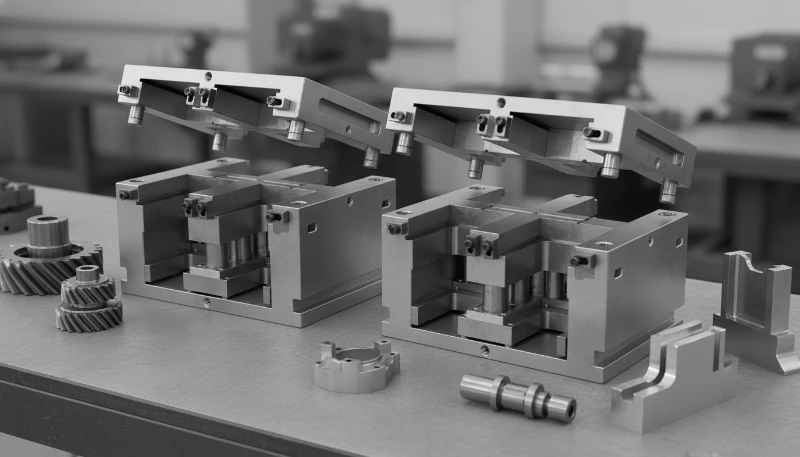
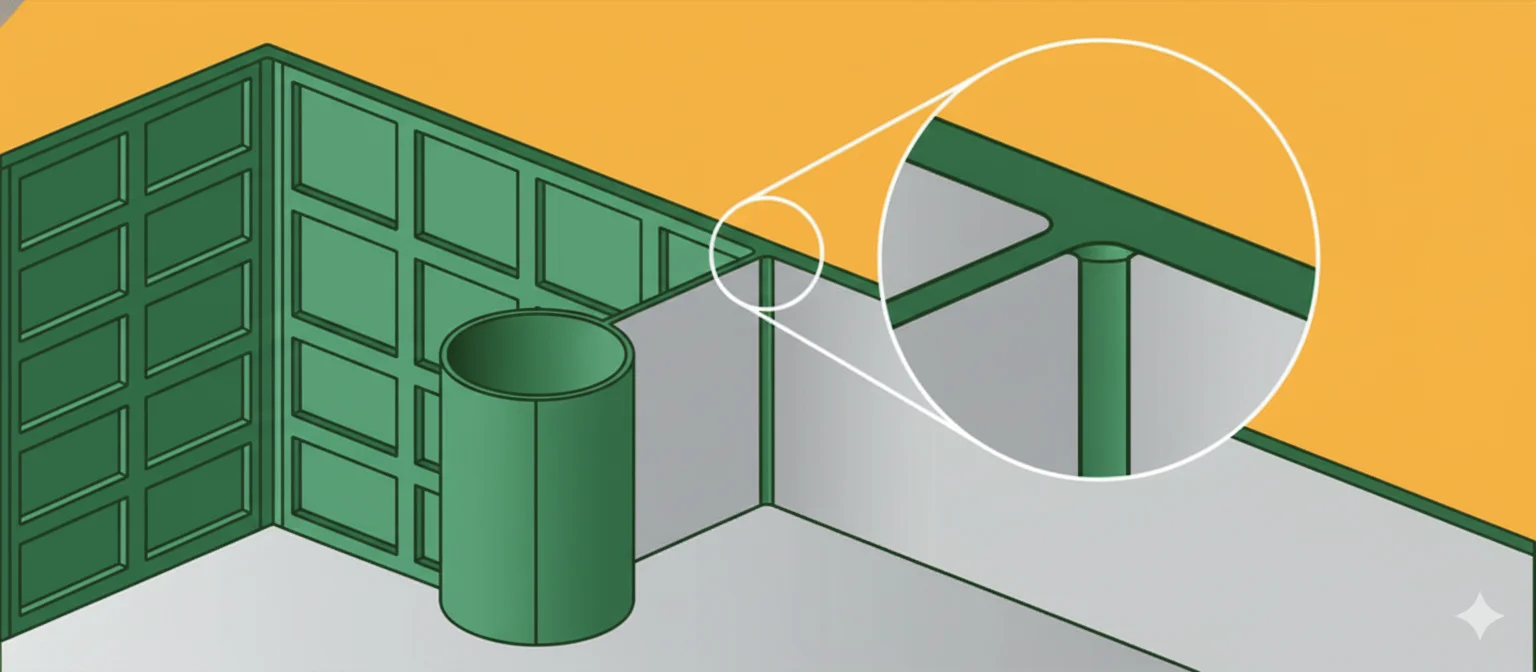
In injection molding, an undercut is any part feature that blocks ejection along the primary line of draw. Typical examples include side holes, snap hooks, internal threads, latch windows, and recessed grooves that mechanically trap steel unless the tool includes a release mechanism. The earlier this feature is identified during Design for Manufacturing (DFM) review, the easier it is to compare redesign, shut-off geometry, bump-off release, side-action1 slides, lifters, or collapsible cores before cost and lead time are locked.
Undercuts are among the most common drivers of increased tooling cost and lead time, because they almost always require additional moving components inside the mold. A well-run DFM review can reduce undercut-related tooling cost by 20 to 40 percent simply by catching features that can be eliminated or simplified before the mold design is finalized. In our factory, we see undercut-related rework requests in roughly one out of every three new mold projects, which is why we prioritize early mechanism selection.
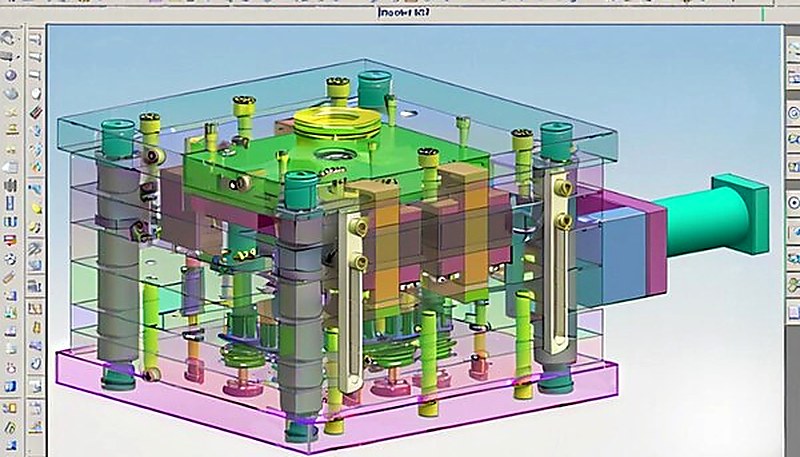
- Undercut features should be classified before quoting because the release method changes mold cost, lead time, and maintenance risk.
- Side-actions, lifters, and collapsible cores solve different geometry problems, so mechanism choice should follow release direction, stroke, resin, tolerance, and production volume.
- The lowest-risk DFM path is to simplify geometry first, then add moving mold components only when function justifies the added tooling complexity.
Without a specialized mechanism to release the feature, the steel of the mold cavity would physically trap the solidified plastic, causing damage to the part or the tool upon ejection. Solving this challenge is the core of complex mold design.
Common mechanisms used to resolve undercuts include:
Side-Actions (Slides): Cam-driven blocks that move perpendicular to the mold opening.
“Incorporating slight draft angles on undercut features significantly reduces the force required for side-actions and lifters to disengage.”True
Adding draft to the undercut feature reduces friction and drag during the retraction of the metal component, extending tool life and reducing the risk of part deformation.
“All undercuts in part design require expensive mechanical side-actions or lifters to be molded successfully.”False
This is a misconception. Many minor undercuts can be resolved using ‘bump-offs’ (stripping) if the material is flexible, or by redesigning the part with slot-throughs or shut-offs to eliminate the undercut entirely.
Lifters: Internal cores that move on an angle during ejection to release internal features.
Collapsible cores: Segmented cores that shrink inward to release threads or deep internal undercuts.
What Are the Key Parameters for Side-Action Cam Definition?
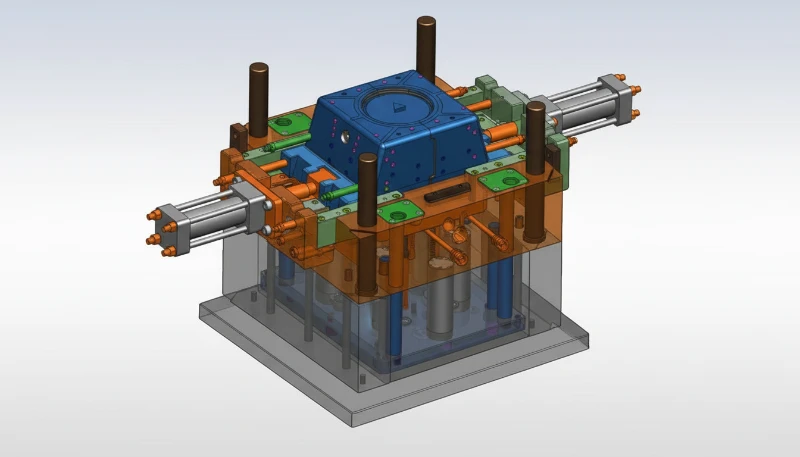
A side-action (often called a slide or cam action) is the most robust method for handling external injection molding undercuts. It typically consists of a cam pin (angle pin), a sliding body, and a locking block.
When the mold opens, the angle pin forces the slide to retract away from the part. When the mold closes, the locking block (heel block) holds the slide firmly in place against injection pressure.
Table 1: Critical Design Parameters for Side-Actions
| Parameter | Typical Value / Range | Notes |
|---|---|---|
| Angle Pin Angle | 10° – 25° | The angle of the pin determines the travel distance. Steeper angles provide more travel but less mechanical advantage. |
| Heel Block Angle | Pin Angle + (2° to 5°) | The locking angle must be steeper than the pin angle to prevent the slide from backing up during injection. |
| Slide Material | H13, P20, or S7 Tool Steel | Moving components require hardened steel (48–52 HRC) to resist wear and galling. |
| Wear Plates | Aluminum Bronze / Graphitic Steel | Used under the slide to prevent steel-on-steel seizing; typically self-lubricating. |
| Clearance | 0.012 – 0.025 mm (0.0005″ – 0.001″) | Tight tolerances are required to prevent “flash” (excess plastic leakage) at the parting line. |
How Do You Design Lifters for Molds?
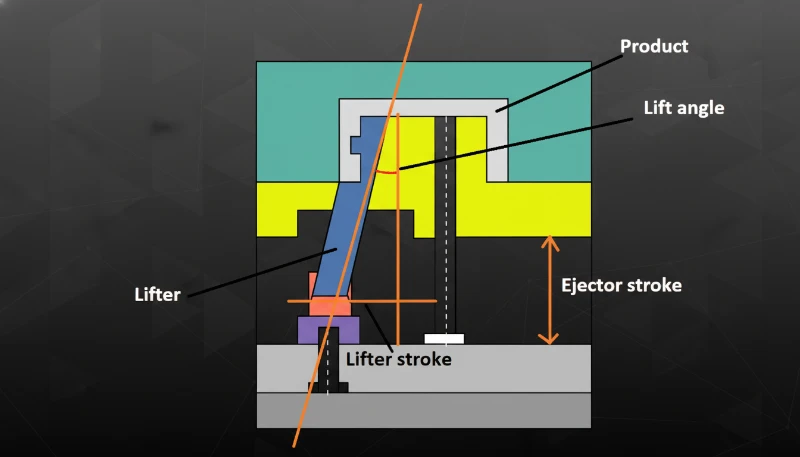
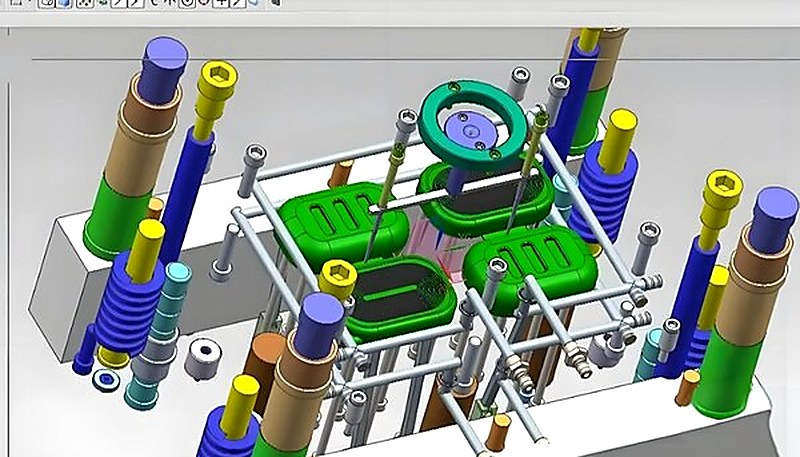
Designing lifters for molds is necessary when the undercut is located on the interior of the part, where a side-action cannot reach. A lifter2 is part of the ejection system. As the ejector plates push forward, the lifter moves upward and inward (laterally) on an angle, releasing the undercut feature.
Step-by-Step Lifter Function:
Injection: The lifter forms a portion of the internal wall or clip detail.
Mold Opening: The A-side (cavity) separates from the B-side (core). The part stays on the core.
“Using ‘shut-offs’ or ‘pass-throughs’ allows engineers to mold features that look like undercuts without using any moving mechanisms.”True
By designing a hole in the part floor directly below a clip or snap-fit, the core and cavity steel can ‘kiss’ (shut off) to form the feature, eliminating the need for side-actions.
“Lifters are generally less expensive and easier to maintain than external side-action slides.”False
Lifters are often more prone to mechanical failure and galling due to the complex stresses during ejection. They are also much harder to cool, which can extend cycle times and increase part cost compared to externally cooled slides.
Ejection Start: The ejector plate pushes the lifter rod.
Lateral Movement: Because the lifter rod is angled, the vertical ejection force translates into lateral movement, pulling the steel detail out of the plastic undercut.
Factory Insight: ZetarMold has an in-house mold manufacturing facility, 8 senior engineers, and capacity for 100+ mold sets per month. In our experience, side-actions, lifters, and collapsible cores should not be treated as default answers. Our team first checks whether draft, shut-off geometry, material flexibility, or part redesign can remove the undercut before adding moving steel. For export molds, our toolroom flags undercuts deeper than 0.5 mm before quote, checks 0.012-0.025 mm shut-off control, specifies 48-52 HRC wear surfaces where sliding steel is exposed, and compares 15-25 degree cam-pin ranges before layout approval. This early review reduces hidden fitting time, makes spare-part planning clearer for overseas customers, and usually improves mold reliability before the mold leaves the factory.
Release: Once the lifter clears the undercut, the part falls or is picked by a robot.
Engineering Constraint: Cooling lifters is notoriously difficult because they are thin, moving rods. This can lead to longer cycle times compared to side-actions, which can be water-cooled easily.
What Are the Advantages and Disadvantages of Undercut Solutions?
Choosing the right mechanism is essential for avoiding undercut costs and ensuring tool longevity. A slide, lifter, hand insert, bump-off, unscrewing device, or collapsible core3 should be selected only after the team confirms release direction, required stroke, resin flexibility, cosmetic risk, tolerance needs, and production volume.
Table 2: Comparison of Undercut Mechanisms
| Mechanism | Best For | Pros | Cons |
|---|---|---|---|
| Side-Action (Slide) | External undercuts, ports, holes on side walls. | Robust; easy to cool; high pressure resistance; reliable. | Increases mold footprint (requires wider mold base); expensive to machine. |
| Lifter | Internal snap-fits, internal threads, internal barbs. | Solves internal trapped geometry; activates automatically with ejection. | Difficult to cool (hot spots); prone to breaking/galling; complex maintenance. |
| Collapsible Core | Full circumference internal threads (e.g., bottle caps). | Allows ejection of 360° internal undercuts; fast cycle times. | Extremely expensive; high maintenance; size limitations. |
| Bump-off (Stripping) | Shallow undercuts in flexible materials (PP, PE, TPE). | Zero mechanism cost; simplest mold design. | Limited to specific geometry constraints; requires material elasticity; part distortion risk. |
What Are Practical Tips for Reducing Complexity and Cost?
In my experience on the factory floor, the best way to handle an undercut is to eliminate it during the Design for Manufacturing (DfM) phase. If that is not possible, follow these practical insights:
Use Sliding Shut-Offs: Instead of a side-action for a hole in a vertical wall, see if you can draft the wall and use a “telescoping” shut-off where the cavity and core slide past each other to form the hole.
Limit Side-Action Travel: Keep the undercut depth shallow. A deeper undercut requires a longer side-action travel, which forces a larger mold base, significantly increasing tooling costs.
Material Selection for Bump-Offs: If avoiding undercut costs is the priority, use materials like Polypropylene (PP) or Polyethylene (PE). Design the undercut with a lead-out angle (30° to 45°) so the plastic can stretch over the steel bump during ejection without shearing.
Prioritize Cooling in Slides: Always plumb cooling lines into side-action bodies if they are large enough. Uncooled slides are a primary source of cycle time variation and dimensional instability.
What Are the Common Application Scenarios?
Side-actions, lifters, and collapsible cores are used in automotive, electronics, plumbing, and medical molding. Automotive Interior Trim: Uses lifters extensively for internal snap-fits that mount door panels to the chassis.
Consumer Electronics (Housings): Uses side-actions for USB ports, power buttons, and HDMI slots located on the sidewalls of the device casing.
Plumbing Fittings: Uses collapsible cores or unscrewing racks for internal threads that cannot be stripped.
Medical Vials: Often utilizes bump-offs for cap retention rings, relying on the medical-grade Polypropylene’s flexibility.
“Standardizing the angle of side-action pins to 15° or 20° simplifies mold design and replacement part procurement.”True
Adhering to standard angles allows mold makers to use off-the-shelf components from suppliers like DME or Hasco, reducing design time and maintenance costs.
“Collapsible cores are the standard industry solution for molding all types of internal threads.”False
Collapsible cores are complex and costly. For many standard internal threads, automatic unscrewing molds (using rotational gears) are preferred, or simple bump-offs if the thread profile is rounded and the material is flexible.
What Steps Are Recommended for Selecting the Right Mechanism?
Analyze Geometry: Is the undercut internal or external? (External → Side-Action; Internal → Lifter/Core).
Check Material Properties: Is the material flexible (TPU, PP) or rigid (PC, Glass-Filled Nylon)? Flexible materials may allow bump-offs.
Calculate Stroke Required: How far must the steel move to clear the plastic? Ensure the mold base can accommodate this travel.
Evaluate Volume: For low volume (1,000 units), consider hand-loaded inserts. For high volume (100,000+ units), invest in hardened, automatic slides with wear plates.
Simulate: Use Moldflow analysis to ensure the moving components do not impede cooling or create air traps (gas burns).
Frequently Asked Questions (FAQ)
Frequently Asked Questions
Can I mold undercuts without moving mold parts?
Yes, but only when the geometry and material allow a controlled bump-off. This usually means the undercut is shallow, has a generous radius, and uses a flexible resin such as PP, PE, or TPE. Rigid materials, sharp edges, deep hooks, or cosmetic surfaces normally need a side-action, lifter, collapsible core, or part redesign because forcing the part off the steel can crack the part or damage the tool. If the feature is functional, test the release direction in DFM before committing to the mold layout.
What is the difference between a slider and a lifter?
A slider, also called a side-action, moves sideways from the parting line and is usually driven by an angle pin or hydraulic cylinder. It is best for external holes, windows, snap hooks, and side openings. A lifter moves at an angle through the ejector system and is better for internal undercuts that must release while the part is pushed out. The choice depends on feature direction, stroke distance, available mold space, cooling, part cosmetics, tolerance risk, and expected production volume.
How much does a side-action add to mold cost?
A simple side-action can add a few thousand dollars to tooling cost, while larger or hydraulic slides can add much more because they require extra steel, machining, wear plates, locks, fitting, spotting, and validation time. The added cost also continues after launch because moving components need lubrication, maintenance, and spare-part planning. For low-volume projects, hand-loaded inserts or a geometry change may be more practical. For high-volume production, automatic slides usually pay back through stable cycle time and reduced manual labor.
When should I choose a collapsible core?
A collapsible core is most useful when the part has internal threads, deep internal rings, or geometry that cannot release with a simple lifter. It can reduce part redesign pressure, but it is also more expensive and more sensitive to wear, resin contamination, cooling imbalance, and maintenance quality. Use it only after checking whether the thread can be redesigned, split, stripped, unscrewed, or moved to another assembly approach. For critical parts, validate the mechanism during DFM before cutting production steel.
How can I reduce undercut tooling risk before DFM approval?
Start by marking every undercut on the 3D model and classifying it as external, internal, cosmetic, functional, or assembly-related. Then estimate release direction, stroke, draft, material flexibility, tolerance requirement, and production volume. Ask the mold engineer to compare redesign, shut-off, bump-off, hand insert, side-action, lifter, unscrewing, and collapsible core options. The best decision is rarely the most complex mechanism. It is the option that protects function, mold life, cost, cycle time, maintenance access, and future spare-part support at the same time.
Summary
Dealing with injection molding undercuts requires a balance between part function and tool complexity. Side-actions are usually best for external features, lifters are useful for internal details, and collapsible cores are reserved for complex internal geometry such as threads. Before adding these mechanisms, review the overall Injection Molding Complete Guide, confirm mold design basics in the injection mold guide, and prepare procurement details with the injection molding supplier sourcing guide. This keeps cost, maintainability, and manufacturing risk visible before DFM is locked.
Need a Quote for an Injection Mold With Undercuts, Slides, Lifters, or Collapsible Cores?
Get competitive pricing, DFM feedback, and production timeline from ZetarMold’s engineering team. If your part has side holes, snap hooks, internal threads, latch windows, or other undercut features, share the 3D file, resin, annual quantity, tolerance needs, and cosmetic requirements. For planning context, compare the release mechanism with steps of injection molding and injection molding production time before quoting the mold.
Request a Free Quote With DFM Review for Tooling Today →
-
side-action: A side-action, also called a slide, is a moving mold component that pulls away from an external undercut before ejection. ↩
-
lifter: A lifter is an angled core driven by the ejector system to release internal undercuts during part ejection. ↩
-
collapsible core: A collapsible core is a segmented core that contracts inward so internally threaded or deeply recessed features can be released. ↩