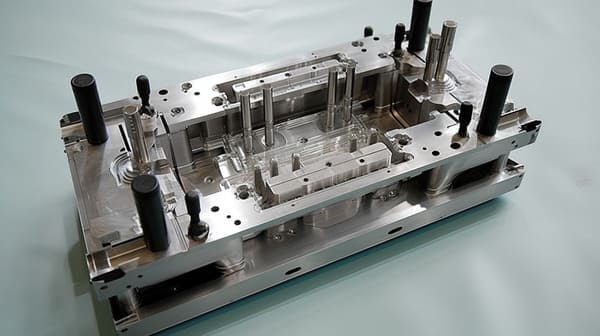
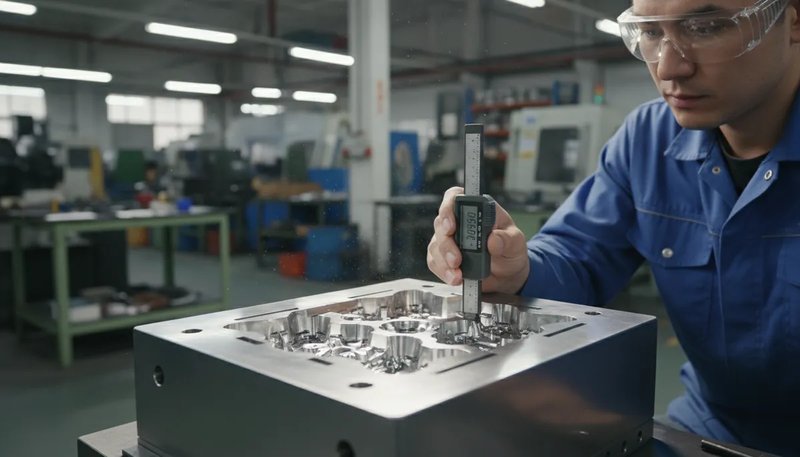
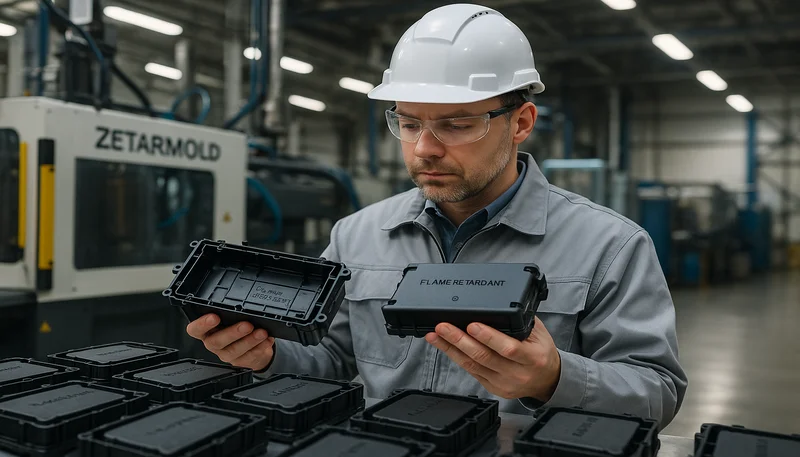
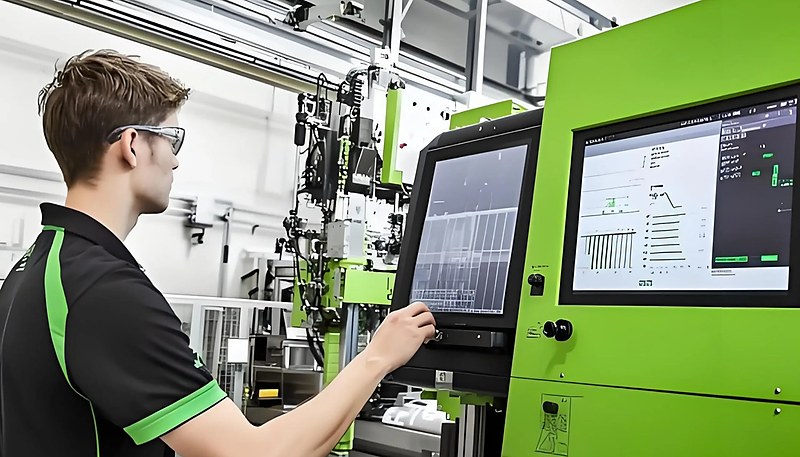
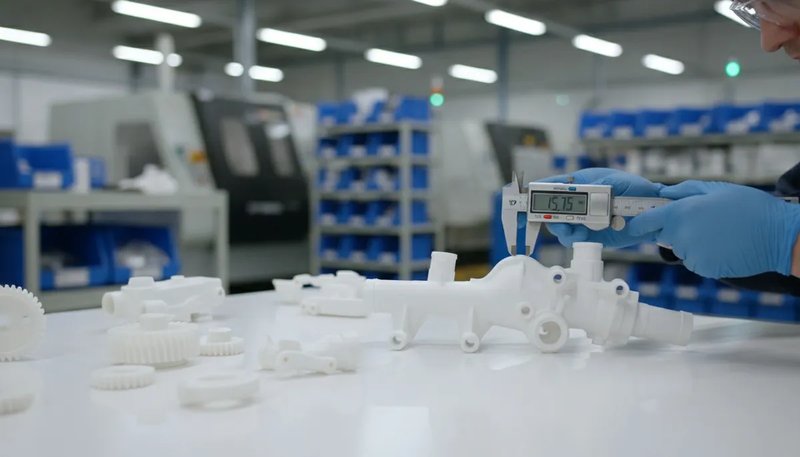
An injection mold is the single most expensive asset on your production floor, and how long it lasts determines whether each part costs you pennies or dollars. If you are running high-volume production, mold service life is not an abstract engineering concern — it is a line item that directly shapes your profitability. In our experience at ZetarMold, a well-maintained mold running standard polypropylene or PA6 can deliver over 1,000,000 shots, while a neglected one might fail at 200,000. This article walks you through every variable that determines injection molding mold service life, gives you practical formulas to estimate shot counts, and shows you exactly where to invest your maintenance budget for maximum return.
- Mold steel choice (P20 vs H13) is the biggest controllable factor in mold service life
- Preventive maintenance saves 5-20x its cost in avoided emergency repairs
- H13 molds with PVD coatings can exceed 2,000,000 shots on glass-filled resins
- Calculate expected shot count using baseline x abrasion x corrosion x maintenance factors
- Replace when cumulative repairs exceed 60% of new mold cost
What Affects the Service Life of an Injection Mold?
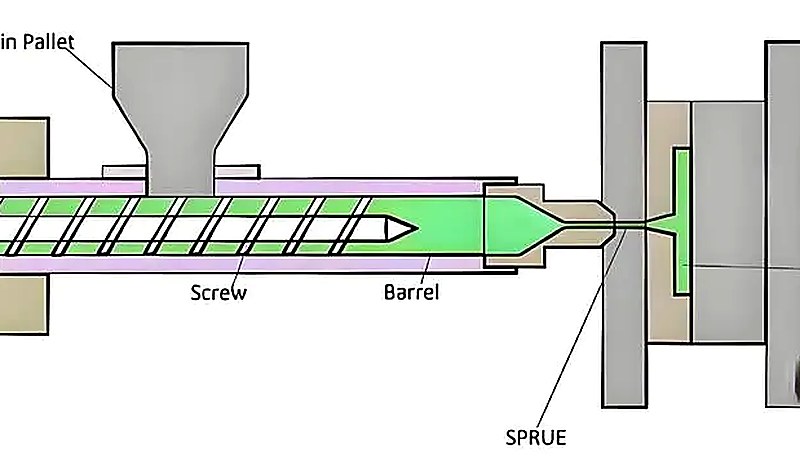
The four factors that determine your injection mold service life are mechanical stress, thermal cycling, chemical erosion, and abrasive wear. Each one attacks the mold steel differently, and understanding them is the first step to extending tool life. Clamping forces routinely exceed 100 tons, ejection forces stress core pins, and high-pressure melt fills cavities at 15,000 psi. We have seen core pins shear clean off after 300,000 shots on a glass-filled nylon part because the draft angle was just 0.3 degrees too shallow.
If you are comparing vendors or planning procurement, our injection molding supplier sourcing guide covers RFQ prep, qualification, and commercial risk checks.
Chemical erosion is the quiet killer most molders underestimate. If you are molding PVC, acetal, or any flame-retardant resin, the decomposition gases pit polished cavity surfaces within months. We had a customer running FR-ABS who needed cavity re-polishing every 80,000 shots because they skipped vent maintenance. Abrasive wear from glass-filled or mineral-filled resins wears a P20 runner 3 to 5 times faster than unfilled material. The gate area usually fails first, developing a grooved texture that transfers visible marks onto every part.
Which Materials Provide the Best Mold Longevity?
Your choice of mold steel is the single biggest controllable factor in mold service life. P20 handles 500,000 to 1,000,000 shots on unfilled resins and machines easily, keeping your upfront cost reasonable. If you are running abrasive glass-filled materials, step up to H13 tool steel1. H13 holds hardness at elevated temperatures far better than P20, and in our shop we routinely see H13 molds exceed 2,000,000 shots on 30 percent glass-filled PA6 with proper maintenance. The trade-off is machining cost: H13 takes roughly 30 to 40 percent longer to cut and finish. Learn more about choosing the right injection mold material for your application.
Aluminum molds using 7075-T6 are fantastic for prototyping and short runs under 10,000 shots. They conduct heat 4 to 5 times faster than steel, cutting cycle time by 20 to 40 percent, but they cannot withstand production volumes. Beryllium copper inserts are a smart compromise for hot spots like core pins where aggressive cooling is needed. We use them regularly on thick-wall parts and the insert typically pays for itself within 50,000 shots through cycle time reduction alone. Match your mold steel hardness to resin abrasiveness: P20 for unfilled, H13 for glass-filled, S136 for corrosive resins.
“H13 tool steel molds can exceed 2,000,000 shots on glass-filled nylon with proper maintenance.”True
H13 holds hardness at elevated temperatures better than P20, making it the standard for high-wear applications.
“Aluminum molds cannot produce more than 100,000 shots.”False
With proper surface treatments and running unfilled resins, aluminum molds regularly exceed 200,000 shots.
How Does Regular Maintenance Extend Mold Life?
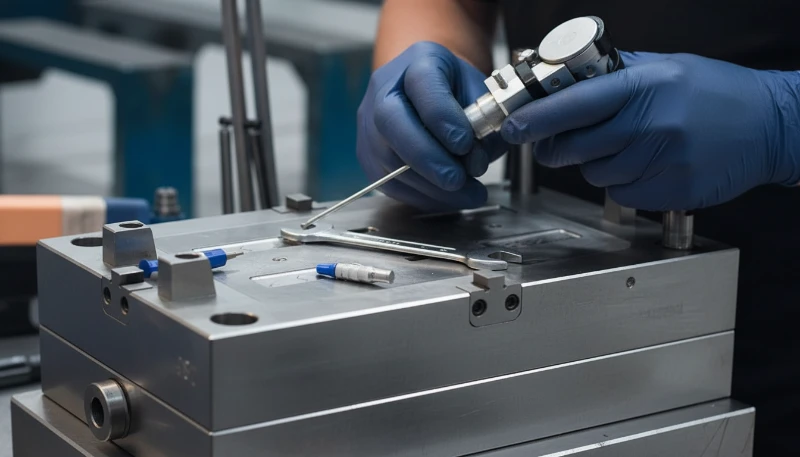
Regular preventive maintenance is the single most impactful factor in injection mold service life. Molds on strict maintenance schedules routinely deliver 1,000,000 shots, while identical molds that skip maintenance fail at 200,000 to 300,000. Tier one is daily: wipe down parting lines, clear vents, and inspect the ejector system after every shift. A blocked vent causes gas burns that pit the cavity surface. Tier two is every 50,000 to 100,000 shots: full disassembly, cavity cleaning, and water line scale checks. Tier three is a major overhaul at 250,000 to 500,000 shots covering re-polishing, ejector pin replacement, and gate re-machining.
A single unplanned mold failure during production costs you far more than years of scheduled maintenance. We have seen one emergency repair cost 45,000 dollars in rush machining, 12,000 dollars in scrapped parts, and three days of lost production on a 500-ton machine totaling over 80,000 dollars. That same mold had been on a 5,000-dollar-per-year preventive maintenance schedule. Every dollar spent on preventive maintenance saves between five and twenty dollars in avoided emergency costs. Skipping maintenance to save time is the most expensive decision you can make on your production floor.
What Advanced Technologies Improve Mold Durability?
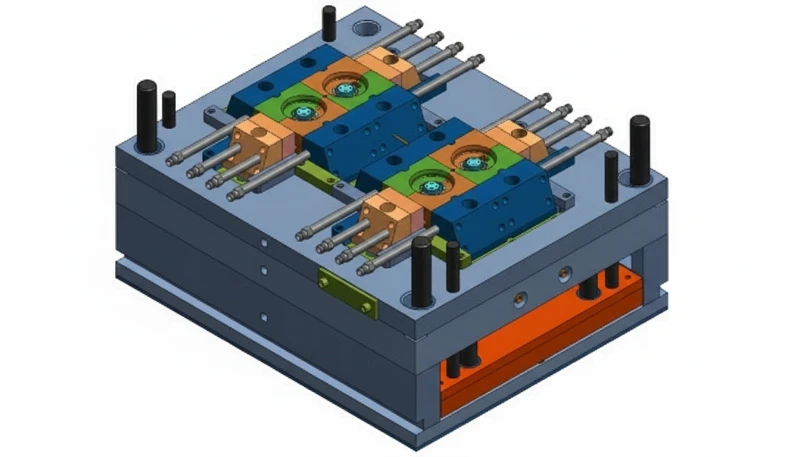
The most effective technologies for extending mold durability are cavity pressure sensors, temperature monitoring, and surface coatings. Pressure and temperature data from inside the cavity tell you exactly what is happening during every shot. When cavity pressure drifts upward cycle over cycle, that signals gate erosion or vent blockage before parts show visible defects. Temperature sensors catch cooling circuit degradation. Modern sensor systems cost between 3,000 and 8,000 dollars per mold and typically pay for themselves within the first production run by preventing defective parts.
Surface coatings are another game-changer for mold longevity. Physical vapor deposition coatings like TiN, which is titanium nitride, and TiAlN add a hard shell to cavity surfaces that resists both abrasive and chemical attack. We routinely apply TiN to molds running glass-filled materials and see gate life extend by 200 to 300 percent. DLC, which stands for diamond-like carbon, coatings provide a chemically inert barrier for corrosive resins. The coating adds roughly 5 to 15 percent to mold build cost but can double or triple the interval between gate refurbishments.
“PVD coatings2 like TiN can extend gate life by 200 to 300 percent on abrasive resins.”True
Titanium nitride creates a hard surface layer that resists erosion from glass-filled materials.
“Mold sensors only benefit high-volume production runs.”False
Even on low-volume molds, sensors catch issues like uneven cooling that cause part defects and accelerate wear.
How to Calculate Injection Mold Service Life?
Mold service life is calculated by multiplying a baseline shot count by adjustment factors for abrasion, corrosion, and maintenance. For P20 steel3 running unfilled polypropylene, the baseline is 800,000 to 1,200,000 shots. H13 starts at 1,200,000 to 2,000,000 shots. Multiply by an abrasion factor: 0.3 to 0.5 for 30 percent glass-filled, 0.7 to 0.9 for unfilled engineering resins. Apply a corrosion factor: 0.4 to 0.6 for PVC, 0.8 to 1.0 for neutral. Factor in maintenance: 0.5 for poor, 0.8 for average, 1.2 for rigorous preventive maintenance.
With 20+ years of injection molding experience, 47 machines (90T-1850T), and in-house mold manufacturing, ZetarMold has built and maintained thousands of molds. Our engineers track actual shot counts and wear patterns across production runs, giving us real-world data on mold service life that goes beyond textbook estimates.
An H13 mold running 20 percent glass-filled PA66 with good maintenance: baseline 1,500,000 times 0.6 abrasion factor times 1.2 maintenance factor gives approximately 1,080,000 shots. That is a planning number, not a guarantee, but it gives your scheduling team something concrete to work with. Shot count tracking is non-negotiable. Every modern machine logs cycle counts automatically. Feed that data into a spreadsheet alongside your maintenance log, and you have a living document telling you exactly where each mold stands in its lifecycle.
When Should You Repair vs. Replace an Injection Mold?
The rule is straightforward: repair when the fix costs under 30 percent of a new mold and restores at least 50 percent of original life. Replace when cumulative repairs exceed 60 percent of new mold cost, or when structural cracking appears in the mold base. Common repairs that meet the threshold include re-polishing at 5 to 15 percent, replacing worn ejector pins at 3 to 8 percent, and re-machining gate inserts at 10 to 20 percent of new mold cost. Multiple refurbishments on the same area are a red flag — the surrounding steel is fatigued and the next failure comes sooner.
We had an automotive connector mold that a customer kept repairing for three years — four new core pins, two re-machined gates, one full re-polish. The total reached 85 percent of a new mold price, yet it still could not hold the required tolerance. A new mold with optimized cooling delivered 1,500,000 shots in two years with only scheduled maintenance, and cost per shot dropped from 0.08 to 0.03 dollars. The hidden costs of repeated repairs — downtime, scheduling disruption, quality validation — often justify replacement before the pure repair math does.
What Are the Best Practices for Mold Storage?
Proper mold storage is essential for preserving service life between production runs. Before storage, remove all resin residue from cavities and runners, blow out every water line with compressed air at minimum 90 psi, and wipe all exposed steel surfaces with rust-preventive oil. Do not skip the water lines — we have seen molds returned from storage with internal rust that reduced cooling efficiency by 30 percent. Store molds upright on pallets, never stacked. Apply desiccant packs and wrap in VCI paper for storage exceeding one month.
The storage environment should maintain temperature between 15 and 25 degrees Celsius with humidity below 50 percent. Label every mold with last maintenance date, cumulative shot count, and next scheduled service. Before returning a mold to production, run a controlled warm-up of 20 to 30 minutes at moderate clamp pressure. Thermal shock from cold storage to full production temperature can crack cavity inserts already fatigued from millions of cycles. Check ejector pin movement and verify cooling circuit flow rates match documented baselines from the last production run.
Frequently Asked Questions About Injection Mold Service Life
Frequently Asked Questions
What is the average service life of an injection mold?
An injection mold should receive daily tier-one maintenance including parting line cleaning and visual inspection after every production shift without exception. Tier-two service including full disassembly and cavity cleaning should happen every 50,000 to 100,000 shots. A major overhaul at 250,000 to 500,000 shots covers ejector pin replacement, vent recutting, and cooling circuit descaling. Following this three-tier schedule can extend mold life by 40 to 60 percent compared to reactive maintenance that only addresses problems after failure occurs on the production floor.
How often should an injection mold be serviced?
No injection mold lasts indefinitely. Every cycle subjects the steel to thermal stress, mechanical load, and chemical exposure that gradually degrades cavity surfaces, parting lines, and moving components over time. Even with perfect maintenance, cumulative fatigue in the mold base and erosion of gate areas will eventually require rebuild or replacement. Think of maintenance as extending life significantly, not eliminating wear entirely. Most production molds reach end of life between 500,000 and 2,000,000 shots depending on the mold material, resin type, and maintenance discipline applied throughout production.
Can an injection mold last indefinitely with proper maintenance?
No injection mold lasts indefinitely. Every cycle subjects the steel to thermal stress, mechanical load, and chemical exposure that gradually degrades cavity surfaces, parting lines, and moving components. Even with perfect maintenance, cumulative fatigue in the mold base and erosion of gate areas will eventually require rebuild or replacement. Think of maintenance as extending life significantly, not eliminating wear entirely. Most production molds reach end of life between 500,000 and 2,000,000 shots depending on the mold material, resin type, and maintenance discipline applied.
What is the most common cause of premature injection mold failure?
Routine mold maintenance typically costs 3 to 15 percent of new mold cost per service cycle, while an unplanned failure during production can cost 50 to 200 percent of mold value in lost machine time, scrapped parts, and emergency repair labor charges. A preventive maintenance program costing 10,000 dollars per year on a 100,000-dollar mold is far cheaper than a single unplanned stoppage that loses 30,000 dollars or more in production time, rush freight charges, and expedited machining expenses during an emergency situation.
How much does mold maintenance cost compared to replacement?
Routine mold maintenance typically costs 3 to 15 percent of new mold cost per service cycle, while an unplanned failure during production can cost 50 to 200 percent of mold value in lost machine time, scrapped parts, and emergency repair labor. A preventive maintenance program costing 10,000 dollars per year on a 100,000-dollar mold is far cheaper than a single unplanned stoppage that loses 30,000 dollars or more in production time, rush freight charges, and expedited machining expenses during an emergency repair situation.
Does mold material selection affect part quality over the mold lifespan?
Yes, mold material directly affects part quality as the mold ages through its production lifecycle. Softer steels like P20 develop surface wear patterns that transfer to parts as gloss variations and dimensional drift after 300,000 to 500,000 shots. Hardened steels like H13 and S136 maintain cavity fidelity much longer, producing consistent parts over 1,000,000 shots. For optical or medical parts where surface finish is critical, starting with harder mold steel is essential for maintaining quality and consistency throughout the entire production run.
What role does cooling circuit maintenance play in injection mold life?
Cooling circuit maintenance is critical because scale buildup and corrosion inside water lines reduce heat transfer efficiency, forcing longer cycle times and increasing thermal stress on the mold steel over the entire production lifecycle. Descale cooling circuits every 100,000 shots using a circulating chemical cleaner to maintain optimal flow rates and cooling performance. Neglected cooling lines can reduce heat transfer by 30 percent, raising cavity surface temperatures and accelerating thermal fatigue cracking that significantly shortens overall mold service life over multiple production runs.
How Can You Maximize Your Injection Mold Investment?
Your mold investment is maximized through four disciplines: material selection, preventive maintenance, technology adoption, and proper storage. A well-maintained H13 mold running moderate-abrasion resin can deliver over 1,000,000 shots, while the same mold neglected might fail at a quarter of that. Start with the right steel, commit to a three-tier maintenance schedule, invest in sensors and coatings where they make economic sense, and follow proper storage procedures. Check out our sourcing guide for more guidance on selecting a manufacturing partner.
Ready to maximize the service life of your injection molds? Contact ZetarMold today to discuss your next mold project. With 20 years of experience, in-house mold manufacturing, and 47 machines ranging from 90 to 1,850 tons, we have the expertise and equipment to build molds that last. Get a quote and let us show you the difference that disciplined mold engineering makes.
-
H13 tool steel: H13 is a hot-work tool steel that maintains hardness at elevated temperatures, typically 44 to 52 HRC, making it the preferred choice for molds running abrasive or high-temperature resins in demanding production environments. ↩
-
PVD coatings: Physical vapor deposition is a coating process that deposits thin hard films such as titanium nitride onto mold surfaces to dramatically improve resistance to abrasive and chemical wear from filled and corrosive resins. ↩
-
P20 steel: P20 is a pre-hardened mold steel rated at approximately 30 to 36 HRC, widely used for medium-volume injection molds running unfilled or mildly filled resins due to its good machinability and polishability. ↩