Launching an injection molding1 project without asking your supplier2 the right questions is like handing over your design files and hoping for the best. I have seen projects fail because the buyer assumed the supplier could handle multi-cavity precision molds, only to discover after tooling3 kick-off that the shop ran only 200T presses. The cost of those assumptions shows up in delayed timelines, defective parts, and tooling rework that could have been avoided with a structured conversation before the contract was signed. This article lays out the critical questions every buyer should ask an injection molding supplier before project launch, covering mold-making capability, quality systems, material expertise, production capacity, intellectual property protection, and commercial terms.
Whether you are sourcing your first molded part or switching from an underperforming vendor, these questions will help you qualify the right partner and avoid costly surprises down the road. Think of it as your pre-launch checklist.
- Verify mold-making capability and tonnage range before committing
- Ask for documented quality certifications like ISO 9001
- Confirm material experience with your specific resin
- Evaluate production scalability with real lead-time data
- Protect your IP with signed NDAs and confidentiality practices
What Questions Should You Ask About Mold Design and Tooling?
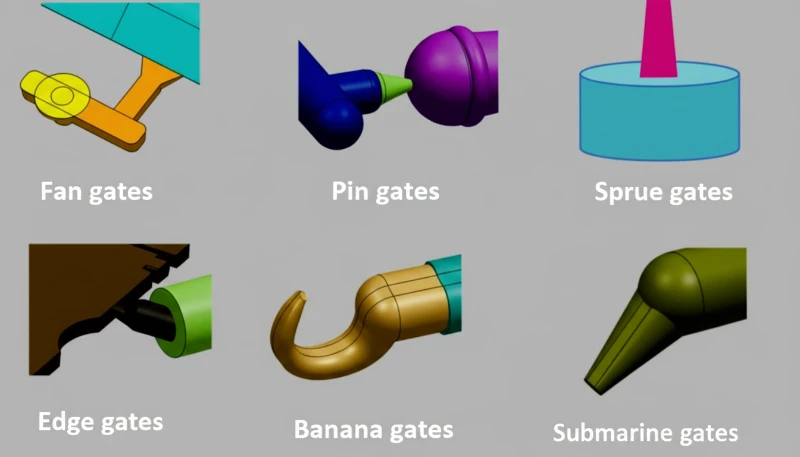
The mold is the single most expensive and consequential asset in any injection mold project. Get it right and your parts come out consistent; get it wrong and you burn cash on rework. Here are the questions that separate a capable tooling shop from a liability.
Do you design and build molds in-house? This is the first question I would ask. A supplier with an in-house mold manufacturing facility can iterate faster on design changes, control tolerances directly, and troubleshoot issues without depending on a third-party toolmaker. In practice, suppliers who outsource tooling often add two to four weeks to the mold-build timeline because every change request goes through a middleman. When a tooling issue arises during sampling, the in-house shop can machine a steel insert the same day. The outsourced shop sends an email and waits.
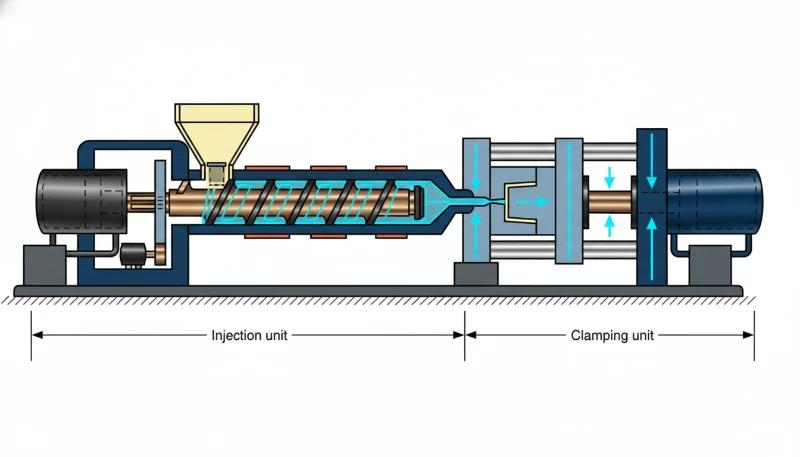
What tonnage range do you cover? Your part size and wall thickness dictate the clamp force needed. A supplier whose largest press is 500T cannot run a large automotive housing that needs 1200T. Conversely, a shop that only has 1000T+ presses will waste energy and cycle time on small precision parts that belong on a 90T machine. Ask for the full tonnage range and the number of machines at each tier.
Can you show me samples of similar work? Past performance is the best predictor. Ask for case studies or sample parts in a similar resin, complexity level, and tolerance band to your project. If a supplier has never produced a Class A surface-finish cosmetic part in polycarbonate, that learning curve will show up on your invoice.
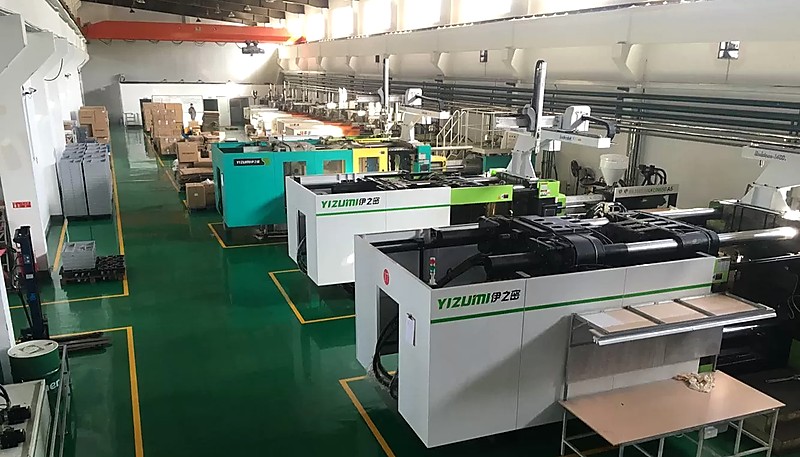
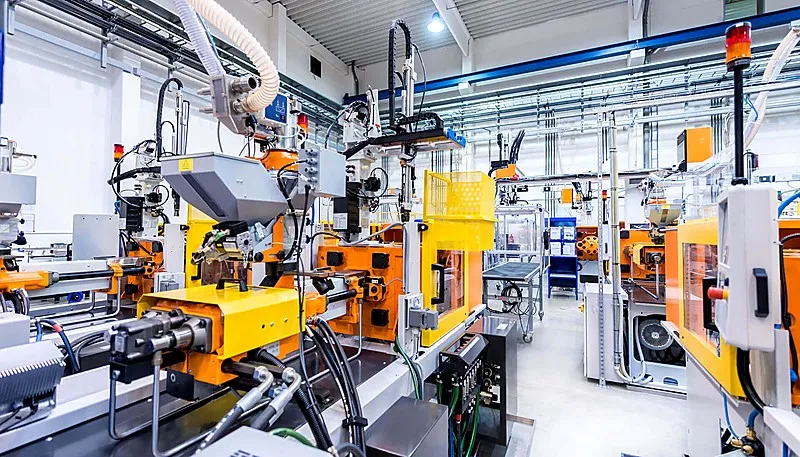
In our Shanghai factory, we run 47 injection molding machines from 90T to 1850T, backed by an in-house mold manufacturing facility capable of producing 100+ mold sets per month. This means design iterations happen on the shop floor, not in an email chain with an external toolmaker.
How Do You Evaluate a Supplier’s Quality Management System?
Quality problems in injection molding are expensive. A single bad batch of parts can scrap thousands of dollars in resin, machine time, and downstream assembly labor. The supplier’s quality management system (QMS) is your insurance policy against those losses. Here is what to probe.
Which ISO certifications do you hold? At minimum, look for ISO 9001. If your parts go into medical devices, ISO 13485 is non-negotiable. Environmental management (ISO 14001) and occupational health (ISO 45001) tell you the supplier takes systemic discipline seriously. Certificates on the wall are good, but ask to see the most recent audit report and any corrective actions from the last surveillance audit. A clean audit is reassuring; a list of open corrective actions that have been resolved transparently is actually more trustworthy.
What inspection equipment and procedures do you use? CMM (Coordinate Measuring Machine) capability, optical comparators, and surface roughness testers are standard for tight-tolerance work. Ask about first-article inspection (FAI) procedures: does the supplier follow AS9102 or an equivalent standard? How are in-process inspections documented? Can you get dimensional reports with every shipment?
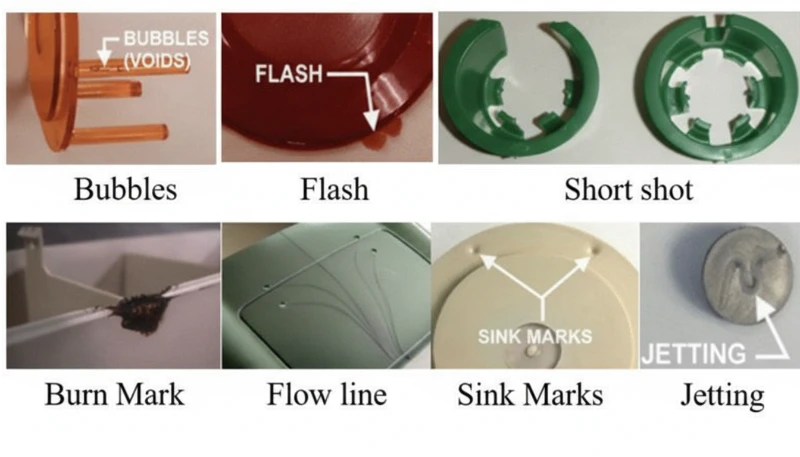
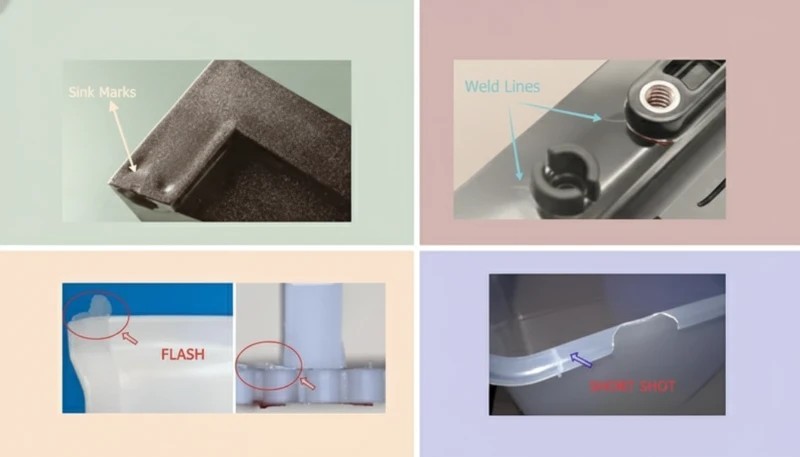
How do you handle non-conforming parts? The answer reveals more than any certificate. A mature supplier has a documented corrective and preventive action (CAPA) process. They track defect rates by cause (material, machine, mold, operator) and run root-cause analysis on recurring issues. If the answer is “we just re-run the parts,” that is a red flag.
What Should You Ask About Material Selection and Sourcing?
You should ask about resin processing experience, direct material sourcing practices, and material test report capabilities before committing. Material choice drives part performance, mold design, processing parameters, dimensional tolerance, and total project cost. A supplier who treats material selection as an afterthought will cause problems downstream.
How many resins have you processed? Experience with a wide range of materials (engineering grades, filled compounds, high-temperature resins, elastomers) indicates process depth. A supplier who has only run PP and ABS may struggle with glass-filled nylon or medical-grade PEEK. Ask for a material experience list and cross-reference it with your project requirements.
Do you source resin directly or through brokers? Direct sourcing from authorized distributors reduces the risk of counterfeit or degraded material. It also gives the supplier better control over lot traceability. Brokers are not inherently bad, but you want to know the chain of custody for the resin going into your parts.
Can you provide material test reports (MTRs)? For regulated industries, material traceability is mandatory. The supplier should be able to provide certificates of analysis (CoA) for every resin lot used in your production. If they cannot, that is a gap that will surface during your own audits or, worse, during a product failure investigation.
How Do You Assess Production Capacity and Scalability?
Assess production capacity by verifying machine count, utilization rate, and scheduling systems before you commit. Capacity is not just about machine count — it is about scheduling discipline, workforce depth, and supply-chain resilience that determines whether your parts arrive on time.
What is your current utilization rate? A supplier running at 95% utilization has almost no room for your order without displacing someone else’s work. Conversely, a supplier at 50% utilization may be struggling financially. The sweet spot for a healthy, responsive partner is typically 70-85%. Ask how they handle peak demand: do they run overtime shifts, or do lead times simply stretch?
How do you manage production scheduling? A mature supplier uses ERP or MES systems to track work orders, machine assignments, and material availability in real time. If scheduling is done on a whiteboard or spreadsheet, you will experience frequent delivery slips. Ask for a sample production plan for a project similar in size to yours.
What happens when a machine goes down? Machine breakdowns are inevitable. What matters is how quickly the supplier can recover. Do they have redundant press capacity? Do they maintain a spare-parts inventory for critical components? A supplier with 47 presses has more buffering capacity than one with three machines. Ask for their equipment maintenance schedule and average unplanned-downtime metrics.
Our team includes 120+ production workers and 30+ English-speaking project managers who coordinate scheduling, material procurement, and quality inspections. This depth means your project does not stall because one person is out sick.
When Should You Discuss Pricing, Payment, and Commercial Terms?
Commercial conversations should start early but not dominate the first meeting. You need to understand the cost structure before you commit, but leading with price signals that you care more about cheap parts than quality parts. Here is how to time these conversations.
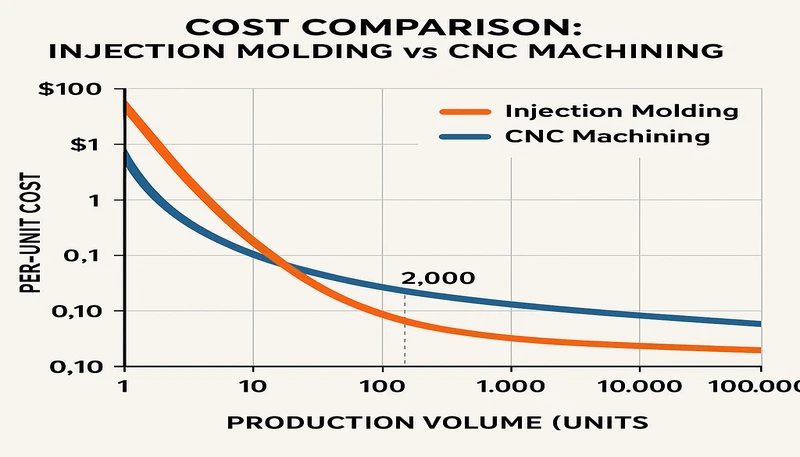
How is tooling cost structured? Mold tooling is typically the largest upfront investment. Ask for a breakdown: steel type (P20, H13, S136), number of cavities, expected tool life (shots to maintenance), and warranty terms. A supplier who quotes a fixed price without asking about your expected annual volume is either padding the quote or cutting corners. The right supplier will propose a tooling solution that matches your volume projection, not just the cheapest mold.
What is included in the piece price? The unit price should cover resin, machine time, labor, packaging, and quality inspection. Clarify whether secondary operations (assembly, printing, plating) are included or quoted separately. Also ask about tooling amortization: some suppliers fold the mold cost into the piece price over a defined volume, which improves your cash flow but commits you to a minimum order quantity.
What are your payment terms? Standard terms in China-based manufacturing are 30-50% deposit with the balance on shipment or after inspection. For established relationships, net-30 or net-60 terms are common. If a supplier demands 100% payment upfront before starting work, that is a significant risk. Use the sourcing guide framework to benchmark commercial terms against industry norms.
How Do You Protect Your Intellectual Property When Working With a Supplier?
If your part design is proprietary, IP protection is not optional. China’s IP legal framework has improved significantly, but enforcement still relies heavily on contractual safeguards and practical controls. Here is what to insist on.
Will you sign a non-disclosure agreement (NDA)? A reputable supplier will sign a mutual NDA without hesitation. If they resist, that tells you something. Make sure the NDA specifies damages for breach, the duration of confidentiality obligations (typically three to five years after the relationship ends), and which jurisdiction governs disputes.
What data-security practices do you follow? Ask how design files are stored, who has access, and whether the supplier uses any third-party cloud services. A supplier who stores CAD files on a shared drive with no access controls is a data-leak risk. Look for encrypted file transfer, role-based access, and audit trails for file downloads.
Do you manufacture for competitors in my industry? This is an uncomfortable question but a necessary one. If the supplier makes identical parts for your direct competitor using the same mold shop, the risk of inadvertent (or deliberate) information leakage increases. Some suppliers address this with information barriers between project teams, but you should verify these controls exist.
"A supplier with ISO 9001 certification guarantees zero defects in production."True
False. ISO 9001 certifies that a quality management system exists and is followed, not that defects are impossible. It means the supplier has documented procedures for identifying, correcting, and preventing quality issues.
"The cheapest tooling quote is always the best value for your project."False
False. A mold built with lower-grade steel and fewer cavities will cost less upfront but may fail prematurely or require expensive rework. Tooling cost should be evaluated against expected tool life, maintenance intervals, and annual volume.
Beyond these common misconceptions, there are additional factors that experienced buyers always verify. For example, asking whether the supplier provides a tool maintenance log and scheduled maintenance plan can reveal how well they protect your long-term investment in the mold. A supplier who proactively schedules mold maintenance after every 50,000 shots demonstrates a level of operational maturity that reactive shops simply do not match. Similarly, requesting a communication protocol — including weekly status updates during tooling construction and daily reports during production — establishes clear expectations that prevent the kind of information gaps that lead to costly surprises at delivery time.
"Lead times for injection molding typically range from 4 to 12 weeks for new tooling."True
True. Simple single-cavity tools can be ready in 4-6 weeks. Complex multi-cavity molds with side actions can take 8-12 weeks. T1 sampling occurs within this window, but production-ready approval adds 1-3 weeks.
"You only need to evaluate a supplier once before signing a long-term contract."False
False. Supplier evaluation should be ongoing. Schedule periodic audits, track on-time delivery and defect-rate trends. A supplier's capabilities can drift over time due to staff turnover or equipment aging.
Frequently Asked Questions About Supplier Project Launch
What is the most important question to ask an injection molding supplier?
Ask how the supplier will prove that your part, material, tooling, and quality requirements are achievable before steel is cut. A qualified supplier should answer with a written DFM review, a defined inspection plan, material traceability, and named engineering ownership rather than a verbal promise. This question exposes whether the supplier has a repeatable launch process or is quoting first and solving risks later.
How do I verify a supplier ISO certifications are legitimate?
Request copies of their ISO certificates and verify the certificate number on the issuing body’s official website, such as the IAAR or UKAS databases. Ask for the most recent surveillance audit report and any corrective action records from the previous audit cycle. Legitimate suppliers will have no issue providing these documents promptly. Also confirm whether the certificate scope covers the specific manufacturing processes relevant to your project, not just general administrative management. A certificate that covers only office operations while your parts are made in a separate workshop is a gap worth investigating before you commit.
What tonnage do I need for my injection molded part?
Tonnage depends on the projected area of the part including the runner system, the number of cavities, and the flow characteristics of the chosen resin. As a rough engineering guide, small electronic enclosures typically need 50-150T of clamp force, medium-sized automotive interior parts need 300-800T, and large structural components like pallets or bins can require 1000T or more. Your supplier should calculate the required clamp force from your 3D CAD model during the quoting process and propose a specific press for your project based on that analysis.
Should I visit the supplier factory before placing an order?
Yes, a factory visit is strongly recommended if the project value justifies the travel cost. A walk through the production floor reveals information that certifications and marketing photos cannot convey: the cleanliness and organization of the shop, the condition and age of the machinery, how raw materials and finished goods are stored, workforce organization, and the general level of operational discipline. For first-time partnerships or high-value tooling investments, an on-site audit provides the direct observation needed to make a confident sourcing decision. Many experienced buyers combine the factory visit with a face-to-face project kickoff meeting to align expectations.
What payment structure is standard for injection molding tooling?
The most common payment structure for injection molding tooling is a three-stage approach: 30-50 percent deposit upon order confirmation, 30-40 percent at T1 sampling when first trial shots are produced, and the remaining balance upon final tooling acceptance after dimensional validation. For ongoing production orders, standard terms are typically net-30 after shipment for established accounts with a track record of timely payments. New relationships often begin with a letter of credit or advance payment until mutual trust is established through several successful delivery cycles.
How long does it take to qualify a new injection molding supplier?
Full supplier qualification for a new injection molding partner typically takes 8 to 16 weeks from initial contact to approved production status. This timeline breaks down into several phases: initial communication and quoting takes 1-2 weeks, tooling design review adds another 1-2 weeks, mold construction requires 4-8 weeks depending on complexity, T1 sampling and dimensional validation takes 1-2 weeks, and final process qualification including CPK studies adds 1-2 weeks. Expedited timelines are possible for simpler tools but usually come at a premium cost and require clear priority scheduling commitment from the supplier.
Can a single supplier handle both prototyping and production?
Many injection molding suppliers offer both prototyping and production services under one roof, but the tooling approaches and process rigor required for each phase are fundamentally different. Prototyping typically uses aluminum or soft steel molds with simplified cooling channels and manual ejection, prioritizing speed and low cost over tool longevity. Full production requires hardened steel molds built from P20, H13, or S136 grades with optimized thermal management, precision gate design, and documented process validation including CPK capability studies. Ask whether the supplier has dedicated engineering teams and press allocations for each phase, or whether prototyping jobs compete directly with production orders for scheduling priority and machine time.
Ready to Launch Your Injection Molding Project?
Choosing the right injection molding supplier is a decision that affects your product quality, timeline, and total cost for years to come. The questions in this guide give you a structured framework for evaluating potential partners, from tooling capability and quality systems to material expertise and IP protection. At ZetarMold, we welcome these questions because we built our operation to answer them with confidence. With 20+ years of experience, 47 machines from 90T to 1850T, in-house mold manufacturing, and a team of 30+ English-speaking project managers, we have the infrastructure and transparency that serious buyers expect. Get a free quote and let us show you how a qualified supplier partnership should work.
injection molding: injection molding refers to comprehensive guide to the injection molding manufacturing process ↩
supplier: supplier refers to injection molding supplier sourcing guide with evaluation criteria and best practices ↩
tooling: tooling refers to complete reference for injection mold design and construction ↩