Your RFQ went out to six suppliers in China. Three responded with quotes that look reasonable. One attached an ISO certificate scanned at 72 dpi. Another quoted FOB Shanghai but could not explain how your parts would clear U.S. customs. The third promised export support but when you asked for Incoterms1, the reply was a single line: We can arrange shipping. If you have been in this situation, you already know the gap between a supplier who can mold parts and one who can reliably deliver them to your dock is wider than most people think.
This article gives you a practical evaluation framework for determining whether a supplier’s export support is operational or merely a claim on a brochure.
- Verify certificate holder, validity, and scope independently rather than relying on brochures
- Agree on Incoterms, product classification responsibilities, and packaging specifications before signing a purchase order
- Test technical communication in a live call, not just by email
- Identify the contracting party, manufacturer, and exporter of record before comparing costs
- Ask for redacted shipping and documentation examples relevant to your destination market
Why Does Export Support Matter When Choosing an Injection Molding Supplier?
Export support is the infrastructure that helps parts arrive intact, on time, and with the documents required for the shipment. A supplier that excels at molding but lacks export capability may require you to appoint a freight forwarder, coordinate documentation, and manage more handoffs at the border. Evaluate those responsibilities before comparing headline prices.
The real cost of poor export support shows up in places many buyers do not check until it is too late: customs holds due to incorrect HS codes, parts damaged by inadequate packaging, delays because no one coordinated the freight booking, and compliance failures when the destination market requires specific evidence. Before evaluating a supplier’s molding capabilities, understand how the injection molding process works end to end so you can separate production evidence from export evidence.
Zetar Industry Co., Limited operates the ZetarMold brand and publishes a registered Shanghai office plus a separate Shanghai factory address. Buyers should match the legal entity and addresses on quotations, contracts, certificates, and shipping documents before placing an order.
How Do You Verify a Supplier’s Certifications and Export Compliance?
Request certificates directly and verify the holder, certificate number, validity period, accreditation, and certified scope through the issuing or accreditation body where possible. ISO 90012, ISO 13485, ISO 14001, and ISO 45001 cover different management systems; none of them alone proves product conformity or export capability. Check each certificate against the work you intend to buy.
| Certification | Management-System Focus | What to Verify |
|---|---|---|
| ISO 9001 | Quality management | Holder, validity, accreditation, and certified scope |
| ISO 13485 | Medical-device quality management | Scope and relevance to the contracted activity |
| ISO 14001 | Environmental management | Scope; verify product rules such as REACH or RoHS separately |
| ISO 45001 | Occupational health and safety management | Holder, validity, accreditation, and certified scope |
Do not accept a scanned PDF at face value. Confirm the company name, certificate number, dates, issuing body, accreditation, and scope. Use IAF CertSearch or the certification body’s database when the record is available there. For medical or automotive work, verify that any ISO 13485 or IATF 16949 certificate covers the contracted activity and site; a certificate for sales or an unrelated scope does not certify the production process. A capable injection mold design partner should explain which activities are covered and provide separate product and process evidence where needed.
What Communication Standards Should You Expect from an Export-Ready Supplier?
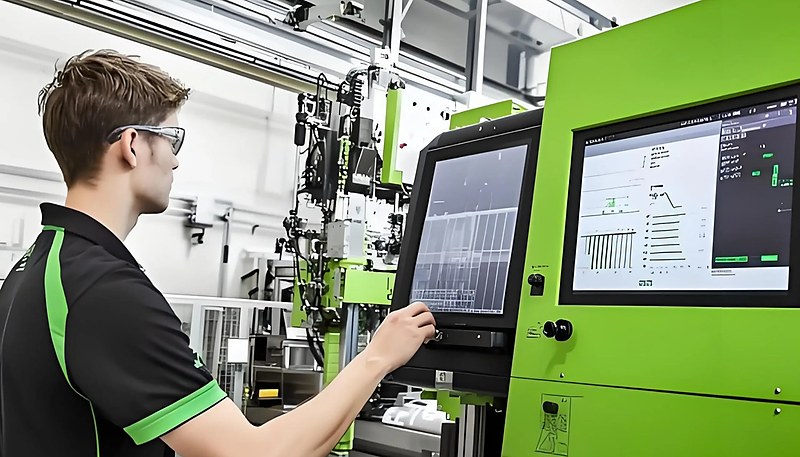
Agree on response times, escalation paths, working language, and meeting channels before the order. Then schedule a technical video call with the project manager or engineer who would handle your account. The person should be able to discuss tolerances, material selection, and process parameters directly or bring a qualified interpreter whose role is clear.
ZetarMold's published capability data lists 8 expert mold engineers. Before ordering, identify the engineer and project contact assigned to your work and confirm how technical questions, DFM feedback, and production issues will be communicated.
Beyond language, review the supplier’s documentation standards. Can it provide inspection reports in your agreed language and measurement system? If your project requires PPAP3, can the supplier produce the specified submission level and elements? Technical quality records and export or customs documents serve different purposes; verify both sets rather than treating one as proof of the other.
How Do You Assess Shipping and Logistics Capabilities?
Start the shipping assessment by asking which Incoterms the supplier quotes and naming the agreed place or port. DAP and DDP extend the seller’s delivery responsibility to the named destination, but they differ on import clearance and duties. FOB transfers risk when goods are loaded on board at the named port of shipment, while EXW places most transport responsibility on the buyer. Choose the term with your freight forwarder or customs adviser after confirming who will act as exporter and importer of record.
Request recent, redacted shipping records or document samples relevant to your route. Look for the origin and destination, transport mode, carrier or forwarder, declared product description, and transit assumptions without asking for another customer’s confidential data. Experience in one destination market does not automatically transfer to another market’s classification and documentation requirements. For more on comparing suppliers, see our injection molding supplier sourcing guide.
What Packaging and Labeling Standards Indicate a Professional Export Supplier?
Professional export packaging is designed around the part, route, handling method, storage conditions, and destination requirements. Precision components may need moisture barriers, dividers, trays, or reinforced cartons, but those features are not universal. Define acceptance tests that address warpage, abrasion, contamination, stacking, and unloading risks for your shipment.
| Packaging Element | Requirement to Define | Why It Matters |
|---|---|---|
| Inner bags or barriers | Material, seal, desiccant, and quantity per bag where required | Moisture and contamination control |
| Dividers or trays | Part orientation, contact points, and parts per layer | Prevents part-to-part damage |
| Outer cartons | Material, dimensions, weight limit, closure, and stacking test | Protects the shipment during handling and stacking |
| Palletization | Pallet dimensions, material compliance, load pattern, and restraints | Supports compliant and safe mechanical handling |
| Labeling | Required identifiers, quantities, dates, barcodes, and label positions | Traceability and receiving accuracy |
Labeling is equally important. Define the identifiers required on each package, such as purchase order, part number, quantity, production lot, and inspection status. Where the product’s quality plan requires material traceability, the label and shipment records must connect the finished-parts lot to the applicable material records. Consider the full journey from the supplier through freight handling and final delivery; each stage introduces different stresses.
Proper export documentation creates an audit trail that protects both parties: if parts arrive damaged, the documentation establishes accountability; if customs questions the declared value, the paperwork provides evidence; if a quality dispute arises months later, the inspection reports serve as baseline data.
How Do You Evaluate a Supplier’s Financial and Business Stability for Export?
Financial and business stability is the supplier’s ability to meet contractual obligations through material-price changes, demand fluctuations, and production disruptions. Review the legal entity, years in business, payment terms, credit or trade references where appropriate, export track record, insurance, and contingency plans. Factory ownership alone does not prove stability, cost control, or response quality; verify the actual manufacturer and every intermediary in the transaction.
ZetarMold's published capability data lists 45 production lines, and its public entity record identifies its Shanghai factory address. Buyers should still verify that the legal entity, operating site, and production evidence for the quoted project are consistent.
Ask for the supplier’s business license and evidence of the customs or export qualifications used for your transaction. The manufacturer, contracting party, declarant, and exporter of record may be the same entity or different entities. If a trading company is involved, identify its role, fees, responsibilities, and relationship with the factory instead of assuming that an intermediary is automatically worse or more expensive.
"FOB pricing shifts all shipping and customs responsibility to the buyer."False
False — under FOB, the seller handles the goods and export clearance until they are loaded on board at the named port of shipment. Risk then transfers to the buyer, who arranges the main carriage and normally handles import clearance and duties.
"A supplier with ISO 9001 certification automatically meets all export compliance requirements."False
ISO 9001 certifies a quality management system, not export capability. Export compliance requires separate documentation including HS code classification, certificates of origin, and market-specific regulatory approvals.
What Red Flags Should You Watch for During Supplier Evaluation?
The table below lists six warning signs: an unclear exporter of record, vague Incoterms, missing packaging evidence, weak communication, undefined classification responsibility, and no relevant shipment references. A warning sign is a prompt for evidence, not proof of misconduct by itself.
| Warning Sign | Risk to Clarify | What to Do |
|---|---|---|
| Exporter of record is unclear | Contract and export roles may involve different entities | Verify every entity and its responsibility |
| Cannot define the Incoterm and named place | Costs and risk transfer are ambiguous | Request complete written shipping terms |
| No packaging specification or evidence | Packaging may not be validated for the route | Review a specification, photos, and test evidence |
| Cannot arrange a technical call | Technical escalation path is unproven | Meet the project lead and responsible engineer |
| Product classification responsibility is undefined | Customs declarations may be inconsistent | Agree who proposes and who approves the HS code |
| No relevant destination-market examples | Regional documentation experience is unverified | Request redacted records for comparable routes |
An unusually low quote combined with unanswered export questions is a reason to compare scope line by line. Confirm material, inspection, packaging, documentation, freight, duties, and change-order assumptions before judging total cost. For guidance on the overall injection molding process, our comprehensive guide covers the production side of the equation.
How Do You Test a Supplier Before Committing to a Full Production Order?
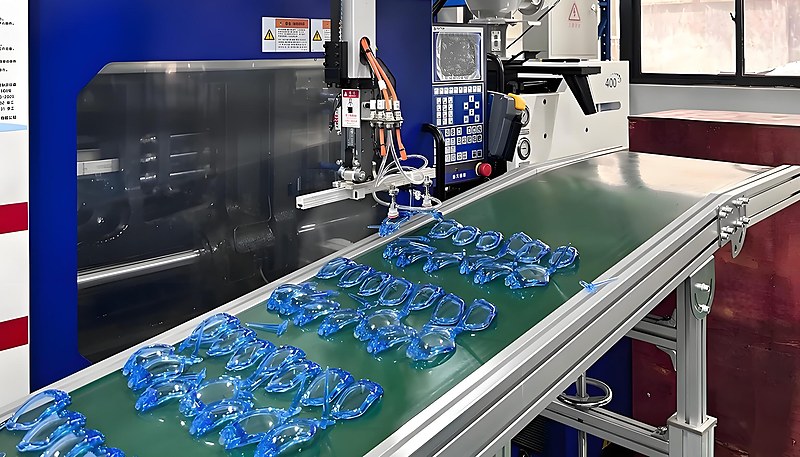
Test the workflow with a paid pilot order whose quantity is sufficient for inspection, packaging, and shipping validation. Define the pilot’s acceptance criteria before ordering. It should produce evidence about lead time, communication, packaging, documentation, part quality, and delivery without exposing the full production order.
During the pilot, observe how the supplier handles deviations and documentation requests. Does it identify dimensional issues before shipping, preserve the lot and inspection records, and respond through the agreed escalation path? The pilot should exercise the same packaging and document-approval workflow planned for production. Our sourcing guide provides a broader framework for comparing candidates.
"A paid pilot order with the required shipping documents provides direct evidence of a supplier's export readiness."True
A representative pilot can exercise production quality, packaging, document preparation, communication, and delivery under the terms planned for the full order.
"If a supplier has been exporting for five years, its export processes are guaranteed to be reliable."False
False — duration alone does not demonstrate process quality. Validate the supplier against your product, destination, Incoterm, documentation, and packaging requirements.
What Documentation Should a Professional Export Supplier Provide?
The required document set depends on the Incoterm, transport mode, destination, product classification, and contract. It commonly includes a commercial invoice, packing list, transport document, and any required origin, material, inspection, or product-compliance records. Confirm the list with your freight forwarder or customs broker before shipment.
| Document | Typical Trigger | Common Mistake |
|---|---|---|
| Commercial Invoice | Commercial export transaction | Description or classification conflicts with the actual product |
| Packing List | Shipment with multiple packages or detailed packing data | Weights, dimensions, or package count do not match the cargo |
| Origin Evidence | Customs, trade-preference, or buyer requirement | Origin basis is unsupported or inconsistent |
| Transport Document | Bill of lading, air waybill, or courier record as applicable | Party names or shipment data conflict with other documents |
| Material Record | Contract or quality-plan requirement | Missing grade, batch, or lot traceability |
| Inspection Report | Contract or quality-plan requirement | Incomplete results or no link to the shipped lot |
Document accuracy is itself a useful process signal. If the commercial invoice misidentifies the product, the packing list does not match the packages, or an origin document conflicts with the transaction, stop the shipment and correct the record.
Proper export documentation creates an audit trail that protects both parties: if parts arrive damaged, the documentation establishes accountability; if customs questions the declared value, the paperwork provides evidence; if a quality dispute arises months later, the inspection reports serve as baseline data.
How Can You Build a Long-Term Export Partnership with Your Supplier?
A strong export partnership needs three things: predictable orders, quality feedback loops, and transparent communication. Once you have found a supplier who passes the evaluation, the relationship shifts from vetting to optimization. Agree on standard Incoterms, packaging specifications, and documentation templates so every shipment follows the same process.
Zetar Industry Co., Limited holds current ISO 9001, ISO 13485, ISO 14001, and ISO 45001 certificates, each with its own published scope. These certificates do not by themselves prove a shipment's export readiness, so buyers should separately verify the quotation, logistics plan, and required documents.
Use periodic business reviews to share a suitable demand forecast, review quality and delivery performance, and plan material or capacity risks. A stable process can reduce avoidable errors and expedite costs, but compare landed cost with actual shipment data rather than assuming a fixed saving.
Verify certificates independently, test the workflow with a pilot order, and review the actual export documents before committing to full production. A low factory price can be erased by classification errors, customs holds, damage, or missed delivery dates. Ask ZetarMold for a project-specific quotation that identifies the contracting entity, Incoterm, named place, packaging scope, documentation, and logistics responsibilities.
What Are the Most Common Questions About Injection Molding Export Support?
What Incoterms should I use when importing injection molded parts?
There is no universally safest Incoterm. DDP places import clearance and duties on the seller, but it may be unsuitable where the seller cannot legally act as importer of record. FOB can work for eligible sea or inland-waterway shipments when the buyer controls the main carriage. EXW places most transport obligations on the buyer and can create export-clearance complications. Choose the rule and named place with your customs broker or freight forwarder, and record any responsibilities the Incoterm does not cover.
How can I verify if a Chinese injection molding supplier has valid export qualifications?
Request the business license and identify the entity that will contract, declare, and export the goods. Cross-check the company name and unified social credit code in China’s National Enterprise Credit Information Publicity System, then ask for the customs-registration or other qualification evidence used for the transaction. If a trading company or customs agent is involved, verify that entity and document its responsibilities. A supplier’s reluctance to explain the chain is a warning sign, but the use of an intermediary is not by itself proof of a problem.
What packaging standards should I expect for exported injection molded parts?
There is no universal packaging specification for injection-molded parts. Define inner protection, part orientation, quantity per package, carton strength, pallet requirements, labels, and validation tests according to the resin, geometry, cosmetic surface, route, and receiving method. Hygroscopic materials may require sealed moisture-barrier packaging and desiccant; delicate surfaces may need individual separation. Approve a packaging sample and photographs before the first production shipment.
How long does it take to receive injection molded parts from a Chinese supplier?
Total lead time combines material availability, production, inspection, packaging, export handling, main carriage, customs clearance, and final delivery. Each element varies by part, order volume, season, route, and transport mode. Ask the supplier and freight forwarder for a dated schedule that states assumptions and cut-off times, then add contingency appropriate to the project instead of relying on a generic transit range.
What documents do I need from my supplier for customs clearance?
The usual starting set is a commercial invoice, packing list, and transport document such as a bill of lading or air waybill. Origin evidence, product-compliance records, material declarations, test reports, licenses, or permits depend on the destination, classification, and intended use. Give your customs broker the product description, material composition, value, origin, and use so the broker can confirm the exact document list before shipment.
Should I use a trading company or work directly with an injection molding factory?
Direct factory contracting can simplify technical communication and production visibility when the factory also manages the export transaction competently. A trading company can add value through supplier management, consolidation, language support, credit terms, or logistics. Compare the complete scope, fees, legal accountability, access to production evidence, and escalation path rather than assuming either structure is always cheaper or better.
How do I handle quality issues with an overseas injection molding supplier?
Establish a quality agreement before production that defines acceptance criteria, inspection methods, sampling plans, containment, and corrective-action responsibilities. When a non-conformance occurs, identify the affected lots, stop or hold shipment as required, preserve evidence, and agree on disposition before release. Request an 8D or another structured root-cause report when appropriate; do not assume an ISO 9001 certificate guarantees a particular report or an effective corrective-action process.
Incoterms: Standard trade terms published by the International Chamber of Commerce that allocate specified delivery costs, tasks, and risks between seller and buyer. ↩
ISO 9001: An international standard that specifies requirements for a quality management system; certification scope must be checked separately. ↩
PPAP: Production Part Approval Process, a documented approval framework used to show that a production process can meet specified requirements. ↩