You found what looks like the perfect injection molding supplier. Their quote is competitive, their samples look clean, and their sales team responds within hours. Then the delays start — first a week, then three weeks, then a cryptic email about tooling adjustments. Before you know it, your product launch is pushed back an entire quarter.
If this scenario sounds familiar, you are not alone. Supplier delivery management mistakes in injection molding are far more common than most buyers admit, and the root causes usually trace back to a handful of preventable errors. In this article, we break down the specific missteps that turn promising supplier relationships into costly rework cycles, and share what a reliable delivery management process actually looks like from the factory floor.
- Ignoring pre-production qualification is the single biggest delivery risk in injection molding
- Poor tolerancing on drawings creates rework loops that add 4-8 weeks to tooling timelines
- Material sourcing delays account for roughly 30% of late deliveries on custom projects
- Weekly milestone tracking catches 80% of delivery problems before they become critical
- A qualified supplier with in-house tooling can cut lead time variability in half
Why Do Injection Molding Deliveries Keep Missing Deadlines?
The uncomfortable truth is that most late injection molding deliveries are not caused by random acts of misfortune or bad luck. They are the predictable result of systematic gaps in how buyers manage the supplier relationship from the very first day. When you skip pre-production qualification, fail to lock down tolerances before tooling starts, or assume that a competitive quote means the supplier has actually accounted for every complexity in your part design, you are setting up a delivery chain reaction that will inevitably delay your project.
We have seen this play out dozens of times on our factory floor. A buyer sends a 3D CAD file with vague tolerancing, the tooling team builds to nominal dimensions, first shots reveal that critical features are out of spec, and suddenly you are in a rework cycle that nobody budgeted time for. The supplier blames the drawing. The buyer blames the supplier. Meanwhile, the delivery date slips week by week, and the real cost of the so-called cheap quote becomes painfully clear.
The pattern is remarkably consistent across industries, whether you are sourcing injection mold parts or HVAC components, medical device housings, or robot parts. The specific part geometry changes, but the underlying delivery management mistakes remain the same. Understanding these patterns is the first step toward breaking them.
What Are the Most Common Supplier Delivery Management Mistakes?
The biggest mistakes are skipping DFM, vague tolerancing, no milestone tracking, and price-only selection. Each error creates rework cycles that compound into weeks or months of additional lead time and budget overruns that erode project margins.
Mistake 1: Skipping the DFM review. Design for Manufacturability1 analysis is not a nice-to-have formality. It is the process where your supplier identifies undercut features, impossible wall thickness ratios, inadequate draft angles, and tooling complexity that will inflate both cost and lead time. When buyers skip DFM and go straight to tooling, they are gambling that the design is perfect on the first try. In our experience, fewer than 20 percent of first-time designs are tooling-ready without modification. The other 80 percent need at least one round of changes, and each round adds two to four weeks to the project timeline.
These four mistakes are interconnected and often compound simultaneously on the same project. Skipping DFM leads directly to vague tolerancing, which creates costly rework cycles, which makes milestone tracking absolutely essential. And choosing the cheapest supplier often means all of these problems appear at once, turning a straightforward project into a months-long ordeal that far exceeds the original timeline and budget.
Mistake 2: Vague tolerancing on drawings. This is probably the single biggest driver of rework in injection molding. When a drawing specifies a general tolerance of plus or minus 0.1 mm on everything, the tooling team has to guess which dimensions actually matter. They guess wrong about 40 percent of the time. First article inspection reveals out-of-spec dimensions on critical features, the mold needs steel changes, and your delivery date moves out by three to six weeks. The fix is straightforward: identify critical-to-function dimensions, specify tight tolerances only where they matter, and loosen everything else.
Tooling is a multi-step process that includes rough machining, electrode burning, polishing, fitting, and T1 sampling. Problems at any stage can cascade into significant delivery delays that compound over time. Without weekly or biweekly milestone checkpoints, the first time you hear about a problem is when the supplier tells you the mold needs rework. That communication gap can add four to eight weeks to your timeline and inflate the total project cost well beyond the original budget. Experienced buyers know that visibility during tooling is not micromanagement but essential risk management.
Mistake 5: Ignoring secondary operations and assembly requirements. Many buyers focus exclusively on the molding process and forget that their parts may need post-molding operations like ultrasonic welding, pad printing, sub-assembly, or custom packaging. Each secondary operation adds another vendor, another lead time, and another potential failure point to your delivery chain. Consolidating as many operations as possible under one roof is one of the most effective delivery risk reduction strategies available to international buyers today.
Mistake 4: Choosing the cheapest quote without understanding the scope. A supplier who quotes 30 percent below the market average is not doing you a favor. They are either cutting corners on quality, underestimating the design complexity, or planning to hit you with change orders later. In injection mold production, the cheapest quote often leads to the most expensive final bill when you factor in rework costs, expedited shipping charges, and the opportunity cost of a delayed product launch. Always ask your supplier to break down their quote into tooling, sampling, material, and production phases. If they cannot or will not provide this transparency, that is a clear red flag for delivery management reliability.
How Can Poor Communication Derail Your Mold Delivery Schedule?
Communication failures are the invisible tax on every cross-border manufacturing project. The buyer sends an email with requirements. The supplier reads it through the lens of their own capabilities and assumptions. Three weeks later, both sides discover they were never aligned on what needed to happen. The mold is built to the wrong interpretation, the parts do not fit the assembly, and nobody can agree on who is responsible.
In practice, we see three communication patterns that consistently cause delivery problems. First, relying solely on email for technical decisions. Email is fine for confirmations, but complex technical discussions — gate placement, draft angles, ejector pin locations — need live review sessions with the part on screen. Second, not establishing a single point of contact on each side. When three people from the buyer side send conflicting instructions to four people at the supplier, nothing gets done correctly. Third, failing to document verbal agreements in writing. A phone call where both sides agree to change a fillet radius means nothing if the updated drawing never gets sent.
"Documenting verbal agreements in writing is one of the simplest ways to prevent delivery disputes in injection molding projects."True
Undocumented phone agreements about design changes create ambiguity that leads to rework cycles. Requiring written sign-off on every modification creates a clear audit trail and prevents costly misinterpretations between buyer and supplier.
"Material lead times are negligible compared to tooling lead times in injection molding projects."False
Material sourcing for engineering-grade resins like PEEK or PEI can take six to twelve weeks, which often exceeds the time required for mold modifications. Custom color-matched compounds add further delays of two to four weeks.
The companies that consistently hit their delivery targets do one thing differently: they treat communication as a process, not an event. They hold structured weekly check-ins during tooling, use a shared tracker for all open issues, and require written sign-off on every design change. It sounds bureaucratic, but it eliminates the ambiguity that causes rework.
Why Do Quality Issues Cause Rework Loops and Shipping Delays?
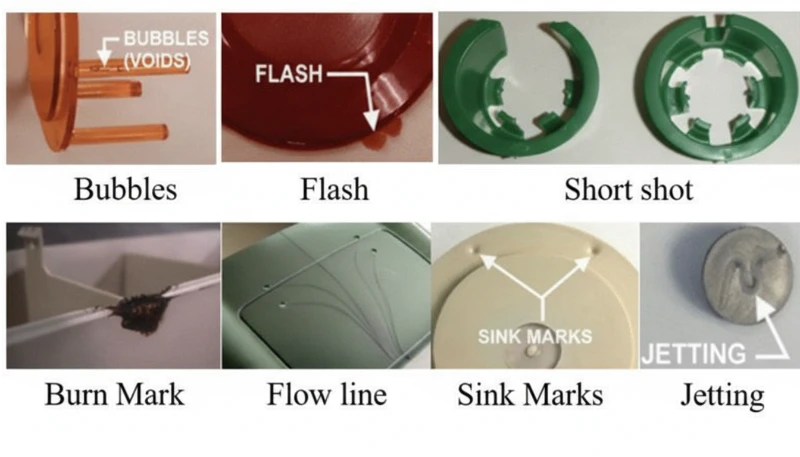
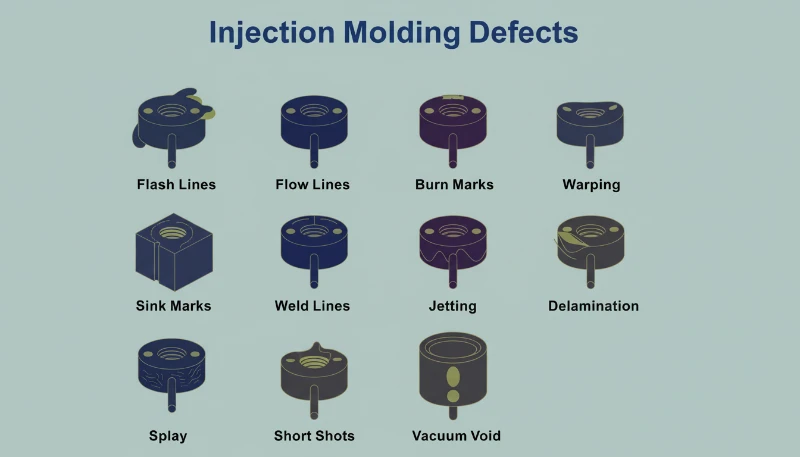
Quality problems and delivery delays are two sides of the same coin. When first article inspection reveals defects — sink marks, warpage, flash, short shots, dimensional non-conformance — the production line stops. The mold goes back to the tool room. Samples are re-run. Inspection happens again. Each iteration consumes one to three weeks, and there is no guarantee that the next attempt will pass. Some parts go through four or five rework cycles before they meet specification.
The frustrating part is that most rework loops are preventable. They trace back to upstream decisions that were made weeks or months before production started. A material was chosen without accounting for shrinkage behavior. A gate location was placed for tooling convenience rather than flow balance. A cooling circuit was undersized because the mold base was already at its size limit. None of these issues are visible during the quoting phase, but they all surface during sampling — right when the delivery clock is ticking loudest.
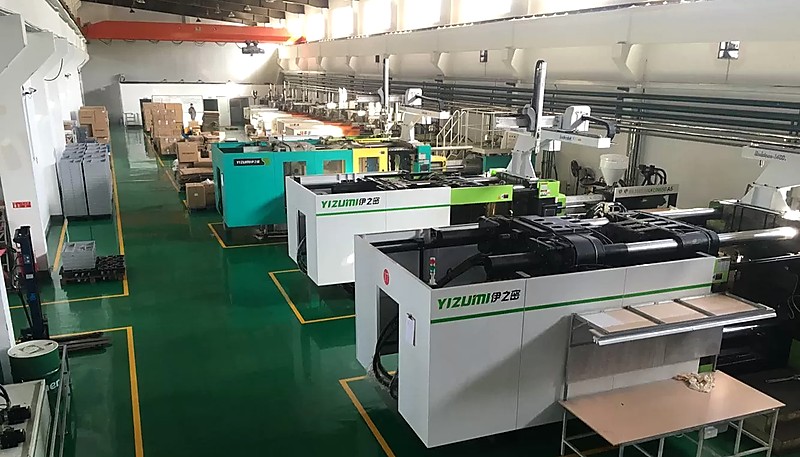
In our Shanghai factory, we run 47 injection molding machines ranging from 90T to 1850T, backed by 20+ years of process optimization experience. This combination allows us to identify potential quality issues during the DFM phase, before tooling investment begins, which is far cheaper and faster than catching them during first article inspection.
When Should You Audit Your Injection Molding Supplier Process?
The most effective time is during tooling execution, after T1 sampling, and during production ramp-up.
The right time to audit depends on your project phase. During tooling, you should verify that the mold is being built according to the approved design. After T1 sampling, you should review the sampling report and dimensional data in detail. During production ramp-up, you should witness at least one full production run to confirm process stability. The buyers who skip these checkpoints are the ones who discover quality problems after receiving a container of defective parts — at which point the rework cost and timeline impact are an order of magnitude worse than catching it early.
Remote auditing has also become a practical option for overseas buyers. With an injection molding supplier sourcing guide, you can request live video walkthroughs of the tool room, real-time process parameter data from the injection molding machines, and photo-documented inspection reports at each milestone. These digital checkpoints are not a perfect substitute for being on the factory floor, but they catch 70-80% of the issues that would otherwise surface as delivery surprises.
How Do Material Sourcing Problems Impact Delivery Timelines?
Material issues are the silent delivery killer in injection molding. Everyone focuses on Tooling Lead Time2, but the truth is that material sourcing can be equally unpredictable, especially for engineering-grade resins, custom colors, or specialty compounds. If your supplier does not have reliable material supply chains in place, your perfectly built mold will sit idle while you wait for resin to arrive.
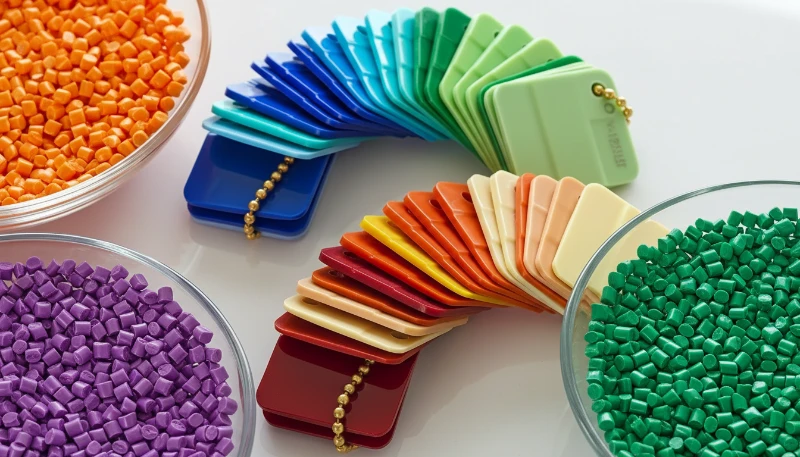
We track material lead times carefully across our 400+ material portfolio, and the variation is significant. Commodity resins like PP and HDPE are almost always available within a week. Engineering resins like PEEK, PEI, or PPSU can have lead times of six to twelve weeks depending on global supply conditions. Custom color-matched compounds add another two to four weeks on top of the base resin lead time. The delivery impact compounds when the buyer changes material specifications mid-project, which happens more often than you might expect.
With experience across 400+ plastic materials and an in-house mold manufacturing facility, we can validate material-process compatibility during the DFM phase rather than discovering shrinkage or flow problems during first shots. This upfront validation is one of the most effective ways to prevent material-related delivery delays.
What Does a Reliable Delivery Management Process Look Like?
The most reliable process is one that follows four phases: kickoff, milestone tracking, qualification, and locked production.
Phase 1, Project Kickoff: Hold a formal kick-off meeting that covers the full production scope, critical dimensions, material specifications, cosmetic standards, and delivery milestones. Document every decision in a shared project file. Both sides sign off. This meeting alone eliminates about 30% of the misunderstandings that cause later delays.
Phase 2, Tooling Execution: Assign a dedicated project manager on each side. Hold weekly progress reviews with photo or video evidence of tooling progress. Track milestones against the original timeline. Flag any deviation within 48 hours — not at the next scheduled meeting. In our operation, we have 30+ English-speaking project managers whose primary responsibility is keeping overseas buyers informed in real time.
Phase 3, Sampling and Qualification: Review T1 samples against the approved drawing within 48 hours of receipt. If dimensional issues exist, classify them by root cause — tooling error, drawing ambiguity, or material behavior — and assign corrective actions with deadlines. Do not proceed to production until first article inspection is fully approved.
"Weekly milestone tracking during tooling can prevent most delivery surprises."True
Regular check-ins catch tooling problems, material delays, and design misinterpretations early enough to correct them without impacting the final delivery date. Most delivery disasters accumulate silently over weeks of zero communication.
"A competitive injection molding quote usually means the supplier has thoroughly evaluated all project complexities."False
Low quotes often reflect incomplete scope analysis, not superior efficiency. The supplier may be underestimating tooling complexity, material costs, or tolerance requirements, which leads to change orders and delays later.
Phase 4, Production and Shipping: Lock process parameters after qualification. Run Statistical Process Control3 during production to catch drift before it produces defects. Inspect at defined intervals rather than relying on end-of-line sorting. Ship on the agreed schedule with tracking visibility from dock to destination.
This structured approach sounds like common sense, but you would be surprised how many buyers skip one or more phases under time pressure. The irony is that skipping a phase never saves time — it always costs more time later in the form of rework, reshipping, or start-over tooling. The most reliable delivery outcomes come from suppliers who have institutionalized this process into their project management workflows, not from the ones who promise the fastest individual lead times on a quote.
Our team of 30+ English-speaking project managers operates under ISO 9001, ISO 13485, ISO 14001, and ISO 45001 certified management systems. This infrastructure ensures that delivery milestones are tracked systematically and communication with international buyers remains clear and documented throughout the project.
Frequently Asked Questions
Frequently Asked Questions
What is the most common cause of late injection molding deliveries?
The most common cause is skipping the Design for Manufacturability review before tooling begins. Without this critical analysis, design issues like impossible wall thickness ratios, undercut features, and poorly placed gates go undetected until first shots are run. This triggers expensive rework cycles that add four to eight weeks to the timeline. Buyers who invest in thorough upfront DFM analysis and specify clear tolerances on critical dimensions consistently hit their delivery targets with far fewer costly surprises during the sampling phase.
How can I track my injection molding project milestones effectively?
Establish weekly check-ins with your supplier during the tooling phase, use a shared milestone tracker that both sides update in real time, and require photo or video evidence of progress at each stage. Assign a dedicated project manager on each side as the single point of contact to prevent conflicting instructions. This structured approach catches 70 to 80 percent of delivery problems before they become critical, and it gives you the visibility to make timely decisions when schedule adjustments are needed.
What should I look for when evaluating an injection molding supplier delivery track record?
Ask for specific delivery performance data rather than general assurances about their capabilities. Request detailed references from projects similar in size and complexity to yours, and inquire about their average rework rate on new molds, typical time from T1 sampling to fully approved production status, and how they handle design change requests that come up mid-project. A supplier who tracks and shares these operational metrics transparently demonstrates the kind of process maturity needed for reliable delivery performance, rather than just promising fast lead times.
How do material shortages affect injection molding delivery timelines?
Material shortages can add six to twelve weeks to your project timeline, especially for engineering-grade resins like PEEK, PEI, or PPSU that have limited global supply chains and long order cycles. Custom color-matched compounds add further delays of two to four weeks on top of base resin lead times. The best mitigation strategy is to confirm material availability and secure lead time commitments before tooling starts, and to work with your supplier to maintain buffer stock of approved resins for your ongoing production runs.
Why do rework loops happen in injection molding and how can they be prevented?
Rework loops typically occur when first article inspection reveals defects caused by upstream decisions made during the design and tooling phase. Common root causes include vague tolerancing on critical dimensions, suboptimal gate placement, incorrect material selection for the application, or inadequate cooling channel design in the mold. Each rework iteration consumes one to three weeks with no guarantee of success on the next attempt. Prevention requires thorough DFM analysis, clear critical dimension specification, and validated process parameters before production begins.
What questions should I ask my injection molding supplier before placing an order?
Ask about their DFM review process and whether it is mandatory or optional, how they handle design changes and what the typical cost and timeline impact is, what milestone tracking and reporting they provide to buyers, their typical rework rate on new mold builds, material lead times for your specified resin grade, and whether they have in-house tooling capability or outsource it. Suppliers who answer these questions with specific data rather than vague assurances demonstrate the operational maturity needed for reliable delivery.
Design for Manufacturability: Design for Manufacturability refers to the practice of designing parts to be easily and cost-effectively manufactured, considering the capabilities and limitations of the production process. ↩
Tooling Lead Time: Tooling Lead Time refers to the total time required to design, machine, polish, and qualify an injection mold before production can begin, typically ranging from 6 to 12 weeks depending on mold complexity. ↩
Statistical Process Control: Statistical Process Control refers to a method of quality control that uses statistical methods to monitor and control production processes, ensuring that they operate at their full potential. ↩