You found a supplier, approved the samples, and placed the PO. Production then brought dimensional rejects, inconsistent surface finishes, or missed shipments. A frequent cause is that the tooling and process produced acceptable samples but were not validated under production-representative conditions. This article walks through common mistakes buyers make when transitioning from prototyping to full production and gives you a practical framework to avoid them.
The gap between a successful prototype and a successful production run is a distinct validation stage. The question is not only whether the part design can be molded, but whether the manufacturing system around it can repeatedly meet the agreed requirements. Treat production readiness as a release gate with objective evidence, not as a checkbox.
- Mass production readiness means validated tooling, stable process parameters, and documented quality gates — not just good samples
- Incomplete mold trials, skipped process validation, and unclear tolerance specifications create avoidable production risk
- A qualified supplier should provide agreed mold-trial, capability, and pilot-run evidence before full production
- Tooling, material, process, quality, and logistics readiness must be verified together
- Resolve critical evidence gaps before authorizing production volume
What Is Mass Production Readiness in Injection Molding?
Mass production readiness means the tooling, process, and quality system have been validated to produce conforming parts at the required volume. It is the documented confirmation that material, machine assignment, process parameters, inspection criteria, packaging, and traceability work together under production-representative conditions. The required trial stages, capability targets, pilot quantity, and sampling plan should be defined from the part risk and customer requirements rather than copied from a universal template.
A pilot run costs time and material, but it provides evidence that a sample-making process can be transferred to sustained production. Think of mass production readiness as the bridge between injection molding feasibility and production reliability.
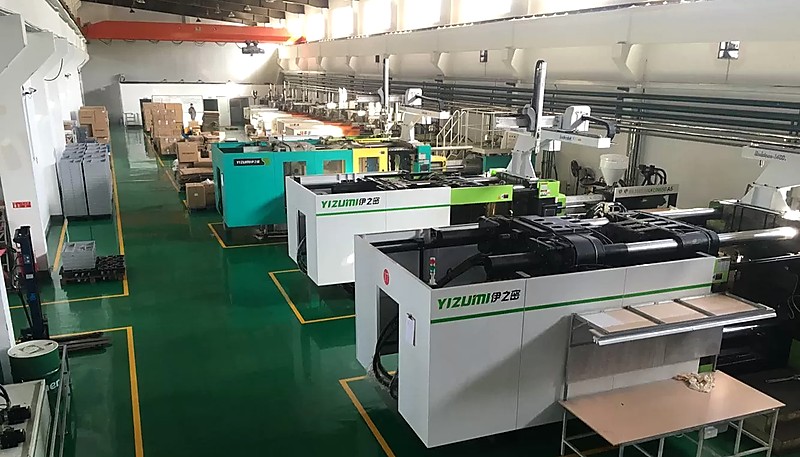
ZetarMold's published company facts list 45 Production Lines and 8 Expert Mold Engineers. Capacity figures still do not validate a particular part: the release decision should be tied to that mold's trial records, approved process window, inspection results, and production-representative run.
Why Do So Many Projects Fail at the Production Handoff?
The transition from prototyping to mass production can fail when prototype settings are not converted into a controlled process. During sampling, engineers may tune hold pressure, cooling time, and injection speed under close supervision. Production introduces sustained cycle targets, operator shifts, and material-lot changes. Common handoff failures include: Incomplete mold trial data. The supplier produced acceptable samples but did not document machine identity, settings, melt temperature, mold temperature, or inspection results. When production moves to another machine or operator, the result cannot be reproduced reliably. Material batch variation ignored. Prototype material came from one lot.
Production material may come from another lot or supplier. A viscosity shift can move a narrow process outside its validated window and produce flash, short shots, or dimensional drift. Cooling time underestimated. During trials, operators may allow extra cooling time. Compressing the cycle in production can expose warpage or sink marks that the samples did not show. No statistical process control. Critical characteristics need an agreed sampling and capability method; a capability index without stable data and defined specification limits is not meaningful. The core problem is information loss.
Every undocumented parameter, unrecorded machine setting, and assumption that “it worked before so it will work again” adds risk as production volume and duration increase.
"A production-representative pilot run provides evidence for a mass-production release decision."True
A useful pilot uses the approved production material, intended machine, target cycle, normal operators, packaging, and inspection plan. Its quantity and duration must be large enough for the project's risks and acceptance criteria rather than chosen from a fixed rule.
"If prototype samples pass inspection, mass production will automatically meet the same quality standard."False
Prototype samples may use slower cycles, hand-tuned parameters, and close operator attention. Mass production introduces longer runs, material-lot variation, machine assignment, and operator shifts. Documented process validation is needed to show that production can meet the same requirements.
What Are the Most Common Mass Production Readiness Mistakes?
Common mistakes include skipping mold trials, ignoring process windows, and assuming machines are interchangeable. The four below create avoidable risks during the handoff to production.
Across injection mold programs, these four mistakes deserve explicit checks: Mistake 1: Ending mold trials before the acceptance criteria are met. A first trial shows whether the mold can produce a part; subsequent trials verify corrections, dimensions, appearance, and repeatability. The number and names of stages should follow the agreed validation plan. Mistake 2: No process window study. A process window maps how dimensional and visual quality change as key parameters—melt temperature, mold temperature, hold pressure, and cooling time—vary.
Without it, you do not know how much margin the process capability1 has. Normal changes in material condition, cooling-water temperature, or machine response can then move the process outside specification.
Mistake 3: Ignoring gate seal time. If you do not measure and document gate seal time during trials, hold time is not evidence-based. Inadequate packing can contribute to sink or dimensional variation; excessive hold time adds cycle time and can increase residual stress or flash when other settings are unsuitable. Mistake 4: Uncontrolled material changes. Define the approved grade, supplier, colorant, additives, drying conditions, regrind limits, and incoming checks. If a secondary material source is needed for resilience, qualify it before substitution rather than assuming equivalent grade names will process identically.
Luck is not a strategy.
How Can You Verify a Supplier’s True Production Capability?
To verify production capability for a specific part, review trial evidence, assess agreed capability data, observe representative production where practical, and evaluate engineering communication.
Factory audits and ISO certificates can contribute to supplier assessment, but neither validates a specific molding process. An ISO 90012 certificate does not show whether the proposed machine, operator, mold, material, and inspection plan can meet the part requirements. Verify project evidence directly: Require mold-trial documentation. Look beyond photos of acceptable parts to records of machine identity, settings, cycle, material lot, dimensional results, defects, and corrective actions for each agreed stage. Without those records, the trial result is not reproducible evidence of a controlled process.
Ask for capability data on critical characteristics. Agree on the study method, sample size, subgrouping, stability evidence, and acceptance threshold before interpreting Cp or Cpk. A calculated index without a stable process and trustworthy measurement system can mislead. Observe a live production run when possible. Check whether approved parameters are available at the machine, operators follow the inspection plan, nonconforming parts are controlled, and calibrated measurement equipment is used as documented.
| Verification Area | What to Check | Red Flag |
|---|---|---|
| Mold Trial Data | Reports for agreed stages with machine settings and inspection results | "We ran trials but did not document the settings" |
| Process Capability | Approved study method and threshold for critical characteristics | Index reported without stability evidence or underlying data |
| Material Control | Approved material, lot records, drying data, and regrind limits | No incoming material control |
| Maintenance Program | Preventive maintenance schedule for machines and molds | "We fix things when they break" |
| Quality Lab | Calibrated equipment suitable for the specified measurements | Quality judgment based solely on visual inspection |
"A supplier should identify design-for-manufacturing risks during quotation instead of silently accepting them."True
A DFM review that identifies draft, wall-thickness, gate, ejection, cooling, or tolerance risks provides evidence of engineering review. Each recommendation should be tied to the current design revision and resolved before tool build.
"Conformal cooling channels always eliminate warpage in injection molded parts."False
Conformal cooling can improve cooling uniformity, but it does not guarantee elimination of warpage. Part geometry, material selection, gate design, cooling layout, and process parameters all contribute. Validate the complete design and process for the actual part.
Check the machine fit and maintenance program. Fleet size alone does not establish capacity. Verify the intended machine’s clamp force, injection unit, platen and tie-bar dimensions, controls, auxiliary equipment, maintenance status, and available schedule. Ask about preventive maintenance for both machines and molds. Review incoming material control. Check whether the supplier verifies the characteristics relevant to the resin and records drying, moisture, lot identity, and regrind use against approved limits.
Evaluate engineering communication. A capable supplier identifies manufacturability risks, records open questions, and obtains approval before changing a requirement. Test this during quotation by asking for a DFM review tied to the drawing and CAD revision, then check whether each recommendation has an owner and disposition.
ZetarMold's published company facts list 8 Expert Mold Engineers. For each quotation, the useful evidence is a DFM record tied to the current drawing and CAD revision, with each risk resolved before steel is cut.
"ISO 9001 provides a framework for a quality management system, but it does not validate a specific molded part."True
ISO 9001 addresses quality-management-system requirements such as controlled processes, corrective action, and management review. Verify the certificate holder, validity, and scope, then assess the actual project records separately.
"A mold that produces good parts during trials will continue producing good parts indefinitely without maintenance."False
Molds and their moving, sealing, and cooling components wear or accumulate contamination over time. A documented preventive-maintenance plan should define inspections, cleaning, lubrication, wear limits, and component replacement based on the tool and process.
What Should a Production Readiness Checklist Include?
A production readiness checklist should be a controlled document completed by buyer and supplier, not a checkbox exercise that gets filed and forgotten. A practical framework includes: Tooling validation: Required mold trials completed with documented results. Mold maintenance schedule agreed. Critical spare parts identified. Mold storage conditions specified. Process validation: Process parameters documented and approved—such as melt temperature, mold temperature, injection speed, hold pressure, hold time, and cooling time. Process-window evidence recorded. Capability studies completed for agreed critical characteristics using customer-approved thresholds. Gate seal time evaluated where relevant. Material qualification: Approved resin grade, supplier, colorant, additives, drying requirements, and substitution rules documented.
Relevant incoming checks and acceptance ranges documented. Regrind limits established. Quality plan: First-article protocol defined. In-process inspection frequency and method specified. Acceptance criteria agreed. Measurement equipment calibrated and listed. Nonconformance procedure documented. Production logistics: Intended machine and backup strategy confirmed. Packaging and labeling specifications approved. Capacity and lead-time commitments checked against cycle-time and availability data. Communication protocol: Named technical and quality contacts on both sides. Escalation path, reporting format, change control, and sample-retention policy established.
Any item that does not apply should be marked not applicable with a reason; an applicable item without evidence remains an open release risk.
How Do Tooling Issues Derail Mass Production Timelines?
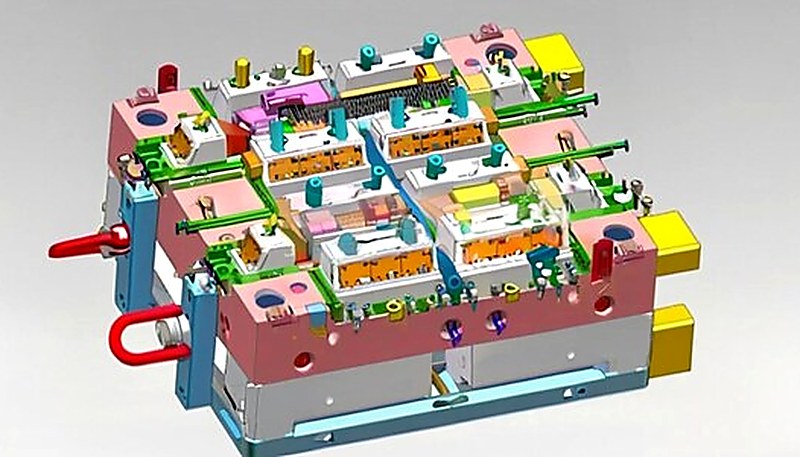
Tooling condition is a major variable in injection molding production readiness. Expected life depends on material, mold steel, geometry, finish, process, maintenance, and repair criteria. A mold that is not designed and maintained for the required duty can produce recurring flash, short shots, sticking, or dimensional drift.
Inadequate cooling design can create uneven mold temperatures, long or unstable cycles, and cavity-to-cavity variation. Channel location, diameter, flow, coolant temperature, and circuit balance should be evaluated together. Conformal channels, baffles, or bubblers may improve mold cooling3, but the benefit is design- and process-specific and must be validated on the actual tool.
Insufficient draft angles can cause parts to stick in the mold. Operators may compensate during trials by adjusting ejection speed or pressure, but that does not correct the geometry and can lead to damaged parts or tool wear in production. Treat difficult ejection during trials as an open issue. Gate design mismatch is subtler but equally damaging. A gate that produces acceptable samples may create visible marks, high shear, or incomplete packing at the approved production cycle. Hot runner systems add further variables, including temperature balance across drops, color-change procedures, and maintenance requirements.
Wear and maintenance planning should define inspection points, cleaning, lubrication, wear limits, spare components, shot-count records, and approval for repairs. Without a documented plan and capable maintenance resources, gradual wear may not be detected until parts fail inspection.
Before awarding production, ask who performs mold maintenance and steel changes, what equipment is available, which work is outsourced, how changes are approved, and what lead time applies to the specific repair. Verify the answers against a comparable maintenance record.
When Should You Walk Away from a Supplier?
Not every supplier is right for every project. Changing suppliers costs time and money, but unresolved release risks can cost more. Do not authorize production without required mold-trial data. If a supplier claims trials were completed but cannot provide the agreed machine settings, dimensional results, and corrective-action record, the process has not been demonstrated as controlled.
Escalate refusal to run the agreed pilot. The pilot quantity and duration should come from project risk, process behavior, and the sampling plan. If the supplier proposes another validation method, require evidence that it covers the same acceptance criteria before changing the plan.
Reject anecdotal quality evidence. “The parts looked good” is not enough. Require measurement reports and documented acceptance criteria appropriate to the part. Challenge unsupported timelines. Ask for the tool-build schedule, dependencies, trial dates, correction allowance, material availability, capacity assumptions, and shipping plan. A short lead time may be valid, but it needs a credible schedule.
Treat repeated communication gaps as a project risk. Late responses, unanswered questions, and vague updates during quotation and sampling show that the escalation path or ownership is not working. Define response expectations and test them before placing the order. If critical evidence remains unavailable, change the plan or supplier before committing production volume. Our injection molding supplier sourcing guide covers the broader evaluation framework.
Frequently Asked Questions
How many mold trials should a supplier complete before mass production?
There is no universal number of mold trials. Define the stages and exit criteria before tool build: initial sampling, correction verification, dimensional and visual approval, and production-process confirmation may require separate runs. Each trial should record the mold and machine identity, material lot, process parameters, dimensional and visual results, defects, and corrective actions. Move to production only when the agreed criteria are met.
What is CpK and why does it matter for injection molding?
Cpk (Process Capability Index) compares a stable process distribution with the upper and lower specification limits while accounting for process centering. The acceptance threshold is a customer and application decision; it is not meaningful without a capable measurement system, a defined sampling method, and evidence that the process is stable. Ask the supplier to provide the underlying data and calculation method, not only the index value.
What size pilot run validates injection molding production readiness?
Pilot-run size should be derived from the part risk, cavity count, cycle behavior, critical characteristics, planned production volume, and statistical sampling method. The run should use approved production material, the intended machine and auxiliaries, target cycle conditions, normal staffing, packaging, and the production inspection plan. Sample at defined intervals so startup, steady-state, cavity-to-cavity, and time-related variation can be evaluated.
How do you handle material batch variation in injection molding?
Lock the resin grade, approved supplier, colorant, additives, drying conditions, and regrind rules in the material specification. Define incoming checks for the characteristics that affect the selected resin and part, such as lot identity, certificate data, moisture, or melt-flow behavior. If a secondary source is needed, qualify it before use. Do not assume that lots or nominally equivalent grades will process identically.
What documents should a supplier provide to prove production readiness?
The required evidence may include mold-trial reports with machine settings and dimensional results, approved process parameters, capability studies for critical characteristics, material qualification records, first-article results, a production quality plan with inspection frequencies, and a mold-maintenance schedule. Define the required records and acceptance criteria for the project. Missing applicable evidence means the corresponding readiness risk remains open.
Can injection molding production be transferred between machines without revalidation?
A machine transfer requires documented assessment and an agreed level of requalification. Machines with the same tonnage rating can differ in injection-unit size, screw geometry, platen layout, controls, response, and maintenance condition. Confirm machine fit, translate the process using appropriate machine-independent parameters where possible, and verify the required dimensions and appearance under production conditions. The part risk and customer requirements determine whether a limited confirmation run or a full capability study is needed.
What are the signs of an unreliable injection molding supplier?
Warning signs include missing trial data, refusal to perform the agreed pilot or propose equivalent evidence, quality reports without measurements or acceptance criteria, repeatedly missed sampling commitments, resistance to process documentation, and unresolved communication gaps. Evaluate each against the project’s critical requirements and close it before release; do not infer production readiness from reassurances alone.
How important is mold maintenance for sustained mass production quality?
Mold maintenance is critical for sustained production quality. The plan should define inspection and service intervals using shot count, material, tool construction, observed wear, and supplier recommendations. Record cleaning, lubrication, cooling-circuit condition, wear measurements, repairs, and replaced components. Include critical spare parts, approval rules, and emergency-repair procedures in the production-readiness checklist.
Avoiding mass-production readiness mistakes requires both a capable supplier and project-specific evidence. ZetarMold’s published company facts list 45 Production Lines and 8 Expert Mold Engineers, but every new mold still needs its own DFM, trial, process, quality, and pilot-run records. Ready to discuss your project? Get a Free Quote and let our engineering team review your production-readiness plan.
Process capability: The NIST/SEMATECH e-Handbook describes process-capability indices and the assumptions needed to interpret them. ↩
ISO 9001: ISO 9001:2015 specifies requirements for a quality management system; certification does not by itself validate a specific molding process or part. ↩
Mold cooling: The cited peer-reviewed article evaluates conformal cooling-channel design and its effects for the studied molding conditions. Results remain part- and process-specific. ↩