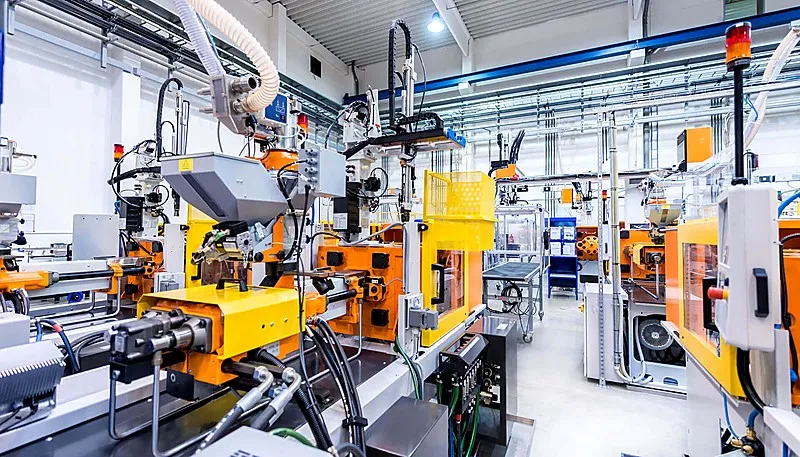
You have a production deadline in 12 weeks. Your supplier says they are ready. But are they really? In my two decades working with injection molding suppliers — both as a buyer and a manufacturer — I have seen too many projects derail because someone skipped the production readiness check. A supplier who looks great on paper can still surprise you with inconsistent cycle times, uncontrolled scrap rates, or a mold that was never qualified for volume. This article walks you through a practical, no-nonsense framework to evaluate whether your injection molding supplier can actually deliver mass production before you commit your budget and timeline.
We will cover capacity audits, tooling integrity checks, quality system verification, material handling assessment, and production testing requirements — everything you need to make a confident go or no-go decision.
The stakes are high: tooling for a multi-cavity production mold can run from tens of thousands to over one hundred thousand dollars, and lead times of eight to sixteen weeks are standard. If you discover mid-production that your supplier cannot hold tolerances, cannot scale to your weekly volume, or cannot maintain consistent material quality, restarting with a new supplier means lost time, sunk tooling costs, and missed market windows. That is why a structured readiness evaluation is essential — and why this guide gives you the exact checklist and methodology to do it right.
- Mass production readiness goes beyond sample approval — it covers capacity, tooling, quality systems, and process stability.
- Demand documented process capability studies (Cpk data), not just sample photos.
- Verify mold maintenance plans and spare tooling strategies before signing off.
- Check that the supplier runs statistical process control on critical dimensions.
- A supplier evaluation checklist should include at least 7 categories: capacity, tooling, quality, materials, logistics, communication, and contingency.
What Is Mass Production Readiness in Injection Molding?
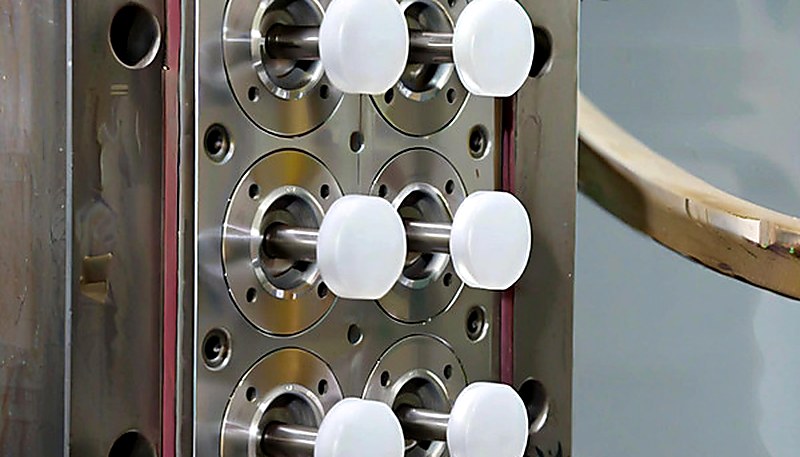
Mass production readiness means your supplier can sustain consistent output at volume. Not just once — shift after shift, week after week, within specification. It is the difference between a supplier who nailed the prototype and one who can deliver a 500,000-unit run without dimensional drift. In the injection molding industry, this distinction is critical because the tooling investment is front-loaded. Once the mold is built, switching suppliers is painful and expensive.
Readiness evaluation covers five pillars: capacity verification (do they have enough machines and time slots?), tooling integrity (is the mold production-grade, not just prototype-grade?), quality systems (do they have SPC1, incoming material inspection, and traceability?), material management (can they handle your resin properly, including drying and storage?), and logistics and communication (will your project get buried in their system?). Missing any one of these is a red flag. In our experience, capacity and tooling are the two that bite hardest when they fail.
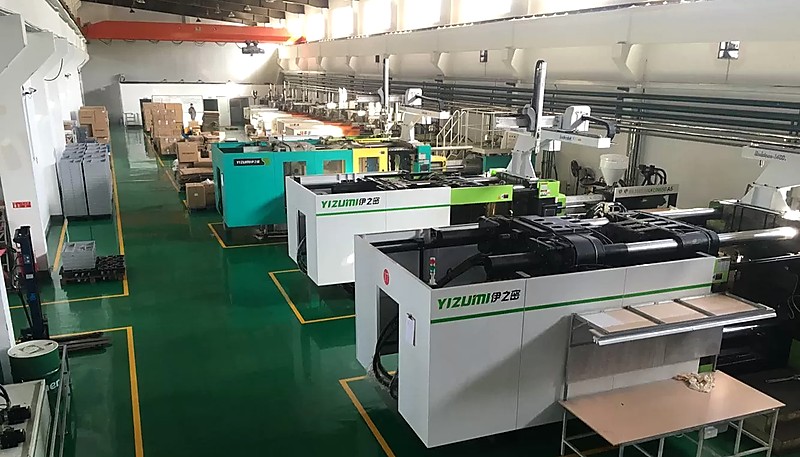
With 20+ years of production experience and 47 injection molding machines in our Shanghai factory, we have seen firsthand what separates a production-ready supplier from one who is still learning. Machine count matters — but machine availability and scheduling discipline matter more.
How Do You Audit a Supplier’s Production Capacity?
The answer is to audit three hard numbers: available press tonnage, verified cycle times from similar parts, and current utilization rate. A factory running at 95% utilization has almost no room for your order — you want a supplier at 70 to 85% capacity with actual headroom. Ask how many machines can run your mold and what the tonnage range is. If your part needs a 650T machine and they only have two in that range, your scheduling flexibility is close to zero.
"A supplier running at 95% capacity utilization has less scheduling flexibility than one at 75%."True
Correct. High utilization means no buffer for rush orders or unexpected downtime. Target 70-85% for production readiness.
"ISO 9001 certification alone guarantees consistent production quality."False
False. ISO certification means a quality management system exists on paper, but it does not guarantee SPC implementation, process discipline, or real-time quality control on the shop floor.
Also verify their maintenance schedule and downtime history in detail before committing. A supplier who does not track machine downtime cannot tell you their real output capacity. In one project I managed, we discovered the supplier’s supposedly available 650T press was actually down for maintenance every third week. Our 12-week timeline turned into 18 weeks because no one had checked the actual availability. Ask for maintenance logs or at least a rolling six-month uptime percentage from the supplier. Anything below 90% planned uptime is a warning sign for mass production work.
Also ask about their spare parts inventory — particularly for wear items like heater bands, thermocouples, and check rings — because these small components can halt production when they fail unexpectedly during a critical run.
Why Does Mold Tooling Quality Determine Production Success?
The injection mold is your most expensive production asset — and the most likely to cause problems if not designed for sustained volume. A prototype mold might survive 5,000 shots. A production mold needs 500,000 to 2 million cycles without dimensional drift. The difference goes beyond steel grade (P20 vs H13 vs S136) — it includes cooling channel design, ejector system layout, gate geometry, and overall mold construction quality.
When evaluating tooling readiness, ask these specific questions: What steel grade is used for the cavity and core? Is there conformal cooling or only drilled channels? How many cycles has the mold completed so far (if it is an existing mold)? What is the predicted tool life? Is there a spare parts inventory for wear items like ejector pins, bushings, and springs? If the supplier built the mold in-house, that is actually a positive signal — it means they can do emergency repairs without shipping the tool across town. An injection molding sourcing guide will tell you to check tooling ownership, but you also need to verify tooling durability.
Our in-house mold manufacturing facility produces 100+ mold sets per month, which means we maintain full control over tooling quality and can respond to design changes or maintenance needs without external dependency.
What Quality Management Systems Should You Verify?
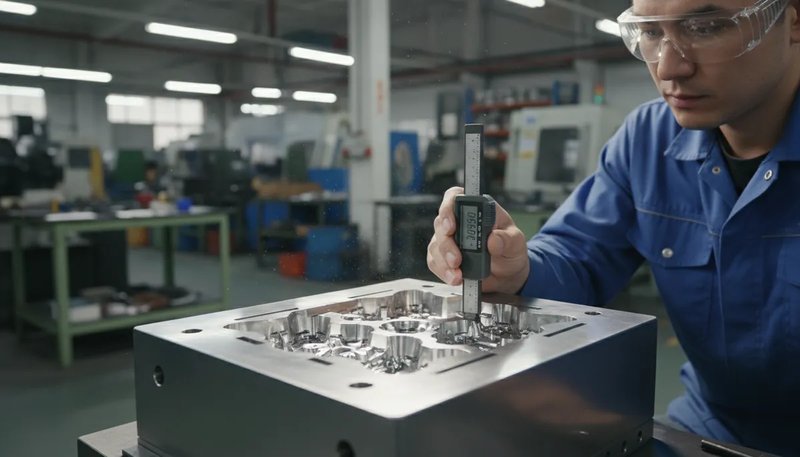
ISO certifications are the starting point, not the finish line. Look for ISO 9001 as a baseline, ISO 13485 if you are in medical, and IATF 16949 for automotive. But here is what the certificate on the wall does not tell you: how consistently those processes are actually followed on the shop floor. I have walked through factories with pristine quality manuals and chaotic production floors. The real indicators are: statistical process control (SPC) charts for critical dimensions, incoming material inspection records, and first-article inspection (FAI2) procedures.
Ask the supplier for their Cpk3 data on critical dimensions. Cpk (process capability index) tells you whether the process can hold tolerance consistently. A Cpk of 1.33 is the minimum acceptable for most production runs — it means the process spread uses no more than 75% of the tolerance band. If the supplier cannot provide Cpk data, they are not running SPC, which means they are relying on end-of-line inspection to catch problems. That is inspection, not quality control. Prevention is always cheaper than detection, especially at volume.
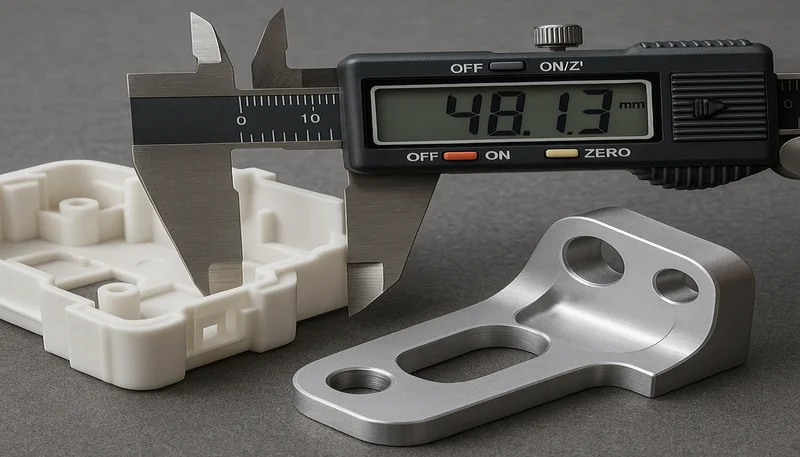
We operate under ISO 9001, ISO 13485, ISO 14001, and ISO 45001 systems, supported by 10+ dedicated QC specialists who run daily SPC checks on critical dimensions.
How Do You Assess Material Handling and Processing Capability?
Material handling is the quiet killer of mass production consistency. If your supplier does not have proper drying equipment for hygroscopic resins like nylon, polycarbonate, or PET, you will get splay marks, reduced mechanical strength, and dimensional instability — and you will not see it coming until you are thousands of parts into the run. Ask specific questions: What drying equipment do they use (dehumidifying hopper dryers or just hot air)? What are their standard drying parameters for your material? Do they have moisture analyzers to verify dryness before processing?
Also check their material lot traceability. In a regulated industry, you need to trace every part back to the resin lot. If the supplier blends regrind into virgin material (common practice, not inherently bad), what is their ratio and is it documented? Do they have a first-in-first-out (FIFO) inventory system for raw materials? A supplier who stores resin on the floor near an open loading dock is a supplier who will have moisture and contamination problems. These operational details tell you more about production readiness than any sales presentation.
With experience processing 400+ plastic materials, we maintain detailed drying and processing parameter records for each resin family, ensuring consistent production quality across different material runs.
What Production Testing Should You Demand Before Full Run?
You should demand a production trial run of 50 to 100 parts before approving any mass production commitment. This is different from prototype sampling — the trial must use the actual production machine, production parameters, production operators, and production-grade materials. The goal is to simulate real conditions and verify that everything holds up under sustained operation before you commit your full budget and timeline.
"A production trial run should use the same machine, parameters, and materials as the actual production run."True
Correct. The whole point of a production trial is to simulate real conditions. Using different parameters defeats the purpose.
"A supplier who has never processed your material family can still be production-ready if they have good equipment."False
False. Material processing experience is critical. Each resin family has unique drying, melting, and processing requirements that are learned through production runs, not theory.
Key tests to request during the trial: dimensional inspection report (DIR) covering all critical-to-quality (CTQ) dimensions with Cpk values, visual quality audit on a random sample of 30+ parts for cosmetic defects, material certification confirming the resin lot matches your specification, and weight consistency check across the sample batch (weight variation beyond 0.5% often signals process instability). If the supplier pushes back on any of these, ask yourself why. A confident, production-ready supplier welcomes scrutiny — it validates their process.
When Should You Walk Away from a Supplier?
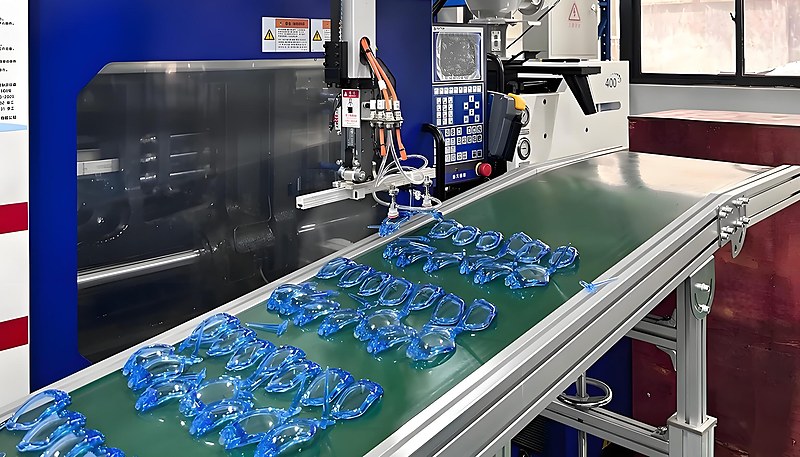
Not every supplier is ready for your production volume, and recognizing that early saves both sides time and money. Here are deal-breakers I have learned to watch for: the supplier cannot provide Cpk data or process capability documentation — this means they are not running SPC. They refuse a production trial run or want to charge exorbitantly for it — a production-ready supplier budgets for trials. Their facility is disorganized, with unclear material segregation, no visible traceability labels, or machines running without process monitoring. Their communication is consistently vague — if you cannot get straight answers about capacity, cycle times, or quality metrics during the evaluation phase, imagine what happens when a real problem arises mid-production.
One more red flag: the supplier has never run your material family at volume. Processing ABS at 50,000 units is very different from processing glass-filled PBT at 500,000 units. Ask for references from customers who ran similar materials and volumes. If the only samples they show you are simple PP caps or commodity items, and your part is a precision glass-filled automotive component, that gap matters. The learning curve on a new material is real — and you do not want your production run to be the supplier’s training exercise.
How Do Communication and Project Management Affect Production Readiness?
This is the most underrated pillar of production readiness. A supplier with great machines and terrible communication will cause you more headaches than a slightly less capable supplier who keeps you informed proactively. What should you look for? Dedicated project managers who speak your language fluently — not a shared sales inbox. Documented escalation procedures — who do you call when a quality issue surfaces on a Friday night your time? Regular production status updates — at minimum weekly during ramp-up, with photos and data. The ability to discuss technical issues directly with engineering, not just through a commercial intermediary.
We assign dedicated English-speaking project managers to each international account, backed by 8 senior engineers available for direct technical consultation. When a production question comes up, you talk to the person who can answer it — not a relay chain.
What Does a Complete Supplier Evaluation Checklist Look Like?
Here is the practical checklist I use every time I evaluate a supplier for volume production. This is not theoretical — it comes from projects where things went well and projects where they did not.
Capacity: Machine count in your required tonnage range, current utilization rate, available scheduling windows, backup machine availability.
Tooling: Mold steel grade, cavity count, cooling design (conformal vs. drilled), expected tool life, spare parts inventory, in-house repair capability.
Quality: ISO certifications, SPC implementation, Cpk data for critical dimensions, incoming material inspection, traceability system, inspection equipment list (CMM, optical comparators, etc.).
Materials: Drying equipment type and capacity, moisture analysis capability, regrind policy, FIFO inventory, lot traceability.
Communication: Dedicated PM assignment, response time SLA, escalation procedure, English proficiency of technical staff, engineering access policy.
Why Consider ZetarMold for Your Mass Production Project?
ZetarMold is a production-ready supplier that meets every readiness criterion covered in this guide. Based in Shanghai with 47 injection molding machines from 90T to 1850T, we have the capacity range for most production requirements. Our in-house mold manufacturing produces over 100 mold sets monthly, giving us full control over tooling quality from design through maintenance. With ISO 9001, ISO 13485, ISO 14001, and ISO 45001 certifications, backed by 10+ QC specialists running daily SPC checks, quality is built into every production run we ship.
Our team includes 8 senior engineers and 30+ English-speaking project managers who ensure your project gets direct technical attention, not just commercial handoffs. We have processed 400+ plastic materials across 20+ years of production, so chances are we have already learned the lessons on your material before your project starts. Ready to discuss your mass production requirements? Get a Free Quote and let our engineering team review your project.
Frequently Asked Questions
Frequently Asked Questions
What is Cpk and why does it matter for injection molding?
Cpk (process capability index) measures how consistently a manufacturing process stays within specified tolerance limits over time. In injection molding, a Cpk of 1.33 or higher indicates that the process uses no more than 75% of the tolerance band, leaving adequate room for natural material and environmental variation. If your supplier cannot provide Cpk data from recent production runs, they are likely not running statistical process control. This means quality is managed by end-of-line detection rather than upstream prevention — a risky and expensive approach at high production volumes.
How many sample parts should I inspect during a production trial?
You should inspect a minimum of 30 to 50 parts from the trial run for visual quality assessment, and measure all critical-to-quality dimensions on every part if the batch is under 100 pieces. For larger trial batches, use a statistically valid sampling plan such as ANSI/ASQ Z1.4 to determine the appropriate sample size. The key objective is having enough data points to calculate meaningful Cpk values and to detect any process drift or systematic variation before committing to full production volume.
What certifications should an injection molding supplier have for medical parts?
For medical device components, your supplier should hold ISO 13485 certification as an absolute minimum requirement. This standard ensures their quality management system meets regulatory requirements specific to medical devices, including traceability, risk management, and design controls. For the US market you will also need FDA registration, and for Europe you may need CE marking compliance. Additionally, the supplier should demonstrate compliance with relevant cleanroom standards if your parts require controlled manufacturing environments. Always verify that the certification scope specifically covers injection molding processes, not just general manufacturing.
Can a supplier be ready for mass production without in-house tooling?
Yes, but it introduces additional risk that you must manage explicitly. A supplier without in-house mold manufacturing depends on an external tool shop for all maintenance, repairs, and modifications, which adds lead time when issues arise during production. If you choose a supplier without in-house tooling capability, verify they have a documented relationship with their tool shop that includes guaranteed response times for emergency repairs, ready access to spare components like ejector pins and bushings, and clear ownership terms for the mold itself.
What is the difference between prototype sampling and production trial?
Prototype sampling uses whatever machine and parameters are available to prove the part geometry can be produced correctly. A production trial runs the mold on the designated production machine with production parameters, production operators, and production-grade materials. The production trial is the only reliable method to verify dimensional stability, process consistency, and cycle time at actual production conditions. Prototype approval alone does not validate mass production readiness — it only confirms the mold can produce an acceptable part under ideal conditions.
How do I verify a supplier\u2019s material drying capability?
Ask what type of drying equipment they use — dehumidifying hopper dryers are the industry standard for hygroscopic engineering resins like nylon and polycarbonate. Request their standard drying parameters including temperature and duration for your specific material grade. Then verify they have a moisture analyzer on-site and ask what their acceptance criterion is before processing begins. For hygroscopic materials such as nylon or polycarbonate, moisture content should be below 0.02% before the material enters the barrel. A supplier who cannot clearly articulate these drying parameters has not standardized their material preparation process, which directly affects part quality.
SPC: SPC refers to statistical Process Control — a method of quality control which uses statistical methods to monitor and control a process. ↩
FAI: FAI refers to first Article Inspection — a formal measurement process used to verify that a production part meets all design requirements before mass production begins. ↩
Cpk: Cpk refers to process Capability Index — a statistical measure of a process's ability to produce output within specification limits. ↩