Choosing an injection molding supplier is a six- or seven-figure bet. A wrong call does not just cost money — it delays launches, damages brand reputation, and can leave you scrambling for alternatives when deadlines loom. After 20+ years in this industry, we at ZetarMold have seen projects derail because buyers skipped the due-diligence questions that matter most. This article lays out the critical supplier risk prevention questions every buyer should ask before signing a contract, covering quality systems, production capacity, material traceability1, financial stability, communication practices, factory audits, and contract protections. Think of it as your pre-qualification checklist — the difference between a supplier partnership that scales and one that fails under pressure.
- Always verify ISO certifications and quality management systems before committing to a supplier
- Ask specific questions about machine capacity, tonnage range, and backup equipment
- Require material traceability documentation — certificates of conformance are non-negotiable
- Financial stability checks prevent mid-project supplier failure
- Include contract clauses for IP protection, liability caps, and supply continuity guarantees
What Quality System Checks Should You Ask Your Injection Molding Supplier About?
ISO 9001 certification is the baseline quality requirement. Ask to see their latest audit report — the real insight comes from reading the findings, not just the certificate. Look for repeated nonconformances in areas like process control or calibration records. If the supplier hesitates to share audit results, that is a red flag worth heeding[1]. At ZetarMold, we maintain active ISO 9001, ISO 13485, ISO 14001, and ISO 45001 certifications and share our latest audit results with prospective buyers during the qualification process.
Beyond ISO 9001, ask whether they hold industry-specific certifications such as ISO 13485 for medical devices or IATF 16949 for automotive. If your parts serve regulated industries, the supplier must already operate under those frameworks — retrofitting compliance later is expensive and slow. Our quality team conducts daily in-process inspections to catch deviations before they become defective parts.
Dig into their inspection capabilities. Do they perform incoming material inspection? In-process checks? Final outgoing inspection with CMM data? A supplier who relies solely on post-production sorting is managing defects, not preventing them. Ask to see sample inspection reports and First Article Inspection (FAI) documentation from a recent project similar to yours.
Quality systems also reveal cultural attitudes.
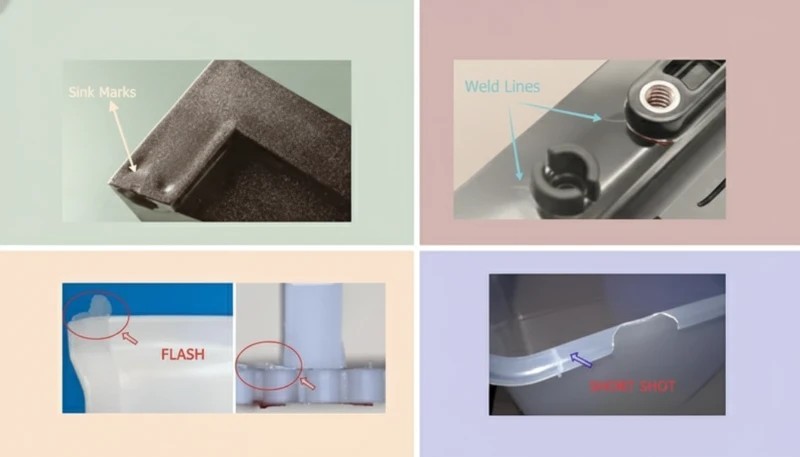
Suppliers who treat audits as a learning opportunity tend to improve continuously. Those who view audits as a compliance checkbox often stagnate. In practice, the difference shows up in scrap rates, on-time delivery metrics, and how quickly they respond to nonconformance reports.
Our Shanghai factory operates under ISO 9001, ISO 13485, ISO 14001, and ISO 45001 systems — not just on paper, but in daily practice, with documented in-process inspections and CMM-verified outgoing reports on every production run.
How Do You Verify a Supplier’s Production Capacity Matches Your Needs?
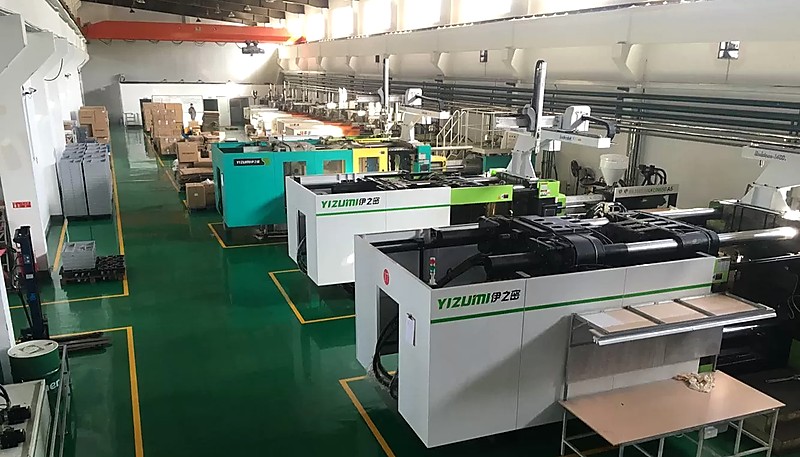
Machine count and tonnage range are the first numbers to verify. A supplier with five machines all in the 100T-200T range cannot help if your part requires a 1500T press. Ask about utilization rates2 — if machines run above 85% capacity, they have limited room for rush orders[2]. At ZetarMold, our Shanghai factory operates 47 machines from 90T to 1850T, covering virtually any part size.
Then ask about backup capacity. What happens when a machine goes down for maintenance? Do they have redundant equipment in the same tonnage range, or will your production queue stall indefinitely? Equipment redundancy is easy to overlook until it becomes an emergency.
For more on matching machine capabilities to your project, see our injection mold guide.
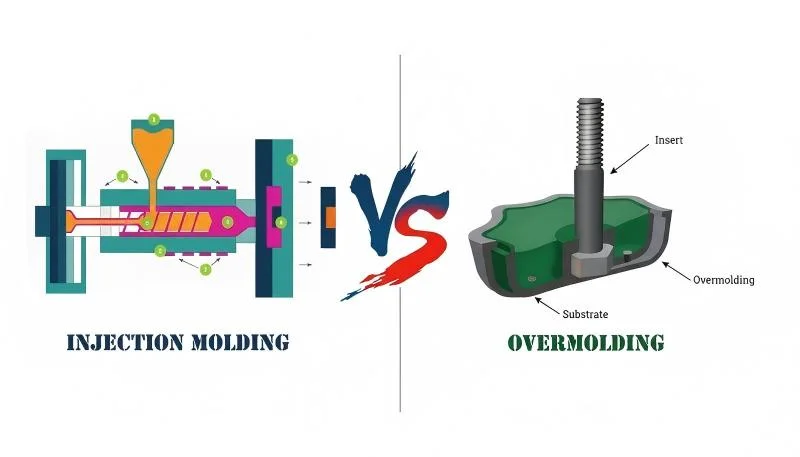
Mold storage and maintenance capacity also matters. If the supplier is managing 200+ active molds with limited storage and no preventive maintenance schedule, tool wear and damage become inevitable. Ask how many molds they currently maintain, their storage conditions, and their preventive maintenance protocol. A well-organized mold management system reflects broader operational discipline.
Finally, look at workforce capacity. A 50-person shop taking on 20 new injection molding projects simultaneously is a recipe for stretched resources and missed deadlines. Ask about their current project load relative to staffing levels. Experienced suppliers can give you a straight answer about their bandwidth without overpromising.
Why Does Material Traceability Matter When Evaluating Suppliers?
Material traceability is your insurance policy against invisible failures. When a part cracks in the field six months after delivery, you need to trace it back to the exact material lot, production run, and machine parameters — otherwise root cause analysis becomes guesswork.
Ask specific questions: “Do you provide certificates of conformance3 (CoC) for every material lot? Can you trace a finished part back to its raw material batch number? What is your process for handling nonconforming material?” A supplier who answers these questions without hesitation has a system in place. Vague answers suggest they do not[3].
Material sourcing diversity also matters.
If a supplier relies on a single source for a critical resin, any supply disruption at that vendor cascades directly to your production. Ask whether they maintain approved alternate material suppliers and whether they qualify those alternates with actual testing rather than just paperwork.
For regulated industries, material traceability is not optional — it is a compliance requirement. FDA, EU MDR, and automotive standards all require documented material chains. If your supplier cannot demonstrate this capability, you carry the regulatory risk.
"A Certificate of Conformance guarantees the material meets the specified grade and can be traced to its production batch."True
True — a valid CoC from the material manufacturer confirms the grade, lot number, and test results. The CoC is only as reliable as the supplier process for matching it to the actual material used in your parts.
"The cheapest quotation always represents the best value for an injection molding project."False
False — a low quote often excludes tooling maintenance, design revisions, material testing, and shipping. The true cost emerges when hidden fees surface mid-project. Compare total landed costs, not unit prices.
What Financial Warning Signs Should You Look For in a Mold Supplier?
Financial instability is the root cause of most mid-project supplier failures. It cascades into delayed tooling, unpaid material vendors, and workforce attrition[4]. The challenge is that private companies rarely share financial statements, so you need indirect indicators.
Start with business longevity. A supplier operating for 15+ years in the same location has weathered multiple business cycles. Ask how they navigated the 2020 pandemic disruption — their answer reveals both financial resilience and operational adaptability.
Payment term demands can signal cash flow problems. If a supplier insists on 100% upfront payment on a large order, they may need the cash to fund operations rather than simply managing risk.
Standard industry practice for established suppliers is 30-50% deposit with balance on shipment.
Check their investment trajectory. Are they adding equipment, upgrading systems, and hiring? A supplier in growth mode is reinvesting revenue. One that has not updated equipment in five years may be cash-constrained or disinvesting.
Request references from long-term customers. Suppliers with 10-year client relationships typically have stable operations. If every reference is a one-year engagement, buyer churn may indicate underlying problems.
How Do Communication Practices Predict Supplier Reliability?
Communication quality during the quotation phase predicts project communication for the next two years. If emails take three days during the sales process, imagine the response time when a critical dimension is out of tolerance and you are three weeks from launch.
Ask specific communication questions: “Who is my project manager? How many other projects do they manage? What is your guaranteed response time for urgent issues?” A supplier who assigns a dedicated English-speaking project manager is investing in the relationship. One who routes everything through a generic sales inbox is structuring for efficiency — their efficiency, not yours.
Time zone responsiveness matters for international sourcing.
If your supplier is 12 hours ahead and only communicates during their business hours, you lose a full day on every question. Ask whether they have staff available during overlapping hours or dedicated communication windows for your time zone.
Pay attention to the quality of their initial quotation. Does it include detailed process recommendations, material alternatives, and design-for-manufacturing feedback? Or is it just a price and lead time? The former shows technical engagement. The latter suggests they view you as a transaction, not a partner.
Use this quick reference when evaluating communication quality: a green-flag supplier responds within 24 hours, assigns a dedicated project manager by name, includes process recommendations and DFM feedback in their quotation, offers time zone overlap, and proactively suggests manufacturing improvements. A red-flag supplier takes three or more days to reply, routes everything through a generic inbox, sends only a price and lead time, operates strictly in their own time zone, and asks no questions about your part function or requirements.
When Should You Insist on a Factory Audit Before Signing a Contract?
A factory audit is essential whenever the contract value exceeds your risk threshold. For injection mold tooling projects, set that threshold low — molds are expensive, long-lived assets that tie you to a single supplier[5]. At ZetarMold, our Shanghai facility welcomes buyer audits because transparency builds the trust that sustains long-term partnerships.
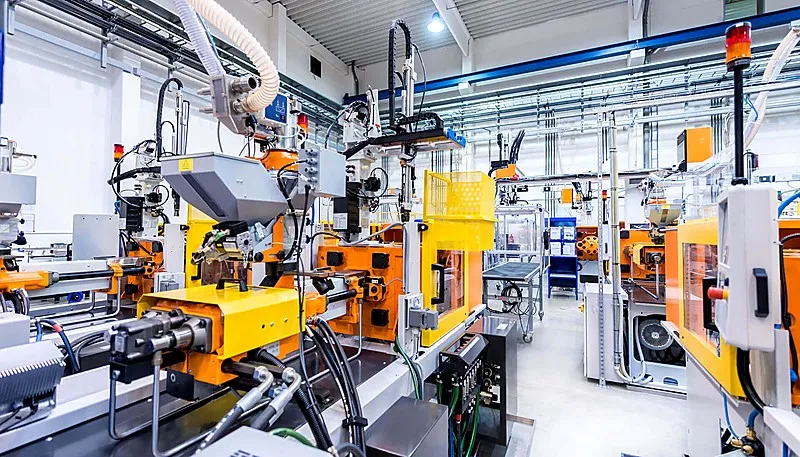
A proper factory audit covers four areas: equipment condition, workforce competency, quality systems in practice (not just on paper), and environmental controls. Walk the production floor during active operations, not on a staged tour day. Look at machine maintenance logs, check calibration stickers on measurement equipment, and observe how operators handle nonconforming parts.
If you cannot visit in person, hire a third-party inspection firm. Companies like SGS, Bureau Veritas, or TUV can perform supplier audits against your specific requirements. The cost of an audit — typically between five hundred and two thousand dollars — is trivial compared to the risk of a six-figure tooling project gone wrong.
Virtual factory tours have become common post-pandemic and offer initial screening value, but they cannot replace a physical walk-through. Camera angles hide clutter, video quality obscures machine condition, and a guided tour always shows the cleanest part of the factory. Insist on an unannounced or semi-announced visit for final qualification.
"Your contract should explicitly state that you own the mold upon final payment."True
True — without clear mold ownership terms in the contract, the supplier may claim ownership or charge fees to release your tooling. Always specify ownership transfer conditions, retrieval rights, and restrictions on using your mold for other customers.
"Virtual factory tours are sufficient for final supplier qualification."False
False — virtual tours offer initial screening value but cannot replace physical walk-throughs. Camera angles hide clutter, video quality obscures machine condition, and guided tours always show the cleanest part of the factory.
What Contract Clauses Protect You From Supply Chain Disruption?
Three contract clauses are non-negotiable: mold ownership, IP protection, and supply continuity guarantees[6]. Without these, you carry all the risk in the partnership.
Mold ownership must be unambiguous. The contract should state that you own the mold upon final payment, that the supplier cannot use your mold for other customers, and that you can retrieve the mold within a defined timeframe after contract termination. Without this clause, some suppliers effectively hold your tooling hostage.
Intellectual property protection goes beyond NDAs. Your contract should specify that all design files, process parameters, and production know-how generated during the project belong to you.
If the supplier develops a specialized process while making your parts, clarify who owns that process improvement.
Supply continuity clauses address what happens when things go wrong. Include penalty terms for late delivery, force majeure provisions with defined alternative plans, and minimum inventory buffer requirements for critical parts. Some buyers also include a clause requiring the supplier to maintain sufficient raw material stock to cover a defined period of production.
Liability caps and insurance requirements protect both parties. Require the supplier to carry product liability insurance adequate for your industry, and define liability limits for defects, delays, and consequential damages. Ambiguity here creates exposure for both sides when disputes arise.
"A signed NDA is the first step in protecting your injection mold designs and process parameters."True
True — an NDA establishes confidentiality between parties and should be signed before sharing any proprietary designs or specifications. However, for complete protection, you also need specific IP ownership clauses in the manufacturing contract.
"Once an injection molding supplier passes your initial qualification audit, you never need to re-audit them again."False
False — supplier capabilities change over time. Equipment ages, key personnel leave, and quality systems can deteriorate between audits. Best practice is to re-audit critical suppliers every 12 to 18 months, or whenever you notice declining quality metrics, missed deadlines, or unexplained cost increases.
What Are the Most Common Questions About Evaluating Injection Molding Suppliers?
How many suppliers should I evaluate before making a decision?
ISO 9001 is the fundamental baseline certification every injection molding supplier should hold, as it demonstrates a structured quality management system. However, for medical device or food-contact parts, ISO 13485 or FDA registration becomes essential. For automotive components, IATF 16949 is the industry standard. Always ask to see the actual certificate and the latest audit findings, not merely a claim of compliance. Reviewing audit nonconformances gives you real insight into how the supplier manages quality on a daily basis, far more than a certificate alone.
What is the most important quality certification for an injection molding supplier?
Yes, you should be concerned if your parts require higher clamping force than the supplier can provide. Machine tonnage directly determines the maximum part size, wall thickness capability, and mold complexity a supplier can handle. If your parts need presses above their tonnage range, they will outsource the molding work, which adds cost, extends lead times, and introduces quality control risk. Always match your part requirements to the supplier actual equipment capabilities rather than hoping they will figure it out.
Should I be concerned if a supplier only has small-tonnage machines?
Yes, you should be concerned if your parts require higher clamping force than the supplier can provide. Machine tonnage directly determines the maximum part size, wall thickness capability, and mold complexity a supplier can handle effectively. If your parts need presses above their tonnage range, they will need to outsource the molding work, which adds cost, extends lead times, and introduces quality control risk that you cannot directly manage. Always verify that your supplier has equipment that matches your specific part requirements.
How can I verify a supplier claims about production capacity without visiting the factory?
You can verify supplier capacity claims remotely by requesting recent production reports, machine utilization data, and employee headcount documentation. Ask for a live video tour conducted during actual production hours, not a staged demonstration. Third-party audit firms like SGS, Bureau Veritas, or TUV Rheinland can verify claims independently and provide detailed reports covering equipment condition, workforce capability, and quality system effectiveness. A transparent supplier welcomes these verification requests and responds promptly with all the requested documentation and any supporting evidence you need.
What payment terms are standard in the injection molding industry?
Standard payment terms in the injection molding industry typically require a 30 to 50 percent deposit with the balance due upon shipment or after quality inspection confirmation. Tooling payments often follow a milestone-based structure: partial payment at mold design approval, a second payment at T1 sampling, and final payment after First Article Inspection approval. Be cautious of suppliers who demand full upfront payment on large orders, as this may indicate cash flow problems rather than standard risk management practice in the industry.
How long does supplier qualification typically take?
A thorough supplier qualification process typically takes four to eight weeks, encompassing quotation review, facility audit, sample evaluation, and contract negotiation. Rushing this timeline significantly increases your risk exposure. For critical parts serving regulated industries such as medical or automotive, plan for eight to twelve weeks to include comprehensive documentation review, process validation, and regulatory compliance verification. The upfront investment in proper qualification pays for itself many times over by preventing production problems and costly rework cycles down the line.
Can I use the same supplier for both tooling and production molding?
Using the same supplier for both tooling and production molding is often advantageous because they deeply understand the mold design intent and can optimize production parameters accordingly. However, you should verify that they have genuine in-house tooling capability alongside sufficient production molding capacity, as some companies specialize in only one area. A supplier with integrated tooling and production can also respond faster to design iterations, maintain tighter process control throughout the product lifecycle, and reduce the coordination overhead of managing multiple vendors.
Choosing the right injection molding supplier comes down to asking the right questions and verifying the answers. At ZetarMold, our Shanghai factory runs 47 injection molding machines from 90T to 1850T, backed by 20+ years of manufacturing experience, ISO 9001/13485/14001/45001 certifications, and 30+ English-speaking project managers ready to respond to your inquiries. We welcome factory audits, provide full material traceability, and structure contracts that protect your intellectual property and supply continuity. Ready to evaluate a supplier who passes every check on your list? Get a free quote and let us show you what transparent, reliable injection molding partnerships look like.
material traceability: refers to material Traceability Standards ASTM standards for material certification and traceability in plastics manufacturing. ↩
utilization rates: refers to injection Molding Machine Utilization Industry benchmark for machine utilization in injection molding operations, highlighting capacity planning best practices. ↩
certificates of conformance: refers to iSO 9001 Quality Management ISO 9001 is the international standard for quality management systems, providing a framework for consistent quality and continuous improvement. ↩