Choosing an injection molding supplier overseas can save you 30 to 60 percent on tooling, but the wrong partner can cost you months of delays, lost intellectual property, and six-figure rework bills. After 20+ years of watching buyers succeed and fail in Chinese manufacturing, we built this checklist to help you spot red flags before they become expensive problems.
- Audit factory capabilities on-site — video calls and certificates alone are not enough
- Protect IP with NDAs in both jurisdictions before sharing design files
- Demand milestone-based payment terms — 100% upfront is a dealbreaker
- Require real production samples, not showroom display pieces
- Build a backup supplier plan before your first order ships
What Are the Biggest Risks When Working with Injection Molding Suppliers?
The biggest risks fall into five categories: capability fraud, IP theft, quality inconsistency, communication gaps, and financial exposure. Each one is preventable with the right due diligence framework. In our 20+ years of manufacturing for overseas clients, we have seen every one of these scenarios play out. Some buyers lose months of time; others lose six-figure investments. The pattern is always the same: insufficient upfront verification. This checklist walks you through each risk area with specific, actionable verification steps. Think of it as your pre-commitment due diligence framework: a structured way to pressure-test any injection molding supplier before you entrust them with your production.
According to a 2024 survey by the China Europe International Business School[CEIBS20241], 37% of foreign buyers reported at least one major quality dispute with their Chinese manufacturing partner within the first two years of engagement. The root cause in nearly every case was insufficient upfront due diligence—buyers relied on trade show conversations and polished company websites instead of structured verification. We have seen this pattern repeatedly in our own client onboarding: buyers who skip structured audits are three times more likely to encounter disputes in their first production run.
"A factory visit with physical machine verification is the most reliable way to confirm supplier capabilities"True
Correct. Video tours can be staged, but walking the production floor and checking machine nameplates gives you ground truth.
"ISO certification alone guarantees consistent product quality"False
False. ISO certification confirms a quality management system exists on paper, but it does not guarantee execution. We have seen ISO-certified factories produce 15% defect rates because their documented processes were not followed on the shop floor.
How Do You Verify a Supplier’s Manufacturing Capabilities?
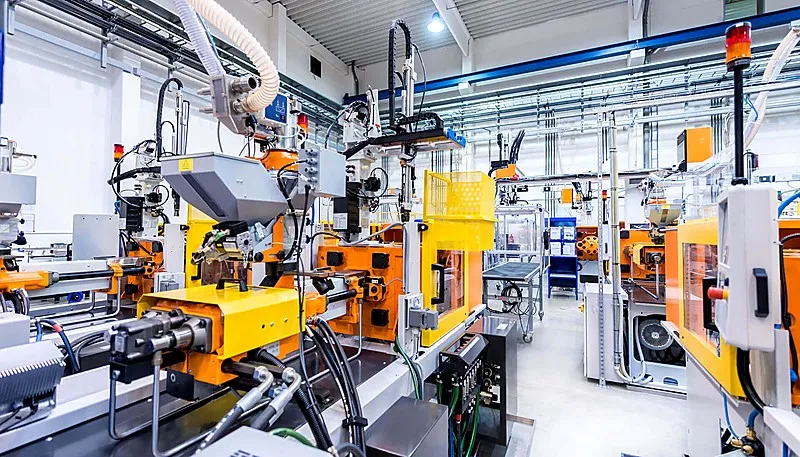
The single most reliable verification method is an in-person factory audit. Video tours can be staged—factories routinely borrow equipment from neighbors for the camera. When you walk the floor, look for three things: are the machines actually running, does the shop floor match the capacity they claimed, and are there quality control stations at each production stage?
The single most reliable verification method is an in-person factory audit. We tell every prospective client the same thing: come visit us. Video tours can be staged—factories routinely borrow equipment from neighbors for the camera. When you walk our production floor in Shanghai, look for three things: are the machines actually running, does the shop floor match the capacity we claimed, and are there quality control stations at each production stage? We have nothing to hide and everything to gain from your confidence.
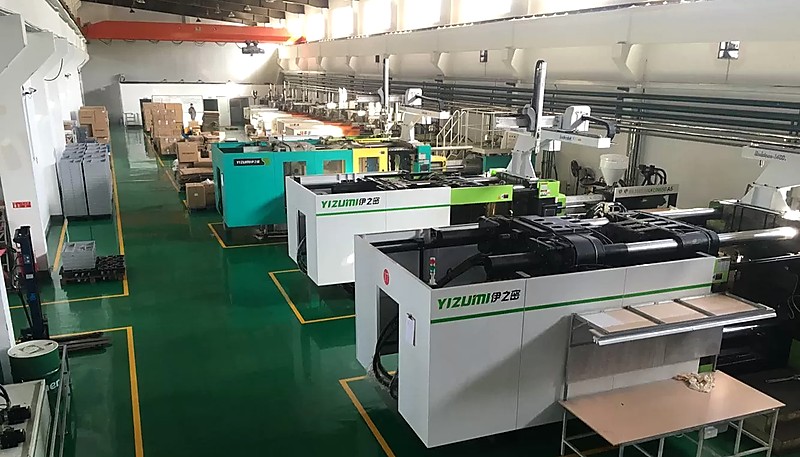
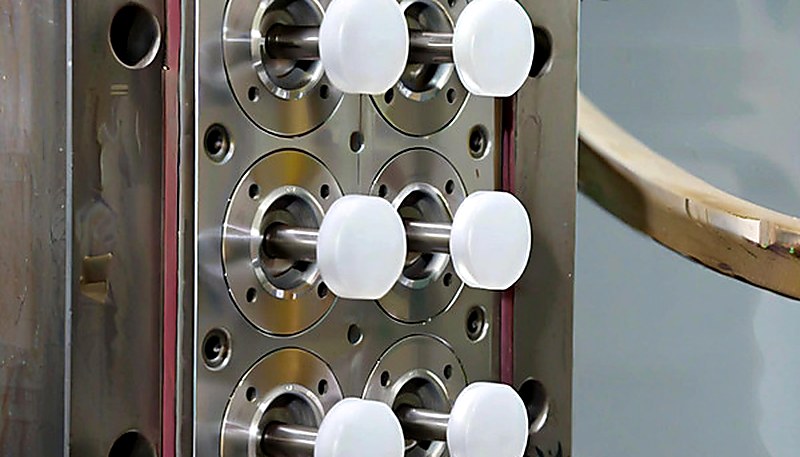
At our Shanghai factory, we run 47 injection molding machines from 90T to 1850T. When overseas buyers visit, we encourage them to photograph machine nameplates, check tonnage ratings, and verify that our capacity matches what we advertise. Transparency at this stage prevents misunderstandings later.
What Should a Supplier Audit Checklist Include?
A supplier audit checklist is a document covering equipment, quality systems, material storage, workforce competence, and documentation. For equipment, record machine brands, tonnage, and age. For quality, verify ISO certificates with the issuing body. For materials, check climate-controlled storage with FIFO labeling. For workforce, ask about senior engineer tenure. A factory with 8 senior engineers and dedicated QC specialists has institutional knowledge that newer operations cannot replicate.
Our facility operates under ISO 9001, ISO 13485, ISO 14001[ISO140012], and ISO 45001[ISO450013] systems. We maintain 8 senior engineers with an average of 15+ years of experience and a dedicated team of 10+ QC specialists who perform dimensional inspection, visual checks, and material validation on every production run. When you audit us, you will see inspection reports posted at each workstation and calibrated measurement tools at every bench.
How Can You Protect Your Intellectual Property When Outsourcing?
"Payment terms requiring 100 percent upfront before production is a major red flag"True
Correct. Standard terms are 30-50% deposit with balance after inspection. Full upfront payment removes all your leverage if quality or delivery issues arise.
"An NDA signed in the supplier home country provides sufficient IP protection for overseas buyers"False
False. NDAs must be enforceable in the jurisdiction where the supplier operates. Registering design patents in China before sharing CAD files is critical because China uses a first-to-file patent system.
IP protection in cross-border manufacturing is not a single document—it is a layered strategy. Start with an NDA, but make sure it is enforceable in the supplier jurisdiction. A US-law NDA signed by a Chinese factory is essentially decorative unless it is also registered or mirrored under Chinese law.
Register your design patents and utility models in China before sharing any CAD files, because China operates on a first-to-file system. This is the single most important IP step most buyers skip. Second, use NDAs that are enforceable under both jurisdictions with clear enforcement mechanisms. Third, split your manufacturing across suppliers when possible: have one shop build the mold and another run production, so no single factory holds your complete process. Fourth, insist on mold ownership clauses in your contract that specify the mold is your property, stored on your behalf, and can be retrieved within a defined timeframe.
An integrated manufacturer with in-house mold manufacturing and production under one roof offers efficiency advantages, but you should still secure written mold ownership agreements. The key is documentation: every design file transfer, every mold modification, every material substitution should be tracked in writing.
Why Do Communication Failures Derail Injection Molding Projects?
Communication breakdowns account for more project delays than any technical issue. The problem is not language alone—it is context. When you describe a finish as high gloss, your supplier might interpret that as a standard polish. When you specify a tolerance of plus or minus 0.05mm, they might assume that applies to non-critical dimensions only.
The fix is to make the implicit explicit. Provide visual references—physical samples, color chips, surface roughness comparators—alongside written specs. Use a numbered drawing with callouts for every critical dimension, and require the supplier to sign off on a first article inspection report before full production. A supplier with 30+ English-speaking project managers has the infrastructure to handle this level of detail, but you still need to drive the process. Do not assume shared understanding—verify it.
We employ 30+ English-speaking project managers who serve as dedicated liaisons between overseas clients and our engineering floor. Over 20+ years of serving international buyers, we learned that miscommunication costs more than any defect—so we built our communication process to be redundant by design.

What Financial Red Flags Should You Watch For?
The main financial red flags are demands for full upfront payment, below-market quotes, and refusal to provide business licenses. Standard terms are 30-50% deposit with balance after inspection. If a supplier demands 100% upfront, walk away.
Other financial red flags include reluctance to provide a physical address or registered business license, quotes significantly below market rate where corners are inevitably being cut somewhere in the process, inability to provide trade references from customers in your region, and pressure to use payment methods that offer no buyer protection. In our experience serving overseas buyers for over a decade, the suppliers who push hardest for unfavorable terms are the ones most likely to deliver problems. Legitimate suppliers expect professional payment structures and welcome milestone-based terms or third-party inspection before final payment.
How Do You Build a Contingency Plan for Supply Chain Disruption?
A contingency plan is built around four safeguards: mold redundancy, secondary suppliers, safety stock, and force majeure provisions. Identify your single points of failure first. If your only mold is at one factory and they shut down, how fast can you resume production elsewhere? The answer to that question should shape your entire risk mitigation strategy and supplier diversification approach.
Practical contingency measures include: maintaining a copy of your mold design files with complete mold drawings and assembly instructions, establishing relationships with a secondary supplier pre-qualified for your material and geometry requirements, building safety stock of 4-6 weeks for critical components, and including force majeure clauses with specific remedies in your contracts. In our experience producing for overseas clients, the buyers who weather disruptions best planned for the worst before the first order shipped. For high-volume runs, consider dual-sourcing from day one—the cost premium is cheap insurance against a complete supply stoppage.
When Should You Walk Away from a Supplier Relationship?
Knowing when to leave is as important as knowing when to commit. We have seen buyers stay in failing supplier relationships far too long, hoping things would improve on their own. They rarely do. Walk away if the supplier refuses an on-site audit, cannot provide verifiable references from buyers in your market, pushes back on written quality agreements, or if their quoted capabilities change between the sales conversation and the production contract. These are not negotiable preferences—they are baseline requirements for any professional manufacturing partnership.
Also walk away if you detect evasiveness about subcontracting. Some suppliers present themselves as manufacturers but outsource your work to smaller, unverified shops. This is not always a dealbreaker if disclosed transparently, but undisclosed subcontracting is a fundamental trust violation. A supplier who also operates as an injection mold manufacturer with in-house tooling gives you direct visibility into the entire production chain. In our factory, we maintain both mold manufacturing and injection molding production under one roof so clients can audit every stage of their project from raw material to finished part. The right supplier relationship is built on transparency, accountability, and mutual respect.
Before ending a supplier relationship, protect your assets first. Ensure you have copies of all mold designs, production specifications, and quality records. Review your contract for any non-compete or exclusivity clauses that might limit your sourcing options. Document the reasons for termination in writing. Then execute a structured transition: qualify your new supplier with a trial order before committing full production volume, arrange mold transfer logistics if applicable, and build buffer stock to cover the transition period. A well-planned supplier transition should be invisible to your end customers.
If any of those elements are missing, the cost of staying will always exceed the cost of switching.
Frequently Asked Questions
What is a supplier risk prevention checklist?
A supplier risk prevention checklist is a structured due diligence framework that helps overseas buyers evaluate potential injection molding suppliers before committing to a contract. It covers capability verification, IP protection, quality systems, financial stability, and communication protocols. Using a standardized checklist reduces the risk of costly surprises by ensuring you evaluate every critical area systematically rather than relying on impressions from sales conversations or trade show meetings. Think of it as your safety net before signing any manufacturing agreement.
How do I verify an injection molding supplier before placing an order?
Schedule an on-site factory audit to verify machine inventory, quality control stations, and material storage conditions. Request their machine list with serial numbers and tonnage ranges, verify ISO certificates with the issuing body, ask for recent production records for similar parts, and require references from customers in your region. A legitimate supplier with real capabilities will welcome this level of scrutiny and see it as a sign of a serious, professional buyer. Do not skip this step even when time pressure is high.
What are the most common risks with overseas injection molding suppliers?
The five most common risks when working with overseas injection molding suppliers are capability mismatches where the factory secretly outsources your work to unverified third parties, intellectual property theft where your proprietary mold designs appear in competitor catalogs, quality inconsistency between approved first articles and later production batches, communication failures caused by ambiguous or poorly documented specifications, and financial exposure from unfavorable payment terms that leave you with no recourse. Each of these risks is entirely preventable with proper upfront due diligence, structured verification processes, and clearly documented quality agreements between both parties before any manufacturing begins.
How important is a factory audit for injection molding?
A factory audit is the single most valuable risk prevention step you can take before committing to any injection molding supplier. It reveals the actual production environment, equipment condition, workforce competence, and quality management systems in ways that no document or video call can ever match. Buyers who conduct thorough on-site audits report significantly fewer quality disputes and delivery delays compared to those who rely solely on remote verification methods or trade show impressions. We strongly recommend planning at least half a day on the factory floor during your visit for a proper assessment.
What payment terms are standard for injection molding projects?
Standard payment terms for new supplier relationships are 30-50% deposit with the balance due after quality inspection and before shipment of goods. For established relationships with verified track records of on-time delivery and consistent quality, some suppliers offer net-30 or net-60 day terms. You should avoid any supplier requiring full upfront payment before production begins because it completely eliminates your leverage and represents significant financial risk to your business. Use milestone payments tied to verifiable deliverables like mold completion, T1 sample approval, and final pre-shipment inspection for larger manufacturing projects.
How can I protect my mold design when outsourcing to China?
Register your design patents and utility models in China before sharing any CAD files with potential suppliers, because China operates on a first-to-file patent system where whoever registers first owns the design rights regardless of who originally created it. Use NDAs that are enforceable under Chinese law, include clear mold ownership clauses in your manufacturing contract specifying retrieval rights, consider splitting mold fabrication and production across different suppliers to limit exposure, and maintain complete documentation of every design file transfer and modification. These protective layers work together to secure your intellectual property throughout the entire manufacturing relationship from initial quotation through production and delivery.
What certifications should an injection molding supplier have?
At minimum you should expect ISO 9001 certification for quality management systems from any reputable injection molding supplier. For medical devices or food-contact plastic parts, ISO 13485 or FDA-compliant manufacturing processes are absolutely essential. Environmental management certifications like ISO 14001 and workplace health and safety certifications like ISO 45001 indicate mature and well-organized operational systems. Always verify all certificates directly with the issuing certification body because expired or suspended certificates are far more common in the industry than most buyers realize. Certifications demonstrate process discipline on paper but they cannot substitute for thorough on-site verification of actual production practices and quality control procedures.
When should I switch injection molding suppliers?
Consider switching injection molding suppliers when your current manufacturing partner consistently delivers late without proactive communication or reasonable explanation, when defect rates exceed your contractually agreed thresholds more than twice within a six-month period, when they subcontract your work to third parties without prior written disclosure, or when they resist reasonable quality improvement requests. Before making the switch to a new supplier, ensure your mold ownership contract clearly allows retrieval of your tooling within a defined and reasonable timeframe, and have a pre-qualified alternative supplier ready to begin production to minimize costly interruption during the transition period.
CEIBS2024: CEIBS2024 refers to china Europe International Business School, 2024 Foreign Buyer Manufacturing Dispute Survey ↩
ISO14001: ISO14001 refers to ISO 14001:2015 Environmental Management Systems Requirements with Guidance for Use ↩
ISO45001: ISO45001 refers to iSO 45001:2018 Occupational Health and Safety Management Systems Requirements with Guidance for Use ↩