You just received a tooling quote from an injection molding supplier in China. The price looks good — maybe too good. Your boss wants a decision by Friday, but you are not sure what you are actually buying. Will the mold last 500,000 shots or 50,000? Do they have real QC or just a final inspection table? Can you actually talk to an engineer, or only a sales rep reading a script?
This article gives you 15 specific questions to ask any injection molding supplier before you commit your tooling budget. Every question comes from real production experience — things we have seen go wrong when buyers skip them. Use this as your checklist, and you will eliminate 90% of the surprises that derail mold projects.
- Ask about tool steel grade, cavity count, and expected mold life upfront
- Verify ISO certifications, QC instrumentation, and SPC capability on-site
- Confirm material traceability and compliance documentation before production
- Get pricing breakdowns (tooling vs. piece price vs. secondary ops) in writing
- Red flags: no DFM report, no sample approval process, price too low to sustain quality
What Should You Ask About Mold Design and Tooling?
The three questions that matter most for mold design are tool steel grade, DFM analysis, and mold life validation — everything else is secondary. Your injection molding project lives or dies by the mold itself, not the machine or the material. Yet most buyers spend more time negotiating unit price than asking about the tool that determines whether they get 50,000 shots or 500,000. The questions below separate a mold that runs reliably for years from one that needs constant repair.
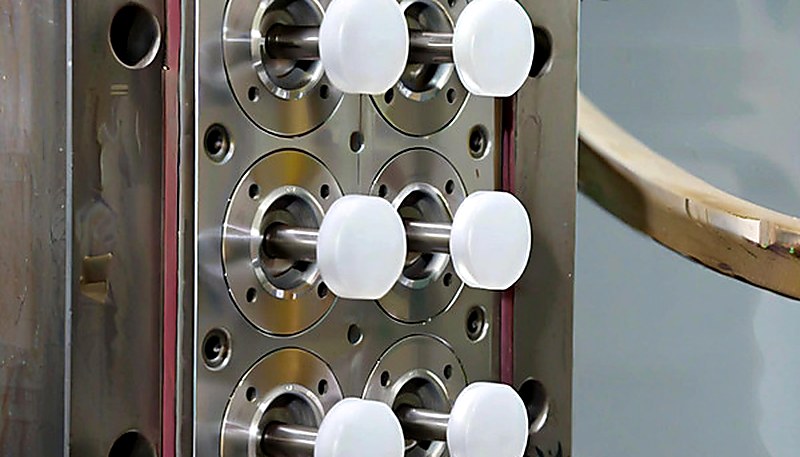
Question 1: What mold steel grade do you use, and why? A supplier who defaults to P20 for everything is either lazy or assumes you do not care. P20 is fine for short runs under 300,000 shots with non-abrasive materials. But if you are running glass-filled nylon at 1M+ cycles, you need H13 or S136. If they cannot explain the difference or push back on your material choice, that is a warning sign.
Question 2: Can I see a DFM report before steel is cut? A proper Design for Manufacturability analysis catches 80% of tooling problems before anyone machines steel. Wall thickness issues, undercuts, draft angle problems, gate location trade-offs — all of it should be on the table. If the supplier says they will handle that internally without showing you the report, they are flying blind with your money.
Question 3: What is the expected mold life, and how is it validated? Get a number: 100K shots? 500K? 1M? Then ask how they validate it. A supplier worth working with will tie mold life to maintenance schedules — when does the first polish happen, when do ejector pins get replaced, what is the warranty on the injection mold itself? If they give you a number with no maintenance plan attached, that number is fiction.
How Do You Evaluate a Supplier’s Production Capacity?
Production capacity is about machine availability for your parts — not the total count on a website. A supplier with 50 machines running at 95% utilization has less real capacity than one with 20 machines at 65%. Ask for actual availability, not theoretical headcount.
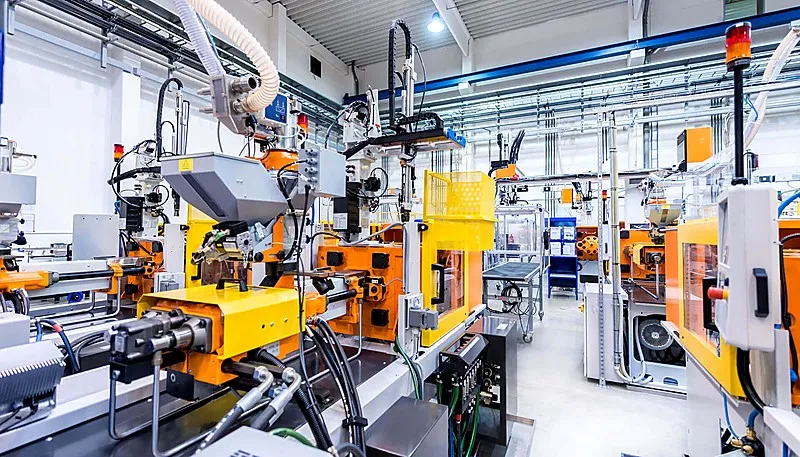
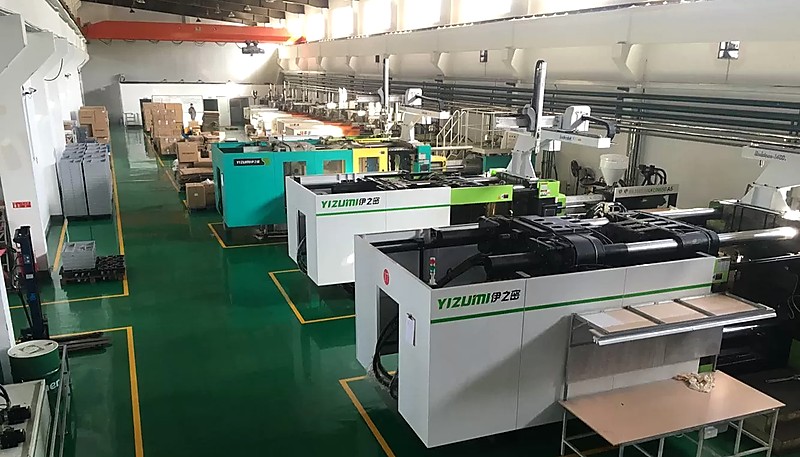
Question 4: How many machines do you have, and what is the tonnage range? This tells you if they can physically run your part. A supplier with only 100T–300T machines cannot mold a 1.5 kg automotive housing. Ask for the machine list, including brand names. Chinese domestic brands like Haitian are fine for most work; Engel, Arburg, or KraussMaffei suggest higher-end capability.
In our Shanghai factory, we run 47 injection molding machines ranging from 90T to 1850T, backed by an in-house mold manufacturing facility. This means we can handle everything from precision micro parts to large automotive components without outsourcing your tooling.
Question 5: What is your current capacity utilization, and do you have buffer for growth? If a supplier is at 90% capacity, they are one big order away from missing your deadline. Look for suppliers running at 65–80% — they have room to absorb your ramp-up without sacrificing lead times. Also ask how quickly they can add shifts or bring in additional machines.
Question 6: Can you handle secondary operations in-house? If your part needs assembly, ultrasonic welding, pad printing, or chromate plating, doing it under one roof saves weeks of logistics and reduces defect-handling finger-pointing. A supplier who outsources every secondary operation creates hidden costs and hidden lead times that only surface when something goes wrong.
When we evaluate whether to take on a new project, one of the first things we check is whether the part requires post-molding operations that we can handle internally. Every step that leaves our building introduces a new variable — a new supplier, a new lead time, a new quality risk that we cannot control directly.
What Quality Control Systems Must Your Supplier Have?
A supplier QC system is made up of three layers: incoming material verification, in-process monitoring, and final inspection with documented criteria. Most buyers get fooled because every supplier claims strict QC, but few actually run statistical process control or maintain calibrated instruments across all measurement points.
Question 7: Which ISO certifications do you hold, and when were they last audited?ISO 90011 is the baseline. If you are in medical devices, ISO 134852 is mandatory. For automotive, IATF 16949. But the certificate on the wall is not enough — ask for the most recent audit report and any non-conformances found. A supplier who refuses to share audit results has something to hide.
ZetarMold operates under ISO 9001, ISO 13485, ISO 14001, and ISO 45001 systems, with 10+ dedicated QC specialists performing incoming, in-process, and final inspections.
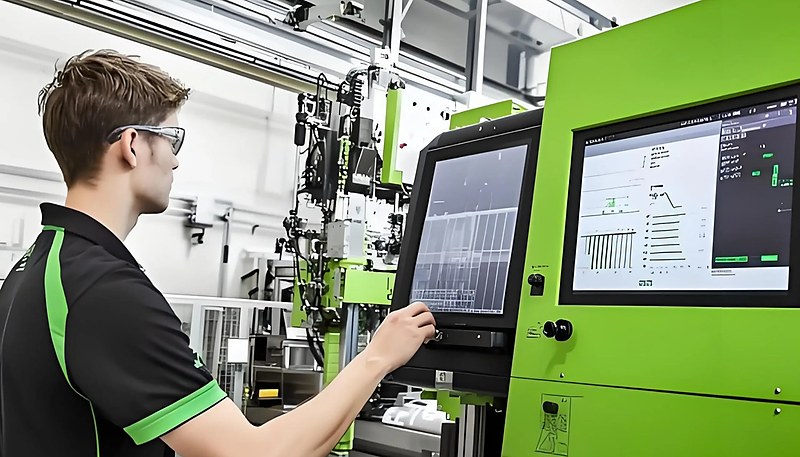
Question 8: Do you use SPC3, and can I see process capability data? Statistical Process Control (SPC) is the difference between inspecting parts and controlling the process. Ask for Cpk data on critical dimensions. A Cpk below 1.33 on a critical feature means the process is not capable — no amount of inspection will fix that. If the supplier looks confused when you mention Cpk, walk away.
Question 9: What is your PPAP process? If you are in automotive or any regulated industry, Production Part Approval Process (PPAP) is non-negotiable. Even if you are not required to submit PPAP formally, a supplier who understands it will produce better-documented, more consistent parts. Ask for a sample PPAP package from a previous project — if they cannot produce one, their documentation culture is weak.
In our experience, the suppliers who struggle with PPAP documentation are the same ones who struggle with dimensional consistency at volume. PPAP forces discipline into the production handoff process, and that discipline shows up in every shipment.
How Do You Verify Material Sourcing and Compliance?
Material is the one thing you cannot fix after molding. If the resin is wrong, every part from that run is scrap — no rework, no salvage, just a pile of expensive plastic. This section covers the questions that prevent material-related failures, which are among the most expensive because they affect entire production batches rather than individual parts.
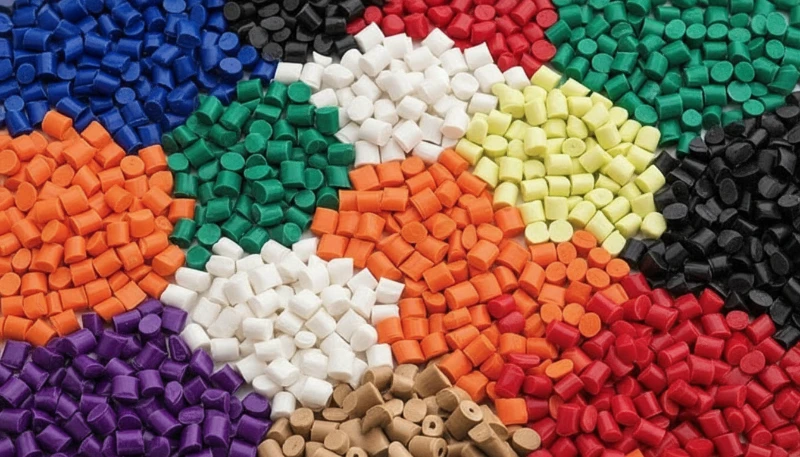
Question 10: Where do you source resin, and can you provide material certificates? Legitimate suppliers buy from authorized distributors of DuPont, SABIC, BASF, Covestro, or equivalent tier-one producers. They should provide a Certificate of Analysis (CoA) for every lot. If they prefer to use their own trusted channels without naming the source, assume they are buying regrind or off-spec material — and the savings never reach your bottom line.
Question 11: Can you provide RoHS, REACH, and UL compliance documentation? If your end product ships to Europe or North America, you need this documentation downstream. Getting it retroactively is expensive and sometimes impossible. Ask upfront, and verify that the documentation references the exact material grade used in your part — not a generic datasheet that covers an entire polymer family.
We have processed over 400 plastic materials across our production history, supported by 8 senior engineers who select and validate resin grades for each project. Every lot receives a material certificate before production starts.
What Should You Know About Lead Times and Pricing?
The cheapest quote is rarely the cheapest project. Low tooling prices often mean corner-cutting on steel grade, polish level, or cooling design — and those costs come back multiplied in production. Understanding the pricing structure tells you whether you are buying a reliable tool or buying trouble.
Question 12: Can you break down the tooling quote by component? A proper mold quote separates core and cavity steel, mold base, hot runner system (if any), surface finish, and trial shots. If the quote is a single lump sum, you cannot compare it to anything. More importantly, you cannot tell where the corners are being cut. An itemized quote is a sign of a supplier who knows their own costs and is not hiding anything.
Question 13: What is included in the per-piece price? Ask specifically: does the piece price include material, machine time, packaging, quality inspection, and shipping to your forwarder? Many suppliers quote EXW piece price that excludes inspection, packaging, and logistics — adding 15–25% to the real landed cost. Get the inclusion list in writing before comparing quotes.
One thing we see repeatedly is buyers who negotiate hard on piece price but never ask what is included. Six months later, they discover that packaging costs extra, inspection is billed separately, and freight to their warehouse was never part of the quoted price. By then, the tooling is committed and the leverage is gone.
How Can You Assess Communication and Project Management?
Bad communication kills more projects than bad tooling. A supplier who responds in 48 hours during quoting will respond in 96 hours during a production crisis. The way a supplier communicates during the sales process is the best they will ever communicate — it only gets worse from there.
Question 14: Who is my project manager, and can I speak directly with engineers? You want a named contact — not a team that will take care of you. Better yet, you want direct access to the tooling engineer and the process engineer. If every technical question routes through a salesperson who cannot answer it, problem resolution will be slow and distorted. The best suppliers put you in a group chat with both the PM and the lead engineer on day one.
With 30+ English-speaking project managers and 20+ years of injection molding experience, we assign a dedicated PM to each project — with direct engineer access, not a sales middleman.
Question 15: How do you handle design changes after T1 samples? Every project has changes after first shots. The question is not whether changes happen — it is how the supplier manages them. Do they quote changes before making them? Do they provide updated timelines? Do they re-run the DFM? A supplier who says no problem without a change control process will burn your timeline and budget faster than any tooling defect.
What Red Flags Should Make You Walk Away From a Supplier?
These red flags are reliable predictors of a bad supplier relationship in injection molding. We have seen each one precede failed projects — either firsthand or when customers come to us after losing time and money with the wrong partner.
No DFM report offered before steel cutting. They plan to learn on your dime. If a supplier does not proactively offer a DFM analysis, they are not engineering your tool — they are building it and hoping it works. The rework cost falls on you.
Tooling price more than 40% below the next lowest quote. Something is missing, usually steel quality or QC steps. No foundry sells H13 at P20 prices, and no shop runs full first-article inspection for free. If the math does not work, the parts will not either.
No sample approval gate. If they go straight from T1 samples to production without your written sign-off, they are prioritizing their schedule over your quality. This is non-negotiable: you approve samples, then production starts. Period.
"Requesting a DFM report before steel is cut can prevent 80% of tooling problems."True
A proper Design for Manufacturability analysis catches wall thickness issues, undercuts, draft angle problems, and gate location trade-offs before any steel is machined — saving significant time and rework cost across the entire project timeline.
"A lower tooling price always means a better deal for the buyer."False
Low tooling quotes often cut corners on steel grade, cooling design, or surface finish. These savings disappear quickly when the mold needs premature maintenance or produces defective parts at volume. The real cost of a cheap mold includes rework, delays, and lost production time that far exceeds the initial savings.
Trust us without documentation. Certifications, Certificates of Analysis, process data, and inspection reports should be standard deliverables. If a supplier cannot or will not produce documentation, their quality claims are unverified — which means unreliable.
No named project manager. A team that will take care of you means nobody is accountable. You need one person who owns your project timeline, your quality issues, and your communication. Without that, problems fall through the cracks between departments.
"A supplier at 90% capacity utilization is less flexible than one at 70%."True
Running at 90% utilization leaves almost no buffer for rush orders, volume growth, or unexpected maintenance downtime. A supplier at 65–80% capacity has room to absorb your ramp-up without extending lead times or skipping preventive maintenance on your molds.
"ISO 9001 certification guarantees consistent part quality from a supplier."False
ISO 9001 certifies that a quality management system exists — not that every part meets specification. You still need to verify process capability data (Cpk), inspection procedures, and material traceability independently. The certificate is a starting point for evaluation, not proof of manufacturing capability.
Frequently Asked Questions
What is the most important question to ask an injection molding supplier?
Ask for their mold steel grade justification and expected mold life in writing. This single question reveals whether the supplier engineers your tooling for your actual production volume or defaults to the cheapest option available. A supplier who can explain why H13 is better than P20 for your glass-filled nylon part is a genuine engineering partner. One who shrugs and says P20 is standard is treating your mold like a commodity — and you will pay for that attitude in rework and downtime later.
How do I verify an injection molding supplier’s quality claims?
Request their latest ISO audit report with non-conformances listed, ask for Cpk data on critical dimensions from a current production run, and visit the facility or send a third-party auditor to verify that inspection equipment matches what they claim on paper. Certificates on a wall are a starting point for due diligence, not proof of actual manufacturing capability. A supplier who readily shares audit results and process data is confident in their systems; one who hesitates has something to hide from your evaluation.
Should I choose the lowest injection molding quote I receive?
No. A tooling quote 40 percent or more below the market average almost always omits something critical — typically steel quality, surface finish level, or included trial shots. Compare quotes side-by-side with identical specifications, and eliminate any supplier that cannot provide an itemized cost breakdown for each mold component. The real cost of a cheap mold includes rework, production delays, and lost customer confidence, all of which far exceed whatever you saved on the initial tooling investment. Always validate the cheapest quote against a detailed component list before committing.
What certifications should a reliable injection molding supplier have?
ISO 9001 is the minimum certification required for any industrial supplier worth considering for your injection molding project. Medical device projects require ISO 13485 certification, and automotive projects require IATF 16949 compliance to meet OEM supplier requirements. Environmental management certification (ISO 14001) and occupational health certification (ISO 45001) indicate mature operational management beyond basic quality. Always verify certification dates, ask to see the latest external audit results, and confirm that the scope of certification covers the specific manufacturing processes your project requires.
How long does injection mold tooling typically take to complete?
Standard mold tooling takes 4 to 8 weeks depending on part complexity, cavity count, and surface finish requirements. Simple single-cavity molds can ship in 3 to 4 weeks from design approval, while complex multi-cavity molds with hot runner systems may take 10 to 12 weeks total. Rush timelines below 4 weeks usually reduce testing iterations and increase the risk of quality issues surfacing during production. Always factor in additional time for DFM review, steel procurement, sample approval cycles, and any design revisions that emerge during the initial sampling process.
What is a DFM report and why does it matter for injection molding?
A Design for Manufacturability (DFM) report analyzes your part design for moldability issues before steel is cut — covering wall thickness uniformity, draft angles, undercut feasibility, and gate placement optimization. It prevents costly mold modifications by catching problems early in the engineering phase, typically saving 30 to 50 percent in potential rework costs compared to discovering issues during sampling. Any competent injection molding supplier should provide a DFM report as part of their standard tooling process, not as an optional add-on service.
Can I visit my injection molding supplier’s factory before placing an order?
Yes, and you absolutely should visit before committing your tooling budget to any injection molding supplier. A legitimate supplier welcomes on-site visits and has nothing to hide from potential customers. During the visit, check machine condition and age, tool room organization, calibration stickers on measurement equipment, and whether the production floor matches what their marketing materials and website claim. Virtual tours via video call are acceptable for initial screening purposes, but a physical visit before tooling kickoff remains the gold standard for supplier verification and building a productive long-term manufacturing relationship.
What should be included in an injection molding piece price quote?
An itemized piece-price quote should separate resin, machine time, labor, scrap allowance, packaging, and each secondary operation such as printing, assembly, or inspection. It should state the assumed annual volume, cavity count, cycle time, Incoterm, and validity period, plus whether freight, duty, testing, and tooling maintenance are included. Without these assumptions, two unit prices are not comparable, and a low quote can increase after approval.
Evaluating injection molding suppliers is not about finding the cheapest quote — it is about finding a partner who will still be delivering good parts three years from now. At ZetarMold, we welcome every question on this checklist because we built our Shanghai operation to answer them confidently. Get a free quote and let us show you the difference between a supplier and a partner.
ISO 9001: ISO 9001 refers to international standard for quality management systems, providing a framework for consistent product and service quality. ↩
ISO 13485: ISO 13485 refers to quality management standard specifically designed for medical device manufacturers and their supply chains. ↩
SPC: SPC refers to statistical Process Control — a method of using statistical methods to monitor and control manufacturing processes to ensure consistent output quality. ↩