You just received three injection molding quotes for the same part. One is 12000 dollars, another is 38000 dollars, and the third is 85000 dollars. Your boss wants the cheapest one. Your engineer wants the most expensive one. And you are stuck in the middle, trying to figure out which supplier will actually deliver on time without burning through your budget on rework cycles. After 20+ years of running injection molding production, I can tell you: the price on the quote is the least important number. What matters is what is missing from the quote.
Most buyer checklist mistakes come down to one thing: assuming that all suppliers operate the same way, ask the same questions, and deliver the same result. They do not. Here are the eight mistakes I have seen companies make repeatedly, each one leading to delays, rework, or full project restarts.
- Always request a DFM review before committing to tooling — it reveals 80% of future problems
- Vague tolerance specs on quotes are a red flag; demand GD&T callouts with inspection criteria
- Verify your supplier can actually process your chosen material at production volume, not just in theory
- A proper quality agreement should define defect thresholds, measurement methods, and corrective action timelines
- The cheapest quote almost always excludes something you will end up paying for later
What Are the Most Costly Buyer Checklist Mistakes in Injection Molding?
The single most expensive mistake buyers make is treating an injection molding quote like a commodity price comparison. Injection molding is not commodity sourcing. Every mold is a custom tool, every part has unique processing requirements, and every supplier has different capabilities, equipment, and quality systems. When you evaluate suppliers using only price and lead time, you miss the structural differences that determine whether your project runs smoothly or becomes a six-month rework nightmare.
For a broader look at injection mold design, our pillar guide covers tooling structure, thermal control, and manufacturability tradeoffs.
In our experience working with buyers from OEMs across HVAC, medical, and consumer products, the top eight checklist failures cluster around three themes: what you fail to ask before signing, what the supplier fails to disclose in their quote, and what neither side documents in a quality agreement. Let me walk through each one with the specific questions you should be asking instead.
Why Does Skipping DFM Review Lead to Expensive Rework?
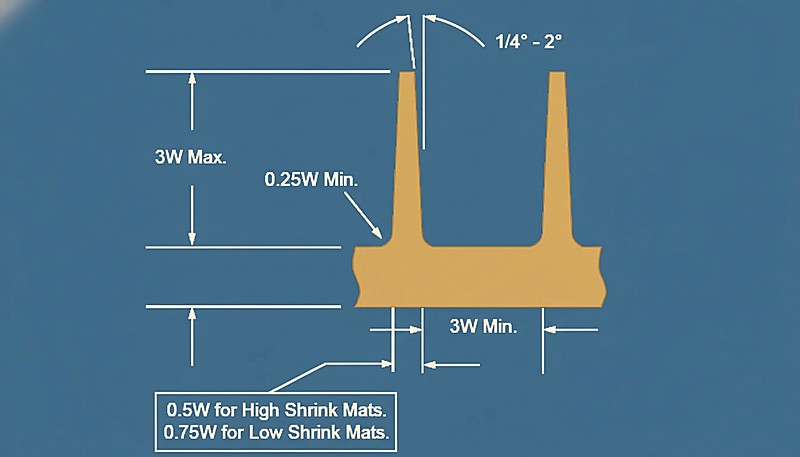
Skipping the Design for Manufacturability review is the mistake I see most often, and it is also the most expensive to fix after the fact. A DFM review catches problems like inadequate draft angles, impossible undercuts, and wall thickness transitions that will cause sink marks or warpage. These are not theoretical risks. They are predictable outcomes that an experienced mold engineer can flag in 30 minutes.
Here is the math: a DFM review typically costs nothing when you are working with a legitimate supplier. It takes one to three days. But fixing a sink mark problem after the mold is cut? That is a steel modification, which means re-machining, re-polishing, new samples, and another round of validation. You are looking at two to four weeks of delay and potentially thousands of dollars in rework costs. For complex parts with tight tolerances, a single missed DFM issue can cascade into dimensional failures across the entire assembly.
The key question to ask your supplier: Will you provide a written DFM report before tooling starts, with specific recommendations and risk flags? If the answer is anything other than a clear yes with a sample report, find another supplier. A supplier that does not insist on DFM review is not saving you time. They are setting you up to pay for their omission.
How Do Vague Tolerances Cause Production Delays?
Vague tolerances on a quote are not a simplification. They are a liability. When a supplier quotes general tolerances without referencing specific GD&T1 callouts, they are telling you that they plan to hit whatever their machines naturally produce — and you will either accept it or pay for tighter control later. This is one of the most common injection molding supplier evaluation mistakes, and it almost always surfaces during first article inspection when dimensions are out of spec and neither side can agree on what was actually promised.
The solution is straightforward but requires homework on your end. Before requesting quotes, define critical dimensions with actual tolerances: plus or minus 0.05mm for bearing surfaces, plus or minus 0.1mm for mounting holes, and plus or minus 0.2mm for non-critical features. Then ask each supplier to confirm which tolerances they can hold consistently at production volume, not just on a golden sample. A supplier with 47 injection molding machines ranging from 90T to 1850T has the equipment flexibility to handle this, but you need to specify what you need before they can tell you if they can do it.
"A supplier who quotes general tolerances without GD&T callouts is signaling that they intend to deliver whatever their machines naturally produce."True
Without specific tolerance requirements tied to inspection methods, there is no contractual basis for rejecting out-of-spec parts during production.
"If a part passes first article inspection, it will maintain those dimensions throughout the entire production run."False
First article inspection only confirms the initial sample batch. Process drift, tool wear, and material variation can shift dimensions significantly over a production run of thousands of parts.
What Happens When You Do Not Verify Material Capabilities?
Unverified material claims cause 15-20% of first-article failures in our experience. Every supplier will tell you they can mold your material, and most can physically put pellets in the hopper. But can they process glass-filled nylon at the correct melt temperature and hold a glossy surface finish? Can they run PEEK without degrading it? Can they handle overmolding TPE onto polycarbonate without delamination? These are different questions, and the answer separates a functional part from a pile of rejects.
Material processing is not just about temperature settings. It is about screw design, barrel wear, drying protocols, and the accumulated experience of the processing team. A supplier with experience across 400+ materials has likely encountered most of the common material-specific challenges: the moisture sensitivity of polycarbonate, the shear-thinning behavior of LCP, the crystallization requirements of PPS. When you ask about material capability, do not accept yes or no. Ask for specific processing parameters, recent production examples with the same material, and confirmation that their drying equipment meets the material data sheet requirements.
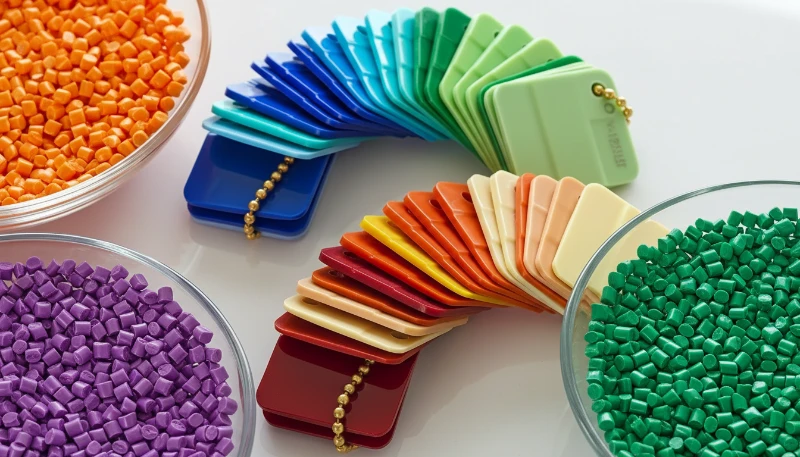
Our processing team has run production across 400+ plastic materials, with 8 senior engineers who specialize in difficult-to-process engineering resins. This means when you specify a material, we can confirm whether it will work with your part geometry before cutting steel.
Why Is Ignoring Mold Maintenance Plans a Critical Oversight?
Mold maintenance is the single biggest factor in part quality consistency beyond 50,000 cycles. A mold is a precision tool with moving parts, cooling channels, and wear surfaces. Without regular maintenance, ejector pins seize, cooling channels clog, and cavity surfaces degrade. The result is predictable: flash, dimensional drift, and surface defects that get progressively worse with every cycle.
A proper supplier evaluation should include these questions: What is your preventive maintenance schedule? How many cycles between full mold inspections? Do you stock spare ejector pins and springs? What happens when dimensional data shows drift? A supplier with an in-house mold manufacturing facility can repair and maintain molds internally, which means faster turnaround and better control. But you need to ask, because maintenance costs are real and they need to be factored into your total cost of ownership calculation.
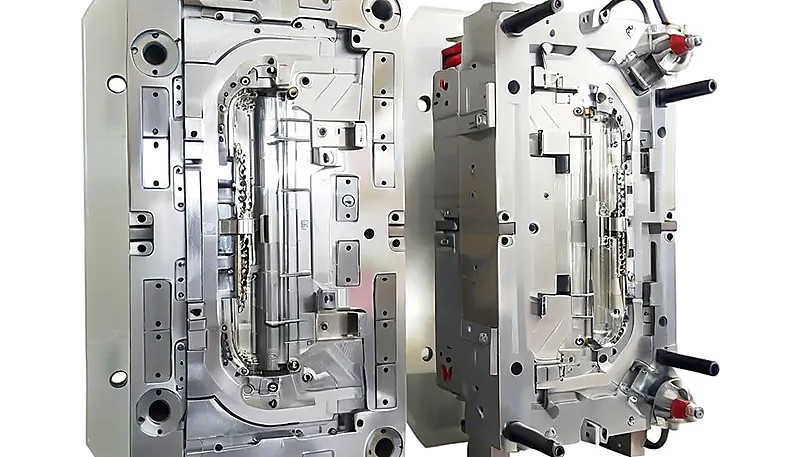
With our in-house mold manufacturing facility producing over 100 mold sets per month, we handle all preventive maintenance and emergency repairs internally. This eliminates the three-to-five-day wait that most buyers experience when their supplier has to outsource mold repairs.
The cost difference between a well-maintained mold and a neglected one is dramatic. A mold that receives scheduled preventive maintenance every 50,000 cycles can produce consistent parts for 500,000 to over one million cycles. A mold that runs without maintenance typically shows measurable dimensional drift by 100,000 cycles and may require major refurbishment by 200,000 cycles. The refurbishment cost is often 40 to 60 percent of the original mold price, whereas preventive maintenance costs roughly 5 to 10 percent annually. When you evaluate suppliers, ask to see their maintenance logs from a current production program.
How Can Inadequate Quality Agreements Derail Your Project?
A quality agreement is the document that defines what happens when things go wrong. Without one, every defect becomes a negotiation, every delay becomes a blame game, and every cost overrun becomes your problem. I have seen projects stall for weeks because the supplier and buyer could not agree on whether a particular surface blemish was a defect or acceptable variation. A proper quality agreement eliminates ambiguity by specifying AQL2 levels for each defect category, measurement methods and equipment, corrective action response times, and escalation procedures.
The most critical elements to include are: acceptable quality limits per defect class (critical, major, minor), sampling plans referencing ISO 2859-13, measurement equipment calibration requirements, first article inspection criteria and timing, process change notification requirements, and scrap and rework cost responsibility. If your supplier pushes back on a detailed quality agreement, that is a warning sign. A supplier operating under ISO 9001, ISO 13485, ISO 14001, and ISO 45001 systems should have the infrastructure to support a thorough quality agreement without resistance.
Our quality system operates under ISO 9001, ISO 13485, ISO 14001, and ISO 45001, supported by a team of 10+ QC specialists. When a defect is identified, our standard operating procedure requires root cause analysis within 24 hours and corrective action implementation within 72 hours.
When Should You Walk Away from a Supplier Quote?
Not every supplier is the right fit for your project, and recognizing when to walk away is as important as knowing what to look for. Here are the red flags that should make you reconsider: the quote is missing material specifications, the supplier cannot provide references for similar parts, there is no mention of quality systems or certifications, the lead time seems too good to be true, or the supplier avoids answering technical questions in writing. Any one of these is a legitimate reason to keep looking.
The cheapest quote I ever saw was from a supplier who quoted a multi-cavity production mold for 3,000 dollars. The buyer took it. Six months later, they had spent 22,000 dollars on mold modifications, lost three months of production time, and ended up coming to us for a complete re-tool. The original supplier had quoted a prototype-grade mold with no cooling optimization, no standard mold base, and a lifecycle rating of 10,000 shots for a part that needed 500,000. Walking away from that 3,000 dollar quote would have saved 22,000 dollars and three months.
"A supplier who avoids answering technical questions in writing is a higher risk than one who provides detailed written responses."True
Written technical commitments create accountability. A supplier who only communicates verbally may be avoiding a paper trail that would hold them to specific quality or timeline commitments.
"The lowest quote is always the best value because injection molding is a standardized process."False
Injection molding is highly customized. The lowest quote often excludes critical elements like DFM review, proper mold steel grades, optimized cooling, and quality documentation — all of which you will pay for later through rework and delays.
What Should a Proper Supplier Evaluation Checklist Include?
After seeing every version of the buyer checklist mistake, here is the one I would use myself. It is organized by priority — the items at the top will save you the most money and time if you get them right.
Use this checklist framework to evaluate every supplier systematically: First, DFM Review: ask if they provide a written DFM report before tooling. Red flag: no formal DFM process. Second, Tolerance Capability: ask what tolerances they hold at production volume. Red flag: only general tolerances quoted. Third, Material Experience: ask for recent production data for your specific material. Red flag: no material-specific processing records. Fourth, Mold Maintenance: ask about their preventive maintenance schedule. Red flag: no maintenance plan or outsourced repairs. Fifth, Quality Agreement: ask if they sign detailed quality agreements with AQL levels. Red flag: resistance to formal quality terms. Sixth, Certifications: ask what quality management systems they are certified under. Red flag: no ISO certifications or expired certificates.
Seventh, Communication: ask who your project manager is and their English proficiency. Red flag: no dedicated PM or slow communication. Eighth, Lead Time Realism: ask them to break down lead time by phase. Red flag: timeline seems unrealistic for part complexity.
The pattern across all eight items is the same: specificity. The more specific your questions, the more revealing the answers. A good supplier welcomes detailed questions because it shows you are a serious buyer. A supplier who gets defensive or vague when you dig into specifics is telling you something important about how they will respond when real problems arise during production.
In 20+ years of supplying injection molded parts to international OEMs, we have found that the most successful partnerships start with detailed buyer checklists. Our team of 30+ English-speaking project managers is trained to walk through each of these items before any contract is signed.
Frequently Asked Questions About Injection Molding Supplier Evaluation
What should I look for when choosing an injection molding supplier?
Focus on three core elements that separate competent suppliers from risky ones. First, a documented DFM review process that catches geometry and tolerance issues before any steel is cut. Second, specific tolerance capabilities demonstrated at production volume, not just on golden samples. Third, a quality agreement with defined AQL levels, measurement methods, and corrective action timelines. These three items reveal more about a supplier than any certification on the wall. If a supplier can clearly explain their approach to all three, they are worth your consideration.
How do I know if an injection molding quote is realistic?
Break the quote down by phase: tooling design, mold fabrication, T1 sampling, and production ramp. Each phase should have a specific timeline and cost allocation. If a supplier quotes a 15-day total lead time for a multi-cavity mold with side actions and lifters, that is not realistic. Mold fabrication alone for complex tools typically takes 25 to 35 days. Ask for a phase-by-phase breakdown with milestones, then compare each phase against industry benchmarks for similar part complexity and cavity count.
Why do injection molding quotes vary so much between suppliers?
Quotes vary because suppliers make different assumptions about tool steel, cavity count, runner design, surface finish, validation, and included secondary operations. Ask each supplier to itemize mold construction, sample rounds, inspection, packaging, and freight against the same RFQ. A low quote is meaningful only when its scope, production volume, material, and quality assumptions match the other bids.
What is the most important question to ask an injection molding supplier?
Ask for a written DFM report before tooling starts. The quality of the DFM report reveals everything about a supplier: their technical depth, their communication style, and whether they are engineering your part or just quoting to win the order. A thorough DFM report should include specific recommendations for draft angles, wall thickness optimization, gate location rationale, and identified risk areas with proposed mitigations. A supplier who skips this step or provides only a one-page summary is not performing real engineering analysis on your project.
How can I avoid delays in injection molding production?
Define critical tolerances before requesting quotes, insist on a written DFM review with specific recommendations, sign a quality agreement with defined AQL levels for each defect class, and establish clear communication protocols with a named project manager who responds within 24 hours. Most production delays trace back to ambiguity that could have been resolved during the quoting phase. The upfront effort of documenting all expectations in detail saves weeks of costly back-and-forth during production when schedule pressure is highest and corrective actions become most expensive to implement.
What certifications should an injection molding supplier have?
At minimum, ISO 9001 for quality management is essential for any production supplier you are evaluating. For medical device parts, ISO 13485 is mandatory for regulatory compliance and audit trail requirements. Environmental management certification (ISO 14001) and occupational health certification (ISO 45001) indicate operational maturity and responsible manufacturing practices that reduce long-term supply chain risk. Always verify that certificates are current and applicable to the specific facility producing your parts, not just a corporate headquarters in a different location or country.
Choosing the right injection molding supplier is not about finding the lowest price. It is about finding a partner who asks the right questions before you do, catches problems before they become expensive, and communicates clearly when things do not go according to plan. At ZetarMold, we start every project with a detailed DFM review because we have learned over 20+ years that the money saved by skipping it is always spent later, with interest.
If you are evaluating suppliers for an upcoming injection molding project, send us your 3D CAD file. We will return a DFM report, a detailed quote with phase-by-phase timeline, and a material recommendation based on your part requirements. No obligation, no pressure — just the information you need to make the right decision. Get a free injection molding quote from our engineering team.
GD&T: GD&T refers to geometric Dimensioning and Tolerancing, a standardized system for defining engineering tolerances ↩
AQL: AQL refers to acceptable Quality Limit, the maximum defect rate considered acceptable during sampling inspection ↩
ISO 2859-1: ISO 2859-1 refers to sampling procedures for inspection by attributes, used to define AQL levels in quality agreements ↩