Why Should You Evaluate an Injection Molding Supplier Before Production?
Supplier evaluation is an important step before committing to production because a poor fit can lead to delays and defective parts. Before you approve full production, use a structured evaluation process that covers factory capabilities, quality systems, communication, and project management rigor.
For a broader view, our injection molding complete guide covers process fundamentals, material behavior, and production decisions.
- Verify factory capabilities: machine tonnage, mold-making capacity, and material experience must match your project requirements before signing any contract.
- Demand a clear tooling plan: ask for mold design reviews, T1 sample timelines, and maintenance commitments upfront to avoid costly surprises.
- Validate quality systems rigorously: ISO certifications, in-process inspection protocols, and PPAP documentation separate reliable suppliers from risky ones.
- Test communication responsiveness early: response time, English proficiency, and proactive problem-solving during quoting predict post-launch behavior.
- Require a structured launch checklist: first article inspection, production trial runs, and documented sign-offs protect both parties during handoff.
This guide walks you through a practical, step-by-step framework for evaluating an injection molding1 supplier before approving a production launch. It draws on more than 20 years of field experience to highlight what matters beyond the supplier questionnaire.
What Factory Capabilities Should You Verify First?
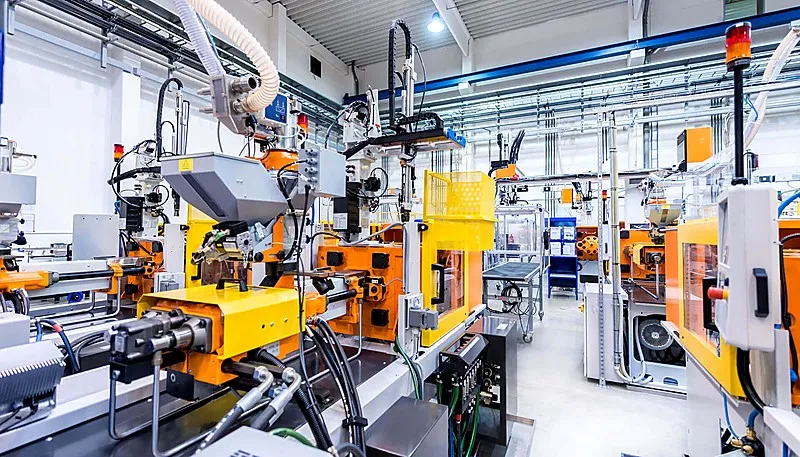
Machine specifications, available capacity, and material experience are three critical capabilities to verify first. The press must suit the part envelope, required clamping force, shot size, material, and process window; machine count alone does not establish that fit.
ZetarMold’s published capability records list 45 production lines and experience with 400+ material types. For your project, request the actual machine list, available capacity, and tooling plan, then confirm which operations are performed on-site and which are subcontracted.
ZetarMold's published capability records list 45 production lines and 400+ material types. Buyers should verify the exact press, tooling route, and available capacity against the requirements of each project.
Beyond machines, check material experience. A supplier who has not processed your specific resin — whether it is glass-filled nylon, medical-grade PEEK, or high-temperature PPS — needs a credible validation plan before production. ZetarMold’s published records list experience with 400+ material types, but material expertise still has to be demonstrated through documented process controls and project-specific trials.
How Do You Assess the Tooling Process and Mold Quality?
The injection mold is often a major project asset. Tooling2 quality affects part consistency, cycle time, and production longevity. When evaluating a supplier, examine the mold design process, not just the final product.
Ask these specific questions: Do they perform mold flow analysis before cutting steel? Who designs the mold — an in-house engineer or an external contractor? What steel grade do they use, and does it match your expected production volume? A supplier who skips mold flow analysis for a complex part is setting you up for sink marks, weld lines, and warpage that no amount of process tweaking can fix.
ZetarMold’s published capability records list 8 expert mold engineers. For any supplier, verify who owns mold design, when simulation is required, how design reviews are approved, and who is accountable for tooling changes. In-house control can simplify iteration, but the evidence is the documented workflow and resulting mold performance.
What Quality Systems Must a Reliable Supplier Have?
Quality certifications are evidence with a defined holder, scope, and validity period; they are not a blanket guarantee. ISO 9001 is a common quality-management baseline. Medical-device, automotive, and food-contact projects may require additional systems or regulatory controls, depending on the product and jurisdiction. Verify that each certificate covers the legal entity and activity relevant to your order, then examine how the controls are implemented.
During your evaluation, request applicable quality artifacts: control plans, inspection reports from comparable projects, Cpk data where statistical control is used, and corrective-action records. Agree on a reasonable response deadline, then assess whether the supplier provides current, traceable evidence rather than inferring capability from response speed alone.
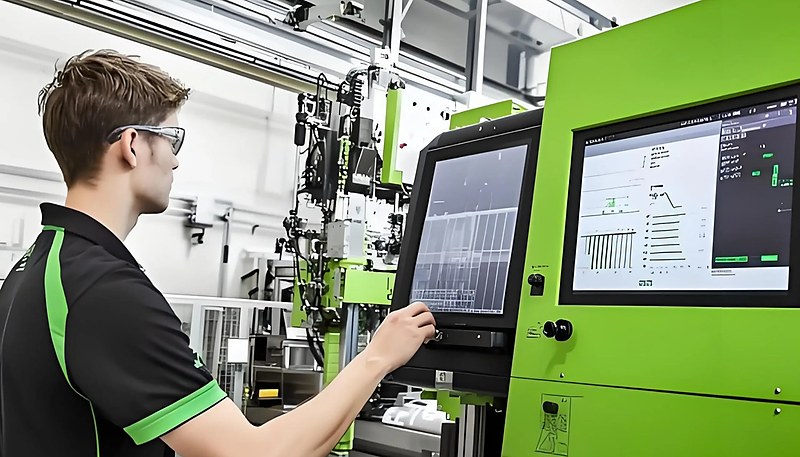
ZetarMold holds current ISO 9001, ISO 13485, ISO 14001, and ISO 45001 certificates within their respective published scopes. Those scopes are not identical, so buyers should review the actual certificates and request project-specific first-article, in-process inspection, and PPAP3 evidence where applicable. A supplier’s refusal to provide relevant quality data is a risk that requires resolution before approval.
ZetarMold holds current ISO 9001, ISO 13485, ISO 14001, and ISO 45001 certificates. Review each certificate's holder, scope, and validity, then verify the inspection plan for the specific project.
"A supplier's ISO 9001 certification guarantees consistent part quality."False
False. ISO 9001 certification provides evidence of a quality management system within its stated scope, but it does not guarantee that every part meets your specifications. Verify implementation through audits, applicable process data, and sample evaluation.
"The cheapest tooling quote is always the best value."False
False. A low quote may exclude the specified steel grade, design analysis, validation, maintenance, or target mold life. Compare the scope and assumptions behind each tooling price.
Why Is Sample Quality the Most Important Evaluation Metric?
Sample parts are the proof. Everything else — brochures, certifications, factory photos — is secondary to how the actual parts turn out. When you receive prototype or T0 samples from a prospective supplier, evaluate them methodically, not just visually.
Request dimensional reports in both PDF and raw data formats. Raw CMM data lets you perform your own statistical analysis, while PDF reports show you what the supplier considers acceptable presentation. Comparing both reveals whether the supplier is transparent about variation or presenting only favorable measurements.
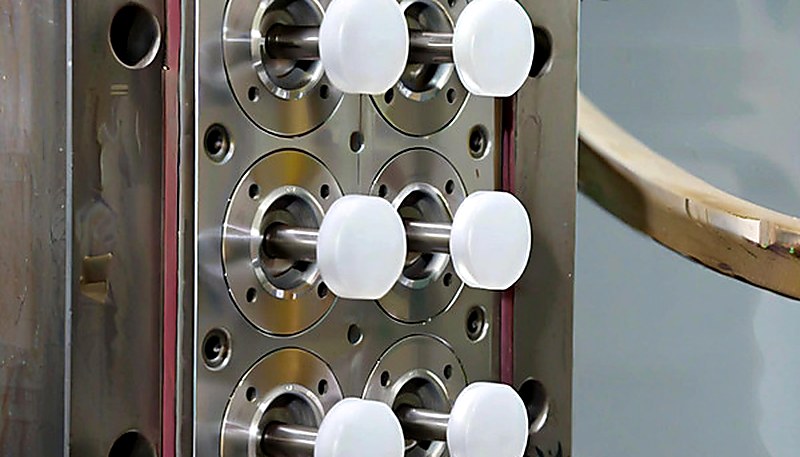
Check dimensional accuracy against your drawings using CMM reports. Look for surface finish consistency across all cavities in a multi-cavity mold. Examine gate vestige, ejector pin marks, and weld line visibility. These details reveal process-control maturity. If a supplier delivers attractive samples but cannot provide the process parameters and material lot behind them, the result is not yet shown to be reproducible.
Pay special attention to multi-cavity balance. In a multi-cavity mold, parts from every cavity must meet the drawing and agreed cavity-to-cavity limits. If the measured variation exceeds those limits, investigate the mold and process before production approval. Cavity-specific data matters because pooled measurements can hide an unstable cavity.
Require each sample run to be tied to its process parameters, material lot, cavity identity, and dimensional results. Samples without traceable records do not show whether the supplier can reproduce the result in volume. Ask the supplier to explain how the sample record becomes the approved production baseline.
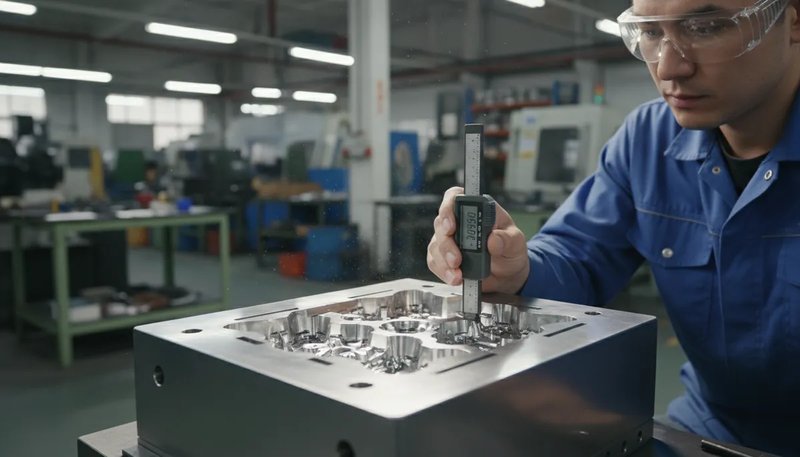
Beyond dimensional checks, evaluate the supplier test and measurement capabilities. Do they have coordinate measuring machines (CMM), optical comparators, or surface roughness testers? Can they provide full dimensional reports with GD&T callouts, or only basic linear measurements? A supplier with robust metrology equipment is far more likely to catch process drift before it affects your parts.
What Communication and Project Management Standards Should You Expect?
Poor communication kills more projects than poor engineering. When you are working with a supplier across time zones, language barriers, and cultural differences, you need a team that proactively communicates status, problems, and solutions — not one that goes silent for weeks and then delivers bad news.
Evaluate communication during the quotation phase itself. Did they ask clarifying questions about your design? Did they flag potential manufacturing issues? Did they provide a detailed timeline with milestones? A one-line price quote does not demonstrate that the supplier reviewed the drawing, material, tolerance, tooling, or validation requirements. Test the actual project contact’s technical communication and agree on update and escalation expectations in writing.
Project management tools matter too. Ask whether the supplier uses formal project tracking, stage-gate reviews, and documented approval workflows from design review through sampling, applicable PPAP submission, and production-launch approval. The specific tool matters less than traceable decisions, owners, dates, and sign-offs.
ZetarMold's published capability records list 45 production lines, 400+ material types, and 8 expert mold engineers. Project-specific communication cadence, ownership, and escalation terms should still be agreed before launch.
How Do You Validate Production Readiness Before Launch?
Production readiness validation is the final gate before you commit to volume orders. This step verifies that the supplier can consistently produce parts that meet your specifications at the required rate. Skipping it leaves production capability unproven at the point of approval.
A proper production readiness review includes: capacity verification (can they produce your monthly volume without overtime or subcontracting?), process stability (have they demonstrated consistent Cpk values over multiple runs?), packaging and logistics (do they have proper packaging and shipping procedures documented?), and contingency plans (what happens if a machine breaks down or a material shipment is delayed?).
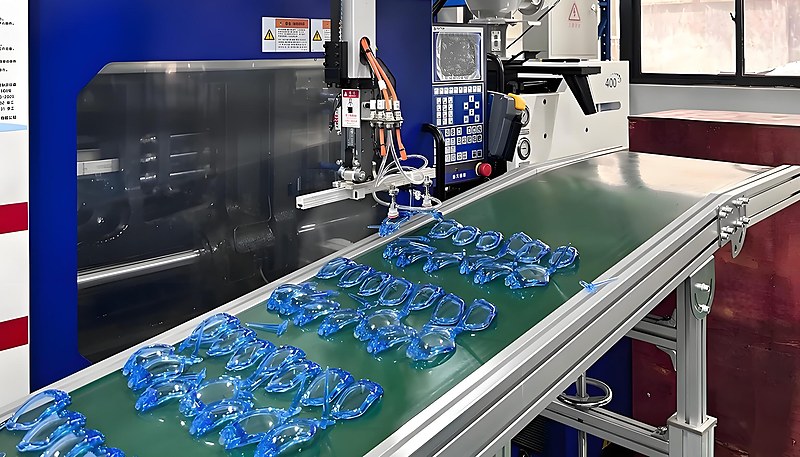
Request a pilot production run sized to the part risk, cavity count, expected variation, and validation plan. Evaluate critical dimensions against the agreed acceptance criteria and review stability over time; an acceptable standard deviation alone does not prove that a process is centered or controlled. Resolve failures before committing to volume production.
What Red Flags Should Make You Walk Away From a Supplier?
Some warning signs are obvious, while others only appear when you ask for evidence. Drawing on more than 20 years of field experience, these are the red flags to investigate during supplier evaluation.
Red flag one: the supplier refuses both a factory visit and a live virtual tour without a credible confidentiality or safety reason. That prevents you from verifying the claimed production boundary. Red flag two: a tooling price far below comparable quotes without a transparent explanation. Ask whether steel grade, design analysis, surface treatment, validation, maintenance, and target mold life are included before comparing totals.
Red flag three: no references or case studies. A legitimate supplier should be able to provide verifiable references from clients in your industry. Red flag four: vague quality documentation. If a supplier says they are ISO certified but cannot show you a control plan or inspection report, the certification may be real but the implementation is not. Red flag five: pressure to skip steps. A supplier who pushes you to approve tooling without T1 samples or skip PPAP is prioritizing speed over quality — and you will pay for that decision later.
One more subtle warning sign: a supplier who over-promises on timeline without asking detailed questions about your part geometry, material requirements, or tolerance specifications. A realistic supplier will push back on unrealistic deadlines because they understand the complexity involved. A supplier who agrees to everything is either inexperienced or planning to cut corners.
"First article inspection reports should be required before approving mass production."True
True. FAI reports document that initial samples meet all dimensional and material specifications. Skipping FAI means starting production without evidence that the process produces conforming parts.
"A virtual factory tour provides the same evaluation depth as an in-person visit."False
False. While virtual tours are useful for initial screening, in-person visits reveal equipment condition, housekeeping standards, worker engagement, and process discipline that cameras cannot fully capture.
How Do You Structure a Supplier Evaluation Checklist?
A structured evaluation checklist keeps your assessment objective and comparable across multiple suppliers. We recommend scoring each category on a 1-5 scale, with specific evidence requirements for each score level. Here is a practical framework you can use immediately.
| Evaluation Category | Key Questions | Evidence Required |
|---|---|---|
| Factory Equipment | Machine count and tonnage range? On-site or subcontracted? | Actual machine list with serial numbers |
| Tooling Capability | In-house mold design? Mold flow analysis? Steel grades available? | Previous mold designs, flow analysis reports |
| Quality Systems | ISO certifications? Cpk data? FAI reports? | Valid certificates, recent inspection reports |
| Material Experience | Have they processed your resin before? How many materials total? | Material processing logs, defect rates |
| Communication | English proficiency? Response time? Project tracking tools? | Sample communication, project management samples |
| Production Capacity | Monthly capacity for your part? Lead times? Backup plans? | Production schedules, capacity reports |
| References | Can they provide client references in your industry? | Verifiable reference contacts |
| Pricing Transparency | Itemized quotes? Clear terms? No hidden fees? | Detailed quotation breakdown |
Use this checklist as a living document during your supplier evaluation process, not a one-time form to fill out and file away. Update your scores after each interaction with the supplier — the factory tour, the sample evaluation, the quality document review. Over time, your checklist becomes a comprehensive record that supports your final sourcing decision with objective evidence rather than gut feeling.
What Steps Ensure a Smooth Transition From Evaluation to Production?
Passing the evaluation is just the beginning. The transition from approved supplier to active production partner requires clear contractual agreements, documented processes, and mutual accountability. Here is how to set up the relationship for long-term success.
First, establish a detailed quality agreement that specifies inspection criteria, sampling plans, corrective action procedures, and escalation paths. This document becomes the operating manual for the partnership. Second, define key performance indicators — on-time delivery rate, defect rate, response time — and agree on measurement methods. Third, schedule regular business reviews, at least quarterly, to discuss performance, address issues, and plan for changes in volume or design.
A sound onboarding process treats the transition as a joint project, not a handoff. Both parties align expectations, evidence, owners, and escalation paths before production. That work reduces ambiguity when a quality or delivery issue occurs later.
Author Mike Tang reports more than 20 years of field experience, and ZetarMold's published records list 400+ material types. The launch plan should still define project-specific approvals, owners, and acceptance evidence.
Frequently Asked Questions
What documents should I request from an injection molding supplier during evaluation?
Request the applicable ISO certificates, control plans, process-flow diagrams, FMEA documents, current process-capability data, first-article inspection reports, and verifiable client references. Agree on a response date and verify that each record is current, traceable, and relevant to your project. Also request the mold-maintenance schedule and equipment-calibration records. These operational documents show how the supplier applies its stated quality system.
How long should the supplier evaluation process take?
The evaluation duration depends on part complexity, tooling status, sample availability, audit scope, and the evidence required for approval. Include quotation review, a virtual or in-person factory audit, sample evaluation, and quality-document verification in the schedule. Simple parts with established tooling may need less sampling, while complex multi-cavity molds with tight tolerances may require additional T1 and T2 rounds. Set the timeline from the validation plan rather than an arbitrary number of weeks.
Should I visit the factory in person or is a virtual tour sufficient?
An in-person factory visit provides direct evidence of housekeeping, equipment condition, material flow, and process discipline. A structured virtual tour with live video, equipment verification, and quality-document review can support initial screening when travel is impractical. Decide whether an in-person audit is required based on project risk, value, and duration, and document any evidence that remains unresolved after a virtual review.
What is the minimum production volume a good supplier should demonstrate?
There is no universal minimum volume or fixed capacity buffer. Define peak demand, cycle time, yield, planned maintenance, changeovers, and contingency needs for your part, then ask for a capacity model showing current utilization and available capacity. Also review material lead times, approved sources, inventory policy, and backup arrangements because machine capacity alone does not prove delivery capability.
How do I compare pricing between different injection molding suppliers?
Do not compare only the bottom-line price. Break down each quote into tooling cost, per-part price, material cost, secondary operations, packaging, and logistics. Compare warranty terms, mold ownership conditions, and charges for setup or design modifications. A higher quote may include mold-flow analysis, in-house tooling, or additional quality documentation, but verify each inclusion. Compare total cost of ownership, including maintenance, validation, rework risk, and production-interruption terms.
What certifications should an injection molding supplier have?
ISO 9001 is a common quality-management baseline. Medical, automotive, environmental, or occupational-health requirements may call for ISO 13485, IATF 16949, ISO 14001, ISO 45001, or other controls depending on the project. ZetarMold currently holds ISO 9001, ISO 13485, ISO 14001, and ISO 45001 certificates, each with its own published scope and validity period; this does not imply IATF 16949 certification or coverage beyond those scopes. Verify the certificate holder, scope, expiration date, and project relevance directly.
Can I evaluate multiple suppliers simultaneously?
Yes. When time and budget allow, evaluating more than one supplier against the same checklist can improve comparison of capability, pricing, and responsiveness. Use consistent evidence requirements and consider pilot work for the strongest candidates when the decision remains close. Keep detailed notes and record the basis for each score; structured scoring reduces reliance on memory, though it does not eliminate judgment or bias.
What happens if the supplier fails the evaluation?
Record the failed criteria and the evidence behind the decision. If appropriate, provide specific feedback and define what would be required for a future re-evaluation. Keep the records according to your procurement and legal policies; they preserve institutional knowledge and help the next sourcing team avoid repeating the same oversight.
Ready to Evaluate Your Next Injection Molding Partner?
Choosing the right injection molding supplier is a consequential product-development decision. ZetarMold welcomes evidence-based evaluation. Its published records list 45 production lines, 400+ material types, and 8 expert mold engineers, while author Mike Tang reports more than 20 years of field experience. Verify the exact equipment, tooling route, quality plan, and project team required for your program.
Whether you need a prototype mold or a volume production program, ask ZetarMold for an itemized quotation, the applicable quality records, and a named project owner from first contact through production launch. Get a free quote today and evaluate the response against the same evidence-based checklist.
Injection molding: Injection molding forms parts by injecting molten material into a mold cavity and allowing it to solidify. ↩
Tooling: Tooling includes the mold and related design, fabrication, validation, and maintenance work used to produce the part. ↩
PPAP: PPAP (Production Part Approval Process) is a framework for demonstrating that a production process can meet the customer's engineering and quality requirements. ↩