You found an injection molding supplier that looks good on paper. Their quotes are competitive, their samples passed inspection, and you are ready to commit to mass production. But before you sign that purchase order, you need to ask the right questions — the ones that separate suppliers who can scale from those who will scramble when your order volume triples. In this guide, we walk through the critical questions every buyer should ask to verify injection molding mass production readiness.
- Ask about tooling life, spare molds, and DFM feedback before committing to volume production
- Verify machine count, tonnage range, and utilization rates — not just whether the supplier can make samples
- Demand specific QC metrics: Cpk targets, inspection frequency, and non-conformance escalation procedures
- Check material supply chain resilience: safety stock, alternative suppliers, and lot traceability
- Get a detailed production schedule with milestones, buffer time, and communication protocols
What Is Mass Production Readiness in Injection Molding?
Mass production readiness means your supplier can deliver consistent quality at volume, on schedule, with documented processes and contingency plans.
For a broader look at injection mold design, our pillar guide covers tooling structure, thermal control, and manufacturability tradeoffs.
The gap between producing an approved sample batch and sustaining a controlled production run is wider than many buyers realize. Sample approval is necessary but not sufficient. Mass production readiness spans five critical dimensions: tooling durability, production capacity, quality systems, material management, and scheduling discipline.
A production-ready supplier can answer specific questions about each of these areas with data, not promises. They can show you their maintenance logs, capacity utilization dashboards, inspection sampling plans, and material safety stock policies. If a supplier responds to readiness questions with vague assurances instead of documented evidence, treat that as a warning and investigate further.
Think of mass production readiness as a qualification process: you are qualifying not just the part, but the entire production system behind it. The questions in this guide are structured to help you evaluate each dimension systematically before you commit your budget and timeline.
Why Do Buyer-Supplier Conflicts Escalate Before Mass Production Begins?
Buyer-supplier conflicts often start with assumptions made during the sampling phase when neither side verifies mass production readiness. The supplier assumes the buyer understands lead-time constraints. The buyer assumes the supplier can scale seamlessly from sample quantities to full production volume.
An approved sample does not prove that enough raw material has been reserved for the full run or that the validated cycle can be maintained across normal production shifts. Those constraints must be checked before production starts, because either one can turn a successful sample phase into a delayed launch.
A common cause is untested assumptions: the buyer did not ask the right questions, and the supplier did not proactively disclose constraints. Asking structured, specific questions about mass production readiness closes this gap. It transforms the relationship from hope-based to evidence-based, and it gives both sides a shared understanding of what success looks like at scale.
What Should You Ask About Tooling and Mold Readiness?
Tooling is often a major upfront investment in an injection molding project and a potential source of mass production failure. Before you commit to volume production, you need answers to these critical tooling questions.
First, ask about expected mold life. The realistic number of shots depends on tool steel, part geometry, resin abrasiveness, complexity, and maintenance discipline. Your supplier should be able to give you a project-specific estimate and the maintenance schedule behind it. A life estimate without a preventive-maintenance program is not reliable evidence.
Second, ask about spare tooling and backup plans. What happens if the mold is damaged mid-run? Does the supplier keep spare inserts, cores, or cavities on hand? Can they manufacture or source replacement components quickly? Not every supplier has in-house tooling capability, and discovering that constraint during a production emergency is expensive.
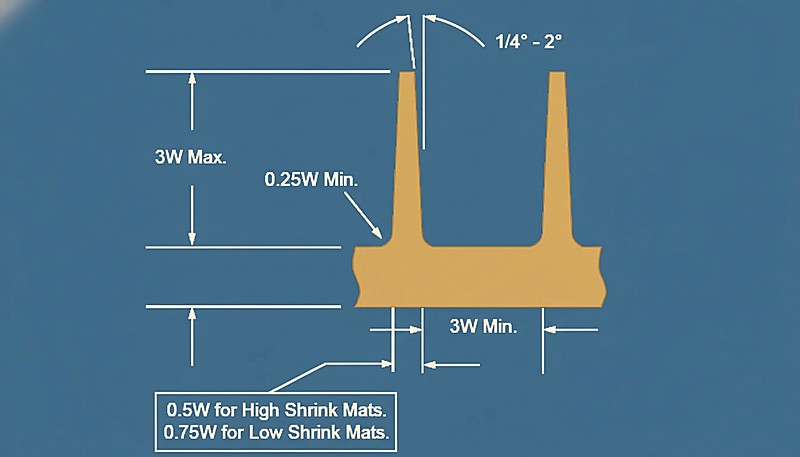
Third, ask about design-for-manufacturing (DFM) feedback. A production-ready supplier should challenge your design before tooling starts — not just accept it and discover problems later. They should identify potential sink marks, weld lines, draft angle issues, and gate placement concerns during the DFM review. If your supplier simply nods and starts cutting steel, you are working with an order-taker, not a manufacturing partner.
Our Shanghai factory includes in-house mold manufacturing equipment. Buyers should still confirm the repair workflow, spare-component plan, and expected turnaround for their specific tool before production starts.
How Do You Evaluate a Supplier’s Production Capacity and Equipment?
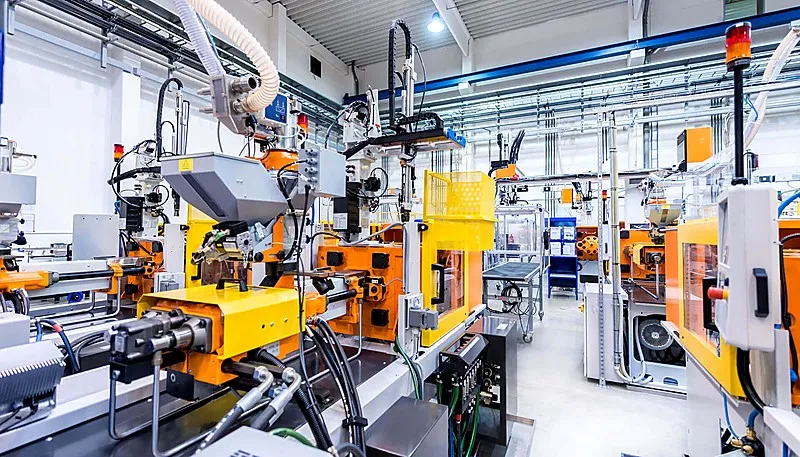
Evaluating production capacity is not just about counting machines. You need to understand whether the supplier has the right machines for your part, whether those machines are available when you need them, and what happens when something breaks down.
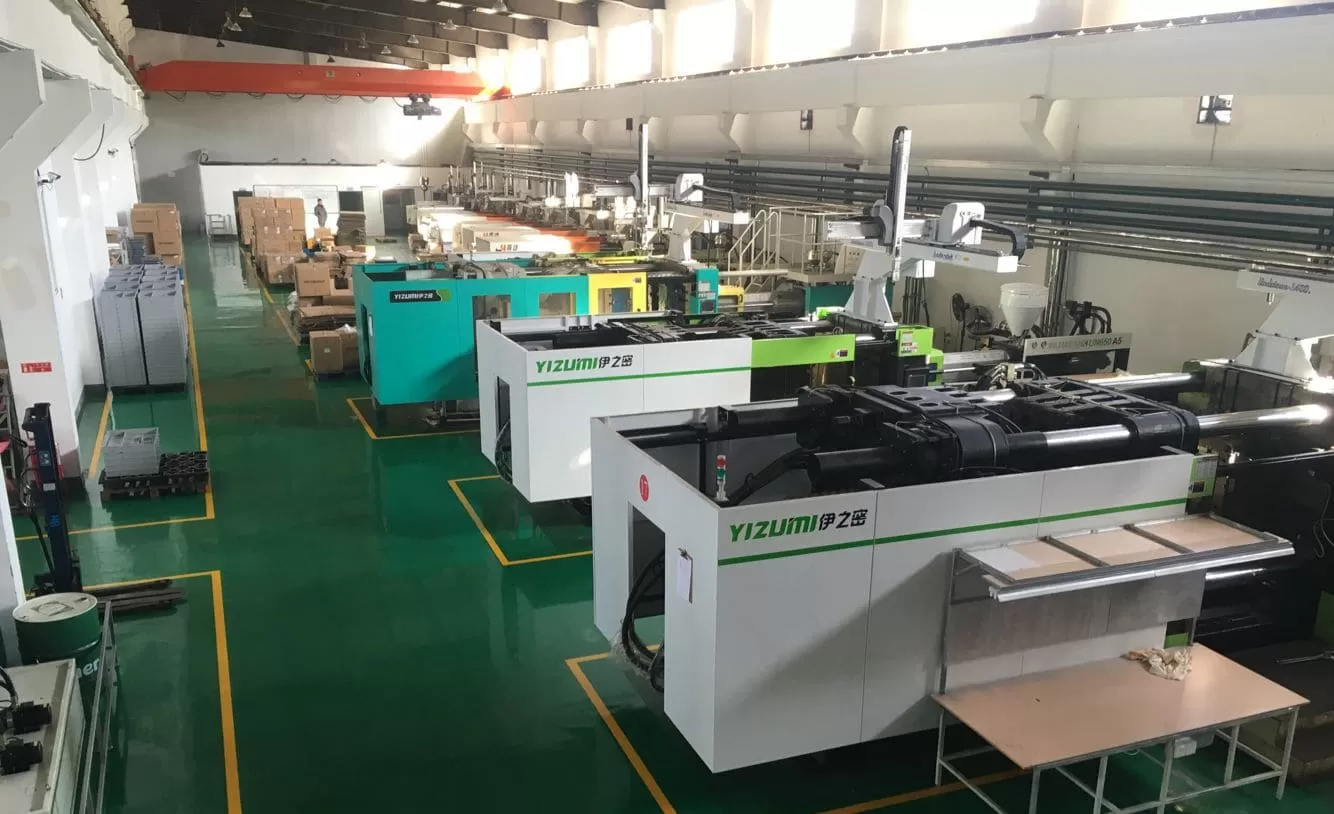
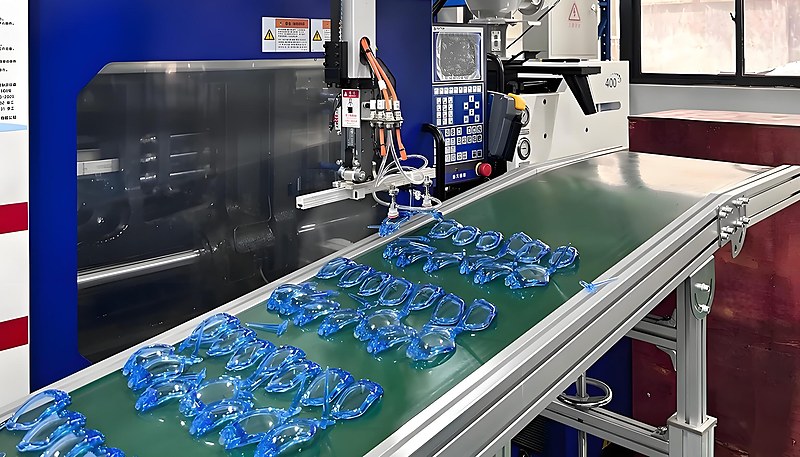
Start with the basics: how many injection molding machines does the supplier operate, and what are their clamping-force and shot-size ranges? Your part requires a compatible press, and the supplier needs capacity on that press when your order is scheduled. Ask to see the current utilization rate and the specific backup machine proposed for your part; a headline machine count alone does not prove capacity.
Next, ask about scheduling flexibility and backup capacity. Can they run your parts on multiple machines if needed? Do they have redundant equipment for critical tonnage ranges? What is their policy when a machine goes down unexpectedly? A supplier who runs a single machine in your required tonnage range is a single point of failure for your entire supply chain.
Finally, ask about their track record with similar parts. Not all injection molding experience is transferable. A supplier who specializes in small, simple PP parts may struggle with your large, glass-filled PA66 housing. Ask for specific examples of parts they currently produce that are similar to yours in size, material, and tolerance requirements.
Our published capability profile lists 45 production lines and 8 expert mold engineers. For a sourcing decision, ask us to identify the exact press, backup capacity, and process owner for your part rather than relying on those headline figures alone.
What Quality Control Checks Reveal True Production Readiness?
Quality control is where many supplier assessments fall short. Buyers ask whether the supplier has ISO 90011 certification, receive a yes, and move on. But certification tells you about a management system within a stated scope, not execution on your project. To evaluate real QC readiness, ask operational questions about daily practices, not just policy documents.
Ask about their process capability indices (Cpk2). A supplier who is serious about mass production should be tracking Cpk on critical dimensions and able to tell you their current values. A Cpk target of 1.33 or higher is common for critical dimensions, but the required threshold must be agreed for the specific product and industry.
Ask about their incoming material inspection procedures. Do they verify every lot of raw material, or do they trust the supplier certificate? Do they perform melt flow index testing? Do they check moisture content for hygroscopic materials like nylon or polycarbonate? Skipping incoming inspection to save time is a common shortcut that causes intermittent quality problems that are nearly impossible to trace.
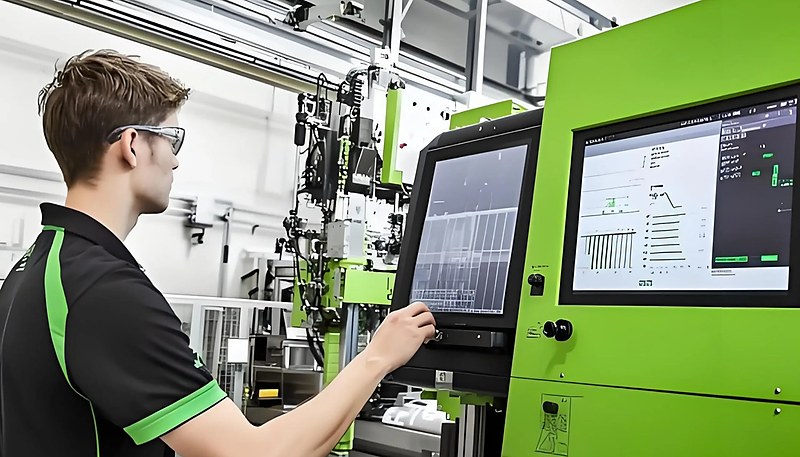
Ask about their in-process inspection frequency and whether they use SPC3 (Statistical Process Control) to monitor dimensions over time. During mass production, how often do they check dimensions — by shot count, batch, or time interval? What happens when they find an out-of-spec part? Is there a documented containment and corrective action procedure, or does the operator just set it aside and keep running? Defined inspection intervals and escalation rules matter more than headcount alone.
Zetar Industry Co., Limited holds current ISO 9001, ISO 13485, ISO 14001, and ISO 45001 certificates. Buyers should review each certificate's published scope and then verify the project-specific inspection plan, records, and escalation process.
How Can You Verify Material Management and Supply Chain Stability?
Material management is the hidden variable in mass production reliability. Your parts can only be as consistent as the material going into them, and supply chain disruptions can halt production without warning. Ask these questions to evaluate how well your supplier manages this risk.
First, ask who their raw material suppliers are and whether they maintain approved alternative sources. If your part requires a specific grade of ABS from a single resin manufacturer, and that manufacturer has a production outage, your supplier should have a qualified alternative ready. A supplier with experience across 400+ materials is more likely to have established relationships with multiple resin suppliers.
Second, ask about their safety stock policy. Do they keep enough raw material on hand to cover your order plus an agreed buffer, or do they order just-in-time without a recovery plan? A disruption at the resin supplier can flow directly into your schedule when no qualified stock or alternative source is available.
Third, ask about lot traceability. Can they trace finished parts back to the raw-material lot used? Medical-device, automotive, or customer-specific programs may impose auditable traceability requirements, and the same records are useful for investigating quality problems in any industry. Ask the supplier to demonstrate the traceability path rather than merely confirming that a system exists.
Our published capability profile covers 400+ material types. That breadth does not replace project-level verification: ask us to document the approved resin grade, lot-traceability method, and qualified alternative for your part.
What Lead Time and Scheduling Details Protect Your Launch Date?
Your launch date is protected by demanding a detailed production timeline with milestones, buffer time, and defined escalation triggers. Yet many buyers accept a single lead-time number without understanding what it includes or what can go wrong.
Ask for a detailed production timeline broken into milestones: material procurement, mold preparation (if applicable), first article inspection, production ramp-up, full production, and shipment. Each milestone should have a date, a responsible party, and defined completion criteria. A single delivery date without this breakdown gives you too little evidence to assess schedule risk.
Ask about their communication protocol when things go off schedule. Who is your point of contact? How quickly will they notify you of a delay — the same day, or only when you follow up? Will they propose a recovery plan, or just report the problem? Verify those practices through a named contact, a sample status report, and a defined escalation path rather than relying on team-size claims.
Finally, ask about their policy for handling change orders mid-production. What happens if you need to modify a dimension, change a material, or adjust the order quantity? How long does it take, and what does it cost? Change orders are common in mass production, so confirm how the supplier will assess and control them.
Author Mike Tang brings more than 20 years of experience with production issues, design optimization, mold design, and early project evaluation. That experience informs our emphasis on named contacts, milestone updates, and explicit escalation paths.
What Red Flags Signal a Supplier Is Not Production-Ready?
Useful red flags include a supplier’s inability to provide process data, refusal of a reasonable factory audit, or unexplained below-market pricing. Knowing when to walk away protects your project from costly mid-production surprises.
Knowing when to walk away is as important as knowing what to ask. Some suppliers will fail to provide satisfactory answers even after you ask all the right questions.
Another red flag is pricing significantly below comparable bids without a clear explanation. The difference may reflect material substitutions, a reduced inspection scope, or omitted services, so require a line-by-line explanation. Also check for a documented non-conformance procedure. When something goes wrong, you need to know how the supplier responds, not just how they perform when everything goes right.
A further warning sign is an inability to name the project manager or technical contact who will own your account. A generic sales inbox is not a substitute for clear responsibility during production. This is especially critical for overseas buyers working across time zones and language barriers. For more on evaluating suppliers, see our supplier sourcing guide.
"A supplier who passed sample approval is automatically ready for mass production."False
False. Sample approval confirms the mold and process can produce acceptable parts under controlled conditions. Mass production requires consistent quality across shifts, material lots, and machine variations — a fundamentally different challenge that demands documented systems and redundancy.
"You should ask your supplier for their Cpk data on critical dimensions before mass production."True
True. Cpk helps show whether the process can consistently meet agreed tolerances. Review the measured values against the product-specific acceptance threshold rather than assuming one universal cutoff.
The first two checks address sample approval and process capability. Two more common assumptions concern certification and material planning; both need to be tested against project-specific evidence rather than accepted at face value.
"ISO certification alone guarantees mass production quality."False
False. ISO certification confirms that a quality management system exists within a stated scope and is audited. It does not guarantee execution, process capability, or that the supplier will catch every defect. Always verify operational practices beyond the certificate on the wall.
"A supplier's material safety stock policy directly affects your delivery reliability."True
True. If your supplier orders raw material just-in-time without a safety buffer, a delay from the resin manufacturer can cascade into your production schedule. A documented buffer policy can reduce that exposure, although it cannot eliminate every disruption.
Frequently Asked Questions
What questions should I ask an injection molding supplier before mass production?
Focus on five critical areas before committing to volume production. First, ask about tooling maintenance plans and whether the supplier keeps spare mold components on hand. Second, verify their machine capacity and current utilization rates to confirm they can absorb your order volume. Third, request specific quality control procedures including Cpk targets and inspection frequency across shifts. Fourth, check their material supply chain resilience and safety stock policies for your required resin grades. Fifth, demand a detailed production schedule with milestones, buffer time, and clear communication protocols. Each area reveals whether the supplier can deliver consistent quality at scale, not just produce acceptable samples under controlled conditions.
How do I know if my injection molding supplier is ready for large volume production?
Verify three things before trusting a supplier with large-volume orders. First, request documented process capability data for critical dimensions and compare it with the thresholds agreed for your product. Second, look for a verifiable track record of similar-volume production runs, ideally with references from existing buyers you can contact directly. Third, review a production scheduling system that shows milestone tracking, buffer time for unexpected delays, and defined escalation triggers when production goes off plan. Missing evidence in any of these areas requires further qualification, regardless of how well the supplier performed during initial sampling.
What is the difference between sample approval and mass production readiness?
Sample approval confirms that the mold and process can produce an acceptable part under controlled short-run conditions. It is a necessary milestone but far from sufficient for mass production. Mass production readiness means the supplier has proven they can reproduce that same quality consistently across thousands of shots, multiple production shifts, varying raw material lots, and normal equipment wear over extended runs. It requires documented systems for monitoring and correcting deviations, preventive mold maintenance programs, incoming material verification procedures, and trained operators who follow standardized work instructions rather than relying on individual skill or judgment.
Should I audit my injection molding supplier before mass production?
Yes, either in person or through a detailed virtual tour. A factory audit reveals equipment condition, shop floor organization, cleanliness standards, and whether the supplier actually operates the facility they claim to operate. It also shows whether their workforce is properly trained and whether their quality systems are actively used in daily operations, not just documented for certification purposes. During the audit, pay attention to how operators handle non-conforming parts, whether inspection equipment is calibrated and actually in use, and whether production records are maintained in real time. These operational details tell you more about production readiness than any certificate on the wall.
What red flags should I watch for when evaluating an injection molding supplier?
Watch for five critical warning signs. First, inability to provide process data such as SPC charts or Cpk values from previous production runs. Second, refusal of factory audits or virtual tours without a compelling reason. Third, pricing significantly below market rate without a clear and verifiable explanation of how they achieve the savings. Fourth, absence of documented non-conformance procedures that define how defects are contained and corrected. Fifth, lack of a dedicated project manager who can serve as your single point of contact. Any one of these red flags suggests the supplier may struggle with the operational discipline that mass production demands on a daily basis.
How important is material traceability in injection molding mass production?
Material traceability is essential for investigating quality problems, isolating affected batches, and verifying that the specified material grade was used. Medical-device, automotive, or customer-specific programs may impose auditable traceability requirements, so confirm the exact obligation for your product. Even when it is not mandated, lot-level traceability is a useful indicator of production discipline.
What quality metrics should an injection molding supplier track during mass production?
Define the required metrics in the quality plan. They commonly include process capability on agreed critical dimensions, defect rates by shift and batch, first-pass yield, scrap rates with root-cause analysis for significant events, and on-time delivery against committed dates. Agree on the reporting cadence and escalation thresholds before production starts; a dashboard that the buyer cannot review is weak qualification evidence.
How do communication practices affect injection molding production outcomes?
Proactive communication can prevent many delivery and quality disputes between buyers and suppliers. A supplier who alerts you to a potential delay immediately gives you time to adjust downstream plans and manage expectations with your own stakeholders. A supplier who waits until the delivery date has passed to report a problem has already reduced your recovery options. Named project contacts and clearly defined escalation protocols are production infrastructure, not optional extras. This is especially important for overseas buyers working across time zones and language barriers, where miscommunication can compound small issues into major disruptions.
Choosing the right injection molding supplier for mass production is one of the most consequential decisions in your manufacturing strategy. The questions in this guide give you a structured framework to evaluate suppliers beyond surface-level impressions. If you are looking for a production partner, talk to our team and ask us to document the relevant capabilities for your project. Our published profile lists 45 production lines, 400+ material types, and 8 expert mold engineers, and author Mike Tang brings more than 20 years of field experience.
ISO 9001: ISO 9001 is the international standard for quality management systems, specifying requirements that help organizations consistently provide products that meet customer and applicable statutory and regulatory requirements. ↩
Cpk: Cpk, or Process Capability Index, is a statistical measure comparing process variation and centering with specification limits. The acceptance target must be defined for the product and industry. ↩
SPC: SPC, or Statistical Process Control, uses statistical methods to monitor and control a process so that variation can be identified before it results in defective output. ↩