Choosing the wrong injection molding supplier can lead to delays, scrapped tooling, and parts that do not meet specification. Drawing on author Mike Tang’s more than 20 years of field experience, this checklist explains what to verify before you commit to production: from certification scope and machine capability to communication standards and hidden costs.
- Verify the certificates relevant to your project, including their holder, validity, and exact scope
- Match the supplier's machine capacity to your part size, material, and shot requirements
- Request real CMM inspection reports, not just generic Certificates of Conformance
- Test communication quality and establish a named technical contact
- Request a trial run with first article inspection before full production
- Calculate total landed cost including shipping, duties, and rework risk
Why Does Supplier Evaluation Matter Before Production?
Supplier evaluation is a critical step between a good product design and a successful production run. A supplier who looks capable on paper — a polished website, ISO certificates, competitive pricing — can still deliver inconsistent parts, miss dimensional tolerances, or communicate poorly when problems arise. The injection molding process demands tight coordination between mold design, material selection, machine parameters, and quality control, so buyers need evidence for each link before committing tooling spend.
If any one of those links is weak, the production outcome is at risk. This checklist gives you a structured way to assess each critical dimension before your money is on the line.
What Certifications Should You Look For?
Certifications are qualification evidence, not a guarantee of product quality. Start with ISO 9001 for quality management, then determine whether your product, customer, or regulatory pathway calls for standards such as ISO 13485. ISO 14001 and ISO 45001 address environmental and occupational health and safety management. In every case, request the certificate number, holder, issuing body, validity dates, and exact scope. A certificate covering design or production is materially different from one limited to sales or trading activities.
Also ask when the last surveillance audit was completed. Do not accept scanned images at face value; verify them through the issuing body or its certificate database. The certificate’s scope, validity, and connection to the entity performing your work matter more than a list of standard numbers.
Zetar Industry Co., Limited holds current ISO 9001, ISO 13485, ISO 14001, and ISO 45001 certificates. Their published scopes are not identical: they cover specified sales activities, while ISO 13485 also covers quality-management activities related to medical devices. Review the exact scope before treating any certificate as project evidence.
How Do You Assess Machine Capability and Capacity?
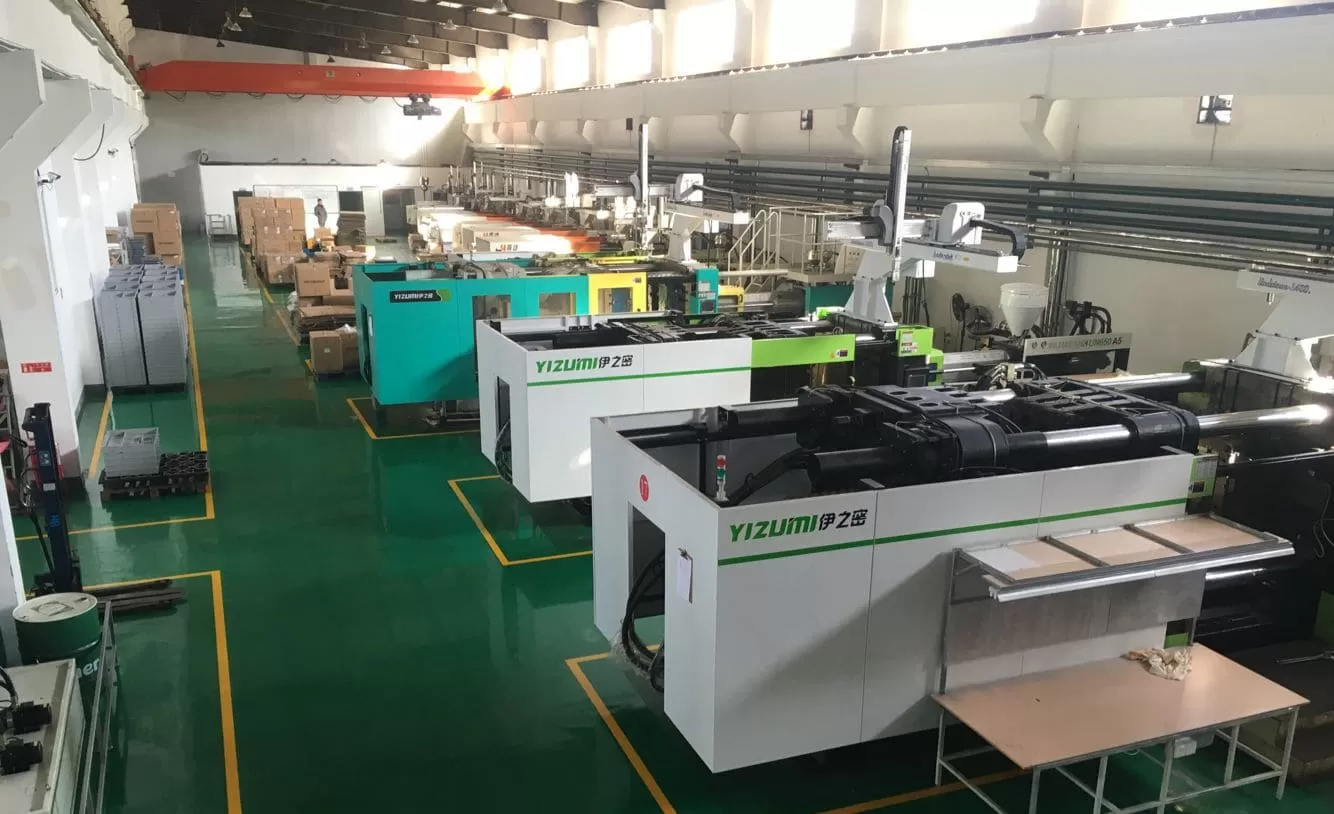
Machine capability is not just about how many machines a factory has — it is about whether a specific press matches your part and process window. Ask for a machine list with clamping-force ranges, shot sizes, controller types, and current availability. Beyond clamping force, ask about injection speed profiles, control repeatability, and whether the proposed machine is servo-hydraulic or all-electric.
Also verify shot-size compatibility using the combined weight of the part and runner system, the resin’s processing characteristics, and the machine manufacturer’s usable shot range. You want a supplier who can identify the specific press for your part, show the calculation, and name the backup plan.
Our published capability profile lists 45 production lines. That headline does not prove fit for a particular part, so ask us to identify the proposed press, shot-size calculation, available capacity, and backup equipment for your project.

What Should You Check in Their Mold Making Capability?
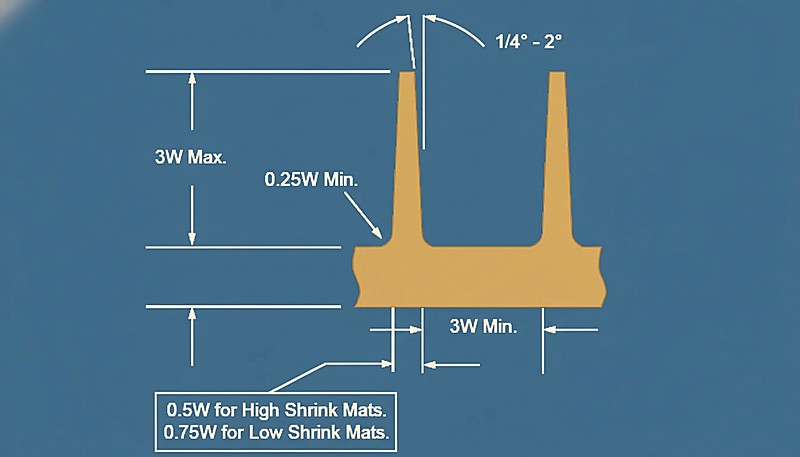
Some molding suppliers outsource toolmaking, while others manufacture molds in-house. Either model can work, but every handoff needs clear ownership, schedule control, and technical communication. Ask who designs and owns the tool, which software and machining processes are used, how dimensional inspection is documented, whether mold-flow analysis is performed when appropriate, and who resolves issues during trials. Also ask about available toolmaking capacity, mold-life assumptions, and preventive-maintenance programs.
A low-cost mold is not a bargain if its documented service life is below your production requirement. Request design records, inspection reports, maintenance plans, and examples of similar molds the supplier has built. If you visit the factory, inspect the mold shop, tool storage, machine condition, and maintenance records instead of relying only on a sales presentation.
Our published site documents in-house injection mold manufacturing equipment. For your project, ask us to identify the tooling owner, planned machines, inspection records, trial process, and repair path rather than relying on a headline monthly-output figure.
How Do You Evaluate Their Quality Control System?
Quality control is where many supplier evaluations fall short. Buyers ask “do you have QC?” and accept a yes. The right questions are: what inspection equipment do you have, what is your sampling plan, what happens when a part fails, and can I see a real inspection report from a current production run? Look for CMM (Coordinate Measuring Machine1) capability where your tolerances require it — not just calipers and go/no-go gauges. Ask for dimensional reports with actual values and GD&T callouts, then review incoming-material inspection and the documented corrective-action process.
Can they provide PPAP Documentation2 if your industry requires it? Request a sample First Article Inspection3 (FAI) report and check whether it includes actual measured values against nominal dimensions with tolerance assessment. A real FAI report tells you whether the supplier understands your tolerances or just checks a box.
Do not infer inspection coverage from team size. Ask us for the project control plan, sampling frequency, measurement records, equipment calibration status, and escalation path for a nonconforming result.
What Hidden Costs Should You Watch Out For?
The unit price quote is where many buyers stop comparing. But the real cost comparison needs to account for tooling cost and ownership terms, mold storage fees after production ends, rework and scrap rates, shipping method and frequency, payment terms and currency risk, engineering support charges for design changes, and warranty coverage on both tooling and parts. In a hypothetical comparison, a supplier quoting $0.50 per part with a 3% scrap rate and planned sea freight may have a lower landed cost than one quoting $0.35 with an 8% scrap rate and unplanned air freight caused by schedule problems.
Ask for a total cost model that includes at least two production scenarios. The best suppliers will proactively walk you through these variables rather than hoping you only look at the headline price. Also clarify who owns the mold — if you paid for it, you should be able to move it. If the supplier claims ownership despite your payment, that is a red flag for future flexibility.
How Important Is Communication and Project Management?
Poor communication can be as damaging as bad tooling. When a supplier responds slowly to a critical dimension question or misunderstands a tolerance requirement, the cost shows up in rework and delays. Evaluate communication before you commit: send a technical inquiry and assess response time, technical accuracy, and language clarity. Ask for a named contact, a sample progress report, the milestone-tracking method, and the escalation path for technical issues.
Can you get on a video call with the actual engineer working on your project, or only with a sales person? The difference between a project manager who forwards your email and one who proactively flags a potential issue before it becomes a problem is the difference between a successful launch and a fire drill. Insist on a named project manager and a communication cadence before placing your order.
Ask us to name the project and technical contacts for your work, define the reporting cadence, and show how an issue moves from sales to engineering and production. Those observable practices are stronger evidence than a team-size claim.
Should You Request a Trial Run Before Full Production?
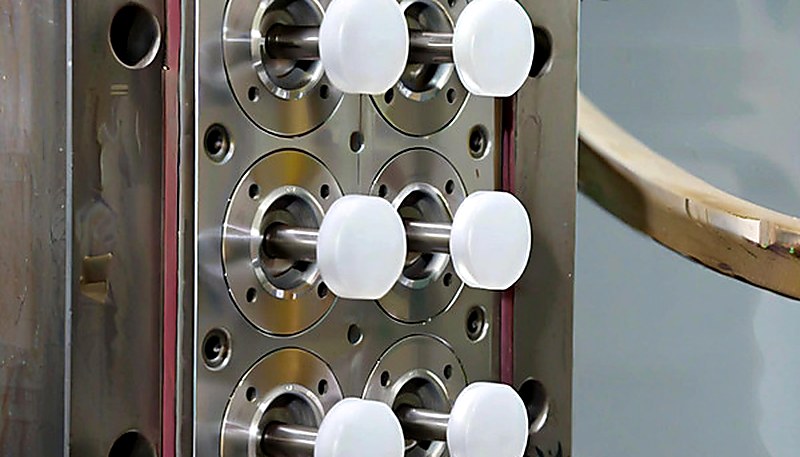
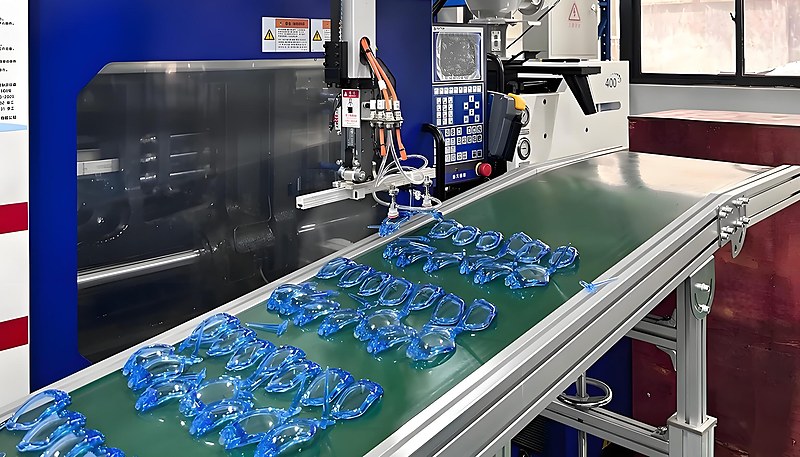
Yes. A supplier who cannot explain or accommodate an appropriate trial plan presents a serious qualification risk. During the trial, check dimensional accuracy across cavities, visual surface quality, material behavior, cycle consistency, and gate effects on appearance. Define the sample quantity from the number of cavities, inspection plan, and validation objective, then compare the results with your drawings through your own team or an independent lab.
If critical dimensions are out of specification on trial parts, do not assume the transition to production will correct them. Require a documented root cause and corrective action. This is also the time to verify that the supplier recorded the process parameters needed to reproduce validated conditions in volume production.
How Do You Verify Material Capability?
Material capability means your supplier has verifiable experience processing your specific resin. Many suppliers claim they can mold any material, but the reality is that each material has specific processing requirements, and experience matters enormously. A supplier who has never run glass-filled nylon will have a steep learning curve on your project — at your expense. Ask for a list of materials they run regularly, and specifically ask about experience with your target material. A supplier with experience across 400+ plastic materials has likely encountered your material before and understands its quirks — moisture sensitivity, melt temperature windows, drying requirements, and post-molding behavior like shrinkage and creep.
Also verify that they have suitable drying equipment for the selected resin and that the incoming-material controls match your specification. Out-of-spec or improperly conditioned resin can cause part failure, and documented receiving and drying controls reduce that risk. If your part requires a specific color match, ask to see a color sample before full production and verify how the supplier measures and controls color across batches.
Our published capability profile lists 400+ material types. For your selected grade, ask us to provide relevant processing history and the proposed drying, temperature, pressure, and traceability controls.
What Red Flags Should Make You Walk Away?
Major red flags include refusal to provide inspection data, inability to name the person responsible for your project, and payment terms that shift all risk to the buyer. First, treat refusal to provide relevant sample inspection reports or references as missing qualification evidence. Second, investigate capability claims that are inconsistent with the equipment, staffing, or processes you can verify.
Third, challenge a demand for full upfront tooling payment with no milestone structure. Fourth, require a named project manager or engineer and a clear escalation path. Fifth, ask the supplier to explain any restriction on a factory visit or live video tour. Sixth, require a documented process for defects and complaints. Seventh, investigate a bid far below comparable quotes by checking material grade, inspection scope, tooling assumptions, and omitted services before deciding whether the price is credible.
How Do You Build a Long-Term Supplier Relationship?
Passing the checklist is the beginning, not the end. The best supplier relationships are partnerships built on transparency, consistent communication, and mutual investment. Once you have selected a supplier, maintain a regular review cadence — quarterly business reviews with quality metrics, on-time delivery rates, and open issue logs keep both sides accountable. Share your demand forecast proactively so the supplier can plan capacity. The suppliers who perform best for their clients are the ones who get treated like partners rather than interchangeable vendors. Consolidate your spend with fewer suppliers to increase your leverage and priority. Provide feedback on both good and bad performance — most suppliers want to improve but need specific, actionable input.
Consider a periodic factory visit when the relationship is significant; direct interaction can reveal changes in equipment, process control, and staffing that routine emails do not. Long-term stability should be judged from delivery, quality, financial, and management evidence rather than workforce size alone.
Author Mike Tang has more than 20 years of field experience, while our published capability profile lists 45 production lines, 400+ material types, and 8 expert mold engineers. Buyers should combine those facts with current project records when assessing long-term fit.
"A trial run with first article inspection is an effective way to verify a supplier's capability before committing to volume production."True
True. A trial run provides direct evidence of dimensional accuracy, surface quality, and process stability that certificates alone do not establish. It creates an opportunity to correct problems before they scale.
"A supplier with only ISO 9001 certification is sufficient for every medical device injection molding project."False
False. Medical-device requirements depend on the product, customer, jurisdiction, and supplier role. ISO 13485 may be required or expected, but buyers must verify the exact certification scope and project-specific regulatory obligations rather than treating any certificate as universal approval.
In practice, a polished website and a certificate list do not compensate for weak technical ownership. In-house tooling capability can simplify handoffs, and responsive project management can surface problems earlier, but buyers should verify both through records, named owners, and a trial process. Compare bids on total landed cost and risk, not only on the lowest tooling or unit price.
Use a simple decision test: ask the supplier to walk you through a recent dimensional nonconformance, including containment, root-cause analysis, corrective action, and customer communication. An inability to explain that process is a material warning sign.
"In-house mold manufacturing can reduce handoff time and communication errors compared with outsourced mold building."True
True, when design, machining, trial, and corrective-action ownership are integrated. Buyers should verify the actual workflow; an in-house label alone does not guarantee shorter lead time or better accountability.
"The lowest unit price quote is always the best choice for injection molding production."False
False. Total landed cost includes scrap rates, shipping method, rework frequency, and tooling ownership terms. A supplier with a slightly higher unit price but lower scrap and better communication often delivers a lower total cost.
Frequently Asked Questions
How many suppliers should I evaluate before choosing one?
There is no universal number. Compare enough qualified suppliers to establish a credible range for capability, lead time, total cost, and commercial terms. For a high-risk program, include at least one backup candidate and use the same evidence checklist for each supplier so the comparison remains consistent.
What is the most important certification for an injection molding supplier?
ISO 9001 is a common baseline for a quality management system, but there is no single certificate that answers every sourcing question. Medical-device work may require ISO 13485 or other project-specific evidence depending on the supplier’s role and regulatory pathway. ISO 14001 and ISO 45001 address environmental and occupational health and safety management. Always verify the holder, validity, and exact scope through the issuing body rather than accepting a scanned logo or certificate at face value.
How long should a supplier evaluation take?
The evaluation period depends on project risk, audit access, sample availability, and whether a trial run is required. Build the schedule around completion of the evidence: capability screening, certificate review, a factory tour when warranted, sample or trial production, and reference checks. Do not compress the process by skipping a gate that protects a critical tolerance, regulatory obligation, or launch date.
Should I visit the factory in person before placing an order?
A factory visit is strongly recommended when project risk, critical tolerances, regulatory obligations, or delivery exposure justify it. Walking the production floor reveals equipment condition, workplace organization, and process discipline in ways that documents cannot fully capture. If travel is not feasible, request a live video tour of the mold shop, inspection area, and active production lines, and ask technical questions during the walkthrough.
Can I use the same supplier for both mold making and injection molding production?
Yes, when the supplier has the required tooling and molding capability. One integrated owner can reduce handoffs and simplify accountability, but the benefit depends on the actual workflow, equipment, and technical team. If toolmaking is outsourced, require clear design ownership, change control, trial responsibilities, and a single escalation path across both companies.
What happens if the supplier fails the trial run?
A failed trial run is valuable diagnostic data, not necessarily a deal-breaker. The key is to evaluate how the supplier responds to the failure. If they acknowledge the root cause, propose a clear corrective action plan with a specific timeline, and demonstrate they have the technical capability to implement the fix, then a second trial run may be warranted. However, if the supplier blames your design without performing any root cause analysis, cannot explain why the failure occurred, or dismisses dimensional deviations as acceptable when your specifications say otherwise, that is a clear signal to find a different supplier.
Ready to Evaluate Your Next Injection Molding Partner?
The right injection molding partner is one who passes your checklist, welcomes appropriate verification, and communicates proactively throughout production. ZetarMold’s published capability profile lists 45 production lines, 400+ material types, and 8 expert mold engineers, while author Mike Tang brings more than 20 years of field experience. We welcome project-specific questions, evidence requests, and trial planning so you can evaluate fit on your own requirements.
[cta title=“Get a Free Quote” href=“https://zetarmold.com/contact/”\]Upload your 3D files and request a detailed quote with mold cost, unit price, and estimated lead time.[/cta]
Coordinate Measuring Machine: A Coordinate Measuring Machine is a device that measures the physical geometrical characteristics of an object against design tolerances, providing precise dimensional data. ↩
PPAP Documentation: Production Part Approval Process is a standardized framework used primarily in the automotive industry to ensure supplier components meet customer engineering and quality requirements. ↩
First Article Inspection: First Article Inspection is a formal method for verifying that the manufacturing process produces parts conforming to the design specifications. ↩