When you source injection molded parts from an overseas supplier, the mold design and production quality matter — but export support is what gets those parts to your dock on time and in spec. Drawing on more than 20 years of experience in mold design and production, we have seen how missed paperwork, unsuitable packaging, and incomplete compliance files can turn a sound parts order into delays and rework. In this article, we walk through common export support mistakes injection molding suppliers make, why they happen, and how to identify them before shipment.
Whether you are evaluating a new supplier or debugging a recurring shipping problem, these are the pitfalls worth knowing.
- Incomplete shipping documentation can cause customs delays
- Poor packaging design can lead to part damage and rework
- Regulatory compliance gaps can trigger shipment holds or rejection
- Clear buyer-supplier communication helps prevent export problems
- Evaluate a supplier's export track record alongside its molding capabilities
What Are the Most Common Export Support Mistakes in Injection Molding?
Export support mistakes fall into six categories: documentation, packaging, compliance, quality standards, communication, and process discipline. Each one can extend lead time, and together they can stall a shipment entirely. Export support covers everything that happens after a part comes off the injection molding machine: inspection documentation, packaging, labeling, customs paperwork, compliance evidence, and logistics coordination. Buyers who focus only on tooling quality and unit price may discover export-process gaps too late.
In the sections below, we break down each mistake, explain why it happens, and share what to look for when auditing a supplier’s export capability.
How Does Incomplete Documentation Cause Shipping Delays?
Incomplete documentation is a common export support failure. When a supplier ships injection molded parts without the commercial invoices, packing lists, safety data sheets, certificates of origin, or other records required for that shipment, customs may hold the goods until the paperwork is corrected. Storage fees can accumulate and production schedules can slip. Frequent gaps include inaccurate HS code classifications, missing material declarations for regulated products, such as those subject to RoHS requirements1, and inspection reports that do not match the shipped lot.
A practical pre-shipment checklist should cover the records applicable to the order, including material certificates, dimensional inspection reports, and packaging integrity photos. Cross-check each document against the purchase order, shipped lot, and destination requirements before the shipment is sealed.
Why Do Packaging and Labeling Failures Lead to Part Damage?
Injection molded parts may look tough, but they are surprisingly vulnerable during transit. Surface scratches, warped features, contamination from debris, and even UV damage from improper storage can all turn functional parts into scrap. The root cause is usually a supplier who treats packaging as a cost to minimize rather than a quality step to engineer. Common packaging mistakes include: using single-wall corrugated boxes for heavy molded parts, skipping VCI (vapor corrosion inhibitor) protection for metal-insert mold components, stacking parts without layer separators, and failing to vacuum-seal moisture-sensitive materials like nylon or polycarbonate. Labeling errors are equally destructive.
For example, moisture-sensitive packaging without the specified desiccant or humidity indicator can allow parts to absorb moisture during transit and then fail during a downstream thermal process. Specify the required packaging controls in the purchase order, including ESD protection, desiccant packs, or vacuum sealing where the material and application require them.
A wrong part-number label can send the wrong parts to the production line, forcing segregation, replacement, or return shipping. Proper export packaging should specify inner packaging (individual bags or trays), outer packaging (box type and stack pattern), and labeling (part number, quantity, PO reference, and country-of-origin marks where required). Request a sample packing photo before the first bulk shipment.
When Do Regulatory Compliance Gaps Trigger Customs Holds?
Customs clearance delays2 can arise when the shipment lacks current documentation required for its product and destination. Requirements differ by region and application: EU-bound electrical and electronic products may need RoHS evidence, while regulated products in the United States may require FDA-related documentation. For medical-device supply chains, an ISO 134853 quality system may support traceability, but the certificate does not replace product- and shipment-specific regulatory records. Missing or mismatched evidence can lead to a hold while the buyer and supplier correct it.
Certification status and shipment documentation are separate checks. Ask the supplier to identify the exact documents required for your product and destination, provide current copies for review, and name the person responsible for keeping them aligned with the shipped lot. An outdated safety data sheet or declaration that cites a superseded standard can still delay clearance. Preparing and reviewing the records before dispatch is generally less disruptive than correcting them after a hold.
How Can Misaligned Quality Standards Cause Rework Cycles?
Rework is the silent budget killer in injection molding supply chains. It happens when the supplier and the buyer have different interpretations of what acceptable quality means. The supplier inspects parts to their internal standard, ships them, and the buyer rejects them based on a stricter or simply different set of criteria. Common mismatches include: dimensional tolerance interpretation (the supplier measures at room temperature, the buyer measures after conditioning), surface finish expectations (what the supplier calls SPI B-2 the buyer considers SPI B-3), and cosmetic defect allowances (how many sink marks or weld lines are acceptable per hundred parts).
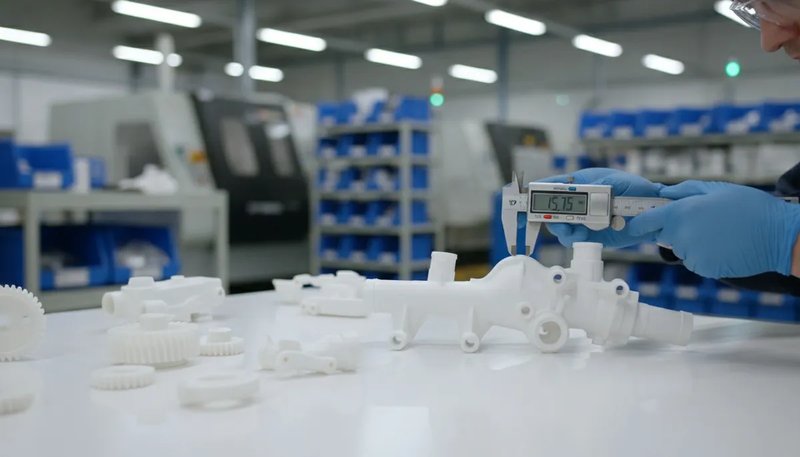
Each rejection cycle may require segregation, rework, replacement production, or tooling adjustment, extending the project timeline. The preventive step is to agree on a detailed quality standard before production starts. Share inspection criteria, measurement methods, conditioning requirements, and acceptance limits in writing, then record both parties’ approval of the dimensional tolerances, surface-finish requirements, and sampling plan.
"Preparing required compliance documentation before shipment reduces clearance risk."True
True. Reviewing current, product-specific documents before dispatch can expose missing records or mismatches while they are still easier to correct.
"A supplier with ISO 9001 certification automatically meets all export compliance requirements."False
False. ISO 9001 is a quality management system standard, not an export compliance certification. Regional regulations like EU REACH, US FDA requirements, and CE marking must each be addressed separately with their own documentation.
What Role Does Communication Play in Preventing Export Problems?
Many export support failures involve a communication breakdown somewhere in the chain. The buyer assumes the supplier knows the applicable market requirements, while the supplier assumes the buyer will specify every unusual condition. Neither side confirms the assumptions in writing, so parts may arrive with the wrong documentation, packaging, or material evidence. A simple protocol helps: first, establish a single point of contact on each side who owns the export process end-to-end.
Second, use a shared pre-shipment checklist that both parties sign off on before goods leave the factory.
Third, require photo documentation of packaging and labeling before the shipment is sealed. These steps expose many issues before they reach customs or incoming inspection. Communication risk rises when the sales and export teams are siloed: the sales representative may lack visibility into shipping, while the export coordinator may lack the project’s technical context. Test whether the supplier has clear ownership and a reliable handoff between these roles.
How Do You Evaluate a Supplier’s Export Capability Before Ordering?
Evaluating export capability is about checking documentation, packaging, compliance, and logistics before you order. Ask for samples of their shipping documentation from recent orders including commercial invoices, packing lists, certificates of origin, and compliance declarations. If they cannot produce these quickly, that is a warning sign. Request their standard packaging specifications for parts similar to yours in size, weight, and material.
Check whether they have experience shipping to your specific country, including any applicable requirements such as CE marking or UL recognition. Pay attention to how they control documentation accuracy: incorrect HS codes, wrong country-of-origin labeling, or missing regulatory declarations can result in customs holds. A named export coordinator makes ownership and escalation easier to verify.
Ask about their logistics partners and whether they offer multiple shipping options with real-time tracking and delivery confirmation. Find out whether they have established relationships with freight forwarders who specialize in your geographic region. The right logistics partner can make the difference between a shipment that arrives on schedule and one that sits in a warehouse waiting for paperwork clearance. Finally, ask for references from customers in your region who can speak to the supplier’s export reliability over multiple orders and years of partnership. A supplier who provides all of this without hesitation has an established export process that will keep your supply chain running smoothly.
Another practical test is to send sample parts through the supplier’s standard export process. This lets you evaluate packaging quality, documentation accuracy, and carrier handling on a small batch before committing to full production volumes. Include the trial shipment’s cost and timing in the evaluation rather than assuming they are insignificant.
The difference between a supplier who treats export as an afterthought and one who treats it as a core process is clearly visible in their daily operations. Do they have a dedicated export coordinator? Do they maintain a documentation checklist that gets signed off before every shipment? Do they proactively notify you about regulatory changes in your destination market? These operational details distinguish reliable partners from those who will eventually cause you costly delays.
During factory audits, look beyond the production floor: ask to see how export documents are controlled, where packaging is tested, and how shipping performance is recorded. Review dated on-time-delivery and customs-hold data, including the definitions and sample size behind each metric, rather than accepting an unsupported summary.
In our experience, the most reliable export partners are those who have invested in dedicated export staff and standardized their documentation workflows. They treat every shipment as a repeatable process, not a one-off event that requires ad hoc problem solving.
Key Indicators of a Reliable Export Partner
Choosing the right injection molding supplier means looking beyond the press floor. A factory that can produce excellent parts but cannot ship them reliably is a liability, not a partner. The best suppliers invest in export infrastructure: trained documentation staff, tested packaging protocols, and established carrier relationships that ensure your parts arrive on time and in spec.
When you evaluate potential suppliers, weight their export track record as heavily as their molding capabilities. Ask about their worst shipping failure and how they resolved it — the answer tells you more about their export maturity than any certification on the wall. Export support is a core competency, not an afterthought, and the supplier who understands that distinction will save you time, money, and frustration over the life of your production program.
The bottom line: many export support mistakes can be prevented when you know what to look for and require the right controls from your injection molding supplier. Do not wait for a costly shipping failure to discover gaps in your supplier’s export capabilities.
ZetarMold's published records identify its Shanghai operations, while author Mike Tang reports more than 20 years of field experience. Buyers should still verify the documentation, packaging, and logistics controls for each project and destination.
"A pre-shipment documentation checklist can reduce customs-clearance risk for injection molded parts."True
True. Verifying the required shipping documents against a standardized checklist before dispatch can catch missing or inaccurate paperwork while it is still under the supplier's control.
"If injection molded parts pass quality inspection at the factory, packaging does not matter for export."False
False. Even perfectly molded parts can be damaged during international transit if packaging is inadequate. Proper inner and outer packaging is essential for protecting part quality.
Frequently Asked Questions
What shipping documents should an injection molding supplier provide?
An injection molding supplier should provide the commercial invoice, packing list, origin evidence, safety data, and compliance declarations that apply to the product and destination. Requirements such as RoHS, REACH, biocompatibility testing, food-contact declarations, or process-validation records depend on the material, intended use, and importing jurisdiction. Agree on the exact document list before production and verify it again before shipment.
How can I verify my supplier’s export track record?
Request copies of recent shipping documents and compliance certificates from orders similar to yours in material, volume, and destination country. Ask for customer references in your geographic region who can confirm delivery reliability and documentation accuracy over multiple shipments. Check whether the supplier has a dedicated export coordination team rather than relying on sales staff to handle logistics. Established partnerships with major freight carriers and a demonstrated track record of on-time delivery are strong indicators of reliable export capability for your orders.
What packaging standards should injection molded parts meet for export?
Export packaging should be designed around the part, material, route, and handling risks. Controls may include anti-static or moisture-barrier bags, outer cartons rated for the packed weight, separators between cosmetic parts, and labels showing part number, lot number, quantity, and handling instructions. For moisture-sensitive materials, follow the resin supplier’s storage and packaging requirements and document the selected moisture controls.
Why do injection molded parts get held at customs?
Customs holds can result from incomplete commercial invoices, inaccurate HS classifications, missing product-specific compliance evidence, or discrepancies between packing-list quantities and the shipment contents. The delay depends on the issue, port, and importing jurisdiction, so confirm the required data with the importer and logistics provider before dispatch.
How do I prevent quality disputes with my injection molding supplier?
Establish a written quality agreement before production begins that specifies dimensional tolerances with explicit measurement methods, surface finish standards using agreed SPI ratings, sampling plans following AQL standards, and clear acceptance and rejection criteria for cosmetic and functional defects. Both parties should sign off on this document before any tooling work starts. Share your inspection criteria and, when possible, send measurement fixtures or go and no-go gauges so the supplier can verify parts against your exact requirements before packing and shipping.
What is a pre-shipment inspection and why does it matter for export?
A pre-shipment inspection is a final quality check performed on finished parts before export. It verifies the agreed sampling and acceptance criteria, confirms quantities against the purchase order, and documents the condition of the inspected lot before it leaves the factory. A dated report with photographs can support later investigation and exposes quality problems while correction remains under the supplier’s control.
Can a supplier’s export mistakes affect my product liability?
Yes. Missing compliance documentation or nonconforming materials can increase the buyer’s regulatory and product-liability exposure, particularly when the buyer is the importer of record. Obligations vary by jurisdiction and application, so identify the responsible parties with qualified legal or regulatory advisers and independently verify the required evidence before accepting the shipment.
RoHS requirements: The EU RoHS Directive restricts specified hazardous substances in electrical and electronic equipment within its scope. ↩
Customs clearance: The WTO customs resources describe international rules related to customs valuation; shipment documentation and clearance requirements still depend on the goods and importing jurisdiction. ↩
ISO 13485: ISO 13485:2016 specifies quality-management-system requirements for organizations involved in the life cycle of medical devices. ↩