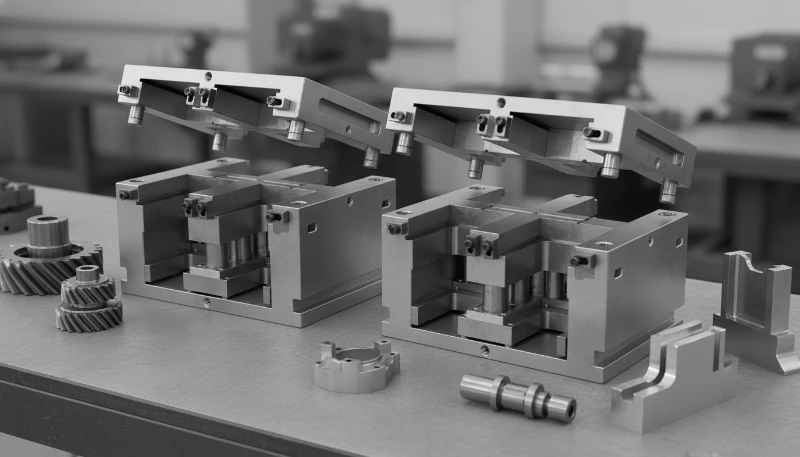
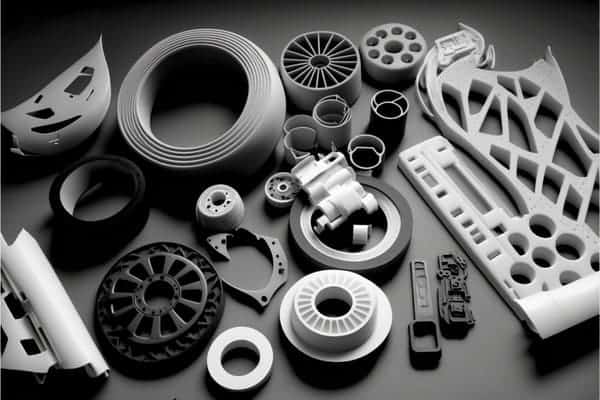
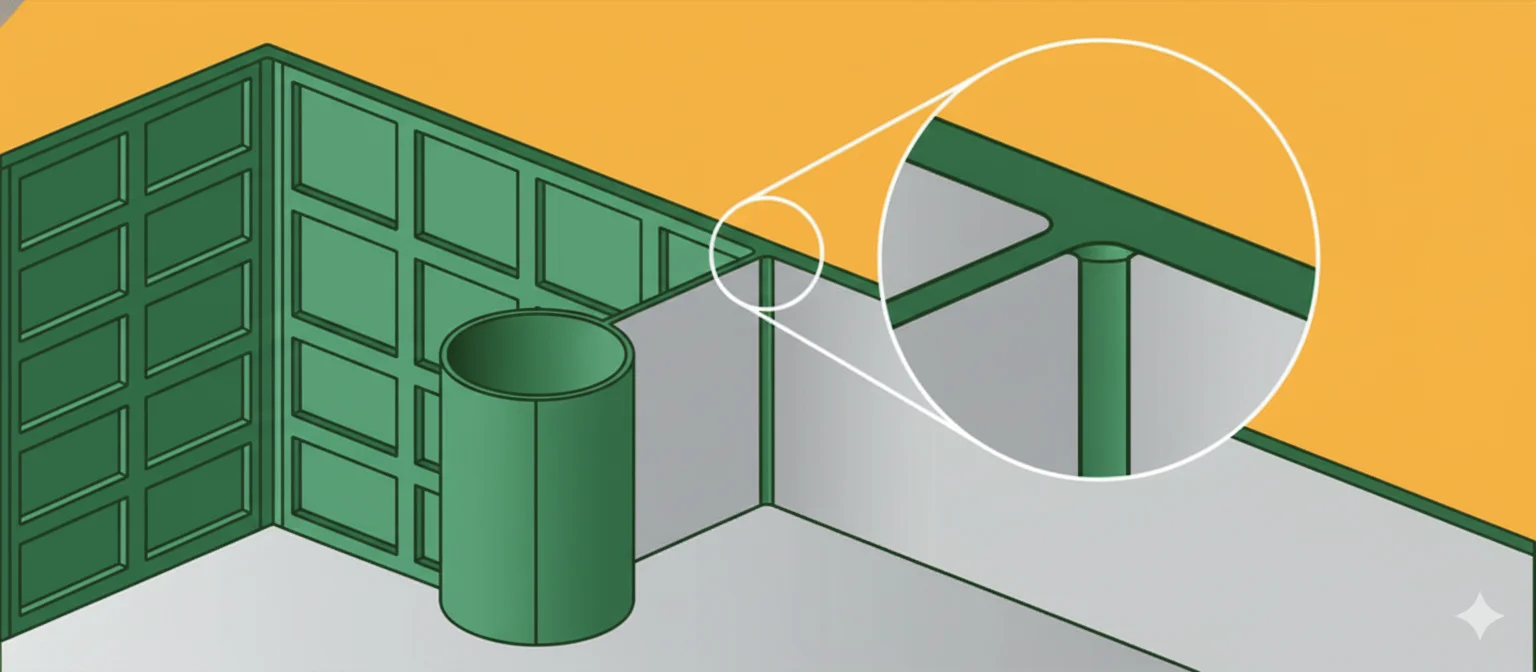
Hot runners revolutionize the injection molding, enhancing efficiency and product quality across various industries.
Hot runners minimize waste and improve cycle times by keeping the plastic melt at optimal temperatures during molding. They are commonly used in automotive, consumer goods, and medical device manufacturing. Key benefits include reduced material costs and improved consistency in part quality.
While this overview highlights the advantages of hot runners, understanding their design and application is crucial for optimizing your production processes. Explore further to discover how different hot runner systems can enhance your manufacturing efficiency.
- Hot runners keep plastic molten in the runner system, eliminating cold-runner waste and reducing cycle times below 5 seconds for thin-wall parts.
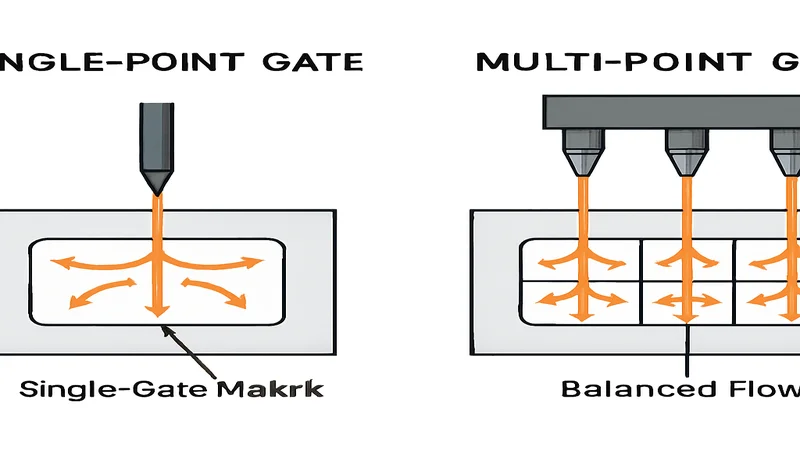
- Temperature control and balanced flow are the two most critical technical factors—poor control causes gate defects, flash, and uneven cavity fill.
- Valve-gate systems offer the highest precision but require the most complex maintenance; open systems are simpler but less versatile.
- Hot runner molds save 10–20% on material costs in high-volume production by eliminating runner scrap entirely.
- Proper manifold and nozzle design, verified through CAE analysis, is essential for multi-cavity mold success.
For buyers, the important question is not whether hot runners are advanced, but whether they fit the resin, part weight, annual volume, gate appearance requirement, and maintenance capability of the supplier. A hot runner can be a strong investment when the runner would waste expensive material, but it can also become a hidden cost if the system is poorly balanced or hard to service.
"Hot runners reduce cycle times in injection molding."True
Hot runners keep the plastic melted, reducing the cooling time and speeding up the overall production process.
"Hot runners are more expensive than cold runners in every case."False
While hot runners generally have a higher initial cost, their efficiency and material savings can lead to lower overall costs in long-term production.
What is the Principle of Hot Runner?
Hot runners keep melt hot inside heated mold channels, so no cold slug forms and no runner scrap is produced.
If you are comparing vendors or planning procurement, our injection molding supplier sourcing guide covers RFQ prep, qualification, and commercial risk checks.
Hot runners maintain the temperature of the molten plastic throughout the molding process, preventing solidification and reducing waste. This technology is widely used in industries such as automotive, consumer products, and medical devices. Key advantages include improved cycle times, lower material costs, and enhanced consistency in finished products.
Hot runner systems are divided into adiabatic runners and micro semi hot runner system1.The hot runner, also known as the non-runner, means that the plastic in the runner does not solidify after each injection, and the water outlet in the runner does not need to be removed when the plastic product is demolded. Since the plastic in the runner is not solidified, the runner is still unobstructed during the next injection. In short, the hot runner is an extension of the injection molding machine nozzle.
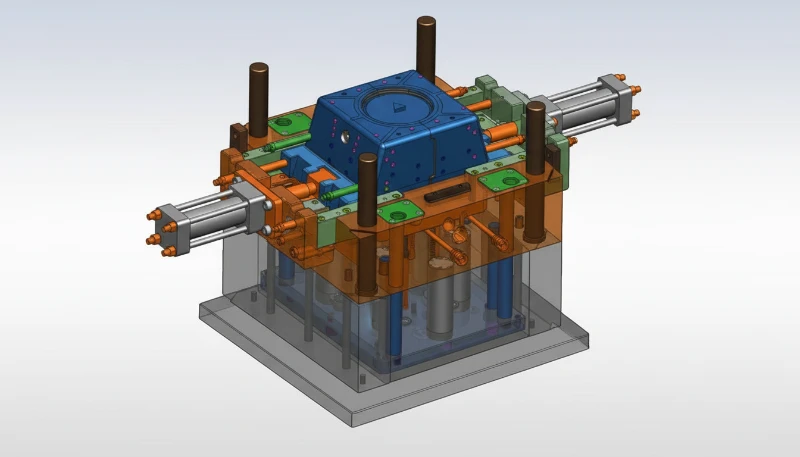
The hot runner is a heating component system used in injection molds to inject melted plastic particles into the mold cavity. A hot runner mold is a new structure that heats the runner and channel of a traditional mold or three-plate mold, so that the runner and runner do not need to be removed during each molding.
What are the Key Technical Factors Affecting Hot Runners?
Nozzle design, temperature control, and gate type are the three variables that decide hot runner reliability in production.
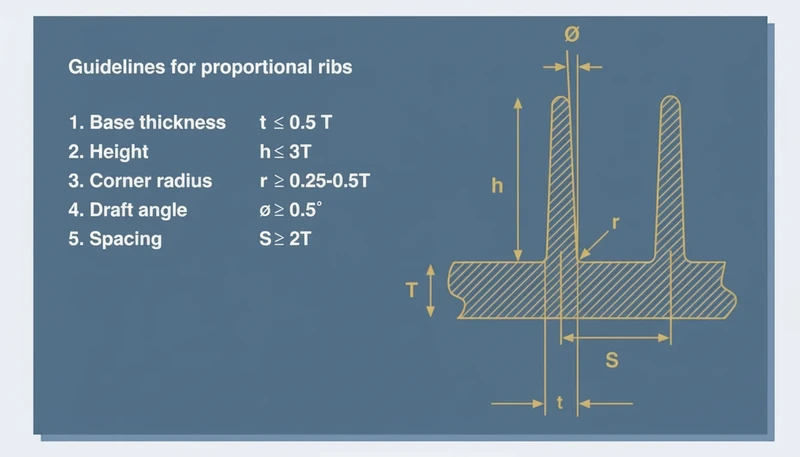
To make a hot runner mold project successful, you need to make sure you have a few things in place. The two most important technical things you need to have are: control of plastic temperature and control of plastic flow.
Control of Plastic Temperature
Controlling the temperature of plastic is super important when you’re using a hot runner mold. If you don’t control the temperature well, you’ll have a lot of problems with your process and the quality of your parts. For example, if you use a hot tip gate, you’ll have a lot of problems with the quality of your gate. If you use a valve gate, you’ll have a lot of problems with the valve pin closing.
If you have a multi-cavity mold, you’ll have a lot of problems with the fill time and the quality of your parts. If you can, try to get a hot runner system that has a lot of zones so you can control the temperature better and have more flexibility.
Control of Plastic Flow
Plastics should flow balanced in the hot runner system. The gates should be opened at the same time to allow the plastic to fill each cavity synchronously. For FAMILY MOLD with a large difference in part weight, the runner size design should be balanced. Otherwise, some parts will not be filled with enough pressure, while others will be filled with too much pressure, or the flash will be too large and the quality will be poor. The design of the hot runner runner size should be reasonable.
If the size is too small, the pressure loss will be too large.If the size is too big, the hot runner volume will be too big, and the plastic will stay in the hot runner system for too long, which will damage the material properties and cause the parts to fail to meet the use requirements after molding. There are already CAE flow analysis software such as MOLDCAE that specifically helps users to design the best runner.
What Types of Hot Runners are There?
There are two main types of hot runners: open and closed systems. Open systems allow direct flow of molten plastic, while closed systems use a manifold2 to maintain temperature and reduce waste. Hot runners are widely utilized in industries such as automotive, consumer goods, and medical devices, offering benefits like reduced material usage and improved part consistency.
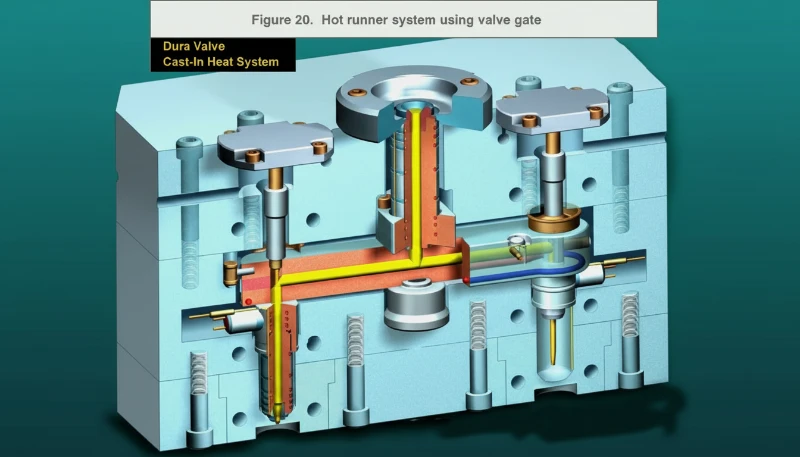
Needle Valve Type
The valve gate system is a mechanical valve needle system that drives the valve needle with air pressure.Needle valve hot runners save materials, have beautiful plastic surface, and have tight internal quality and high strength. There are two major types of needle valve hot runners in the world (based on the injection principle): cylinder type and spring type.
What are the Types of Hot Runner Systems?
There are two main types of hot runner systems: open and closed. Open systems expose the melt to the atmosphere, which is simpler but can lead to material degradation. Closed systems, however, keep the melt contained, minimizing waste and maintaining material integrity. Both systems enhance production speed and part consistency, making them essential in industries like automotive and consumer goods.
Hot runner systems can be divided into fully hot runner system and semi-hot runner systems.Hot runner systems can be divided into three types: single nozzle hot runner systems, multi-nozzle hot runner systems, and valve gate hot runner systems.
Single-Head Hot Runner System
The single-head hot runner system is mainly made up of a single nozzle, a nozzle head, a nozzle connecting plate, a temperature control system, and so on.
It is necessary to control the dimensions d, D, L and adjust the thickness of the nozzle connecting plate so that the fixed mold fixing plate presses the end face of the nozzle connecting plate to control the axial displacement of the nozzle, or directly use the injection molding machine nozzle to support the end face of the nozzle connecting plate to achieve the same purpose.
Multi-Head Hot Runner System
The plastic mold of the multi-head hot runner system is pretty complicated. The molten plastic is injected into the nozzle connecting plate by the injection molding machine, flows to the nozzle through the hot runner plate, reaches the nozzle head, and then is injected into the cavity. The nozzle of the hot runner system has to match the radial dimension D1 and the axial dimension limit requirements with the fixed mold plate.
The nozzle head and the fixed mold insert have to match the radial dimension d to make sure the molten plastic doesn’t overflow to the non-cavity part, and the hardness of the fixed mold insert has to be hardened to about 50HRC. The distance L between the parting surface and the axial positioning surface of the hot nozzle has to be strictly controlled.
| Parameter | Tolerance | Purpose |
|---|---|---|
| Radial dimension D1 | ±0.01 mm | Nozzle-to-plate alignment |
| Radial dimension d | ±0.005 mm | Prevent plastic overflow |
| Gap (room temp) | 0.025 mm | Thermal expansion compensation |
| Hardness (insert) | ~50 HRC | Wear resistance at gate |
The dimension should be determined based on the actual distance L\’ of the nozzle at room temperature plus the actual extension ΔL of the nozzle at the normal working temperature of the mold. To ensure that the nozzle fits the hot runner plate reliably and does not deform the hot runner plate, an adjustment pad is provided above the top of the nozzle.
The adjustment pad and the axial positioning surface of the nozzle limit the axial movement of the nozzle and effectively control the possible deformation of the hot runner plate. At room temperature, the gap between the adjustment pad and the hot runner plate and the fixed mold plate is controlled to be 0.025mm so that after the mold is heated, the adjustment pad is just pressed at the working temperature.
The hot runner system’s positioning seat and positioning pin control the hot runner plate’s position in the mold. The positioning seat and the fixed mold plate must have a D2 radial dimension match, and the depth h must be controlled accurately. The positioning seat’s axial direction supports the hot runner plate and directly bears the injection pressure of the injection machine.
The positioning pin must match the hot runner plate’s fixed plate. There must be enough space between the hot runner plate and the mold plate to wrap the insulation material. The hot runner plate and the fixed plate must have enough wiring grooves to allow the power cord to exit the mold and connect to the wiring seat installed on the mold.
There is a radial dimension D1 matching requirement between the nozzle connecting plate and the fixed mold fixing plate so that the injection head of the injection molding machine can cooperate well with the nozzle connecting plate on the mold. Near the hot runner plate, the fixed mold plate, the hot runner plate fixing plate, and the fixed mold fixing plate are connected with screws to enhance the rigidity of the hot runner plate.
Valve Gate Hot Runner System
What are the Hot Runner Assembly?
A hot runner assembly is the manifold, nozzles, heaters, and sensors that deliver molten plastic straight to each cavity.
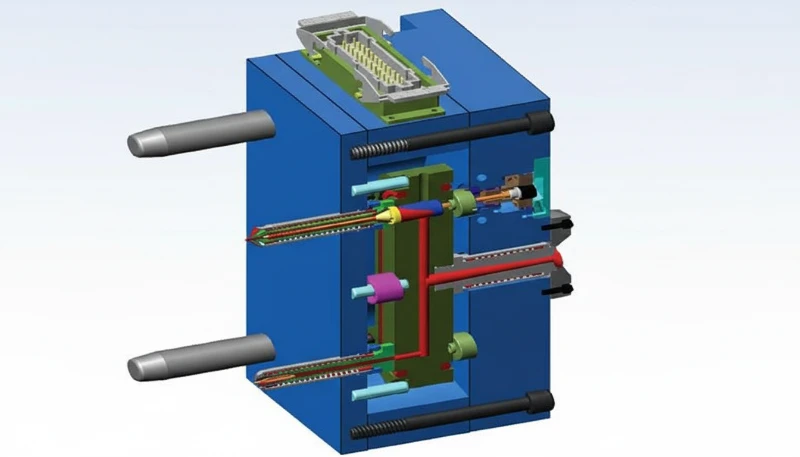
Positioning Ring
The positioning ring positions the injection mold in the injection molding machine to make sure the mold is lined up right with the machine.
Main Nozzle
When the resin is shot into the mold, this is the gate where the resin comes in from the injection molding machine nozzle. Depending on the type of resin and the design of the hot runner, the gate component can be heated to optimize the molding process.
Manifold
Manifolds are used when you have multiple cavities in a mold or when you have multiple feed points or when you have a single feed point but the material level is offset. The material is usually P20 or H13. Manifolds are generally divided into two categories: standard and non-standard. Their structural form is mainly determined by the distribution of cavities on the mold, the arrangement of nozzles and the location of gates.
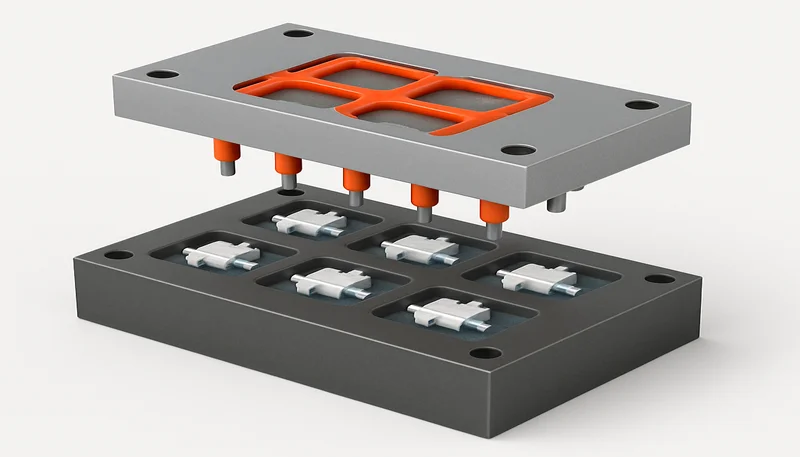
Manifolds allow resin to flow into different nozzles and injection points (gates). Manifolds are usually used when you have multiple cavities or when you need more than one nozzle/gate for each part. Manifolds can be used for a variety of materials, designs and shapes, and are usually optimized through CAE analysis to improve the molding process.
Nozzle
There are two types of hot nozzles: open hot nozzles and needle valve hot nozzles. The type of hot nozzle you use determines the type of hot runner system you need and the type of mold you need to make. So, hot runner systems are divided into open hot runner systems and needle valve hot runner systems.
Heater Technology
Heater technology is the foundation of all hot runner systems and has a big impact on the molding process and part quality. There are several heating methods, each with its own pros and cons. Choose the right hot runner based on different molding processes, part performance, reliability and cost requirements. The most common hot runner technologies include heaters with heating belts/plates, adhesive/flexible heaters or brazed heaters.
What are the Advantages of Hot Runner?
The advantages of hot runner are the main categories or options explained in this section. Hot runners cut material waste by up to 50%, shorten cycle times, and eliminate runner regrind—making them essential for high-volume injection molding.
In our Shanghai factory, we run 47 injection molding machines from 90T to 1850T with an in-house mold manufacturing facility. With over 20 years of experience, we've found that hot runner systems consistently reduce material waste by 15–30% on multi-cavity production runs—especially on our larger tonnage presses where runner volumes would otherwise be significant.
Shortened Cycle
The molding cycle of parts is shortened. Because there is no cooling time limit for the runner system, the parts can be ejected in time after molding and curing. The molding cycle of many thin-walled parts produced with hot runner molds can be less than 5 seconds.
Expand the Scope of Application
Improve Product Quality
When you’re making plastic parts with a hot runner mold, you can control the temperature of the plastic melt in the runner system. This means the plastic can flow into each mold cavity in a more even way, so you get parts that are the same quality every time. The parts you make with a hot runner mold have good gates, low stress after you take them out of the mold, and they don’t get messed up.
That’s why you see a lot of high-quality products made with hot runner molds. A lot of the plastic parts in MOTOROLA phones, HP printers, and DELL laptops are made with hot runner molds.
Save Plastic
Reduce Waste
Production Automation
What are the Disadvantages of Hot Runner?
The main drawbacks of hot runners are higher tooling cost, added maintenance complexity, and the risk of thermal degradation in heat-sensitive resins.
Rising Costs
"Valve-gate hot runner systems produce gate marks that are virtually invisible on the finished part."True
Valve gates use a mechanical pin to close the gate cleanly, leaving only a tiny witness mark—ideal for cosmetic surfaces like automotive exterior panels.
"Hot runner systems eliminate the need for any mold temperature control."False
Hot runners only heat the runner channel; the mold itself still requires its own temperature control system (cooling channels) to solidify the part properly after filling.
High Equipment Requirements
For example, poor plastic sealing leads to plastic overflow and damage to hot runner components, interrupting production, and poor relative position of nozzle inserts and gates leads to serious decline in product quality.
Complex Operation and Maintenance
Hot runner molds are more complicated to operate and maintain than cold runner3 molds. If you don\’t operate them properly, it\’s very easy to damage the hot runner parts, which will make production impossible and cause huge economic losses. For new users of hot runner molds, it takes a long time to accumulate experience.
What are the Application Areas of Hot Runners?
Hot runners serve automotive, medical, packaging, electronics, and consumer goods—anywhere high-volume precision molding is needed.
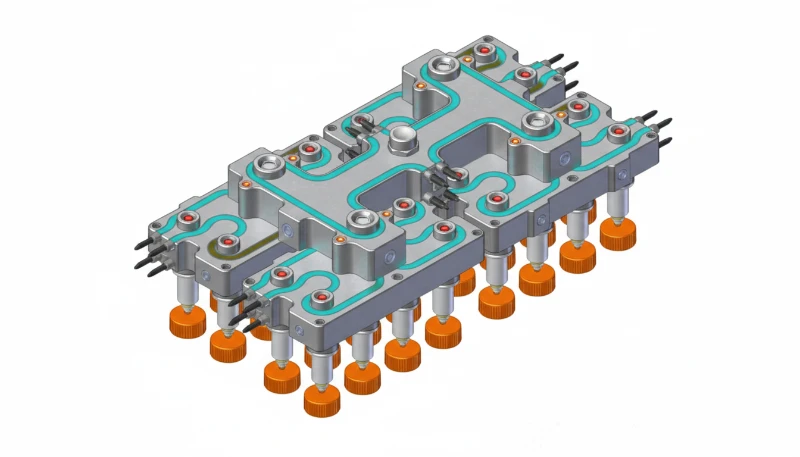
Automotive Industry
Electronic Industry
Medical Device Field
Frequently Asked Questions
Frequently Asked Questions
What Is the Difference Between a Hot Runner and a Cold Runner?
A hot runner keeps the plastic molten inside the runner channel using electrically heated components, so no runner scrap is produced and parts eject cleanly after each cycle with no secondary trimming needed. A cold runner allows the plastic in the feed channels to solidify along with the part, producing waste that must be trimmed, reground, or discarded. Hot runners save material and reduce cycle time but cost significantly more upfront and require careful temperature management. Cold runners are simpler, cheaper, and better suited for short production runs or frequent material changes.
How Much Does a Hot Runner System Cost?
A typical hot runner system adds 3,000 to 15,000 US dollars or more to the total mold cost, depending on the number of nozzles, valve-gate complexity, temperature zone count, and controller sophistication. For high-volume production runs exceeding 100,000 parts, the material savings from eliminated runner scrap often pay back the investment within a few months. For short runs under 5,000 parts, the added cost rarely justifies itself economically. Always run a detailed cost-per-part comparison including material savings, cycle time reduction, and maintenance costs before committing to a hot runner system.
Can All Plastics Be Used in Hot Runner Systems?
Most thermoplastics work well with hot runners, but heat-sensitive materials like PVC, POM (acetal), and certain flame-retardant grades require careful temperature management to prevent thermal degradation inside the manifold. Materials with very narrow processing windows or those prone to gas generation demand specialized nozzle designs and precise zone-by-zone temperature control. Glass-filled resins also accelerate wear on hot runner components, necessitating hardened flow channels. Your hot runner supplier should confirm compatibility with your specific resin grade and provide recommended temperature profiles for optimal processing results.
How Do You Maintain a Hot Runner Mold?
Regular maintenance includes cleaning nozzles and manifolds during scheduled mold servicing, checking heater bands and thermocouples for wear or burnout, inspecting valve pins for scoring or bending, and verifying seal integrity to prevent plastic leakage into wiring channels. Most production shops schedule hot runner maintenance every 50,000 to 100,000 cycles or whenever the mold is removed from the press. Documenting temperature zone readings over time helps detect degradation trends before they cause quality defects. Keeping spare heater bands, thermocouples, and seal kits on hand minimizes unplanned downtime during critical production runs.
What Causes Color Streaks in Hot Runner Molded Parts?
Color streaks in hot runner parts typically result from residual material from a previous color or resin grade stagnating in dead spots within the manifold or nozzle channels. Insufficient purging time, low-temperature zones that allow material to hang up, or worn internal surfaces that create microscopic pockets are common culprits. Thorough purging at the correct melt temperature, followed by physical inspection of flow channels during maintenance, prevents most streaking issues. Some modern hot runner designs feature streamlined flow paths and polished internal surfaces specifically to minimize dead zones and speed up color changes.
When Should You Choose a Valve-Gate Over an Open-Gate Hot Runner?
Choose valve-gate systems when cosmetic gate appearance is critical—automotive exterior panels, consumer electronics housings, and medical device enclosures all demand gate marks that are virtually invisible. Valve gates also enable sequential filling for family molds with parts of different volumes, and they provide precise pressure control for engineering-grade resins. Open-gate systems are significantly more economical and simpler to maintain, making them the better choice for non-cosmetic applications, commodity resins like polypropylene, and molds where a small vestige mark on the gate surface is acceptable to the end user.
How Many Temperature Zones Does a Hot Runner Need?
The number of zones depends on the manifold layout, cavity count, and part geometry complexity. A simple single-nozzle mold may need only one or two zones, while a complex multi-cavity mold with sixteen or more drops may require eight to twenty independently controlled zones. More zones provide finer control over melt viscosity at each gate, which is critical for family molds where different cavities produce parts with different weights or wall thicknesses. Running CAE flow analysis before tooling helps determine the optimal zone configuration and identify potential balance issues early in the design process.
Does a Hot Runner System Increase Mold Cycle Time?
No—hot runner systems generally decrease cycle time rather than increase it. By eliminating the cold runner, there is no thick runner section that needs to cool and solidify before ejection. Thin-wall parts produced with hot runners can achieve cycle times under five seconds in production. The only exception occurs when a poorly designed hot runner adds excessive thermal mass to the mold that interferes with overall cooling, but this is uncommon in professionally engineered systems. The cycle-time reduction, combined with material savings, is one of the strongest economic arguments for investing in hot runner technology for medium to high-volume production.
What is the main purpose of a hot runner system?
The main purpose of a hot runner system is to keep plastic melt hot inside the mold until it reaches the cavity gate. This reduces or eliminates cold-runner scrap, improves material utilization, and can shorten the molding cycle when the runner would otherwise control cooling time. It also helps multi-cavity molds fill more consistently when the manifold is balanced correctly. Buyers should confirm gate quality, temperature stability, maintenance access, and spare-part support before approving the tool, because a well-specified hot runner is easier to validate during production trials and avoids costly rework later.
When is a hot runner better than a cold runner?
A hot runner is usually better than a cold runner when production volume is stable, resin is expensive, the runner would be heavy, or gate appearance and cavity balance are important. It is less attractive for prototypes, very low-volume jobs, frequent color changes, or materials that degrade during long residence time in the manifold. The decision should compare mold cost, resin saved per shot, cycle time reduction, startup scrap, maintenance cost, and downtime risk, rather than focusing only on the initial tooling quote from the mold maker.
What are the common risks of hot runner molds?
Common hot runner risks include melt leakage, heater failure, thermocouple drift, unbalanced cavities, gate stringing, black specks, color streaks, and material degradation. Many of these problems look like molding-process issues even when the root cause is inside the hot half of the mold. A good mold review should check manifold layout, thermal expansion clearance, nozzle seating integrity, wiring protection routing, gate size calibration, cooling near the gate, and how easily heaters or valve pins can be replaced during scheduled maintenance.
How should buyers evaluate a hot runner supplier?
Buyers should evaluate whether the supplier can explain the gate type, hot runner brand, number of temperature zones, manifold balance method, controller compatibility, spare-part list, and trial validation plan. The supplier should provide drawings, zone maps, recommended temperature settings, and T1 sample evidence instead of only saying that a hot runner will save material. Useful trial evidence includes cavity weight data, injection pressure curves, gate appearance photos, startup scrap count, dimensional inspection reports, and a list of corrective actions taken during sampling.
Does a hot runner always reduce total molding cost?
A hot runner does not always reduce total molding cost. It can reduce resin waste, cooling time, and manual runner handling, but it also increases mold cost, controller cost, maintenance cost, and technical risk. The payback is strongest when annual shot volume is high and the runner would be heavy or made from expensive resin. For short production runs under 10,000 parts, a simple cold runner may be cheaper and easier to service even if it creates some runner scrap that must be reground or discarded after each cycle.
How Do Hot Runners Shape the Future of Injection Molding?
Hot runner (Hot Runner Systems) is a heating component system used in injection molds to inject melted plastic particles into the mold cavity. Hot runner molds are a new structure that heats the runners and runners of traditional molds or three-plate molds, so that the runners and runners do not need to be removed at each forming.
Hot runner technology was introduced to the plastics industry more than 50 years ago, and it has completely changed the injection moldingprocess capabilities by improving the quality of injection molded parts, improving operating efficiency, reducing scrap, and saving money. See our injection mold design for a comprehensive overview.
hot runner system: A hot runner system is a heated assembly inside an injection mold that keeps plastic molten in the runner channel and reduces cold-runner waste. ↩
manifold: A manifold is a heated distribution block that routes molten plastic from the machine nozzle to multiple drop locations inside the mold. ↩
cold runner: A cold runner is a conventional mold feed system where runner plastic solidifies each cycle and must be separated from the molded part. ↩